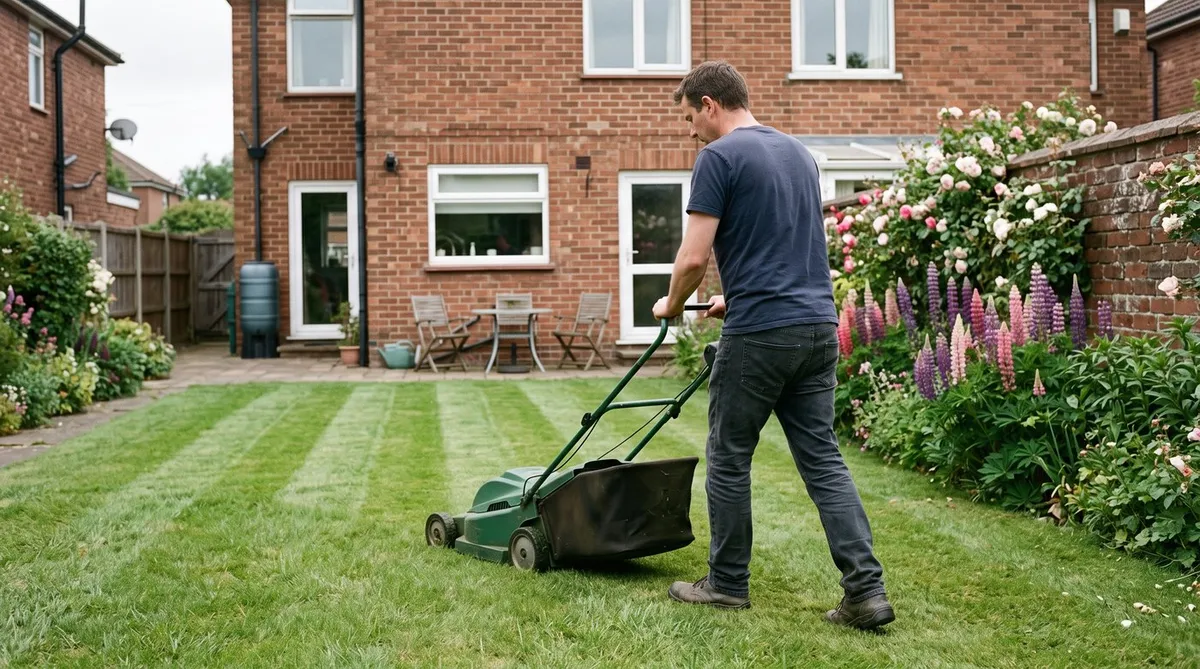
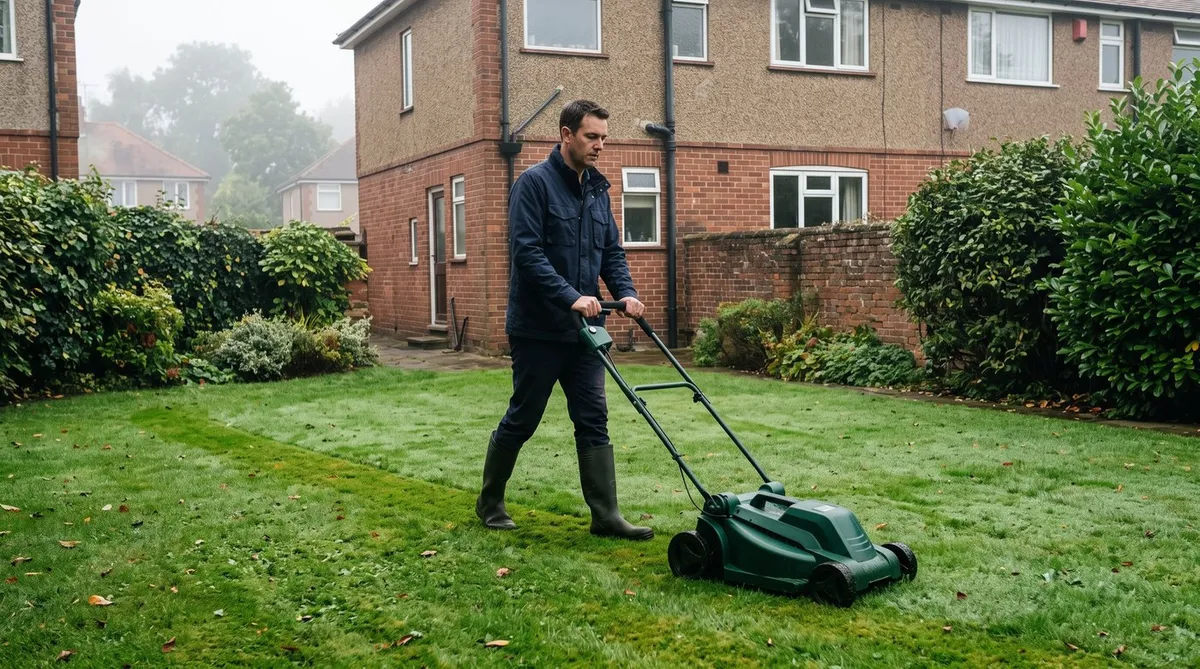
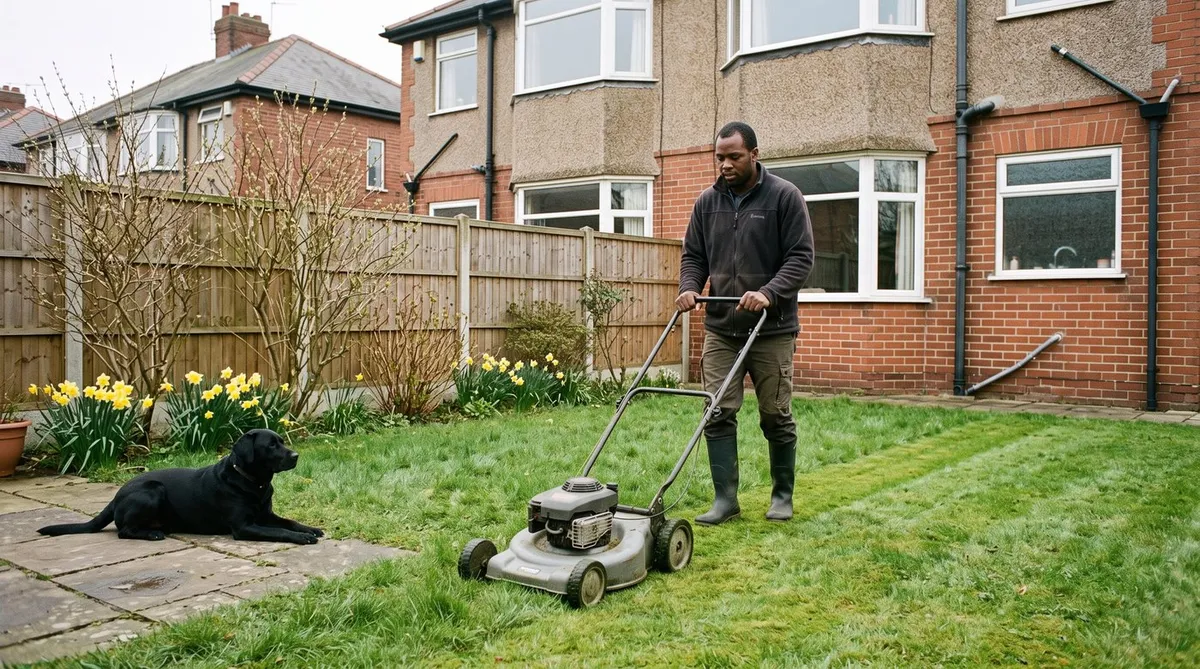
Key takeaways
- Make your first cut in early to mid-March, with the mower set high at about 4cm
- Mow weekly in spring, and up to twice a week in June and July
- Never cut off more than a third of the grass height in one go
- Family lawns are happy at about 2.5cm in summer, a bit longer in dry spells
- Short clippings can be left on the lawn to feed it and save emptying the box
- Stop regular mowing in late October or November
In the UK, mow your lawn from March to October, little and often, and never take off more than a third of the grass at once. Grass grows at different speeds through the year. It wakes up in March, races away in June and July, and slows down by October. Mow in step with it and you’ll have a thick, green lawn that keeps weeds and moss out.
Our lawn care calendar shows how mowing fits in with feeding, scarifying and the other monthly jobs. If weeds have already moved in, see our guide to lawn weed identification and control.
When to start mowing in spring
The first mow of the year is usually in early to mid-March. It depends on where you live and the weather. Mild southern gardens on light soil may need a quick trim in late February. Northern and exposed gardens often wait until late March.
Look for two signs. First, the grass should be clearly growing and a bit longer than you want it. Second, the ground should be firm underfoot. If your shoes leave prints in the lawn, give it another week. Mowing soggy ground squashes the soil, hurts the roots and leaves wheel ruts.
Setting the right height for the first cut
Set the mower to its highest setting, around 4cm, for the first cut. You just want to take the tips off. After a winter rest, the grass is a bit fragile, and scalping it in March sets it back weeks.
Keep it at 4cm for the first three or four cuts. Then lower it about half a centimetre each cut through April, so you reach your summer height by early May. It’s one of the easy spring gardening jobs that gets the garden ready for the year.
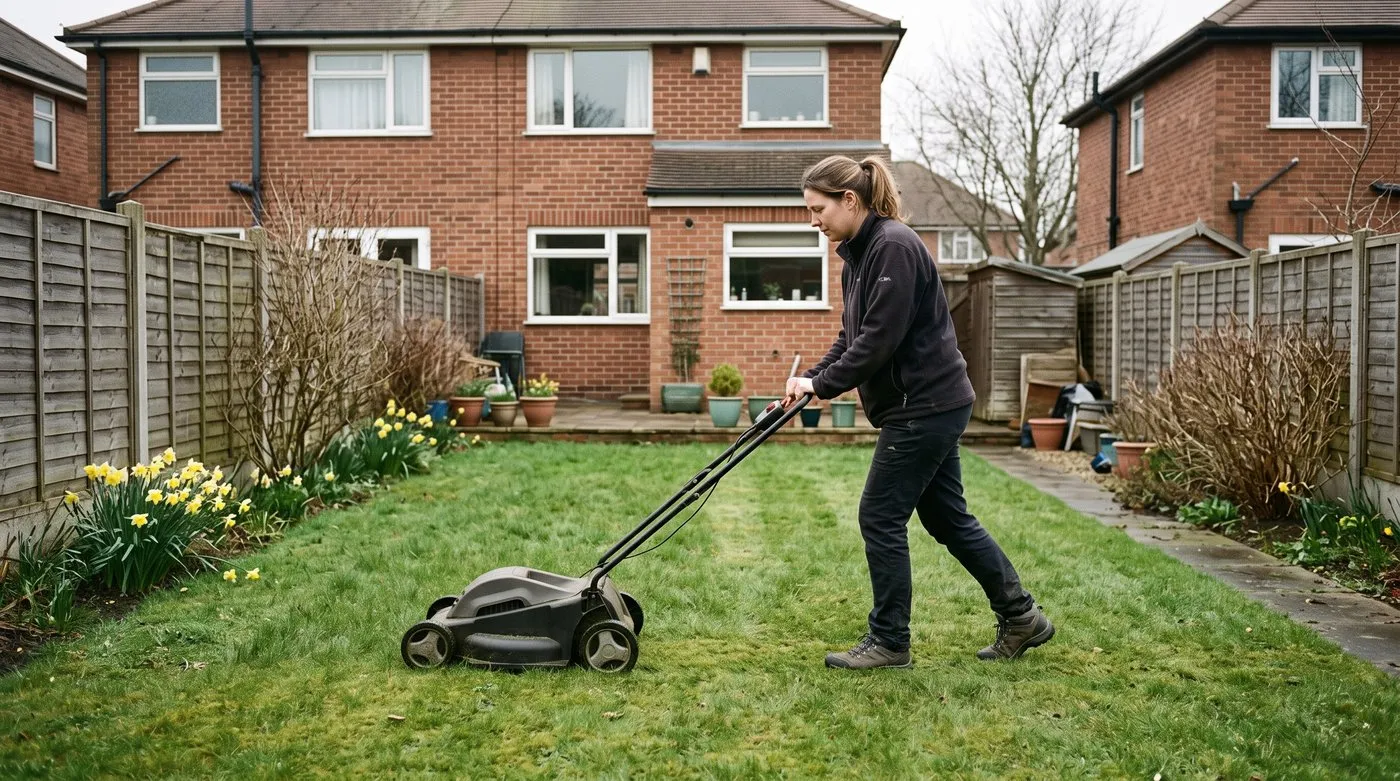
For the first cut, set the mower to its highest setting and just take the tips off. Wait until the ground is firm enough not to leave footprints.
The one-third rule
Never take off more than a third of the grass height in one mow. It’s the golden rule of mowing, and the one most often broken.
Cut too much at once and the grass has to put its energy into regrowing leaves instead of roots. Over time you get shallow roots, a lawn that browns quickly in dry weather, and more weeds.
So mow often enough that you never need to take much off. If you want it at 3cm, mow before it reaches 4.5cm. Back from a fortnight away to a lawn at 8cm? Bring it down over three or four cuts rather than in one go. Not sure where to set the mower? Our guide on how low you should mow a lawn has safe heights for each type of grass.
Gardener’s tip: If you’ve missed a cut and the grass is long, mow it on the highest setting first. Wait three days, lower it a notch and mow again. Keep going until you reach your normal height.
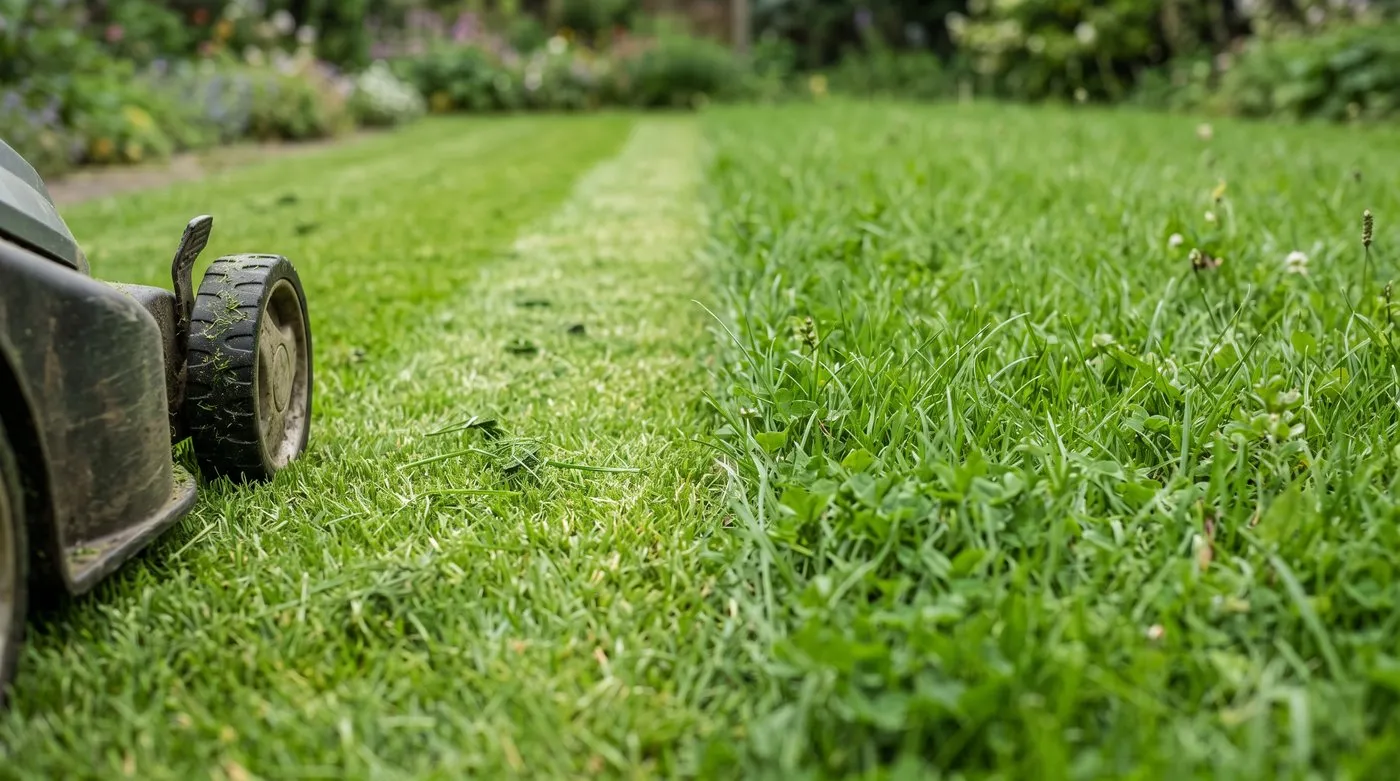
Take off no more than a third of the height in one go. If the lawn has got away from you, bring it down over three or four cuts.
Seasonal mowing frequency and cutting heights
Mow every one to two weeks in spring and autumn, and at least weekly in summer. Warmth and longer days make the grass grow faster.
Spring (March to May)
In March, once a fortnight is usually plenty, as the grass is growing slowly. By April you’ll probably need to mow weekly. In May it really gets going, and a fast-growing lawn may need a cut every 5-6 days.
Spring cutting height: 3-4cm. This helps the lawn thicken up and crowd out new weeds.
Summer (June to August)
This is when the grass grows fastest. Mow twice a week in June and July if you can, or at least every 4-5 days. Growth slows a little in August, especially in dry spells, so drop back to weekly if it’s hot and dry.
Summer cutting height: about 2.5cm for a family lawn. The RHS mowing guide gives 13-25mm for ordinary lawns and 6-13mm for fine lawns, which need a cylinder mower and very regular cutting. In a drought or heatwave, raise the mower by 1cm and mow less often. Longer grass shades the soil and keeps the roots cooler.
Autumn (September to November)
Growth slows through September and October. Mow weekly in September, then every two weeks from mid-October. Raise the height back to 3-4cm, as slightly longer grass copes better with winter.
The last cut is usually in late October or early November. Pick a dry day and set the mower to 4cm. For getting your borders ready for winter too, see our guide on what mulch is and how to use it.
Can you mow your lawn in winter?
Yes, now and then, but you often won’t need to. In mild winters the grass keeps creeping up, and an occasional cut on a high setting keeps it tidy.
Only mow when the grass is dry and the ground is firm. Never mow frosty grass, as the frozen blades break and blacken, and your footprints leave brown tracks. Skip it in cold, drying winds too. A light trim at 4cm or higher in a mild spell in December or February is fine. Otherwise, keep off the lawn when it’s frozen or waterlogged, and rake off fallen leaves so they don’t smother the grass.
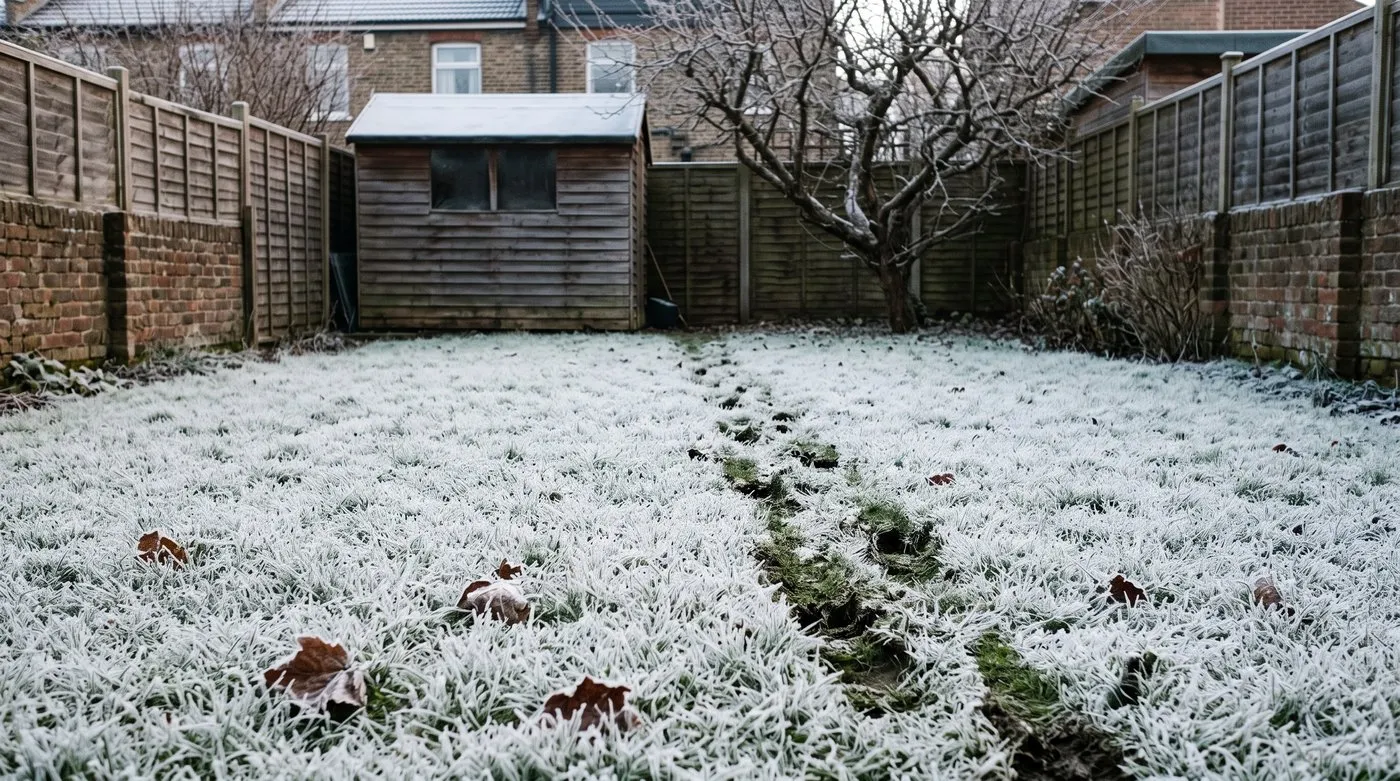
Keep off a frosty lawn, and never mow it. Frozen blades snap and blacken, and even footprints can leave brown tracks.
Month-by-month mowing calendar
Here’s a simple month-by-month guide for a typical UK garden. Northern and high gardens are often 2-3 weeks behind the south.
| Month | Cutting height | How often | Notes |
|---|---|---|---|
| January | 4cm+ if mild | Rarely, if at all | Stay off frozen or soggy grass |
| February | 4cm+ if mild | Rarely, if at all | Rake off leaves and service the mower |
| March | 4cm | Once or fortnightly | First cut when grass reaches 5-6cm |
| April | 3.5-4cm | Weekly | Lower the height bit by bit |
| May | 3cm | Weekly to every 5 days | Growth speeds up, so keep on top of it |
| June | 2.5cm | Weekly to twice weekly | Fastest growth of the year |
| July | 2.5-3cm | Weekly to twice weekly | Raise 1cm in a drought or heatwave |
| August | 3cm | Weekly to twice weekly | Slows down in dry weather |
| September | 3-3.5cm | Weekly | Start raising the height for autumn |
| October | 3.5-4cm | Fortnightly | Last regular cuts |
| November | 4cm | Once, if needed | Final cut on a dry day |
| December | 4cm+ if mild | Rarely, if at all | Only on dry, firm, frost-free days |
Mowing heights for different lawn types
Set the height to suit your lawn: shorter for fine, showy grass, longer for shade and new lawns.
| Lawn type | Summer height | Spring/autumn height | How often in summer |
|---|---|---|---|
| Fine ornamental | 6-13mm | 1.5-2cm | Two or three times a week |
| Family lawn | 2.5cm | 3-4cm | Weekly to twice weekly |
| Shady lawn | 3.5-4cm | 4-5cm | Weekly |
| Meadow or long grass | Uncut | Uncut | Once or twice a year, from late summer |
| New lawn (first year) | 3.5-4cm | 4cm | Weekly |
Shady lawns need about 1cm more height than sunny ones. The longer leaves catch more light. Cut a shady patch as short as the rest and it thins out and lets moss in.
New lawns shouldn’t be cut shorter than 3.5cm in their first year. The grass needs time to grow deep roots first. Wait until it reaches at least 5cm before the first cut.
How to create lawn stripes
Stripes come from a roller on the back of the mower, not from cutting at different heights. The roller bends the grass one way, then the other. Grass bent towards you looks dark, and grass bent away looks light. They show up best in sunshine.
For straight stripes, pick a fixed point at the far end and mow towards it. Turn at the end and come back alongside your first strip. Overlap each pass by 5-10cm so you don’t miss any.
Cylinder mowers with a heavy roller give the crispest stripes. Rotary mowers with a roller give softer ones. A rotary without a roller won’t stripe, but you can still get lawn stripes without a roller with a few simple tricks. For a special occasion, mow stripes one way, then go diagonally across them for a diamond pattern.
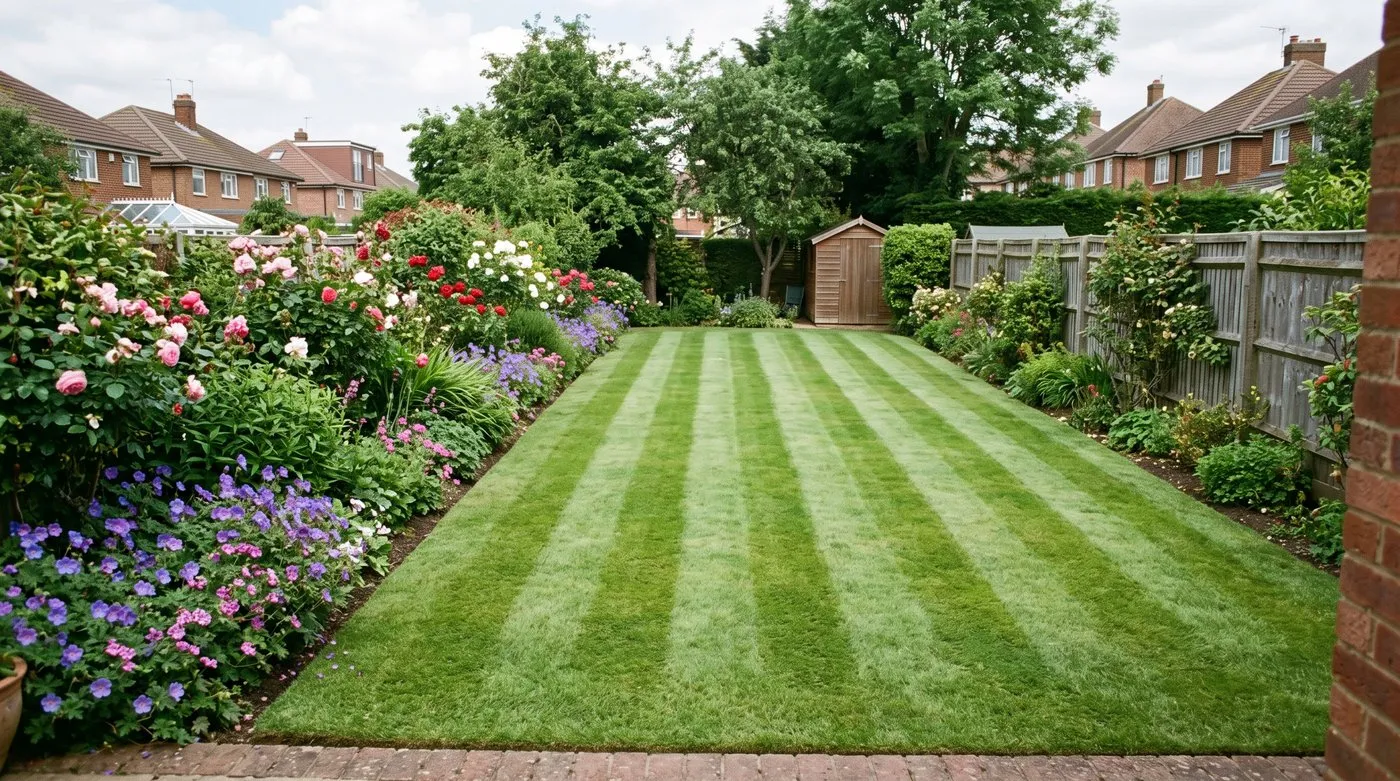
Stripes come from the roller bending the grass, not from cutting heights. Mow towards a fixed point and overlap each pass a little.
Mulch mowing
Mulch mowing just means leaving the clippings on the lawn. A mulching mower chops them very finely, so they drop down between the grass and rot away quickly.
It feeds the lawn a little and helps the soil hold on to moisture. It also saves time, as there’s no grass box to empty, and saves trips to the tip.
It works best if you mow regularly. Short clippings from a weekly cut vanish. Long clippings from a missed cut sit on top, block light and can cause problems. So the one-third rule matters even more here.
Gardener’s tip: If you compost your clippings instead, mix them with dry brown stuff like cardboard or dead leaves. On their own, grass clippings turn into a slimy, smelly mess. Our guide on how to make compost shows the right mix.
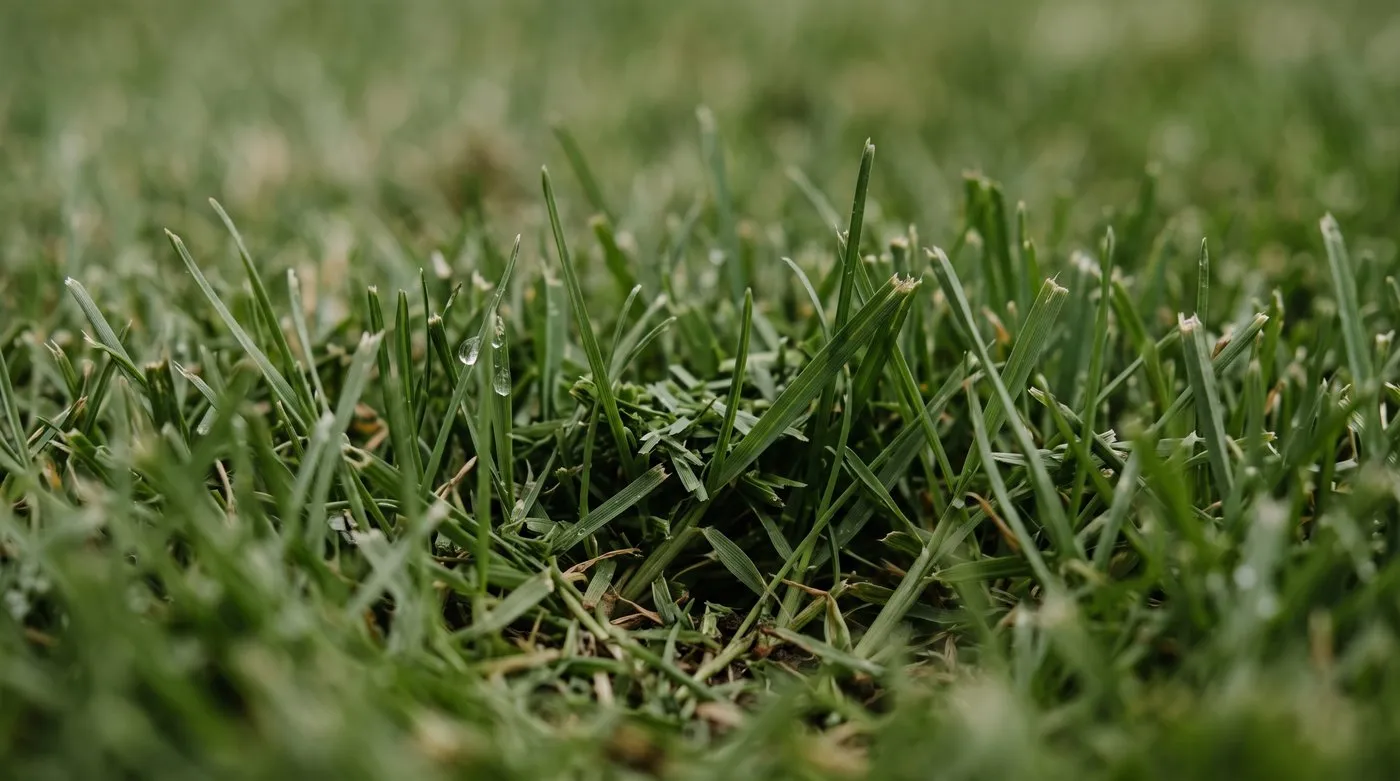
Short clippings from a regular cut vanish into the lawn and feed it a little. Long clippings from a missed cut sit on top, so rake those up.
Choosing the right mower
Go for a cylinder mower for fine lawns and stripes, a rotary for most family lawns, and a hover for slopes. Here’s a quick guide.
Cylinder mowers have a spinning cylinder of blades that cut against a fixed blade, like scissors. They give the neatest cut and the best stripes, but struggle with long or wet grass. Best for small, fine lawns.
Rotary mowers have one spinning blade. They cope better with longer grass and bumpy ground. The cut is good, if not quite as neat. Best for family lawns.
Hover mowers float on a cushion of air. They’re light and great on banks, slopes and awkward corners. The cut is basic and they don’t stripe. Best for slopes and small, oddly shaped lawns.
Robot mowers potter about on their own inside a boundary wire or mapped area. They mow little and often and leave the clippings on. Best for busy households.
Ride-on mowers make sense for big lawns, where pushing a mower gets tiring. They’re quick but cost more to buy and run.
Mowing wet grass
The short answer is to avoid it if you can. Wet clippings clump and clog the mower. Clumps left on the lawn block light and leave bare patches. The wheels squash damp soil, and wet grass tears instead of cutting cleanly, leaving brown tips.
If you have to mow after rain, wait until the grass is dry, even if the soil is still damp. Late morning is usually best. Raise the mower a notch and clean under the deck afterwards.
A rotary mower copes with damp grass better than a cylinder mower, which jams easily with wet clippings.
Common mowing mistakes
Cutting too short (scalping)
Scalping takes off too much leaf, weakens the grass and leaves bare soil for weeds to move into. A lawn cut at 1.5cm looks neat for a day and tired for the rest of the week. Keep a family lawn above 2.5cm.
Mowing on the same pattern every time
Mow the same way every time and the grass starts to lean one way, which looks flat and patchy. Change direction each time: lengthways, widthways, then diagonally.
Mowing with blunt blades
Blunt blades tear the grass instead of cutting it. The torn tips go brown and give the whole lawn a greyish look. Sharpen the blades at least twice a year, once before the season starts and once in midsummer.
Ignoring the edges
A mown lawn with shaggy edges looks half-done. Trim them with long-handled shears or an edger every second or third mow. Recut the edge with a half-moon edger once a year. For a permanent fix, our lawn edging guide compares steel, timber and brick.

Trim the edges every second or third mow. A crisp edge makes the whole lawn look finished.
Mowing too infrequently then cutting too short
This is the worst combination. Letting the grass get long and then hacking it right back breaks the one-third rule in a big way. The lawn sulks, stops growing and weeds take over. Little and often is much kinder.
Not adjusting for shade
Shady grass grows more slowly and needs to be left longer. Cut it as short as the sunny bits and it thins out and moss moves in. Better soil helps too, and our guide on how to improve clay soil covers drainage and feeding.
Leaving an area unmown
Leaving part of the lawn to grow is one of the easiest ways to help wildlife. A long strip or patch gives bees, butterflies and other insects somewhere to feed and shelter.
Wildflower strips only need mowing once or twice a year. Do the first cut in late August or September, once the flowers have set seed. Leave the cuttings for a few days so the seeds drop, then rake them off. A second cut in late autumn tidies it up for winter.
Should you stop mowing for No Mow May?
Yes, if you’d like to help pollinators and don’t mind a shaggier lawn for a month. Starting again in June is fine, though leaving it longer is even better for wildlife.
No Mow May lets dandelions, daisies, clover and selfheal flower, which gives bees early food. When you start again, don’t cut straight down to summer height. Set the mower to its highest setting and lower it over two or three cuts, following the one-third rule. Rake up the long clippings. Or meet halfway: mow a path and the main play area as usual and leave the rest.
Grass paths through longer areas need mowing weekly to stay neat. One mower-width is enough. The contrast between the short path and the long grass looks lovely and deliberate.
Once mowing is sorted, our guide on what mulch is and how to use it helps keep the rest of the garden in good shape.
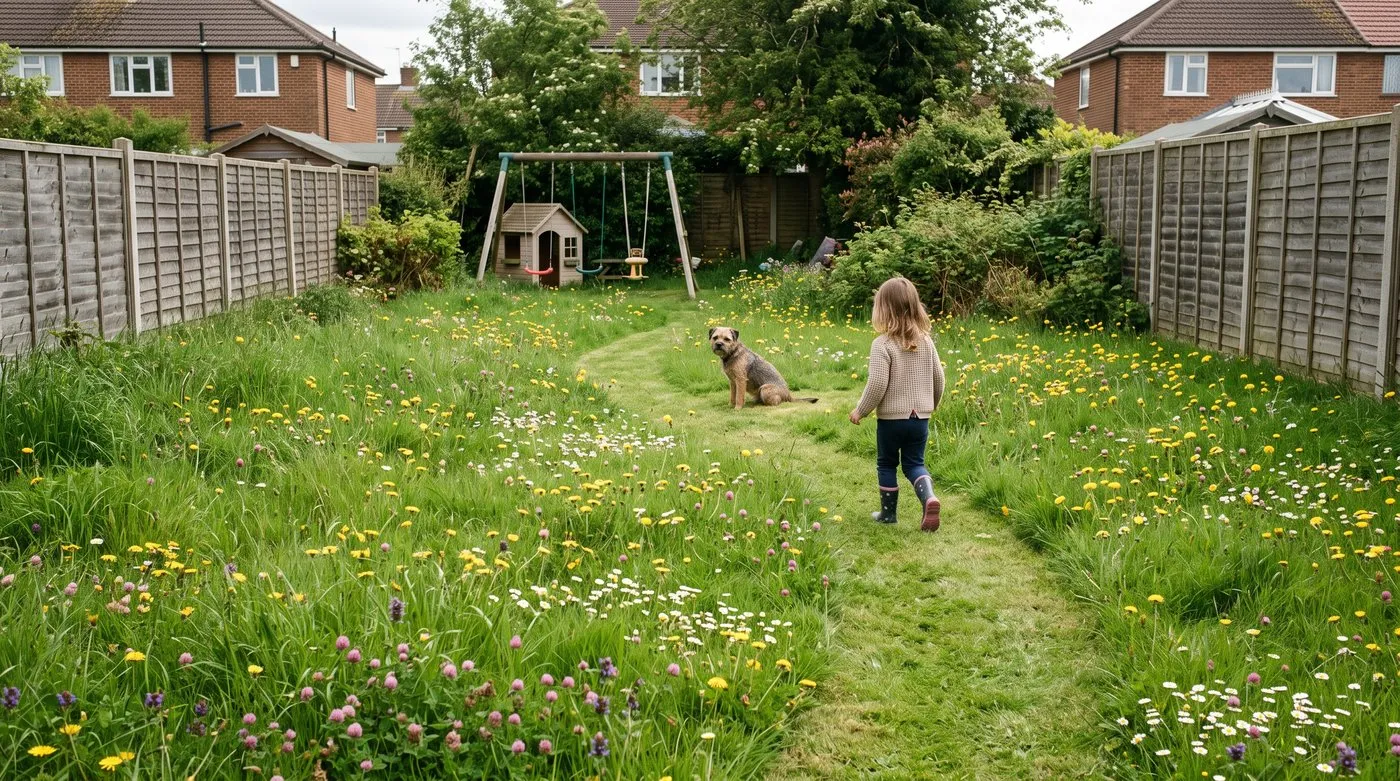
Mowing a path and play area while leaving the rest gives bees early flowers and keeps the lawn usable. Bring it back down gradually in June.
Mowing new lawns
Only mow a new lawn once it’s at least 5cm tall, with the mower on its highest setting.
Lawns grown from seed shouldn’t be cut until the grass is at least 5cm tall, which is often several weeks after sowing. Set the mower high and make sure the blades are sharp. A rotary mower is safer than a cylinder for the first few cuts, as it’s less likely to pull up young grass. Don’t roll it with a heavy roller, and walk on it as little as you can.
Turf can be mown sooner, usually 2-3 weeks after laying. Again, set the height to 4cm. Gently tug a corner first. If it lifts easily, the roots haven’t taken hold yet, so wait another week.
Either way, keep the height at 3.5-4cm for the whole first year. You can mow closer from the second year, once the roots are well settled.
The GOV.UK guidance on noise nuisances explains how councils decide whether noise from a garden counts as a nuisance.
Frequently asked questions
When should I mow my lawn for the first time in the UK?
Usually in early to mid-March. Wait until the grass is growing and the ground is firm enough that you don’t leave footprints. Set the mower on its highest setting, around 4cm. Mild southern gardens may manage a light trim in late February.
How often should I mow my lawn in the UK?
Weekly in spring and early autumn. Go up to twice a week in June and July when the grass grows fastest. In March and late autumn, every two weeks is plenty. Let the weather guide you, as rain and warmth speed things up.
What height should I cut my lawn?
About 2.5cm in summer for a family lawn. Fine, showy lawns are cut shorter, while shady patches need an extra centimetre. In spring and autumn, raise the mower to 3-4cm. Don’t go below 2cm on a family lawn.
Can I mow wet grass?
Best not to if you can help it. Wet clippings clog the mower and clump on the lawn. If you have to, wait until the grass itself is dry, even if the soil is still damp. Raise the mower a notch and clean under the deck afterwards.
Should I leave grass clippings on the lawn?
Yes, if they’re short. They break down quickly and feed the lawn a little. Rake up long clippings from a missed cut, as they form a mat that smothers the grass.
When should I stop mowing in autumn?
Usually late October or November, once the grass slows right down. Northern gardens often stop by mid-October, while mild southern ones may need the odd cut into November. Leave the grass at about 4cm for winter.
Is it bad to mow in the middle of the day?
In hot weather, yes, a little. Midday heat stresses freshly cut grass. Late morning, once the dew has dried, is ideal. In a heatwave, mow in the evening or skip a cut altogether.
Is there a legal time to mow your lawn in the UK?
No, there’s no law on mowing hours. That includes Sundays. A council only steps in if the noise is a real nuisance, like repeated mowing late at night. Some leases and estates have quiet hours, so check yours. As a courtesy, most people avoid mowing before about 9am or after dark.
Our team produces practical UK gardening guidance from source research, contributor records and established horticultural practice. Editorial standards are overseen by Matt W.