Key takeaways
- Dandelions, clover, daisies and plantain are the most common UK lawn weeds
- Mowing too short thins the grass and lets weeds in
- Overseeding thin patches in autumn is the best natural way to crowd weeds out
- Lawn weedkillers work best while weeds are growing well, in spring or early autumn
- Clover feeds the soil and the bees, so lots of people now keep it
- Weeds often point to a soil problem such as packed ground or poor drainage
You mow on Saturday, stand back to admire it, and by Wednesday there are dandelions, clover and daisies dotted about like confetti. Sound familiar? Weeds aren’t a sign you’ve failed. They’re just plants that like your conditions a bit more than the grass does.
Our mild, damp weather suits lawn weeds nicely, but only a dozen or so cause most of the trouble. Once you know which one you’ve got, you’ll know what to do about it.
This guide helps you spot the usual suspects, explains what they’re telling you about your soil, and covers both natural and weedkiller options. For other garden headaches, have a look at our problems section.
How to Identify Common UK Lawn Weeds

Look at the leaf shape, how the plant grows and the flowers, then check the table below. Knowing the weed tells you whether to dig it out, treat it, fix the soil or simply leave it.
The Top Ten
These are the lawn weeds you’ll meet most often in British gardens.
| Weed | Leaves | How it grows | Flowers | What it tells you |
|---|---|---|---|---|
| Dandelion | Jagged, in a rosette | Deep single root | Yellow, spring to autumn | Packed or thin soil |
| White clover | Three rounded leaflets | Creeping runners | White, round heads | The lawn is hungry |
| Daisy | Small, spoon-shaped, in a rosette | Flat to the ground | White with yellow centre | Mowing too short |
| Broad-leaved plantain | Broad, oval, ribbed | Flat rosette | Green-brown spikes | Lots of feet, packed soil |
| Creeping buttercup | Three-lobed, glossy | Creeping runners | Bright yellow | Damp, heavy clay |
| Selfheal | Oval, in pairs | Low and spreading | Purple spikes | Damp, shady spots |
| Common speedwell | Small, round, scalloped | Creeping stems | Tiny blue flowers | Short mowing, thin grass |
| Lesser celandine | Heart-shaped, glossy | Little tubers | Bright yellow, spring | Damp shade |
| Yarrow | Feathery, fern-like | Creeping mat | White clusters | Dry, poor soil |
| Moss | Tiny, dense carpet | Surface mat | None | Shade, damp, acid or packed soil |
What are the yellow flowers in my lawn?
Most yellow flowers in UK lawns are dandelion, cat’s-ear, creeping buttercup, lesser trefoil or black medick. Check the leaves and stems to tell them apart.
- Dandelion: smooth, deeply toothed leaves and one flower on a hollow stem that oozes milky sap.
- Cat’s-ear: similar flowers, but hairy leaves and branching flower stems.
- Creeping buttercup: shiny, cup-shaped flowers with five petals and long runners that root as they go.
- Lesser trefoil: tiny clover-like leaves and small round yellow flower heads, common in dry, thin grass.
- Black medick: like lesser trefoil, but each leaflet has a tiny point at the tip and the seed pods turn black.
Dandelion and cat’s-ear have deep roots, so dig them out. The others creep, so thickening up the grass works better than weeding by hand.
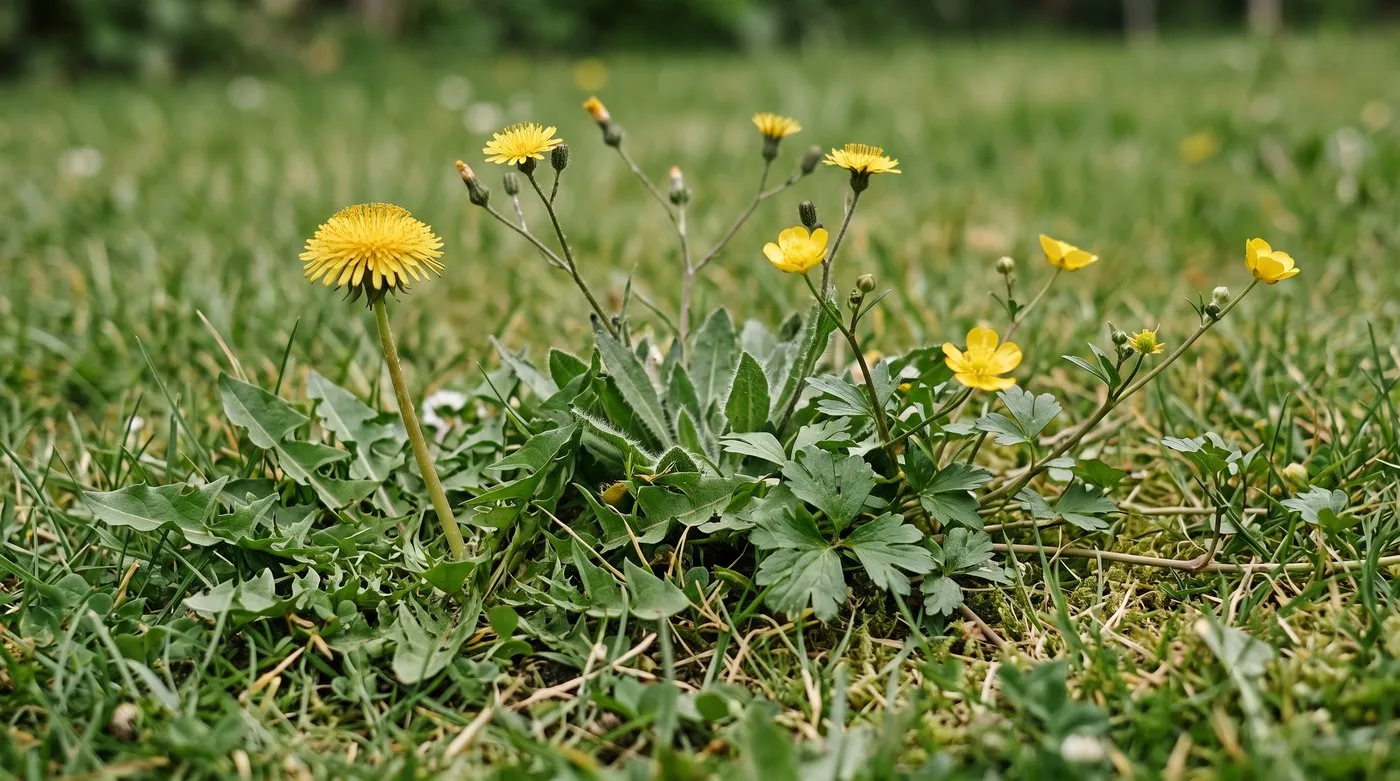
Check the leaves to tell yellow lawn flowers apart. Dig out deep-rooted dandelions, but thicken the grass to crowd out creeping buttercup.
Weeds That Indicate Soil Problems
Weeds are handy little clues to what’s going on under the surface.
Dandelions and plantain cope with packed soil where grass struggles, so if they’re everywhere, aerating is the job to do. Clover loves a hungry lawn because it makes its own food, so a well-fed lawn rarely has much. Creeping buttercup means soggy ground or heavy clay. Moss points to shade, acid soil, packed ground or poor drainage.
Fixing these is far more effective than killing the same weeds over and over. The RHS guide to weeds in lawns has photos to help you identify them.
Organic and Cultural Control Methods

Chemical-free weed control is all about helping the grass win. Thick, healthy grass is the best weed stopper there is.
Mowing Height
This is the most common lawn mistake of all. Cutting too short weakens the grass and leaves gaps for weed seeds. Keep a family lawn at about 3cm or more, and a fine lawn at about 2.5cm or more. In dry summer spells, raise the mower another notch.
Daisies and speedwell love a short lawn, because their flat leaves sit below the blades. Raising the cut a little makes life much harder for them.
Tip: Mow regularly, but take off no more than a third of the height each time. If the grass has grown long while you were away, bring it down over two or three cuts rather than scalping it in one go.
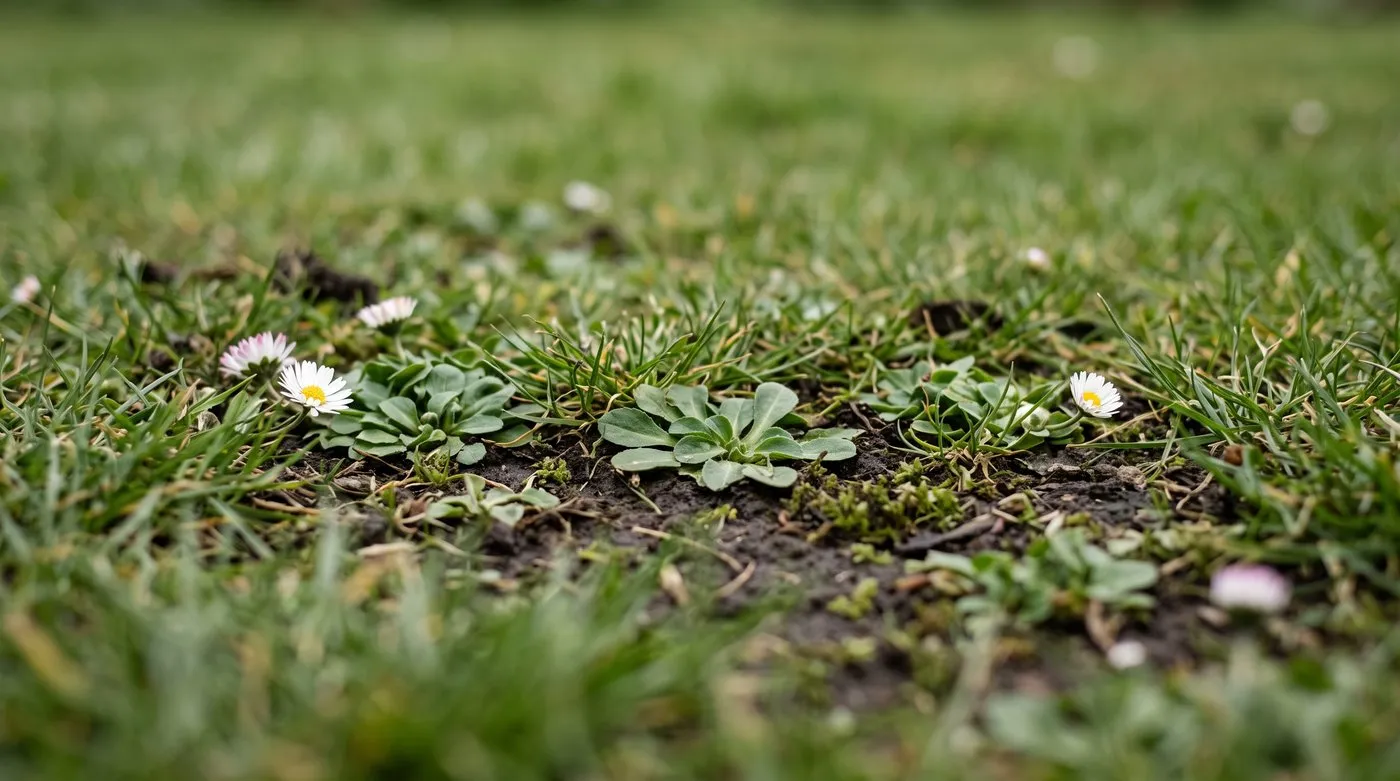
Daisies and speedwell love a short lawn, because their flat leaves sit below the blades. Raising the cut makes life harder for them.
Overseeding
Bare and thin patches are an open door for weeds. Overseeding in autumn (September to mid-October) is the best natural way to thicken a lawn. The soil is still warm, the rain is back, and there are fewer weeds competing than in spring.
- Mow fairly short (2-3cm) and rake out dead grass and moss
- Spike the surface with a garden fork every 10-15cm
- Scatter grass seed at 25-35g per square metre
- Sprinkle a thin layer of sieved compost or loam on top
- Water if it doesn’t rain within a couple of days
- Keep off it for a few weeks
Pick a seed mix that suits your lawn. Shade mixes contain fine fescues, while hard-wearing mixes include ryegrass. Our guide on how to make compost shows you how to make your own top dressing.
Hand Weeding
For weeds with one long root, like dandelions and dock, a daisy grubber works a treat. Push it down beside the root and lever upwards to lift the whole thing out. Spring, when the soil is moist, is best. Any bit of root left behind will regrow, so be thorough.
Creeping weeds are harder. Clover, speedwell and creeping buttercup spread by runners, and little bits left in the soil regrow. For these, building up the grass so it crowds them out is the better long-term plan.
Feeding and Aeration
Feeding twice a year keeps grass thick enough to hold off most weeds. Use a spring feed in April and an autumn feed in September or October.
Aerate packed areas each autumn with a hollow-tine aerator or a garden fork. It loosens the soil, helps drainage and lets grass roots go deeper. On clay, brush sharp sand into the holes to keep them open.
Chemical Weed Control
Lawn weedkillers kill broad-leaved weeds without harming grass. They’re useful when a lawn has become too weedy to sort out by other means.
How Selective Weedkillers Work
Lawn weedkillers are “selective”, meaning they upset the growth of broad-leaved weeds until they die, while grass shrugs them off.
When to Apply
- Best time: Mid-April to late May, or September
- Weather: Mild, calm and dry, with no rain due for a day
- Soil: Moist but not soggy
- Avoid: New lawns from seed or turf (wait six months), drought-stressed grass, hot or windy days
Liquid sprays give the most even cover. Granular weed-and-feed is handy but less precise. Always stick to the rate on the label, as too much damages the grass.
Spot Treatment
If you only have a few weeds dotted about, spot-treating is neater and uses far less weedkiller. A ready-to-use spray lets you treat single dandelions and plantains without doing the whole lawn.
Check the label for how long to wait before and after mowing, and whether you can compost the clippings from the first few cuts.
Are lawn weedkillers safe for children and pets?
Only when you use them exactly as the label says. Most labels say to keep people and pets off the lawn until the spray has dried.
In the UK, following the label is the law, not just good advice. The HSE guidance for home gardeners also says to check a product is still allowed, buy no more than you’ll use in a year and never pour leftovers down a drain. Keep products in their original containers, out of reach of children.
If your dog likes to eat grass, spot-treating or hand weeding is a gentler choice than weed and feed over the whole lawn.
How do you get rid of moss in a lawn?
Treat it with lawn sand or a ferrous sulphate (iron) moss killer, rake out the dead moss, then fix whatever let it grow. If you skip that last step, it’ll be back within a year.
- Put the moss killer down in spring (March to April) or early autumn, while the moss is growing.
- Wait for the moss to turn black, usually within a couple of weeks.
- Rake it out with a spring-tine rake or a powered scarifier.
- Sow seed on the bare patches straight away so weeds don’t move in.
Moss is a sign of shade, poor drainage, packed soil, acid soil or mowing too short. Aerate in autumn, raise the mower and trim back overhanging branches where you can. Keep ferrous sulphate off paving, as it leaves rusty stains.
Living With Lawn Weeds
Not every weed needs fighting. More and more people are enjoying relaxed lawns with a mix of grass and wildflowers, and for good reason.
The Case for Clover
White clover feeds the grass around it, stays green in summer droughts when grass goes brown, and its flowers are a favourite with bees. If you’d like a bee-friendly garden, letting clover stay in the lawn is one of the easiest things you can do.
Daisies and Self-heal
Both sit happily among the grass. Daisies give early nectar to small pollinators, and self-heal adds a lovely splash of purple. In a family lawn that doesn’t need to look like a bowling green, they do no real harm. If you’d still rather they went, our guide to removing daisies from a lawn covers what works.
No-Mow May and Relaxed Lawns
Plantlife’s “No Mow May” campaign encourages gardeners to let their lawns grow through May, so wildflowers can bloom and feed pollinators. Lawns cut less often have far more flowers for bees.
If a fully wild lawn feels like too much, leave one area long with a mown path through it. You get the best of both, and it looks great in small garden designs, where a wilder patch at the back adds depth.

Leaving one area long with a mown path through it gives you flowers for bees and still looks cared for.
Stopping Weeds Long Term

The long-term answer is thick grass: mow high, feed twice a year, aerate and overseed thin areas. Do that and your lawn will hold its own against weeds year after year.
A Simple Annual Lawn Care Calendar
- March: First mow on a high setting (4-5cm). Rake out moss and thatch
- April: Spring feed. Treat weeds with a lawn weedkiller if needed
- May-August: Mow weekly, no lower than about 3cm. In drought, water deeply rather than a little every day
- September: Aerate, overseed thin areas and give an autumn feed
- October: Keep mowing while it grows. Last weed treatment if needed
- November-February: Stay off frozen or soggy grass. Clean and service the mower
Building Strong Grass
A weed-free lawn starts with strong, thick grass. That means the right seed for your conditions, regular feeding, sensible mowing and sorting out drainage or packed soil. You don’t need chemicals, perfection or every weekend on your knees with a daisy grubber.
If you prefer a low-maintenance approach, it’s perfectly fine to accept a few weeds and focus on keeping the lawn healthy. A lawn with a sprinkling of clover and daisies is still a lawn, and for many families it’s a nicer one.
If you’re turning part of the lawn into a veg patch, our guide to starting a vegetable garden explains how to clear the turf and prepare the soil. And if slugs are munching the borders nearby, our slug control guide has plenty of natural ideas.
For brown patches and fungal problems rather than weeds, see our guide to lawn diseases: identification and treatment.
Fix the cause, then the weeds
Lawn weeds aren’t the enemy. They’re opportunists that move in wherever the grass is struggling. Sort out the cause, whether that’s packed soil, poor drainage, a hungry lawn or mowing too short, and most weeds lose their edge.
For the ones that hang on, you’ve got options: digging out, lawn weedkillers and better lawn care all work. Which you choose depends on how much you mind a few weeds, how you feel about chemicals and how much time you want to spend. There’s no single right answer, just the one that suits you and your garden.
Frequently asked questions
What is the best time to treat lawn weeds in the UK?
Mid-April to late May, or September, while weeds are growing well. Use a lawn weedkiller on a calm, dry day with no rain due for a day. Don’t treat in hot weather or during a drought, as stressed grass can be damaged.
How do I get rid of dandelions in my lawn without chemicals?
Dig out the whole root with a daisy grubber or old knife. Dandelion roots go deep, so pulling off the leaves isn’t enough. Spring is best, when the soil is moist and roots come out cleanly. Fill the hole with compost and a pinch of grass seed.
Should I leave clover in my lawn?
Lots of people now keep it on purpose. Clover feeds the soil, stays green in dry weather and gives bees nectar. If you’d rather have pure grass, use a lawn weedkiller that lists clover on the label. Otherwise, why not enjoy it?
Why does my lawn have so many weeds?
Weeds move in where grass is thin or struggling. The usual causes are mowing too short, packed soil, poor drainage, shade and a hungry lawn. Fix the cause first. Aerate in autumn, improve drainage, feed in spring and autumn, and overseed bare patches.
Does pulling weeds out of a lawn work?
Yes, for weeds with one long root, like dandelions and dock. It’s harder with creeping weeds like clover, speedwell and creeping buttercup, which spread by runners. Any bit of runner left behind regrows. For those, spot-treating with a lawn weedkiller is more reliable.
How often should I feed my lawn to prevent weeds?
At least twice a year. Use a spring feed in April and an autumn feed in September or October. A well-fed lawn grows thick enough to crowd out most weeds on its own. Skip summer feeding unless you’re using a slow-release product.
Our team produces practical UK gardening guidance from source research, contributor records and established horticultural practice. Editorial standards are overseen by Matt W.