Key takeaways
- No Mow May is a Plantlife campaign that asks you to stop mowing for the whole of May
- Letting the lawn grow gives bees and butterflies flowers to feed on
- Mow paths through the long grass so you can still use the garden
- Start mowing again from mid-June with the mower on its highest setting
- Mowing every four weeks or so all year helps wildlife even more than one month off
No Mow May gives bees and butterflies a much-needed snack in the gap between spring bulbs and summer borders. All you do is put the mower away for a month, so it’s possibly the easiest wildlife project there is.
What is No Mow May and why does it matter?
No Mow May is a Plantlife campaign asking UK gardeners to leave the mower alone for the whole of May. The wild plant charity started it in 2019. May matters because early pollinators need nectar, and a short lawn offers them almost nothing.
Here’s how it works. Most lawns are full of wildflowers you never see, like daisies, white clover, selfheal and bird’s-foot trefoil. Regular mowing chops them before they can flower. Stop mowing, and up they come.
Wildflower meadows have become rare in the UK, so gardens really matter. Together they make a huge patchwork of habitat in towns and suburbs. Even a small unmown patch feeds bees, butterflies and hoverflies.
 Ox-eye daisies, bird’s-foot trefoil and red clover in a no-mow lawn, all grown from seed already in the soil.
How do different mowing regimes affect wildflower results?
Mow every week and only a few low plants manage to flower: daisies, white clover, creeping buttercup and ribwort plantain. Their flat leaves sit below the blades. Everything else gets chopped before it can bloom. If you’d rather not see daisies in a lawn at all, our guide shows how to clear them.
Mowing once a month is a lovely middle ground. Cut every four weeks at about 8cm and selfheal, bird’s-foot trefoil, common vetch, germander speedwell and meadow buttercup all get to flower. Waiting until mid-June for that first cut lets even more of them set seed.
What wildflowers appear in a no-mow UK lawn?
Early May: Daisies, dandelions, white clover and creeping buttercup. These are already in most lawns and are first off the mark.
Late May to early June: Selfheal, bird’s-foot trefoil, germander speedwell, ribwort plantain and red clover. They need a few weeks without mowing to send up flower stalks.
June to July: Common vetch, meadow buttercup, ox-eye daisy, yarrow, lesser stitchwort and cat’s ear. These taller plants need longer without a cut.
Years two and three: Knapweed, lady’s bedstraw and field scabious may arrive from nearby hedges and verges. Whether they turn up depends on what grows near you.
Your soil makes a difference. On heavy clay, meadow buttercup, selfheal and red clover tend to take over. On chalk, look for cowslips, lady’s bedstraw and wild thyme. On sandy, acid soil, tormentil, heath bedstraw and sheep’s sorrel are more likely. Our wildflower lawn guide has more on choosing plants for your soil.
How to manage No Mow May in a small garden
Mow paths through the long grass so you can still use the garden. The most common worry is that the garden will look abandoned. A mown path winding through the long grass shows it’s on purpose.
 A mown path gives a neat contrast between the tidy and wild areas, and it works in any size of garden.
Small lawns: Leave a patch of a few square metres unmown. Keep a mown strip at least 30cm wide around it to frame it neatly.
Medium lawns: Leave half to two-thirds of the lawn long. Mow a curving path through the middle and keep the edges short. Curves look more natural than straight lines. Mow the path weekly so it stands out.
Big lawns: Make a wildlife garden zone at the back with no mowing. Mow the middle about once a month, and keep a tidy lawn near the house. You get space to use, something lovely to look at and lots of wildlife.
Little tricks that help:
- Tell the neighbours. A friendly note or a small “No Mow May” sign heads off any grumbles
- Keep the edges neat. Tidy borders make long grass look deliberate
- Mow around garden furniture, washing lines and play areas
- Leave dandelion clocks be. They’re sowing next year’s flowers
What happens if you keep going for longer:
The number of different flowers often jumps in the second year. Selfheal, bird’s-foot trefoil and common vetch get a proper chance to flower.
Long grass also holds moisture and shelters lots of small creatures. It gives hedgehogs cover while they hunt for food. In a heatwave, it shades the soil and keeps roots cooler. On heavy ground, see our guide to plants for drainage on clay soils.
When should I start mowing again after No Mow May?
Wait until mid-June, then bring the lawn down in easy stages:
- If the grass is very long: Strim it first, leaving it about 10cm tall. Leave the cuttings for two or three days so seeds can drop, then rake them up
- First mow: Put the mower on its highest setting. A rotary mower copes better with long grass than a cylinder mower
- Collect the clippings: Take them away for the first two cuts. Poorer soil helps wildflowers compete with coarse grasses
- Second mow, a week later: Drop the blade one notch and keep collecting
- From late June: Mow as often as you like. For the most flowers, don’t go below 5cm
The golden rule: Never take off more than a third of the grass height in one go. Scalping long grass leaves bare patches that weeds love. Two or three gentle cuts over a couple of weeks gets the lawn looking normal again.
If you usually feed your lawn, think about stopping. Feed helps strong grasses crowd out the wildflowers. An unfed lawn grows more types of flower within a couple of years.
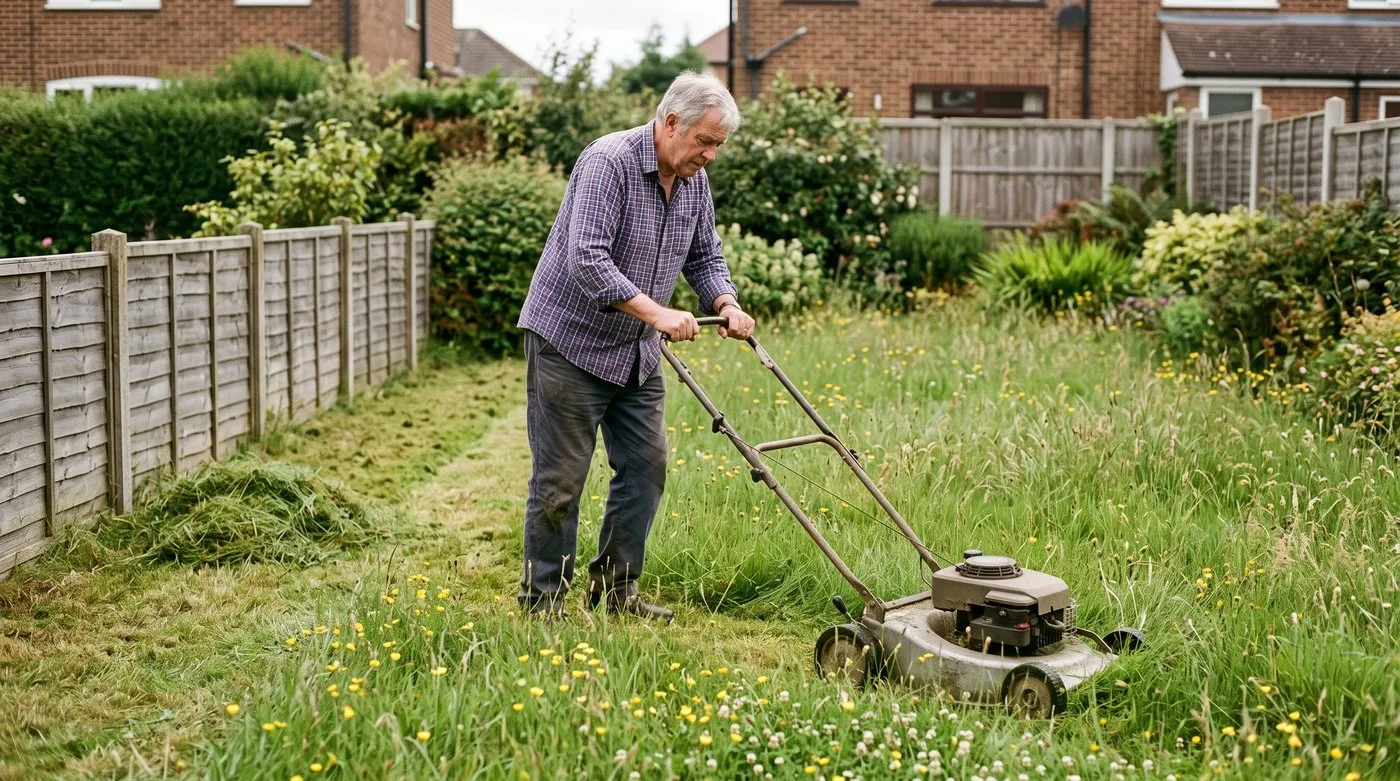
Start on the highest setting and drop a notch a week later. Raking off the cuttings keeps the soil lean, which suits the wildflowers.
Should I do No Mow May or go fully no-mow year-round?
Mowing less all year helps wildlife more than one month off. No Mow May is a brilliant start, and many people find they like the relaxed look.
| Approach | Effort | Wildflowers | Best for |
|---|---|---|---|
| No Mow May, then back to short mowing | Low | A few, short-lived | First-timers, rented homes |
| No Mow May, then summer cuts at 8cm | Medium | Good | Most gardens |
| Mow about once a month at 8cm | Low | Very good | A great all-rounder |
| Long grass all year with mown paths | Low | Lots | Bigger, wildlife-friendly gardens |
| Sown wildflower meadow | High at first | The most | A dedicated patch |
A typical lawn care calendar has you mowing every week from March to October. For a wildlife-friendly lawn, mow about once a month and raise the blades to around 8cm. It’s free, saves you time and uses less fuel.
 Three zones in a bigger garden: a tidy lawn by the house, a monthly-mow middle and long grass for wildlife at the back.
What about lawn alternatives to mowing altogether?
If you’d rather not mow at all, there are lots of lawn alternatives and ground cover plants that work in the UK. A chamomile lawn using the non-flowering ‘Treneague’ needs very little cutting and smells lovely when you walk on it. A white clover lawn stays green in dry spells and feeds bees.
A mini meadow is another option for part of the garden. You sow it with a wildflower mix to suit your soil and cut it once in late summer, with perhaps a tidy-up cut in autumn. It gives you more kinds of flowers than a no-mow lawn, because the seed mix brings in new plants.
Under trees, where grass struggles, try ground cover plants like creeping thyme, bugle (Ajuga reptans) and lesser periwinkle (Vinca minor). They cope with shade better than grass and give bees some flowers.
Common mistakes with No Mow May
Cutting too low when you start mowing again. This is the big one. Dropping straight to a short cut after a month off damages the grass and the wildflowers. Always start on the highest setting.
Leaving the clippings. Long grass clippings are thick and wet, and they smother the flowers underneath. Rake them up within a couple of days or use a mower with a box. Pop them on the compost heap.
Using weedkiller or lawn feed. Lawn weedkillers target exactly the flowers you’re trying to grow. Feed makes grass grow strongly and crowd them out. Keep a no-mow lawn free of both.
Strimming everything on 1 June. That chops the flowers before they’ve set seed. If you must strim, leave it about 10cm tall and let the cuttings lie for a few days before you rake them off.
Want to do even more for wildlife? Our guide on how to build a bug hotel gives solitary bees and other helpful insects somewhere to nest. You can also record the flowers in your lawn with Plantlife’s Every Flower Counts survey, and the Bumblebee Conservation Trust has handy guides to the bees you’ll spot.
Frequently asked questions
What is No Mow May and who started it?
It’s a yearly campaign to stop mowing for the whole of May. The wild plant charity Plantlife started it in 2019 to give bees and other pollinators more food. It has since encouraged lots of people to mow less all year round.
Does not mowing really help wildlife?
Yes, longer grass means more flowers for insects. When you stop mowing, daisies, clover, dandelions and selfheal can bloom. They feed bees, butterflies and hoverflies at a time when spring bulbs are over and summer borders haven’t started.
When should I start mowing again after No Mow May?
Wait until mid-June rather than mowing on 1 June. Those extra weeks let selfheal, bird’s-foot trefoil and red clover set seed. Put the mower on its highest setting for the first cut. Never take off more than a third of the height at once.
Will my lawn recover after not mowing for a month?
Yes, a healthy lawn bounces back within two or three cuts. It looks a bit shaggy for a couple of weeks. If the grass is very long, strim it first, then use a rotary mower on its highest setting. Collect the clippings from the first two cuts.
Can I do No Mow May on a small garden lawn?
Yes, even a 2m by 2m patch helps. Leave one section unmown and keep a mown strip around it so it looks tidy. A mown path through the middle shows it’s on purpose, not neglect.
What wildflowers will appear if I stop mowing?
Daisies, dandelions and white clover usually come first. By late May, look for selfheal, bird’s-foot trefoil, creeping buttercup and germander speedwell. Chalky soils may bring cowslips and lady’s bedstraw. On acid soils, look out for tormentil and heath bedstraw.
Is a no mow lawn the same as a wildflower meadow?
No, they’re quite different. A no-mow lawn uses the grass you have and the wildflower seeds already in the soil. A wildflower meadow is sown with a special seed mix on prepared ground. A no-mow lawn is free and easy, but a meadow gives you more kinds of flowers.
Our team produces practical UK gardening guidance from source research, contributor records and established horticultural practice. Editorial standards are overseen by Matt W.