Key takeaways
- Clay is rich in goodness and holds water, so many plants love it
- October and November are the best months to plant on clay
- Never dig or walk on clay when it's wet and sticky
- Mulch with compost each year instead of digging it in
- Plant at the same depth as the pot, never deeper
- Lavender and other Mediterranean plants need a raised bed with grit on clay
The best plants for clay soil include roses, dogwoods, hydrangeas, daylilies, hardy geraniums, asters and many fruit trees. Clay is rich and holds moisture well. The catch is that it drains slowly, gets squashed when wet and warms up late in spring.
Why clay soil is actually good for plants
Clay gets a bad press, but it’s one of the richest soils you can have. Clay is made of really tiny particles. They hold on to plant food and water much better than sandy soil does.
Rich in goodness
Clay holds on to plant food rather than letting the rain wash it away. Plants on clay rarely go hungry, while plants on sand need regular feeding. Gardening on sand instead? See our guide to the best plants for sandy soil.
Holds on to water
Clay holds lots of water, so plants on clay cope with dry summers much better than on sandy soil. The flip side is soggy ground in winter. The plants in this guide cope with both.
How clay changes through the year
In winter clay soaks up water and swells, and the top layer can stay soggy for weeks. In summer it dries, shrinks and cracks. Those cracks actually help, letting air into the soil and rain down deep in autumn.
Gardener’s tip: Never dig or walk on clay when it sticks to your boots. You’ll squash all the good structure out of it. Wait until it feels like modelling clay, not fudge.
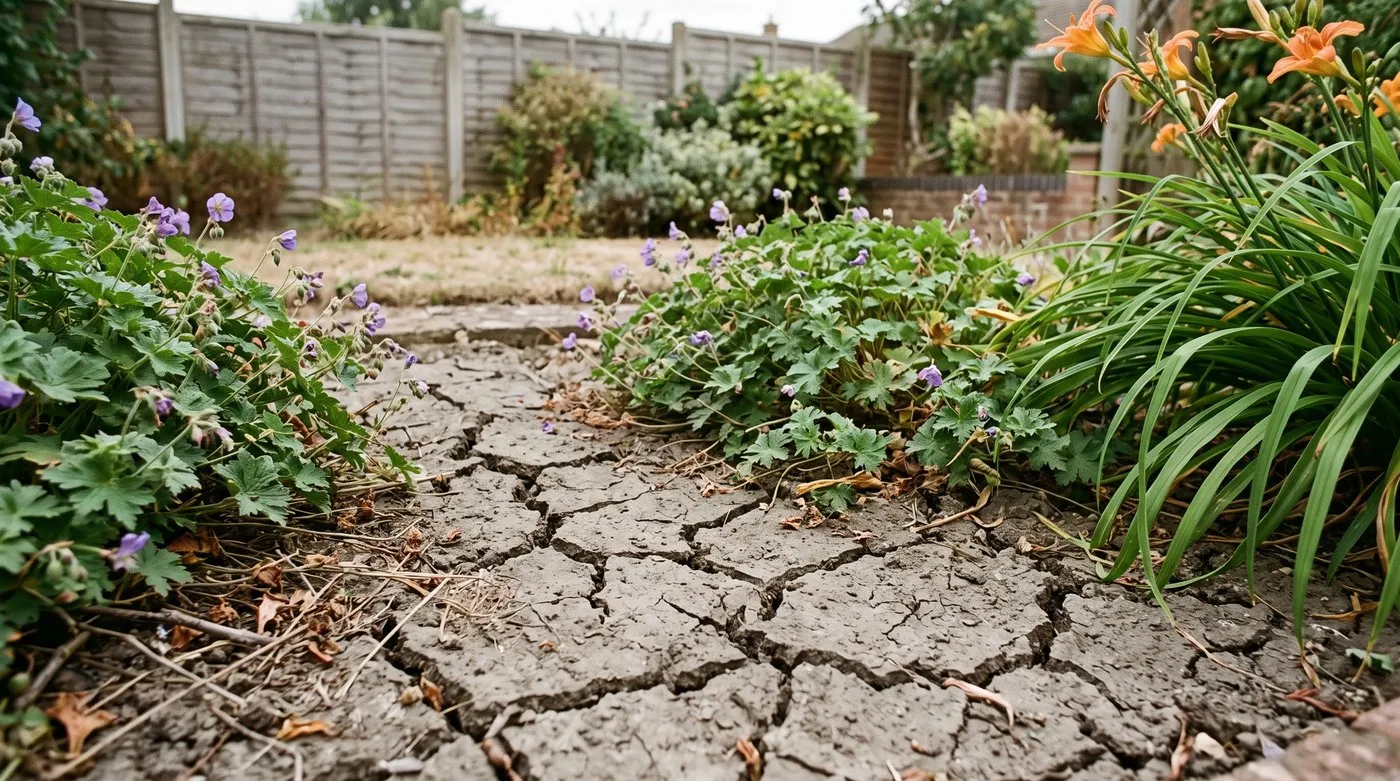
Summer cracks look alarming but let air in and carry autumn rain down deep. Clay-loving plants shrug them off.
How to identify clay soil
Check you really have clay before choosing plants. These three tests take just a few minutes.
The ribbon test
Squeeze a moist handful of soil between your thumb and finger, pushing it out into a flat ribbon. Heavy clay makes a smooth, shiny ribbon longer than 5cm. Clay loam gives a shorter ribbon. Loam or sand crumbles before it gets going.
The jar test
Fill a jar a third full with soil, top it up with water, shake it hard and leave it for a couple of days. The soil settles in layers, with sand at the bottom and clay on top. A thick clay layer means heavy clay.
The drainage test
Dig a hole about 30cm deep and wide. Fill it with water, let it drain, then fill it again. If there’s still water in the hole the next day, you have a drainage problem to sort out before planting, or you should stick to plants that love wet ground.
 Left: raw heavy clay, dense and sticky. Right: clay after a few years of compost mulch, crumbly and full of worm holes.
Best trees for clay soil
Trees give a clay garden its shape, and their roots help open up the soil over time. These six cope well with heavy clay.
Acer campestre (field maple)
Field maple is a brilliant native tree for clay. It grows to 8-12m, copes with heavy soil and dry summers, and is great for wildlife. The autumn colour is a lovely buttery gold.
Malus sylvestris (crab apple)
Crab apples are happy on clay. Their spring blossom is pretty and the fruit feeds birds through winter. ‘John Downie’ is a popular fruiting variety, growing to about 6-8m.
Sorbus aucuparia (rowan)
Rowan copes with exposed, windy gardens and has berries from late summer that blackbirds and thrushes love. ‘Asplenifolia’ has finely cut leaves and suits small gardens.
Betula pendula (silver birch)
Silver birch copes with clay better than its reputation suggests. It grows more slowly on clay than on light soil. Its roots spread wide and shallow, so plant it at least 4m from buildings.
Prunus avium (wild cherry)
Wild cherry is a native of clay woodland. White blossom in April, cherries in July for the birds and gorgeous autumn colour. It likes full sun and grows into a big tree.
Carpinus betulus (hornbeam)
Hornbeam is the go-to hedge plant for clay, and it does better than beech on heavy ground. Clipped as a hedge, it holds its brown leaves all winter, so it screens all year. It isn’t fussy about soil at all.
Best shrubs for clay soil
Shrubs are the backbone of a clay garden. These eight are happy in moist ground as long as they get the right light.
Rosa rugosa
Rosa rugosa is a tough, easy rose that’s very happy on clay. It has scented pink or white flowers through summer, followed by big red hips that birds enjoy. It makes a good informal hedge too.
Cornus sanguinea (dogwood)
Native dogwood copes with wet clay that kills most shrubs. White flowers in June, black berries for birds in autumn and bright red stems in winter. Cut a third of the oldest stems to the ground each March for the best winter colour.
Viburnum opulus (guelder rose)
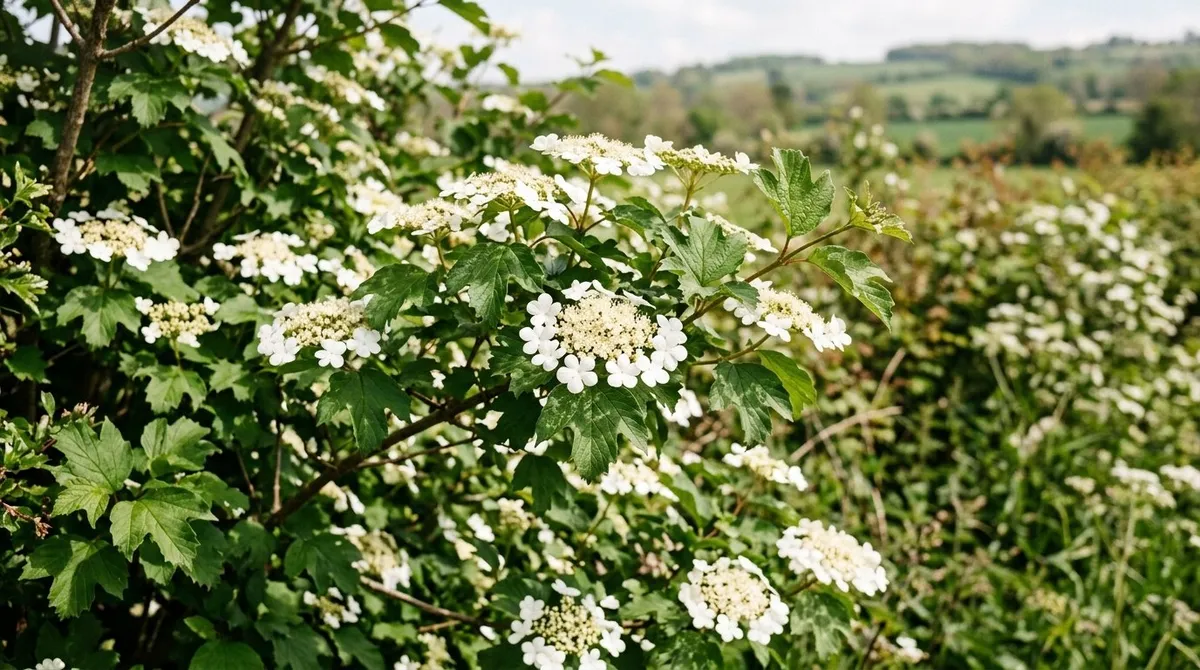
Guelder rose grows wild on Midlands clay. White lacecap flowers in May, glossy red berries in autumn and fiery autumn leaves. It’s happy in sun or shade. One of the best native shrubs for a wildlife garden.
Philadelphus (mock orange)
Mock orange, especially ‘Belle Etoile’ and ‘Virginal’, flowers well on clay. The scent in June and July is wonderful. Prune straight after flowering, cutting flowered stems back to strong new shoots.
Mahonia x media ‘Charity’
Mahonia ‘Charity’ is a bold evergreen that flowers from November to January, when hardly anything else does. The scented yellow flower spikes feed early bumblebees. It copes with heavy shade and heavy clay. Very little trouble.
Ribes sanguineum (flowering currant)
Flowering currant has hanging clusters of pink flowers in March and April, one of the first shrubs to flower each year. Very reliable on clay. ‘King Edward VII’ has deeper crimson flowers.
Forsythia x intermedia
Forsythia is almost impossible to kill on clay. Golden flowers cover the bare branches in March. Prune straight after flowering to keep it compact. ‘Lynwood’ has the biggest flowers.
Symphoricarpos albus (snowberry)
Snowberry spreads on clay, which makes it handy for banks and awkward shady corners. White berries hang on from autumn into winter. It copes with deep shade, wet clay and dry clay. Keep it for the spot where nothing else will grow.
 A mixed border on heavy Midlands clay in July, with Rosa rugosa, hardy geraniums and astilbe in flower.
Best perennials for clay soil
Perennials bring colour and feed the bees. These eight flower reliably on heavy clay year after year.
Astilbe
Astilbe has feathery plumes in white, pink, red or purple through summer. It loves moist soil, so clay suits it well as long as the spot isn’t waterlogged. ‘Fanal’ and ‘Bridal Veil’ are easy to find.
Geranium (hardy cranesbill)
Hardy geraniums are the workhorses of a clay garden. Geranium x magnificum, ‘Rozanne’ and Geranium macrorrhizum all cope with heavy clay. ‘Rozanne’ flowers from June to October. Geranium macrorrhizum makes evergreen ground cover in shade under trees. No staking, no fuss.
Hemerocallis (daylily)
Daylilies have trumpet flowers from June to September. Each flower lasts just a day, but a happy plant keeps producing more for weeks. They cope with clay, sun and part shade. ‘Stella de Oro’ is a short golden one that keeps flowering through summer.
Persicaria amplexicaulis
Persicaria has bottlebrush flower spikes from July into autumn, a really long season. ‘Firetail’ (red) and ‘Alba’ (white) are excellent on clay. They spread steadily without taking over. Cut them to the ground in February.
Leucanthemum x superbum (shasta daisy)
Shasta daisies have classic big white daisies from June to August. They’re fine on clay but need full sun. Divide every few years in spring to keep them flowering well. ‘Phyllis Smith’ has twisty, spidery petals.
Alchemilla mollis (lady’s mantle)
Lady’s mantle has frothy lime-green flowers in summer and soft leaves that hold raindrops like jewels. It seeds itself around on clay, filling gaps. Cut it back hard after flowering for fresh leaves.
Helenium
Heleniums are brilliant late-summer flowers for clay. ‘Moerheim Beauty’ (bronze-red) and ‘Sahin’s Early Flowerer’ (orange-red) flower from July to October. They often need staking on clay, as the rich soil makes tall, heavy stems.
Pulmonaria (lungwort)
Pulmonaria is one of the first perennials to flower, from February to April. Pink buds open to blue flowers on the same stem. The spotted leaves look good all summer. Great ground cover for shady clay under trees.
Best climbers for clay soil
Climbers make the most of walls and fences in a clay garden.
Clematis
Most clematis love clay, because their roots like it cool and moist. The ones you cut hard back in February, like ‘Etoile Violette’, ‘Jackmanii’ and Clematis tangutica, are the toughest on heavy clay. Plant the crown 5-8cm deeper than it was in the pot, which helps it bounce back from clematis wilt.
Lonicera periclymenum (honeysuckle)
Native honeysuckle grows wild along clay woodland edges, and its summer evening scent is wonderful. Flowers from June to September, then red berries. It copes with shade and heavy clay. ‘Graham Thomas’ and ‘Belgica’ are among the best flowering varieties for gardens.
Hydrangea petiolaris (climbing hydrangea)
Climbing hydrangea is the best climber for a shady clay wall, even a north-facing one. White lacecap flowers in June and peeling bark in winter. It clings on by itself. It’s slow for the first couple of years, then romps away.
Best bulbs for clay soil
Bulbs bring the first colour of the year to clay gardens. These three are reliable in heavy clay.
Narcissus (daffodils)
Daffodils are the top bulb for clay. Plant them at three times the depth of the bulb, usually 10-15cm, from September to November. ‘February Gold’ (early), ‘Thalia’ (white) and ‘Actaea’ (pheasant’s eye) all spread nicely in clay lawns and borders.
Galanthus (snowdrops)
Snowdrops flower from January to March and slowly spread in clay. Plant them “in the green” (while still in leaf) in February or March, 8-10cm deep. Galanthus nivalis is the common snowdrop. Galanthus elwesii has bigger flowers. They like moist soil but not a spot that sits under water.
Camassia
Camassia is a bulb every clay gardener should know. Starry blue or white flowers on tall spikes in May. It comes from wet meadows in North America, so it really likes heavy, damp soil. Camassia leichtlinii ‘Caerulea’ is a lovely blue. Plant 10cm deep in autumn.
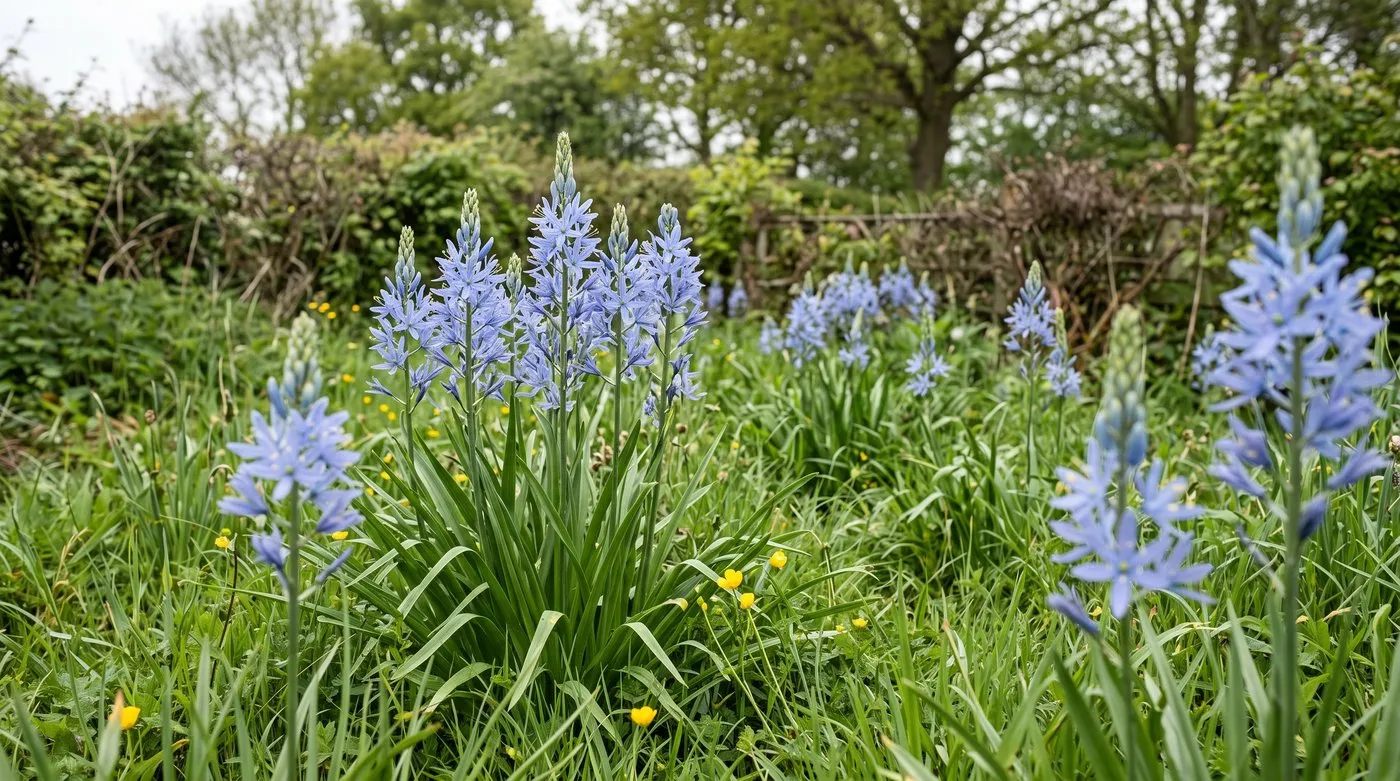
Camassia comes from wet meadows, so heavy, damp clay suits it perfectly. Plant the bulbs 10cm deep in autumn.
Clay soil plants at a glance
A quick guide to 15 great plants for clay.
| Plant | Type | Size | Flowers | Sun or shade |
|---|---|---|---|---|
| Rosa rugosa | Shrub | Medium | June to October | Sun |
| Field maple | Tree | Medium tree | April | Sun or part shade |
| Astilbe | Perennial | Low to medium | June to August | Part shade |
| Native dogwood | Shrub | Medium | June | Sun or shade |
| Daffodils | Bulb | Low | February to April | Sun or part shade |
| Geranium ‘Rozanne’ | Perennial | Low | June to October | Sun or part shade |
| Hornbeam | Tree or hedge | Large tree | April | Sun or shade |
| Guelder rose | Shrub | Large | May | Sun or shade |
| Clematis viticella | Climber | Medium | July to September | Sun, roots shaded |
| Daylily | Perennial | Medium | June to September | Sun or part shade |
| Persicaria | Perennial | Medium to tall | July to autumn | Sun or part shade |
| Camassia | Bulb | Medium | May | Sun or part shade |
| Mahonia ‘Charity’ | Shrub | Large | November to January | Shade or part shade |
| Lady’s mantle | Perennial | Low | June to August | Sun or shade |
| Climbing hydrangea | Climber | Very tall | June | Shade or part shade |
Ways to improve clay soil
Not every clay garden needs improving. But if water sits around for ages, or you want to grow plants that aren’t on this list, here are your options.
| Method | How quickly it helps | Cost | Good to know |
|---|---|---|---|
| Mulch with compost each year (5-10cm) | Slowly, over a few years | Low, free if you compost | The best long-term fix |
| Green manure | One or two seasons | Very low | Sow it on bare ground over winter |
| Gypsum | A few months | Medium | Only helps on unusual salty clays |
| Raised beds | Straight away | High | Great for plants that need drainage |
| Digging | One season | Free | Hard work, and damages the soil if done wet |
| Land drains | Straight away | Very high | For serious waterlogging, needs a professional |
Why mulching works: compost on top protects the soil, feeds worms and slowly makes clay easier to work, with no digging. Our guide to improving clay soil explains which materials to use and when.
Month-by-month planting calendar for clay soil
Timing really matters on clay. Get it wrong and you’re planting into concrete or mud.
| Month | What to plant | What the soil is like | Jobs to do |
|---|---|---|---|
| January | Nothing | Soggy, easily squashed | Plan the year, order bare-root plants |
| February | Snowdrops “in the green” | Still wet | Cut back dogwood stems and old perennials |
| March | Bare-root hedging (last chance) | Drying slowly, still cold | Spread mulch |
| April | Potted perennials | Workable, warming up | Plant astilbe, geraniums, lady’s mantle |
| May | Potted shrubs, bedding | Warm, draining well | Plant roses, viburnum, mock orange |
| June | Potted climbers | May be drying and cracking | Plant clematis deep (5-8cm below pot level) |
| July | Nothing new | Hard, cracked, dry | Water new plants deeply once a week |
| August | Bulbs from late in the month | Very dry and hard | Plant daffodils and camassia |
| September | Bulbs, divide perennials | Getting moist again | Plant daffodils, divide geraniums and astilbe |
| October | Best month for trees, shrubs and hedges | Moist and warm | Plant field maple, hornbeam, dogwood, crab apple |
| November | Trees, shrubs, bare-root roses | Moist, cooling | Last good chance for woody plants |
| December | Nothing | Getting soggy | Mulch around established plants |
Why plants fail in clay soil
Smeared planting holes
Push a spade into wet clay and twist, and you polish the sides of the hole smooth. Water can’t get out, so the hole fills up like a bath and the roots rot.
How to avoid it: dig square holes rather than round ones, and rough up the sides with a fork before planting. Break up the soil you dug out and use it to backfill, so roots grow happily out into the clay around them.
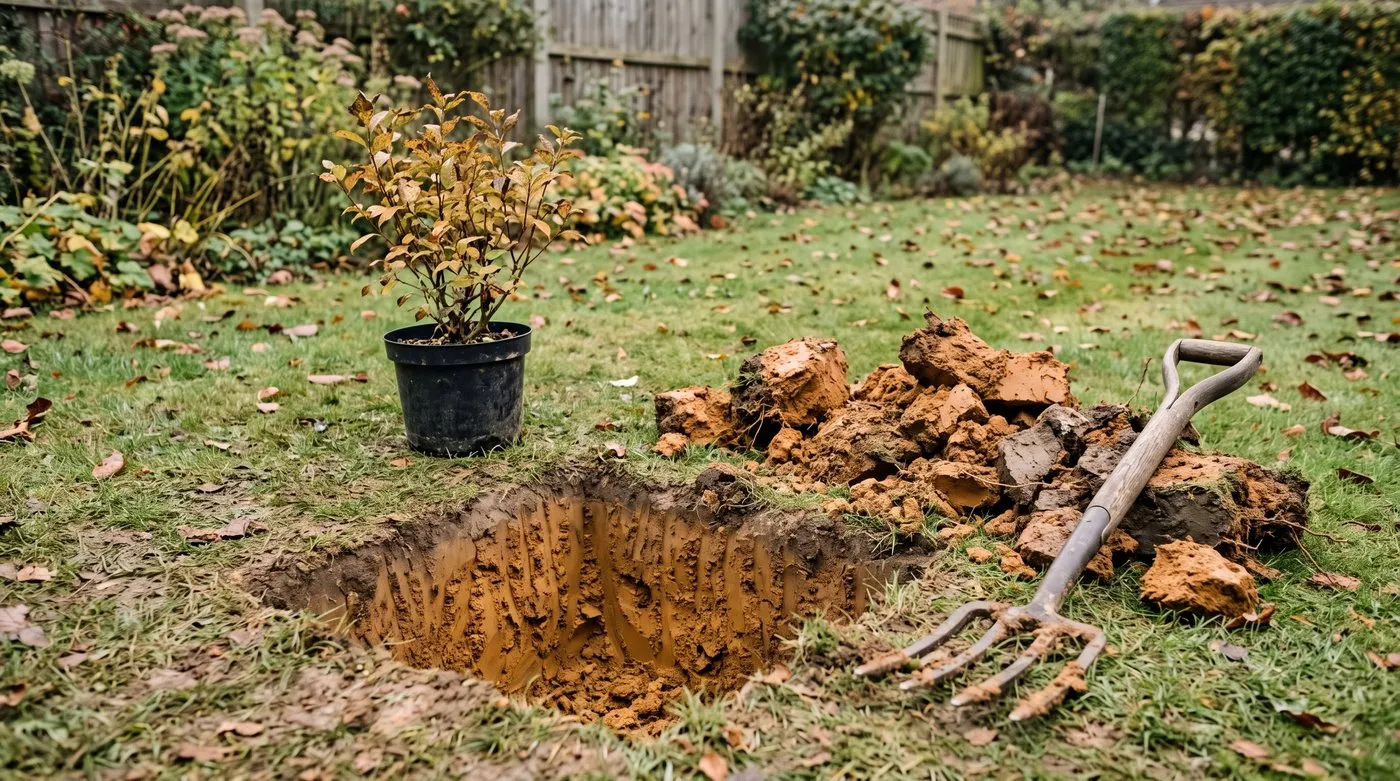
A square hole with roughed-up sides stops water pooling like a bath. Roots then grow out into the clay instead of circling.
Planting too deep
On clay, planting even a little too deep can kill a plant. Wet soil sits against the stem and it rots.
How to avoid it: set the top of the rootball level with the soil around it. On trees, you should see the point where the trunk flares out at the base. Clematis is the exception, as it likes going a little deeper.
Choosing the wrong plants
Lavender, rosemary, cistus and other Mediterranean and drought-tolerant plants nearly always die on heavy clay. They’re made for fast-draining soil and can’t cope with wet winters.
How to avoid it: match the plant to your soil, not the other way round. If you really want lavender, build a raised bed with plenty of grit and grow it there.
 A mature border on heavy clay in October, with persicaria, helenium and dogwood still looking good.
Common mistakes when planting in clay soil
These five slip-ups cause most clay gardening woes. All are easy to avoid.
Adding sand to clay
A bit of sand mixed into clay makes something closer to concrete. You’d need huge amounts to help drainage. Use compost or other organic matter instead. The RHS guide to clay soil explains more.
Walking on wet clay
Every step on soggy clay squashes the air out of it and suffocates roots. If you need to get onto a bed in winter, lay down a plank to spread your weight.
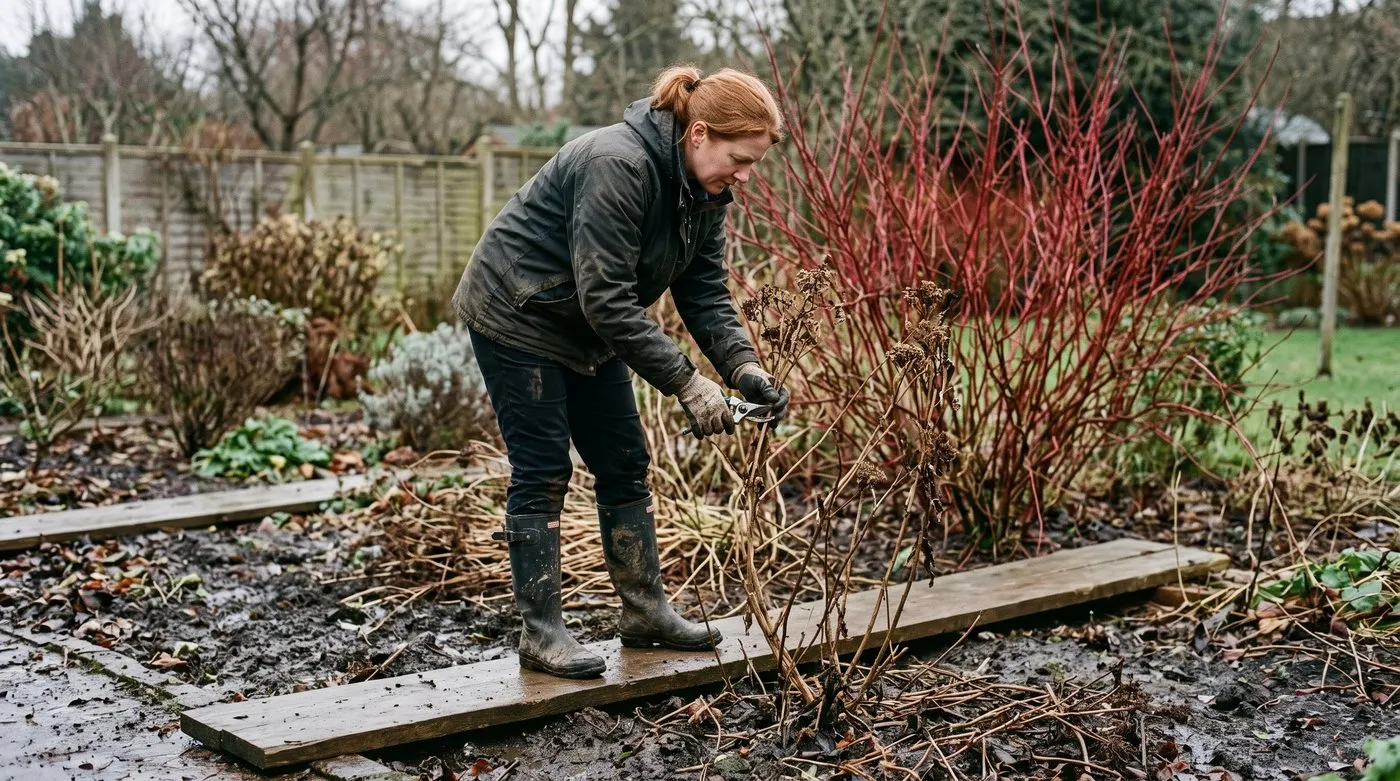
A plank spreads your weight so you don’t squash the air out of wet clay. Keep off the soil altogether when it sticks to your boots.
Digging in winter
Digging wet clay does even more damage than walking on it. It smears the soil into a hard layer that blocks drainage for years. Mulch the surface instead and let worms do the work. If you must dig, do it in early autumn when the soil is moist but not wet.
Overwatering new plants
New plants on clay need less water than you’d think, because clay holds moisture for days. In their first summer, a deep weekly soak is plenty: about 10 litres for a tree and 5 litres for a shrub. Watering every day keeps the surface wet and brings slugs and rot.
Skipping the drainage test
If a test hole still holds water after a day, do something about it. Raise the planting level, put in drainage, or stick to plants that love wet ground, like dogwood, guelder rose and willow.
For ground that stays wet all year, see the best plants for wet, boggy soil.
Frequently asked questions
Can you grow roses in clay soil?
Yes, roses love clay soil. It holds the water and goodness they need. Rosa rugosa, hybrid teas and English shrub roses all do well. Plant in autumn and mulch with 5cm of composted bark.
What is the best tree for heavy clay soil?
Field maple (Acer campestre) is a great all-round tree for heavy clay. It’s a tough native that grows to 8-12m, turns gold in autumn and is great for wildlife. Crab apple, rowan and silver birch are good choices too.
Should I improve clay soil before planting?
Not always, as many plants are happy in clay as it is. Spreading compost on top is better than digging it in. When you plant, break up the soil you dug out and use it to backfill. Then mulch with 5-10cm of compost or bark.
Why do plants die in clay soil?
Usually because their roots sit in water. Clay drains slowly, especially in winter. Planting too deep, smearing the sides of the planting hole and choosing plants that like dry soil are the other common mistakes.
When is the best time to plant in clay soil?
October to November is ideal. The soil is still warm and moist but not soggy, so roots settle in before winter. Avoid January to March when clay is waterlogged and easily squashed. April to May is the next best time.
Our team produces practical UK gardening guidance from source research, contributor records and established horticultural practice. Editorial standards are overseen by Matt W.