
Key takeaways
- Spring-flowering shrubs like forsythia and ceanothus: prune straight after flowering
- Late-summer shrubs like buddleja and spiraea: prune hard in early spring
- Lavender needs really free-draining soil, so add grit on clay
- Mophead hydrangeas turn blue in acid soil and pink in chalky soil
- Most shrubs need nothing more than a yearly mulch of compost
- Potentilla flowers from May to October with almost no work at all
Flowering shrubs are the backbone of a British garden. They give shape through winter, colour from early spring to late autumn and homes for bees and birds. And unlike perennials, they don’t vanish each winter.
The secret to a border that flowers for months is mixing shrubs that bloom at different times. Spring shrubs cover February to May, summer shrubs take over from June to September, and long-flowering ones fill the gaps. Here are eleven easy, reliable favourites, grouped by season, with soil and pruning tips for each. If you already grow hydrangeas or lavender, these will stretch your season at both ends.
Spring-flowering shrubs
Spring shrubs flower on stems that grew last year, so prune them straight after flowering. That gives the new growth all summer to make next year’s flower buds. Prune them in winter and you’ll cut off the flowers.
Forsythia
Forsythia covers itself in bright yellow flowers in March and April, often before the leaves appear. It’s one of the first signs that spring is here. It grows to about 2.5-3m and copes with any reasonable soil, including clay, in sun or light shade. ‘Lynwood Variety’ has the biggest, brightest flowers. After flowering each year, cut about one in three of the oldest stems down to the ground. That stops it turning into a tangled thicket.

Ceanothus
Ceanothus, or California lilac, smothers itself in vivid blue flowers in May and June. Evergreen kinds like ‘Concha’ and ‘Puget Blue’ stay green all year. It looks stunning against a sunny south-facing wall or fence. It needs full sun and soil that drains well, and it sulks on heavy, wet ground. The RHS ceanothus growing guide helps you pick the right one. Trim straight after flowering, cutting flowered shoots back by a third to a half. Never cut into old bare wood, as it rarely grows back.
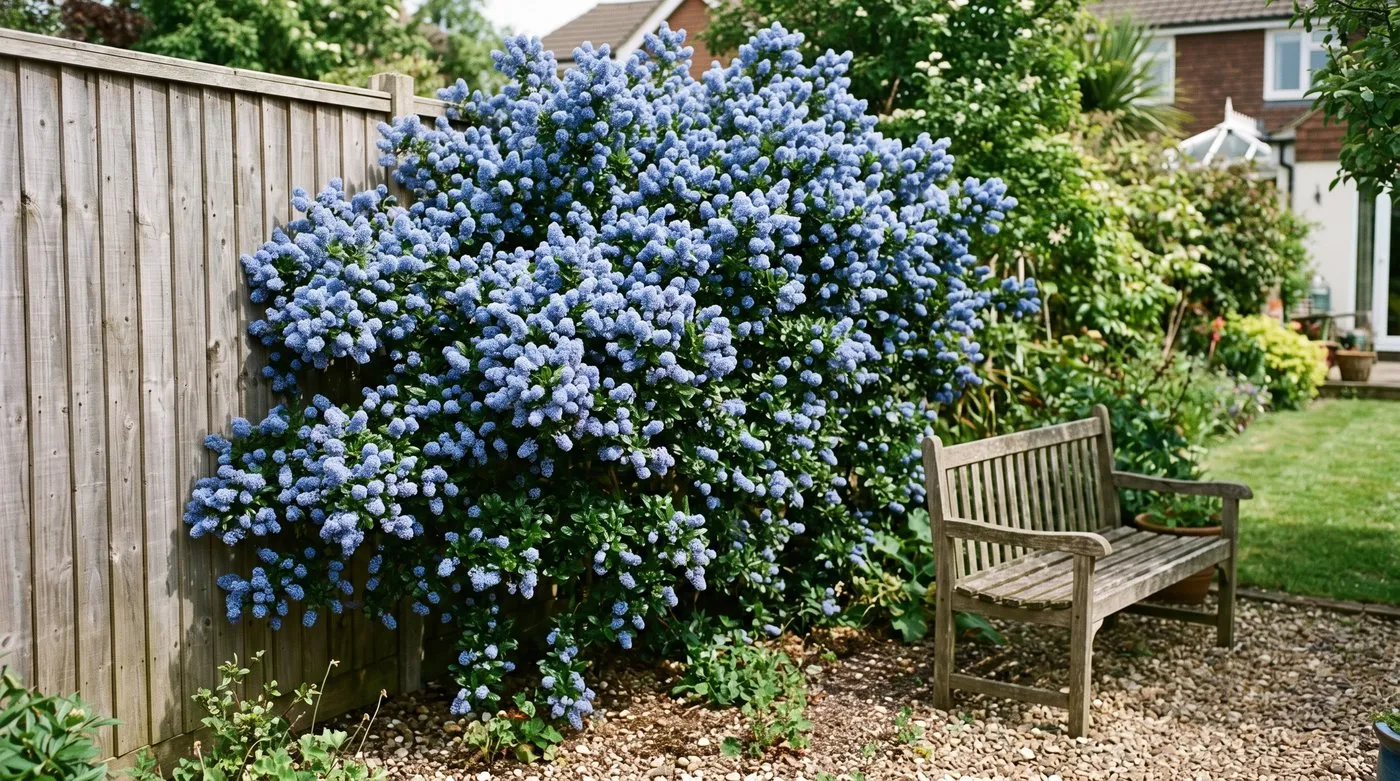
Ceanothus loves a hot fence and soil that drains well. Trim it straight after flowering, but never cut back into old bare wood.
Deutzia
Deutzia is an underrated gem. ‘Strawberry Fields’ has arching sprays of pink and white starry flowers in June. It grows to about 1.5-2m and suits the middle of a border. It’s happy in most soils, including chalk, in sun or part shade. After flowering, cut one in three of the oldest stems to the ground. It’s easy-going and rarely bothered by pests.
Summer-flowering shrubs
Most late-summer shrubs, like buddleja, flower on this year’s growth, so prune them hard in early spring. Early-summer shrubs like weigela flower on last year’s stems, so prune them after flowering. Mophead hydrangeas just need a light tidy in spring.
Buddleja
Buddleja, the butterfly bush, has long cones of flowers from July to September in purple, white, pink or deep blue. Red admirals, painted ladies and peacocks flock to it. The RHS buddleja guide suggests cutting it back hard to a low framework between late March and mid-April. That keeps it to about 1.8-2.4m. Skip it and the plant gets leggy, with flowers only at the very top. ‘Black Knight’ has the darkest purple flowers and ‘White Profusion’ is a lovely white. It grows in most well-drained soils, even poor chalk, but hates cold, wet ground. Pair it with the bee-friendly plants in our guide for a garden full of wildlife.
Is buddleja invasive in the UK?
It seeds itself freely, but it’s easy to keep in check in a garden. You’ll often see it growing wild on railway land and old walls. Snip off flower spikes before they turn brown and set seed. Deadheading also tidies the plant and can bring a smaller second flush. Pull up seedlings while they’re small, especially any in walls or gutters, where roots can damage brickwork.

Hydrangea
The mophead hydrangea is a British garden classic. Big round flower heads appear from July to September in blue, pink, purple or white. On acid soil they turn blue, on neutral soil mauve, and on chalky soil pink. ‘Endless Summer’ flowers on both old and new stems, so it keeps going from June to October. Hydrangeas like light shade and soil that stays moist. In full sun on dry ground they wilt every afternoon. Leave the old flower heads on over winter to protect the buds. In mid-spring, cut them back to the first or second pair of healthy buds below the old flower. Cut lower and you’ll lose this year’s flowers. Our hydrangea growing guide covers colour, feeding and more.

Weigela
Weigela has clusters of trumpet flowers in pink, red or white in May and June, and some flower again in September. ‘Bristol Ruby’ is a deep crimson, and ‘Wine and Roses’ has dark burgundy leaves with rose-pink flowers. It grows to about 1.5-2m and copes with most soils, including clay, in sun or part shade. After the main flush, cut one in three of the oldest branches to the ground. It’s tough, reliable and perfect for a cottage garden border.
Lavender
English lavender flowers from June to August, with spikes of purple, blue, pink or white above silvery leaves. Bees adore it. ‘Hidcote’ has deep purple flowers and ‘Munstead’ is a little more compact. Lavender needs full sun and really free-draining soil. It loves chalk, gravel and sand, but rots in wet clay. On heavier soil, mix in plenty of grit or plant it in a raised bed. Trim off the old flower stalks in late August and shape it lightly in April. Never cut into old bare wood. Our lavender guide has more. It’s also one of the best drought-tolerant plants and a top pick in our guide to plants for sandy soil.
Long-season flowering shrubs
Potentilla, spiraea, abelia and philadelphus fill the gaps between the spring and summer stars. They’re especially good in small gardens, where every plant needs to earn its place.
Potentilla
Potentilla is one of the longest-flowering shrubs you can grow, blooming from May to October. Little buttercup-like flowers in yellow, white, orange or pink cover a neat, rounded bush about 80cm-1m tall. ‘Goldfinger’ is a bright yellow and ‘Abbotswood’ a lovely white. It copes with poor, dry soil and windy spots, and pests leave it alone. Give it a light trim in March. It’s the shrub for months of colour with no effort.
Spiraea
Spiraea japonica has flat heads of pink or crimson flowers from June to August above neat, colourful leaves. ‘Goldflame’ has orange-red new leaves that turn green, and ‘Anthony Waterer’ has deeper crimson flowers. It likes full sun and any well-drained soil. Cut all the stems back to about 15-20cm each March for the best leaf colour and most flowers. It works as a low hedge, a border shrub or ground cover.
Abelia
Abelia flowers from July to October, with tubular white-pink flowers that smell sweetly of honey. Its leaves turn bronze-purple in autumn and mostly stay on in mild winters. It grows to about 1.5-2m and likes a sheltered, sunny spot. In cold northern gardens, give it a warm south-facing wall. ‘Kaleidoscope’ has gold and green leaves. Prune lightly in April, removing any dead or frost-damaged stems.
Philadelphus
Philadelphus, or mock orange, fills the garden with an orange-blossom scent in June and July. Its arching branches are covered in white cup-shaped flowers. ‘Belle Etoile’ has a purple blotch in each flower, and ‘Aureus’ has golden leaves that look good even when it’s not in flower. It grows in any soil, including chalk and clay, and copes with some shade. Straight after flowering, cut one in three of the oldest stems to the ground, or it soon becomes a thicket that won’t flower.
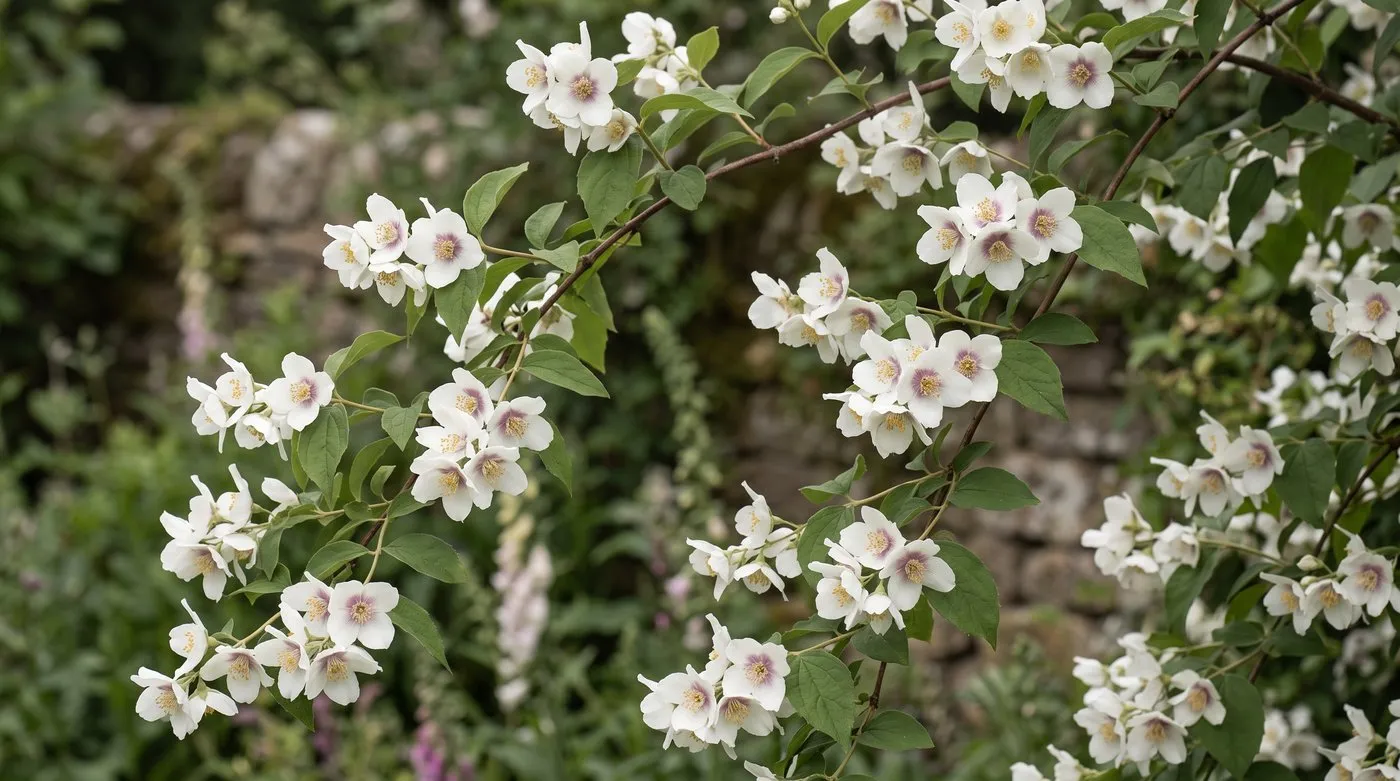
‘Belle Etoile’ has a purple blush in every flower and an orange-blossom scent. Cut out a third of the oldest stems after flowering to keep it blooming.
Which flowering shrubs suit small gardens?
Pick shrubs that stay under about 1.5m without hard cutting. Lavender ‘Munstead’, potentilla and Spiraea japonica all stay compact. Deutzia ‘Strawberry Fields’ fits nicely in the middle of a small border. Dwarf buddlejas, such as the Buzz Series, stay small and still feed the butterflies. In a really tiny space, grow two or three compact shrubs in big pots, so you can move them to centre stage as they flower.
Which shrubs flower in winter?
Mahonia, sweet box, witch hazel, Viburnum x bodnantense and winter honeysuckle all flower in winter. They fill the November to February gap. Many are beautifully scented, so plant them by a path or door where you’ll catch the scent on cold days. Most cope with some shade. See our guide to winter-flowering shrubs for varieties and planting tips.
Flowering shrub comparison table
| Shrub | Flowers | Height | When to prune | Soil |
|---|---|---|---|---|
| Forsythia | March to April, yellow | 2.5-3m | After flowering | Any, even clay |
| Ceanothus | May to June, blue | 2-3m | Lightly after flowering | Well-drained, sunny |
| Deutzia | June, pink and white | 1.5-2m | After flowering | Any, even chalk |
| Buddleja | July to September, purple or white | 1.8-2.4m if pruned | Hard, late March to April | Well-drained, even poor |
| Hydrangea | July to September, blue or pink | 1.5-2m | Deadhead in mid-spring | Moist, acid to neutral |
| Weigela | May to June, pink or red | 1.5-2m | After flowering | Any, even clay |
| Lavender | June to August, purple | 45-60cm | Trim in August, shape in April | Very well-drained |
| Potentilla | May to October, yellow or white | 80cm-1m | Light trim in March | Any, even poor |
| Spiraea | June to August, pink | 80cm-1.2m | Hard in March | Any well-drained |
| Abelia | July to October, white-pink | 1.5-2m | Light prune in April | Sheltered, well-drained |
| Philadelphus | June to July, white | 2-2.5m | After flowering | Any, even clay |
Gardener’s tip: Put spring-flowering shrubs at the back and summer ones at the front. The spring shrubs turn into a green backdrop once they’ve finished, and the shorter summer shrubs in front keep the show going.
How to plant a flowering shrub
Autumn, from September to November, is the best time to plant shrubs in pots. The soil is still warm, so roots get growing, and autumn rain does the watering for you. Spring planting works too, but you’ll need to water every week through the first summer.
Dig a hole twice as wide as the rootball and just as deep. Stand the shrub so the top of the rootball is level with the soil around it. Fill in, firm gently with your foot and water with a full 10-litre can. Spread a 5-8cm mulch of garden compost around the base, keeping it off the stems.
On heavy clay, plant a little higher, so the rootball sits slightly above the ground and water drains away from it. Mix some coarse grit into the bottom of the hole too.
Most shrubs don’t need feeding at planting time. Give a general feed the following spring, then let the yearly compost mulch do the rest.
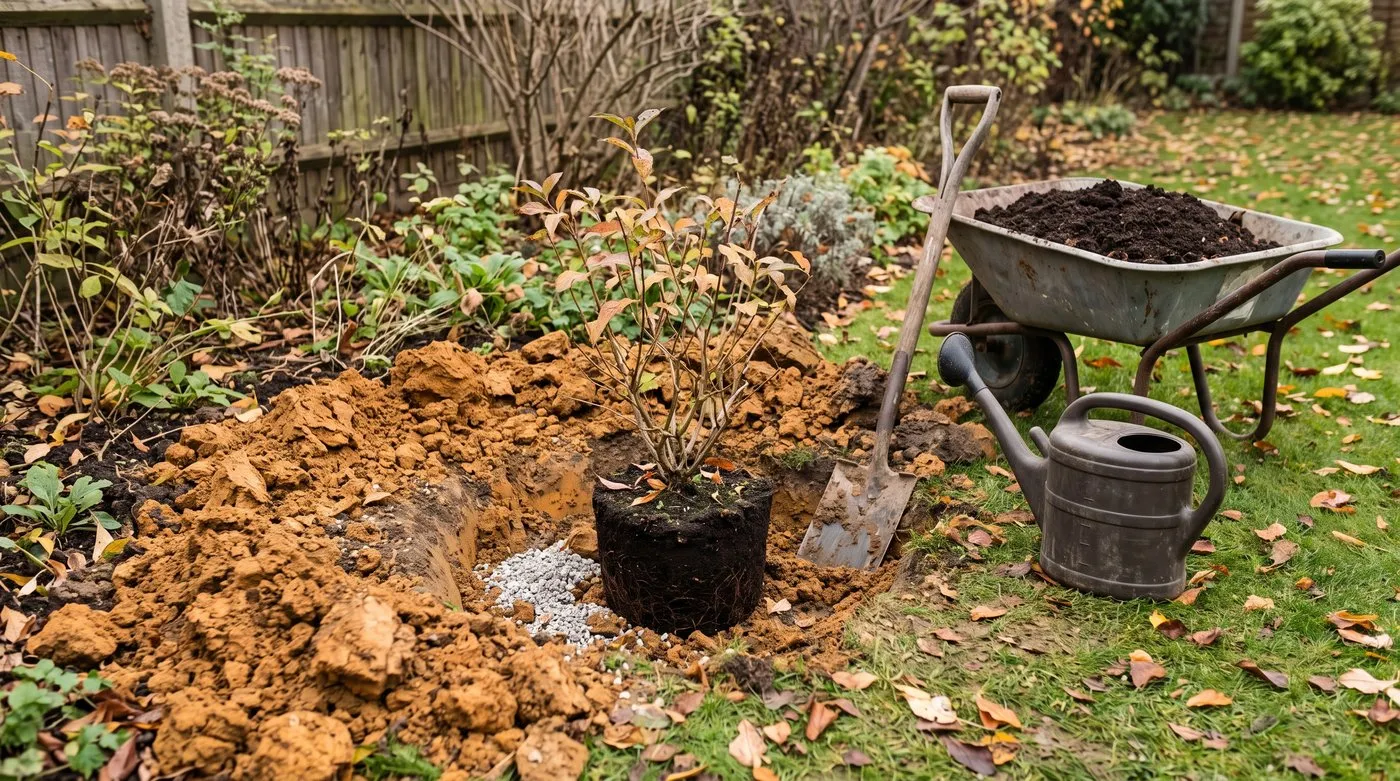
On clay, sit the rootball a little above the soil so water drains away from it. A full can of water and a compost mulch finish the job.
Pruning groups explained
Prune by when the shrub flowers, so you don’t cut off next year’s blooms. These three simple groups are our own shorthand, not the RHS’s numbered pruning groups.
Group 1: prune after flowering. For shrubs that flower before midsummer, on last year’s stems. Prune within a few weeks of the flowers fading. Cut one in three of the oldest stems to the ground for fresh new growth. This covers forsythia, ceanothus, deutzia, weigela and philadelphus.
Group 2: prune in late winter. For shrubs that flower from midsummer on this year’s stems. Prune in early spring, cutting back to a low framework or down to 15-60cm, depending on the shrub. The new spring growth carries the flowers. This covers buddleja, Spiraea japonica and Hydrangea paniculata. Potentilla just needs a light trim.
Group 3: light pruning only. Mophead hydrangeas, abelia and lavender. Take off old flower heads and any frost damage in spring, and shape lightly. Don’t cut hard into old wood unless you’re rescuing an old plant. Our guide to pruning shrubs shows each method step by step.
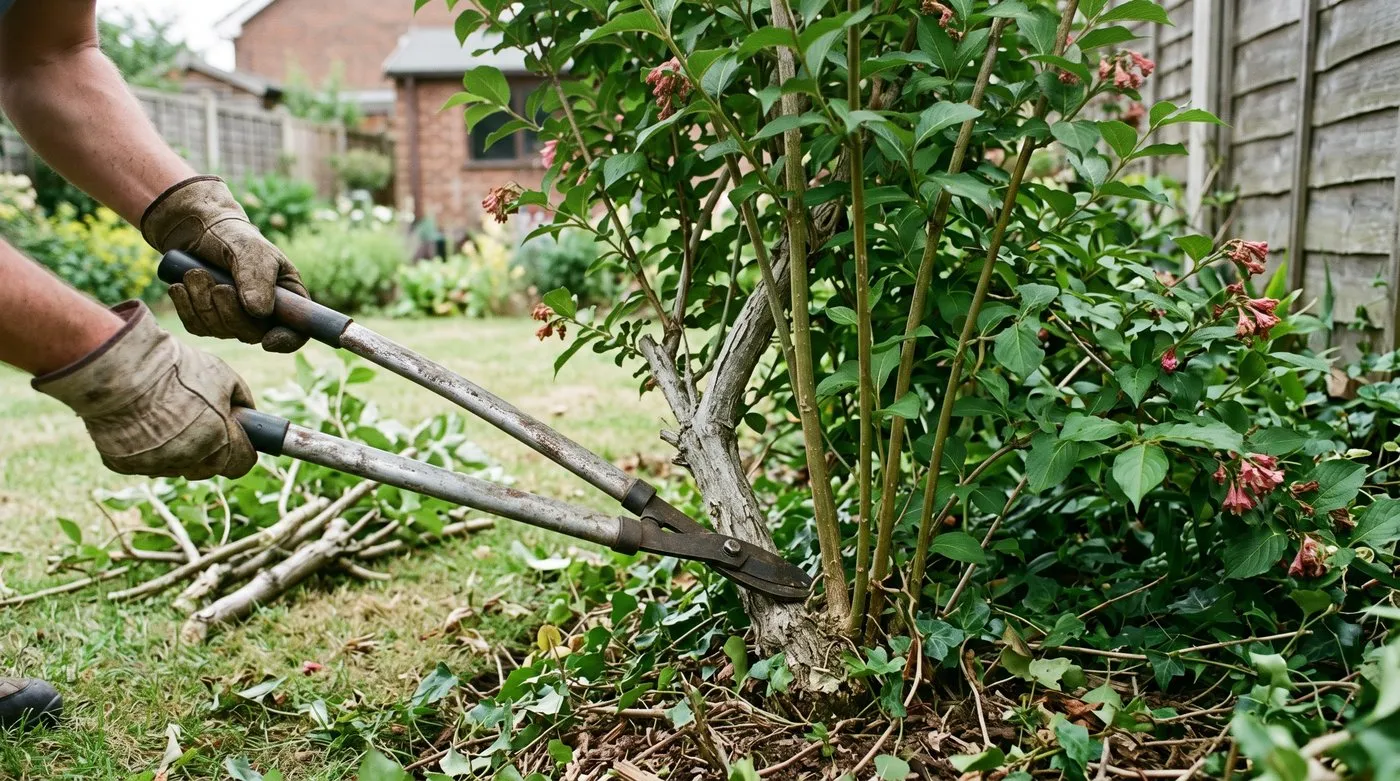
For shrubs that flower before midsummer, take one in three of the oldest stems to the ground after flowering. Young stems then carry next year’s blooms.
Designing a shrub border for year-round colour
Plan it so something flowers every month from February to October. Put tall shrubs like buddleja and philadelphus at the back, medium ones like weigela and hydrangea in the middle, and compact lavender, potentilla and spiraea at the front. For late summer colour, add a hardy hibiscus.
For a 4m border along a fence, try one philadelphus ‘Belle Etoile’ at the back, a weigela ‘Bristol Ruby’ and a hydrangea ‘Endless Summer’ in the middle, and three lavender ‘Hidcote’ at the front with a potentilla ‘Goldfinger’ between them. You’ll get crimson flowers in May, scented white flowers in June, mopheads from July, purple spikes all summer and yellow from May to October.
Tuck spring bulbs and hardy geraniums underneath for colour at ground level. The shrubs give the permanent shape, and our cottage garden planting plan has more ideas for plants to go with them. If you need height quickly, see our guide to fast-growing shrubs.
Common problems with flowering shrubs
Shrub not flowering
Pruning at the wrong time is the usual culprit. Cut a spring-flowering shrub in winter and you remove all its flower buds. Too much shade is the next most likely reason. Lawn feed washing into the border can also give you leaves instead of flowers. A potash-rich feed like tomato feed helps the buds along.
Yellow leaves on hydrangeas
On chalky soil, this usually means the plant can’t get enough iron. Give it sequestered iron in spring and mulch with ericaceous compost. On very chalky soil, grow hydrangeas in big pots of ericaceous compost instead.
Lavender dying in winter
Lavender rarely dies of cold in the UK; wet soil is what kills it. Soggy roots in winter rot, and the plant browns from the base. Mix in plenty of grit before planting. On heavy clay, grow it in a raised bed or gravel garden where water drains away.
Buddleja becoming leggy
Unpruned buddleja soon gets tall and bare, with flowers only at the top. Cut it back hard every spring, between late March and mid-April. You’ll get a bushy plant covered in flowers at a height you can actually enjoy.
Now you’ve chosen your flowering shrubs, read our guide on best climbing plants for UK gardens to add a layer of colour and wildlife up the fence behind your border.
Frequently asked questions
What is the best flowering shrub for shade in the UK?
Mophead hydrangea is the best pick for shade. It loves dappled shade and moist soil, and flowers from July to September without direct sun. Mahonia and skimmia are good in shade too. Avoid lavender and ceanothus there, as both need full sun.
When should I prune flowering shrubs?
It depends on when they flower. If a shrub flowers before midsummer, prune it straight after flowering. If it flowers after midsummer, prune it in late February or March. Get this wrong and you’ll cut off next year’s flower buds.
Which flowering shrubs attract the most bees?
Lavender is one of the best shrubs for bees. Buddleja is just as good and pulls in butterflies too. Ceanothus hums with bees in May. Grow all three alongside other bee-friendly plants for food from spring to autumn.
Can I grow flowering shrubs in clay soil?
Yes, lots of them are happy in clay. Philadelphus, weigela, forsythia and hydrangea all grow well in heavy soil. Mix grit and compost into the planting hole to help drainage. Avoid lavender and ceanothus, which rot in wet winter soil.
How far apart should I plant flowering shrubs?
Plant them half their final spread apart. So a shrub that grows 2m wide goes 1m from its neighbour. Closer planting fills in faster but means more pruning later. Check the label for the final size.
What are the best low-maintenance flowering shrubs?
Potentilla is about as easy as it gets. It copes with poor soil and dry spells and flowers from May to October with no deadheading. Spiraea, abelia and hardy fuchsia are nearly as easy. All four just need a trim in spring. For more ideas, see our list of other low-maintenance plants.
Do flowering shrubs need feeding?
Settled shrubs rarely need feeding. A spring mulch of garden compost is usually plenty. New shrubs like a handful of bonemeal in the planting hole. Avoid high-nitrogen feeds, which give you leaves instead of flowers.
Which flowering shrubs are evergreen?
Ceanothus is the star evergreen flowering shrub. It keeps its dark leaves all year and covers itself in blue flowers in May. Lavender keeps its grey-green leaves through winter, and abelia holds most of its leaves in mild winters. Buddleja, philadelphus and forsythia all lose theirs.
Our team produces practical UK gardening guidance from source research, contributor records and established horticultural practice. Editorial standards are overseen by Matt W.


