Key takeaways
- Deutzia flowers in June, filling the gap between spring and midsummer
- Deutzia gracilis is a small shrub for little gardens, path edges and low hedges
- It's generally trouble-free and grows on clay, chalk and sand
- Prune straight after flowering, cutting flowered stems back to young shoots
- Never prune in spring, or you'll cut off the flowers
- 'Strawberry Fields' has lovely deep pink flowers
Deutzia is one of the most overlooked flowering shrubs in British gardens. Garden centres are full of hydrangeas, forsythia and buddleja, but deutzia rarely gets a look in. That’s a shame, because it’s a little gem.
In June it’s smothered in white or pink flowers, just when few other shrubs are blooming. It’s generally trouble-free, grows on clay, chalk, sand and everything between, and needs no spraying or winter protection. The only real job is a quick prune after flowering.
Which deutzias are best for UK gardens?
Most deutzias come from East Asia, and the main differences between them are size, flower colour and vigour.
Deutzia gracilis is the compact one that deserves to be everywhere. White flowers cover the small, arching plant in late May and June. It’s perfect for small gardens, path edges and the front of a border, and it makes a lovely low informal hedge planted 40cm apart. If you’ve never grown deutzia, start here. For other shrubs that work at the front of a border, see our guide to the best flowering shrubs for UK gardens.
Deutzia x hybrida ‘Strawberry Fields’ has some of the best pink flowers of any deutzia. Deep pink buds open to rose-pink flowers in big clusters in June. It grows to about 1.5m. Choose this one for a real splash of colour.
Deutzia scabra is the giant of the family, at 2.5 to 3m tall and wide. White or pale pink flowers come in early summer, later than most. It suits the back of a big border or a spot on its own. The double-flowered ‘Plena’ has longer-lasting flowers.
Deutzia ‘Mont Rose’ has big clusters of rose-pink flowers on arching branches, at about 1.2m tall. It flowers in June and looks lovely against a wall or fence.
Deutzia x rosea is a neat shrub of about 90cm with pale pink June flowers. It fills the gap between little Deutzia gracilis and the medium-sized kinds.
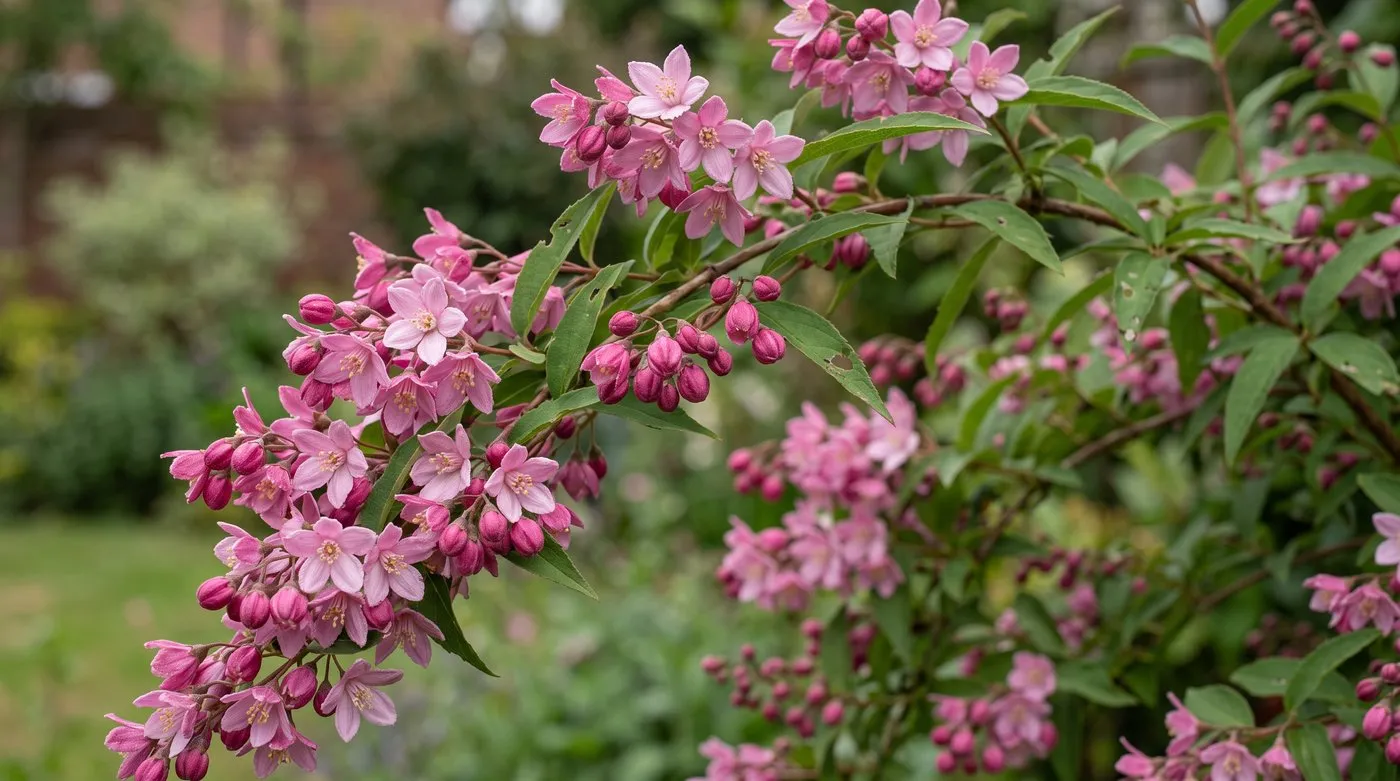
‘Strawberry Fields’ is the one for proper colour. The buds open deep pink and fade to rose as the flowers open.
Deutzias at a glance
| Kind | Height | Flowers | When | Best for |
|---|---|---|---|---|
| D. gracilis | 60cm | White | Late May to June | Small gardens, low hedges |
| D. x hybrida ‘Strawberry Fields’ | 1.5m | Deep pink | June | Colour in borders |
| D. scabra | 2.5 to 3m | White or pale pink | Early summer | Back of large borders |
| D. ‘Mont Rose’ | 1.2m | Rose pink | June | Against walls and fences |
| D. x rosea | 90cm | Pale pink | June | Medium borders |
Where should I plant deutzia?
Deutzia is easy-going about position but flowers best with a few hours of direct sun. West and south-facing borders give the best show, and east-facing spots work well too.
It doesn’t mind town air, so it’s a great shrub for city gardens and front gardens by busy roads.
Spacing: Plant at least 60cm from walls and fences for compact kinds, and 1m for bigger ones. In a border, leave 1 to 1.5m between deutzia and its neighbours. For a Deutzia gracilis hedge, plant 40cm apart.
Put it where you can see it from a window or seat in June. The flowers only last a few weeks, so you’ll want to enjoy every day.
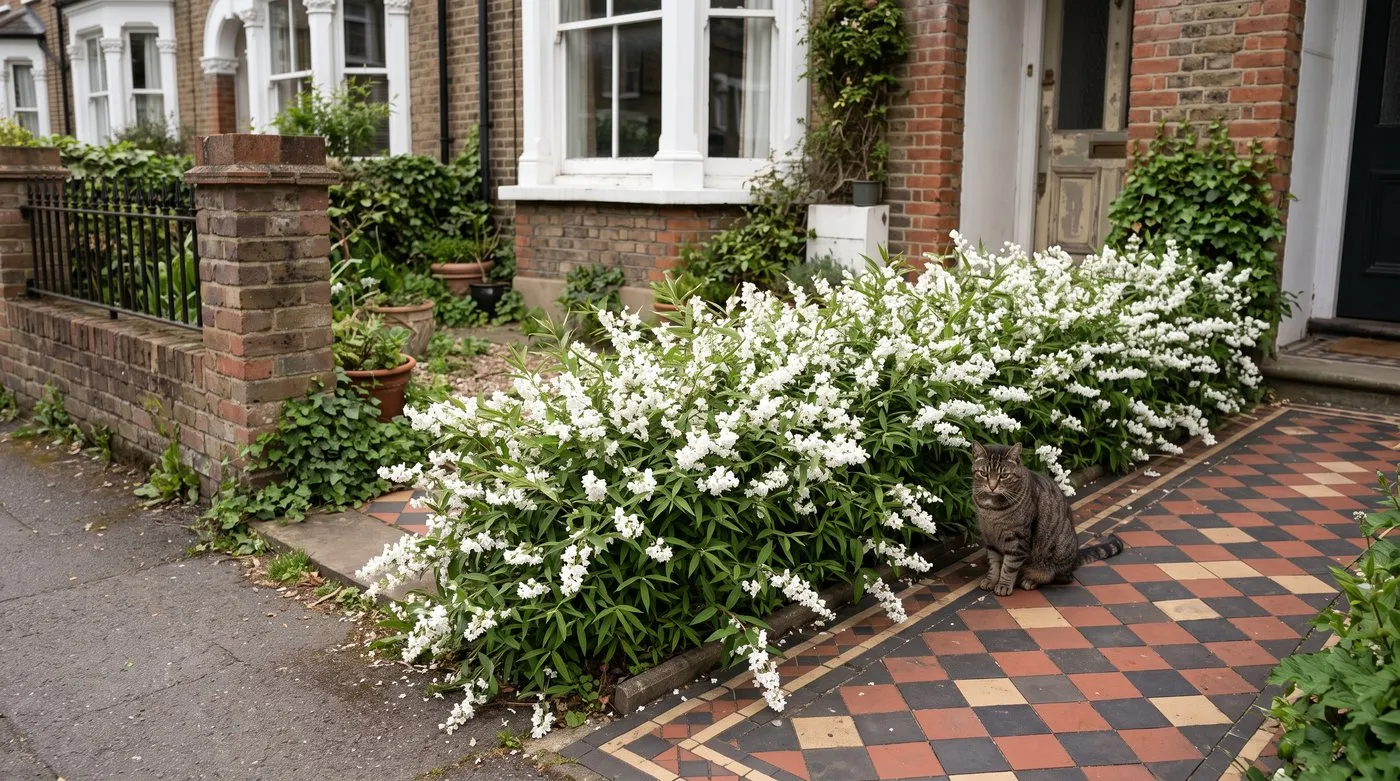
Deutzia gracilis shrugs off town air, so it’s a great pick for a front garden by a busy road. Plant 40cm apart for a low hedge.
How to plant deutzia
Plant bare-root deutzia from October to March, and pot-grown plants at any time of year. Autumn is best, as the roots grow over winter.
Dig a hole twice as wide as the root ball and the same depth. Plant at the same depth it sat in its pot, without burying the stem. Fill back in with the soil you dug out. On heavy clay, mix in a handful of grit.
Water well after planting and spread a 5cm mulch of bark or garden compost around the base, keeping it off the stems. Water in dry spells through the first summer. After that, it rarely needs watering except on very dry, sandy soil.
It doesn’t usually need feeding. On very poor, sandy soil, a handful of general fertiliser in March helps.
How to prune deutzia
Deutzia flowers on last year’s stems, just like weigela, philadelphus and other early summer shrubs. Timing is everything.
Every year, straight after flowering in late June or early July, cut each flowered stem back to a strong young side shoot lower down. That young shoot grows through summer and carries next year’s flowers.
Keep it young by cutting about a quarter of the oldest, thickest stems down to about 15cm from the ground each year. New shoots grow from the base and flower within a couple of years. This stops the shrub becoming a tangle of old wood.
Neglected plants bounce back well. If you inherit an overgrown deutzia, cut a third of the stems to near ground level after flowering. Do the same for the next two years, and by year three the whole plant is renewed.
Never prune in spring. It removes the flower buds. It’s really the only way to go wrong with deutzia.
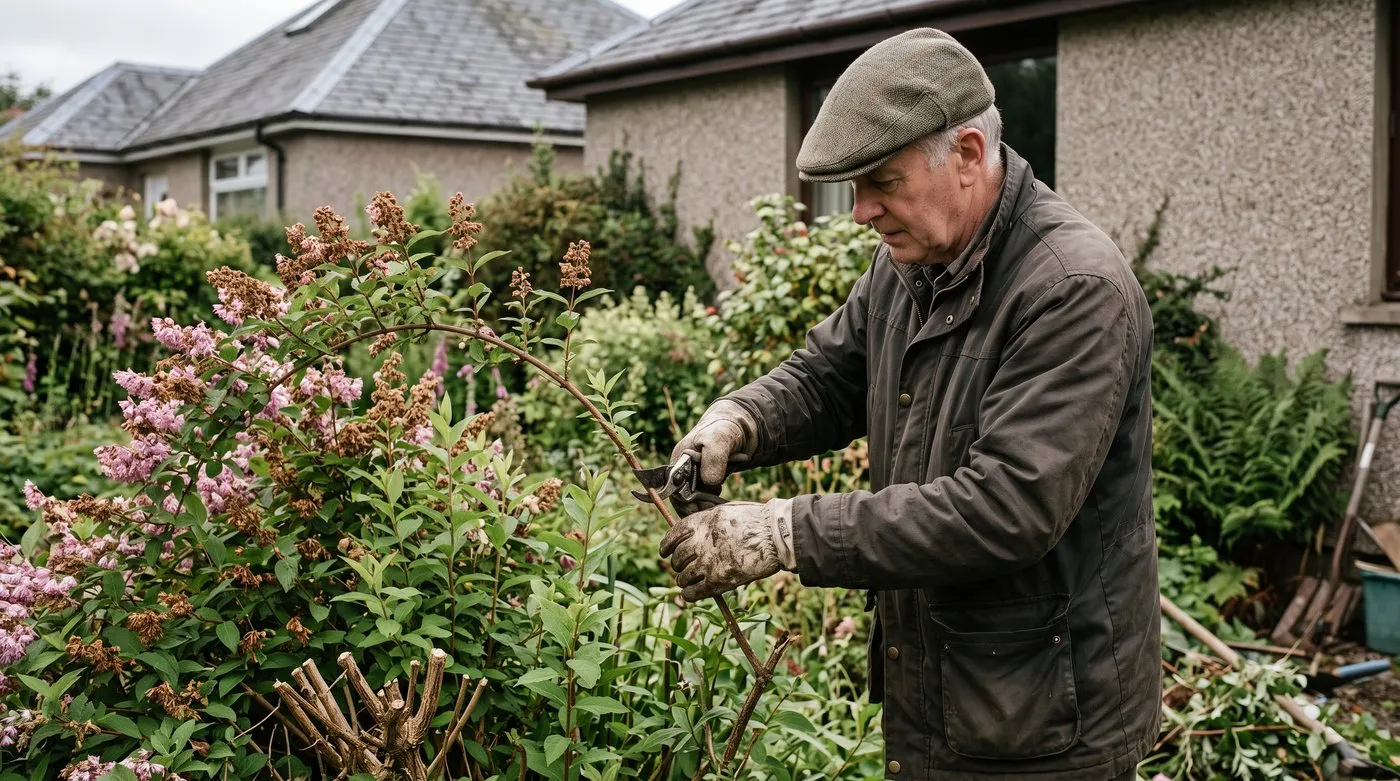
Cut flowered stems back to a strong young shoot as soon as the flowers fade. That shoot carries next June’s flowers.
How to grow deutzia from cuttings
Deutzia roots easily from softwood and hardwood cuttings, with no special kit needed.
Softwood cuttings in June are the quickest. Take 10cm pieces of soft new growth, strip the lower leaves, dip the end in rooting hormone and push into a pot of gritty compost. Cover with a clear plastic bag and keep in a bright spot out of direct sun. Roots form in four to six weeks. Pot them up on their own, grow on through summer and plant out the following autumn.
Hardwood cuttings in November are the easiest. Cut 20cm lengths of pencil-thick stem. Push two-thirds of each into a slit trench of gritty soil in a sheltered spot outside, firm in and leave them be. They root over winter and shoot in spring. Plant them out the following autumn. Our propagation guide has more on both methods.
You can also layer deutzia. Peg a low branch to the ground in autumn, nick the underside slightly and cover with soil. It roots within a year and can be cut from the parent plant the next autumn.
What to plant with deutzia
Deutzia fits happily into mixed borders. Its June flowers bridge the gap between spring and midsummer.
With late spring shrubs: Plant deutzia near lilac and mock orange. Lilac finishes about as deutzia starts, and mock orange overlaps and carries on into July. Together, they give flowers from late April to mid-July.
With roses: Deutzia flowers alongside the first flush of roses. White Deutzia gracilis in front of shrub roses looks lovely, and the deutzia finishes just as the roses hit their stride.
With summer perennials: Plant hardy geraniums, catmint or lady’s mantle around the base. They flower from June on, hiding the deutzia’s base once its flowers are over.
On its own: In a small garden, a single Deutzia gracilis or ‘Strawberry Fields’ makes a lovely feature in a lawn or at the corner of a path.
Why is deutzia so rarely grown?
Deutzia has a fame problem, not a growing problem. Garden centres tend to stock the shrubs everyone already knows, like hydrangeas, roses and buddleja, and deutzia has never really had its moment.
Several deutzias hold the RHS Award of Garden Merit, which means they’ve been judged reliable garden plants. The RHS deutzia page is a good place to browse them.
If you’re happy to order from a specialist nursery, deutzia is a real find. It flowers its heart out, grows almost anywhere and asks for very little.
Frequently asked questions
When does deutzia flower in the UK?
Mostly in June, and the show lasts a few weeks. Deutzia gracilis can start in late May in the south. Deutzia scabra flowers later, into early July. The flowers grow on stems made the summer before, so pruning straight after flowering matters for next year’s show.
How do I prune deutzia?
Prune straight after flowering, in late June or July. Cut flowered stems back to a strong young side shoot lower down. Each year, also cut about a quarter of the oldest, thickest stems down near the ground to bring on new growth. Never prune in spring, as that removes the flower buds.
Is deutzia easy to grow?
Yes, it’s one of the easiest flowering shrubs around. It copes with clay, chalk, sand, part shade and town air. It’s generally trouble-free and needs no staking or winter protection. The only real job is a prune after flowering.
Can deutzia grow in shade?
It copes with part shade but flowers best with a few hours of direct sun. In deeper shade it flowers less and grows more open. A west-facing border that gets afternoon sun is ideal. Hardy geraniums and ferns make good partners underneath in shadier spots.
How big does deutzia get?
Anything from 60cm to about 3m, depending on the kind. Deutzia gracilis stays at about 60cm. ‘Strawberry Fields’ reaches about 1.5m. Deutzia scabra is the biggest at 2.5 to 3m. Pick the right size for your space and you won’t need to hack it back.
Can I take cuttings from deutzia?
Yes, it roots easily from cuttings. Take softwood cuttings of new growth in June, dip them in rooting hormone and push them into gritty compost. Hardwood cuttings taken in November root outdoors over winter. Neither needs any special kit.
Our team produces practical UK gardening guidance from source research, contributor records and established horticultural practice. Editorial standards are overseen by Matt W.