Key takeaways
- Prune straight after flowering in late June or July, never in spring
- Weigela copes with clay, chalk, part shade and town gardens
- More sun means more flowers
- Compact types like 'Tango' and 'Minor Black' suit small gardens and pots
- Hardwood cuttings in November give you free plants
- Bees and hoverflies love the trumpet flowers
Weigela is one of the easiest flowering shrubs you can grow. All it asks for is ordinary soil, some sun and one well-timed prune a year. In return, it smothers itself in pink, red or white trumpet flowers every late May and June, and the bees and hoverflies come flocking.
It’s deciduous, so it drops its leaves in autumn and leafs up again in spring. Most varieties grow 2 to 3m tall and wide. Dark-leaved types like ‘Wine and Roses’ look good all summer for their leaves alone, with the flowers as a bonus.
Which weigela varieties are best for UK gardens?
There are lots to choose from, and they’re all easy. The main differences are flower colour, leaf colour and size.
Weigela florida ‘Variegata’ is a lovely all-rounder. Its cream-edged leaves look good from spring to autumn, with pale pink flowers in late May and June. It grows 1.5 to 2m tall and brightens shady corners. If you only have room for one, pick this.
‘Bristol Ruby’ is grown for its rich ruby-red flowers. It’s vigorous, reaching about 2.5m tall and wide. The leaves are plain green, but the flowers more than make up for it. For more ideas, see our best flowering shrubs for UK gardens.
‘Wine and Roses’ (also sold as ‘Alexandra’) has dark purple-bronze leaves all season and rose-pink flowers in June. It grows 1.5 to 2m and looks great next to gold or variegated shrubs.
‘Tango’ is compact at about 1 to 1.2m, with bronze-tinted leaves and deep pink flowers. It’s ideal for small gardens, the front of a border or a big pot.
‘Minor Black’ has very dark, almost black leaves and deep pink flowers. It stays compact at 1 to 1.5m.
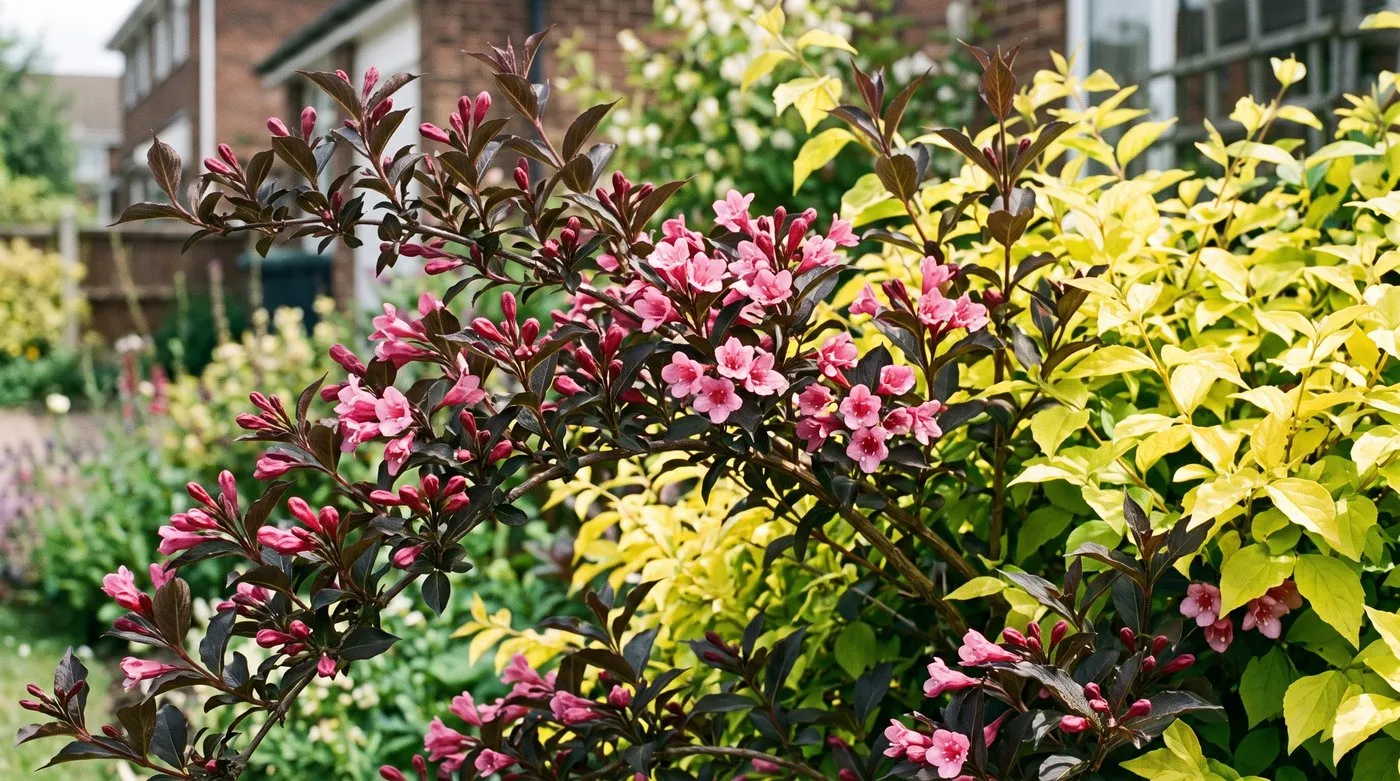
Dark-leaved weigelas look good all summer, with the flowers as a bonus. Pair them with a golden shrub for a bold contrast.
Weigela varieties at a glance
| Variety | Height | Flowers | Leaves | Best for |
|---|---|---|---|---|
| ’Variegata’ | 1.5-2m | Pale pink | Green with cream edges | All-round, lighting up shade |
| ’Bristol Ruby’ | 2.5m | Ruby red | Green | Big flower show |
| ’Wine and Roses’ | 1.5-2m | Rose pink | Dark purple-bronze | Leaf colour |
| ’Tango’ | 1-1.2m | Deep pink | Bronze-tinted | Small gardens, pots |
| ’Minor Black’ | 1-1.5m | Deep pink | Almost black | Dramatic leaves |
| ’All Summer Red’ | 1.5m | Red | Green | Extra flowers later in summer |
Where should I plant weigela?
Somewhere with at least a few hours of direct sun. Full sun gives the most flowers. West-facing borders are great, and east-facing spots are fine if they get the morning sun.
Weigela copes well with town gardens. It doesn’t mind traffic fumes or dusty air, so it’s a good pick for narrow borders and front gardens near a road. It grows happily in clay, chalk or sandy soil.
How to prune weigela for lots of flowers
Prune straight after flowering, usually in late June or early July. It’s the one job weigela really needs, and timing is everything.
Weigela flowers on stems that grew last year. So once the flowers fade, cut the stems that have just flowered back to a strong pair of buds or a younger side shoot lower down.
Never prune in winter or spring. You’ll cut off all the flower buds. It’s the most common reason a weigela doesn’t flower. Our shrub pruning guide explains timing for other shrubs too.
To rescue an old, overgrown weigela, cut a third of the oldest, thickest stems down to about 15cm after flowering. Do the same for the next two years. New stems will grow from the base and flower the following June. Avoid cutting the whole plant down at once, or you’ll lose flowers for a couple of years.
A yearly tidy takes about 15 minutes. After flowering, take out the stems that have flowered, any crossing branches and any dead wood. Leave the young stems that haven’t flowered, as they carry next year’s buds.

Cut flowered stems back straight after flowering and leave the young ones. They carry next year’s buds.
How to take hardwood cuttings from weigela
Weigela roots very easily from hardwood cuttings in November. You don’t need any special kit, and it’s free plants.
When: after the leaves have dropped in November.
How: pick pencil-thick stems that grew this year. They’re smooth and paler than older wood. Cut them into 20cm lengths, each with a bud at the top and bottom. Make a sloping cut at the top and a flat cut at the bottom, so you know which way up they go.
Rooting: make a slit trench in gritty soil somewhere sheltered outside. Push the cuttings in two-thirds deep, about 10cm apart. Firm the soil, water and leave them be.
Aftercare: they’ll start rooting in spring as the soil warms. By the next autumn they’ll have good roots and new shoots. Move them to their final spots in October or November. Our guide to cuttings and dividing plants has more ideas.
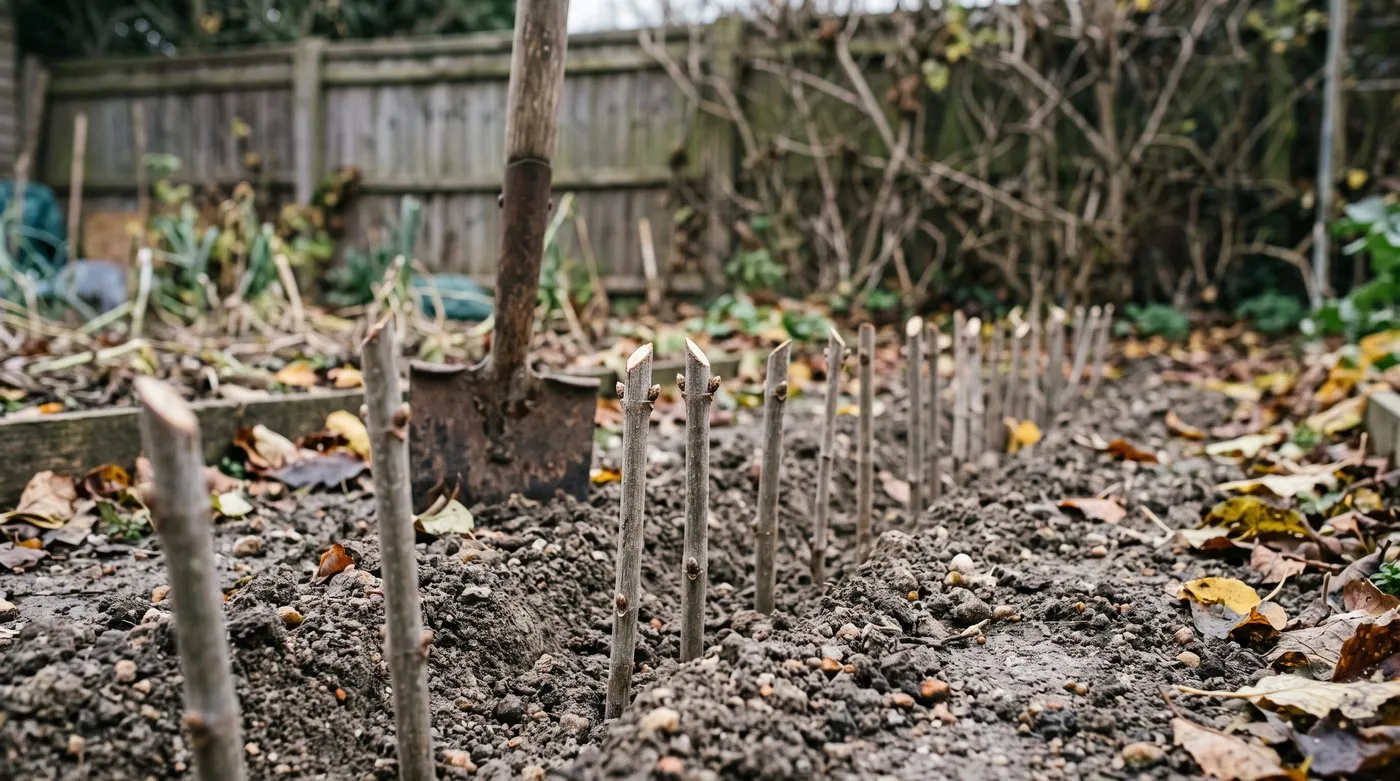
Push the cuttings in two-thirds deep and leave them be. By next autumn they’ll have roots and be ready to move.
What to plant with weigela
Weigela bridges the gap between spring and summer. Use it in a mixed border to keep colour going.
With spring shrubs: plant it near forsythia or a flowering cherry. They finish in spring, and the weigela takes over in late May.
With summer perennials: the base can look bare after flowering. Plant hardy geraniums, catmint or alchemilla around it to fill the gap from July.
With golden leaves: ‘Wine and Roses’ and ‘Minor Black’ look striking next to golden shrubs like Philadelphus coronarius ‘Aureus’ or golden elder. Dark purple and bright gold make a bold pairing.
As a hedge: weigela makes a relaxed flowering hedge about 1.5 to 2m tall. Plant about 1m apart and trim after flowering. It won’t be as neat as yew or beech, but it’s lovely in June. Our hedge planting guide has more options.
What problems affect weigela?
Hardly any. It’s one of the most trouble-free shrubs you can grow.
Pests: aphids sometimes cluster on soft shoot tips in spring but do no lasting harm. Hoverflies and ladybirds usually sort them out for you.
Frost: weigela is fully hardy, but a late spring frost can nip the flower buds. You’ll just get fewer flowers that year.
Leggy growth: usually from too much shade or skipping the yearly prune. Prune after flowering each year to keep it bushy, with flowers all the way down.
Can weigela grow in shade?
It copes with part shade, but more sun means more flowers. With half a day of sun, it flowers well. In a lot of shade, it flowers less and gets leggy.
Dark-leaved types keep their colour best in full sun. In shade, the leaves fade to a dull green-purple. For purple-ish colour in shade, try Cornus alba ‘Kesselringii’ instead.
For really shady spots, our guide to shrubs for shade has better choices.
Frequently asked questions
When should I prune weigela in the UK?
Prune straight after flowering, in late June or early July. Cut flowered stems back to a strong pair of buds or a younger side shoot lower down. Don’t prune in spring, or you’ll cut off the flower buds. Pruning at the wrong time is the most common reason weigela doesn’t flower.
Why is my weigela not flowering?
Pruning at the wrong time is the usual reason. Weigela flowers on last year’s stems, so pruning in winter or spring removes the buds. Too much shade, a very young plant or cutting everything back hard can also stop it flowering.
How fast does weigela grow?
Fairly fast, reaching full size in a few years. Most grow 2 to 3m tall. Compact types like ‘Tango’ and ‘Minor Black’ stay around 1 to 1.5m. Vigorous types like ‘Bristol Ruby’ grow quickest in sun and good soil.
Can weigela grow in shade?
It copes with part shade but flowers best in sun. In deep shade it flowers poorly and gets leggy. A west-facing spot with afternoon sun works well. For deep shade, choose a different shrub.
How do I take hardwood cuttings from weigela?
Take them in November once the leaves have fallen. Cut pencil-thick stems from this year’s growth into 20cm pieces, with a bud at each end. Push them two-thirds deep into a trench of gritty soil somewhere sheltered outside. They root over winter and can be moved the next autumn.
Is weigela good for bees?
Yes, bees and hoverflies love the trumpet flowers. Bumblebees in particular are frequent visitors. It flowers in late May and June, filling the gap between spring shrubs like forsythia and summer perennials.
Can I grow weigela in a pot?
Yes, compact types do well in a big pot. Choose ‘Tango’, ‘Minor Black’ or ‘All Summer Red’, which all stay under about 1.5m. Use John Innes No. 3 compost, water regularly in summer and add slow-release feed each March. Repot every few years.
Our team produces practical UK gardening guidance from source research, contributor records and established horticultural practice. Editorial standards are overseen by Matt W.