
Key takeaways
- Summer-flowering shrubs like buddleja get a hard prune in late February to March
- Spring-flowering shrubs like forsythia are pruned straight after they flower
- Slow growers and most evergreens only need dead wood removed and a light trim
- Prune a spring-flowering shrub in winter and you cut off this year's flowers
- Most overgrown deciduous shrubs can be cut to 30-60cm in late winter and will regrow
- Never cut lavender, broom or heather back into old bare wood
Pruning keeps shrubs healthy, full of flowers and the right size for your garden. The trick is timing. Prune at the wrong moment and you cut off next season’s flowers.
Here’s how to tell which of three simple groups your shrub belongs to, the tools you need, how to rescue an overgrown shrub and the mistakes to avoid. Growing roses? They have their own rose pruning guide.
Why prune shrubs?
Pruning takes out dead and diseased wood, gives you more flowers and keeps shrubs in their place. Left alone, a shrub fills up with old, tired stems. The middle gets crowded and dark, and that damp, still air suits diseases like grey mould and mildew.
A good prune prompts the plant to send out fresh, strong shoots. Young stems flower more and look better. A philadelphus left for years gets tall and tangled, with flowers only at the top. Pruned after flowering each year, it stays compact, with blooms right at nose height.
The three pruning groups
Most garden shrubs fit one of three groups, based on when they flower. Work out the group and the timing follows.
Group 1: prune hard in late winter
These shrubs flower on new growth made this year. Their flower buds haven’t formed yet when you prune, so a hard cut in late February to March does no harm. In fact it gives you the strongest shoots and the best flowers.
When to prune: Late February to mid-March, just as the buds start to swell.
How to prune: Cut all stems back to a low framework 30-60cm above the ground. On older plants, cut to just above last year’s stubby stumps. New shoots grow from there and flower the same summer or autumn.
Examples: Buddleja davidii (butterfly bush), Hydrangea paniculata, Hydrangea arborescens, hardy fuchsia, lavatera, Spiraea japonica, elder grown for its leaves, and dogwoods grown for coloured winter stems.
Buddleja is the classic example. Left unpruned, it turns into a gangly skeleton with small flowers at the tips. Cut hard in March, it sends up strong new stems with big flower spikes that butterflies love. Pruning it fits in nicely with your other spring gardening jobs.
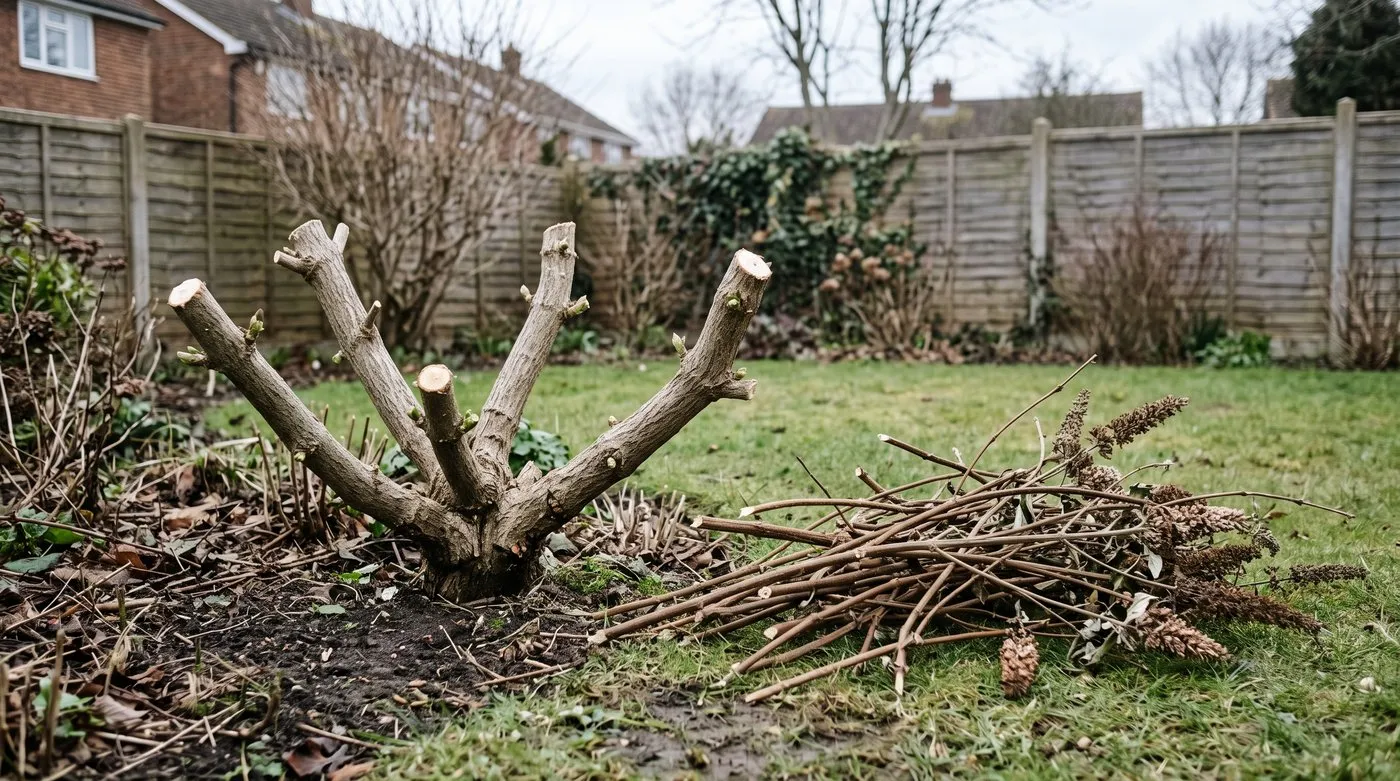
Group 1 shrubs flower on new growth, so a hard cut in late winter does no harm. Buddleja answers with strong stems and big flower spikes.
Group 2: prune after flowering
These shrubs flower on last year’s stems. Their buds form in summer and autumn and sit there all winter. Prune them in winter and you cut every bud off.
When to prune: Straight after flowering, so the plant has all summer to grow next year’s flowering stems.
How to prune: Cut the stems that have flowered back to a strong pair of buds or a healthy side shoot lower down. Also take out a third of the oldest stems at ground level each year, so fresh shoots come from the base.
Examples: Forsythia, philadelphus (mock orange), weigela, deutzia, kolkwitzia (beauty bush), flowering currant, kerria, Spiraea x vanhouttei and spring-flowering ceanothus.
Take philadelphus. It flowers in June on stems that grew last year. When the last petals drop in July, cut each flowered stem back to a strong side shoot. Then remove two or three of the thickest, oldest stems at the base to let light into the middle. New shoots grow through summer and carry next June’s flowers.
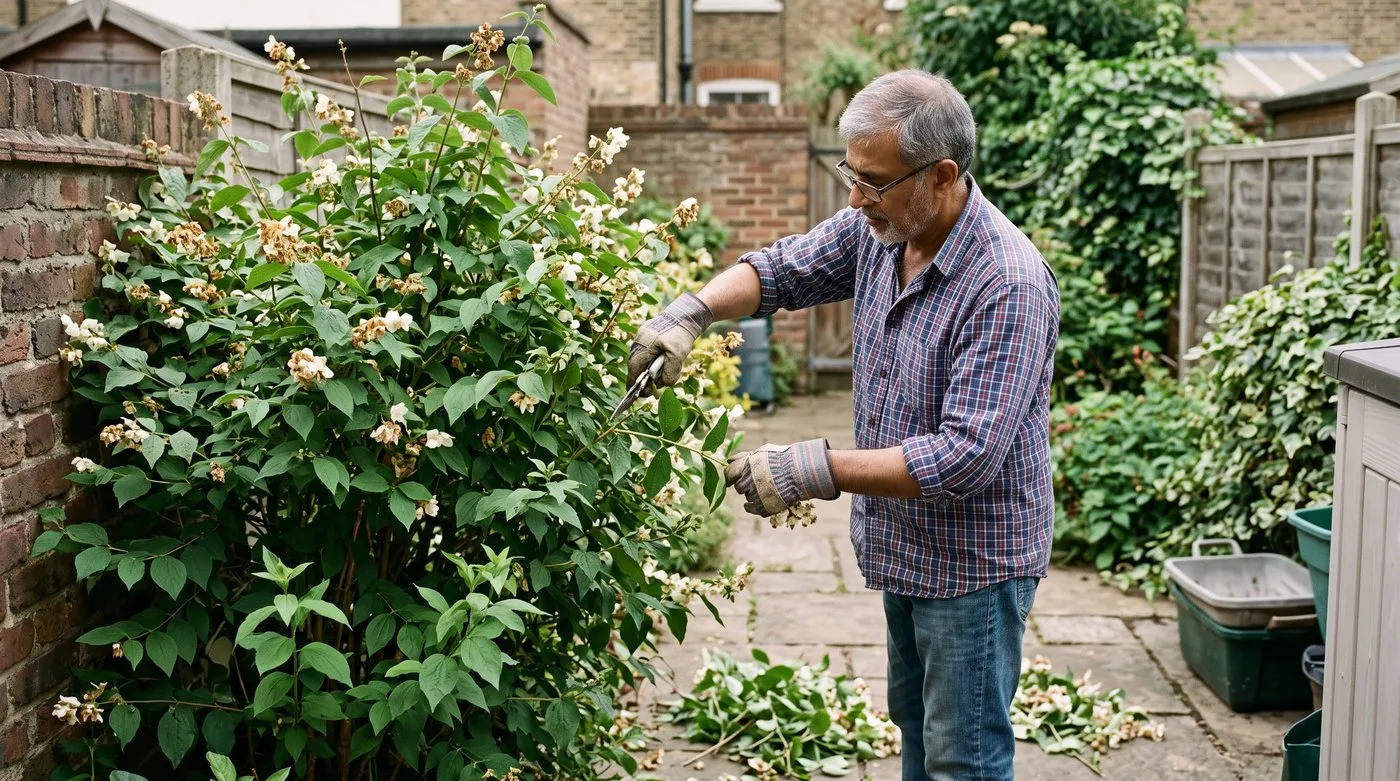
Prune Group 2 shrubs straight after flowering. That gives them all summer to grow the stems that carry next year’s flowers.
Group 3: very little pruning
These shrubs grow slowly, flower on a permanent set of branches, or are evergreens that lose their shape if cut hard. Just take out dead, damaged and diseased wood and trim lightly if needed.
When to prune: Late spring (April to May), once hard frosts are over.
How to prune: Remove dead and crossing branches and trim lightly to shape. Don’t cut evergreens back into old bare wood unless you know they regrow. Yew, box, holly and Portugal laurel do. Most conifers don’t.
Examples: Daphne, witch hazel, magnolia, camellia, rhododendron, azalea, pieris, skimmia, Viburnum tinus and most slow-growing evergreens.
Lavender is a special case. Give it a light trim after flowering in August, leaving a little green growth above the woody base. Never cut into old grey wood, as lavender won’t regrow from bare stems. The same goes for broom and heather.
The pruning groups at a glance
| Group | When to prune | Example shrubs | How much to cut |
|---|---|---|---|
| Group 1 | Late Feb to March | Buddleja, hardy fuchsia, Hydrangea paniculata, dogwood | Hard, to a 30-60cm framework |
| Group 2 | After flowering | Forsythia, philadelphus, weigela, deutzia, flowering currant | Flowered stems, plus a third of the oldest at the base |
| Group 3 | Late spring, if needed | Daphne, witch hazel, camellia, rhododendron, pieris | Light: dead wood and shaping only |
| Lavender and friends | After flowering (August) | Lavender, broom, heather | Trim off spent flowers, never into old wood |
Tip: Not sure which group a shrub is in? Watch it for a year. Note when it flowers and whether the flowers come on new spring shoots or on stems that were there all winter. That tells you when to prune.
Can you prune shrubs during bird nesting season?
Yes, but leave any active nest alone. It’s against the law to damage or destroy a wild bird’s nest while it’s being built or used.
Birds mainly nest from March to August, though blackbirds and woodpigeons can nest outside that. Before pruning a thick shrub, hedge or climber, watch for birds flying in with food or nesting material. Then part the stems gently and look inside. If you find a nest in use, leave that part until the young have flown. Group 2 shrubs pruned in June and July need this check most, as blackbirds, dunnocks and wrens love them.
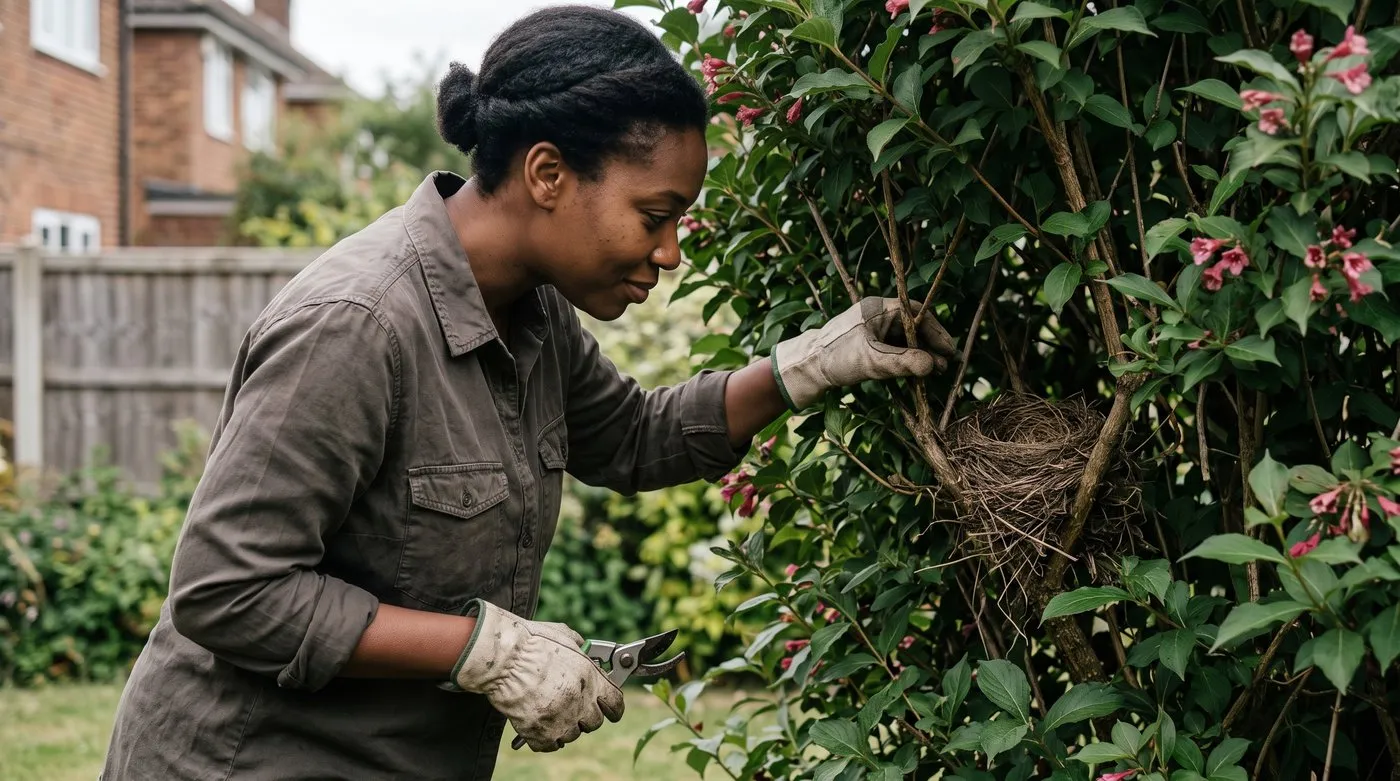
Part the stems and look inside before pruning between March and August. If a nest is in use, leave that part until the young have flown.
Tools you need
Sharp tools make clean cuts that heal quickly. Blunt ones tear the bark and let disease in.
Bypass secateurs are the one tool you can’t do without. The blades pass each other like scissors for a clean cut. Use them for stems up to 15mm thick. Felco is a popular make, and smaller models suit smaller hands. Avoid anvil secateurs on living stems, as they crush.
Loppers handle stems from 15mm to 35mm thick. Their long handles give you extra leverage. Bypass loppers cut more cleanly than anvil types. Telescopic handles help you reach into the middle of a prickly shrub.
A pruning saw deals with anything thicker. A folding saw with a curved blade cuts on the pull and fits in a pocket. Use it for big old branches. A woodworking saw won’t do, as its fine teeth clog on green wood.
Hedge shears are only for small-leaved formal hedges like box, privet and yew. On big-leaved shrubs like laurel or hydrangea, shears slice the leaves, which then turn brown for months. Use secateurs instead.
Keep everything sharp. Here’s how to sharpen secateur blades with a diamond file. Oil the pivot and wipe the blades after every session. When cutting diseased wood, clean the blades with methylated spirit between plants.
Step-by-step pruning technique
The way you cut is the same for every group. Only the timing and the amount change.
Step 1: take a good look
Stand back and look at the shape. Spot the dead wood (grey, brittle, no buds), diseased stems (cankers, odd colours, fungus) and branches crossing and rubbing. Notice which stems have flowered and which are oldest (thick bark, few leaves).
Step 2: cut out dead, diseased and damaged wood
Do this first, whatever the time of year. Cut dead stems back to healthy wood or to the ground. Cut diseased stems at least 15cm below the problem, into clean, pale wood. Bin diseased bits rather than composting them.
Step 3: remove crossing branches
Where two stems cross and rub, take out the weaker or worse-placed one. Rubbed bark is an easy way in for disease. Cut back to where it joins another branch, or to the base.
Step 4: make renewal cuts
For Group 2 shrubs, cut a third of the oldest stems out at ground level. Pick the thickest, barkiest ones and cut as low as you can. This opens up the middle and brings on new shoots from the base.
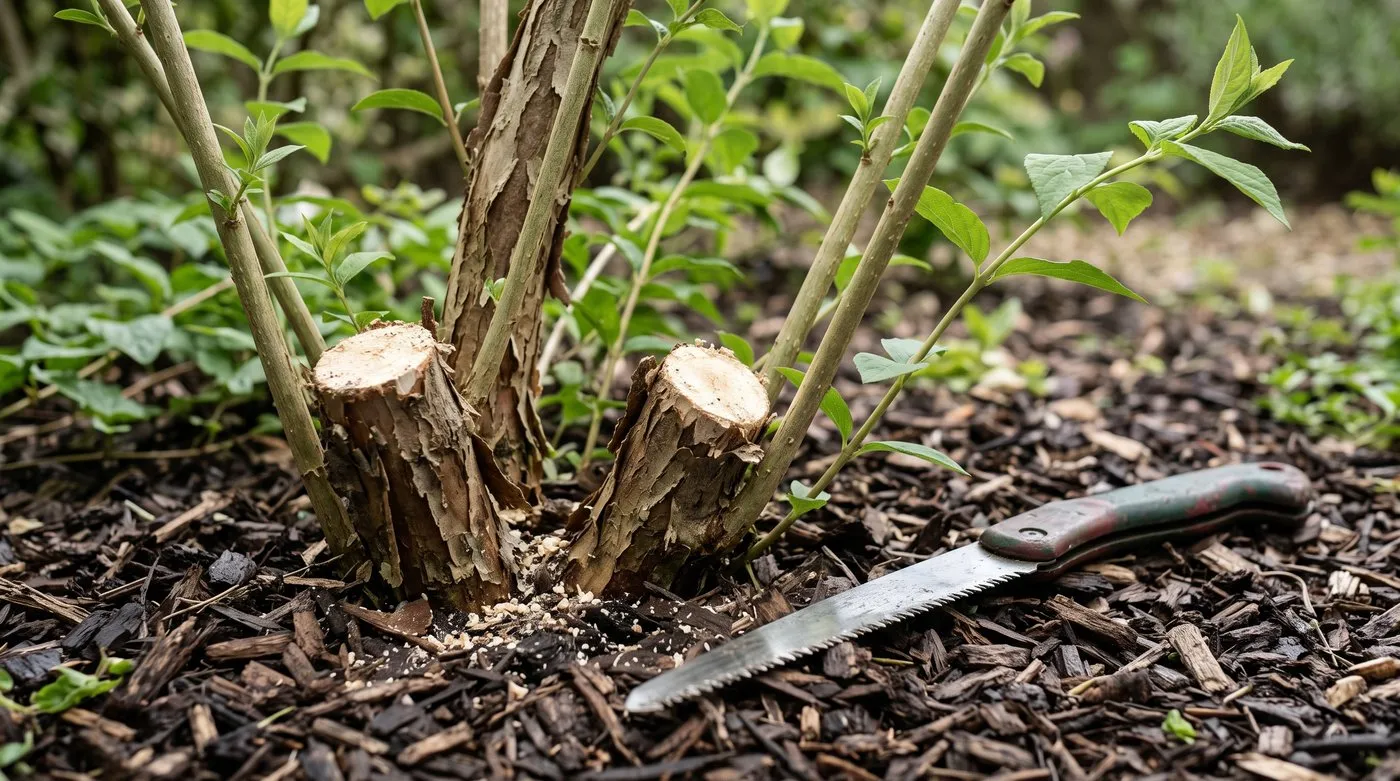
Cut out a third of the oldest stems as low as you can each year. It lets light into the middle and brings on new shoots from the base.
Step 5: shorten the flowered stems
For Group 1, cut everything back to the low framework. For Group 2, cut each flowered stem back to a strong bud or side shoot facing outwards. For Group 3, just trim for shape if needed.
Step 6: make a neat cut
Cut on a slope, angled away from the bud, about 5mm above an outward-facing bud. New growth then heads outwards, keeping the middle open. Too close and you damage the bud. Too far and the stub dies back. Practise on a few dead stems first if you like.
Renovation pruning for overgrown shrubs
A shrub left for years can look hopeless, but most deciduous shrubs bounce back from a hard cut. Renovation just means cutting the whole thing down low and letting it regrow.
The best time is late February to early March, just before growth starts, so the plant has all season to recover.
The all-at-once way: Cut every stem to 30-60cm above the ground with loppers and a saw. Mulch thickly with composted bark and scatter a handful of blood, fish and bone around the base. Water weekly through the first summer if it’s dry. New shoots usually appear within a few weeks. Next winter, keep the strongest, best-placed shoots and remove the rest. Flowers usually return within two or three years. It’s a good job to plan while you’re doing your autumn gardening jobs.
The gentle way: If cutting everything feels too drastic, remove a third of the oldest stems at ground level each year for three years. The shrub keeps some shape the whole time. This works well for philadelphus, forsythia and hydrangeas.
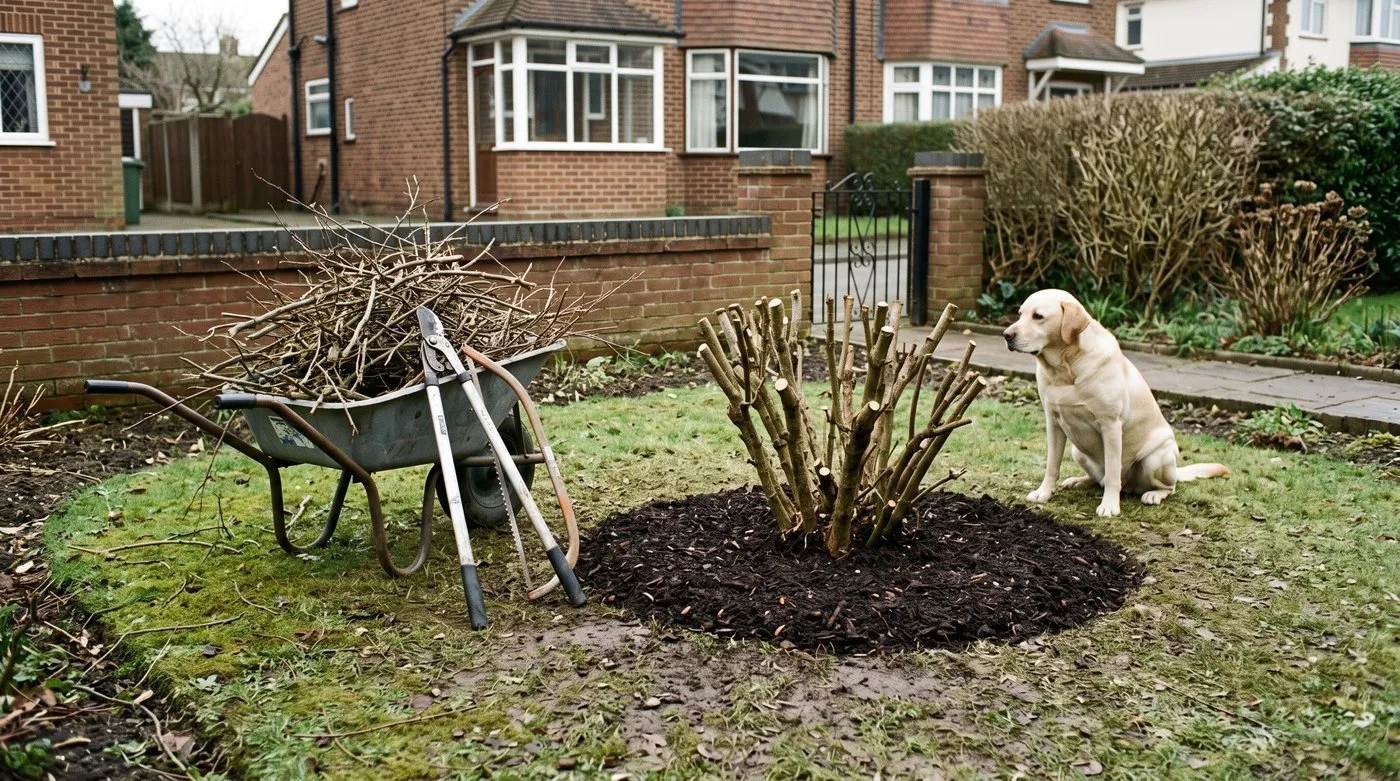
Most deciduous shrubs bounce back from a hard cut in late winter. Mulch well and water through the first dry summer.
Shrubs that take a hard cut well
Buddleja, forsythia, philadelphus, viburnum, cotoneaster, escallonia, pyracantha, flowering currant, deutzia, weigela, dogwood, elder and hazel.
Shrubs that DON’T take a hard cut
Lavender, broom, heather, evergreen ceanothus, cistus and most conifers (yew is the exception). These won’t sprout from old bare wood. If they’ve got too big, it’s usually time for a new plant.
Pruning some favourite shrubs
Hydrangeas
Mophead and lacecap hydrangeas flower on old wood. Leave the dead flowerheads on over winter to shelter the buds below. In March or April, cut each old flowerhead back to the first pair of fat, healthy buds. Take one or two of the oldest stems out at ground level. Our hydrangea growing guide has more on their care.
Hydrangea paniculata and H. arborescens flower on new wood. Prune them hard in March like any Group 1 shrub.
Buddleja
Cut every stem to 45-60cm in late February, leaving 4-6 stubby branches. Feed and mulch. Flowers come from July on the new stems. Snip off faded spikes to get more flowers into September.
Forsythia
Prune straight after the yellow flowers fade in April. Cut each flowered stem back to a strong new shoot, and take a third of the oldest stems out at the base. Don’t clip forsythia with shears, or you’ll get a tight ball of twigs with flowers only on the outside.
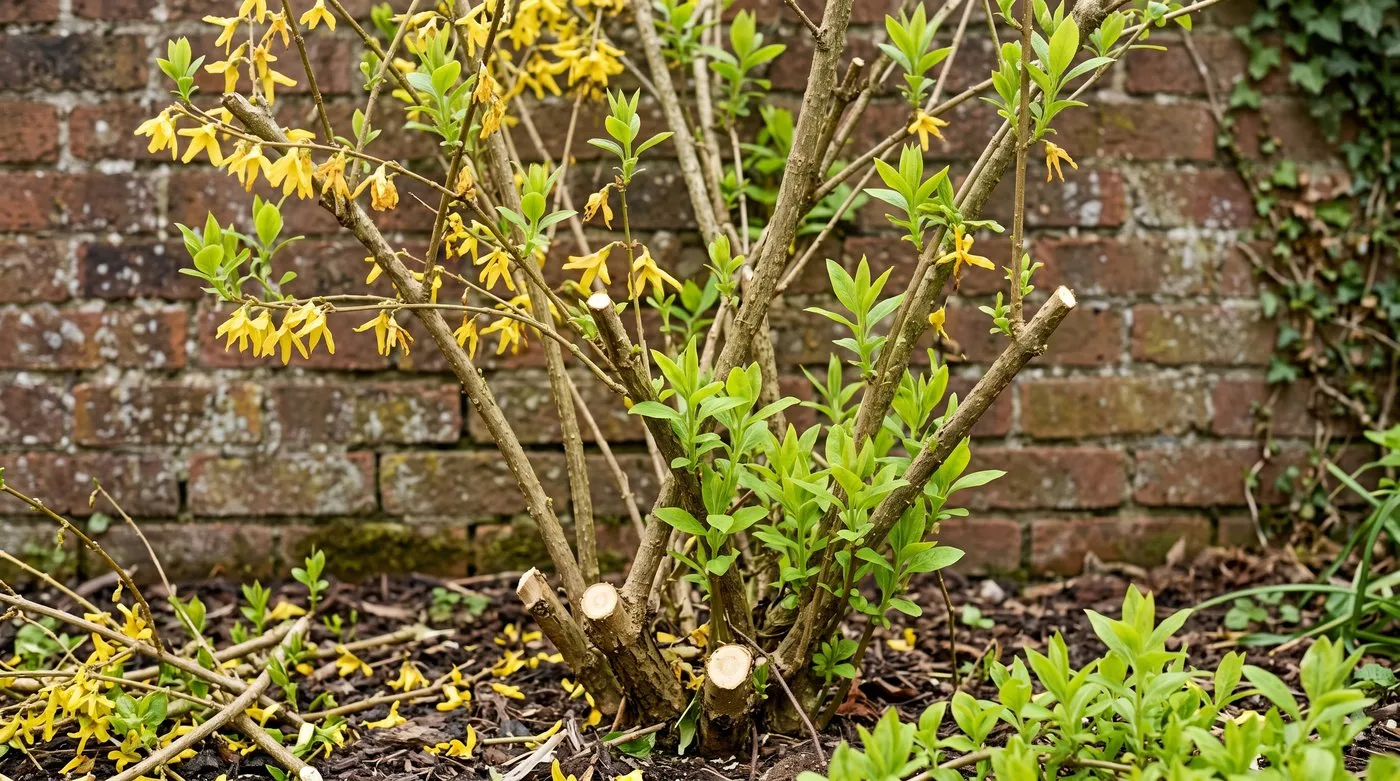
Prune forsythia as soon as the flowers fade. Use secateurs rather than shears, or you’ll get a tight ball with flowers only on the outside.
How do you prune evergreen shrubs like laurel?
Prune most evergreens in mid-spring, once the frosts are over and just before growth starts. Spring-flowering evergreens like camellia, rhododendron and cherry laurel are pruned straight after flowering instead. Laurel, holly, box, yew, Viburnum tinus, pieris, choisya, euonymus, spotted laurel and camellia all cope with a hard cut, according to the RHS evergreen pruning guide. Other evergreens are safer cut back gradually over a few years. On big-leaved types like laurel, use secateurs and cut each stem just above a leaf. Avoid pruning evergreens in late summer and autumn, as soft new growth gets caught by frost.
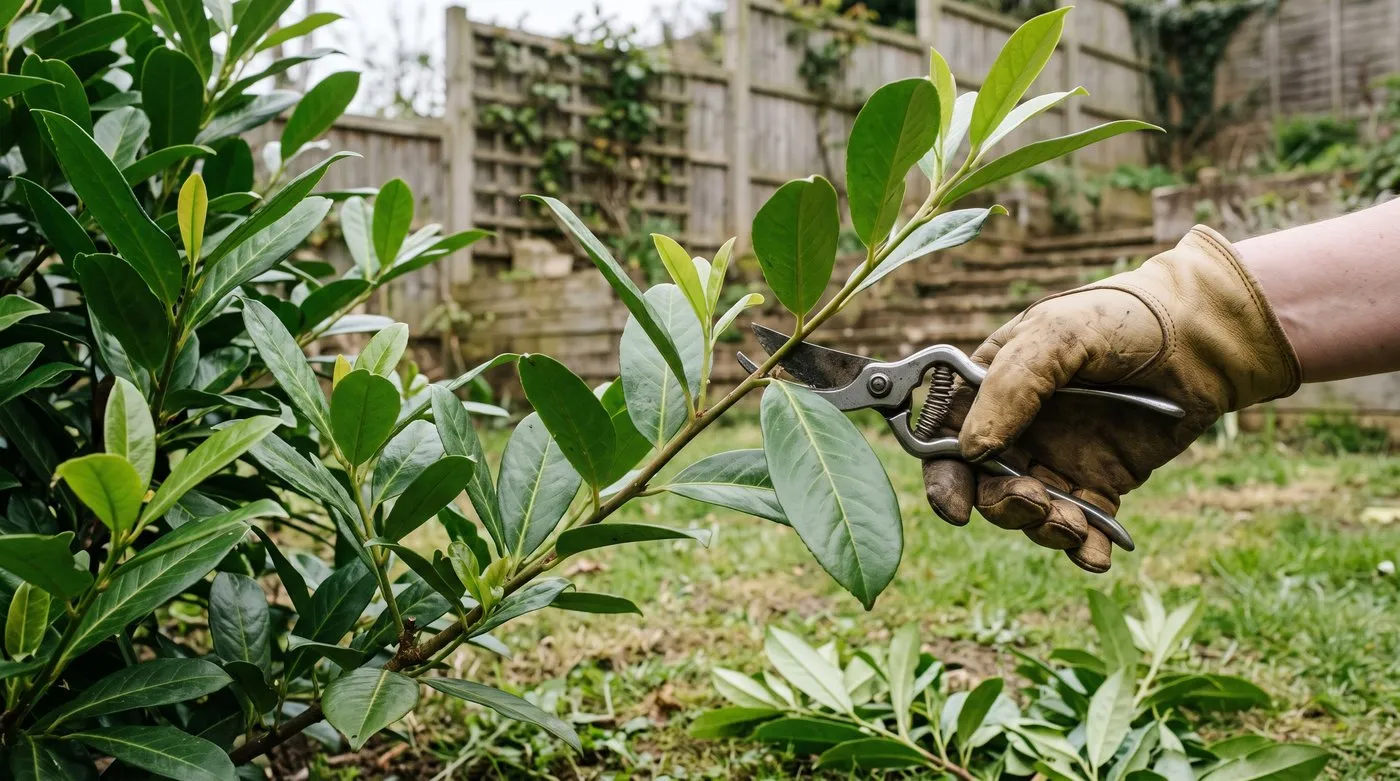
On big-leaved evergreens like laurel, cut each stem just above a leaf with secateurs. Shears slice the leaves and they brown for months.
Roses
Roses have their own rules. Hybrid teas and floribundas are pruned in late February to March, while climbers and shrub roses are handled differently. Our rose pruning guide walks you through it.
Common pruning mistakes
Pruning at the wrong time
The big one. Cut a spring-flowering shrub in January and you lose that year’s flowers. The plant will be fine, but it’s a long wait. Always check whether a shrub flowers on new or old wood before you start.
Clipping everything into balls
Hedge trimmers are quick, but they leave a thick outer shell of twigs and a bare, dead middle. Secateurs keep the natural shape and let light in. Save shears for small-leaved hedges like box and privet.
Leaving stubs
A cut well above a bud leaves a stub that dies and can rot back into healthy wood. Cut just above a bud, or flush with the branch it comes from, just outside the slight swelling where they join.
Cutting too much at once
Take off more than about a third in one go and many shrubs answer with lots of weak, whippy shoots that spoil the shape. For a big reduction, spread the work over two or three years.
Not cleaning your tools
Going straight from a diseased shrub to a healthy one can spread problems like silver leaf, coral spot and canker. A quick wipe with methylated spirit takes seconds. For tough, trouble-free choices, see our pick of the best flowering shrubs.
Month-by-month pruning calendar
| Month | What to prune |
|---|---|
| January | Dead, diseased and damaged wood on any shrub. Cut dogwood and willow stems for crafts. |
| February | Group 1: buddleja, hardy fuchsia, lavatera, Hydrangea paniculata. Cut hard. |
| March | Finish Group 1. Mophead hydrangeas: cut old flowerheads back to the first fat buds. |
| April | Early spring flowerers once they’ve finished: forsythia, flowering currant, kerria. |
| May | Light shaping of evergreens: camellia, rhododendron, pieris. Deadhead azaleas. |
| June | Group 2 after flowering: philadelphus, weigela, deutzia, kolkwitzia. |
| July | Shorten wisteria’s long summer shoots to about five leaves. Trim lavender after flowering. |
| August | Clip lavender and broom after flowering. Trim formal evergreen hedges. |
| September | Shorten tall shrubs by a third so winter winds don’t rock them. |
| October | No big pruning. Plan any renovation for late winter. |
| November | No big pruning. Remove dead or damaged wood only. |
| December | Only storm-damaged branches. Clean, sharpen and oil your tools. |
Pruning a variegated shrub? Keep an eye out for shoots reverting to plain green. To keep boundary trees in check, see our guide to pruning trees for privacy and light.
Frequently asked questions
When should I prune my shrubs in the UK?
It depends on when they flower. Prune summer-flowering shrubs like buddleja and hardy fuchsia hard in late February to March. Prune spring-flowering shrubs like forsythia and philadelphus straight after they flower. Evergreens and slow growers only need a light tidy in late spring.
Can I prune shrubs in autumn?
It’s best to wait. Fresh cuts can be hit by frost and damp over winter. You can take out dead, diseased or damaged wood at any time. Tall shrubs can also be shortened by a third in autumn so the wind doesn’t rock them. Leave the main prune until late winter.
How hard can I cut back an overgrown shrub?
Most deciduous shrubs can go down to 30-60cm. Do it in late February or March. Buddleja, forsythia, dogwood, philadelphus and viburnum all bounce back well. For slower shrubs, spread the job over three years. Never cut lavender, broom, heather or most conifers into old bare wood, as they won’t regrow.
What is the one-third pruning rule?
Each year, cut a third of the oldest stems out at ground level. Over three years the whole shrub is renewed, and it keeps flowering the whole time. It suits multi-stemmed spring-flowering shrubs like deutzia, philadelphus, weigela and flowering currant. Pick the thickest, oldest-looking stems.
Should I prune hydrangeas in the UK?
Yes, but how depends on the type. Hydrangea paniculata and H. arborescens flower on new growth, so cut them hard in March. Mophead and lacecap hydrangeas flower on last year’s stems. Leave their dead flowerheads on over winter, then cut each one back to the first strong pair of buds in spring.
Why did my shrub not flower after pruning?
It was probably pruned at the wrong time. Cut a spring-flowering shrub in winter and you remove the buds that were about to open. Don’t worry, it will grow new buds over summer and flower the year after. If you’re unsure of a shrub, watch it for a year before you prune.
Do I need to seal pruning cuts?
No, the RHS advises against it. Sealant can trap damp under it and help rot set in. Plants heal cuts on their own. Make clean cuts with sharp tools and let the shrub do the rest.
How do I sterilise pruning tools?
Wipe the blades with methylated spirit or diluted household bleach. Do this between plants whenever you’ve been cutting diseased wood. At the end of the day, wash the blades, dry them well and give them a thin coat of oil so they don’t rust.
Our team produces practical UK gardening guidance from source research, contributor records and established horticultural practice. Editorial standards are overseen by Matt W.


