
Key takeaways
- Reversion means a variegated plant has grown a shoot with plain green leaves
- Green shoots grow faster than variegated ones and take over if left
- Cut each green shoot back to where it starts, into variegated wood
- Check euonymus, elaeagnus and variegated holly every few weeks from April to September
- Pure white or yellow shoots are weak, so cut those out too
- A plant that has gone completely green won't change back
Reversion is the reason a smart variegated shrub slowly turns plain green. One year it’s crisp gold or cream, then a few all-green shoots appear. Leave them and within a few seasons the pattern you paid for has gone. The good news is that it’s easy to stop if you catch it early. This guide explains why it happens, which shrubs do it most and exactly where to cut.
What is plant reversion?
Reversion is when a variegated plant grows a shoot with plain green leaves, like the plant its variety came from. It isn’t a disease and the plant isn’t dying.
Most variegated plants are a mix of two kinds of tissue: one that makes green chlorophyll and one that makes little or none. The pale tissue gives the cream, white or gold markings. This mix isn’t completely stable. Now and then a bud produces only green tissue, and out comes a plain green shoot.
Very occasionally a plant does the opposite and throws out a pure white or yellow shoot. These have almost no chlorophyll, so they’re weak and often scorch. Cut them out too.

Caught early, a single green shoot like this takes seconds to remove.
Why do green shoots take over?
Green shoots win because they have more chlorophyll. More chlorophyll means more food, so the shoot grows faster and stronger than the variegated growth around it.
That’s why a reverted shoot isn’t a curiosity to keep an eye on. It’s a takeover in progress. Catch it small and the plant stays variegated. Leave it for a season or two and the green wood can dominate the whole shrub.
Which variegated plants revert most?
Some variegated shrubs revert far more than others. These are the ones to watch:
- Euonymus fortunei, such as ‘Emerald ‘n’ Gold’ and ‘Emerald Gaiety’. The classic culprit. The euonymus growing guide covers its care.
- Elaeagnus, such as ‘Gilt Edge’ and ‘Limelight’. Strong green shoots can quickly outgrow the gold ones.
- Variegated holly, such as ‘Argentea Marginata’ and ‘Golden King’. The plain shoots are darker and glossier. See the holly growing guide for pruning times.
- Cornus alba ‘Elegantissima’, the white-edged dogwood. Easy to fix at its spring prune.
- Variegated box elder (Acer negundo ‘Flamingo’ and ‘Variegatum’).
- Weigela florida ‘Variegata’ and Buddleja davidii ‘Harlequin’.

The reverted holly shoot on the right is darker and glossier than the cream-edged leaves around it.
| Plant | How to spot reversion | When to cut it out |
|---|---|---|
| Euonymus fortunei | Plain green shoots among gold or white | Any time you see it, April to September |
| Elaeagnus | Tall, strong all-green shoots | As soon as seen, or at the late spring trim |
| Variegated holly | Darker, glossier all-green shoots | As seen, or at the late summer trim |
| Cornus alba ‘Elegantissima’ | Plain green stems in summer | As seen, or at the spring prune |
| Variegated box elder | All-green branches, often vigorous | As seen, or in late summer to winter |

On elaeagnus the reverted branch is easy to spot: plain green leaves in the middle of the gold.
How to cut out reversion properly
Cutting out reverted shoots is quick, but where you cut matters. Snip only the tip and it regrows. Cut too far and you lose good variegated wood.
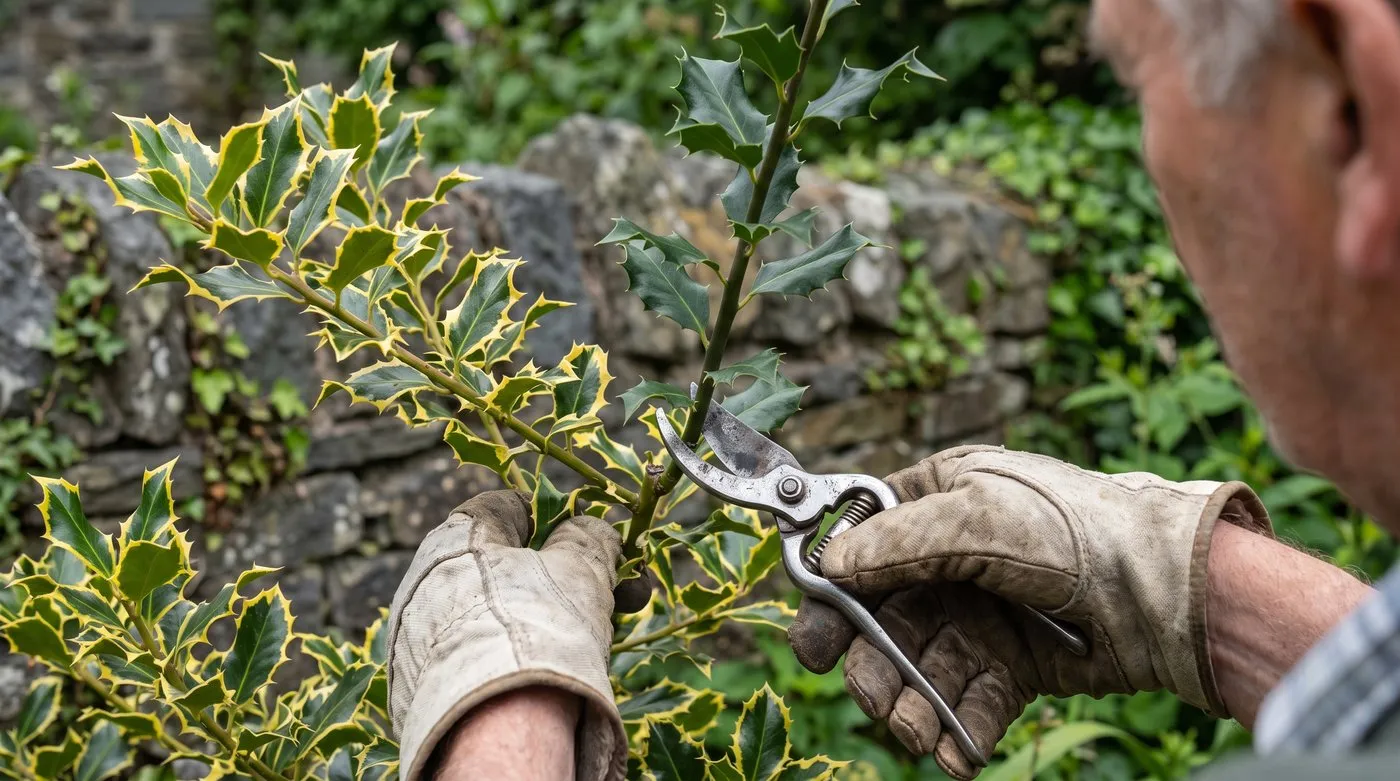
Cut where the green shoot starts, into the variegated wood, so it can’t simply regrow.
- Check regularly. Look over the shrubs above every few weeks from April to September, when shoots grow fastest.
- Follow the green shoot back. Trace it to the point where it comes out of variegated wood.
- Cut just below it. Use clean, sharp secateurs and cut into the variegated stem just below where the green growth begins. On a big branch, cut back to the nearest variegated side shoot.
- Take all of it. Any green section left behind can regrow.
- Look again in a few weeks. Green shoots often come in flushes, so a second look catches any you missed.
For general cutting technique, the guide to pruning shrubs has the details.
Gardener’s tip: Don’t leave a green shoot because it looks healthy or is carrying berries. The longer it stays, the stronger it gets and the more of the plant it takes over.
Does shade or pruning make reversion worse?
Yes, both can. Variegated leaves make less food than green ones. In deep shade the plant is short of light, so greener growth has an even bigger advantage. The same euonymus can stay bright gold in an open border yet go greener against a shady north wall. Plant variegated shrubs somewhere reasonably bright, and pick plain green ones from the best shrubs for shade for the gloomiest corners.
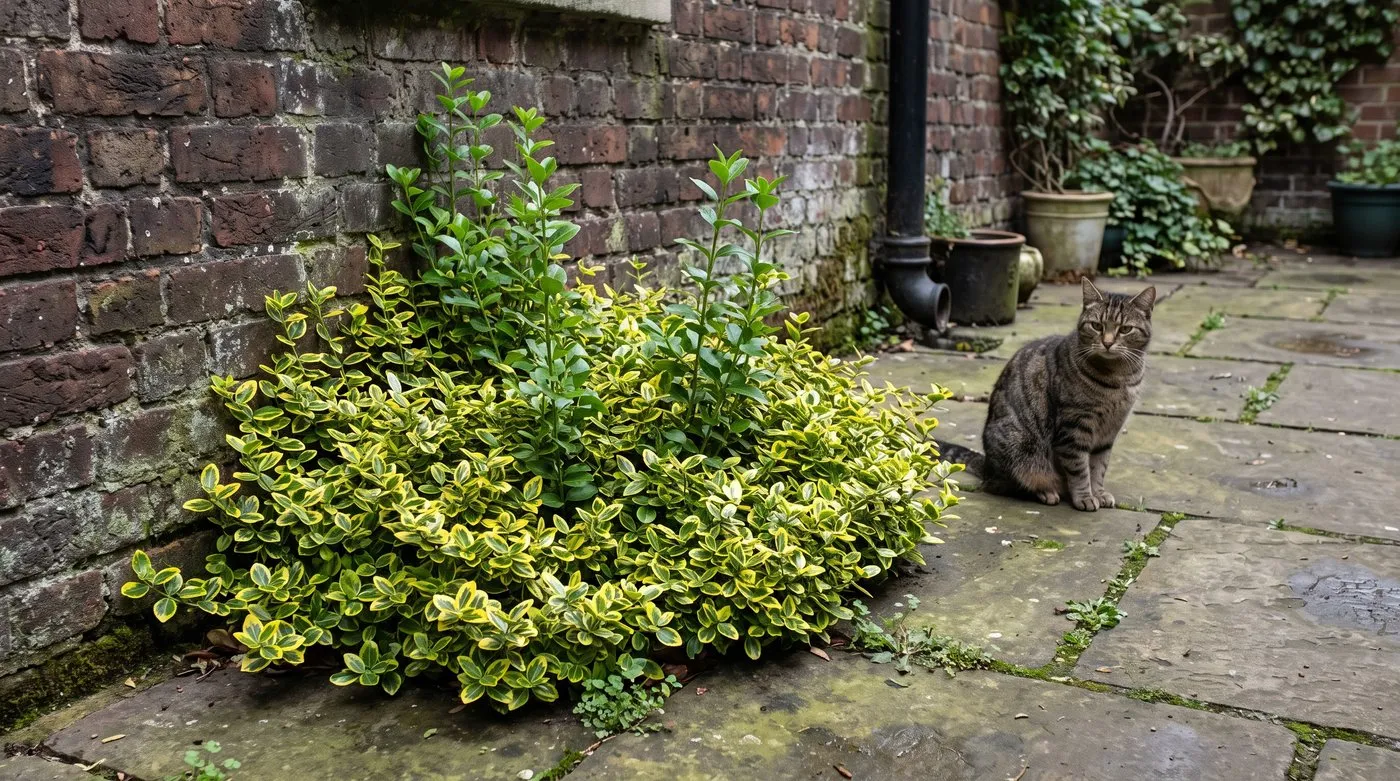
In a shady corner like this, green shoots get the upper hand faster, so check these plants more often.
Hard pruning into old wood can wake up dormant buds, and some of these come through green. Light, regular trimming keeps the plant balanced.
Don’t confuse reversion with fading. Some variegated plants show weaker markings on their existing leaves in shade or as leaves age. That’s not reversion, and better light usually helps. Yellowing all over the plant is different again, and the guide to chlorosis and yellow leaves covers it.
Reversion check calendar
| Month | What to do |
|---|---|
| January to February | Look over evergreens like euonymus and holly for green shoots. Cut back Cornus ‘Elegantissima’ in late winter and remove any green stems |
| March to April | Check new spring growth on every variegated shrub |
| May to June | Check the worst offenders every few weeks. This is when most green shoots appear |
| July to August | Keep checking. Trim variegated holly in late summer, cutting out green shoots as you go |
| September | Last main check of the year. Remove any green shoots before winter |
| October to December | Note which plants reverted most. Plan to move any struggling in deep shade |
Common mistakes with reverted shoots
Leaving green shoots “for later”. They only get stronger. Cut them out the week you spot them.
Cutting in the wrong place. Taking only the green tip leaves the base to regrow. Trace the shoot back into variegated wood.
Planting variegated shrubs in deep shade. Low light favours green growth. Give them a reasonably bright spot.
Pruning hard and rarely. A big cut into old wood can bring a flush of new shoots, some green. Trim lightly and often instead.
Expecting a fully green plant to recover. Once every shoot is green, it won’t go back. Enjoy it as a green shrub or replace it.
Frequently asked questions
Why do variegated plants turn green?
Part of the plant has reverted to plain green growth. Green shoots have more chlorophyll, so they grow faster than the variegated ones. Left alone, they slowly take over the plant.
Should I cut off reverted green shoots?
Yes, cut them out as soon as you see them. Follow each green shoot back to where it starts and cut into the variegated wood just below. Snipping only the tip lets it regrow.
Which plants revert the most?
Euonymus, elaeagnus and variegated holly are the usual culprits. Cornus alba ‘Elegantissima’, variegated box elder, weigela and Buddleja ‘Harlequin’ also do it. Give these a look every few weeks through the growing season.
Does shade cause reversion?
Shade can make it worse. Variegated leaves make less food, so a plant short of light tends to favour its greener growth. Give variegated shrubs a reasonably bright spot and they usually hold their pattern better.
Can a reverted plant be saved?
Yes, if some variegated growth remains. Cut out every green shoot and keep checking. If the whole plant has gone green, it won’t change back, so enjoy it green or replace it.
Is reversion the same as variegation fading?
No. Reversion produces whole new shoots with plain green leaves. Fading is when existing leaves show less contrast, often in deep shade. Better light helps both, but only reversion needs cutting out.
Keep your variegated shrubs looking sharp
Once you’ve spotted reversion, a few minutes with the secateurs keeps it in check. For shrubs that hold their looks with less fuss, browse the best evergreen shrubs for UK gardens, or find more fixes in the plant problems section.
Our team produces practical UK gardening guidance from source research, contributor records and established horticultural practice. Editorial standards are overseen by Matt W.


