Key takeaways
- Overwatering and root rot are the most common reasons a snake plant droops
- A soft, mushy base with a sour smell means rot, not thirst
- Trim rotted roots, repot into gritty cactus compost and wait a week before watering
- Water only when the compost is completely dry, roughly every 2 to 6 weeks
- Weak, leaning growth with a firm base usually means too little light
- Keep snake plants above 10°C and away from cold windows in winter
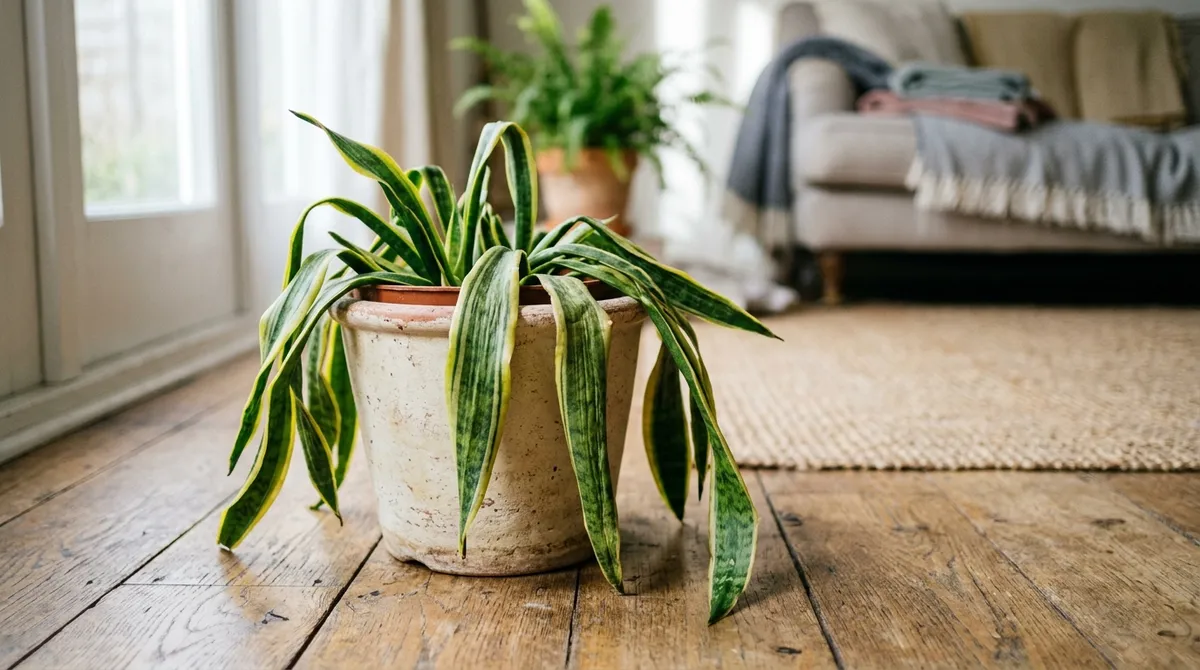
A drooping snake plant is a worry, because this is meant to be the toughest houseplant going. When the stiff leaves start to splay, flop over the rim or go soft near the soil, the problem is usually at the roots. In most UK homes the cause is too much water, made worse by dull winter light and chilly windowsills.
The good news is that most drooping snake plants can be saved. This guide helps you find the cause in a few minutes and put it right.
What’s making your snake plant droop?
Start at the base. Press a finger against each leaf where it meets the compost. Firm and springy is healthy. Soft, spongy or wet means rot has started, and the plant needs help today.
Then check the compost, the light and how cold the spot gets. This table matches what you see to the likely cause.
| What you see | Likely cause | What to do |
|---|---|---|
| Soft, mushy base, sour smell, leaves falling outwards | Overwatering and root rot | Trim rotted roots, repot into dry gritty compost |
| Firm base, whole plant leaning, new leaves thin and pale | Too little light | Move closer to a bright window |
| Soft, see-through patches after a cold spell | Cold damage | Move away from cold glass, cut off damaged leaves |
| Pot bulging or cracked, water runs straight through | Badly root-bound | Repot into a slightly bigger pot in spring |
| Leaves wrinkled and curling, pot feels very light | Underwatering (less common) | Water well, then let it drain |
| One or two creased leaves, rest firm | Knocks or damage | Leave or remove just those leaves |
Overwatering and root rot: the usual culprit
Overwatering kills more snake plants than anything else. They store water in their thick leaves and come from dry, rocky ground. Their roots need air. In constantly wet compost the roots rot, and the rot spreads up into the base of the leaves.
The signs come in order. The base softens first. Then the leaves lose their stiffness and fan outwards. Finally they flop over and may come away with a gentle tug. The compost stays wet for days and may smell sour. Fungus gnats buzzing around the pot are another clue that it’s too wet, and the guide to fungus gnats in houseplants covers those.
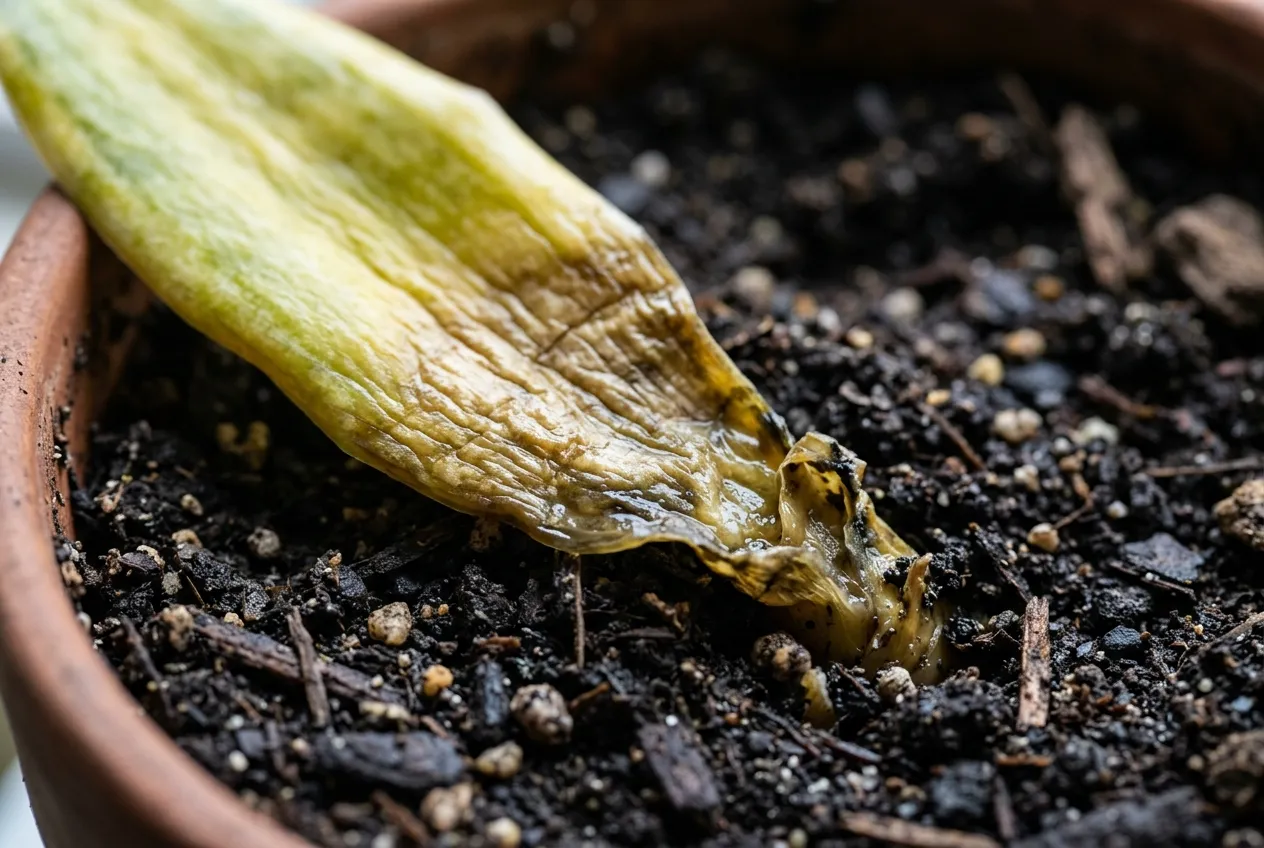
A leaf that has gone soft and yellow at the base won’t recover. Cut it away at soil level.
How to check the roots
Checking the roots takes five minutes and ends the guesswork. Lay down some newspaper, hold the leaves near the base, tip the pot sideways and slide the plant out.
Look at three things:
- The rhizome, the chunky underground stem, should be firm and pale, a bit like fresh ginger.
- The roots should be firm and white to orange.
- The base of each leaf should be solid where it joins the rhizome.
Anything brown, grey, soft, hollow or smelly is dead and needs to come out. Snake plants grow as clumps joined underground, so one rotted section doesn’t doom the rest. Keep every firm piece with healthy roots.
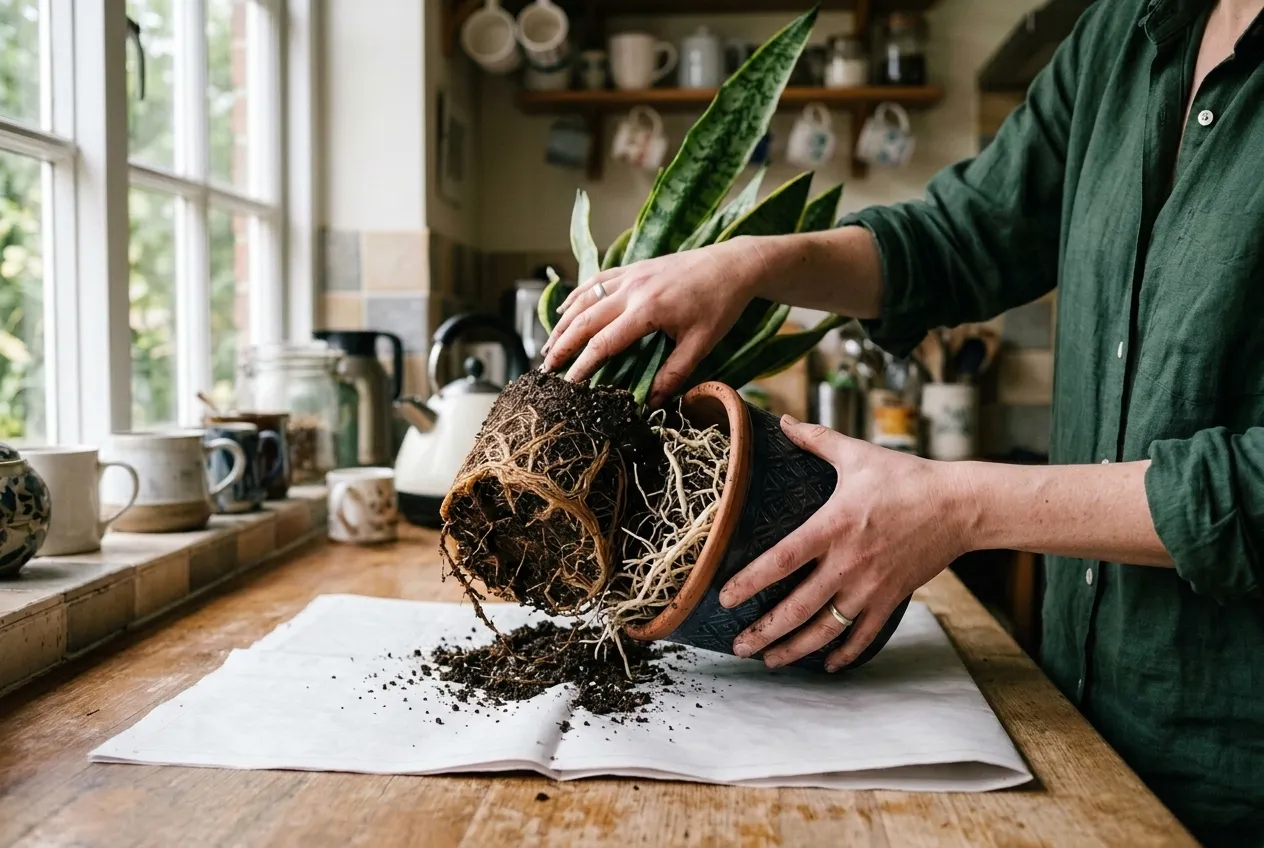
Tip the plant out to see what’s really going on. Firm, pale roots are healthy; brown, mushy ones have rotted.
How to rescue a rotting snake plant
Act as soon as you find soft roots. You’ll need fresh gritty compost, a clean pot with drainage holes and a clean knife.
- Shake or rinse all the old compost off the roots.
- Cut away every brown, soft or slimy root and any mushy rhizome, back to firm, pale tissue.
- Slice off any leaf that is soft at the base, cutting at soil level.
- Leave the plant somewhere shady for a few hours so the cuts dry.
- Repot into dry, gritty compost, with the rhizome just below the surface.
- Wait at least a week before watering, then water lightly and let it drain.
Use cactus or succulent compost, or mix two parts peat-free houseplant compost with one part grit or perlite. Pick a pot only a little bigger than the roots. Terracotta is ideal, as it dries out faster than plastic. Don’t reuse the old wet compost. The guide to repotting houseplants covers the basics.
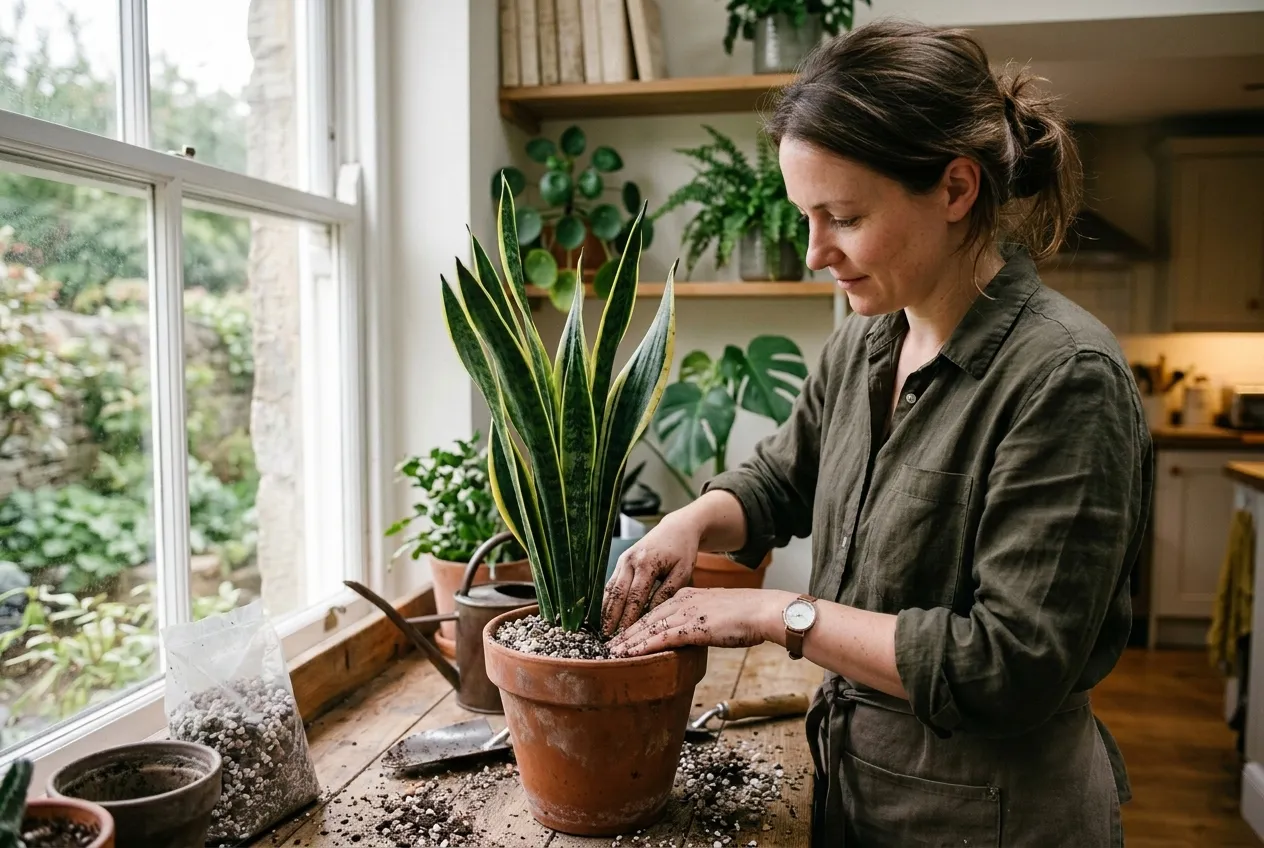
Gritty, free-draining compost lets the roots breathe. It’s the best defence against rot coming back.
If the base has rotted but higher parts of a leaf are firm, you can still start again. Cut the leaf into 8-10cm sections, let them dry for a day, then push them upright, bottom end down, into dry gritty compost. They root slowly over a few months. Cuttings from yellow-edged types usually come up plain green. The guide to propagating houseplants has more on cuttings.
Snake plants are mildly toxic to cats and dogs if chewed, so keep trimmings out of reach.
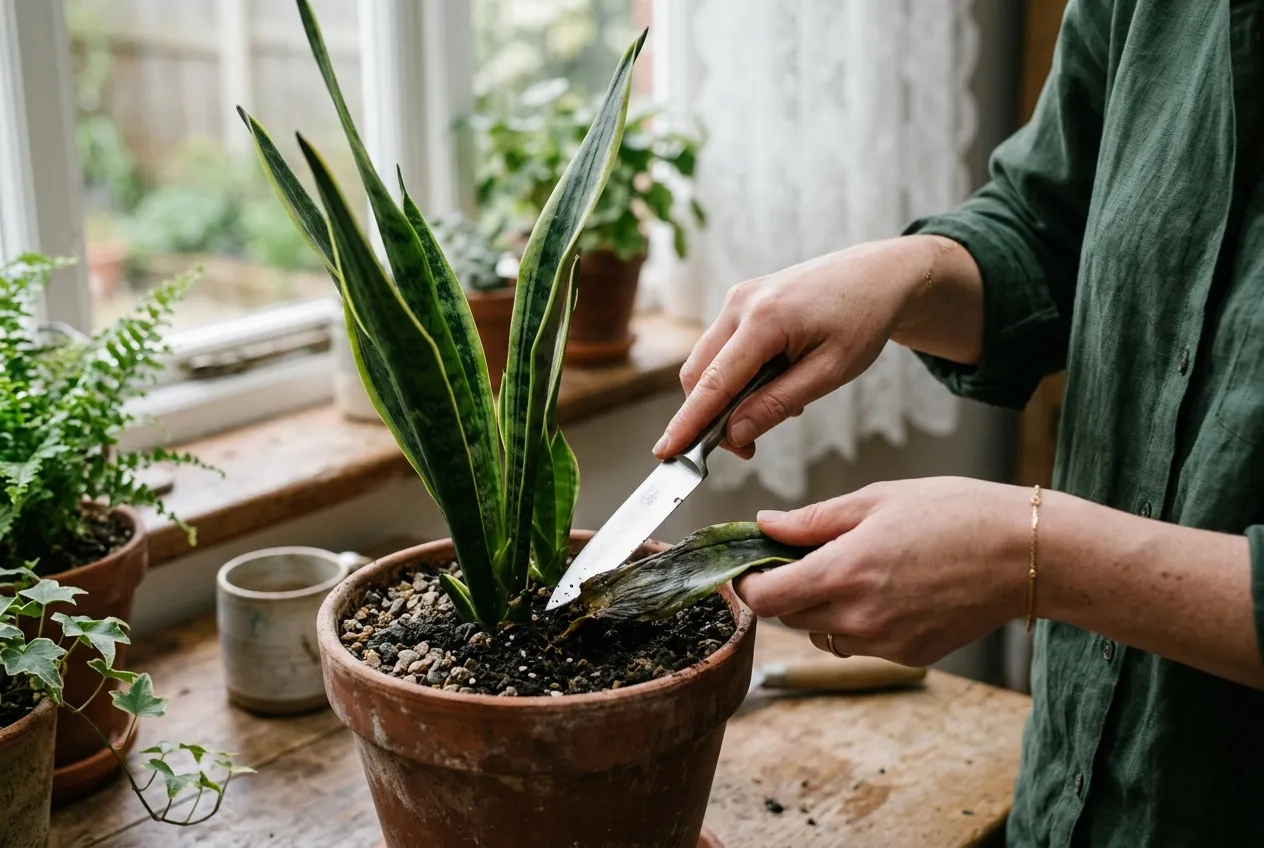
Cut soft leaves away at the base with a clean blade. Wipe the knife between cuts.
Too little light: weak, floppy growth
Low light is the second most common cause, and it bites hardest in a UK winter. Snake plants tolerate shade, but they don’t thrive in it. In a dim spot they stretch towards the light, and new leaves grow thin, pale and floppy.
You can tell this from rot easily. The base stays firm and the compost isn’t soggy. Instead the whole plant leans one way, and the newest leaves are the weakest.
Move the plant within a metre or two of a bright window. An east- or west-facing sill is ideal, and a south-facing one suits it in winter. Turn the pot a quarter each week so it grows evenly. Leaning leaves rarely straighten, but new growth will come up firm. If your room really is dark, the guide to low-light houseplants suggests plants that cope better.
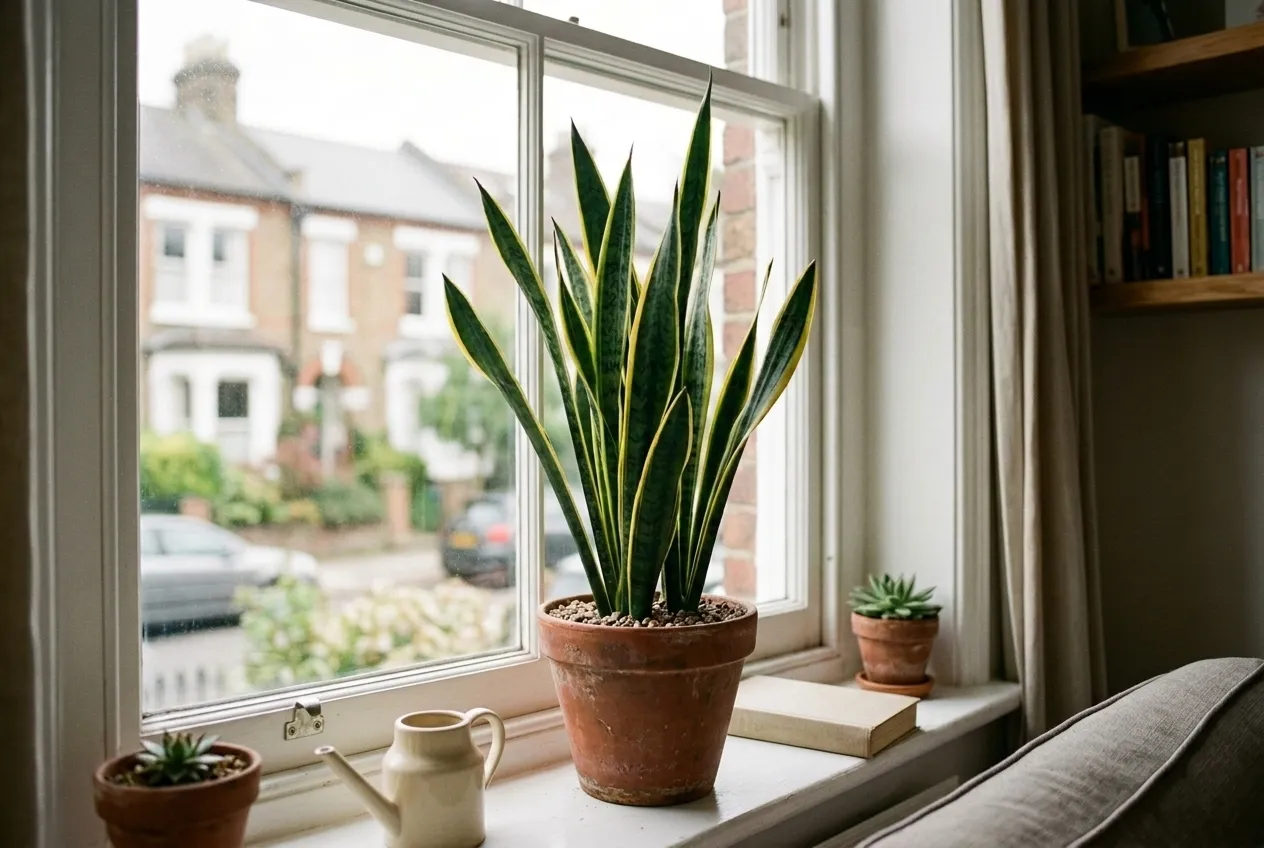
A bright windowsill keeps new growth stiff and upright, especially through the dull winter months.
Cold, tight pots and other causes
Cold is a common winter problem. Snake plants are tropical and suffer below about 10°C. Cold-damaged leaves develop soft, pale or see-through patches within days, then droop. Watch out for cold windowsills at night, unheated hallways and draughty doors. Move the plant somewhere that stays comfortably warm, and cut off leaves with soft patches.
A badly root-bound plant can droop too. When roots fill the pot completely, water runs straight through and the pot may bulge or crack. Repot in spring into a pot just a few centimetres wider. The guide to fixing root-bound houseplants shows how to tease out a tight rootball.
Old compost breaks down over the years and holds water like a sponge. That quietly leads back to root rot, so refresh it every few years.
How to water a snake plant so it doesn’t droop
Let the compost dry out completely, water well, then wait. A snake plant would rather be bone dry than damp.
Push a finger 5cm into the compost before you water. If you feel any moisture, wait. Lifting the pot helps too: a dry pot feels surprisingly light. When you do water, pour until it runs out of the drainage holes, then empty the saucer. Never leave the pot standing in water.
| Season | How often to water | Care notes |
|---|---|---|
| Spring (March to May) | Every 2 to 3 weeks | Growth starts again. Repot now if needed |
| Summer (June to August) | Every 2 to 3 weeks | Feed once or twice with a houseplant feed |
| Autumn (September to November) | Every 3 to 4 weeks | Water less as light fades. No feeding |
| Winter (December to February) | Every 4 to 6 weeks | Keep above 10°C and away from cold glass |
A warm, centrally heated flat dries pots faster than a cool room, so go by the compost, not the calendar.
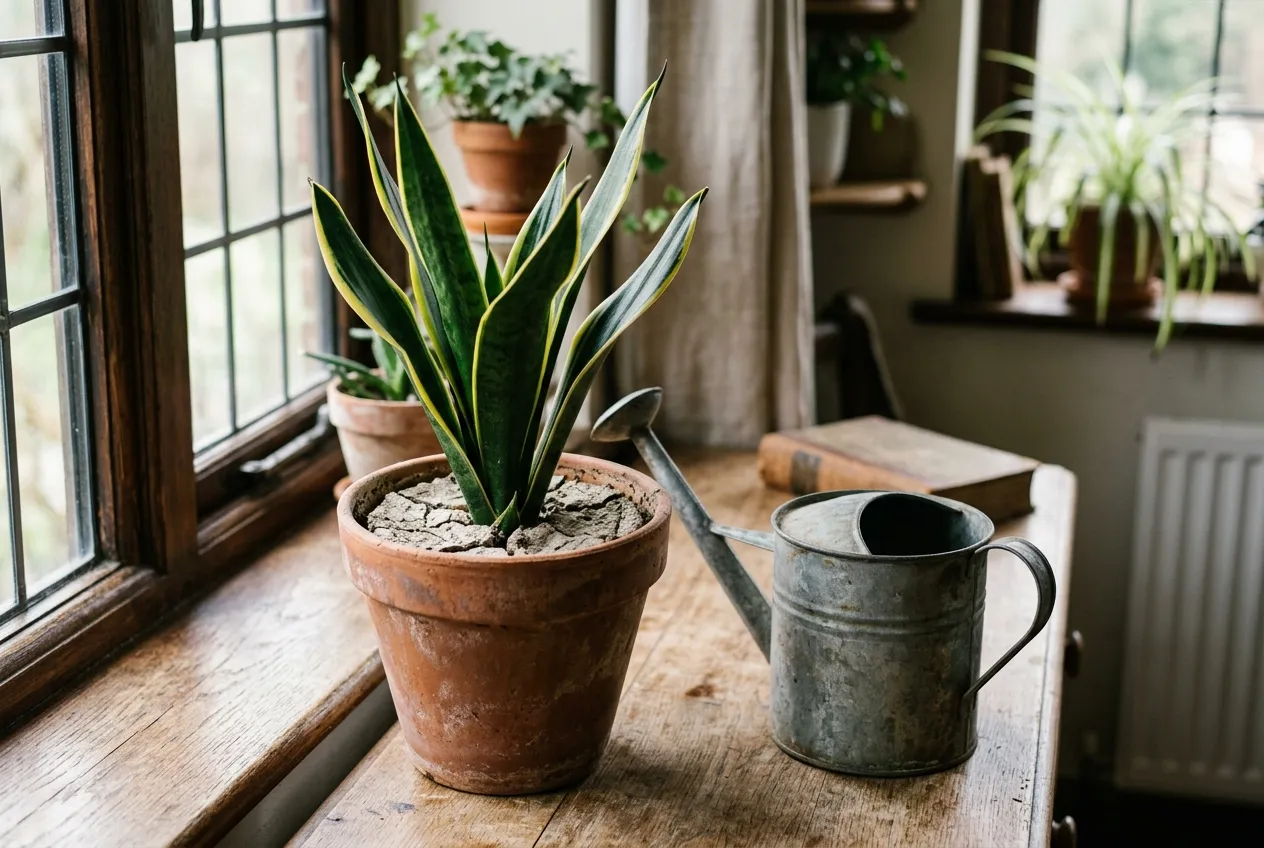
Dry compost like this means it’s time for a good soak. Then leave it until it’s dry again.
How long does recovery take?
A rescued snake plant firms up as new roots grow, usually over a month or two. The old splayed leaves won’t stand back up. Recovery shows in the new spears coming up stiff from the centre.
Give it bright light, warmth and a long dry gap between waterings. Don’t feed it until you see new growth. If the floppy old leaves bother you, tie them loosely to a cane for a while, or cut the worst ones off at the base. A small, firm plant soon bulks out again.
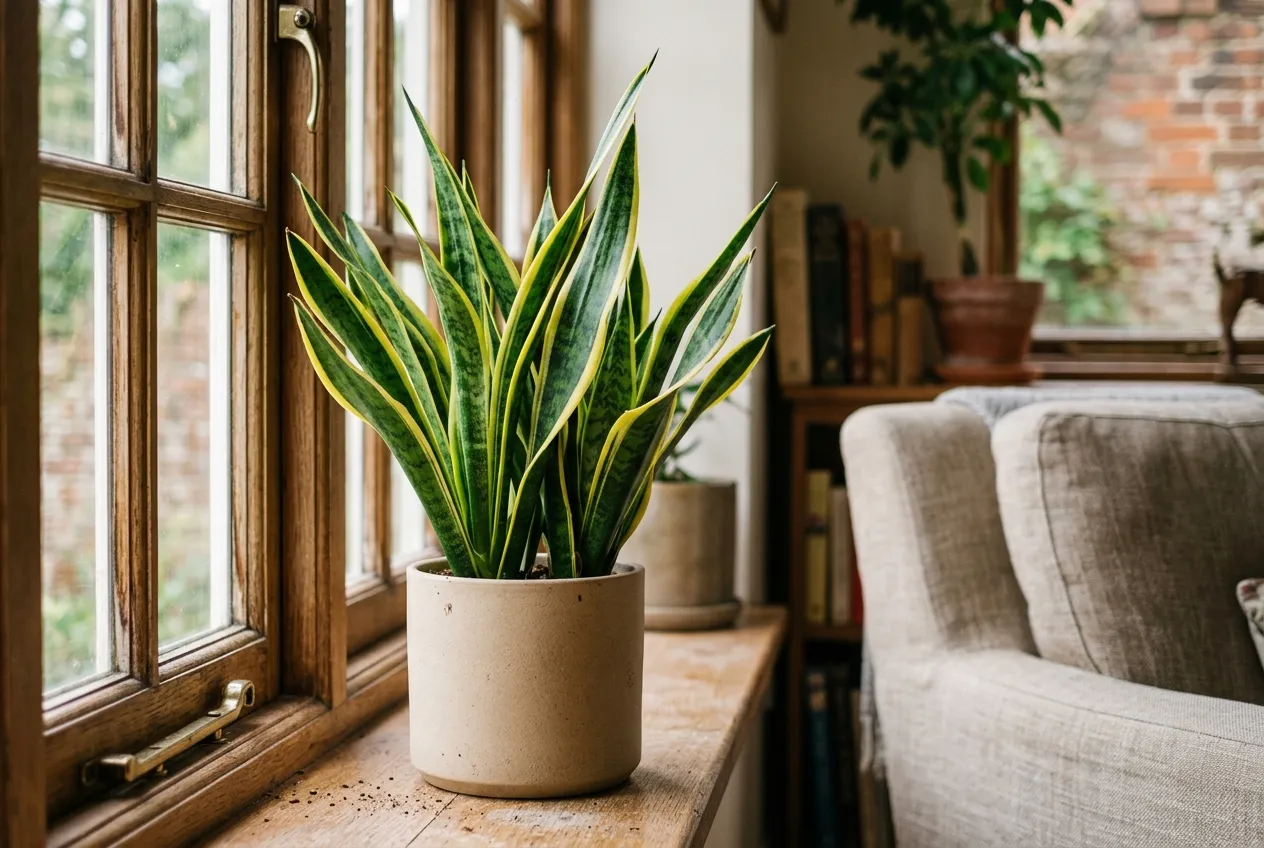
This is the goal: stiff, upright leaves. New spears from the centre show your rescue has worked.
Common snake plant mistakes
Watering on a fixed schedule. Weekly watering is the fastest route to rot. Check the compost first and water only when it’s dry.
Using heavy compost. Ordinary multipurpose compost stays wet for days. Use a cactus mix, or add plenty of grit or perlite.
Pots without drainage holes. Water collects at the bottom where you can’t see it. Plant into a pot with holes and tip out any water in an outer pot.
Leaving it in a dark corner. Growth turns weak and floppy. Give it a bright spot near a window.
Jumping up several pot sizes. A big pot holds damp compost the roots can’t use. Go up just a few centimetres at a time.
Frequently asked questions
Why is my snake plant drooping and falling over?
Overwatering and root rot are the most common causes. Soggy compost rots the roots and base, so the leaves lose support and splay outward. Check the base for softness and a sour smell. Too little light is the next most likely cause.
Can a drooping snake plant recover?
Yes, most recover if some healthy roots remain. Trim the rot, repot into dry gritty compost, give it bright light and water sparingly. New upright growth follows within a couple of months. If the whole base has rotted, root firm leaf sections as cuttings instead.
How often should I water a snake plant in the UK?
Every 2 to 6 weeks, depending on the season. Aim for every 2 to 3 weeks in summer and every 4 to 6 weeks in winter. Always let the compost dry out completely first, then water well and let it drain. When in doubt, wait. Snake plants cope with drought far better than wet roots.
Should I cut the drooping leaves off my snake plant?
Only cut off leaves that are soft, mushy or yellow. Slice them away at the base with a clean knife. Firm leaves that lean from low light can stay while new upright growth comes through.
Why is the base of my snake plant soft and mushy?
A soft, mushy base means root rot from overwatering. Tip the plant out, cut away every brown or slimy root and remove soft leaves at soil level. Repot into dry cactus compost and don’t water for at least a week.
Does a snake plant droop from too little light?
Yes, low light gives weak, stretched, floppy growth. New leaves come up thin and pale and lean instead of standing stiff. Move the plant within a metre or two of a bright window. New growth will come up firm.
Will a root-bound snake plant droop?
Yes, a badly root-bound plant can splay and droop. Packed roots struggle to take up water and may crack the pot. Repot in spring into a pot just a few centimetres wider. Snake plants like being slightly snug.
Now your snake plant is on the mend, read the snake plant care guide to keep it happy all year. There’s more indoor help in the houseplants hub.
Our team produces practical UK gardening guidance from source research, contributor records and established horticultural practice. Editorial standards are overseen by Matt W.