Key takeaways
- Check the undersides of leaves every week from May, as early action makes all the difference
- Pale speckles on top of leaves and fine webbing underneath are the first signs
- Predatory mites (Phytoseiulus) are the best control, released at the first sign of damage
- Spider mites hate damp air, so damp down the floor on hot days
- A good clean in October removes the mites hiding in cracks over winter
Spider mites are one of the most annoying pests in a British greenhouse. The two-spotted spider mite (Tetranychus urticae) loves warm, dry air, and a greenhouse in summer gives it exactly that. A few mites in June can turn into a webby mess by August.
The trick is to catch them early. They breed very fast in hot weather, so by the time most people notice, the problem has spread. Here’s how to spot them and fight back with friendly predators. You’ll also see how to stop them returning next year.
How to identify spider mites in your greenhouse
You’ll usually spot the damage before the mites. Each mite is about the size of a full stop, so a cheap hand lens is a real help.
What to look for
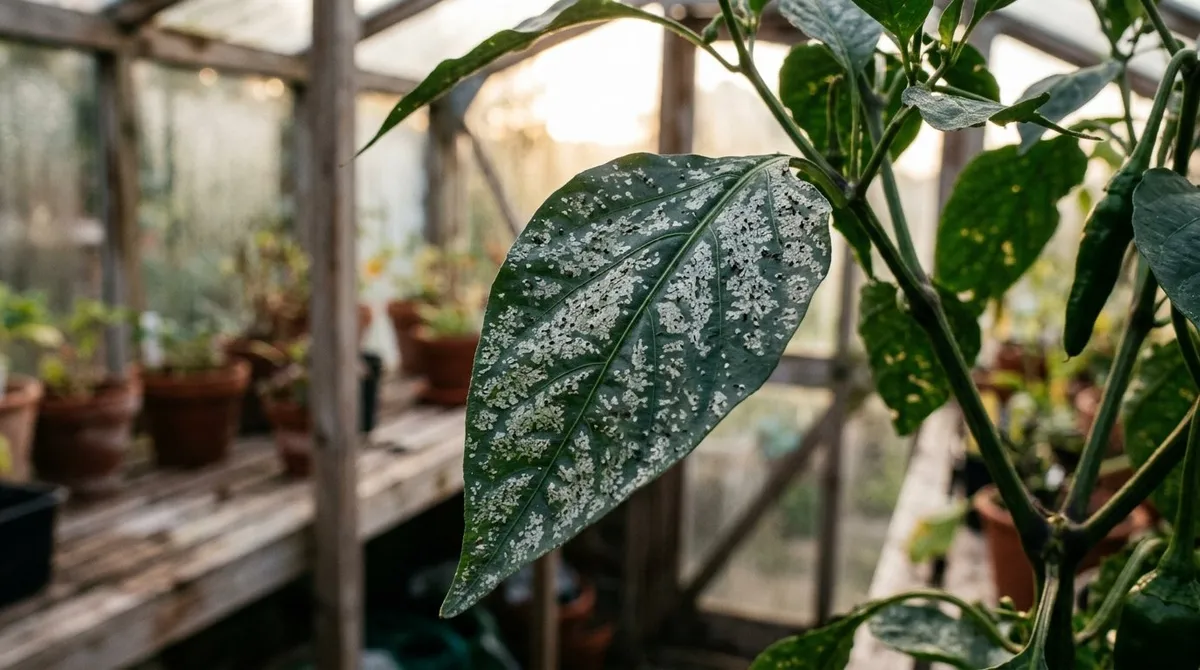
- Pale speckles on the top of leaves. Each tiny dot is where a mite has fed.
- Fine webbing under the leaves, often where the leaf joins the stem. Bad attacks cover whole shoot tips.
- Bronzed, curling leaves that dry up and drop early.
- Tiny moving dots under leaves. Hold white paper under a leaf and give it a sharp tap to see them fall.
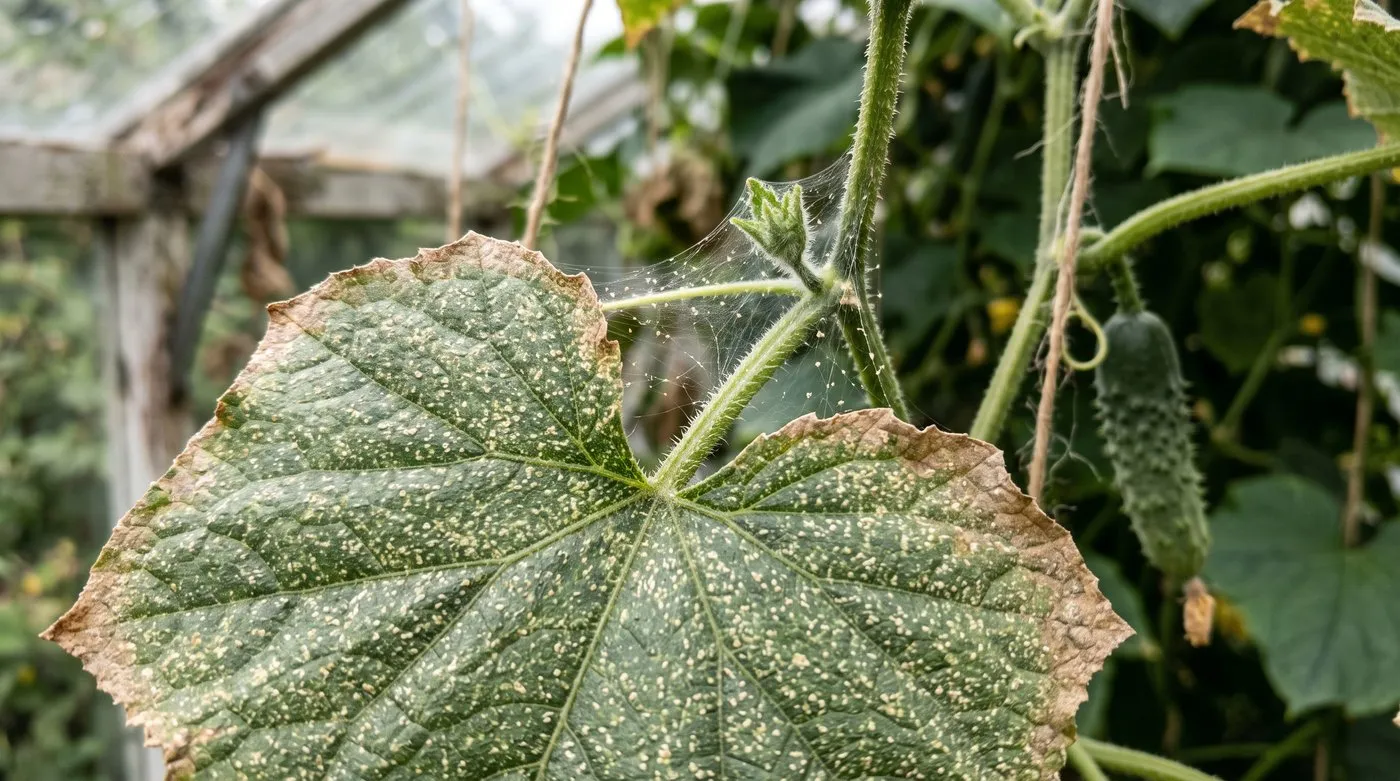
Fine pale speckles and wispy webbing are the classic signs. Check lower leaves weekly from May, before the damage climbs the plant.
Telling them apart
In summer the mites are pale green or yellow, with two dark spots on the back. In autumn the females turn orange-red before they hide for winter. That’s why people call them red spider mite, but it’s the same pest.
Gardener’s tip: Check plants weekly from May. Look at the underside of lower and middle leaves first, as that’s where mites settle. By the time the top leaves look poorly, the mites are well established.
The spider mite year in a UK greenhouse
Knowing what the mites do each season tells you when to act.
Winter hideaway (October to March)
As the days shorten, females stop feeding, turn orange-red and hide in cracks. They tuck in under staging, in frame joints, behind labels and in the soil. They cope happily with a cold, unheated greenhouse. In a heated greenhouse they may keep breeding slowly all winter.
Spring build-up (April to May)
The females wake up as days lengthen and warm up, and start laying eggs. Numbers grow slowly at first while it’s still cool.
Summer boom (June to August)
This is when things go wrong fast. In hot weather a new generation comes along in little more than a week. Damage can go from barely there to severe in two or three weeks. Crops most at risk include tomatoes, cucumbers, peppers and chillies, aubergines, roses and fuchsias.
Autumn slowdown (September to October)
Shorter days send females back into hiding. The plants look clearer, but the mites haven’t gone. They’re waiting for spring.
Plants most affected by spider mites
Spider mites like soft, leafy plants best. These are the ones to watch.
| Plant | Risk | What you’ll see |
|---|---|---|
| Cucumber | Very high | Yellowing, wilting, webbing on growing tips |
| Aubergine | Very high | Silvery leaf undersides, leaves dropping early |
| Tomato | High | Pale speckles, bronzing, fewer fruits |
| Pepper and chilli | High | Curled leaves, flowers dropping, small fruit |
| Strawberry | High | Bronzed leaves, small fruit |
| French bean | Medium | Yellow mottling, twisted pods |
| Rose | High | Grey-green leaves, webbing, damaged buds |
| Fuchsia | Very high | Leaves dropping, webbing |
| Basil and mint | Medium | Speckled, twisted leaves |
Watch outside too: Spider mites also attack outdoor plants in hot, dry summers. If you grow runner beans against a sunny wall, check them in heatwaves.
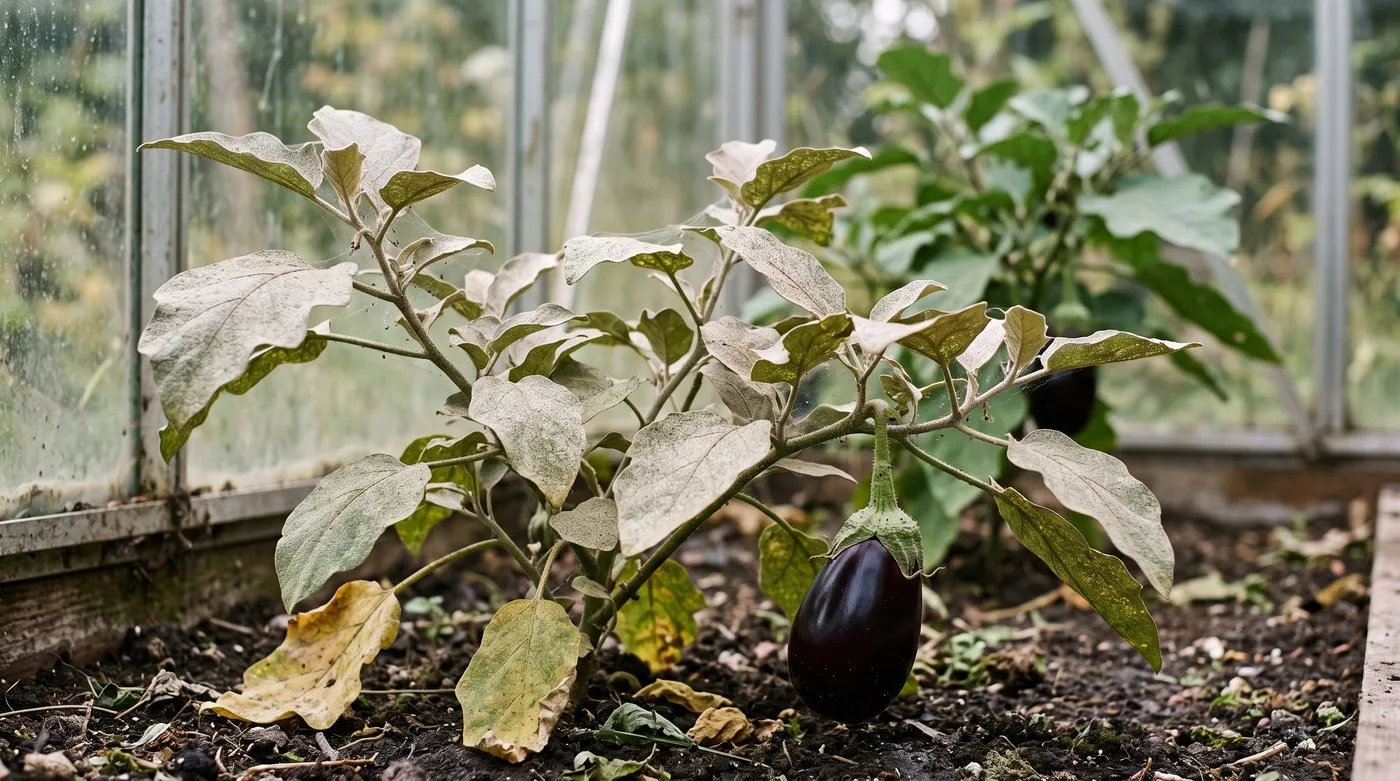
Aubergines and cucumbers are favourites, so check them first. Dull, silvery leaves that drop early are a warning to act now.
Biological control with predatory mites
Predatory mites are the best way to deal with spider mites in a home greenhouse. They’re safe on food crops and the pests can’t become resistant to them.
Phytoseiulus persimilis
Phytoseiulus persimilis is a small, fast red mite that eats nothing but spider mites. It’s a hungry little hunter and clears up eggs and adults alike.
You can buy it by post from biological control suppliers. It comes:
- Loose in vermiculite, to shake onto affected leaves
- On bean leaf pieces, to lay on your plants
- In sachets, to hang on plants
Follow the supplier’s guide for how many to release for your greenhouse size.
To give them the best chance:
- Release them when it’s above about 16C. Below that they stop breeding.
- Keep the air damp by damping down or misting.
- Don’t use pesticide sprays for several weeks before you release them. Check the supplier’s advice.
- Release them early, when you first see speckling on a leaf or two. Heavy webbing makes it hard for them to get about.
Top them up every two or three weeks if the mites keep coming.
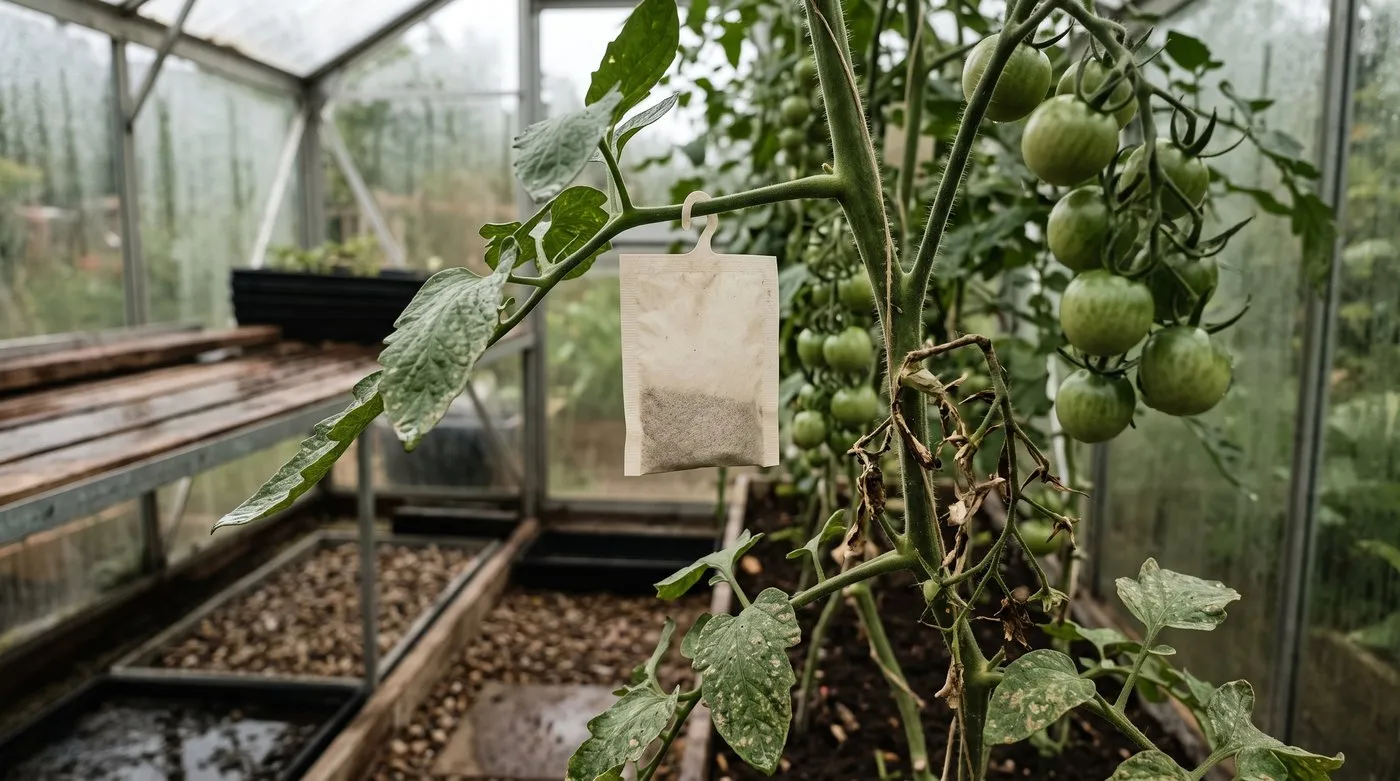
Predators work best released early, at the first speckled leaves. Keep the air damp and they’ll hunt down the spider mites for you.
Other helpful predators
| Predator | When it helps |
|---|---|
| Amblyseius californicus | Good for prevention. Copes with drier air and lives on other food when mites are scarce. |
| Feltiella acarisuga (predatory midge) | Its larvae feed among the webbing. Likes damp air. |
| Amblyseius andersoni | Works over a wide range of temperatures. Also eats thrips. |
| Stethorus punctillum (tiny ladybird) | Flies to heavy infestations and feeds hard. |
For whitefly, aphids, vine weevil and slugs too, see our greenhouse pest control guide. Our guide to organic pest control has more chemical-free ideas.
Simple ways to slow spider mites down
These won’t get rid of spider mites on their own. They do slow them down and help the predators win.
Keep the air damp
Spider mites love dry air and hate damp air. To keep things humid:
- Damp down the floor and staging with water on hot mornings. Do it again in the afternoon in a heatwave.
- Mist the plants, aiming at leaf undersides. Do it in the morning so leaves dry before night.
- Group plants on wet capillary matting or trays of damp gravel.
- Don’t overdo the vents in hot, dry spells. You still need air to keep it cool, but balance it with damping down.

Spider mites love dry air. Wetting the floor and staging on hot mornings raises the humidity and helps the predators too.
Keep it cool
Very hot greenhouses suit mites and stress plants. Use shading paint or shade netting to stop it getting too hot. Automatic vent openers help too. Our guide to greenhouse ventilation and humidity control explains how to balance air and moisture through the season.
Remove badly hit leaves
Pick off the worst leaves and pop them straight into a bag. Don’t drop them on the floor, or the mites will walk to the next plant. Seal the bag and put it in the bin.
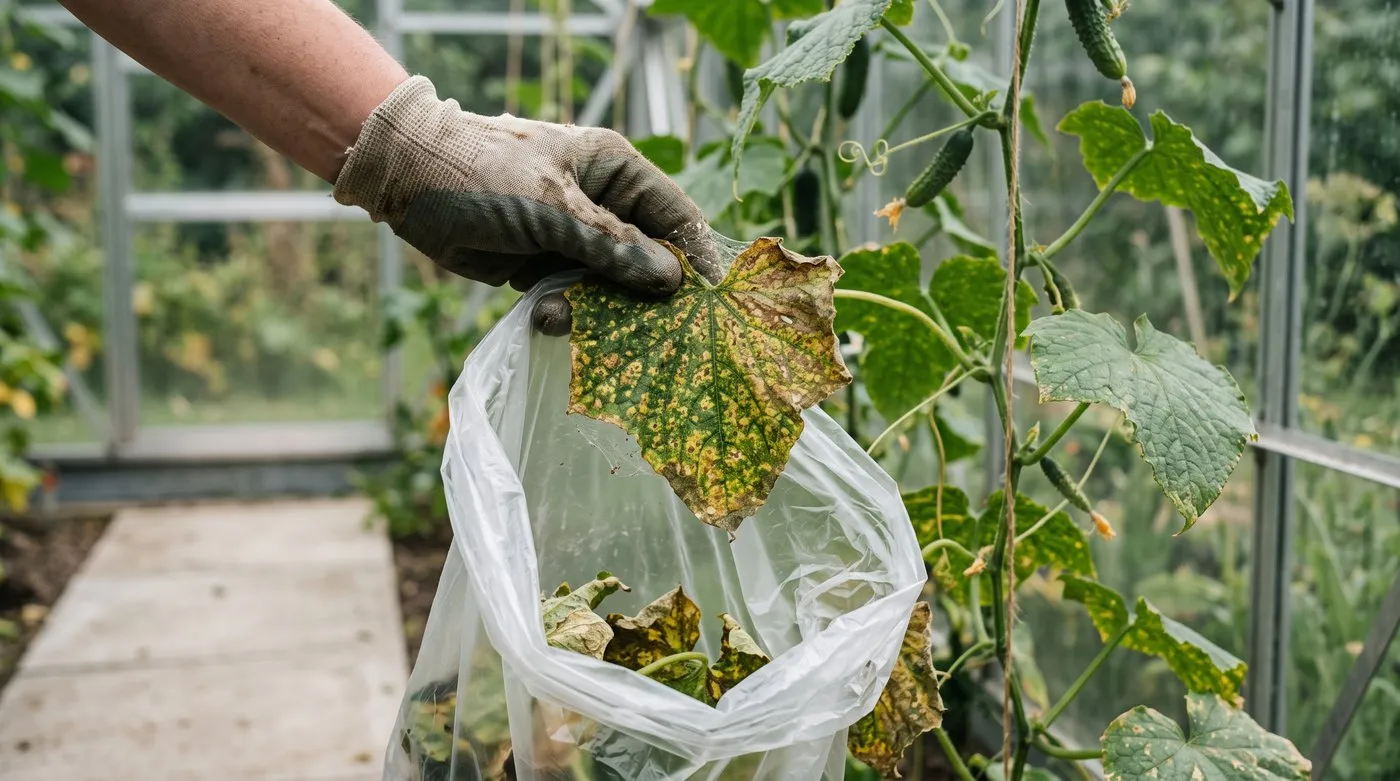
Pop damaged leaves straight into a bag, not onto the floor. Seal it and bin it so the mites can’t walk back to the next plant.
Give the greenhouse an autumn clean
This is the best way to stop next year’s attack. In October, once crops finish:
- Clear out all plant debris, pots, labels and bits and pieces
- Wash the glass, staging and frame with a greenhouse disinfectant
- Pay extra attention to cracks and joints, where the females hide
- Scrub the staging, including underneath
- Clean or replace capillary matting
- If you can, leave it empty and open for a few frosty nights
A good clean gets rid of most of the hiding mites. It also buys you time in spring to get predators going.
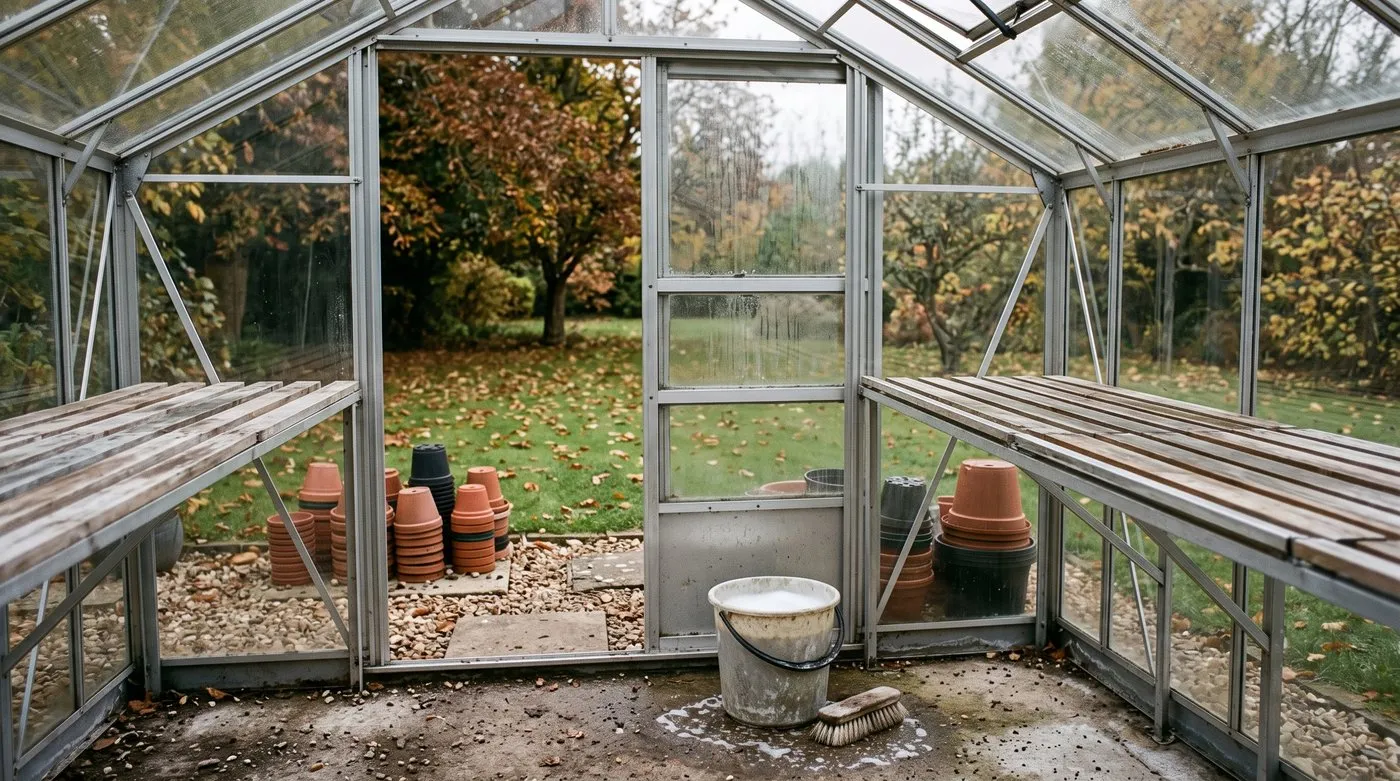
An autumn clean clears out the females hiding in cracks for winter. Scrub the joints and staging, then leave it open for a few frosty nights.
Organic sprays for spider mites
Organic sprays only kill the mites they touch. Any you miss will carry on breeding, so you need to be thorough.
Sprays to look for
| Spray type | How it works | Good to know |
|---|---|---|
| SB Plant Invigorator | Physical action, plus a feed | Can be used alongside predators after 24 hours |
| Plant oil spray (rapeseed oil) | Smothers the mites | Buy a ready-made product, don’t mix your own |
| Fatty acid spray (soft soap) | Breaks down the mite’s coat | Gentle, needs several goes |
Always pick an authorised product and follow the label, and check it lists spider mite. Neem oil and home-made oil or washing-up liquid mixes are not legal to use as pesticides in the UK.
How you spray matters most. The mites live under the leaves, so spraying the tops does very little. Use a fine mister, start at the bottom of the plant and work up. Wet every leaf underside until it drips.
Repeat every 5 to 7 days, three or four times. That catches the young mites that hatch from eggs after each spray.
Gardener’s tip: Use SB Plant Invigorator to knock back a bad patch. Then release Phytoseiulus 24 hours later to mop up the rest.
Chemical sprays
Chemical sprays are a poor choice for spider mites in a home greenhouse. Most garden insect killers aren’t made for mites and don’t list them on the label. They also kill the predators that would help you.
Spider mites become resistant to chemicals very quickly. A spray that seemed to work one year may do nothing the next. If you do spray, choose a product that lists spider mite on the label and follow it exactly.
Why spraying so often disappoints
- Missed mites. They hide under leaves in their webbing, where spray struggles to reach.
- Resistance. Many greenhouse mites shrug off common sprays.
- Bounce-back. Sprays kill helpful predators too. The surviving spider mites then breed with nothing to stop them.
Spider mite calendar for UK greenhouses
| Month | What the mites are doing | What to do |
|---|---|---|
| January to February | Hiding in cracks | Plan your predator orders. Clean the greenhouse if you missed autumn. |
| March | First females waking up | Check their hiding places and wipe away any you see. |
| April | Slow build-up | Start weekly leaf checks. Order Phytoseiulus. |
| May | First speckling appears | Release Amblyseius californicus as prevention. Damp down on warm days. |
| June | Numbers rising fast | Release Phytoseiulus at the first sign. Keep the air damp. |
| July | Peak breeding | Check closely. Top up predators. Use organic sprays if needed. |
| August | Worst damage | Top up predators every two or three weeks. Remove bad leaves. |
| September | Slowing down | Last predator release. Plan the autumn clean. |
| October | Heading into hiding | Give the greenhouse a thorough clean and clear all debris. |
| November to December | Asleep | Keep it tidy. Seal gaps and cracks where you can. |
Common mistakes with spider mites
Waiting too long
Acting at the first speckled leaf is far easier than tackling a webbed-up plant. A quick weekly check is the best habit you can get into.
Spraying the tops of leaves
The mites feed and lay eggs under the leaves. Spray there every time. It takes longer, but anything else is wasted effort.
Using the same chemical again and again
Spider mites become resistant very quickly. Predators are a better bet, as mites can’t get used to being eaten.
Skipping the autumn clean
Without it, lots of females sleep through winter in the cracks. Next spring they get a head start. A couple of hours in October saves a lot of bother next summer.
Opening everything up in dry weather
Throwing open every vent and door in a hot, dry spell makes the air very dry. That’s just what spider mites like. Keep some airflow, but damp down too. Tomatoes and cucumbers like the extra moisture as well.
Putting it all together through the year
No single method does the whole job. Mix them together like this:
- Autumn: a thorough greenhouse clean. Clear debris and wash surfaces.
- March to April: look for waking mites. Start weekly leaf checks.
- May: release Amblyseius californicus as prevention. Start damping down.
- June: at the first speckling, release Phytoseiulus persimilis. Keep the air damp.
- July to August: top up predators every two or three weeks. Spot-spray bad patches with SB Plant Invigorator. Remove the worst leaves.
- September to October: last predator release, then clean up as crops finish.
This works well and is perfectly safe for food crops. The RHS spider mite page has helpful photos for checking what you’ve got.
If powdery mildew turns up as well, it’s a sign plants are stressed. Better growing conditions help with both problems.
Now you’ve got spider mites in hand, try our guide on greenhouse pest control next.
Frequently asked questions
What do spider mites look like in a greenhouse?
They’re tiny, about the size of a full stop. In summer they’re pale green or yellow with two dark spots. Overwintering females turn orange-red. You’ll usually notice fine webbing under leaves and pale speckles on top first.
What is the best biological control for spider mites?
Phytoseiulus persimilis, a predatory mite that only eats spider mites. Release it as soon as you see the first damage, while numbers are low. It needs warmth above about 16C and damp air to settle in.
Can spider mites survive winter in an unheated greenhouse?
Yes, the females hide in cracks and sleep through the cold. They shelter under staging, in frame joints and in the soil from autumn. They wake up in March or April as it warms. A good autumn clean gets rid of most of them.
Do spider mites attack tomatoes?
Yes, tomatoes are one of their favourite greenhouse crops. They feed under the leaves, causing pale speckles that turn bronze before the leaves drop. A bad attack means fewer tomatoes. Check the lower and middle leaves weekly from June.
What organic sprays kill spider mites?
Authorised plant oil and fatty acid sprays smother mites on contact. SB Plant Invigorator works in a similar way. Neem oil and home-made mixes are not legal to use as pesticides in the UK. Spray under every leaf, and repeat every 5 to 7 days three or four times.
Why do spider mites keep coming back?
Females hide in greenhouse cracks over winter and wake up in spring. They also become resistant to sprays quickly, and new plants can bring mites in. An autumn clean, early predators and checking new plants will break the cycle.
How do I prevent spider mites in my greenhouse?
Clean the greenhouse well every autumn. Clear debris and wash the glass and staging, as mites hide in the cracks. Damp down the floor on hot days, since mites love dry heat. Check new plants before bringing them in, and release predators as soon as you see damage.
Our team produces practical UK gardening guidance from source research, contributor records and established horticultural practice. Editorial standards are overseen by Matt W.