Key takeaways
- Seven pests cause most greenhouse trouble, led by whitefly, red spider mite and aphids
- Check the undersides of leaves every week from April
- Helpful bugs like Encarsia wasps and predatory mites are safe on food crops
- Most helpful bugs need warmth, so bring them in from late spring
- A good autumn clean clears out pests hiding over winter
- Plenty of fresh air keeps the greenhouse less welcoming to pests
Greenhouse pests love the same warm, sheltered conditions that make growing under glass so rewarding. The warmth that ripens your tomatoes also lets whitefly, red spider mite and aphids multiply fast. A few pests in May can become a real headache by July if you don’t catch them.
The good news is there’s a reliable answer for every common greenhouse pest. Helpful bugs such as tiny wasps, predatory mites and nematodes do a great job. Add good hygiene and plenty of fresh air, and most gardeners can keep pests in check without reaching for sprays.
How to identify common greenhouse pests
Knowing what you’re dealing with is half the battle. These seven are the usual suspects in UK greenhouses.
| Pest | What to look for | Damage | When |
|---|---|---|---|
| Glasshouse whitefly | Tiny white flies under leaves | Sticky honeydew, black mould, yellowing | May to October |
| Red spider mite | Tiny yellow-green mites, fine webbing | Pale speckling, bronzed leaves | June to September |
| Aphids | Green, black or pink clusters on shoot tips | Twisted growth, honeydew | April to October |
| Vine weevil | Black beetles; C-shaped white grubs in compost | Grubs eat roots, adults notch leaves | Adults May to September, grubs autumn to spring |
| Slugs and snails | Slime trails on staging | Seedlings eaten, holes in leaves and fruit | All year in heated greenhouses |
| Mealybug | White, waxy, cottony blobs | Sap sucking, honeydew, weak plants | All year indoors |
| Scale insects | Brown domed bumps on stems and leaf veins | Sap sucking, honeydew, dieback | All year indoors |
Check your plants weekly from April. A handful of pests is far easier to deal with than a big colony. For more on red spider mite, see our guide to spider mite identification and control.
Biological controls for greenhouse pests
Biological controls are natural enemies of pests that you buy and release into the greenhouse. They’re the best long-term answer and safe to use on food crops right up to picking.
Whitefly: Encarsia formosa
The tiny wasp Encarsia formosa is the go-to control for glasshouse whitefly. It lays an egg inside young whitefly, which turn black as the wasp grows inside. Release it from May, following the supplier’s instructions. It needs warmth and good light to work, so it does best in summer. Give it a few weeks to make a difference.
Spider mites: Phytoseiulus persimilis
Phytoseiulus persimilis is a fast-moving predatory mite that eats red spider mites and their eggs. Release it at the first sign of pale speckling on leaves, not once webbing has taken over. It likes warmth and some humidity, so damp down the floor on hot days. You may need to top it up during the peak season.
Aphids: Aphidius colemani
The tiny wasp Aphidius colemani lays its eggs inside aphids. Aphids it has used turn into swollen, papery brown “mummies” on the leaves. Release it from April, when the first aphids appear. For bad outbreaks, add lacewing larvae too. Our full aphid control guide has more ideas.
Vine weevil and slugs: nematodes
Nematodes are microscopic worms you water into the compost. One kind, Steinernema kraussei, attacks vine weevil grubs. Water it in during spring or autumn when the compost is above 5C. Another, Phasmarhabditis hermaphrodita, tackles slugs. See our guides on vine weevil treatment and getting rid of slugs for when to apply them.
 A Vitavia louvre vent lets fresh air in low down and keeps the greenhouse from getting too humid.
You can shop the Vitavia Louvre Window at Greenhouse Stores.
Prevention: ventilation, hygiene, and companion planting
Stopping pests getting a foothold is cheaper and easier than dealing with them later. Three habits make the biggest difference.
Ventilation and airflow
Still, damp air suits whitefly and grey mould. Hot, dry air suits red spider mite. You want moving air that keeps it from getting too hot or too humid.
Automatic vent openers are the easiest upgrade. Our guide to greenhouse ventilation and humidity control covers the different vents and how to keep humidity comfortable. The Palram Auto Vent Opener opens roof vents as it warms up, with no electricity needed. For side vents, the Vitavia Louvre Window lets air in low down, and the Elite Automatic Louvre Opener opens it for you. Roof and side vents together give a through-draught that pests don’t like.
Greenhouse hygiene
A good autumn clean is the best thing you can do. Pest eggs and sleeping adults hide over winter in cracks, under staging and in old plant bits. In October, clear everything out. Wash the glass, staging and frame joints with greenhouse disinfectant, and scrub under the staging where slugs hide. An afternoon’s work makes a big difference next spring.
Through the season, pick off dead leaves and clear fallen fruit. Check every new plant before it comes in, looking under the leaves and on the compost. If you can, keep new plants separate for a week. Our greenhouse growing calendar has monthly reminders to help.
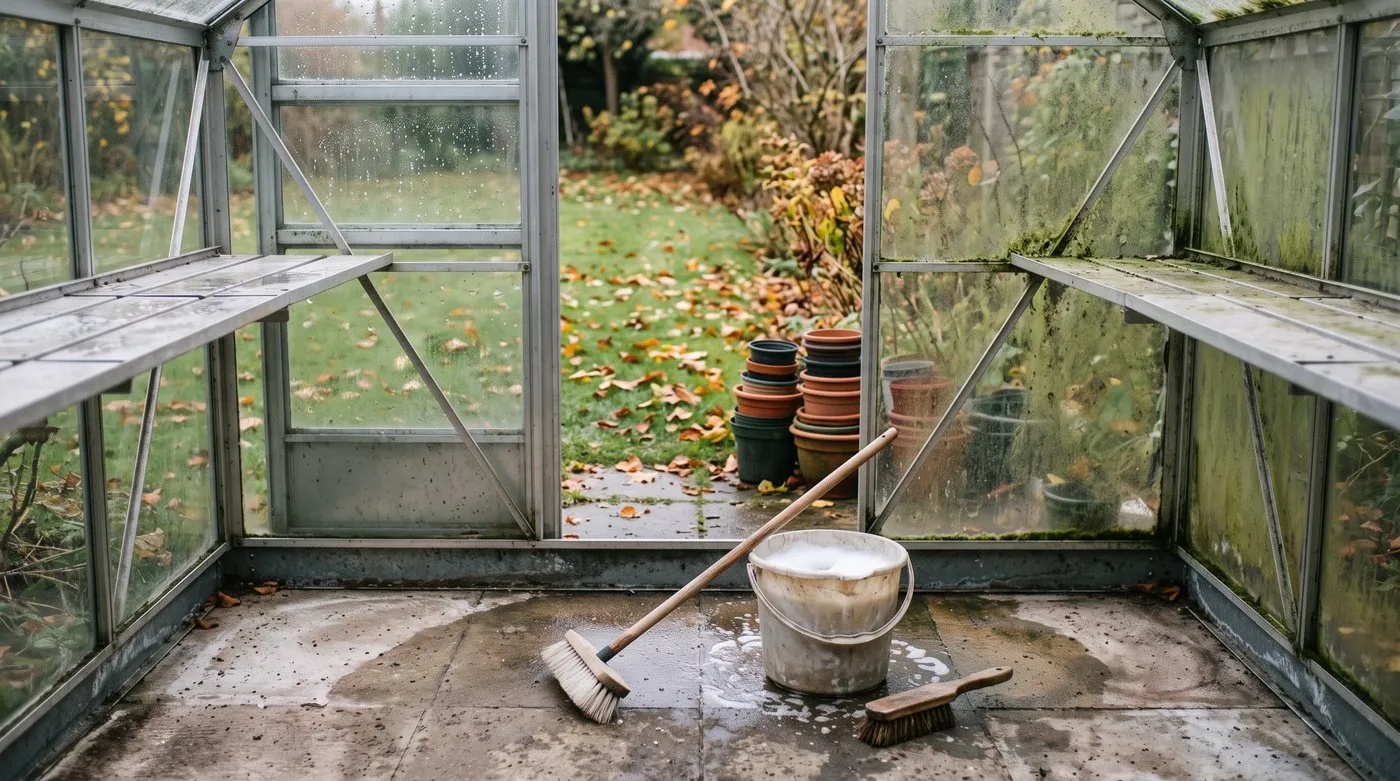
Pest eggs and sleeping adults hide over winter in cracks and old plant bits. An afternoon clearing out and scrubbing in October makes a big difference next spring.
Companion planting
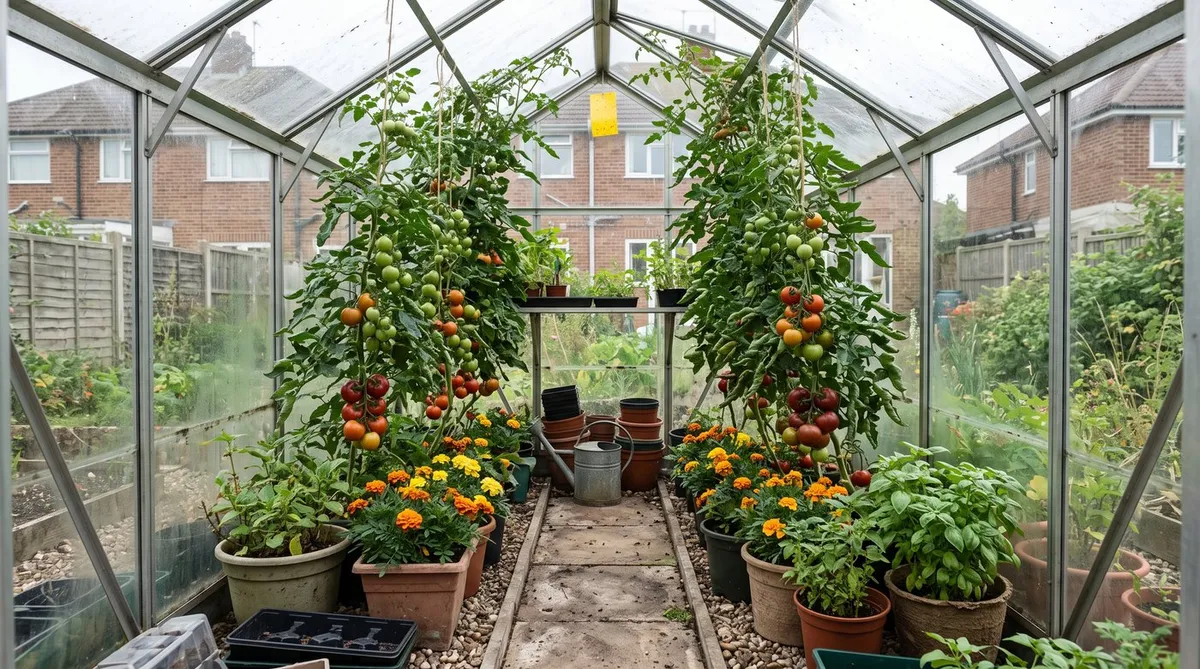
A few companions can help alongside your other controls. French marigolds (Tagetes patula) are a popular partner for tomatoes, and their flowers bring in hoverflies whose larvae eat aphids. Basil is a handy neighbour for tomatoes too. Nasturtiums by the door can lure aphids away from your crops. Our companion planting guide covers more pairings.
French marigolds and basil make cheerful partners for greenhouse tomatoes.
Monthly pest control calendar
Timing matters. Here’s what to do through the year.
| Month | What the pests are up to | What to do |
|---|---|---|
| January to February | Hiding as eggs and pupae in cracks | Order helpful bugs, fix glass and seals |
| March | Aphids on early sowings, slugs waking up | Hang yellow sticky traps, use slug nematodes once the soil is above 5C |
| April | Whitefly and aphids increasing, first spider mites | Release Aphidius, start weekly checks |
| May | Everything breeding, helpful bugs start working well | Release Encarsia for whitefly and Phytoseiulus for spider mites |
| June to July | Peak breeding | Top up helpful bugs as needed, damp down floors |
| August | Busiest time, mealybug and scale easy to spot | Spot-treat bad patches, keep helpful bugs going |
| September | Vine weevils laying eggs, pests slowing down | Water in vine weevil nematodes, plan the autumn clean |
| October to November | Pests settling down for winter | Big clean, clear debris, disinfect surfaces |
Sprays for greenhouse pests
If your helpful bugs need back-up, use an authorised product and follow the label exactly. These sprays work on contact, so cover the undersides of the leaves well.
SB Plant Invigorator is an authorised product for whitefly, aphids, spider mites and mealybug. It works on contact, and you can bring in helpful bugs 24 hours after spraying. Ready-to-use authorised fatty-acid sprays are also sold for aphids, mealybug and scale. Avoid home-made mixes and neem oil as an insecticide, as they aren’t authorised for this use in the UK.
For pest control across the whole garden, see our guide to organic pest control methods. The RHS glasshouse red spider mite page has helpful photos, and Garden Organic covers growing under glass without chemicals.
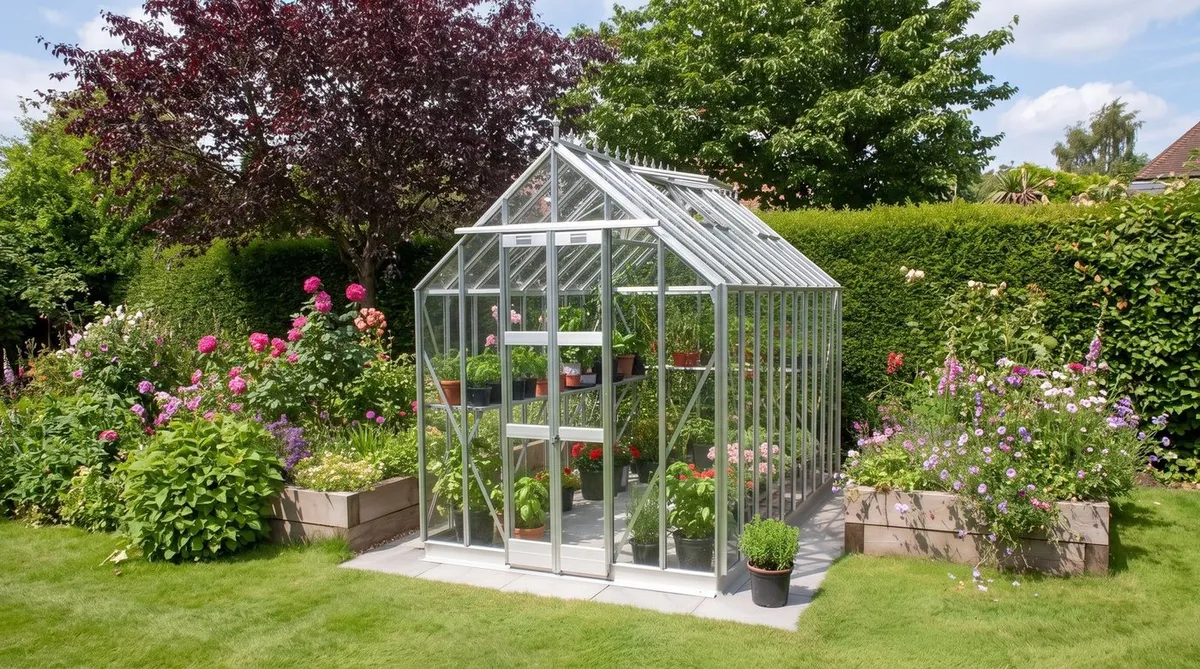
 A Vitavia Venus 5000 Black greenhouse, freshly cleaned and ready for the new season.
If you’re shopping for a new greenhouse, you can shop the Vitavia Venus 5000 at Greenhouse Stores.
Common mistakes in greenhouse pest control
Leaving it too late. Pests multiply fast in a warm greenhouse. A few whitefly in May can be thousands by July. Weekly checks from April catch them early.
Spraying the tops of leaves. Red spider mite, young whitefly and aphids live underneath. Spray from below with a fine mist and cover every leaf underside.
 A quick weekly look under the leaves catches whitefly and spider mites early.
Mixing sprays with helpful bugs. Most insecticides kill helpful wasps and mites as well as pests. If you go down the natural route, stick with it. Only use sprays that are safe alongside them, and wait 24 hours before releasing bugs.
Skipping the autumn clean. Missing it gives overwintering pests a head start next spring. It’s the single best job of the year for keeping pests down.
Too little fresh air. A shut greenhouse on a hot day is hot, dry and still, which red spider mite loves. Fit automatic vent openers and keep side vents open through the growing season.
Weak, stressed plants are more prone to disease too. Our guide on tomato blight prevention covers the problems they’re most likely to pick up.
Now you’ve got pests sorted, read our greenhouse growing calendar to plan your jobs through the season.
Frequently asked questions
What is the most common greenhouse pest in the UK?
Glasshouse whitefly is the most common greenhouse pest. The tiny white adults gather under the leaves and fly up when disturbed. They leave sticky honeydew that turns black with sooty mould. The Encarsia wasp is the best natural control.
How do I prevent pests in my greenhouse?
Clean up in autumn and check every new plant. Clear out old plant bits and wash surfaces before winter. Look under the leaves of new plants before they come in. Keep the air moving with vents, and hang yellow sticky traps from March to spot flying pests early.
Do biological controls work in unheated greenhouses?
Yes, once the weather warms up. Most helpful bugs need warmth to breed, so in an unheated greenhouse bring them in from late spring through to September. Some predatory mites cope with cooler conditions, so ask your supplier which suits your greenhouse.
What is the best organic spray for greenhouse pests?
SB Plant Invigorator is a popular, authorised choice. It works on contact against whitefly, aphids, red spider mite and mealybug. Spray the undersides of leaves well and follow the label. Wait 24 hours before adding helpful bugs.
How often should I clean my greenhouse to prevent pests?
Give it one big clean each year in October or November. Clear out plant debris, wash the glass and staging, and scrub the frame joints where pests hide. During the season, tidy dead leaves and check under pots for slugs and vine weevil.
Can companion planting reduce greenhouse pests?
It can help a little alongside other controls. French marigolds and basil are popular partners for tomatoes, and marigolds bring in hoverflies that eat aphids. Nasturtiums can lure aphids away from your crops. Keep checking your plants too, as companions alone won’t stop a big outbreak.
Our team produces practical UK gardening guidance from source research, contributor records and established horticultural practice. Editorial standards are overseen by Matt W.