Key takeaways
- Aim for roof vents about a fifth the size of the floor, more in small greenhouses
- Try to keep the greenhouse below about 25-27C
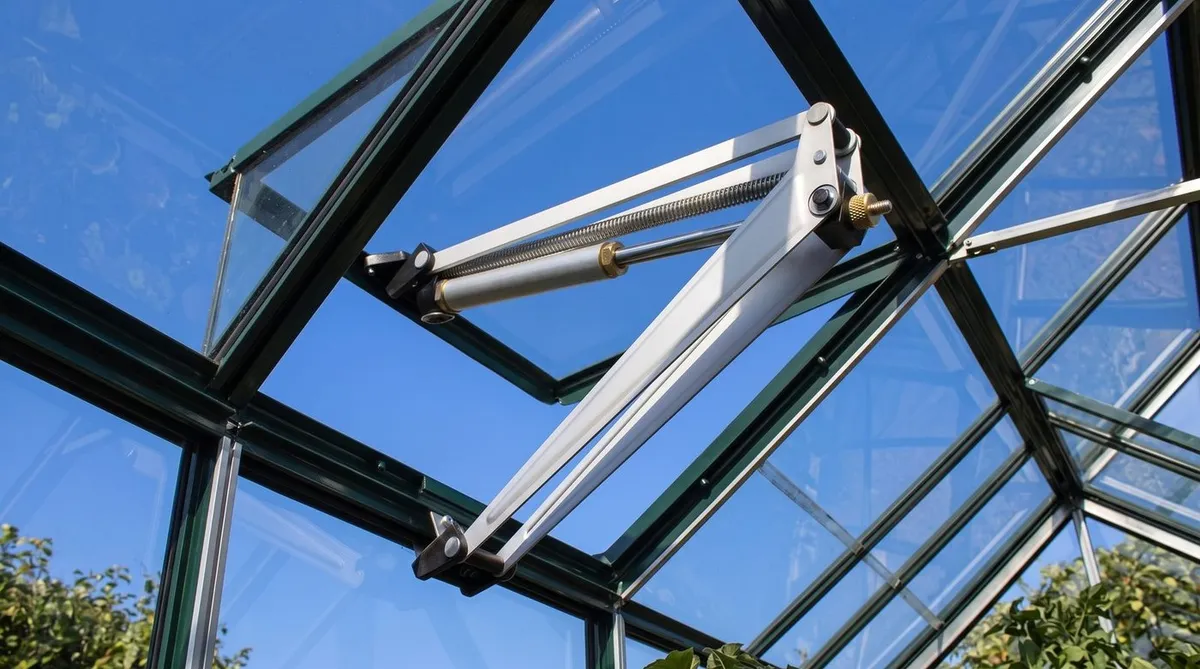
- Automatic vent openers need no electricity and work while you're out
- A low louvre lets cool air in while hot air escapes through the roof
- Damping down the floor on bright days cools the air and adds moisture
- Shade from mid-spring to early autumn so the vents can keep up
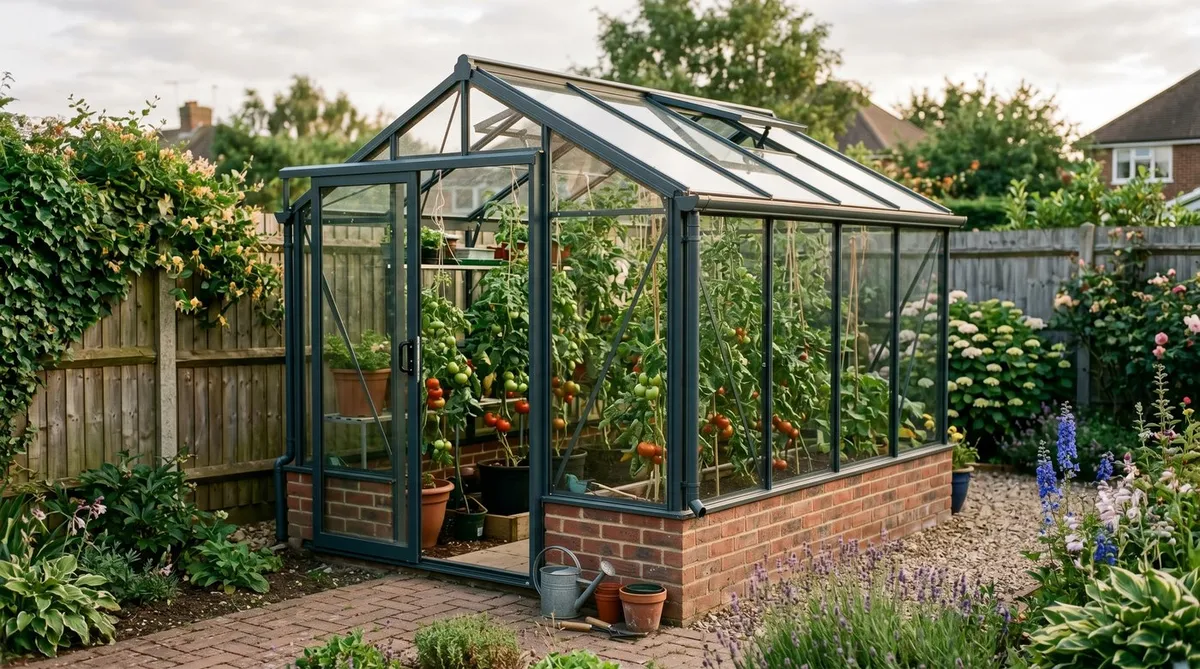
Getting the air right in a greenhouse matters just as much as getting the soil right outside. A shut greenhouse on a sunny day heats up fast, scorching leaves, stopping fruit setting and inviting disease.
This guide shows how roof vents, louvres, the door, fans and shading work together to keep things comfortable. It also covers automatic vent openers, which take the daily guesswork out of opening up.
Why greenhouse ventilation matters
Good ventilation keeps the temperature, humidity and fresh air right for your plants.
On a still, sunny spring day, a closed greenhouse gets far hotter than outside. Too much heat scorches leaves, makes plants wilt and stops tomatoes, peppers and aubergines setting fruit.
Damp, still air is just as bad. Powdery mildew, grey mould and tomato blight all spread more easily in it. Moving air dries the leaves so disease spores struggle to get going. Our greenhouse pest control guide explains how fresh air helps with pests too.
Fresh air also brings in the carbon dioxide plants use to grow, and a gentle breeze tends to give sturdier, less leggy plants.
What temperature is too hot for a greenhouse?
Plants can start to suffer above about 27C. The RHS advice on greenhouse ventilation and shading suggests keeping it below about 25-27C with ventilation and just enough shading.
Watch for soft growth flopping, scorched leaves and young shoots drying out. Tomato flowers may drop without setting fruit in hot spells. Hang a max-min thermometer at plant height, out of direct sun. If it’s going well above 27C on an ordinary sunny day, you need more vents, more shade or both. In a real heatwave, the RHS even suggests taking out a pane or two for a while.
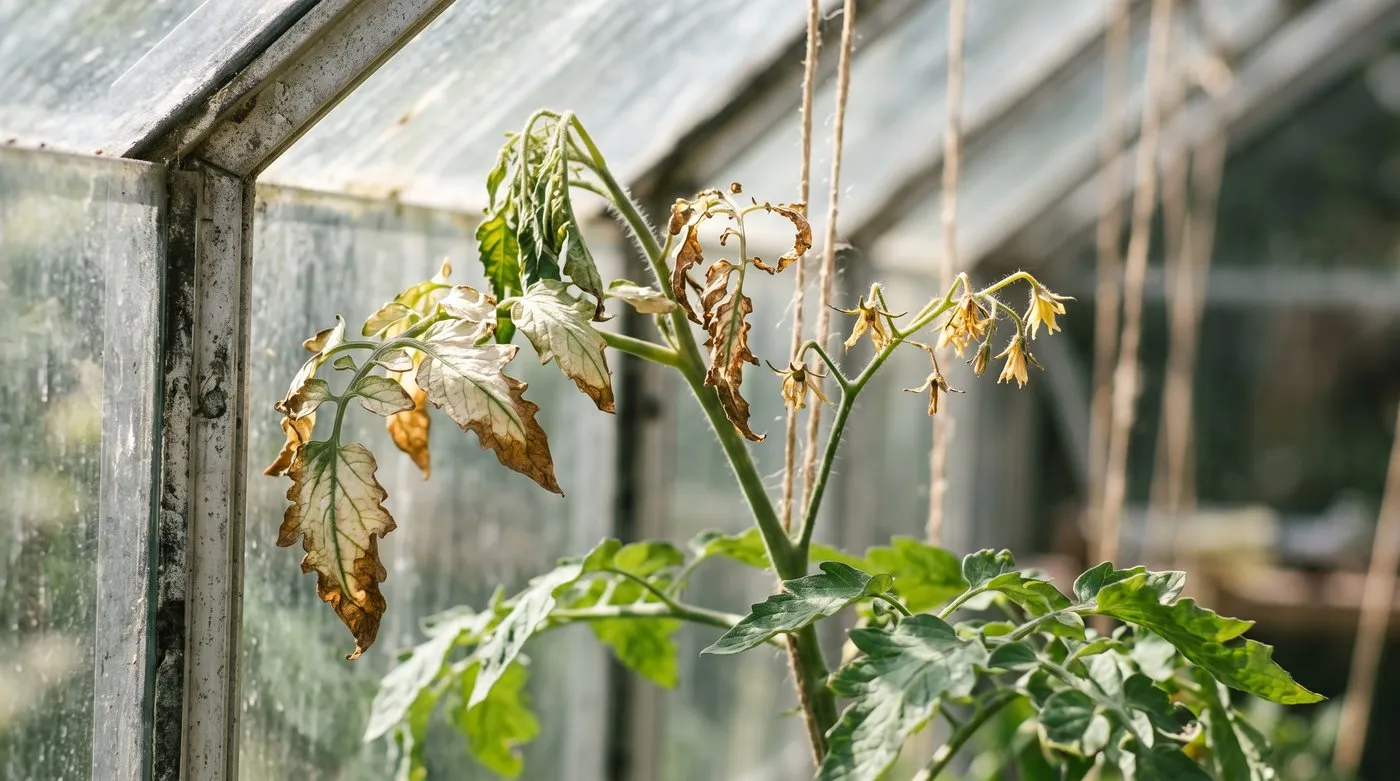
Scorched leaves, flopping tips and flowers falling without setting are signs it’s getting well above 27C. You need more vents, more shade or both.
Roof vents: the most important ventilation
Roof vents do the most work, because hot air rises and escapes at the top. Most aluminium greenhouses come with one or two.
As a guide, aim for roof vents about a fifth the size of the floor, and even more in small greenhouses. A 6x8ft greenhouse has about 4.5 square metres of floor, so it wants around 0.9 square metres of roof vent. One or two standard vents rarely manage that, so most small greenhouses need extra vents or an open door in summer.
Roof vents work best with an opening low down. Cool air comes in at the bottom, warms as it rises through the plants and leaves through the roof, like a chimney. Without a low opening, air just sneaks in through gaps in the frame.
Gardener’s tip: If you’re putting up a new greenhouse, run the ridge east to west. The long side then faces south for the best winter light, and the roof vents on the south side let heat out where it builds fastest.
Louvre vents: the low-level partner
Louvre vents sit low on the wall and let cool air in near the ground. They have overlapping blades that open and close like a venetian blind. They don’t shift as much air as roof vents, so think of them as a partner rather than a replacement.
The Vitavia 5-Blade Louvre Window replaces a standard glass pane in many Vitavia aluminium greenhouses.
Louvres have one big plus over an open door: they let air in while keeping cats, birds and big insects out, especially with insect mesh fitted.

A low louvre lets cool air in while hot air escapes through the roof vents above.
You can shop the Vitavia Louvre Vent at Greenhouse Stores.
For the best airflow, put louvres on the opposite side from your roof vents, so the breeze crosses the whole greenhouse.
Automatic vent openers: hands-free temperature control
Automatic vent openers open and close vents for you, with no electricity. A wax-filled cylinder swells as it warms and pushes the vent open, then shrinks and pulls it shut as it cools.
The Palram Canopia Automatic Roof Vent Opener fits Palram roof vents. The Vitavia Automatic Louvre Opener turns a manual louvre into an automatic one. For Elite louvres, there’s the Elite Automatic Louvre Opener.
Wax openers are slow to react. On a hot morning the greenhouse can overheat before they’re fully open, so leave the door or side vents open on days forecast to be hot. The cylinders also wear out over time. If a vent stops opening fully, fit a new cylinder such as the Elite Auto Vent Replacement Cylinder.
| Option | What it does | Best for | Works by itself? |
|---|---|---|---|
| Roof vent | Lets hot air out | Main ventilation | No |
| Roof vent with auto opener | Lets hot air out | People out during the day | Yes |
| Louvre vent | Lets cool air in low down | Cross-ventilation | No |
| Louvre with auto opener | Lets cool air in low down | Fully hands-free airflow | Yes |
| Open door | Lets lots of air in | Quick cooling on hot days | No |
| Electric fan | Moves air around inside | Still air, packed planting | With a thermostat |
Do you need a fan in a greenhouse?
Most small UK greenhouses manage fine without one if you use the vents and door well. A small fan helps in two cases: thick summer planting, and cool, damp weather when the vents are shut.
In summer, tall rows of tomatoes and cucumbers trap still, damp air near the floor. A fan keeps it moving and helps leaves dry. In autumn and winter, it stirs the air without letting heat out, which helps keep grey mould away. You’ll need a safe outdoor power supply, fitted to current wiring rules, with an RCD. A fan only moves air around. It can’t cool the greenhouse on a hot day, so it’s no substitute for roof vents.
Door ventilation and when to use it
The door is the biggest opening you’ve got, so open it wide on hot days when the vents can’t keep up. Across most of the UK that’s common from June to August.
The downside is that wind, birds and the neighbour’s cat can get in too. In spring, close it by late afternoon to hold some warmth for the evening. Cucumbers hate cold draughts, so keep them away from the doorway.
Gardener’s tip: Hang a mesh screen or strip curtain in the doorway in summer. Air gets through, but birds and cabbage white butterflies stay out.
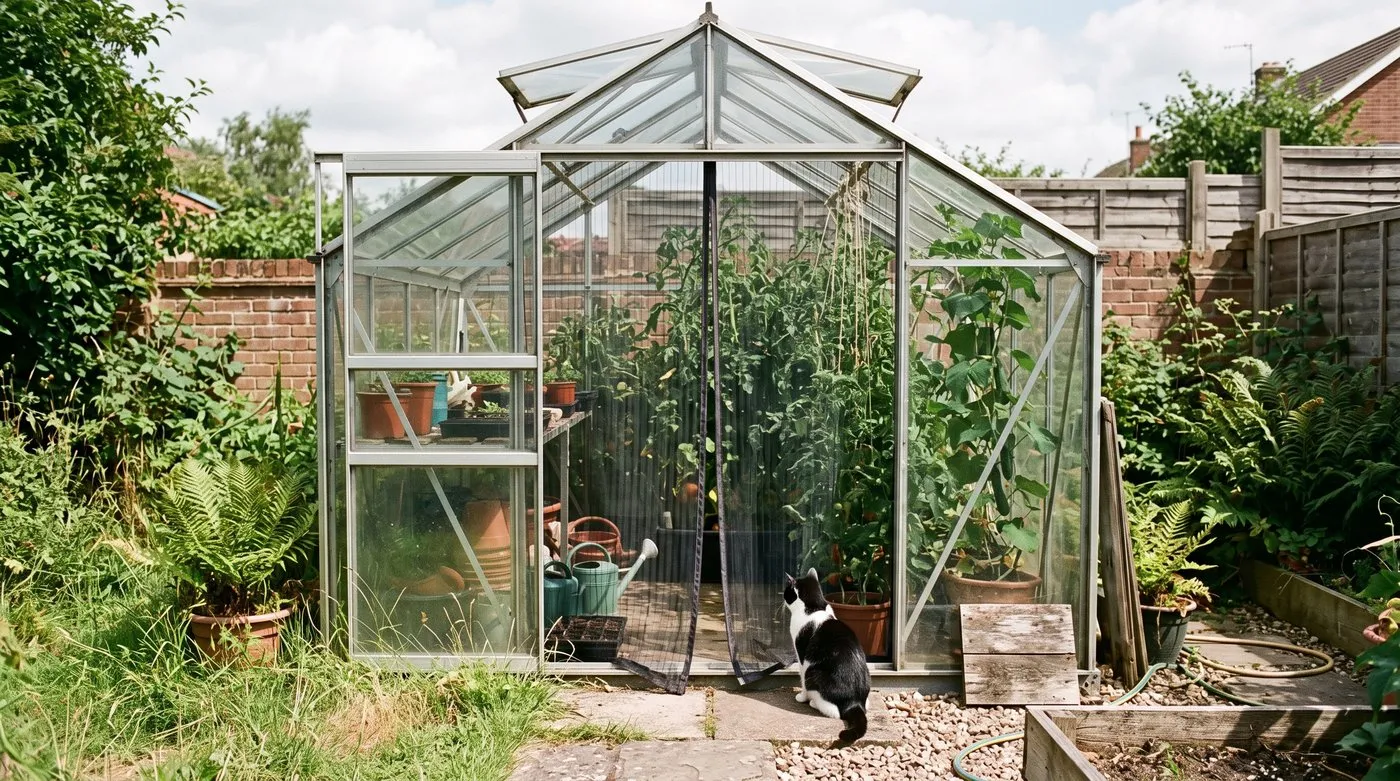
A mesh screen in the doorway lets air through on hot days but keeps out birds, butterflies and the neighbour’s cat. Keep draught-shy cucumbers away from the door.
Humidity: getting the balance right
Humidity is simply how damp the air is. Rather than chasing one perfect number, aim for moist air on hot days and drier air at night.
Air that’s too dry stresses plants. Hot, dry conditions suit red spider mite and can stop flowers setting. Tomatoes and chilli peppers also need steady watering at the roots, as patchy watering leads to blossom end rot.
Air that’s too wet is just as bad. When the air cools at night, water runs down the glass and drips onto plants. Grey mould attacks flowers and fruit, and damping off kills seedlings at soil level.
A cheap digital hygrometer at plant height is the handiest tool. Check it morning and evening to learn how your greenhouse behaves.
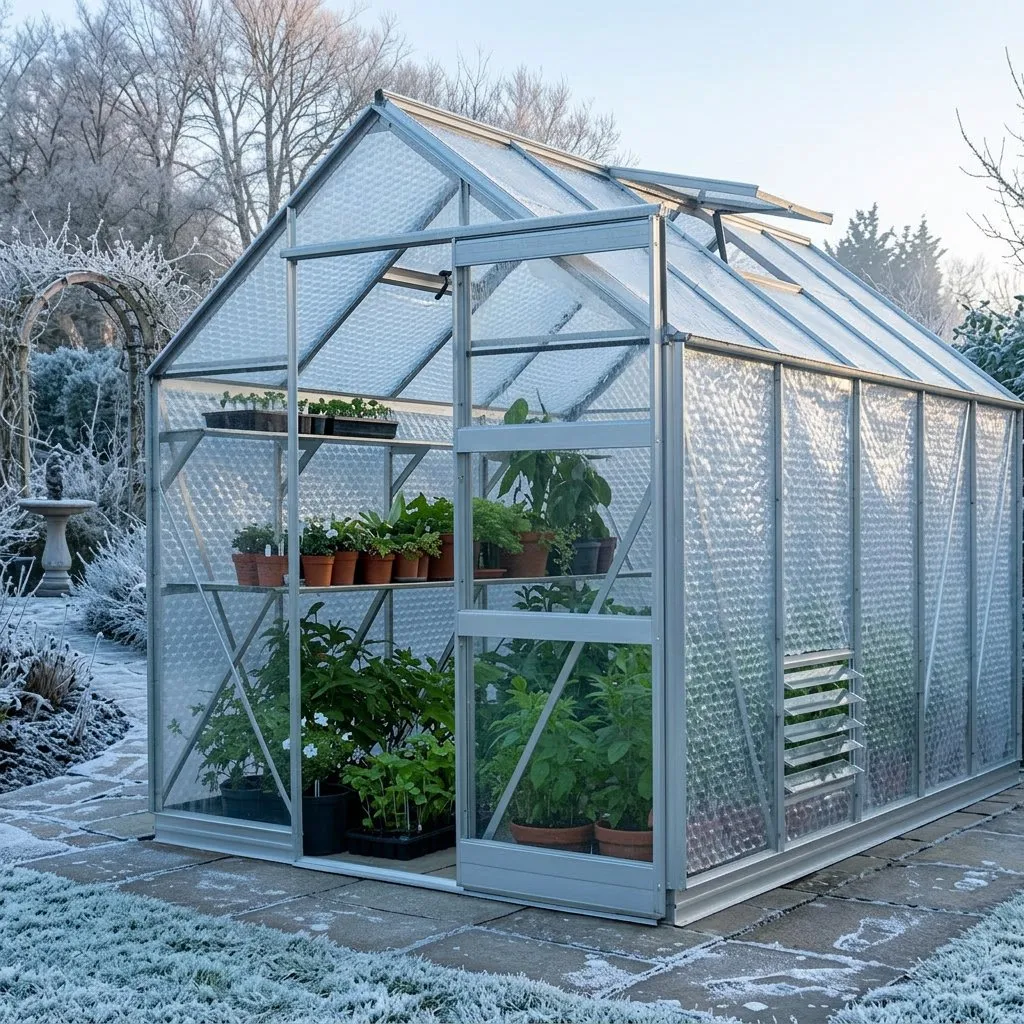
Even on frosty mornings, open a vent for an hour or two around midday to let damp air out.
If you’re after a new greenhouse, you can shop the Elite Thyme 6x8 at Greenhouse Stores.
Damping down: raising humidity on hot days
Damping down means wetting the floor, paths and staging so the water dries off and cools the air. It’s most useful in summer, when open vents leave the air hot and dry.
In bright, sunny weather you can damp down several times a day. Start in the morning on days forecast to be hot. Soak the floor with a watering can or hose, then repeat around midday and early afternoon.
Damping down helps in three ways:
- Cools the air as the water dries off
- Adds moisture around plants on hot days
- Puts off spider mites, which love hot, dry air
Stop by late afternoon. A floor that stays wet overnight keeps the air soggy as it cools, which encourages grey mould and other diseases.
Concrete and paving slabs are easiest to damp down. Gravel gives off moisture more slowly for a steadier effect. Earth floors hold water longest but can get muddy.
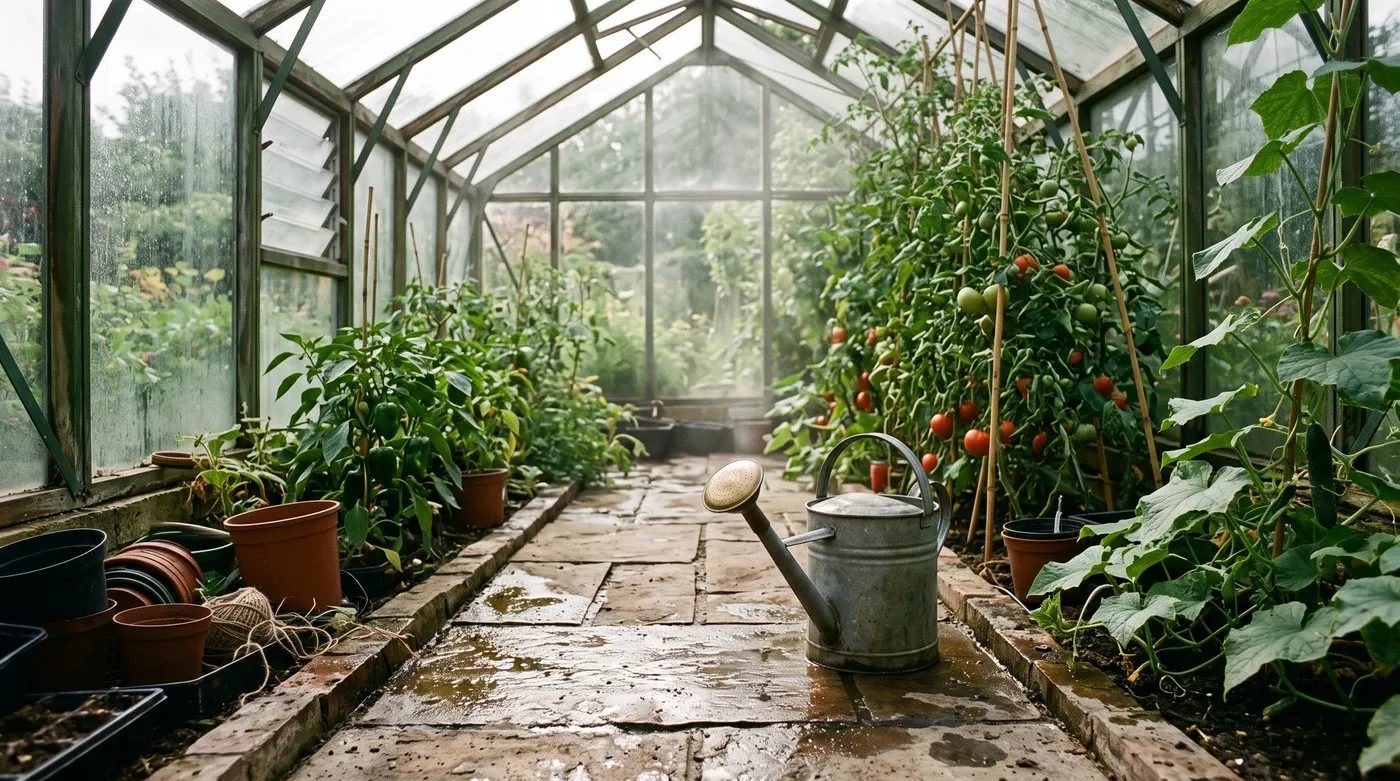
Soak the floor on hot mornings and again around midday. As the water dries it cools the air, but stop by late afternoon so the floor is dry by night.
When should you shade a greenhouse?
Shade from mid-spring to early autumn. Shading and ventilation work as a team, as vents alone can’t stop a small greenhouse overheating in strong sun.
Shading paint is the cheapest option. Paint it on the outside of the glass in spring, add a thicker coat as the sun gets stronger, and wash it off in early autumn. It’s not ideal for polycarbonate, acrylic or bare timber. Shade netting is cheap, reusable and usually fitted inside. Inside blinds are easy to adjust but cool less, as the sun still heats the air inside. Outside blinds cool best but cost more and can get in the way of vents.
Use only as much shade as you need, as crops still want light. Ease it off from September. Sun-lovers like succulents often need no shade at all.
When to ventilate through the seasons
Ventilation is a job for every season, but what you do changes.
Spring (March to May): Open roof vents on sunny mornings once it gets above about 20C inside. Close them by mid-afternoon to trap warmth for the cool nights. Frosts are still possible in many areas until mid-May, so don’t leave vents open overnight. Automatic openers really earn their keep in spring, with sunny mornings and chilly afternoons.

Roof vents propped open on a spring morning let warm air out while seedlings grow inside.
Summer (June to August): Open everything. Roof vents, louvres and the door can all be open from early morning on warm days. Add shading and damp down the floor in bright weather.
Autumn (September to November): Ease off the ventilation and shading bit by bit. Close louvres and the door earlier as nights cool. Leave roof vents on automatic openers to catch warm autumn days. Clean and check all the vent parts before winter. It’s a good time to plan water-saving ideas for next season too.
Winter (December to February): Air the greenhouse briefly on mild, dry days to cut condensation. Open one roof vent for an hour or two around midday. Keep everything shut when frost is forecast. If you heat over winter, our greenhouse heating guide explains how to balance fresh air and warmth.
Should greenhouse vents be open at night?
In summer, yes, while the nights stay warm.
Leaving a roof vent slightly open on warm summer nights lets damp air out. That means less condensation at dawn, which often triggers grey mould on tomatoes and cucumbers. Close the door at night if foxes, cats or slugs are a nuisance, and rely on roof vents with insect mesh. From late summer, close up in the evening as the nights turn cold. In spring, autumn and winter, a shut greenhouse holds onto the day’s warmth, which tender plants need more than fresh air.
Common ventilation mistakes
Relying on one roof vent. One small vent isn’t enough for a 6x8ft greenhouse. Add louvres and use the door in summer.
Trusting auto openers on the hottest days. Wax openers react slowly. Open the door too when a hot day is forecast.
Skipping shading. Even with every vent open, a small greenhouse overheats in strong sun without shade from mid-spring.
Damping down in the evening. A wet floor overnight keeps the air soggy. Finish by late afternoon.
No low opening. Roof vents work best with an opening lower down. Without one, air sneaks in through gaps and misses much of the greenhouse.
Worn opener cylinders. An opener that only half-opens gives you half the airflow. Check them each spring and replace worn cylinders.
Once ventilation is sorted, read our greenhouse heating guide for looking after your greenhouse in the colder months.
Frequently asked questions
How much ventilation does a greenhouse need?
More than most small greenhouses come with. Aim for roof vents about a fifth the size of the floor, which is roughly 0.9 square metres for a 6x8ft greenhouse. Add louvres and open the door to make up the difference.
What humidity should a greenhouse be?
There’s no single perfect figure. Aim for moist air on hot days but not soaking wet air overnight. Hot, dry air suits red spider mite, while cold, still, damp air with drips on the glass brings grey mould. A hygrometer at plant height shows you what’s happening.
Do automatic vent openers really work?
Yes, and they need no electricity. A wax-filled cylinder swells as it warms and pushes the vent open, then shrinks as it cools. They react slowly, so open the door as well on hot days, and check they still open fully each spring.
When should I open my greenhouse vents?
Open them on any sunny day once it gets above about 20C inside. That can happen as early as February. In spring, close them by mid-afternoon to keep warmth in. In summer, vents and doors can stay open at night while it stays warm.
How do I reduce humidity in a greenhouse?
Get the air moving with roof vents and a low opening. Water in the morning so leaves and floors dry before evening. Space plants out, avoid splashing the leaves, and use a small fan in still corners.
What is damping down in a greenhouse?
Damping down means wetting the floor and paths with water. As it dries, it cools the air and adds moisture. In bright, sunny weather you can do it several times a day. Stop by late afternoon so the floor dries before night.
Our team produces practical UK gardening guidance from source research, contributor records and established horticultural practice. Editorial standards are overseen by Matt W.