Key takeaways
- A 6x8ft aluminium greenhouse suits most UK gardens
- Aluminium needs almost no upkeep, while wood needs treating every year
- Toughened glass is safer than horticultural glass, especially with children or pets about
- Plenty of roof vents matter more than any other feature
- Pick a sunny, level, sheltered spot with water close by
- Budget £400-£600 for a starter, £800-£1,500 mid-range and £2,000 or more for timber
For most UK gardens, the best greenhouse is a 6x8ft aluminium one with toughened glass or polycarbonate and good roof vents. It stretches your growing season, keeps late frosts off tender crops and gives you room to start seeds.
Below, you’ll find the main types compared, from budget polycarbonate to handsome timber. Prices are from Greenhouse Stores in October 2026 and change often, so use them as a rough guide. Already got a greenhouse? Jump to our guide to growing tomatoes in the UK.
Aluminium vs wooden vs polycarbonate greenhouses
Aluminium is the best frame for most people, timber suits a traditional garden, and polycarbonate is a choice of glazing, not frame. The frame decides the price, the upkeep and how much shade it casts.
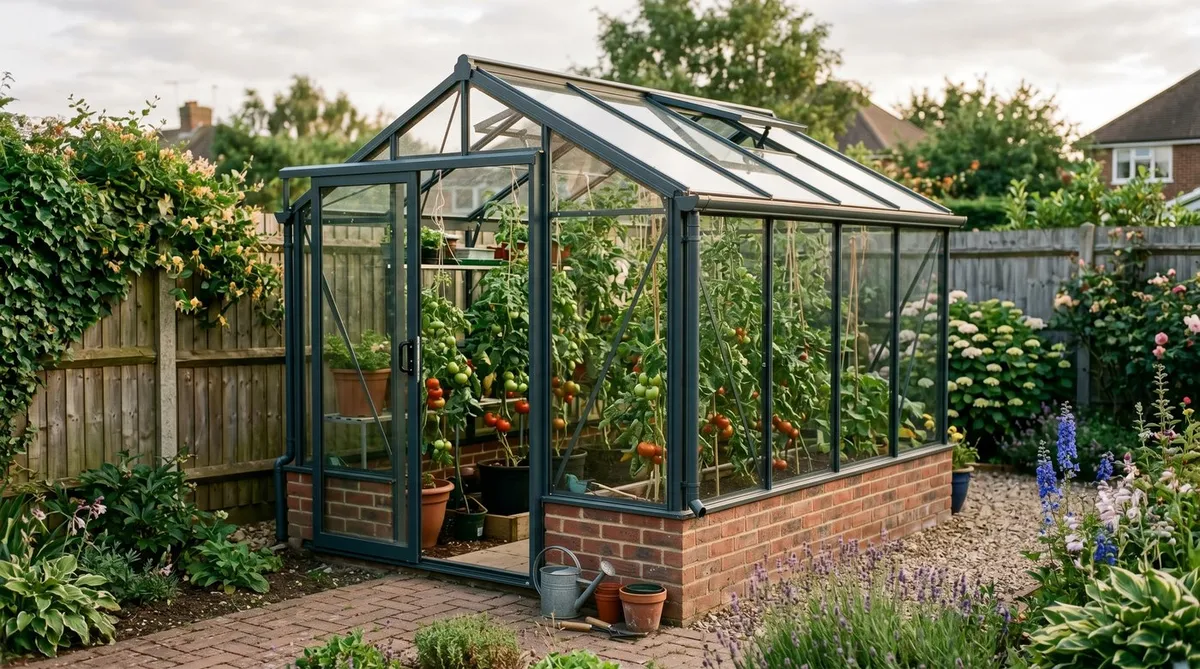
Aluminium frames are the UK favourite. They’re light, don’t rust and never need painting. The thin bars cast very little shade. The Vitavia Venus 5000 is a popular mid-range example, at £509-£729 depending on glazing and colour.
Wooden frames look lovely in a cottage garden. The catch is upkeep, as softwood needs treating with preservative regularly, and the chunkier bars cast more shade. The Swallow Kingfisher, at £3,397, is a premium example made to order in the UK from heat-treated redwood pine.
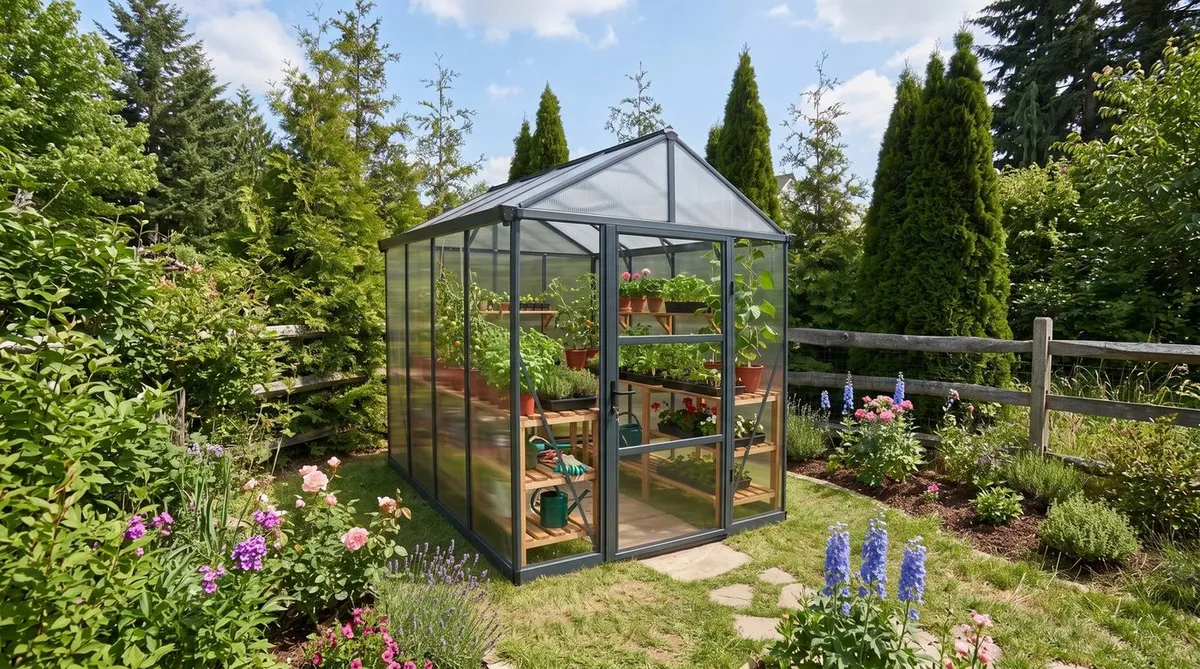
Polycarbonate panels are a glazing option that goes with aluminium frames. They keep heat in well and won’t shatter. The Palram Hybrid, about £464, has twin-wall polycarbonate on the roof and clear panels on the sides. Our guide to polycarbonate vs glass greenhouses compares the two in more detail.
What size greenhouse do you need?
A 6x8ft (1.8 x 2.4m) greenhouse is the best size for most UK gardens. Go bigger if you want to keep plants through winter as well as grow summer crops.
| Size | Best for | Typical price |
|---|---|---|
| 6x4ft | Seed sowing, a few plants | £300-£500 |
| 6x8ft | General growing, tomatoes, staging | £400-£900 |
| 8x10ft | Keen growers, overwintering | £800-£1,500 |
| 8x12ft and up | Growing all year, big gardens | £1,200-£3,500+ |
A 6x4ft greenhouse is tempting, but it fills up fast. Seed trays take over in March, tomatoes arrive in May, and suddenly there’s no room. If you have the space, start with 6x8ft.
Short on space? Mini greenhouses are a handy option. Lean-to models stand against a wall or fence, so they suit patios, balconies and tiny gardens. Our mini greenhouse guide for small gardens covers the different types. They pair nicely with container vegetable gardening where a full greenhouse won’t fit.
Gardener’s tip: Measure your side path before you order. You’ll need about 2m of space to get the parts in while you build it. Check the eaves height too. At least 1.5m, ideally 1.8m, lets you work inside without stooping.
Where is the best place to put a greenhouse?
Put it where it gets sun all day, on level ground, sheltered from cold north and east winds. Keep it away from overhanging trees, which cast shade and drop leaves and branches.
The RHS guide to choosing a greenhouse says running it east to west gives slightly more winter light. Really, open sky matters more than which way it faces. Keep it near the house for water, and for power if you’ll heat it. Any outdoor electrics should be fitted by a qualified electrician. Leave space all round so you can clean and fix the glass.
Most garden greenhouses don’t need planning permission, but there are a few rules. The Planning Portal page on outbuildings explains them for England.
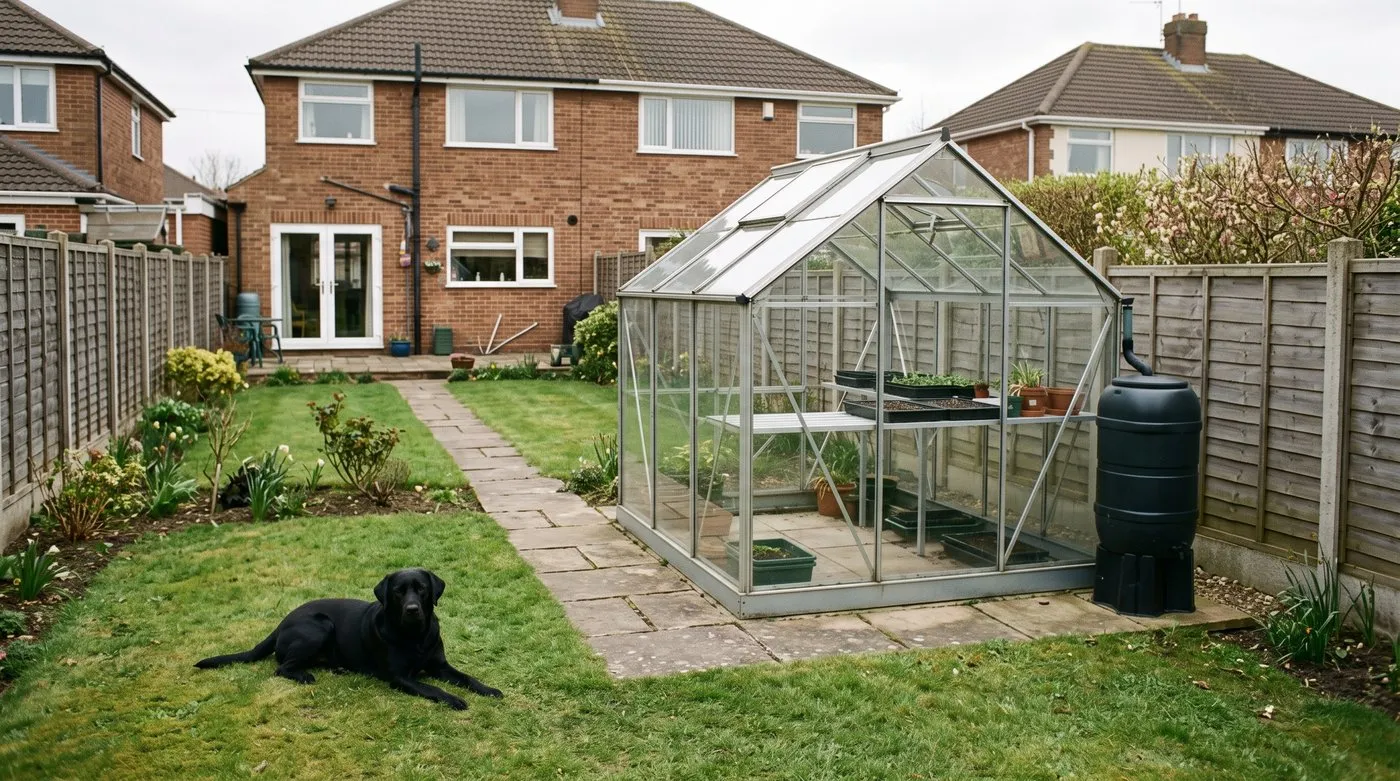
Open sky matters more than which way it faces. Close to the house makes watering, and a quick check on cold nights, much easier.
Choosing the right glazing
Toughened glass is the best all-rounder, with twin-wall polycarbonate a good pick for windy or family gardens. Glazing affects light, warmth, safety and price.
Horticultural glass is the traditional choice. It lets in lots of light and doesn’t go cloudy in the sun. The downside is it breaks easily, into sharp shards. Budget models like the basic Vitavia Venus 5000 use it.
Toughened safety glass costs more but is much stronger. On the Vitavia Venus 5000 it adds about £110. If it does break, it crumbles into small pieces rather than shards. The Elite Thyme, at £1,429, comes with toughened glass as standard. Toughened glass is the safe choice for doors and anywhere someone might fall against the glass.
Twin-wall polycarbonate keeps the most heat in, thanks to the air gap between its layers. It lets in a little less light, and older panels can go cloudy with age. The Palram Hybrid mixes a polycarbonate roof with clear sides, which is a nice middle ground.
| Glazing | Light | Keeps heat in | Strength | Safety |
|---|---|---|---|---|
| Horticultural glass | Very good | Low | Breaks easily | Poor (sharp shards) |
| Toughened glass | Very good | Low | Strong | Good (crumbles) |
| Twin-wall polycarbonate | Good | High | Fair | Very good (bends) |

A wooden Swallow Kingfisher looks right at home in a cottage garden.
Fancy one? You can shop the Swallow Kingfisher at Greenhouse Stores.
Best greenhouses by budget
Under £500: best value starters
The Palram Hybrid 6x8ft, about £464, is great value. The polycarbonate panels shrug off hail and knocks, and a galvanised steel base is included. The frame has a 5-year warranty. It’s ideal if you want to try greenhouse growing without spending a lot. Growing herbs and raising seedlings are perfect jobs for it.
£500-£1,000: the mid-range sweet spot
The Vitavia Venus 5000 costs £509-£729, depending on colour and glazing. It comes in silver, green or black, with horticultural glass, toughened glass or polycarbonate. The 8x6ft model has gutters, a sliding door, one roof vent and a 12-year frame warranty. It needs a raised base, sold separately. The Elite High Eave 6x10, at £849 with horticultural glass, has extra headroom for tall crops like cucumbers and cordon tomatoes.
£1,000-£2,000: keen growers
The Elite Thyme 6x8ft, at £1,429, has toughened glass, an aluminium frame and a 20-year frame and base warranty. It suits gardeners who’ll use their greenhouse all year for growing vegetables.
Over £2,000: premium timber
The Swallow Kingfisher 6x10ft, at £3,397, is made to order in the UK from heat-treated redwood pine. The price includes fitting, toughened glass, slatted staging and two roof vents with automatic openers. The 12-year warranty depends on treating the wood every year.
What to look for when buying
Check the vents first, then the gutters, base and door. These little details make the difference between a greenhouse you love and one that drives you mad.
Vents matter most. Without enough, a greenhouse overheats fast on a sunny day, even in March. Aim for roof vents on both sides of the ridge, adding up to about a fifth of the floor area. Lots of budget models have just one roof vent, so plan to add another or a louvre window. Automatic openers help when you’re out, but they’re a bit slow to react.
Gutters collect free rainwater. Most aluminium greenhouses have them built in. Connect a water butt to each downpipe and even a small greenhouse fills it quickly.
The base depends on the model. Most aluminium greenhouses need a steel base frame, often sold separately, fixed to a flat, level surface. Paving slabs or concrete both work. Our guide on how to build a greenhouse base walks you through it. Never put a greenhouse straight onto bare soil.
Doors are single sliding, double sliding or hinged. Sliding doors save space and won’t blow open. Hinged doors are easier with full hands but need room to swing.
Windy garden? Go for toughened glass and bolt the greenhouse firmly to its base. A hedge on the windy side helps, as long as it’s a few metres away so it doesn’t shade the glass.

The Palram Hybrid 6x8 is a sturdy polycarbonate greenhouse at a friendly price.
You can shop the Palram Hybrid 6x8 at Greenhouse Stores.
Do you need to heat a greenhouse in winter?
No, plenty of gardeners use an unheated greenhouse for hardy crops, spring sowing and sheltering hardy plants. You only need heat to keep tender plants like pelargoniums, citrus or chillies going through frosts.
An unheated greenhouse keeps off wind and rain, but it can still freeze on clear winter nights. For frost-free conditions, an electric fan heater with a thermostat is the simplest choice. Paraffin heaters work without mains power, but they make the air damp, which encourages grey mould. Bubble insulation on the glass keeps heat in but cuts the light a little. Only heat the space you need. A fleece-lined section of staging is cheaper than warming the whole lot.
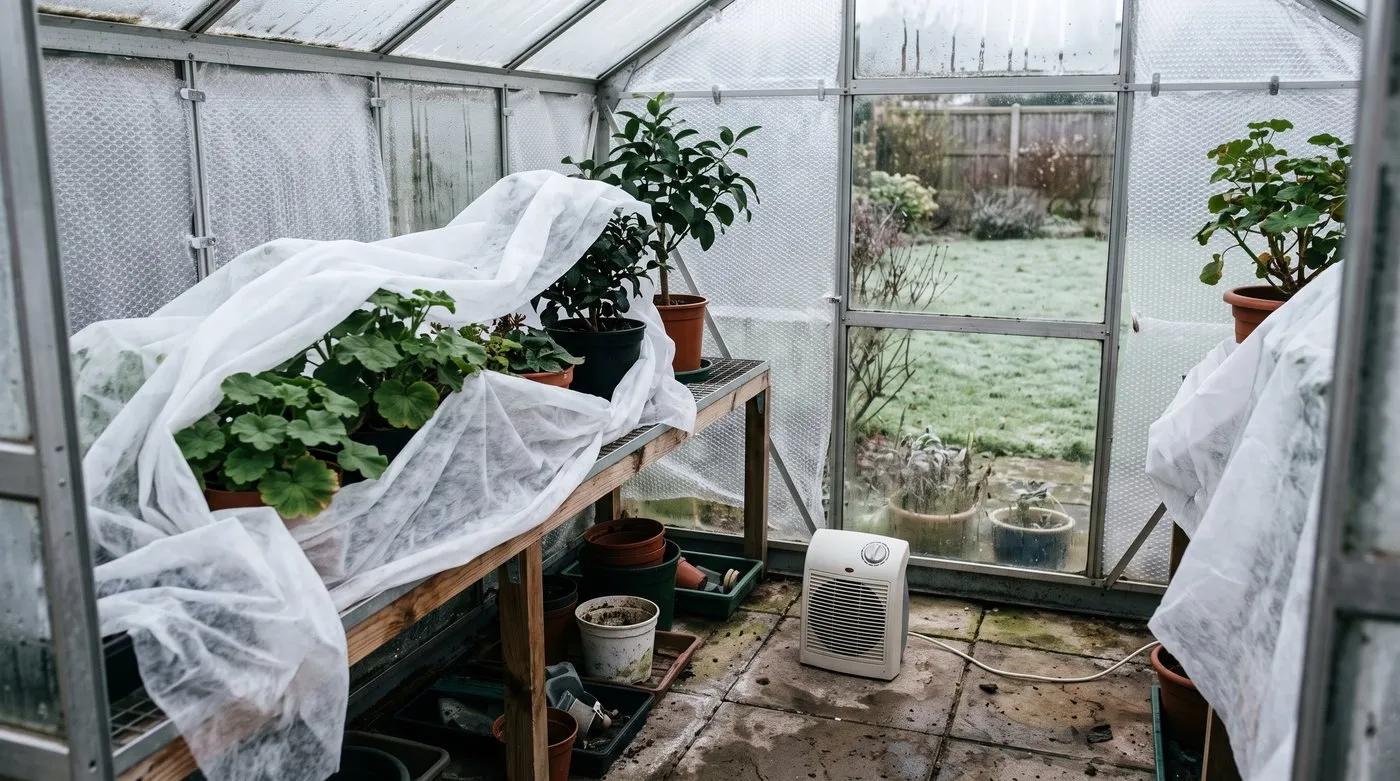
Only heat the space you need. A fleece-tented bit of staging and bubble insulation keep tender plants frost-free for less.
Common mistakes when buying a greenhouse
Buying too small. A 6x4ft greenhouse feels roomy in January and overflows by April. Go for 6x8ft if you can. If money is tight, a polytunnel gives more growing space for your money, though it’s harder to keep cool and doesn’t last as long.
Too few vents. Greenhouses get hot much faster than most beginners expect, even on a sunny spring day.
Skipping the base. Building straight onto soil leads to sinking, shifting and a bent frame. A proper level base is a must.
Going for the cheapest glass. Horticultural glass saves money at first, but you’ll be replacing panes. In a windy garden or with children around, toughened glass is worth it.
Forgetting about access. You need room to carry glass and frame parts while building. A greenhouse squeezed into a tight corner is hard to build and harder to look after.
Getting the most from your greenhouse
A greenhouse earns its keep when you use it all year. Sow chilli peppers and tomatoes in February. Grow salads and herbs in spring. Fill it with tomatoes, cucumbers and peppers in summer. Use it to shelter tender plants from October. A grapevine does well under glass too, though watch for grape shanking if the berries don’t colour up in a cool summer.
Staging and shelves double your space. Aluminium staging lasts well and is easy to clean. Tiered shelves against the back wall hold loads of extra seed trays.

Staging and shelves give you double the room for seed trays and young plants.
Shading is usually needed from late spring to late summer. Shade netting or a shading paint on the glass stops leaves scorching. Take it off in autumn when the light drops.
For what to grow next, see our guides to growing in grow bags and raised bed gardening for beginners. Still deciding on glazing? Our guide to polycarbonate vs glass greenhouses will help.
Frequently asked questions
What size greenhouse should I buy?
A 6x8ft greenhouse suits most UK gardens. It fits staging down one side and tomato pots or growing bags down the other. A 6x4ft one works in a small garden, but most people soon find it cramped.
Is aluminium or wooden better for a greenhouse?
Aluminium suits most gardeners because it needs no upkeep. Wooden greenhouses look at home in traditional gardens, but they need treating with preservative and usually cost much more. Their chunkier frames cast a bit more shade too.
Do I need toughened or horticultural glass?
Toughened glass is safer and lasts better. It copes with knocks and storm debris far better. Horticultural glass is cheaper but breaks into sharp shards. If you have children or pets, go for toughened.
How much does a greenhouse cost in the UK?
At October 2026 prices, a 6x8ft Palram Hybrid is about £464. A Vitavia Venus 5000 costs £509-£729. Wooden greenhouses run from £2,000 to over £3,500. A steel base and fitting are often extra.
Can I put a greenhouse on a patio?
Yes, as long as the paving is flat and level. You’ll need a steel base frame bolted to the paving. Don’t put a greenhouse straight onto soil, as the frame will shift over time.
Do I need planning permission for a greenhouse?
Usually not in England, as most count as permitted development. It must be single storey, not in front of the house, and with other outbuildings cover no more than half the land around the original house. Keep it to 2.5m high if it’s within 2m of a boundary. Listed buildings, flats and conservation areas have stricter rules, and Wales, Scotland and Northern Ireland have their own systems.
Our team produces practical UK gardening guidance from source research, contributor records and established horticultural practice. Editorial standards are overseen by Matt W.