Key takeaways
- Shanking is caused by stress, not a fungus or pest, so sprays won't help
- The little stalk on each affected berry browns first, then the berry shrivels and stays sour
- Too heavy a crop is the most common cause, so thin to about one bunch per 30cm of rod
- Waterlogged, compacted or bone-dry borders damage the roots that feed the fruit
- Yellowing between leaf veins means magnesium shortage, which makes shanking worse
- Snip out shanked berries so the rest of the bunch ripens cleanly
Grape shanking is when single berries on a bunch stop ripening, stay sour and shrivel, while their neighbours ripen normally. The tiny stalk on each affected berry turns brown first. It isn’t a disease. It’s the vine telling you it can’t feed all the fruit it’s carrying.
That’s good news, because it means no spray is needed. The fix is a lighter crop, healthier roots and steady feeding and watering. This guide shows you how to recognise shanking, how to tell it from mildew and grey mould, and what to change so next year’s bunches ripen cleanly. For growing a vine from scratch, see the guide to growing grape vines.
What does grape shanking look like?
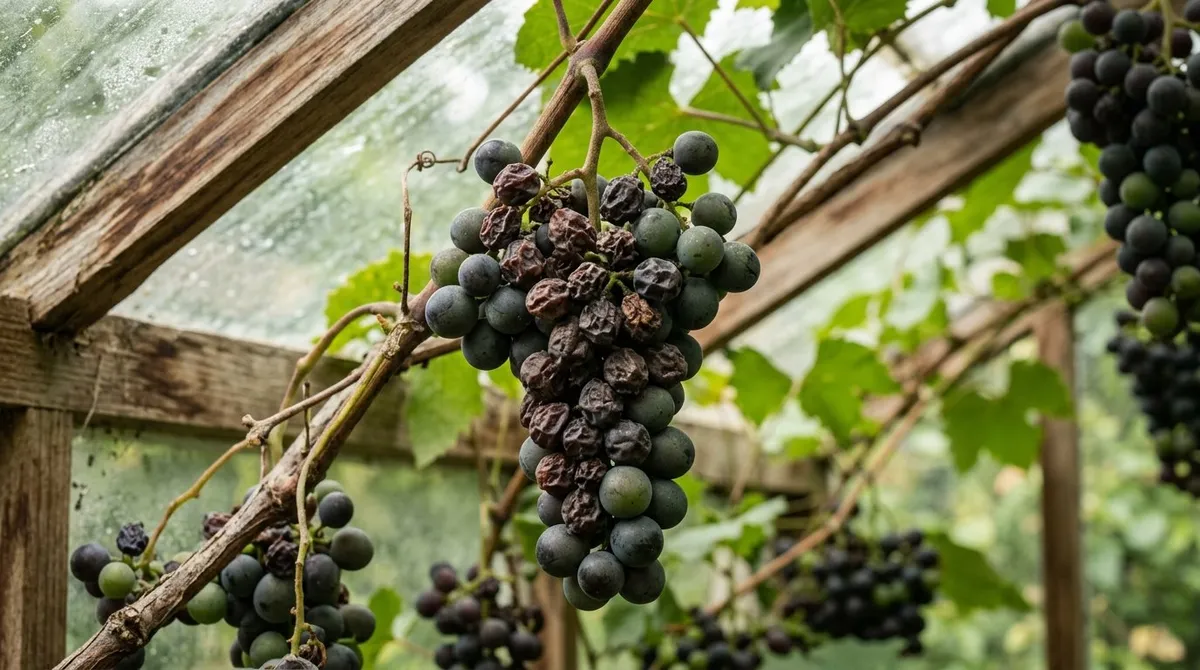
Shanking shows up as the berries start to ripen, usually from midsummer. Look for:
- Single berries scattered through the bunch that stay green, red or see-through instead of colouring fully.
- A brown, dry stalk where the berry joins the bunch. This little stalk is called the pedicel.
- Sour, watery berries that slowly shrivel into raisins.
- No mould and no webbing.
The rest of the bunch can look perfectly normal.
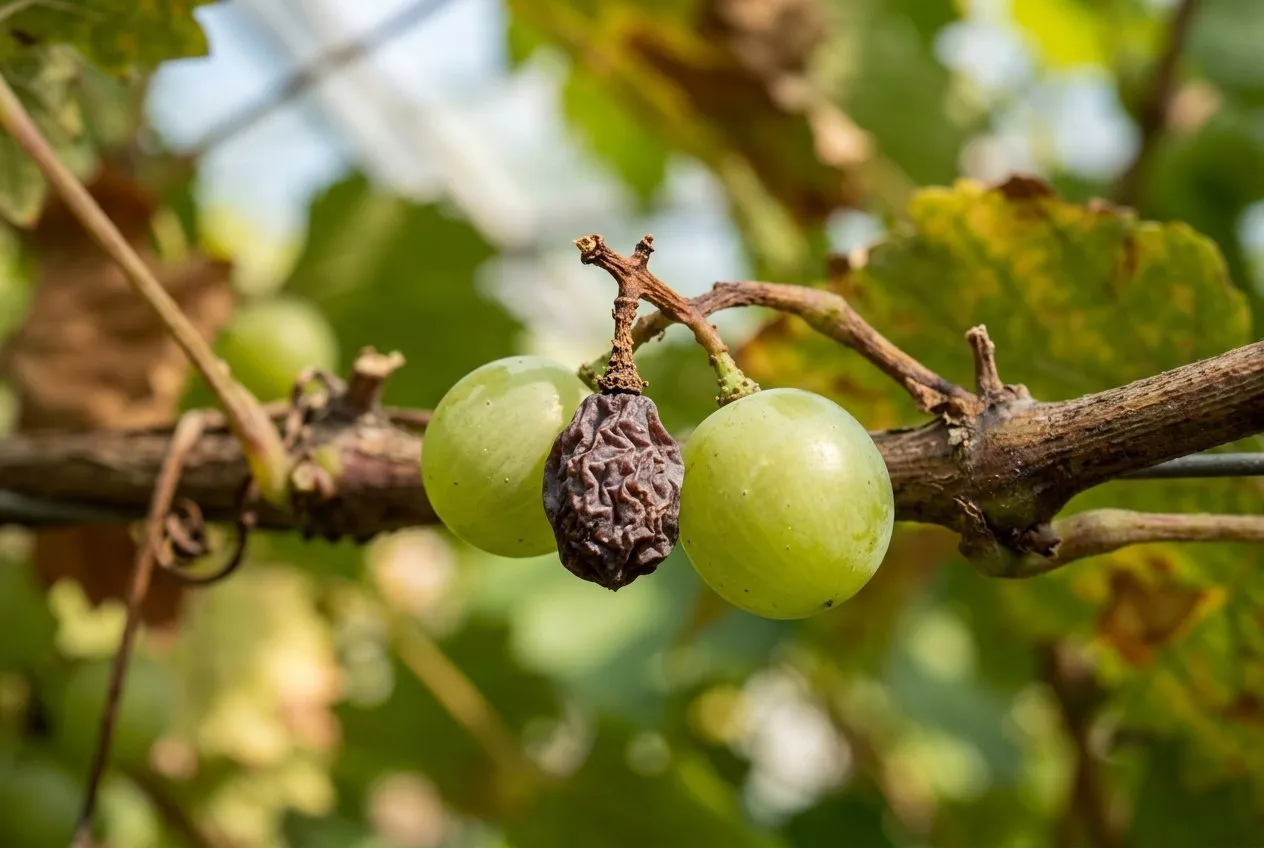
Look at the little stalk. On a shanked berry it turns brown and dry, while healthy berries beside it stay plump.
Why grapes shank in the greenhouse
Shanking happens when the vine can’t send enough water and sugar to every berry. The weakest berries lose out, and their stalks die back. The usual reasons are:
- Too many bunches. A heavy crop is more than the roots and leaves can ripen.
- Unhappy roots. A border that stays waterlogged, gets compacted, or swings between bone dry and soaked damages the fine roots that feed the fruit.
- Poor feeding. Shortages of magnesium or potassium (potash) leave the vine stressed.
- Too much summer pruning. Cutting off lots of leaves takes away the vine’s food factory just when the fruit needs it.
Shanking is a delayed signal. What you see in August was often set up in May and June, when the vine was overloaded or the border too wet or dry.
Is it shanking, mildew, grey mould or thirst?
The fixes are very different, so it’s worth getting this right.
| Problem | What you see | Mould? | What to do |
|---|---|---|---|
| Shanking | Single berries shrivel, stalk browns first | None | Thin crop, water and feed evenly |
| Powdery mildew | White dusty patches on leaves and berries, berries may split | White | Better airflow, even watering |
| Grey mould (botrytis) | Soft berries with fuzzy grey mould | Grey and furry | Ventilate, remove affected berries |
| Dry border | Whole vine wilts, berries soften evenly | None | Water the border deeply |
If single berries are shrivelling, the little stalk is brown and there’s no mould, it’s shanking. For other fungal problems, the guide to powdery mildew helps. Good greenhouse ventilation keeps both mildew and grey mould at bay.
Thin the crop to stop shanking
Taking fewer bunches is the most effective fix. A lighter crop ripens far better.
On an established vine, keep about one bunch per 30cm of rod. Do this in early summer, once you can see which bunches are strongest. On a newly planted vine, remove all flowers for the first two years so it can build roots, then allow just a few bunches in the third.
Then thin the berries within each bunch. With long, narrow scissors, snip out small berries from the inside of the bunch, especially the crowded centre. This lets the rest swell and lets air through, which also helps keep grey mould away. Snip out any shanked berries as soon as you see them.
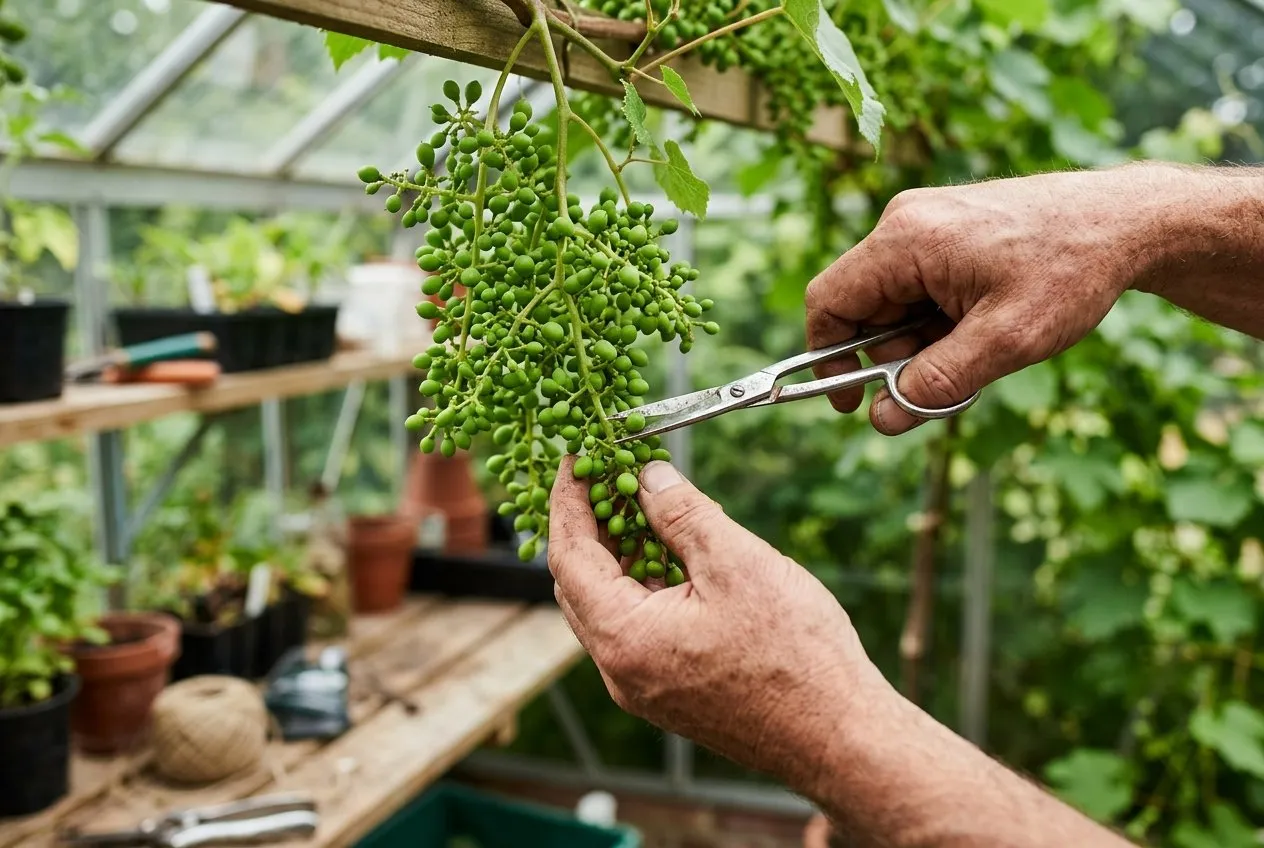
Thinning the berries inside each bunch gives the rest room to swell and lets air move through.
Fixing the border: water, drainage and mulch
The vine feeds through its roots, so the border is where shanking is usually won or lost.
Drainage. If water sits on the surface or the soil smells sour, the roots are struggling. Fork in grit to open up heavy soil. In bad cases, improve the drainage underneath.
Watering. Water deeply and steadily rather than a little every day. In the growing season, give the border a thorough soak once or twice a week depending on the weather, so water reaches the deep roots. Avoid letting it dry right out and then flooding it.
Mulch. In early spring, spread a layer of well-rotted manure or garden compost over the border, kept clear of the stem. It holds moisture and feeds the soil slowly. A layer of leaf mould works well too.
Feeding. From when the berries start to swell, use a high-potash feed such as a tomato feed, following the label. Go easy on nitrogen, which pushes leaves rather than fruit.
Magnesium and the Epsom salts spray
Magnesium shortage is common in greenhouse vines and makes shanking more likely. It shows as yellowing between the veins of older leaves, while the veins stay green. Heavy potash feeding can make it worse, so balance the two.
The quick fix is a leaf spray of Epsom salts (magnesium sulphate), which is a fertiliser rather than a pesticide. Dissolve 20g in a litre of water and spray the leaves in the evening or on a dull day, never in hot sun. Repeat every couple of weeks while the yellowing persists. The guide to calcium, sulphur and magnesium explains how these nutrients work in the soil.
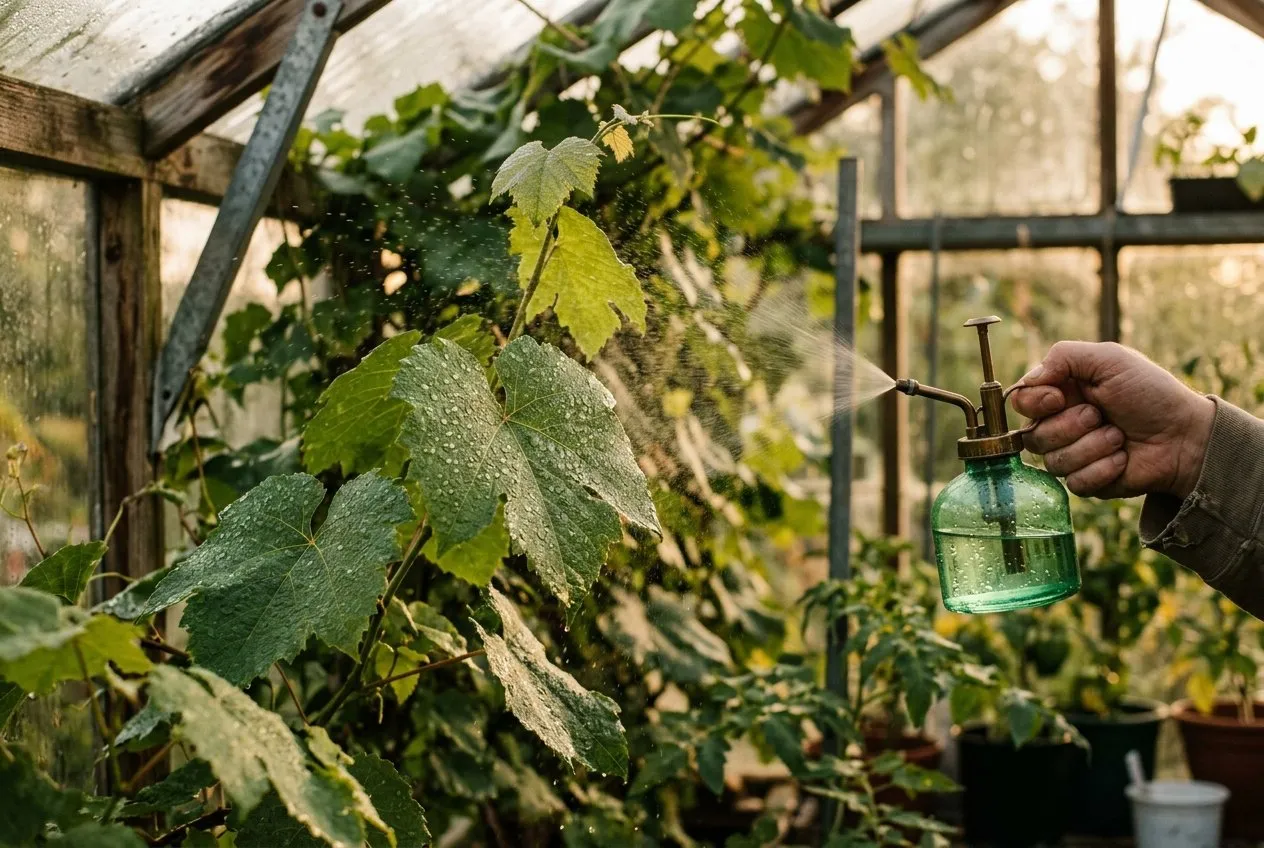
An Epsom salts leaf spray feeds magnesium straight into the leaves. Spray in the evening or on a dull day.
Pruning to rebalance an overloaded vine
Most greenhouse vines are grown on the rod and spur system: one or two permanent stems (rods) with short fruiting spurs along them. Good pruning keeps the crop to a size the vine can ripen.
Winter pruning sets next year’s crop. In December or early January, while the vine is fully dormant, cut each spur back to one or two buds. Don’t leave it later, or the cuts can bleed sap heavily in spring. Remove weak or crowded spurs so the rest are spaced about 30cm apart. If the vine has become a tangle of rods, cut back to one or two strong ones and rebuild over a few seasons.
Summer pruning should be light. Pinch out side shoots a couple of leaves beyond each bunch, and trim extra growth. Avoid stripping lots of leaves, as the vine needs them to ripen its fruit.
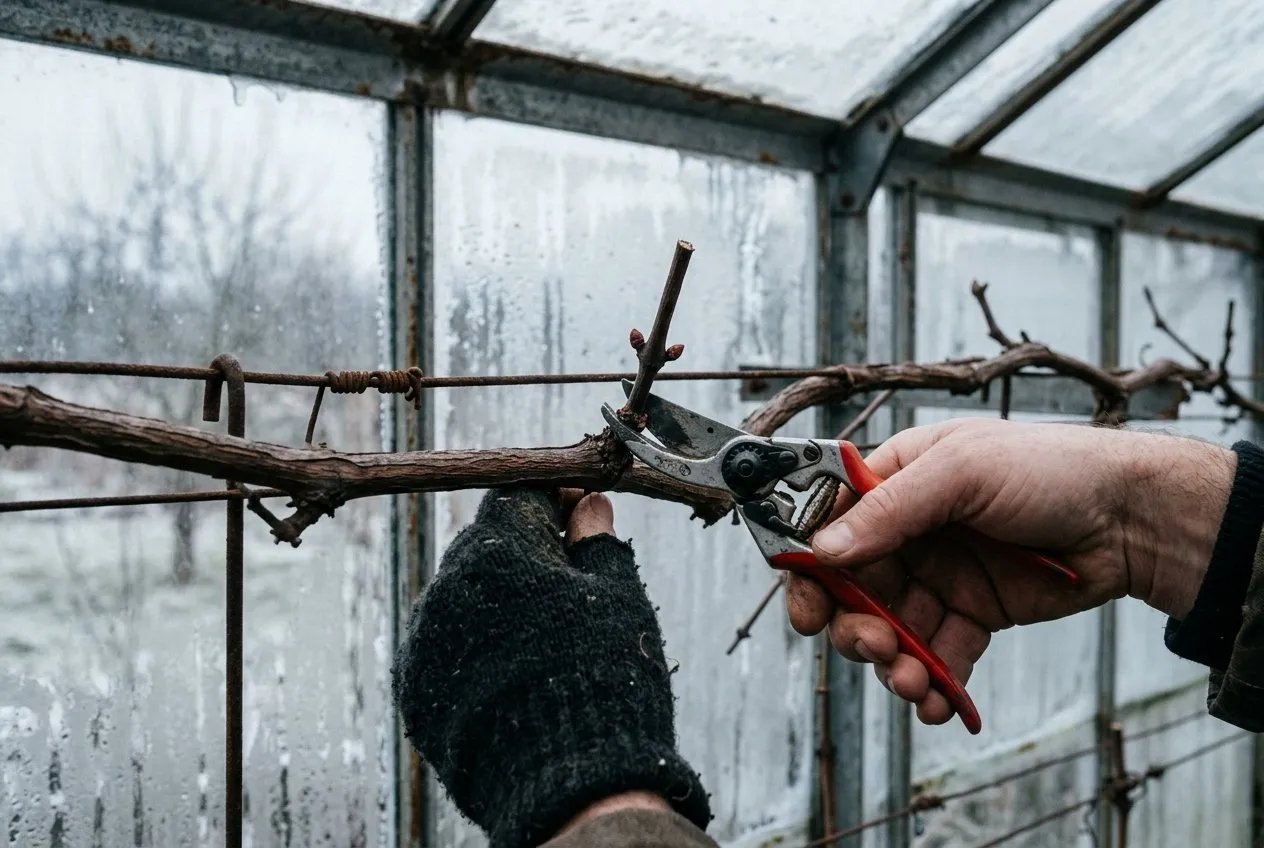
Do the main pruning in winter while the vine is dormant. Cut each spur back to one or two buds.
Greenhouse grape vine calendar
| Month | What to do |
|---|---|
| December to January | Winter prune spurs to one or two buds. Check drainage |
| February to March | Mulch the border with compost or manure. Ventilate on mild days |
| April to May | Pinch out side shoots. Water steadily as growth starts |
| June | Thin to about one bunch per 30cm of rod. Start thinning berries |
| July | Finish berry thinning. High-potash feed. Watch for magnesium yellowing |
| August | Snip out shanked berries. Ventilate well to prevent grey mould |
| September to October | Harvest. Note how many berries shanked this year |
| November | Clear fallen leaves. Plan any border renewal |
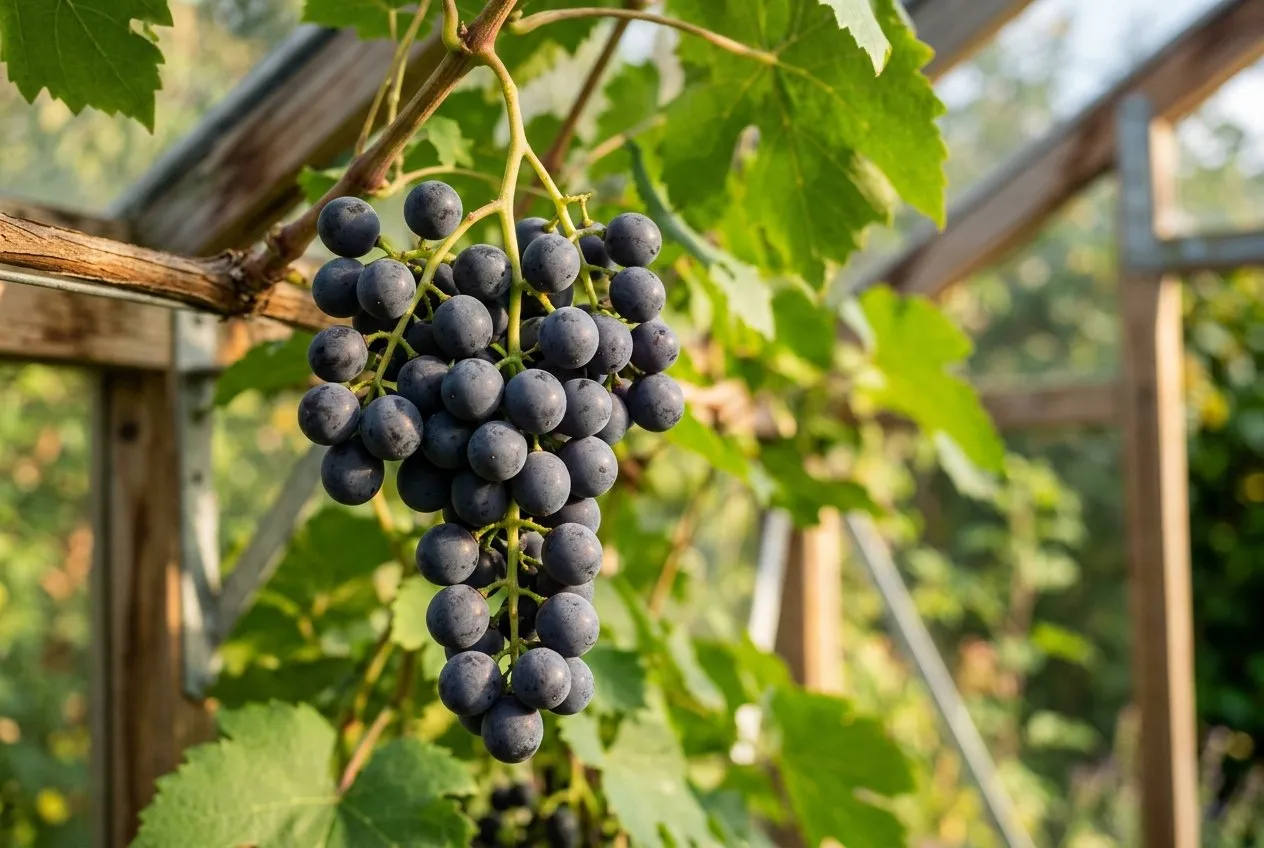
The goal: an evenly coloured bunch with space between the berries. A lighter crop and steady care get you here.
Common mistakes that keep a vine shanking
Leaving too many bunches. A vine can’t ripen everything it sets. Thin to about one per 30cm of rod.
Letting the border swing from flood to drought. Water deeply and evenly, and mulch.
Feeding nitrogen to a struggling vine. It pushes leaves, not fruit. Switch to a high-potash feed once berries form.
Ignoring yellow leaves. Yellowing between the veins means magnesium shortage. Spray Epsom salts.
Pruning hard in summer. Leave the leaves. Do the real cutting in winter.
When to renew the border and replant
If a couple of seasons of good care haven’t helped, the border itself may be worn out or waterlogged. Very old vines can also simply run out of steam.
In that case, start again in winter. Lift the old vine and dig out as much of the old border soil as you can. Improve the drainage underneath, then refill with good loam-based soil mixed with well-rotted manure. Plant a young vine and let it grow for two years before cropping. Black Hamburg is the classic choice for an unheated greenhouse.
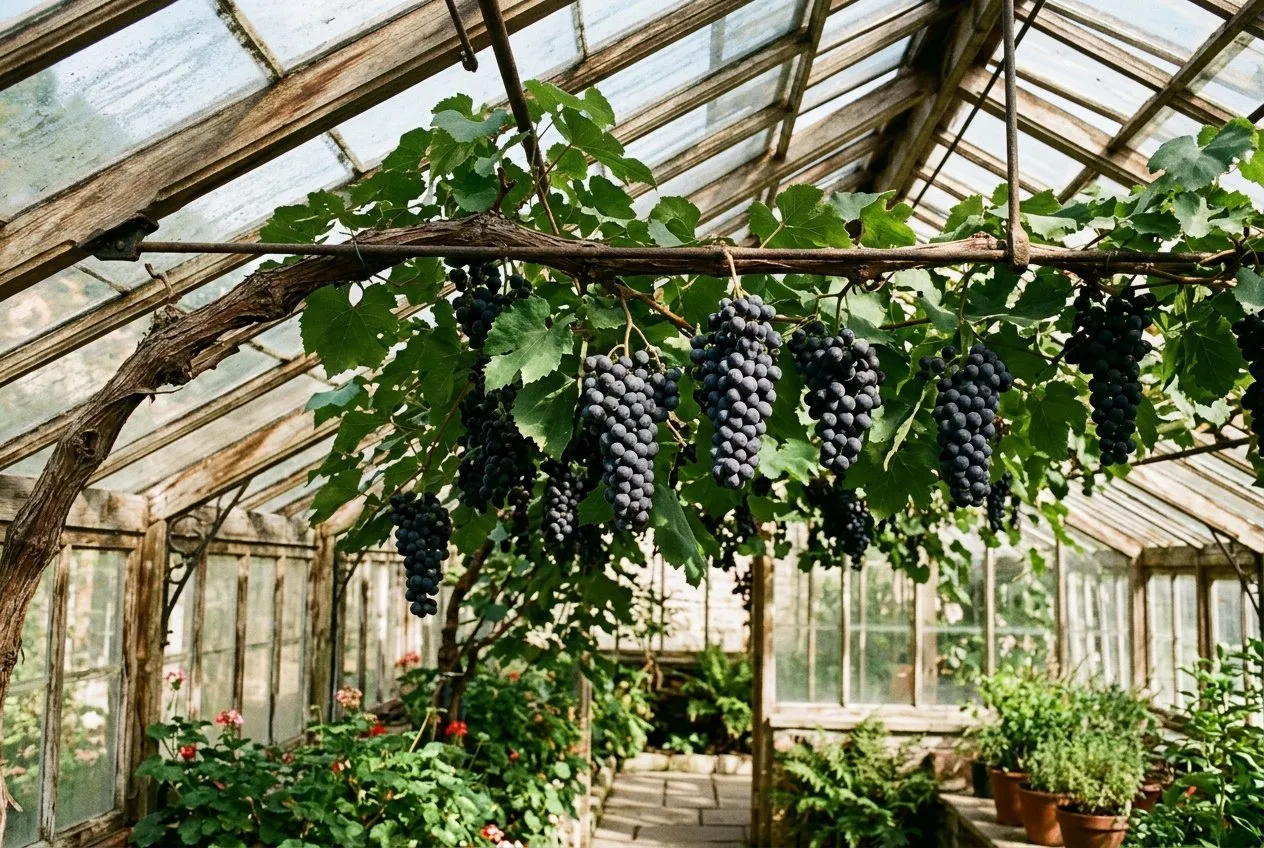
A well-trained vine with a sensible crop. Give a new vine a good root run and it can crop for decades.
Frequently asked questions
What is grape shanking?
Shanking is when the tiny stalk holding a grape dies and the berry shrivels. Without a working stalk, the berry gets no more water or sugar. It stops colouring, stays sour and dries up while others on the bunch ripen.
What causes grapes to shank?
Usually a vine carrying more fruit than its roots can feed. Waterlogged, compacted or very dry borders make it worse by damaging the roots. Shortages of magnesium or potassium and very hard summer pruning can also play a part.
How do I stop grape shanking?
Thin the crop and look after the roots. Keep about one bunch per 30cm of rod, water the border deeply and evenly, and feed with a high-potash feed as the fruit swells. Correct any magnesium shortage and snip out shanked berries.
Can you eat shanked grapes?
They’re not worth eating, as they stay sour and watery. Snip them out with narrow scissors as soon as you spot them. That keeps the bunch tidy and lets the healthy berries ripen.
Is shanking the same as grape mildew or botrytis?
No, shanking isn’t caused by a fungus. Powdery mildew leaves white dusty patches, and botrytis (grey mould) leaves fuzzy grey mould. A shanked berry has no mould at all, just a brown stalk and a shrivelled berry.
Does magnesium deficiency cause shanking?
It can make it worse, along with other stresses. Magnesium shortage shows as yellowing between the veins of older leaves. An Epsom salts leaf spray at 20g per litre is a quick fix, but cropping and roots still need sorting.
When should I give up on a shanking grape vine?
Only after a couple of seasons of good care haven’t helped. If the border is worn out or stays waterlogged, renew the soil and drainage, then replant a young vine in winter. Let it grow for two years before cropping.
Now you know how to beat shanking, plan the rest of the year under glass with our greenhouse growing calendar, or browse more fruit growing guides.
Our team produces practical UK gardening guidance from source research, contributor records and established horticultural practice. Editorial standards are overseen by Matt W.