
Key takeaways
- Buy certified seed potatoes and chit earlies on a cool, bright windowsill from late January
- Plant first earlies in late March and second earlies and maincrops in April
- Plant about 12cm deep, with first earlies 30cm apart and maincrops 38cm apart
- Earth up the stems as they grow so tubers stay in the dark and don't turn green
- Blight strikes in warm, humid weather from June, so cut off and bin infected leaves at once
- Store only maincrops, in paper or hessian sacks somewhere cool, dark and frost-free
Potatoes are one of the easiest and most rewarding crops for a UK veg bed or allotment. Plant seed potatoes in spring, draw soil over the shoots as they grow, and lift your first new potatoes in June. Maincrops follow in late summer and can keep you going through winter.
This guide covers growing potatoes in the ground, from choosing seed potatoes to storing the crop. For a patio or balcony, the guide to growing potatoes in buckets shows the container method step by step.
Which type of potato should you grow?
Potatoes are grouped by how long they take to grow. The type decides when you plant, when you harvest and how much space they take up.
| Type | Plant | Harvest | Best for |
|---|---|---|---|
| First early | Late March | June to July | New potatoes, small plots |
| Second early | Early to mid April | July to August | Salad potatoes, general use |
| Maincrop | Mid to late April | August to October | Baking, roasting, storing |
First earlies are quick, so they usually finish before blight arrives. They leave the bed free by midsummer for a follow-on crop. Second earlies give slightly bigger, often waxy potatoes. Maincrops give the heaviest crop and store well, but they take up the ground for longest and face the highest blight risk.
Gardener’s tip: Short on space? Grow first earlies. They’re in and out by July, and home-grown new potatoes taste far better than shop-bought.
Choosing seed potatoes and varieties
Buy certified seed potatoes from a garden centre or seed supplier. Supermarket potatoes may carry viruses and diseases. Seed potatoes go on sale from January.
A few well-known varieties for each type:
- First earlies: Rocket and Swift are very quick. Pentland Javelin is a classic waxy new potato.
- Second earlies: Charlotte is the favourite salad potato. Kestrel is a good all-rounder with some slug resistance. Maris Peer gives small, creamy tubers.
- Maincrops: Maris Piper is the classic roaster and chipper. King Edward is floury and good for mash and baking. Sarpo Mira has strong blight resistance.
The guide to the best potato varieties compares many more by flavour and use.
How to chit seed potatoes
Chitting means letting seed potatoes sprout before you plant them. It gives earlies a head start of a week or two. For maincrops it makes little difference.
Start in late January or February. Stand the seed potatoes in egg boxes with the end that has the most “eyes” facing up. Put them somewhere cool, bright and frost-free, such as a porch or spare-room windowsill.
After about four to six weeks you should see short, sturdy sprouts about 2cm long. Long, pale shoots mean the spot is too warm or too dark, and they snap easily at planting.

Short, stubby purple or green sprouts are perfect. Pale, leggy shoots mean the spot is too warm or too dark.
Preparing the ground for potatoes
Potatoes like a sunny spot with fertile, well-drained soil. Dig in plenty of well-rotted compost or manure in autumn or winter.
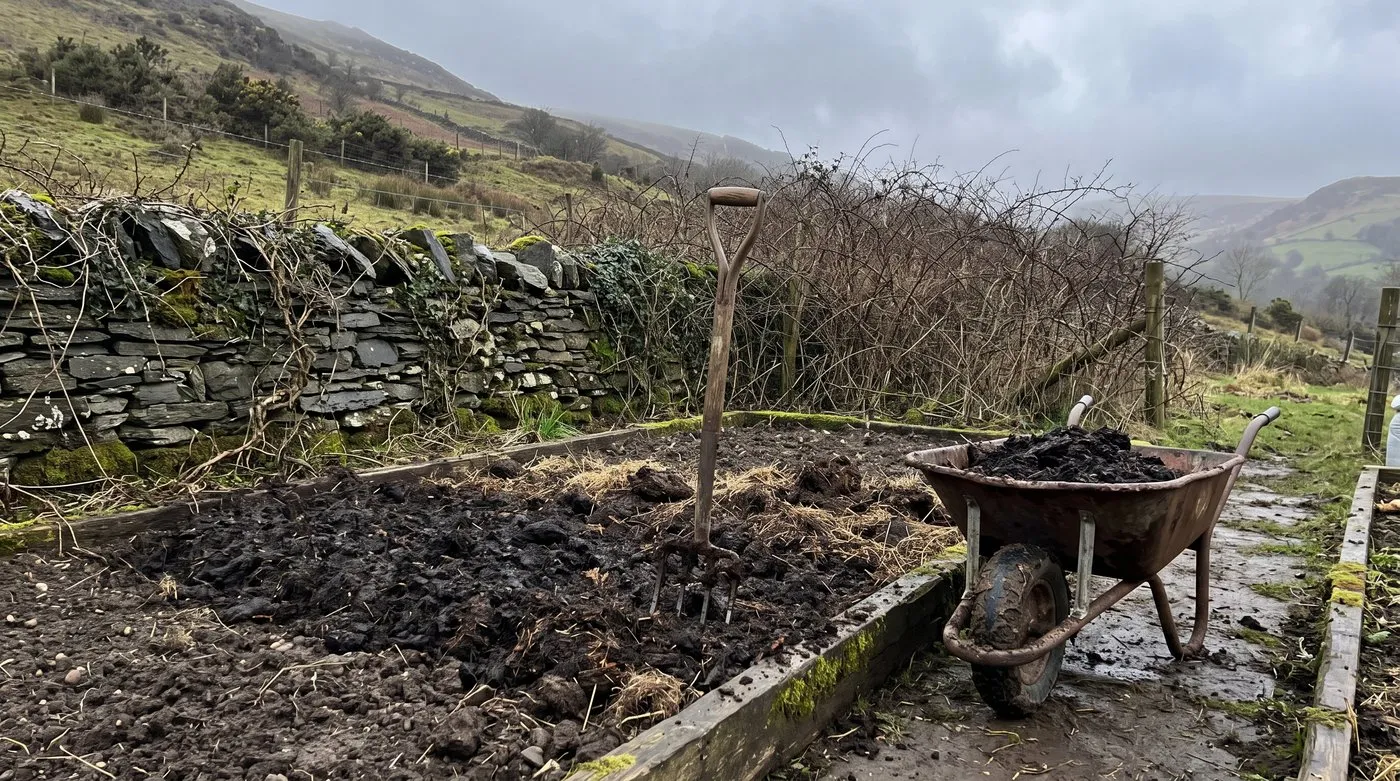
Dig in plenty of well-rotted manure or compost over winter. Potatoes love rich, crumbly soil.
Don’t lime the potato bed. Potatoes prefer slightly acidic soil, and lime makes common scab worse.
Move potatoes to a new bed each year. Growing them in the same spot builds up soil pests such as potato cyst nematode. A simple three-year crop rotation keeps them moving.
How to plant potatoes in the ground
Plant first earlies in late March, and second earlies and maincrops in April. In northern England and Scotland, go a week or two later. The guide on when to plant potatoes has the timings by region.
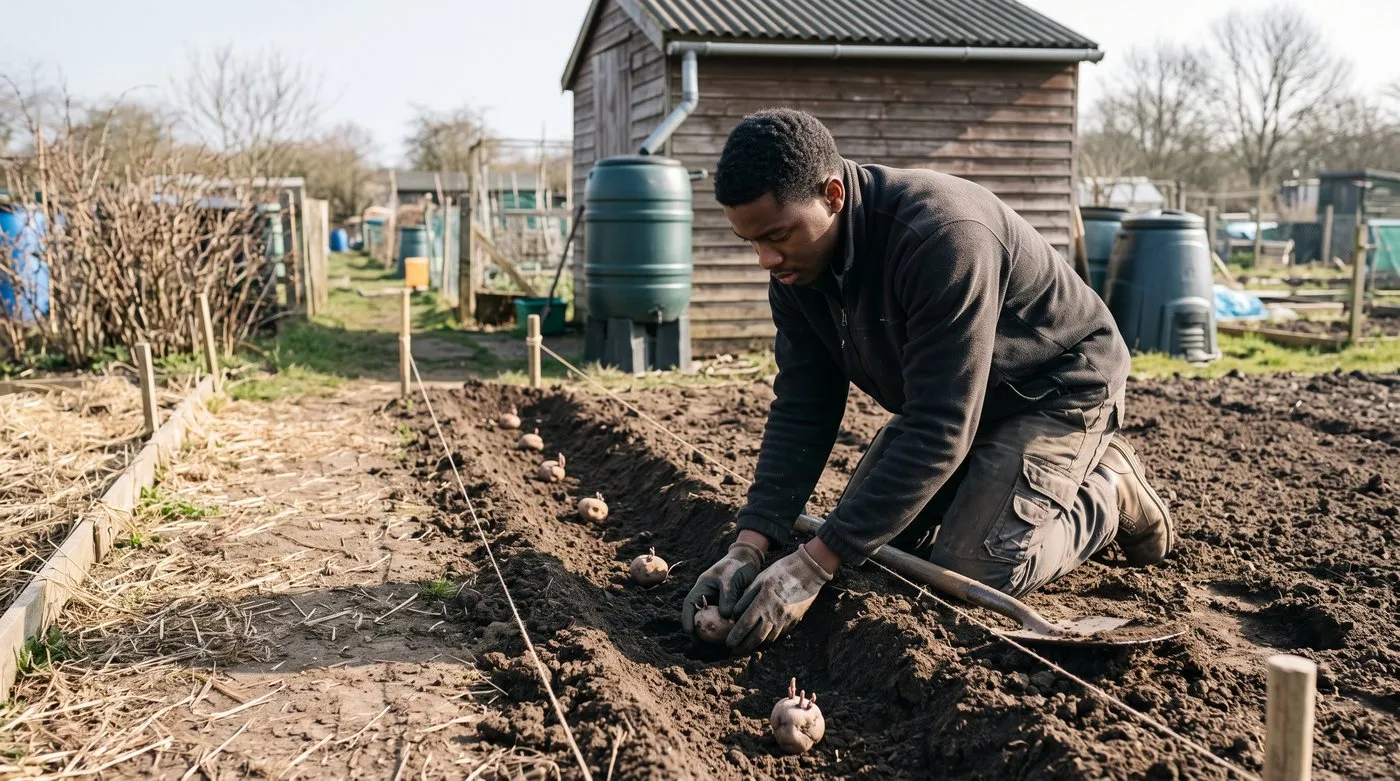
Set seed potatoes in with the sprouts pointing up, then cover gently so the shoots don’t snap.
- Dig a trench or individual holes about 12cm deep.
- Set the seed potatoes in, sprouts pointing up.
- Cover gently with soil, taking care not to snap the sprouts.
- Mark the ends of each row.
| Type | Between potatoes | Between rows |
|---|---|---|
| First early | 30cm | 60cm |
| Second early | 38cm | 75cm |
| Maincrop | 38cm | 75cm |
In a raised bed you can plant a little closer, but leave room to earth up.
Earthing up potatoes
Earthing up means drawing soil up around the stems as they grow. When the shoots are about 20cm tall, use a hoe or rake to pull soil up around them, leaving just the top leaves showing. Repeat every couple of weeks until the ridges are about 15cm high.
It does three jobs. It keeps the tubers in the dark so they don’t turn green. It gives more buried stem for potatoes to form on. And it protects young shoots from late frosts. If a frost is forecast once the shoots are up, cover them with fleece overnight.
The guide to earthing up potatoes covers timing and ridge height in more detail.

Drawing soil up around the stems keeps tubers in the dark and protects young shoots from late frost.
Watering and feeding potatoes
Potatoes need steady moisture once the tubers start to form, which is roughly when the plants flower. In dry spells, give a good soak once or twice a week rather than a daily sprinkle.
Uneven watering causes cracked, misshapen or hollow potatoes. A dry spell followed by a downpour is the usual culprit.
If you dug in plenty of compost or manure, extra feeding is rarely needed. On poorer soil, rake a general-purpose fertiliser into the ground before planting. Avoid high-nitrogen feeds, which give lots of leaf and few potatoes.
Potato blight and other problems
Potato blight is the most serious potato disease in the UK. It strikes in warm, humid weather, usually from June onwards, and is worst in wet western areas.
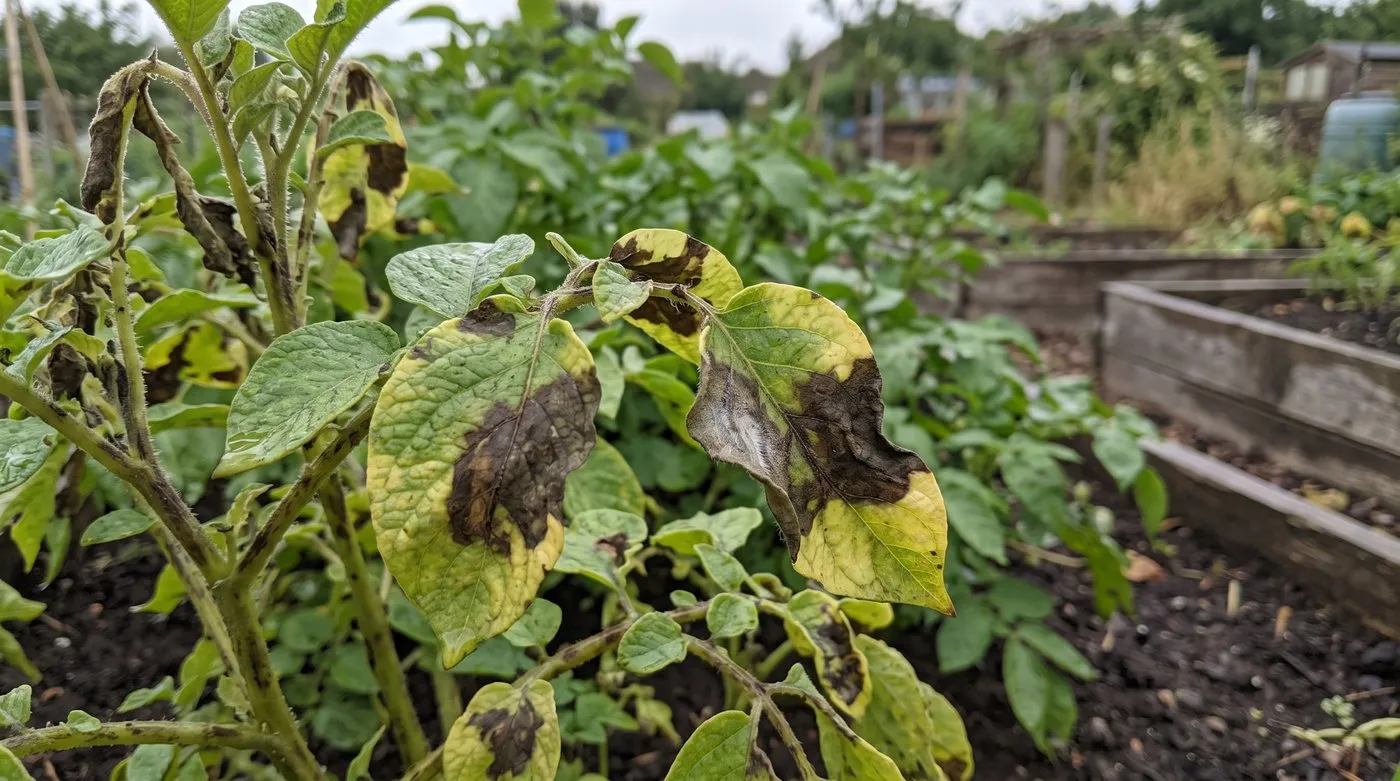
Brown patches spreading from the leaf edges mean blight. Cut off and bin the leaves and stems straight away.
Look for brown patches on the leaves, often with white fuzzy growth underneath, and dark marks on the stems. If you see blight, cut off all the leaves and stems at ground level and bin them, not on the compost heap. Leave the tubers in the ground for two to three weeks before lifting, so spores on the surface die off.
To lower the risk, grow earlies, choose resistant varieties such as Sarpo Mira, and space plants well. The guide to potato blight has pictures and more advice.
Slugs tunnel into tubers, especially maincrops left in the ground into autumn. Lift maincrops promptly once the skins have set to limit the damage.
Common scab leaves rough, corky patches on the skin. The flesh underneath is fine once peeled. It is worse in dry, limy soil, so water in dry spells and don’t lime the bed.
How to harvest potatoes
First earlies are usually ready from June, often around when the plants flower. Scrape back some soil to check the size. Push a fork in well away from the stems and lift gently. New potatoes are best eaten within a day or two.
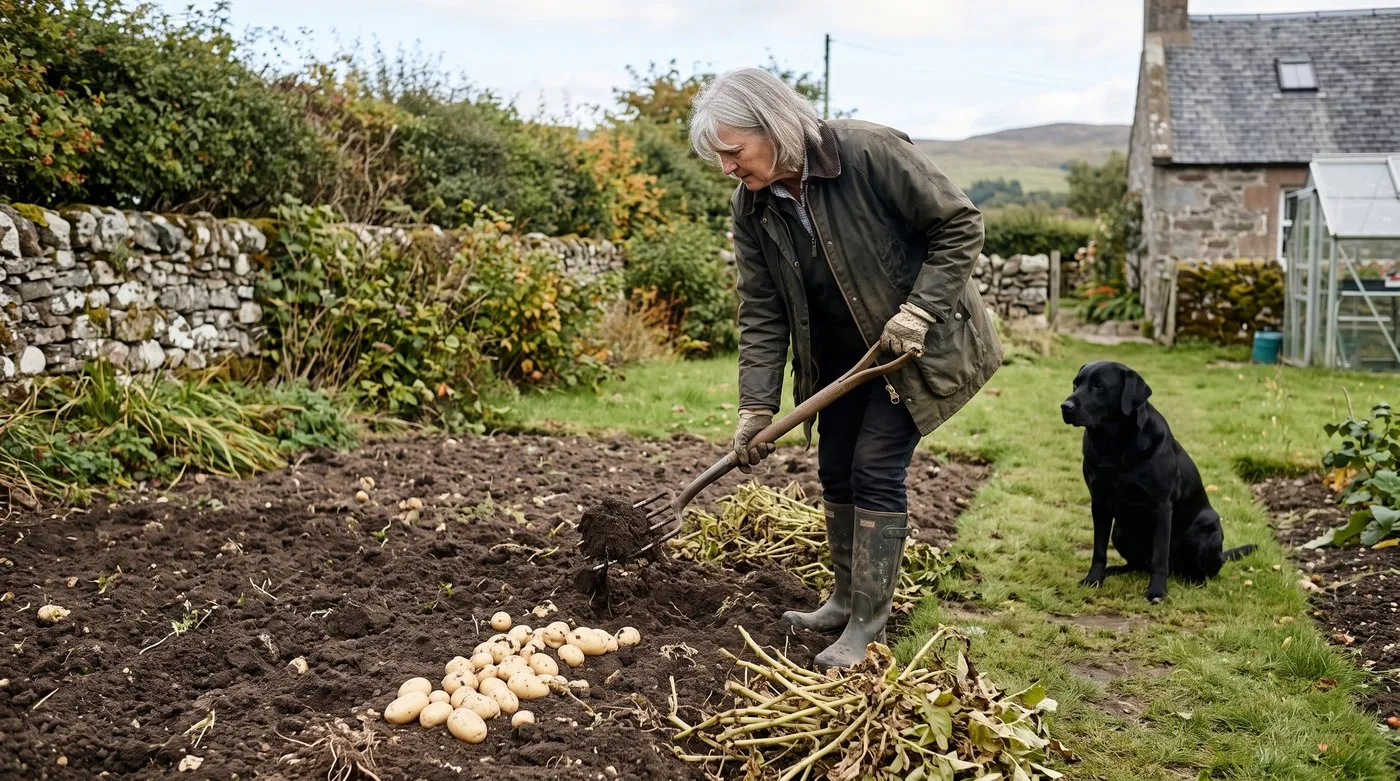
Lift maincrops on a dry day and leave them on the surface for a few hours so the skins dry before storing.
Second earlies follow in July and August. Lift them as you need them.
Maincrops are ready when the leaves yellow and die back, from late August. Cut the dead stems off and leave the potatoes in the ground for about two weeks so the skins firm up. Then lift them on a dry day and leave them on the surface for a few hours to dry. The guide to harvesting potatoes explains each type in more detail.
How to store potatoes
Only maincrops store well. Earlies have thin skins and should be eaten fresh.
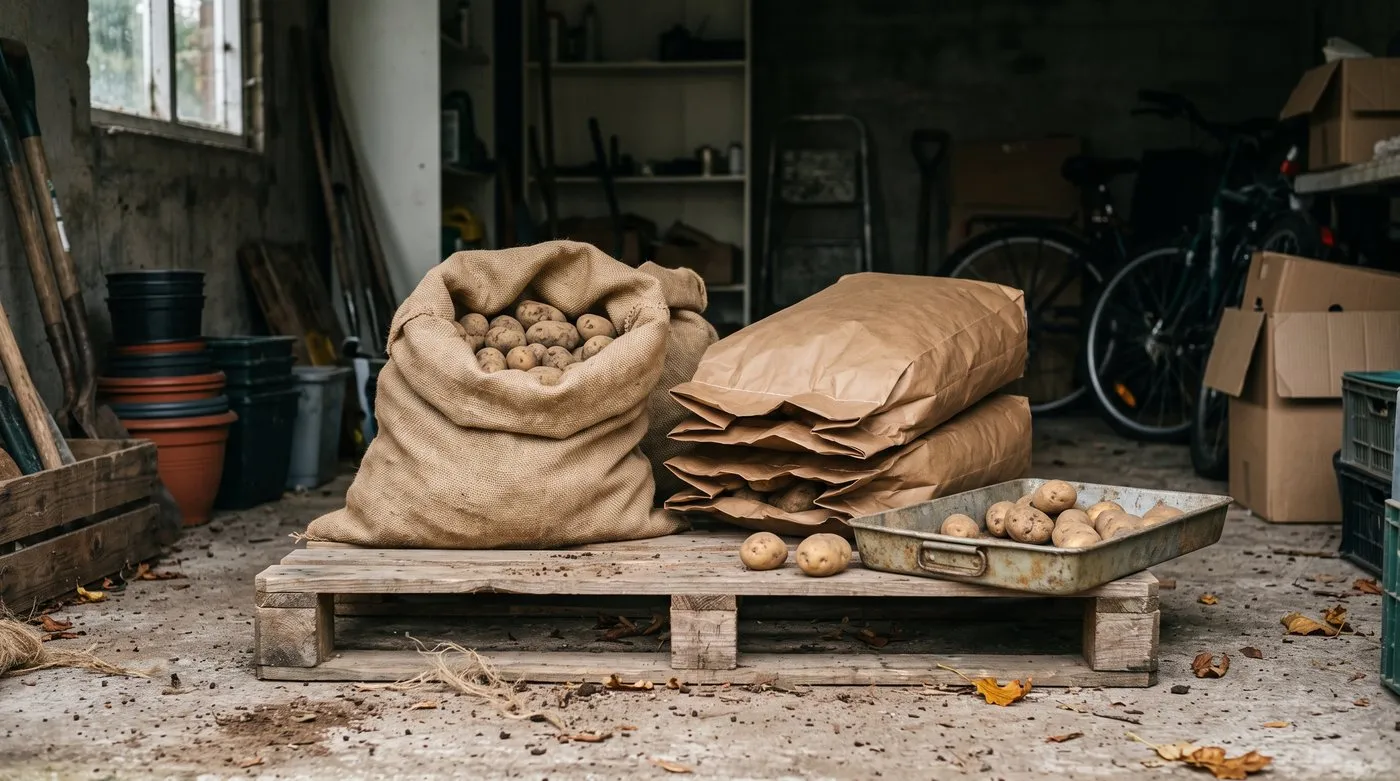
Plain sacks in a cool, dark, frost-free spot keep maincrops for months. Check them every few weeks.
Use only sound, undamaged potatoes. Put them in paper or hessian sacks and keep them somewhere cool, dark and frost-free, such as a garage or shed. Check them every few weeks and take out any that go soft. Keep them in the dark, as light turns them green.
Month-by-month potato calendar
| Month | Task |
|---|---|
| January | Order seed potatoes. Start chitting earlies late in the month |
| February | Keep chitting. Prepare beds with compost or manure |
| March | Plant first earlies late in the month. Fleece if frost is forecast |
| April | Plant second earlies and maincrops. Start earthing up earlies |
| May | Keep earthing up. Water in dry spells. Watch for late frosts |
| June | Harvest first earlies. Check leaves for blight in humid weather |
| July | Harvest second earlies. Cut off any blighted foliage at once |
| August | Start lifting maincrops as foliage dies back |
| September | Finish lifting maincrops. Dry and store them |
| October | Clear the bed. Dig in compost or manure for next year |
Common mistakes when growing potatoes
Planting supermarket potatoes. They may carry disease. Buy certified seed potatoes.
Planting into cold, wet soil. Seed potatoes can rot. Wait until late March and for drier soil.
Not earthing up. Tubers near the surface turn green and the crop is smaller.
Same bed every year. Pests and diseases build up. Rotate to a new bed.
Ignoring the first signs of blight. It spreads very fast. Cut off and bin infected foliage straight away.
Frequently asked questions
When should I plant potatoes in the UK?
Plant first earlies in late March and second earlies and maincrops in April. In colder northern areas and Scotland, plant a week or two later. Wait until the soil is no longer cold and wet, and protect shoots if frost is forecast.
Do I need to chit potatoes before planting?
Chitting helps earlies but is optional for maincrops. Stand seed potatoes in egg boxes, the end with most eyes upwards, somewhere cool and bright from late January. Plant once the sprouts are short and sturdy, about 2cm long.
How deep should I plant potatoes?
Plant seed potatoes about 12cm deep with the sprouts pointing up. Space first earlies 30cm apart in rows 60cm apart, and second earlies and maincrops 38cm apart in rows 75cm apart.
Why are my potatoes turning green?
They have been exposed to light while growing or in storage. Green parts contain a natural toxin, so don’t eat them. Earth up the plants as they grow and store tubers in the dark.
How do I know when potatoes are ready to harvest?
First earlies are usually ready when the plants flower, from June. Scrape back a little soil to check the size first. Maincrops are ready when the leaves yellow and die back in late summer or early autumn.
What is the best way to stop potato blight?
Grow earlies or blight-resistant varieties such as Sarpo Mira. Space plants for airflow and check leaves often in warm, humid weather. If blight appears, cut off and bin all the leaves and stems, then lift the tubers after two to three weeks.
Once your earlies are lifted, use the UK vegetable planting calendar to choose a follow-on crop for the empty bed, or browse more growing guides.
Our team produces practical UK gardening guidance from source research, contributor records and established horticultural practice. Editorial standards are overseen by Matt W.


