
Key takeaways
- Turnips are quick, often ready six to ten weeks after sowing
- Sow turnips little and often from March to August for a steady supply
- Sow swede in May or June; it needs a long season and is ready from autumn
- Pull turnips at golf-ball size, before they turn woody
- Cover seedlings with fine mesh or fleece to keep flea beetle off
- Swede can stay in the ground through winter and be lifted as needed
Turnips and swede are two of the easiest root crops for UK gardens. They’re close relatives, both part of the cabbage family, and both are happy in cool British weather. The difference is speed.
Turnips are quick. Sow them in spring or summer and you can be pulling roots in a couple of months. Swede is slow. It goes in during May or June and gives big, sweet roots from autumn through winter. Grow both and you’ll have fresh roots for much of the year.
What’s the difference between a turnip and a swede?
Turnips (Brassica rapa) are small, fast roots with white flesh and a mild, slightly peppery taste. Many have a purple top where the root sits above the soil. They’re best pulled young, before they turn woody.
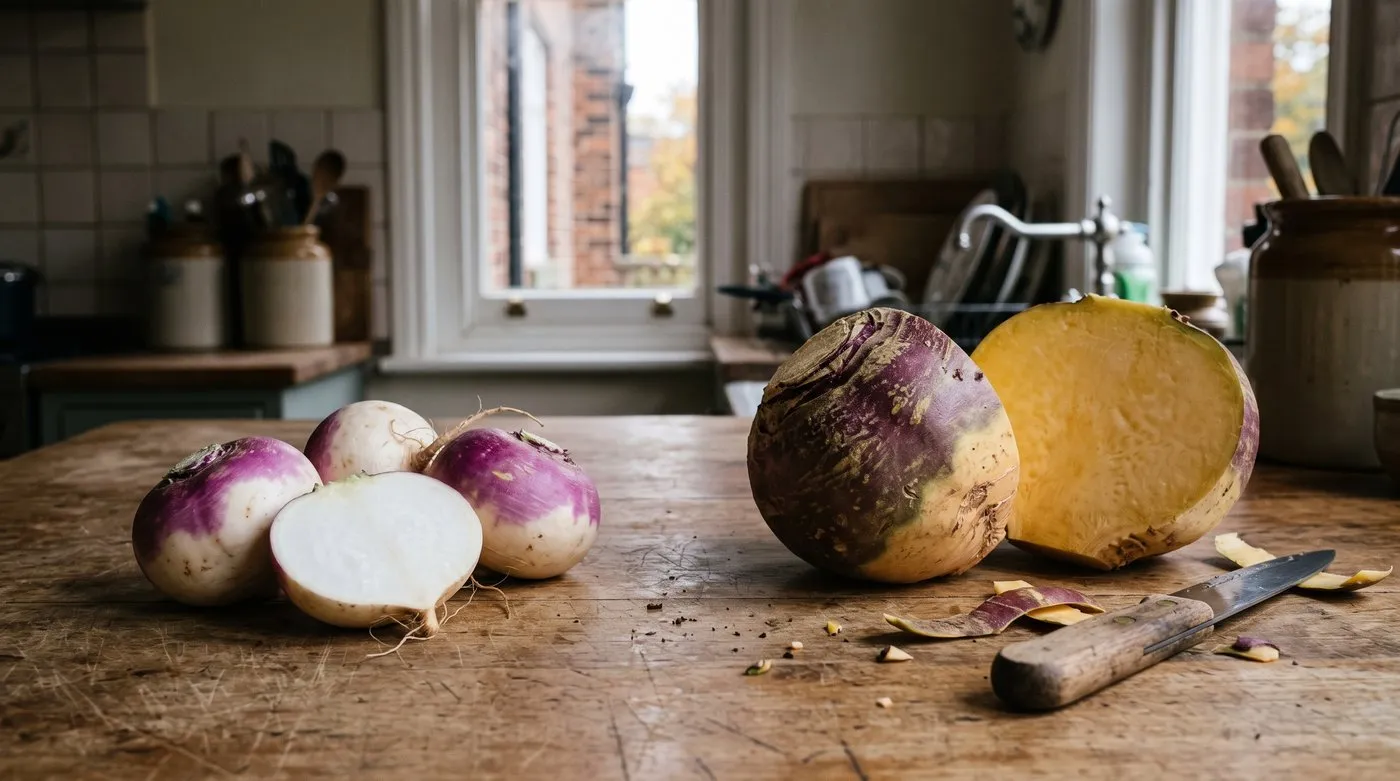
Turnips are small with white flesh; swede is big with golden flesh. Same family, very different crops.
Swede (Brassica napus) is a much bigger, slower root with dense yellow-orange flesh and a sweet, earthy flavour. It began as a cross between a turnip and a cabbage.
In Scotland, swede is often called “turnip” or “neeps”, as in neeps and tatties. This guide uses the English names.
| Turnip | Swede | |
|---|---|---|
| Sow | March to August | May to June |
| Ready | Often 6-10 weeks | Autumn onwards |
| Size to pick | Golf ball | Large, often 10-15cm |
| Flesh | White | Yellow-orange |
| Taste | Mild, peppery | Sweet, earthy |
| Winter | Best eaten before hard frost | Can stay in the ground |
| Best for | Salads, roasting, stir-fries, greens | Mash, soups, stews, roasting |
Best turnip varieties for UK gardens
Purple Top Milan is the classic: flattish roots with a purple crown and white base. Sow it from spring to summer.
- Snowball: round, white and quick. Good for early sowings.
- Tokyo Cross F1: small, smooth white roots that are lovely raw. Good for late summer sowings too.
- Market Express F1: another quick white turnip for pulling small.
- Atlantic: purple-topped, a good all-rounder for cooking.
For leafy turnip tops rather than roots, look for a variety such as Namenia. Sow it thickly and cut the leaves young.
Best swede varieties for UK gardens
Marian is the best-known swede in UK gardens. It has purple-topped roots with yellow flesh and some resistance to clubroot and mildew.
- Invitation: a modern variety bred with clubroot resistance, useful on plots where it’s been a problem.
- Best of All: an older variety with good flavour, but no clubroot resistance.
- Ruby: purple-skinned with yellow flesh.
If clubroot has ever shown up on your plot, choose a resistant variety and read the guide to club root before you sow.
When and how to sow turnips
Sow turnips where they’re to grow. Little and often is the way: a short row every few weeks gives you roots at the right size all season.
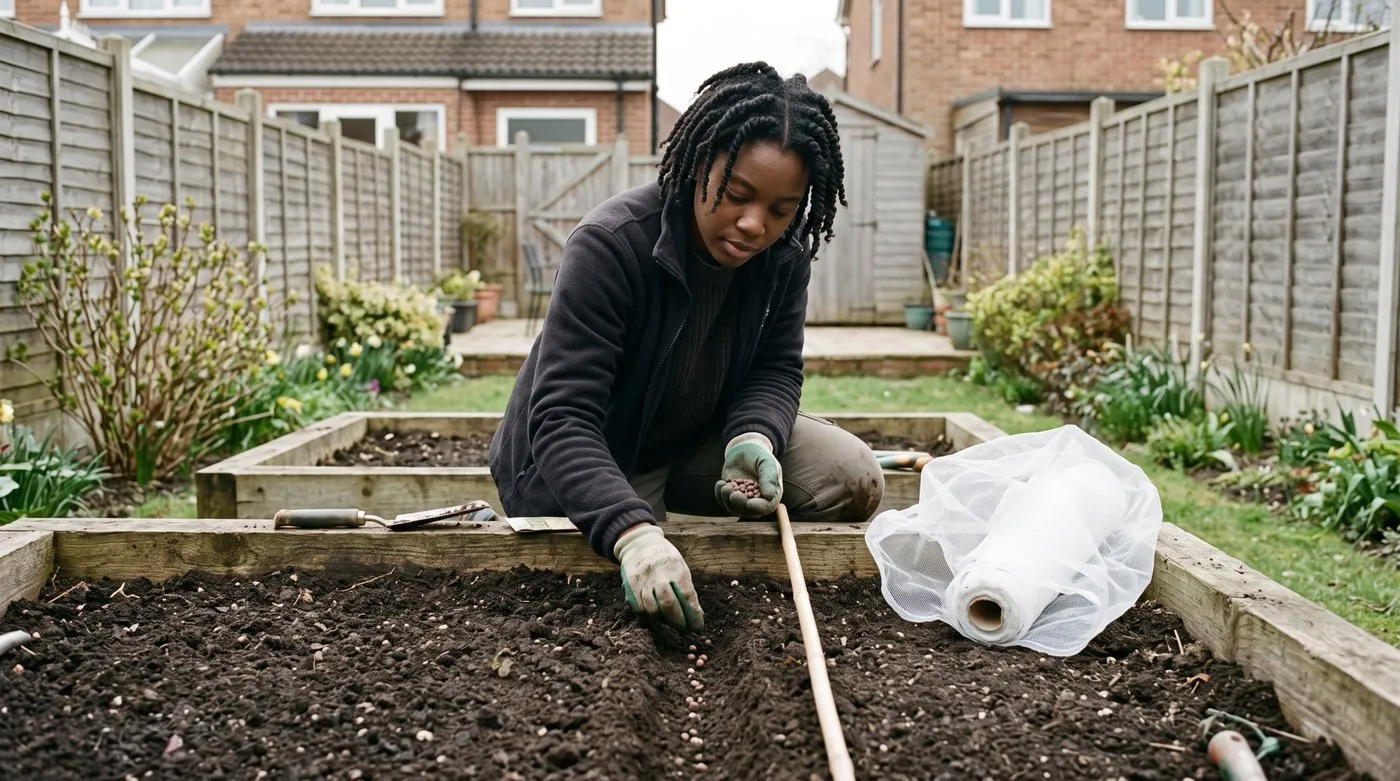
Sow thinly in a shallow drill, then pop the mesh straight on. A short row every few weeks keeps turnips coming.
| Month | Turnip sowing |
|---|---|
| March | Under cloches or fleece, quick varieties only |
| April to July | Main outdoor sowings, every few weeks |
| August | Last sowings of quick varieties for autumn |
How to sow:
- Rake the soil to a fine, crumbly surface and remove stones.
- Draw a drill about 1-2cm deep.
- Water the drill first if the soil is dry.
- Sow thinly along it and cover with fine soil.
- Space rows about 25-30cm apart.
When seedlings are big enough to handle, thin them to about 10-15cm apart. Leave them closer if you want baby turnips. The UK vegetable planting calendar has timings to fit turnips around your other crops.
When and how to sow swede
Sow swede in May or June. It needs a long season to bulk up, and very early sowings are more likely to bolt. May suits southern gardens. June is often better in the north and Scotland.
Sow in drills 1-2cm deep, with rows about 40cm apart. Thin the seedlings in stages until they’re about 25cm apart. Swede needs that space to make good-sized roots.
Preparing the soil
Both crops like fertile, well-drained soil that holds some moisture. Dig in well-rotted compost the autumn before. Don’t add fresh manure just before sowing, as it can lead to forked roots and leafy growth.
Like other brassicas, turnips and swede don’t like very acid soil. If yours is acid, liming in autumn can help. The guide to garden lime explains when and how much.
Heavy clay needs opening up with organic matter to stop roots sitting wet. On thin sandy soil, add plenty of compost to hold moisture.
Crop rotation
Turnips and swede are brassicas, so grow them with your cabbages, kale and broccoli in a rotation. Don’t grow brassicas on the same ground year after year. Moving them on helps keep clubroot and other soil problems down. The crop rotation planner shows how to fit them in.
Looking after turnips and swede
Water steadily. Dry spells followed by a soaking can make roots woody, split or hot-tasting. In dry weather, give a good soak once or twice a week rather than a daily sprinkle. A mulch between the rows helps hold moisture in.
Go easy on feeding. Good soil is usually enough. Too much nitrogen gives lots of leaf and small roots.
Keep weeds down, especially in the first few weeks when seedlings are small. Hand-weed close to the plants so you don’t disturb the roots.
Flea beetle, clubroot and other problems
Flea beetle is the main pest of turnip and swede seedlings. These tiny beetles jump when disturbed and chew small round holes in young leaves. In hot, dry weather they can wipe out a row.
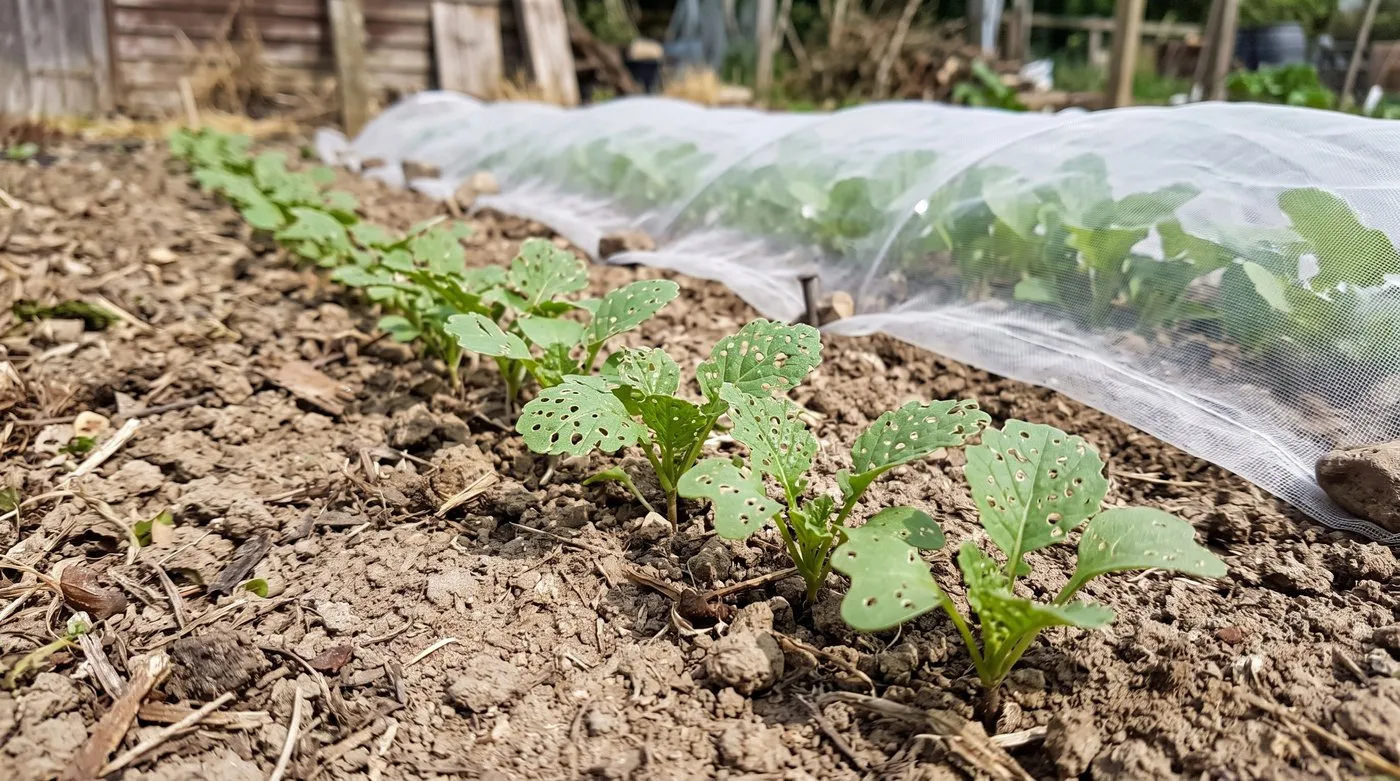
Tiny round holes like these mean flea beetle. The row under mesh next door shows why covering at sowing time works.
- Cover the row with fine insect mesh or fleece straight after sowing, with the edges tucked in.
- Keep seedlings watered so they grow quickly through the risky stage.
- Clear away old brassica debris, where the beetles overwinter.
The guide to flea beetle has more detail.
Clubroot is a soil-borne disease that causes swollen, distorted roots and stunted, wilting plants. Once it’s in the soil, it lasts for many years. Rotate your brassicas, improve drainage, lime acid soil and grow resistant swede varieties.
Cabbage root fly maggots tunnel into the roots. Mesh over the crop keeps the adult flies off.
Powdery mildew shows as white patches on leaves in late summer, especially in dry weather. It rarely does much harm. Watering in dry spells helps.
Eating turnip tops
Turnip tops are an old-fashioned green worth trying. Cut the young leaves when they’re 10-15cm tall, a few centimetres above the root. They often regrow for another cut.
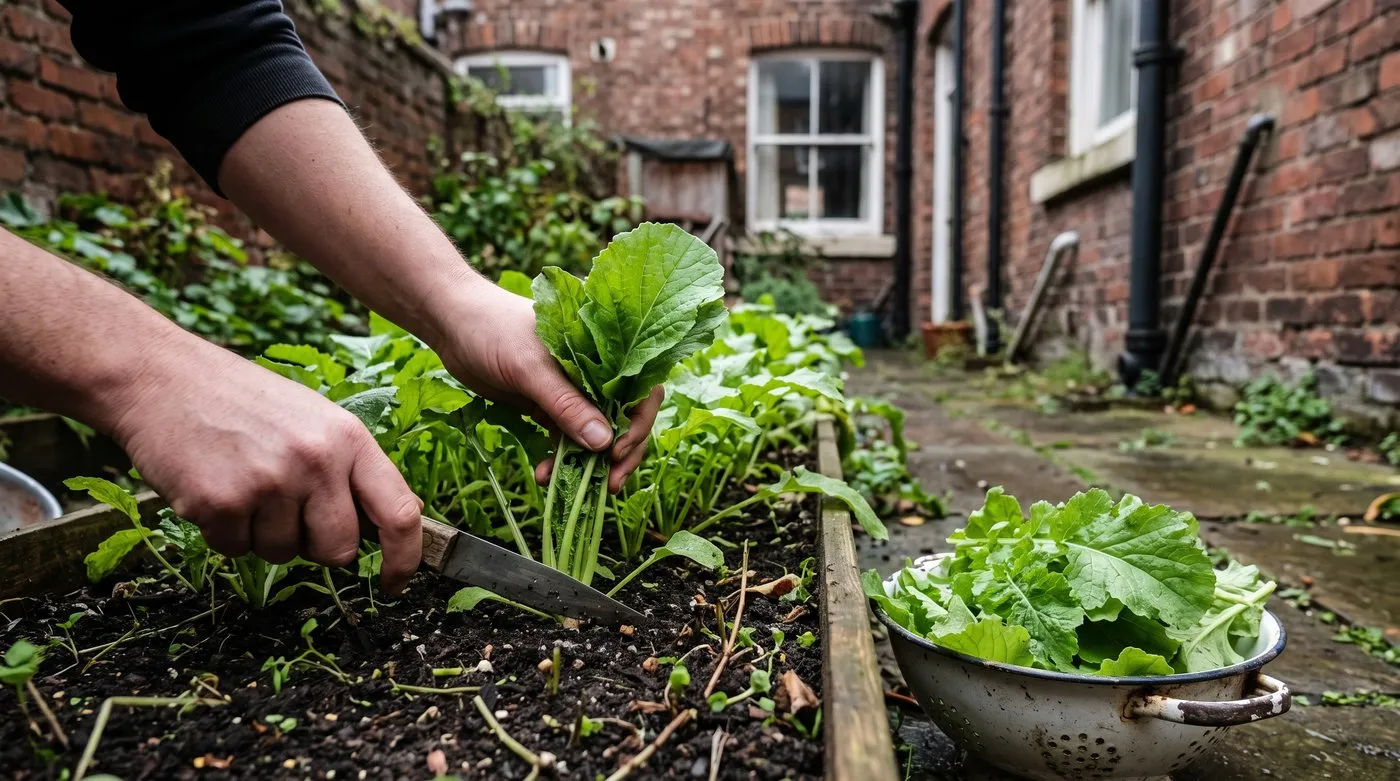
Cut turnip tops young and a few centimetres above the root. They often grow back for a second picking.
Wash them, strip out any tough stems and wilt them in a pan with a little butter for a few minutes, like spring greens.
How to harvest turnips
Pull turnips at golf-ball size. At this stage the flesh is crisp and mild, and the skin is thin enough to eat. Even smaller roots are lovely raw in salads.
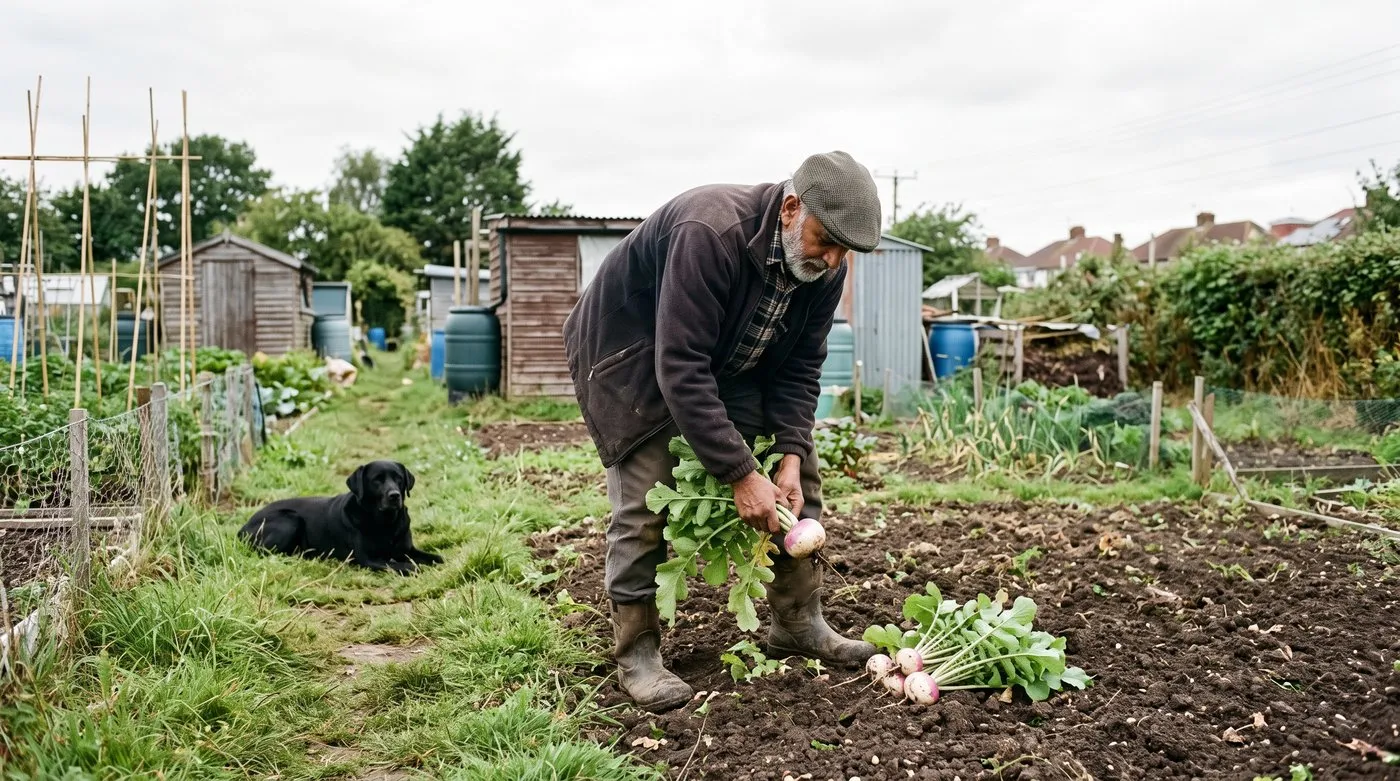
Golf-ball size is just right. Pull turnips young and they’re sweet, crisp and don’t need peeling.
The top of the root shows above the soil, so you can judge the size easily. Grip the leaves near the base and pull. On heavy soil, loosen it with a fork first.
Don’t leave them too long. Big old turnips turn woody and strong-tasting. Summer turnips don’t keep well, so eat them fresh.
How to harvest swede
Swede is ready from autumn onwards, once the roots are a good size. There’s no rush. It sits happily in the ground through autumn and into winter, and many people think it tastes sweeter after a frost.
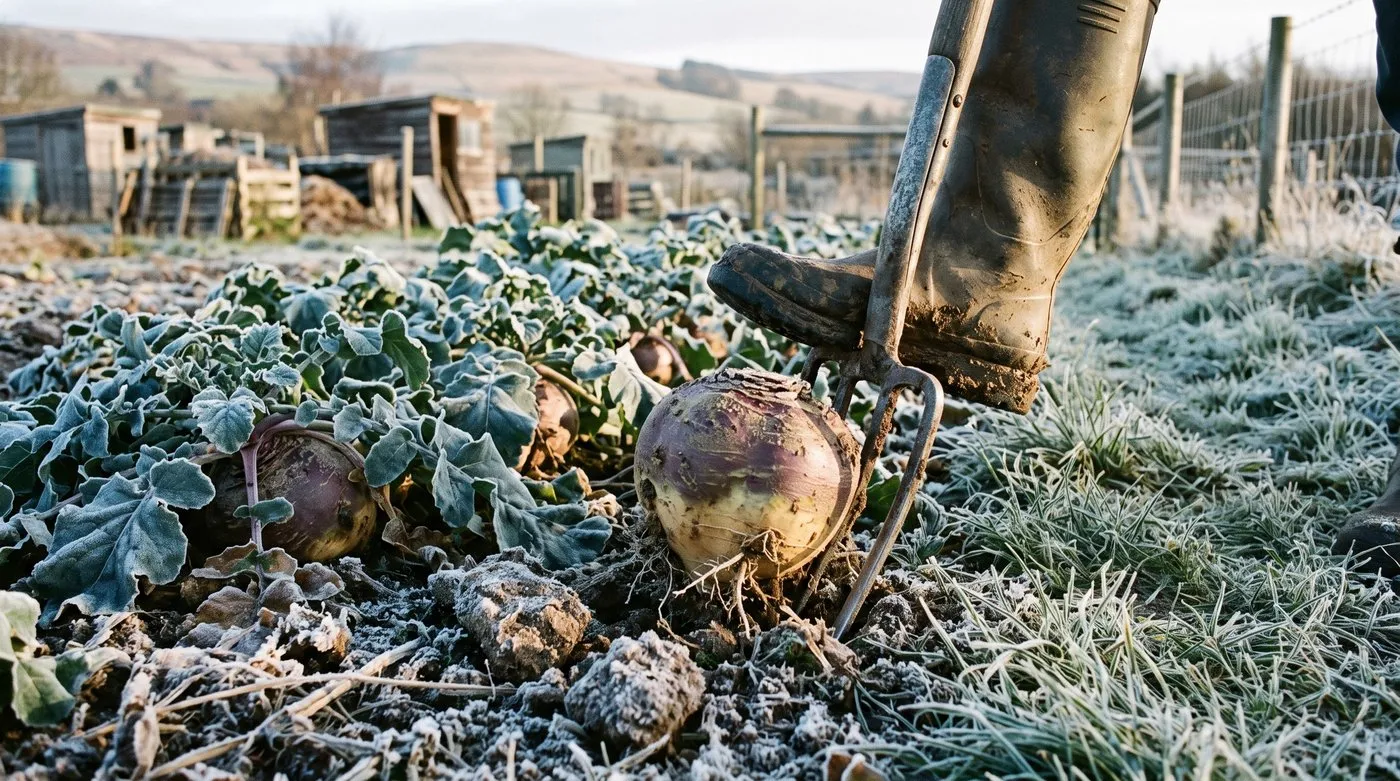
Swede is happy to sit in the ground into winter. Use a fork to lift it rather than pulling on the leaves.
Lift roots with a fork, as pulling on the leaves alone can snap them. In very cold areas, cover the row with straw in hard weather, or lift and store some roots. The RHS swede growing guide has more tips.
How to store turnips and swede
In the ground: swede keeps well in the soil and can be lifted as you need it. Turnips are less hardy, so eat or lift them before hard frosts in colder areas.
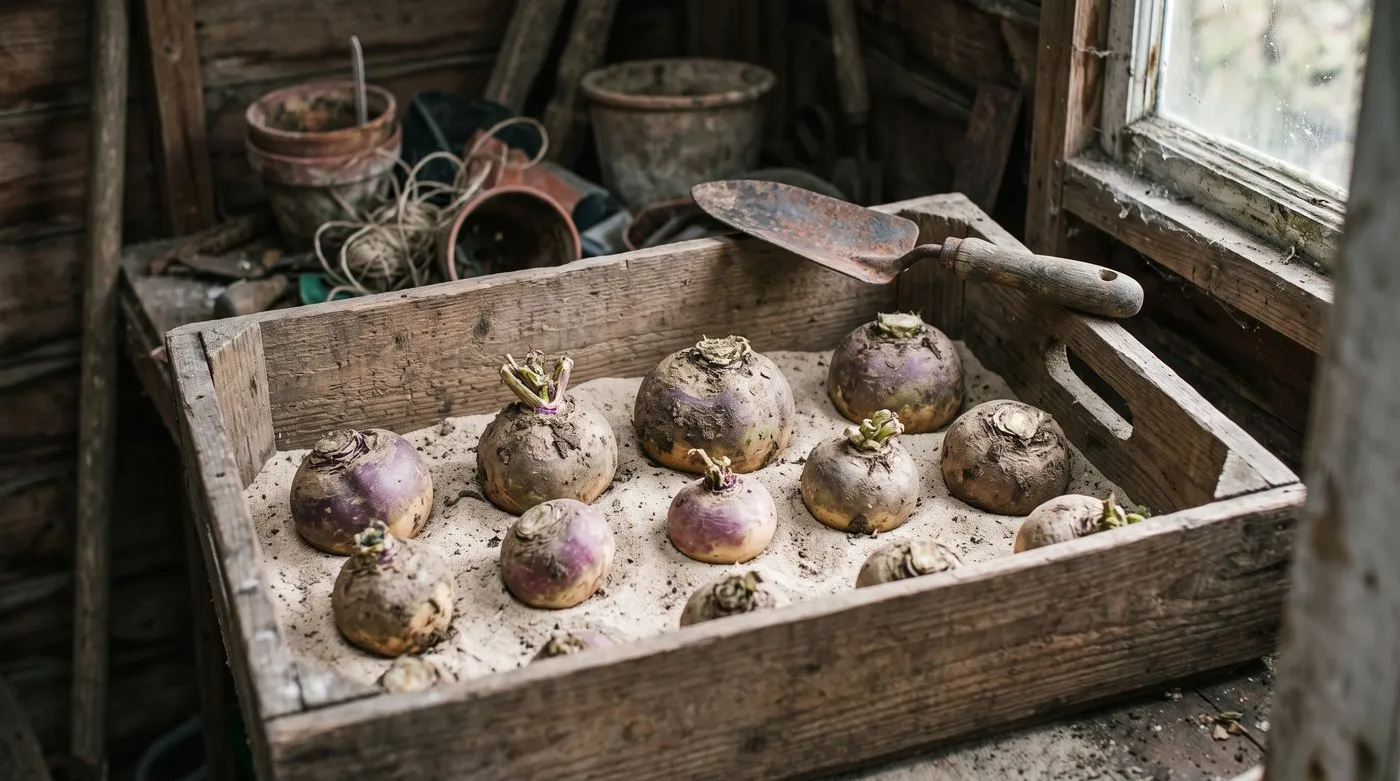
Keep the roots apart in a box of sand somewhere cool and frost-free. Check them now and then for soft ones.
In boxes: for both crops, lift sound roots, twist off the leaves and brush off the soil without washing. Layer them in boxes of sand so they don’t touch, and keep them somewhere cool and frost-free, such as a shed or garage. Swede keeps for months this way, turnips for a few weeks. Check them now and then and remove any going soft.
In the freezer: peel, dice, blanch for a couple of minutes, cool quickly and freeze in portions. Frozen turnip and swede are best in soups, stews and mash. The guide to storing root vegetables over winter covers other methods.
Month-by-month calendar
Sow and harvest a week or two later in northern England and Scotland.
| Month | Turnips | Swede |
|---|---|---|
| February | Order seed. Plan your rotation | Prepare beds with compost |
| March | First sowings under cloches | Lime acid soil if needed |
| April | Main sowings start. Thin March sowings | Finish preparing the bed |
| May | Sow again. First early roots ready | Sow in the south |
| June | Sow again. Keep harvesting | Sow in the north. Thin May sowings |
| July | Sow again. Water in dry spells | Thin June sowings. Water in dry spells |
| August | Last sowings of quick varieties | Keep watering. Watch for mildew |
| September | Harvest. Sow turnip tops for autumn greens | Roots swelling |
| October | Lift remaining roots in cold areas | First roots ready |
| November | Clear old crops | Harvest as needed |
| December | Eat stored roots | Harvest as needed |
| January | Plan next season | Harvest as needed |
Common mistakes with turnips and swede
- Leaving turnips too long: past golf-ball size they turn woody and hot. Sow little and often instead.
- Sowing swede too early: early sowings are more likely to bolt. Wait until May or June.
- Ignoring flea beetle: by the time you spot the holes, seedlings can be lost. Put mesh on at sowing time.
- Not thinning: crowded seedlings give small, tough roots. Thin turnips to 10-15cm and swede to about 25cm.
- Growing on clubroot ground: the disease lasts for years. Rotate, lime acid soil and choose resistant swede.
Growing turnips in pots and raised beds
Both crops do well in raised beds, where you control the soil and drainage.
Turnips suit containers at least 20cm deep. Quick varieties such as Tokyo Cross F1 or Snowball are best. Water regularly, as pots dry out fast.
Swede is less suited to pots because of its big roots and long season. Grow it in the ground or a deep raised bed.
Frequently asked questions
What is the difference between a turnip and a swede?
Turnips are smaller, faster and milder; swede is bigger, slower and sweeter. Turnips usually have white flesh and are best pulled young. Swede has yellow-orange flesh, needs a long season and is a classic winter root.
When should I sow turnips in the UK?
Sow turnips from March to August. Early sowings go under cloches or fleece. The main outdoor sowings run from April to July, and quick varieties can be sown in August for autumn roots.
When is the best time to sow swede?
Sow swede in May or June. Southern gardens can sow in May, while northern gardens and Scotland do better with June. Very early sowings are more likely to bolt.
How do I stop flea beetle on turnip seedlings?
Cover the row with fine mesh or fleece straight after sowing. Flea beetles nibble small round holes in young leaves and can wipe out seedlings in dry weather. Keep seedlings watered so they grow quickly past the risky stage.
Can I eat turnip tops as greens?
Yes, young turnip leaves cook just like spring greens. Cut them when they are 10-15cm tall and they often regrow for another picking. Some varieties are grown mainly for their tops.
How do I know when swede is ready to harvest?
Swede is usually ready from autumn, once the roots are a good size. The tops push up above the soil so you can see them. Many people think swede tastes sweeter after a frost, and it can stay in the ground into winter.
How should I store turnips and swede over winter?
Leave swede in the ground, or store both crops in boxes of sand. Twist off the leaves, brush off soil and keep unwashed roots in a cool, frost-free shed or garage. Swede keeps far longer than turnips.
Turnips and swede fit neatly into a winter veg plan, so read our guide on how to grow parsnips next, or browse more veg growing guides.
Our team produces practical UK gardening guidance from source research, contributor records and established horticultural practice. Editorial standards are overseen by Matt W.


