Key takeaways
- Flea beetles are tiny black or striped beetles that jump like fleas when disturbed
- They make lots of small round holes in leaves of rocket, radish, turnip, pak choi and other brassicas
- Seedlings are most at risk; established plants usually grow through the damage
- Damage is worst in warm, dry weather in spring and again in late summer
- Fine insect mesh or fleece put on at sowing is the most reliable defence
- Watering seedlings regularly helps them grow quickly past the risky stage
Lots of tiny round holes in your rocket or radish leaves? That is flea beetle, one of the most common pests of salads and young brassicas. The beetles are only a couple of millimetres long and jump away when you go near. Seedlings can be wiped out, but fine mesh put on at sowing keeps them off.
This guide shows you how to spot flea beetle, which crops need protecting and how to stop the damage without sprays.
How to identify flea beetles
Flea beetles are tiny, shiny beetles about 2-3mm long. Some are black or metallic blue-green. Others are black with a yellow stripe down each wing case. Their back legs are thick and strong, which is why they jump like fleas.
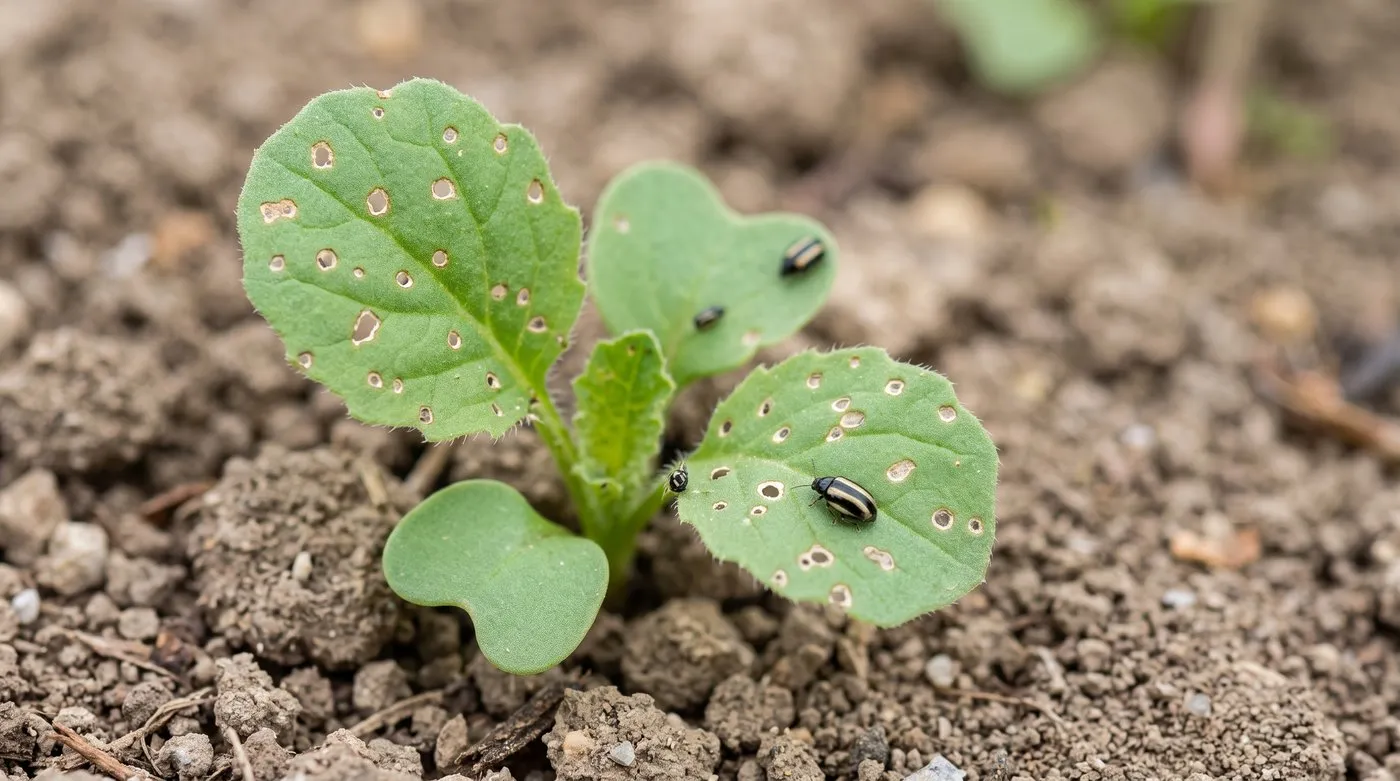
Flea beetles are tiny and shiny, and some have a yellow stripe. Tap the leaf and they jump away.
The quickest test is to tap a damaged leaf. If tiny beetles spring off in all directions, you have flea beetle. On a sunny day you can sometimes see them hopping across the soil between plants.
Don’t mix them up with pollen beetles, which are also small and dark. Pollen beetles cluster in open flowers and don’t jump. The guide to pollen beetles explains why they’re usually harmless.
What does flea beetle damage look like?
The damage is easy to recognise: lots of small round holes, often only a millimetre or two across, scattered over the leaves. Some holes have pale or brown edges, and the tissue round them can dry out. Badly hit leaves look as if they’ve been sprayed with shot.
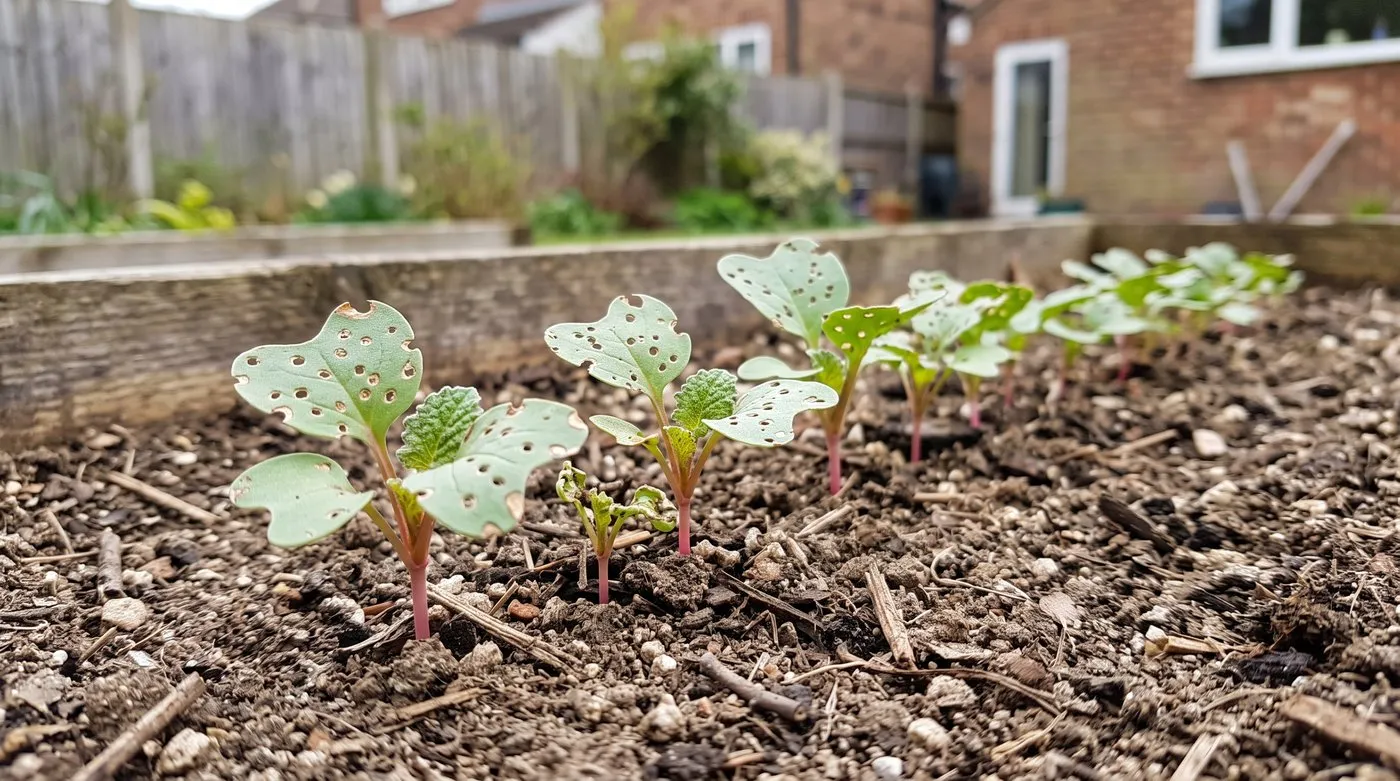
Seed leaves full of tiny holes are classic flea beetle damage. Small seedlings like these are the most at risk.
Seedlings are most at risk. A heavy attack on young seed leaves can stop a seedling in its tracks or kill it. Older plants with plenty of leaves usually grow through the damage, though salad leaves can look too holey to enjoy.
The larvae of some kinds feed on roots or tunnel inside leaves. This is rarely serious in gardens. The RHS flea beetle page has close-up photos.
Which crops does flea beetle attack?
Flea beetles feed on the cabbage family. Thin-leaved salad crops suffer most.
| Crop | Risk | Notes |
|---|---|---|
| Rocket | Very high | Leaves can be riddled in days |
| Radish | Very high | Seed leaves get shredded soon after they appear |
| Turnip and swede | High | Young leaves worst hit |
| Pak choi and mizuna | High | Seedlings heavily holed |
| Mustard and cress | High | Young leaves suffer |
| Cabbage, kale, cauliflower | Moderate | At risk as seedlings, then grow through it |
| Brussels sprouts | Low | Rarely a problem once established |
How to stop flea beetle damage
Cover crops with fine mesh
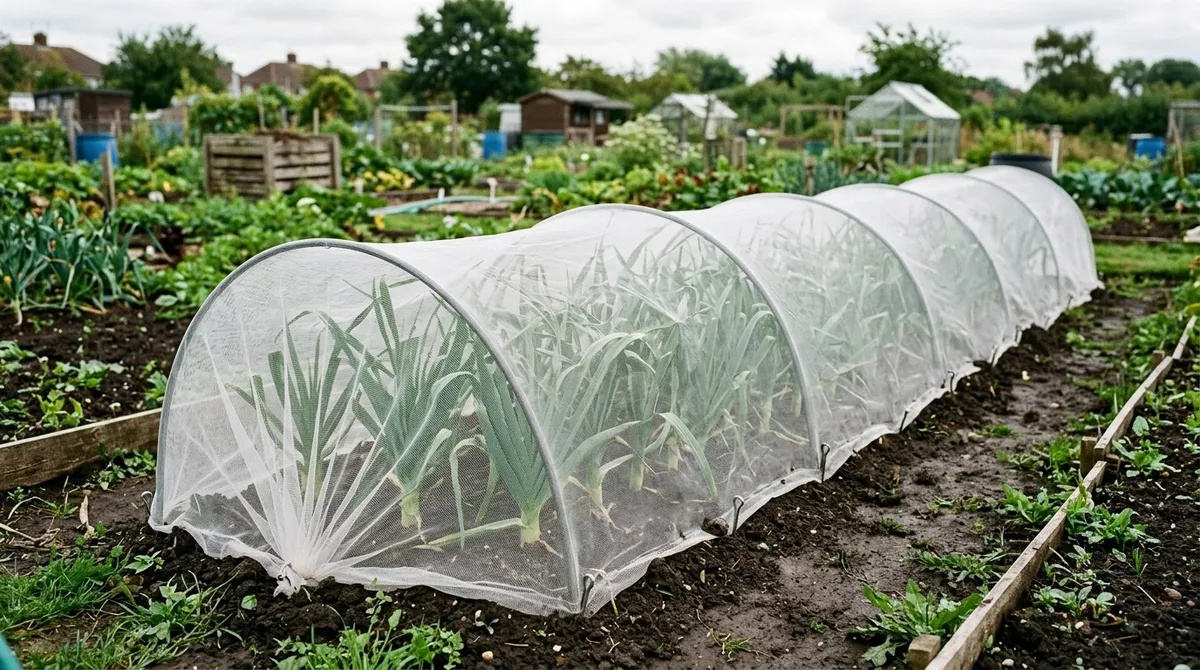
Fine insect mesh or fleece is the most reliable way to protect crops. It keeps the beetles off the leaves altogether.
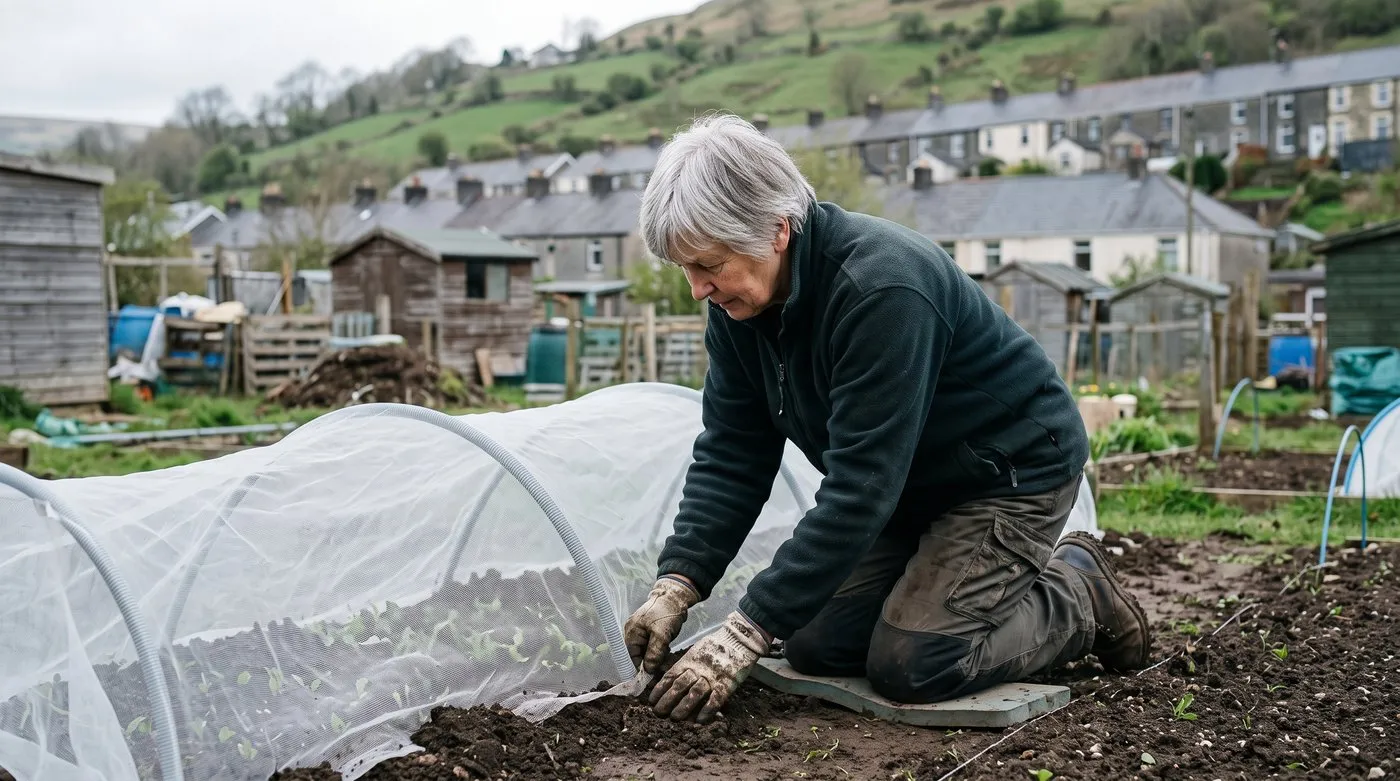
Mesh on hoops, with the edges tucked in all round, keeps flea beetles off from the day you sow.
- Put it on as soon as you sow or plant, not when you see the first holes.
- Use fine insect mesh. Butterfly netting has holes big enough for flea beetles to walk through.
- Support it on hoops so it doesn’t rest on the leaves.
- Bury or weigh down the edges all the way round.
- Rotate crops so you’re not covering a bed where beetles spent the winter.
Fleece works too, but it can get hot under it in summer. Mesh lets in more air and rain. The garden fleece guide covers the different grades.
Mesh has a bonus: it also keeps out cabbage white butterflies, cabbage root fly and small moths.
Water seedlings so they grow away fast
Flea beetle damage is worst in hot, dry weather. Dry soil slows seedlings down, so they stay small and vulnerable for longer. Keep the soil moist while seedlings get going so they race through the risky stage.
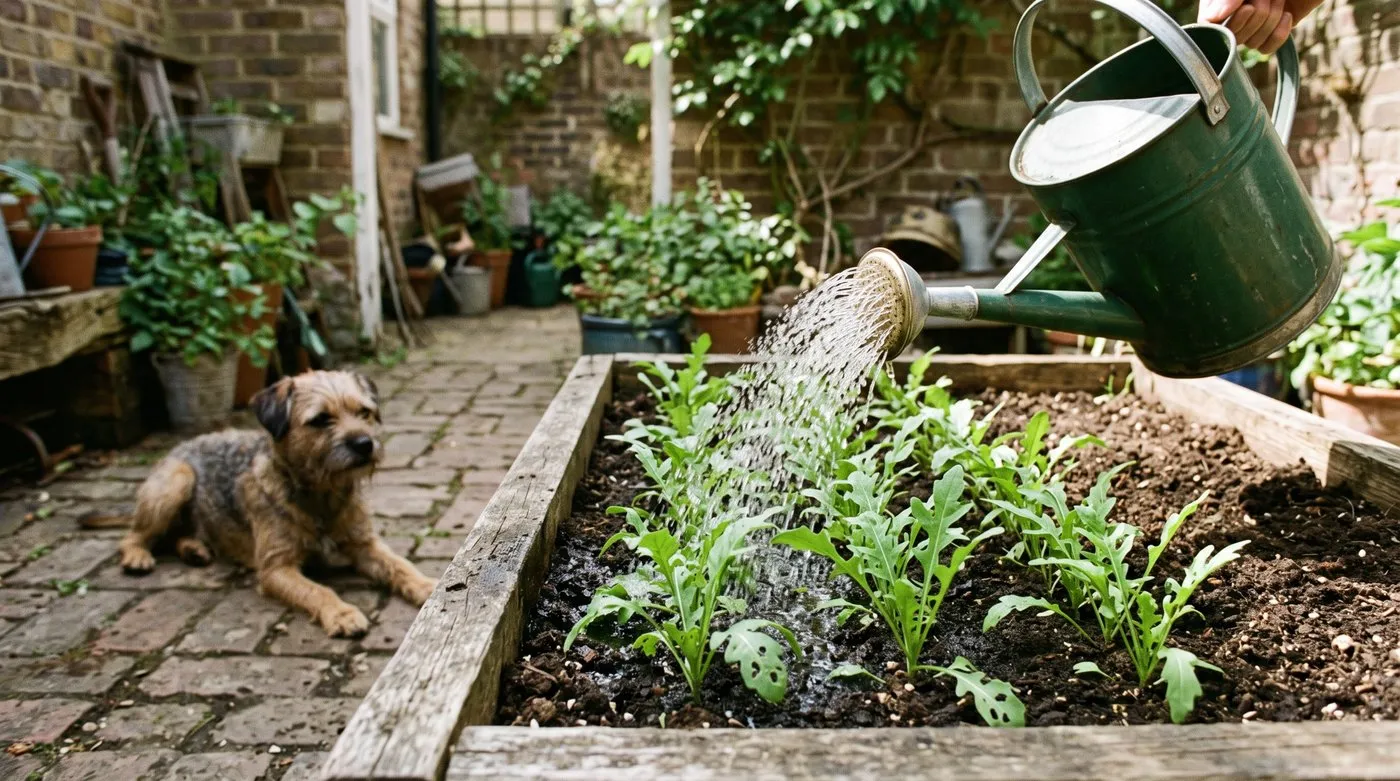
Keeping seedlings moist in dry spells helps them grow quickly past the stage when flea beetles do most harm.
Watering on its own won’t save an unprotected crop in a bad year. It works best alongside mesh.
Sow at the right time
Flea beetles are busiest in warm, dry spells in spring. Rocket, radish and Asian greens sown in late summer or early autumn often suffer less, and they are less likely to bolt then too. The guide to growing rocket covers late sowings.
Sow little and often. Small sowings every few weeks mean one bad attack doesn’t wipe out your whole supply.
Raise brassicas in pots first
Brassicas raised in modules and planted out with five or six true leaves cope with flea beetle far better than tiny seedlings sown direct. Harden them off, plant them into moist soil and cover them with mesh straight away.
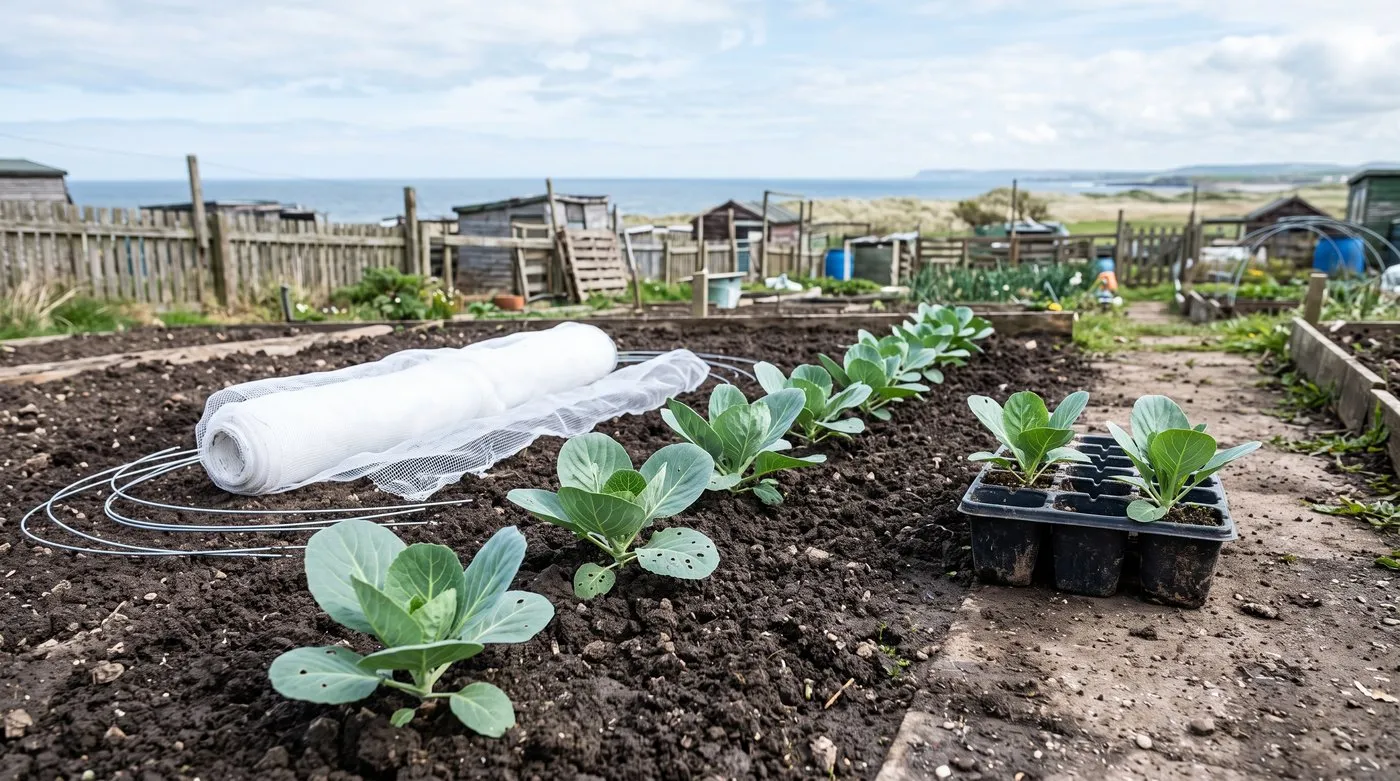
Bigger, module-raised transplants shrug off a few holes far better than tiny seedlings. Cover them straight after planting.
Clear up in autumn
Adults spend winter in leaf litter, soil and hedge bottoms. Clearing old brassica stalks and weedy debris in autumn removes some hiding places. Beetles also shelter beyond your plot, so keep covering new sowings in spring.
Do sprays work on flea beetles?
There is no spray worth relying on. The beetles jump away, new ones fly in, and sprays also harm ladybirds, hoverflies and other helpful insects.
Home-made garlic, soap or neem sprays are not authorised pesticides, so they aren’t legal to use. Mesh, watering and timing do the job far better.
Flea beetle calendar
| Month | What to do |
|---|---|
| March | Get mesh and hoops ready. Raise brassicas in modules under cover |
| April | Cover new sowings of rocket, radish and turnip with mesh straight away |
| May | Peak risk in warm, dry spells. Keep seedlings watered and mesh closed |
| June | Keep covering salad sowings. Check mesh edges for gaps |
| July | Risk often eases a little. Sow autumn rocket and radish under mesh |
| August | A new generation can feed on late crops. Keep young plants covered |
| September | Sow winter salads; still cover early seedlings |
| October | Clear old brassica stalks and debris from beds |
Common mistakes with flea beetle
- Netting after the damage starts. Cover at sowing time, before beetles find the crop.
- Using butterfly netting. The holes are far too big. Use fine insect mesh.
- Letting mesh touch the leaves. Support it on hoops so beetles can’t feed through it.
- Leaving seedlings dry. Slow-growing seedlings take the most damage. Keep them watered.
- Reaching for a spray. It won’t solve the problem and harms helpful insects.
Brassicas have plenty of other pests too. The diamondback moth guide covers the small caterpillars that make window holes in leaves, and more help is in the garden problems guides.
Now your seedlings are safe under mesh, read the guide to growing radishes for quick crops all season.
Frequently asked questions
What does flea beetle damage look like?
Lots of tiny round holes peppered across the leaves. The holes are only a millimetre or two across, and some have pale or brown edges. Heavy attacks can kill seedlings, while bigger plants usually grow on.
When are flea beetles most active in the UK?
They are worst in warm, dry weather from spring to early summer. Adults that spent winter in leaf litter wake up and feed on seedlings. A new generation can cause more damage in late summer before going into hiding for winter.
Does fleece or insect mesh stop flea beetles?
Yes, fine mesh or fleece is the best defence. Put it on at sowing, support it on hoops and weigh down the edges. It only works if the beetles are kept out from the start.
Do flea beetles attack all brassicas equally?
No, thin-leaved crops suffer most. Rocket, radish, turnip and pak choi are hit hardest. Cabbage, kale and sprouts are mainly at risk as small seedlings and usually grow through it once established.
Is there an organic spray for flea beetles?
There is no spray worth relying on. The beetles jump away, and sprays also harm helpful insects. Home-made sprays are not legal to use as pesticides. Mesh, watering and good timing work far better.
Do flea beetles overwinter in UK soil?
Yes, adults spend winter in leaf litter, soil and hedge bottoms. Clearing old crops and debris in autumn removes some hiding places. Beetles also shelter beyond your plot, so cover new sowings anyway.
Our team produces practical UK gardening guidance from source research, contributor records and established horticultural practice. Editorial standards are overseen by Matt W.