Key takeaways
- Look for grey, floury colonies under brassica leaves and in the growing tips
- It only feeds on the cabbage family, including kale, sprouts, broccoli and swede
- Rub out small colonies and blast bigger ones off with a strong jet of water
- Ladybirds, hoverfly larvae and tiny parasitic wasps keep numbers down
- Pull up old brassica stumps after harvest, as the eggs overwinter on them
- Ordinary butterfly netting won't keep aphids out; it takes fine insect mesh
Mealy cabbage aphid is the grey, floury crust you find under cabbage and sprout leaves in summer. It isn’t the caterpillar chewing holes, and it isn’t the little white flies that lift off in a cloud. It is a sap-sucking aphid that only feeds on the cabbage family. Once you can spot it, the fix is simple and mostly free.
What mealy cabbage aphid looks like
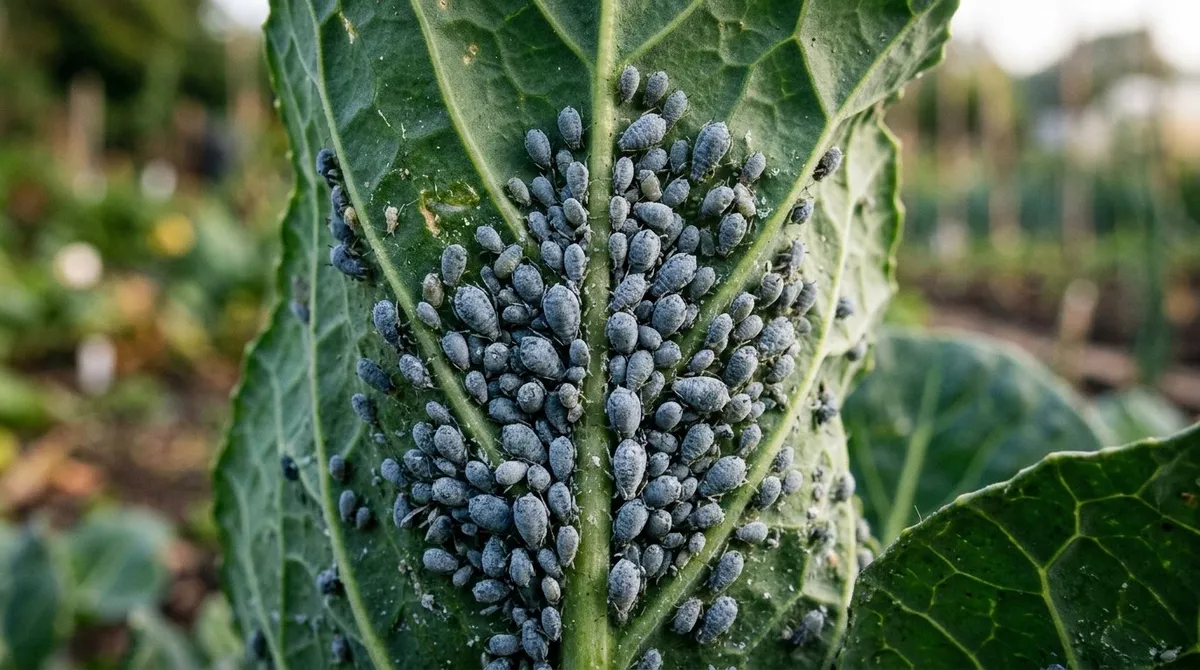
Mealy cabbage aphids are small grey-green aphids, about 2mm long, coated in a white, waxy powder. A colony looks as if it has been dusted with flour. That is the easiest way to tell them from the shiny green or black aphids on roses and broad beans.
They live in crowded, still colonies, often hundreds on one leaf. Winged ones appear when a colony gets crowded and fly off to start new colonies on other plants. You’ll see them mostly from late spring to autumn, with the biggest numbers in warm summer weather.
The guide to getting rid of aphids covers greenfly, blackfly and the rest of the family.
Mealy aphid, caterpillar or whitefly?
Three brassica pests get mixed up all the time, and each needs a different fix.
| Feature | Mealy cabbage aphid | Cabbage white caterpillar | Cabbage whitefly |
|---|---|---|---|
| Looks like | Grey, floury clusters | Green or yellow-and-black caterpillars | Tiny white winged insects |
| When touched | Stays put | Moves slowly | Flies up in a cloud |
| Damage | Yellow, puckered leaves | Big ragged holes, droppings | Sticky leaves, black mould |
| First step | Squash or hose off | Pick off, net the crop | Hose off, tolerate light numbers |
If you find holes and caterpillars, see the cabbage white butterfly guide. If clouds of white insects rise when you brush the plant, read the cabbage whitefly guide.
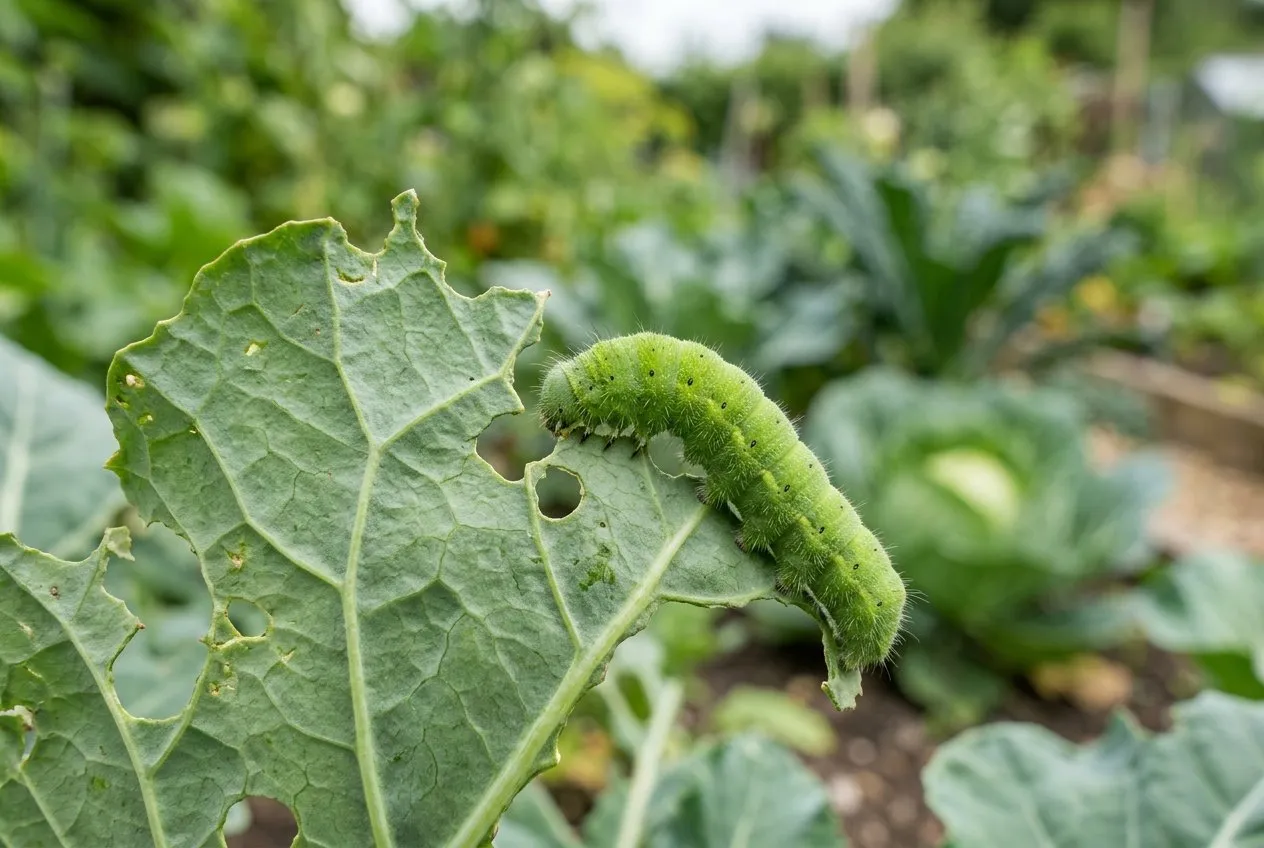
Holes and droppings mean caterpillars, not aphids. Aphids leave the leaf whole but yellow and puckered.
Where colonies hide and the damage they do
Colonies settle where you look last: under the leaves, in the growing tip and inside sprouts. They like soft new growth, so the youngest leaves often carry the most.
- Cabbage and cauliflower: check the centre of the plant and the undersides of inner leaves.
- Kale: run a hand under the curled leaves near the top.
- Brussels sprouts: look inside the buttons. Aphids pack in deep and are hard to wash out later.
Feeding leaves pale, yellow, puckered patches. A colony in the growing tip of a young plant can stunt it badly. On older plants the main problem is aphids tucked into the bits you want to eat. They also make sticky honeydew, which grows black sooty mould on the leaves below.
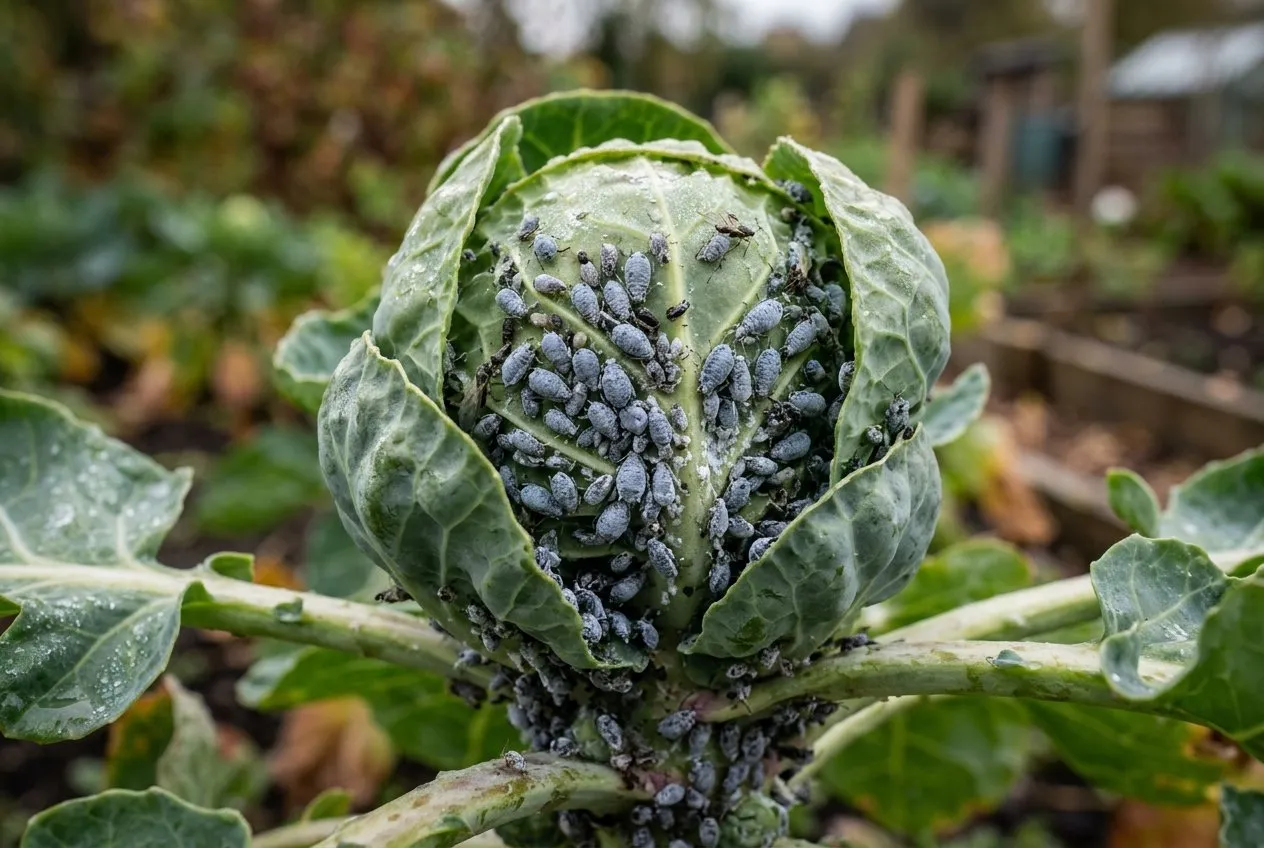
Sprouts are a favourite hiding place. Check the top and the buttons from late summer onwards.
How to get rid of mealy cabbage aphid without spraying
Squashing and water deal with most colonies. Both are free and neither harms the predators you want to keep.
- Check weekly. Turn leaves over and look into growing tips from late spring.
- Rub out small colonies. Wear a glove and pinch or wipe them off.
- Blast bigger ones. A firm jet of water from a hose knocks off hundreds at once. The wax means a gentle spray just runs off, so use real force and aim at the undersides.
- Repeat every few days while colonies are active.
- Remove badly infested leaves if a colony has taken over.
Home-made soap or garlic sprays aren’t the answer. They aren’t legal to use as pesticides, and they harm the insects that would clear the aphids for you. The guide to home-made pesticides explains why. If you really need a spray on a crop at risk, use an approved product for aphids on edible crops and follow the label.
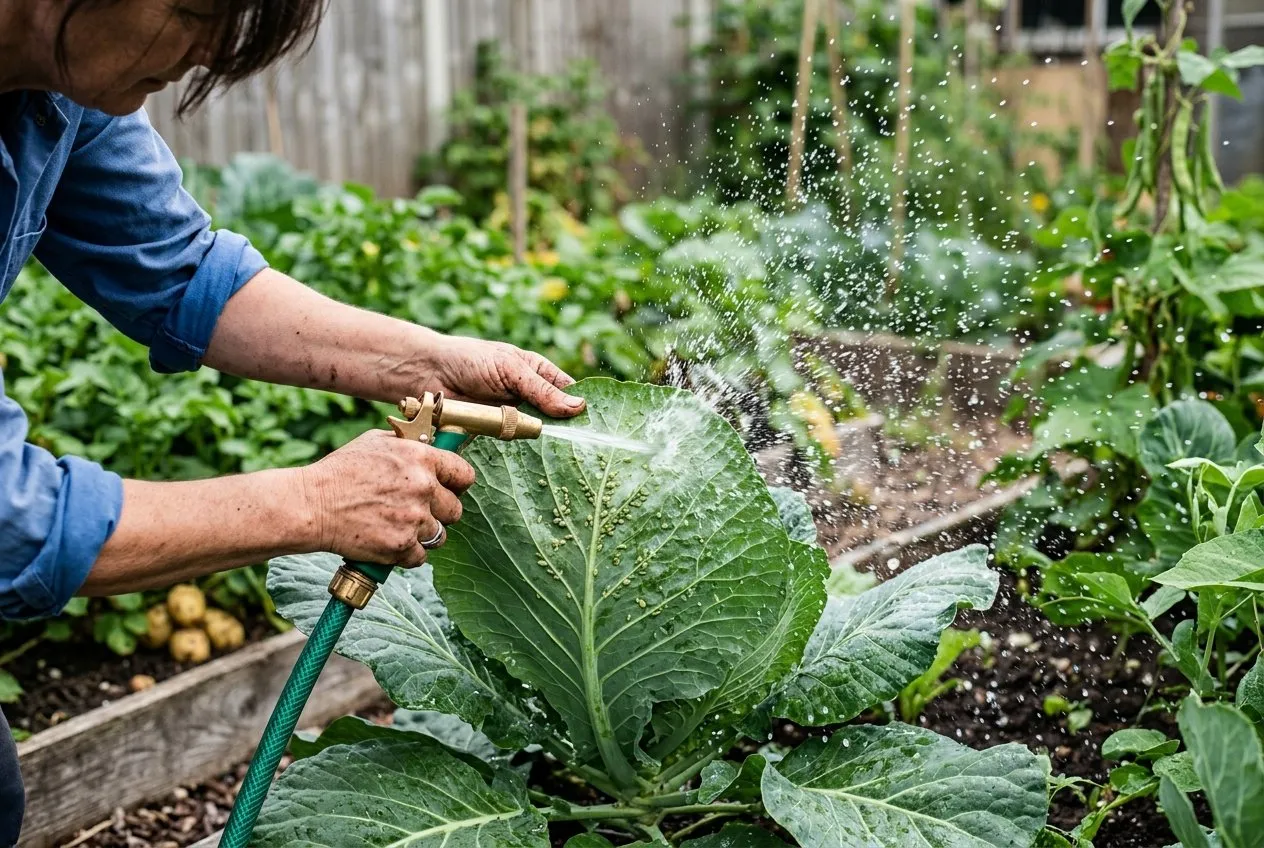
A strong jet of water knocks colonies off. The waxy coating means a gentle sprinkle won’t shift them.
Let the predators help
Ladybirds, hoverfly larvae, lacewing larvae and tiny parasitic wasps all feed on mealy cabbage aphid. Give them a few days to find a colony before you step in.
The parasitic wasp is easy to miss. It lays an egg inside an aphid, which swells into a pale, papery shell called a mummy. Mummies with a small round hole mean a new wasp has hatched and gone hunting. If you see them, the wasps are winning, so leave that colony alone.
Plant flowers near your brassicas to feed the adults. Poached egg plant, calendula and fennel all help. The guide to hoverflies in the garden shows how to spot their larvae so you don’t squash them by mistake.
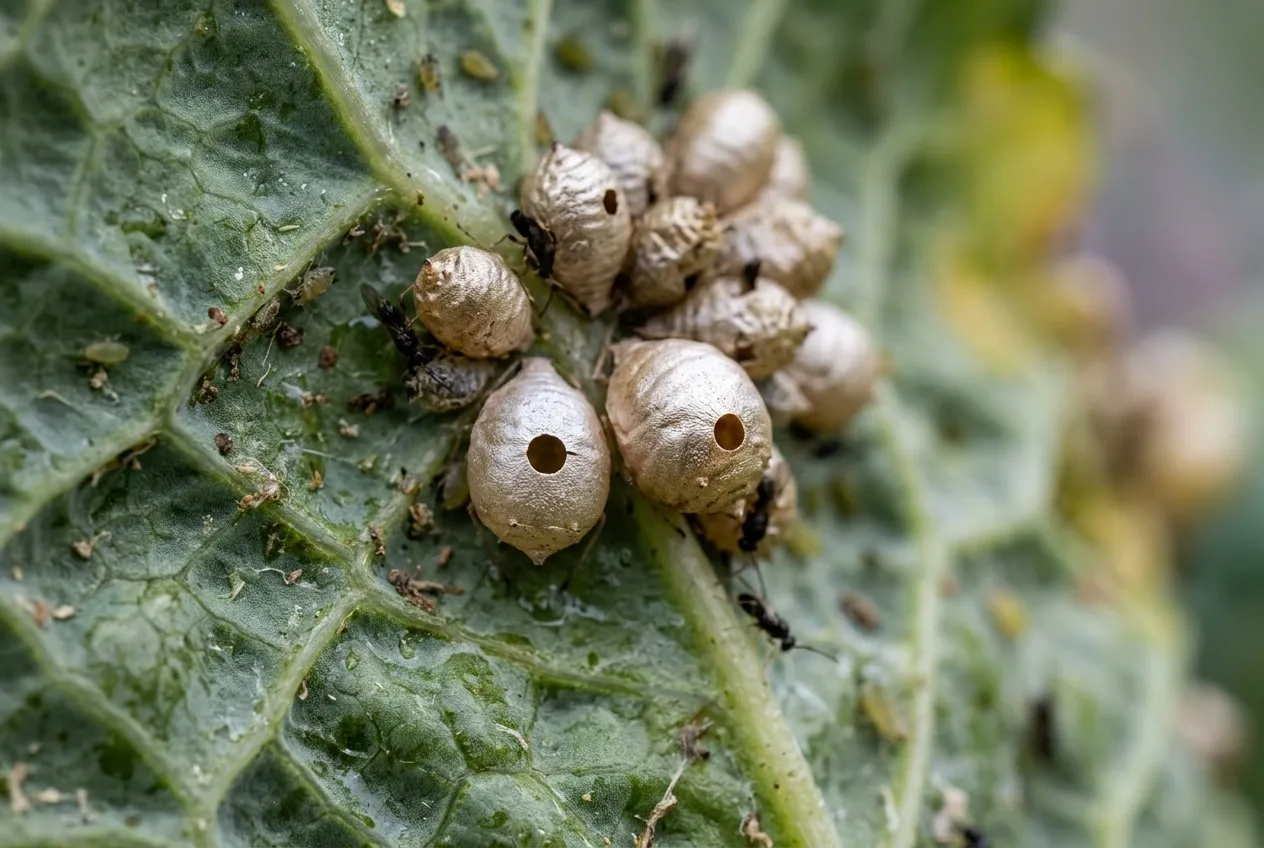
Papery mummies with round exit holes mean tiny wasps are at work. Leave these colonies alone.
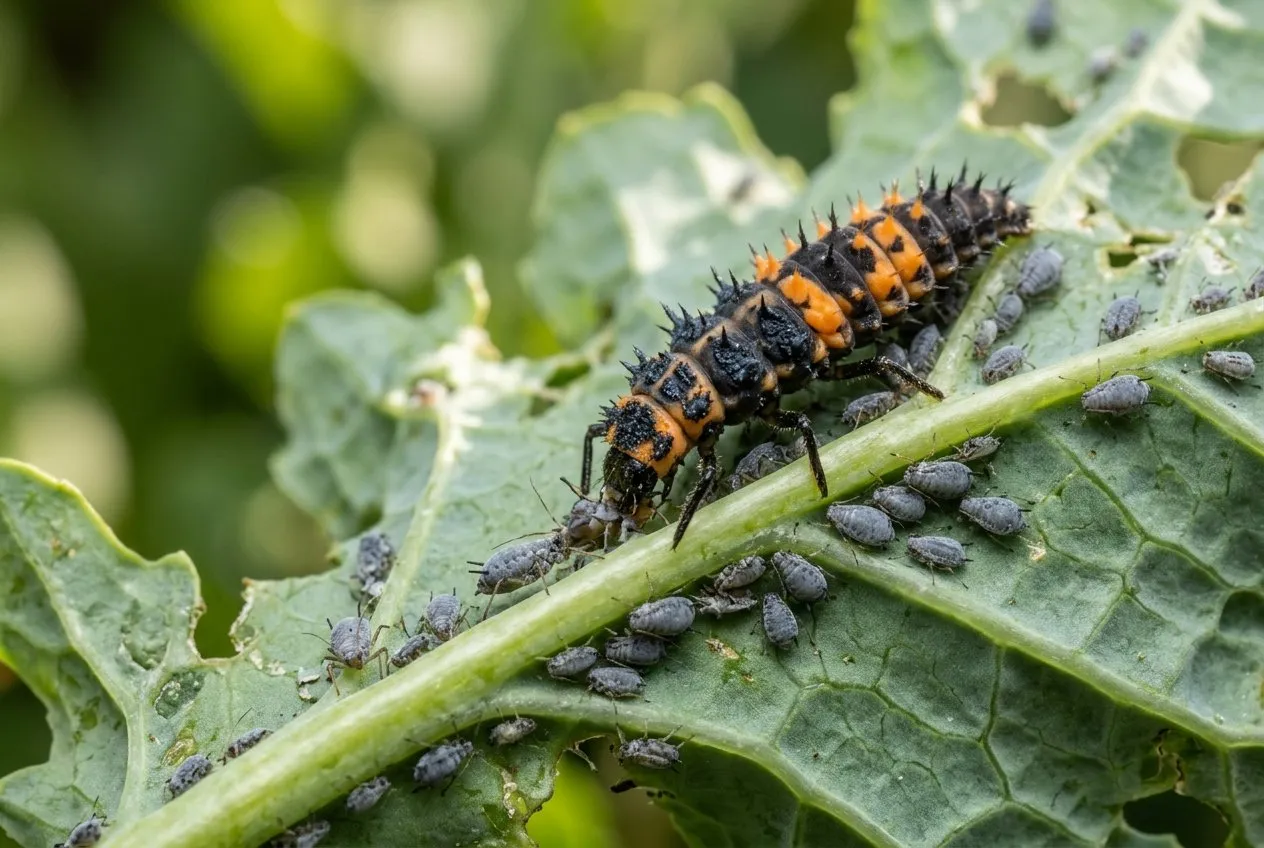
Ladybird larvae look fierce but they are on your side, eating aphids by the dozen.
Does netting stop mealy cabbage aphid?
Ordinary butterfly netting stops cabbage whites but not aphids, which walk through the holes. Only fine insect mesh keeps them out, with the edges buried or weighed down.
Fine mesh has a catch. It keeps ladybirds and wasps out too, so any aphids that sneak in can multiply unchecked. It is most useful over young plants. Lift it every week or so and check underneath.
Why clearing old stumps matters
Mealy cabbage aphid lays its eggs on brassica stems in autumn, and the eggs spend the winter on old stumps. In spring they hatch onto new plants nearby. Leave last year’s kale and sprout stalks standing, and next year’s crop starts with a ready-made colony.
Pull up finished brassicas as soon as they stop cropping. Chop the woody stems before composting them, or put them in the green waste bin. Moving brassicas to a different bed each year helps too. The crop rotation planner shows how.
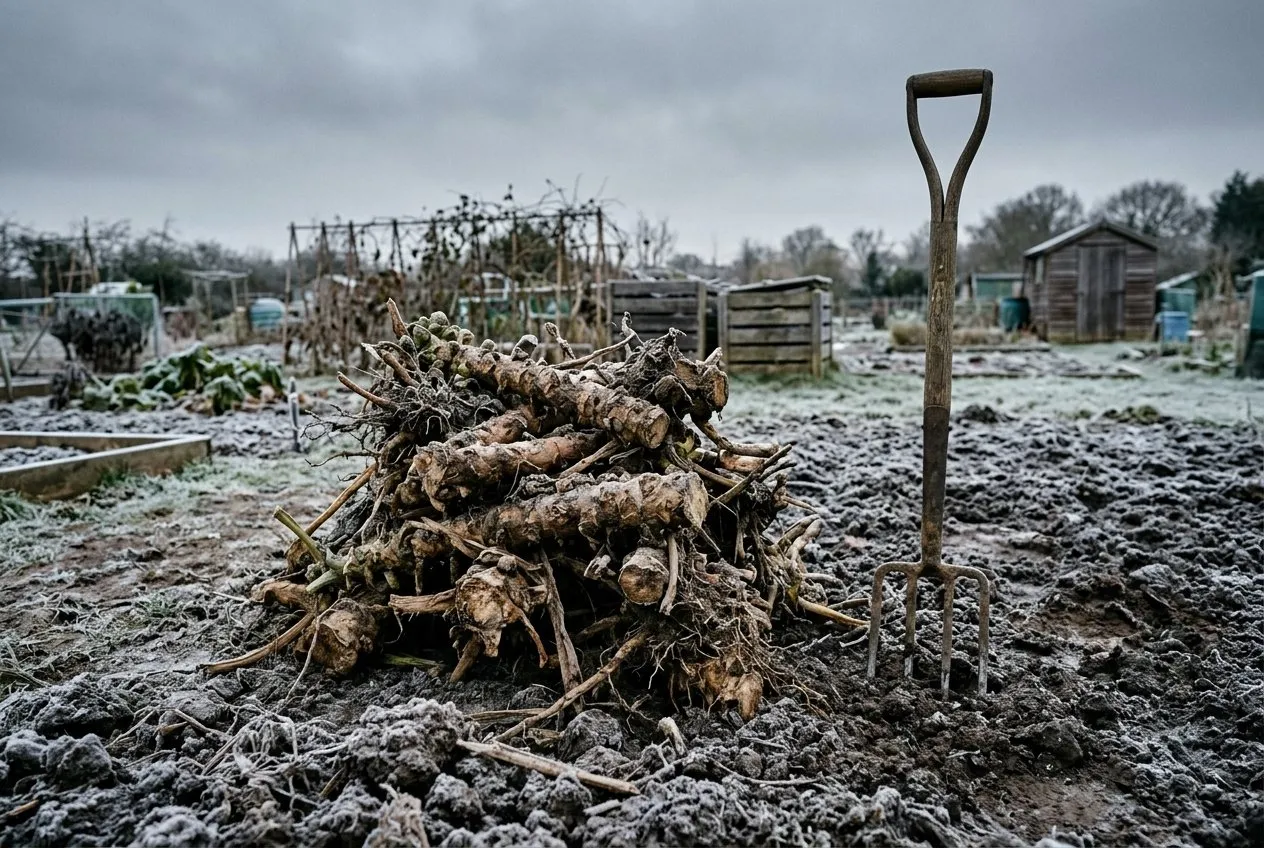
Clearing old stumps over winter removes the eggs before they can hatch onto your new plants.
Mealy cabbage aphid through the year
| Time of year | What is happening | What to do |
|---|---|---|
| Winter | Eggs on old brassica stems | Pull up and clear old stumps |
| Spring | Eggs hatch, first colonies on new growth | Start weekly checks under leaves |
| Early summer | Colonies grow, winged aphids spread | Rub out or hose off clusters |
| Mid to late summer | Peak numbers, colonies in sprouts and heads | Keep hosing, leave mummies and larvae alone |
| Autumn | Numbers fall, eggs laid on stems | Clear finished plants promptly |
Washing aphids off your harvest
Aphids in sprouts and broccoli are harmless if you eat a few, just not very appetising. Trim off badly affected outer leaves. Soak the crop in a bowl of cold, salty water for about 15 minutes, then rinse well under the tap. For sprouts, a small cross cut in the base helps the water get inside.
Common mistakes with mealy cabbage aphid
- Leaving old stumps standing over winter. They carry next year’s eggs.
- Trusting butterfly netting. Aphids walk straight through it.
- Only looking at the tops of leaves. Colonies hide underneath and in the growing tip.
- Spraying at the first sign. Give predators a chance, and check for mummies first.
- Using home-made sprays. They aren’t legal as pesticides and they kill helpful insects.
More help with veg pests is on the pest control hub.
Now you know how to keep aphids down, read the guide to growing Brussels sprouts for firm, clean buttons this winter.
Frequently asked questions
What does mealy cabbage aphid look like?
Small grey-green aphids dusted with a white, floury wax. They pack into crowded colonies under brassica leaves and around the growing tip. The wax makes them look grey and powdery, unlike the shiny green or black aphids on roses and beans.
How do I tell mealy cabbage aphid from cabbage whitefly?
Aphids stay put; whitefly fly up in a cloud when disturbed. Mealy cabbage aphids sit in still, crusty grey clusters. Cabbage whitefly are tiny white winged insects that lift off when you brush the plant, then settle again.
Are cabbage aphids the same as the caterpillars on my cabbages?
No, they are quite different pests. Caterpillars chew big ragged holes and leave dark droppings. Aphids suck sap, leave no holes and cause yellow, puckered leaves. Each needs a different fix.
How do I get rid of mealy cabbage aphid without spraying?
Rub colonies out with a gloved hand or blast them off with water. Check under leaves and in growing tips once or twice a week. Then let ladybirds, hoverfly larvae and parasitic wasps deal with the rest.
Can you eat sprouts or broccoli with cabbage aphids on?
Yes, once you have washed them well. Trim off badly affected outer leaves, then soak the crop in cold, salty water for about 15 minutes. Rinse well under the tap before cooking.
Why do cabbage aphids keep coming back every year?
Because eggs survive the winter on old brassica stems. Leftover stumps of kale, sprouts and cabbage hand next year’s plants a ready-made supply. Pull up and clear stumps once each crop has finished.
Does netting stop mealy cabbage aphid?
Butterfly netting doesn’t; aphids walk straight through it. Only fine insect mesh keeps them out, fitted with the edges sealed. It also keeps out ladybirds, so check underneath regularly.
Our team produces practical UK gardening guidance from source research, contributor records and established horticultural practice. Editorial standards are overseen by Matt W.