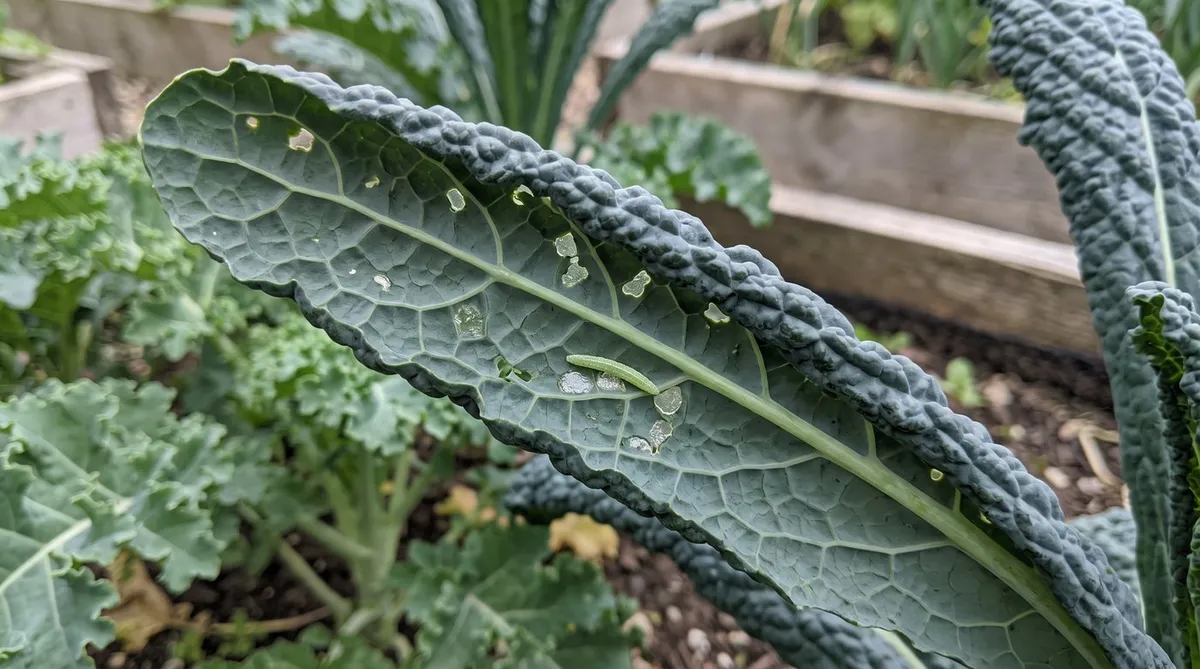
Key takeaways
- Cabbage whitefly lives on brassicas outdoors and survives UK winters on the plants
- It is a different insect from the greenhouse whitefly on tomatoes and cucumbers
- Damage is mostly cosmetic, just sticky honeydew and black sooty mould on lower leaves
- Strip mouldy lower leaves and hose colonies off leaf undersides
- Pull up old brassica stumps in spring, before the new crop goes in
- Wash sprouts and kale well before cooking; they're fine to eat
If you brush past your kale and a cloud of tiny white insects flies up, you’ve got cabbage whitefly. It looks alarming, but on healthy plants the damage is mostly cosmetic. A few simple habits keep it down: strip the worst leaves, hose the undersides and clear old plants each spring.
It’s easily confused with the greenhouse whitefly on tomatoes. They’re different insects with different fixes, so this guide starts by telling them apart.
Cabbage whitefly or greenhouse whitefly?
Both are tiny, white, moth-like insects about 2mm long. The quickest way to tell them apart is which plant they’re on.
Cabbage whitefly lives on brassicas: kale, Brussels sprouts, cabbage, purple sprouting broccoli and swede. It’s outdoors all year and survives winter on the plants. Look closely and the adults often have faint grey marks on their wings.
Greenhouse whitefly goes for tomatoes, cucumbers, aubergines, fuchsias and other tender plants, mostly under glass. Its wings are plain white. It doesn’t survive a UK winter outdoors.
| Feature | Cabbage whitefly | Greenhouse whitefly |
|---|---|---|
| Plants | Kale, sprouts, cabbage, broccoli | Tomatoes, cucumbers, fuchsias, houseplants |
| Where | Outdoors, all year | Greenhouses and indoors |
| Winter | Survives on the plants | Dies off outdoors |
| Damage | Mostly honeydew and sooty mould | Weak, sticky plants under glass |
| Best control | Hygiene, hosing, clearing old plants | Encarsia wasps, yellow sticky traps |
If your tomatoes are the ones covered, head to the greenhouse whitefly guide instead.
What cabbage whitefly does to brassicas
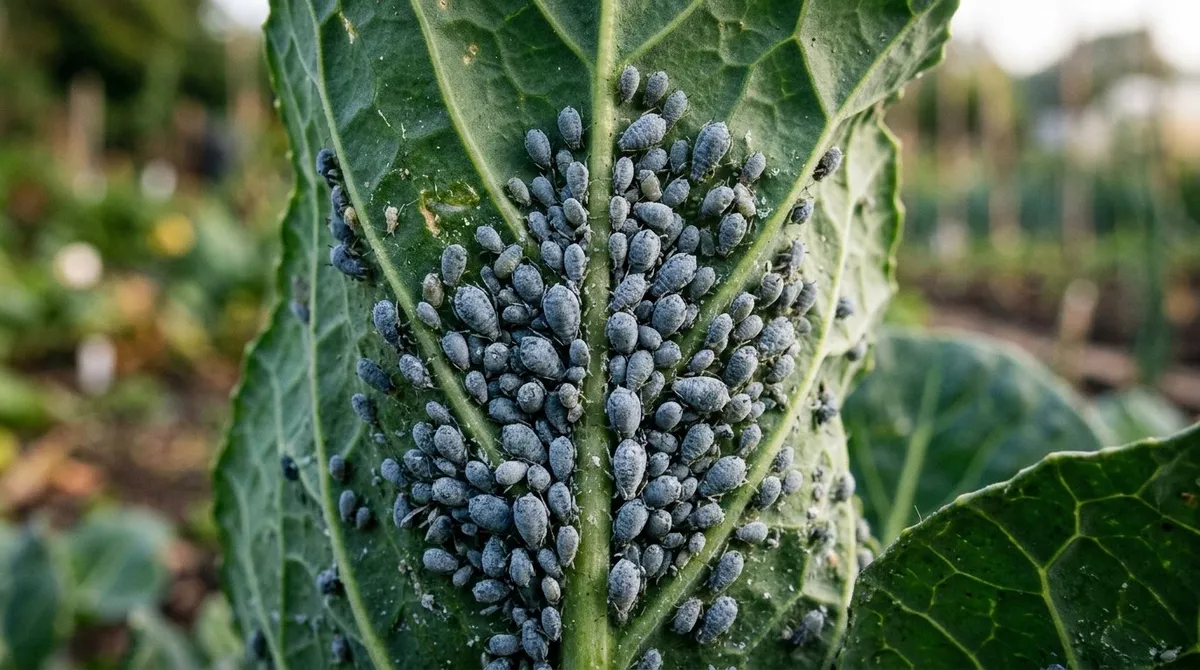
On a healthy crop, not much. Adults and their flat, pale young sit under the lower leaves and suck sap.
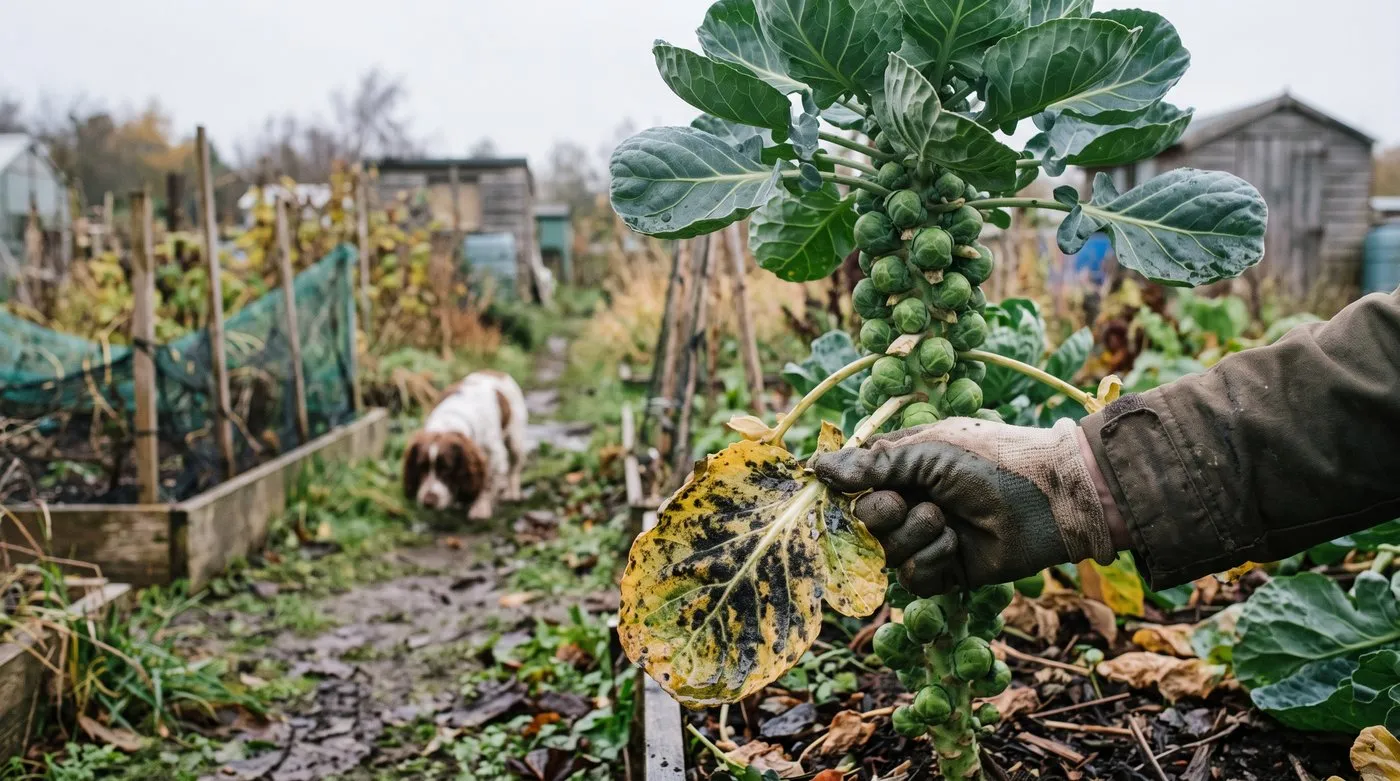
Sooty mould looks grim on the lower leaves, but the sprouts above are fine. Strip the worst leaves and carry on picking.
They give off sticky honeydew, and black sooty mould grows on it. The lower leaves end up grimy and sticky. But the growing tip carries on. Kale keeps producing clean new leaves, sprouts still form, and purple sprouting broccoli still crops in spring.
Numbers build through summer and are often worst from late summer into autumn. Very heavy infestations can slow young plants, so it’s still worth keeping on top of it.
The cabbage whitefly year
Understanding the cycle shows why hygiene beats spraying.
Autumn and winter: adults shelter under the leaves of standing brassicas such as kale and sprouts.
Spring: they lay eggs in small circles on the undersides of leaves, often on the old plants still in the ground.
Summer: the eggs hatch into flat, scale-like young that feed in one spot. Several generations overlap, so numbers climb quickly.
That means the whitefly on your new plants usually came from last year’s stumps. Clear old brassicas in spring before the new crop goes in, and you remove most of the breeding stock.

Look for little rings of eggs under the leaves in spring. They’re often on last year’s stumps, which is why clearing them helps so much.
How to control cabbage whitefly
A few simple jobs keep numbers down. Sprays struggle to reach the undersides where whitefly live, so these physical steps do most of the work.
- Strip the lower leaves. Every few weeks, pull off yellowing, mouldy lower leaves and bin them.
- Hose them off. On a dry morning, direct a firm jet of water at the leaf undersides. Repeat weekly in summer.
- Clear old plants. Pull up old brassica stumps in spring and bin them or put them in the council green bin.
- Don’t overfeed. Lots of soft, sappy growth from too much nitrogen suits sap-suckers.
- Welcome predators. Ladybirds, lacewings and hoverfly larvae all eat whitefly. Leave some flowers nearby and avoid sprays that kill them.
If you do decide to spray, use an approved insecticide labelled for whitefly on brassicas and follow the label exactly. The ladybird guide shows how to bring in more of these helpers instead.
Does netting stop cabbage whitefly?
Not reliably. Whitefly are tiny and get through many meshes, and they’re often on the plants already.
Fine mesh still earns its place over brassicas. It stops cabbage white butterflies laying eggs, keeps off cabbage root fly and deters pigeons. Just don’t expect it to keep whitefly out.
Tiny round holes in young leaves aren’t whitefly either. That’s flea beetle, covered in the flea beetle guide.

Mesh keeps butterflies, root fly and pigeons off your brassicas. Whitefly can still slip in, so keep up the leaf checks.
Treating greenhouse whitefly instead
If the white clouds are on your tomatoes, cucumbers or fuchsias, you have greenhouse whitefly. The plan is different.
Under glass, the tiny parasitic wasp Encarsia formosa is the standard biological control. Introduce it as soon as you spot whitefly, while the greenhouse is warm. Yellow sticky traps help you see how many there are. These fixes won’t help your kale, and hosing won’t clear a tomato house, so match the method to the insect.

Under glass, yellow sticky traps show you when greenhouse whitefly numbers are building. They’re for tomatoes, not your kale.
Common mistakes with cabbage whitefly
Leaving old stumps standing. Last year’s plants are where this year’s whitefly come from. Clear them in spring.
Buying Encarsia for outdoor kale. It only works on greenhouse whitefly in warm conditions.
Panicking over sooty mould. It looks bad but washes off. The crop underneath is usually fine.
Planting new brassicas next to old ones. Whitefly simply hop across. Keep new crops away from overwintered plants.
Frequently asked questions
Is cabbage whitefly the same as greenhouse whitefly?
No, they are two different insects. Cabbage whitefly lives on brassicas outdoors and survives the winter on them. Greenhouse whitefly attacks tomatoes, cucumbers and other tender plants under glass and doesn’t survive a UK winter outside.
Does cabbage whitefly ruin the crop?
Rarely, on healthy plants. It makes lower leaves sticky and black with sooty mould, but the tops, hearts and sprouts usually crop normally. Strip off the worst leaves and wash the harvest well.
How do I get rid of cabbage whitefly?
Keep numbers down with hygiene and water. Remove yellowing, mouldy lower leaves, hose colonies off the leaf undersides, and pull up old brassica plants in spring. Encourage ladybirds, lacewings and hoverflies to help.
Will frost kill cabbage whitefly?
No, it survives UK winters on the plants. The adults shelter under leaves of kale, sprouts and other standing brassicas. That’s why it reappears each spring on the same plot.
Can I use Encarsia formosa on cabbage whitefly?
No, Encarsia is for greenhouse whitefly under glass. The tiny wasp needs warmth and works on tomatoes and cucumbers in a greenhouse. It won’t control cabbage whitefly on outdoor brassicas.
Is it safe to eat kale with whitefly on it?
Yes, once it’s washed well. Rinse leaves and sprouts in plenty of cold water to remove insects, honeydew and sooty mould. Discard any very blackened outer leaves.
Keen to grow cleaner kale next year? The guide to growing kale covers spacing, feeding and timing, and the pest control hub has more brassica pests.
Our team produces practical UK gardening guidance from source research, contributor records and established horticultural practice. Editorial standards are overseen by Matt W.