Key takeaways
- Whitefly breed fast in a warm greenhouse, so catch them early
- Hang yellow sticky traps from March to spot the first adults
- Release Encarsia wasps once daytime temperatures stay above about 18C
- Many insecticides no longer work well on whitefly and harm helpful bugs
- A thorough autumn clean stops whitefly getting a head start next spring
- French marigolds among tomatoes may help, alongside other controls
Greenhouse whitefly is the most common pest in UK greenhouses. These tiny white-winged insects breed fast under glass. A few in May can be thousands by July, crowding under the leaves, dripping sticky honeydew and leaving crops coated in black mould.
How to identify greenhouse whitefly
There are three kinds of whitefly you might meet in the UK, and only one is the real greenhouse pest. Knowing which one you’ve got tells you what to do.
Greenhouse whitefly (Trialeurodes vaporariorum)
The main culprit. The adults are about 1.5mm long with white wings held flat over the body. They gather under young leaves and fly up in a little white cloud when you shake the plant. The young (nymphs) are flat, pale, oval scales stuck under the leaves. The eggs are tiny and often laid in a curved arc on new growth.
Cabbage whitefly (Aleyrodes proletella)
Lives outdoors on brassicas like cabbage, kale and broccoli. It looks similar but isn’t the greenhouse pest, and Encarsia won’t control it. It’s mostly a cosmetic nuisance.
Tobacco whitefly (Bemisia tabaci)
A notifiable pest in the UK, which means you must report it. It’s a little smaller than greenhouse whitefly and holds its wings angled up like a roof rather than flat. It can spread plant viruses. It isn’t established in the UK but sometimes arrives on imported plants. If you think you’ve found it, report it to the Animal and Plant Health Agency (APHA).
| Greenhouse whitefly | Cabbage whitefly | Tobacco whitefly | |
|---|---|---|---|
| Wings | Flat | Flat | Angled up |
| Where | Greenhouses, conservatories | Outdoors on brassicas | Imported plants (report it) |
| Encarsia helps? | Yes | No | Report it first |
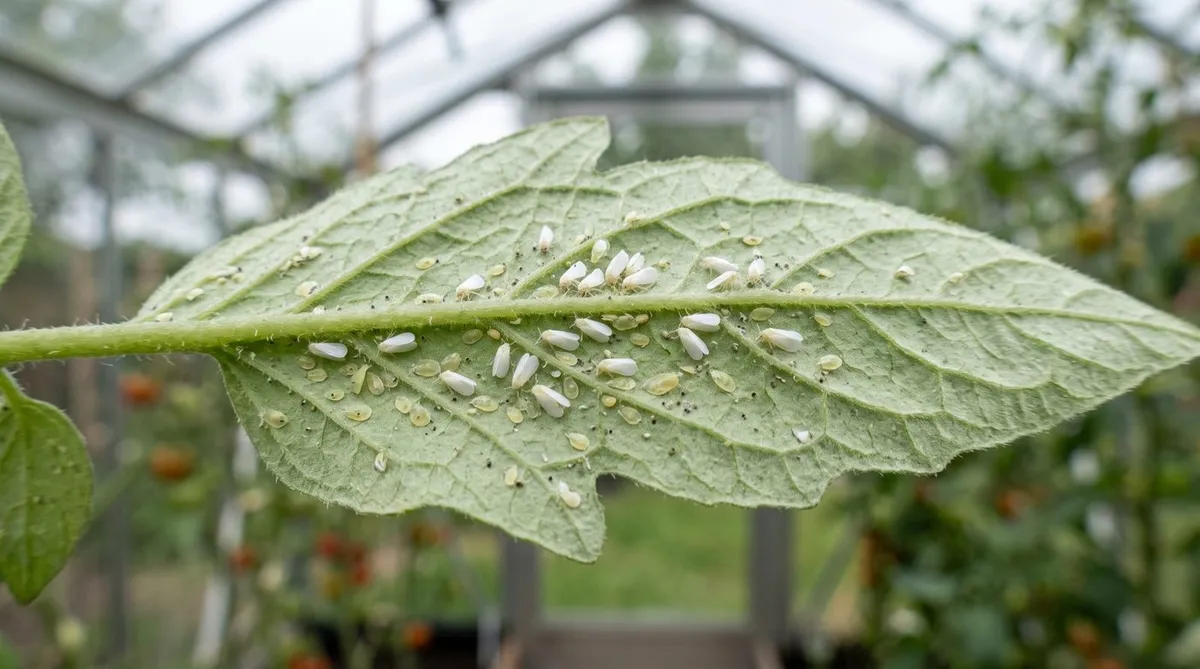
 Adult whitefly gather under the leaves, with the flat, pale young dotted among them.
The greenhouse whitefly lifecycle
In warm weather, whitefly go from egg to adult in about a month. The warmer it is, the faster they go. In cold weather they slow right down.
Eggs: Each female lays lots of tiny pale eggs under young leaves.
Nymphs: The newly hatched young crawl a short way, then settle down and stay put, sucking sap as they grow.
Pupa: The last nymph stage acts like a pupa, and the adult develops inside.
Adult: Adults start laying within a few days of coming out and keep going for weeks.
That’s why spotting them early matters so much. A handful in May soon becomes a crowd. Our greenhouse pest control guide covers dealing with several pests at once.
Damage caused by greenhouse whitefly
Whitefly cause trouble in three ways.
Sap sucking: Adults and young suck sap from the leaves. Lots of them weaken the plant, cut your crop and make leaves yellow and drop.
Honeydew: They give off a sticky, sugary liquid that coats leaves, fruit and the greenhouse. It’s messy and attracts ants and wasps.
Sooty mould: A black mould grows on the honeydew. It blocks light from the leaves, so the plant grows less well. It doesn’t infect the plant, but it’s ugly and hard to wash off.
Tomatoes, cucumbers, peppers and aubergines are the usual victims, along with fuchsias, pelargoniums and poinsettias. Our guide to growing tomatoes includes tips on keeping whitefly away.
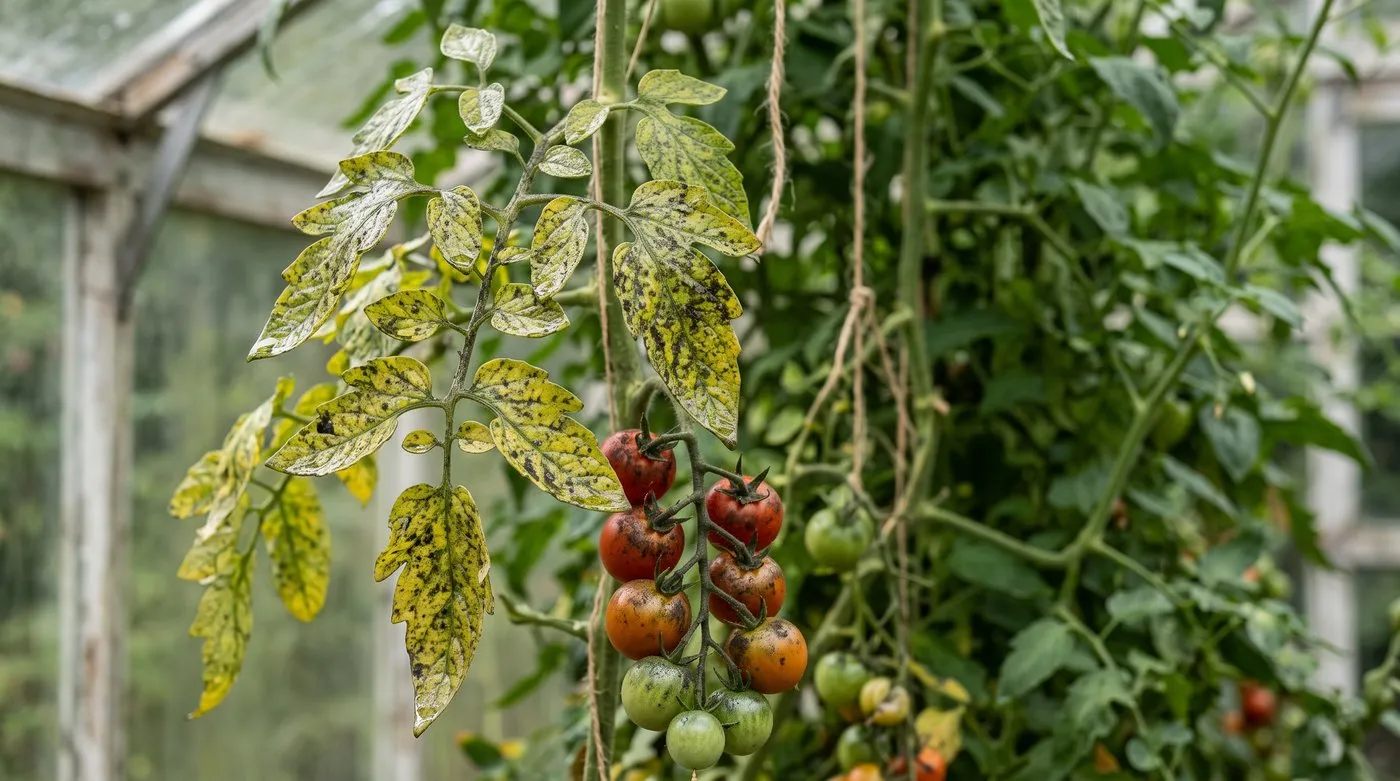
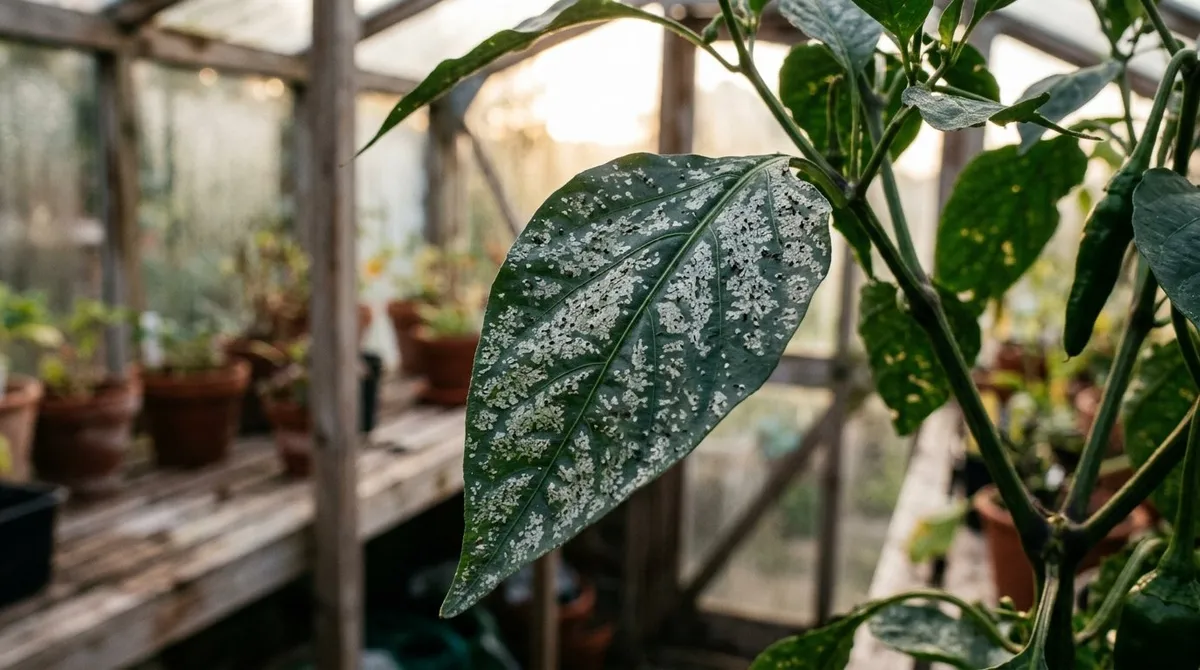
A sticky sheen and black sooty mould on leaves and fruit are tell-tale signs of whitefly feeding above. The mould blocks light, so the plant grows less well.
Biological control with Encarsia formosa
Encarsia formosa is a tiny wasp that preys on greenhouse whitefly. It’s the best way to keep whitefly down in a hobby greenhouse once it’s warm enough.
The female wasp lays an egg inside a young whitefly. The wasp larva grows inside and kills it, and the whitefly scale turns black. Black scales on the leaves are your sign that Encarsia is working. A new wasp then hatches out and carries on the job.
How to use Encarsia formosa
Warmth is the key. Encarsia needs daytime temperatures above about 18C to keep up with the whitefly. Below that, the wasps are sluggish and the whitefly win.
Release Encarsia in May or June, once the greenhouse reliably stays above 18C in the day. In an unheated greenhouse that’s usually late May. In a heated one you can start in April.
You buy it by post from biological control suppliers. It comes on cards holding parasitised whitefly scales, which you hang among the leaves. Follow the supplier’s advice on how many cards to use, and expect to top up a few times over the summer.
 Black scales on the leaf are a good sign: Encarsia is at work.
Cost of biological control
Encarsia costs a bit more than a can of spray, and you’ll usually need a few top-ups a season. But it works far better than sprays on whitefly, and it’s safe on food crops right up to picking.
Yellow sticky traps for whitefly monitoring
Yellow sticky traps give you early warning and catch some adults. Hang them from March, before numbers build.
Whitefly love the colour yellow and get stuck when they land. Hang the traps at plant height. Two or three are enough for a small 6x8ft greenhouse.
Check them every week. One whitefly in March is an early warning. Lots each week means the population is building and it’s time for Encarsia.
Traps only catch adults, not eggs or young, so they’re a helper rather than a cure. They catch Encarsia too, so take them down or cut back on them when you release the wasps.
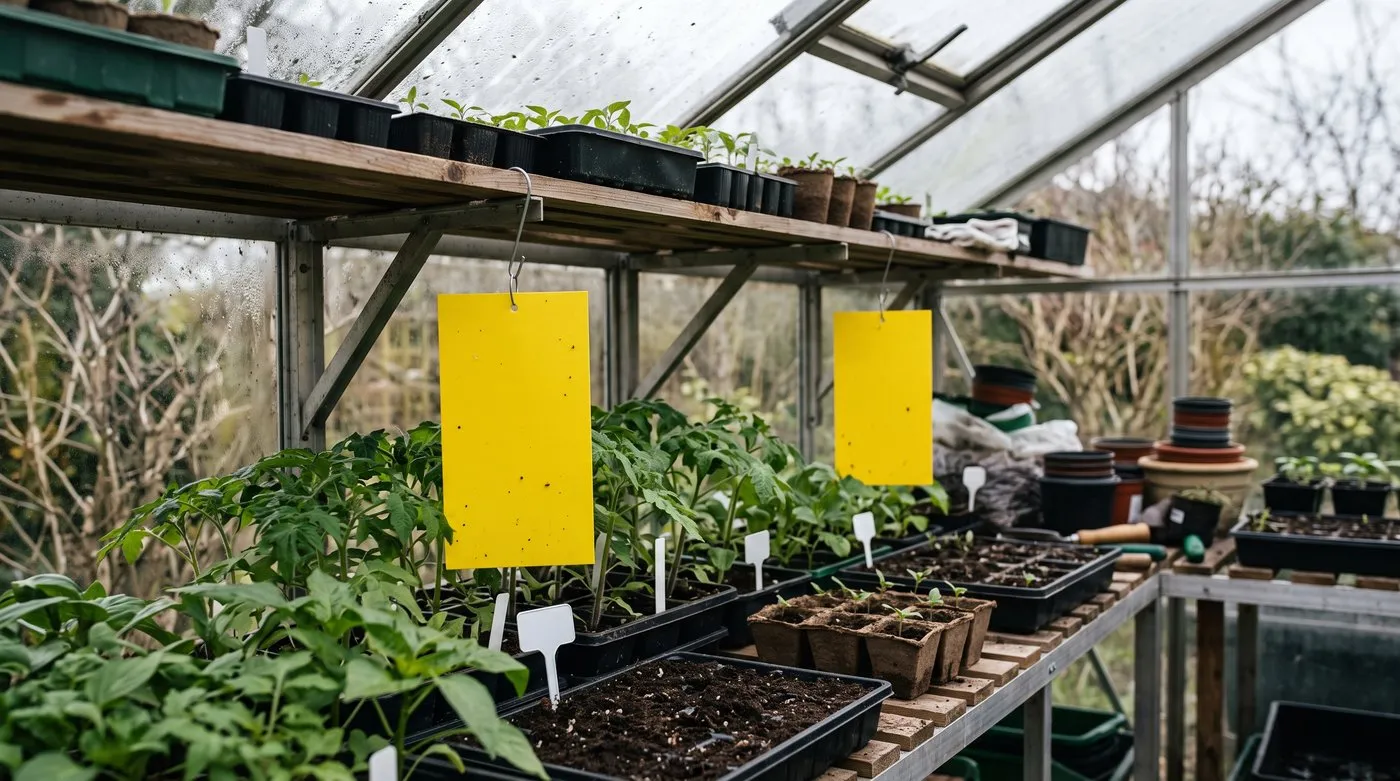
Hang two or three yellow traps at plant height from March and check them weekly. They give early warning, but take them down when you release Encarsia.
Cultural controls and prevention
Autumn greenhouse clean
A good autumn clean is the best thing you can do. Clear out all plant debris by mid-October: every dead leaf and spent plant. Wash the glass, staging and frame joints with a garden disinfectant, diluted as the label says.
Pay extra attention to frame joints, bolt holes and gaps behind the staging, where whitefly hide over winter. A stiff brush works well. On aluminium greenhouses, wash out the frame channels where condensation collects.
Inspect new plants
Every new plant could bring whitefly in. Check under all the leaves before anything goes into the greenhouse. If you can, keep new plants somewhere separate for a week or so first. One infested plant from a garden centre can start a summer-long problem.
Ventilation
Fresh air makes the greenhouse less cosy for whitefly. Open vents and doors on warm days. Automatic vent openers keep the air moving when you’re not there.
Companion planting
Research from Newcastle University found that French marigolds (Tagetes patula) grown with tomatoes can help keep whitefly away, thanks to their strong scent. Dot a few among your tomatoes. They won’t stop a real outbreak on their own, so use them alongside Encarsia and traps. Our companion planting guide has more pairings.
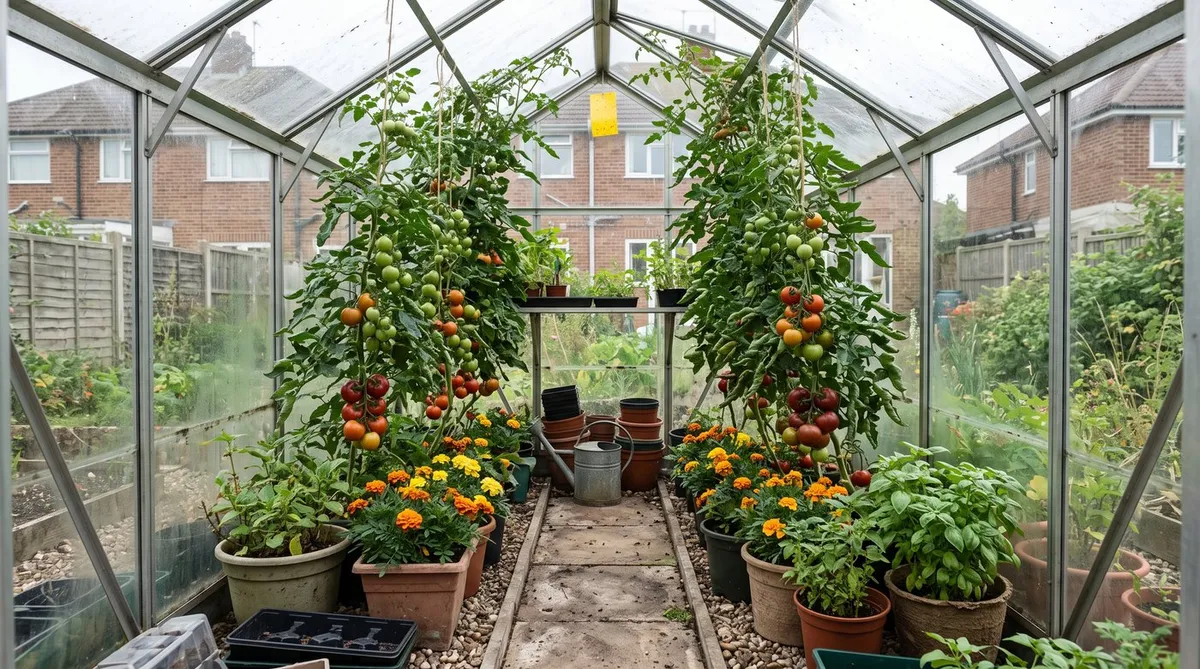
 French marigolds tucked in among the tomatoes add colour and may help put whitefly off.
Authorised contact sprays
If Encarsia isn’t practical or things have got out of hand, a contact spray can knock numbers back for a while.
Fatty-acid sprays (sold as insecticidal soap) work on contact and leave nothing behind, so they must hit the insects directly. Buy an authorised product, spray the undersides of the leaves well, and repeat as the label says. SB Plant Invigorator is a popular UK choice.
Neem oil is often suggested online, but it isn’t authorised as an insecticide in the UK, so leave it out. The same goes for home-made soap or garlic sprays.
Leave a gap of a day or two between spraying and releasing helpful bugs, and don’t spray just after releasing Encarsia.
Why not stronger sprays? Many insecticides no longer work well on greenhouse whitefly, and they kill the helpful bugs too. The RHS recommends natural and physical controls first.
Monthly whitefly control calendar
| Month | What to do |
|---|---|
| January to February | Order Encarsia and sticky traps. Clean the greenhouse if you didn’t in autumn. |
| March | Hang yellow sticky traps. Check weekly for the first adults. Look over any overwintered plants. |
| April | Keep checking traps. Sow French marigolds to plant out in May. |
| May | Release Encarsia once days stay above about 18C. Plant marigolds beside tomatoes. Take traps down while releasing Encarsia. |
| June | Top up Encarsia. Look for black scales, a sign it’s working. |
| July | Top up again if you’re still seeing lots of whitefly. Spot-spray badly hit lower leaves with an authorised spray if needed. |
| August | Keep watching. Encarsia should be on top of things. |
| September | Numbers drop as it cools. Clear out finished plants promptly. |
| October | Big greenhouse clean. Clear all debris and wash every surface. |
| November to December | Nothing to do. The greenhouse should be clean, with only hardy overwintering plants inside. |
Spider mite vs whitefly: telling them apart
People often mix up whitefly damage and spider mite damage. Both turn leaves yellow, but they’re easy to tell apart once you know.
Whitefly are easy to see: white flies that rise up when you touch the plant, plus sticky honeydew and black mould. Spider mites are barely visible, spin fine webbing under the leaves and leave a fine pale speckling rather than general yellowing.
Spider mites love hot, dry air, while whitefly prefer warm, humid, still air. If your greenhouse is dry, suspect mites. If it’s warm and stuffy, suspect whitefly.
Both have good natural controls: Encarsia for whitefly and the predatory mite Phytoseiulus for spider mites. You can use the two together. Our greenhouse pest control guide covers managing both.
Integrated pest management: combining all methods
The best results come from using everything together. No single method does it all, but together they keep whitefly from ever getting out of hand.
Start with biological controls as your base. Encarsia keeps whitefly down all season in a way no spray can. Add yellow sticky traps for early warning, plant French marigolds among the tomatoes, and only spot-spray where whitefly bunch up.
Behind it all, the autumn clean stops the cycle starting again. A greenhouse cleaned well in October starts spring with very few whitefly. Add Encarsia in May and you’ll keep them in check all season with little fuss.
Frequently asked questions
What does greenhouse whitefly look like?
Tiny white flies, about 1.5mm long, under the leaves. They fly up in a little cloud when you brush the plant. The young are flat, pale, oval scales stuck under the leaves. Don’t confuse them with cabbage whitefly, which lives outdoors on brassicas.
What plants do greenhouse whitefly attack?
Tomatoes are their favourite. They also go for cucumbers, peppers, aubergines, French beans, strawberries, fuchsias, pelargoniums and poinsettias. Almost any soft-leaved plant under glass can be a target.
Does Encarsia formosa really work against whitefly?
Yes, it works well once it’s warm enough. The tiny wasp lays its eggs inside young whitefly, which turn black. It needs daytime temperatures above about 18C, so release it from May in most greenhouses. Give it a few weeks to make a difference.
When should I hang yellow sticky traps in my greenhouse?
Hang them from March, before whitefly numbers build up. Place them at plant height and check them weekly. They’re brilliant for early warning and catch some adults, but on their own they won’t clear an established problem.
Why do whitefly keep coming back every year?
Some survive the winter on plants and old debris in the greenhouse. When spring warms up, they start breeding again. A thorough autumn clean, clearing out plant debris and washing every surface, gives you a much cleaner start next year.
Can I use pesticide sprays for greenhouse whitefly?
Most insecticides don’t work well on whitefly any more. They also kill the helpful bugs you want to keep. Authorised fatty-acid sprays such as SB Plant Invigorator work on contact, used exactly as the label says. Neem oil and home-made mixes aren’t authorised as pesticides in the UK.
Do companion plants repel greenhouse whitefly?
French marigolds may help a little. Research from Newcastle University found their scent can help keep whitefly off nearby tomatoes. Use them alongside Encarsia and sticky traps rather than instead of them.
Our team produces practical UK gardening guidance from source research, contributor records and established horticultural practice. Editorial standards are overseen by Matt W.