Key takeaways
- A thorough clean of the empty greenhouse in late autumn or winter sets up the whole year
- Yellow sticky traps are for spotting pests early, not for clearing them
- Release biological controls at the first sign of a pest, usually from May once days are warm
- Damping down the floor on hot days keeps red spider mite in check
- Squash, wipe or hose off small outbreaks before reaching for any product
- Home-made soap, garlic and neem mixes aren't legal to use as pesticides in the UK
Organic greenhouse pest control works best as a plan for the whole year, not a rescue job in August. Clean the greenhouse in winter, watch for pests from spring, and release the right helpful bugs as soon as each pest turns up. Keep sprays for real emergencies, and only use approved products.
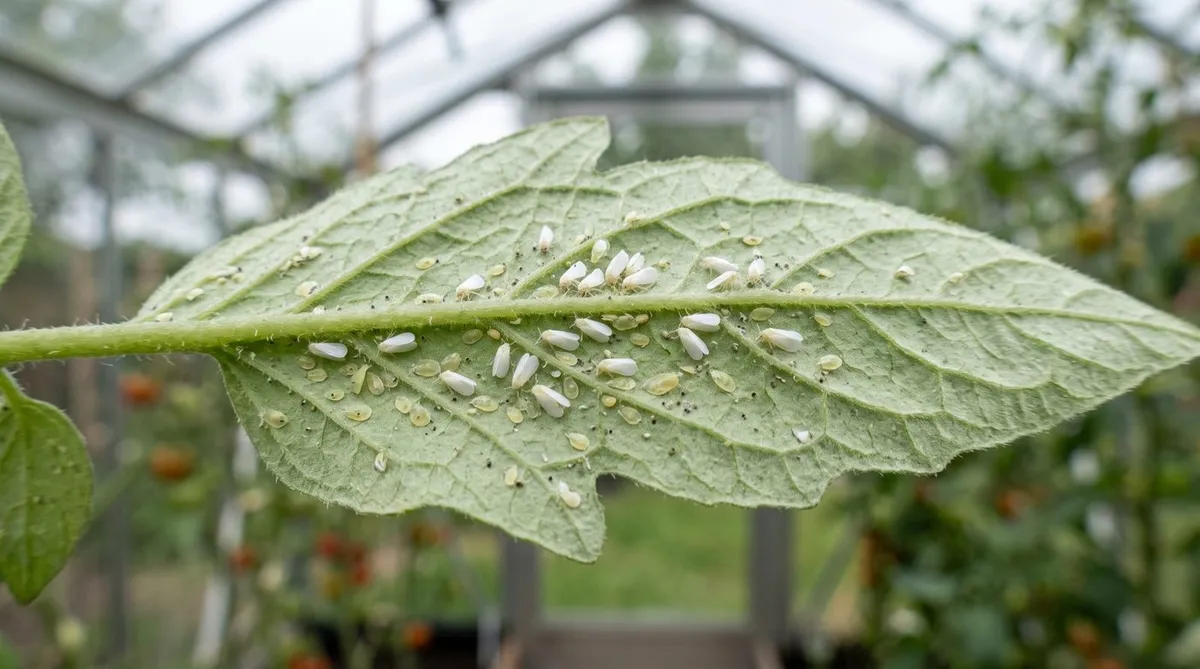
A greenhouse is a cosy place for pests. It’s warm, sheltered and there are few ladybirds or wasps around to eat them. That’s why whitefly and red spider mite can explode under glass. The good news is that you can buy their natural enemies and let them do the work. If you need help working out which pest you’ve got, start with the greenhouse pest control guide, which covers identification for each one.
Your organic greenhouse plan at a glance
The plan has four parts: start clean, watch closely, release helpful bugs early and keep conditions against the pests. Here’s which helper matches which pest.
| Pest | First signs | Helpful bug to buy | Extra help |
|---|---|---|---|
| Glasshouse whitefly | Tiny white flies rise when leaves are touched | Encarsia formosa (parasitic wasp) | Sticky traps for spotting |
| Red spider mite | Fine pale mottling, then webbing | Phytoseiulus persimilis (predatory mite) | Damping down |
| Aphids | Clusters on shoot tips, sticky leaves | Aphidius (parasitic wasp) | Squash or hose off |
| Sciarid fly | Small black flies over seed trays | Steinernema feltiae (nematodes) | Drier compost surface |
| Thrips | Silvery speckles on leaves | Amblyseius (predatory mite) | Sticky traps for spotting |
| Mealybug | White fluffy blobs in leaf joints | Cryptolaemus (predatory ladybird) | Wipe off small patches |
Most of these helpers need warm days, roughly 18°C or more, so the main season is May to September. Order them when you first see the pest, and release them as soon as they arrive. The guide to biological pest control explains how each type works outdoors too.
Start with a winter clean-down
A thorough clean of the empty greenhouse is the cheapest pest control there is. Pests such as red spider mite and whitefly hide in corners, joints and old leaves over winter, ready to start again in spring.
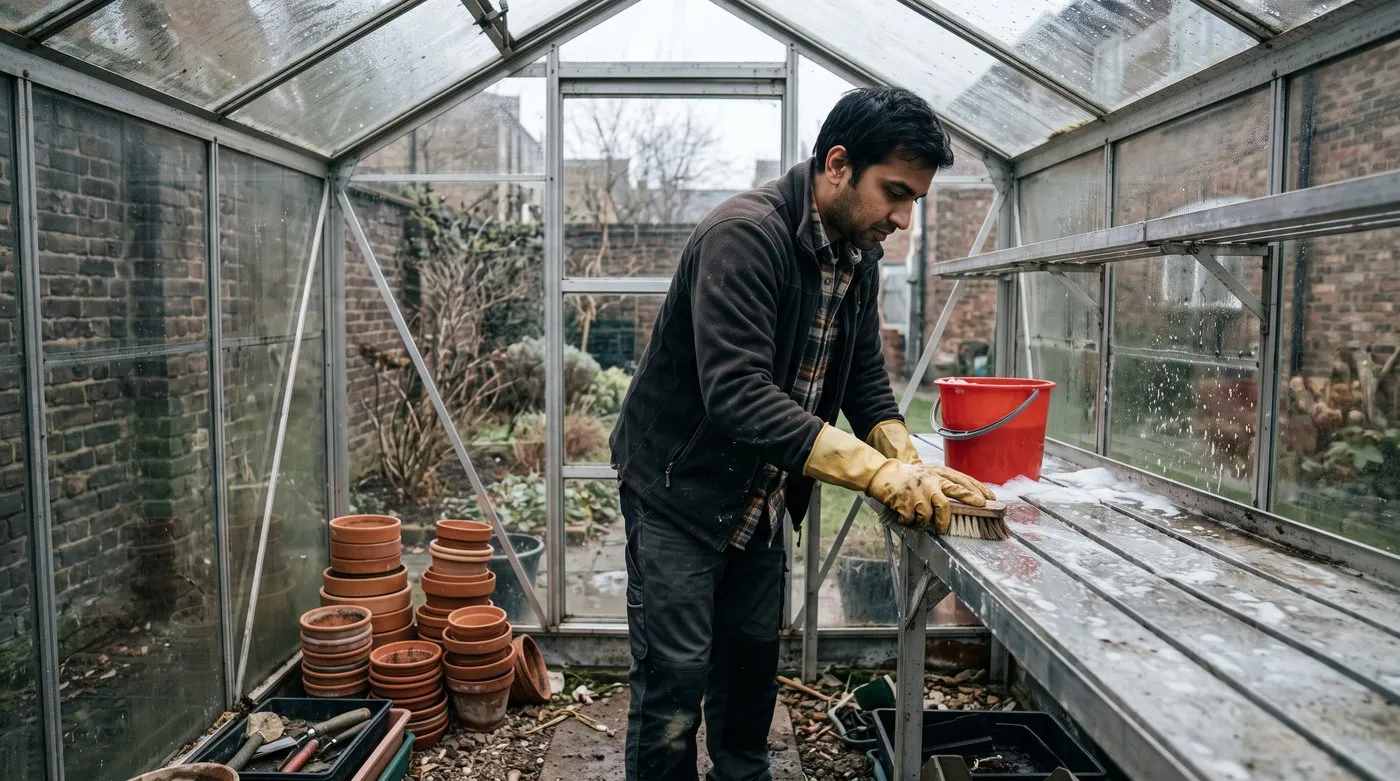
Scrubbing the frame joints and staging in winter clears out the pests hiding there, ready for a fresh start in spring.
Pick a mild day between October and February, once the last crops are out:
- Clear out all plants, dead leaves and old compost.
- Sweep the floor and staging thoroughly.
- Wash the glass, frame and staging with warm soapy water or a garden disinfectant used as its label directs.
- Scrub into the corners, frame joints and under the staging, where red spider mites hide over winter.
- Wash and dry pots, trays and canes before stacking them away.
Leave the doors and vents open for a day afterwards so everything dries. Healthy plant waste can go on the compost heap. Anything with pests or disease is better in the green waste bin.
Spot pests early with sticky traps
Yellow sticky traps tell you which pests have arrived and when. They catch a few flying pests, but nowhere near enough to clear them. Their real job is early warning.
Hang a trap or two at plant-top height from March. Check them every week. When whitefly, thrips or sciarid flies start to appear, you know it’s time to order the matching helpful bug. Swap the traps when they’re full of dust or bugs.
One catch: yellow traps also catch helpful parasitic wasps such as Encarsia. When you release them, take the traps down or lift them well above the plants for a few weeks.

A trap like this tells you whitefly have arrived. That’s your cue to order Encarsia, not to hang up more traps.
Encarsia for glasshouse whitefly
Encarsia formosa is a tiny parasitic wasp that lays its eggs inside young whitefly. The whitefly scales turn black, and a new wasp hatches out to find more. It’s a natural fit for tomatoes, cucumbers and peppers under glass.
Encarsia comes as cards dotted with black parasitised scales. Hang them in the lower part of the plants as soon as you see whitefly. They need warm days of about 18°C or more to work well, and they need whitefly to be there already. You’ll often need a top-up release later in summer. Signs that it’s working are black scales appearing on the undersides of leaves. The greenhouse whitefly guide has more on spotting and controlling whitefly.

Clip the card low down on the plant, out of direct sun. The black dots are parasitised scales, each about to release a new wasp.
Phytoseiulus and damping down for red spider mite
Red spider mite is the big summer pest in a hot, dry greenhouse. Look for fine pale mottling on the leaves, then fine webbing in bad cases. The mites are tiny and usually pale green or yellowish in summer, turning orange-red as they shelter for winter.
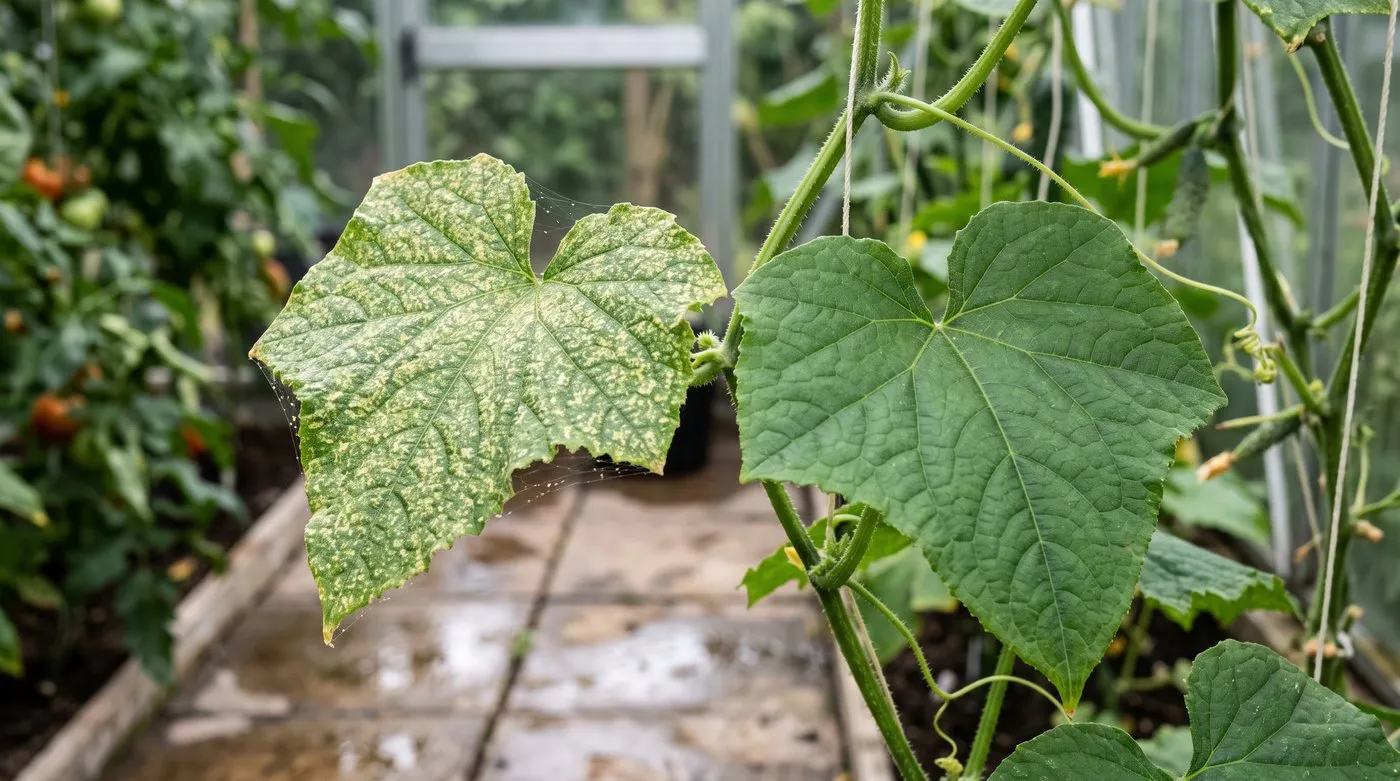
Fine pale speckles like this are the first sign of red spider mite. Release predatory mites now, before the webbing spreads.
Phytoseiulus persimilis is a predatory mite that eats red spider mites at every stage. Release it at the first sign of mottling, sprinkling the carrier material over the affected leaves. It works best in warm, humid conditions.
Help it along by damping down: splash water on the floor and staging on hot mornings to raise the humidity. Red spider mite hates moist air. Wet the floor, not the leaves, and ease off in autumn when cooler damp air can lead to grey mould. The guide to greenhouse ventilation and humidity explains how to balance the two. For a deeper look at this pest, see spider mite control in greenhouses.
Aphidius and simple fixes for aphids
Small aphid colonies are easy to deal with by hand. Squash them with your fingers or wash them off shoot tips with a jet of water. Check the soft new growth every few days.
For bigger outbreaks, Aphidius parasitic wasps lay eggs inside aphids. Parasitised aphids swell up and turn into papery, golden-brown “mummies”, and a new wasp emerges from each one. When you see mummies, leave them alone, as they’re the next generation of helpers. Different Aphidius species suit different aphids, so tell the supplier which aphid you have if you can.
Aphids carry viruses between plants, so it pays to act early. Pick off badly affected shoots and put them in the green waste bin.
Nematodes and drier compost for sciarid fly
Sciarid flies (fungus gnats) are tiny black flies that run over damp compost and seed trays. The adults are harmless. Their larvae nibble fine roots and can set back seedlings and cuttings.

Watering nematodes onto the seed trays deals with sciarid larvae. Letting the surface dry between waterings stops them coming back.
The simplest fix is to let the compost surface dry out between waterings. Water from below where you can. For a bad outbreak, water on Steinernema feltiae nematodes, which hunt the larvae in the compost. They need the compost to be reasonably warm, so check the pack for the minimum temperature.
Sticky traps catch the adults and show you whether numbers are falling. They won’t break the cycle on their own, though. The same pest often turns up on houseplants indoors.
Thrips and mealybug: the trickier two
Thrips leave silvery speckles and tiny black dots on leaves. Predatory mites such as Amblyseius help keep them down, especially if released early. Sticky traps (blue or yellow) show when they’re about. The guide to glasshouse thrips explains why sprays so often fail on them.
Mealybug looks like little white fluffy blobs in leaf joints, often on vines, citrus and succulents. Wipe off small colonies with a damp cloth or cotton bud. For a stubborn problem in a warm greenhouse, the predatory ladybird Cryptolaemus feeds on them. It needs plenty of warmth, so it works best in high summer.
Companion plants and barriers that help
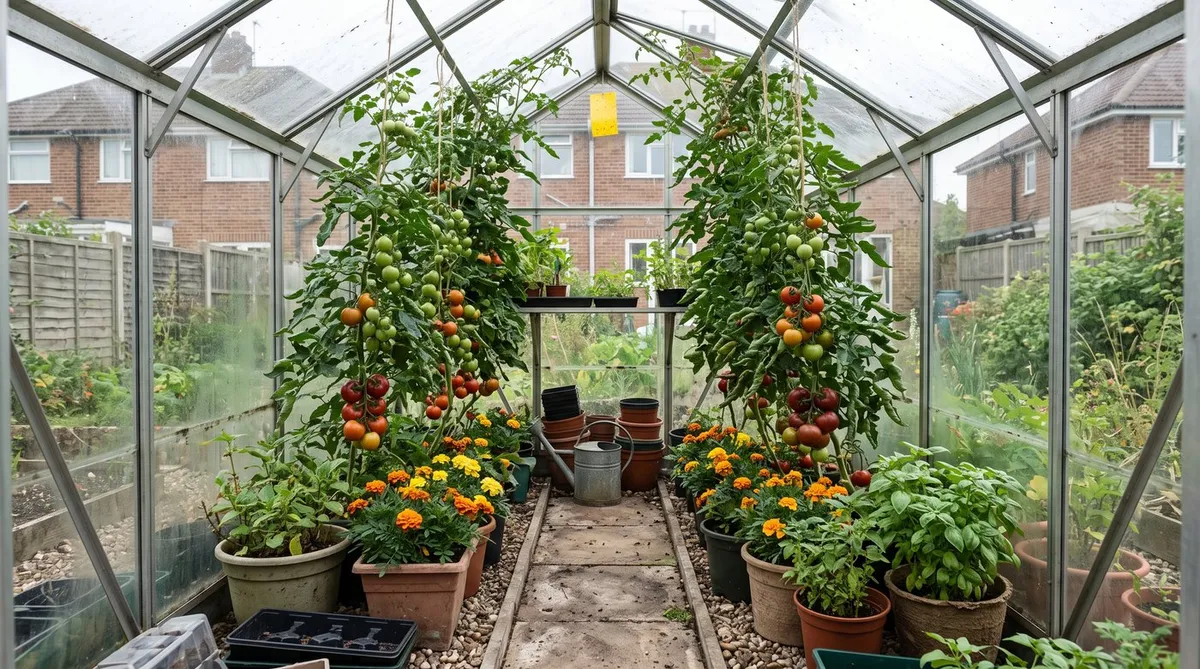
Companion plants won’t clear an infestation, but a few can make the greenhouse a little less pest-friendly. French marigolds are widely grown among tomatoes in the hope of deterring whitefly. Basil is a happy partner too, and handy for the kitchen. Don’t expect miracles from either.
Insect mesh over vents and doors helps keep flying pests out in summer while letting air through. Check new plants carefully before you bring them in, as they’re one of the main ways pests arrive. Keeping new arrivals on a separate shelf for a week or two is a good habit.

French marigolds and basil make good greenhouse neighbours for tomatoes. Think of them as a bonus, not your main defence.
When a spray is genuinely needed
Reach for a product only when hand control and helpful bugs can’t cope. If you do, use a ready-made product approved for that use, and follow the label exactly. Insecticidal soaps and plant oil products work on contact against soft-bodied pests and don’t last long.
Spot-treat the worst patch rather than the whole greenhouse, and check the label for how long to wait before releasing helpful bugs. Avoid broad insecticides, including pyrethrum-based ones, where you’re using biological control, as they kill the helpers too.
Don’t mix your own sprays. Washing-up liquid, garlic, chilli and neem mixes aren’t authorised as pesticides in the UK, so they aren’t legal to use to kill pests. Neem is only sold as a leaf shine. The guide to neem oil in UK gardens explains the rules.
Month-by-month organic greenhouse calendar
| Month | What to do |
|---|---|
| January | Finish the clean-down if not done. Plan crops and note last year’s problem pests |
| February | Check stored pots and trays are clean. Look over overwintering plants for pests |
| March | Hang sticky traps. Water seed trays carefully to avoid sciarid fly |
| April | Check traps weekly. Inspect new plants before bringing them in |
| May | Release helpful bugs at the first sign of each pest as days warm up |
| June | Start damping down on hot days. Release Phytoseiulus at first mottling |
| July | Top up releases if pests return. Keep checking leaf undersides |
| August | Peak pest season. Squash aphids, keep damping down, watch the traps |
| September | Last releases of the season. Reduce damping down as nights cool |
| October | Clear finished crops. Bin anything with pests or disease |
| November | Clean down the empty greenhouse, frame joints and staging |
| December | Wash pots and trays. Order seed and plan next year |
Common mistakes with organic greenhouse pest control
- Releasing helpful bugs too late. Once a pest has exploded, the helpers can’t catch up. Order at the first sighting.
- Releasing them too early. In a cold greenhouse with no pests, they have nothing to eat and die off.
- Leaving yellow traps up with Encarsia. The traps catch the helpful wasps. Take them down or lift them up for a few weeks.
- Skipping the winter clean. Pests hiding in corners and joints start the whole cycle again in spring.
- Mixing your own spray. Home-made mixes aren’t legal as pesticides, and they can scorch leaves and harm helpful bugs.
Frequently asked questions
What is the most effective organic pest control for a UK greenhouse?
Biological control, backed by good hygiene. Release the right helpful bug at the first sign of each pest, keep traps up to spot trouble early, and clean the greenhouse thoroughly each winter.
When should I release biological controls in a UK greenhouse?
At the first sign of the pest, usually from May. Most need daytime temperatures of around 18°C or more. Released too early into a cold or pest-free greenhouse, they have nothing to feed on and die out.
Do yellow sticky traps actually work?
They work well for spotting pests, not for getting rid of them. Hang them at plant-top height and check them weekly to see what’s building up. Take them down or lift them higher when you release Encarsia, as the traps catch the helpful wasps too.
Can I use an insecticidal soap with biological control?
Yes, if it’s an approved product and you time it carefully. Spot-treat the worst patch and check the label for how long to wait before releasing helpful bugs. Don’t mix your own soap or washing-up liquid spray, as home-made mixes aren’t legal to use as pesticides.
What is the best organic treatment for red spider mite?
The predatory mite Phytoseiulus persimilis, plus damping down. Release the predators as soon as you see fine mottling or webbing. Splash water on the floor on hot days, as the pest hates humid air.
How do I stop fungus gnats in a UK greenhouse?
Let the compost surface dry between waterings and use nematodes. The larvae live in damp compost, so overwatered seed trays are their favourite spot. Steinernema feltiae nematodes, watered on, deal with the larvae.
Is neem oil legal for greenhouse use in the UK?
No, neem oil isn’t authorised as a pesticide in the UK. It’s sold as a leaf shine, so you can’t legally use it to kill or deter pests. Stick to helpful bugs, hygiene and approved products.
Find more pest fixes in the pest control hub. If your greenhouse is full of tomatoes, peppers and cucumbers, read our vegetable pests and diseases guide next.
Our team produces practical UK gardening guidance from source research, contributor records and established horticultural practice. Editorial standards are overseen by Matt W.