Key takeaways
- Put barriers and netting in place before pests turn up, not after
- Fine mesh over carrots and cabbages keeps out carrot fly and cabbage whites
- Blight spreads fast in warm, humid weather, so grow resistant potatoes and act quickly
- Move crops to a new bed each year to stop soil diseases like clubroot building up
- Slugs can wipe out young plants overnight, so protect seedlings on wet nights
- Welcome ladybirds, hoverflies and ground beetles, which eat lots of pests for you
Vegetable pests and diseases follow a pattern through the year. Carrot fly arrives in late spring. Blight turns up in warm, humid summers. Clubroot hangs about in acid soil for years. Once you know the pattern, you can get ahead of trouble and keep most of your crop.
How to identify vegetable pest damage
Getting the ID right comes first, so you don’t waste time on the wrong fix. Each pest leaves its own tell-tale damage, often before you spot the culprit.
Holes in leaves point to caterpillars, flea beetles or slugs. Curled, twisted growth suggests aphids. Tunnels in roots mean carrot fly or onion fly maggots. A white powdery coating is mildew. Brown, soggy-looking patches can be blight. The sections below will help you match what you see to the cause.
Always check for disease as well as pests. From a distance, slug damage on lettuce can look a bit like grey mould. Turn the leaf over and look for slime trails, droppings or fuzzy mould before you decide what to do.
The 10 most common vegetable pests in UK gardens
1. Slugs and snails (Gastropoda)
Slugs are the biggest troublemakers in UK veg patches. They feed at night, and one wet night in spring can flatten a row of new lettuce, cabbage or bean plants.
They’re about from spring to autumn, and busiest in mild, damp weather. They lay clusters of little see-through eggs under pots, stones and debris.
Wildlife-friendly slug pellets (ferric phosphate) work well. Scatter them thinly, as the pack directs. Slug nematodes, watered into the soil when it’s mild, tackle slugs underground. A torchlit hunt on a damp evening clears lots of them too. Our slug control guide has plenty more ideas.
2. Cabbage white butterflies (Pieris brassicae and P. rapae)
The large and small cabbage white lay eggs on cabbage family crops from spring to autumn. The large white lays clusters of yellow eggs on top of leaves. The small white lays single eggs underneath. The caterpillars hatch and munch for a few weeks before turning into chrysalises.
Without protection, cabbages and kale can be stripped. Large white caterpillars are yellow-green with black spots. Small white caterpillars are pale green and harder to spot.
Fine mesh netting over crops from planting stops the butterflies laying eggs. Check under leaves each week and squash any eggs, and pick off caterpillars that slip through. Birds and tiny wasps help too. Bt sprays aren’t approved for home gardeners in the UK, so don’t rely on them.
3. Aphids (Aphidoidea)
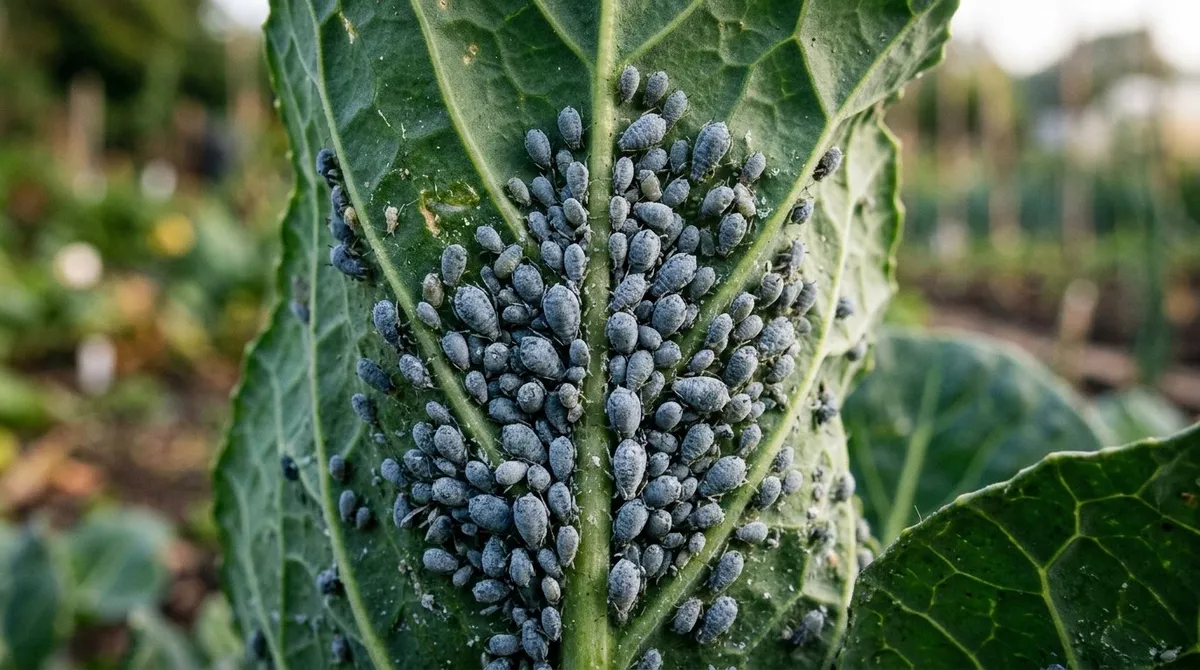
Aphids, or greenfly and blackfly, breed incredibly fast in warm weather. Blackfly on broad beans, greenfly on lots of crops and grey cabbage aphids on brassicas are the ones you’ll see most.
They suck sap, which weakens plants, and they can spread viruses. Their sticky honeydew can turn leaves black with sooty mould. Pinch out the tips of broad beans once the first few trusses of flowers have set pods, as blackfly love those soft tips.
Welcome ladybirds and hoverflies, whose young eat masses of aphids. A strong jet of water knocks lots of aphids off too. Our aphid control guide has more ways to deal with them.
4. Carrot fly (Psila rosae)
Carrot fly goes for carrots, parsnips and celery. The females are drawn in by the smell of carrots, especially when you bruise the leaves while thinning. Their creamy maggots tunnel into the roots, leaving rusty brown tracks that spoil the crop.
There are usually two waves: one in late spring to early summer, and another in late summer. The second wave often does more harm, as maggots keep feeding into autumn.
Carrot flies fly low, so a fine mesh barrier about 60cm high around the bed stops most of them. Covering the crop with fine mesh works too. Sowing in early June helps you dodge the first wave. Varieties such as ‘Flyaway’ and ‘Resistafly’ get less damage, though they’re not immune.
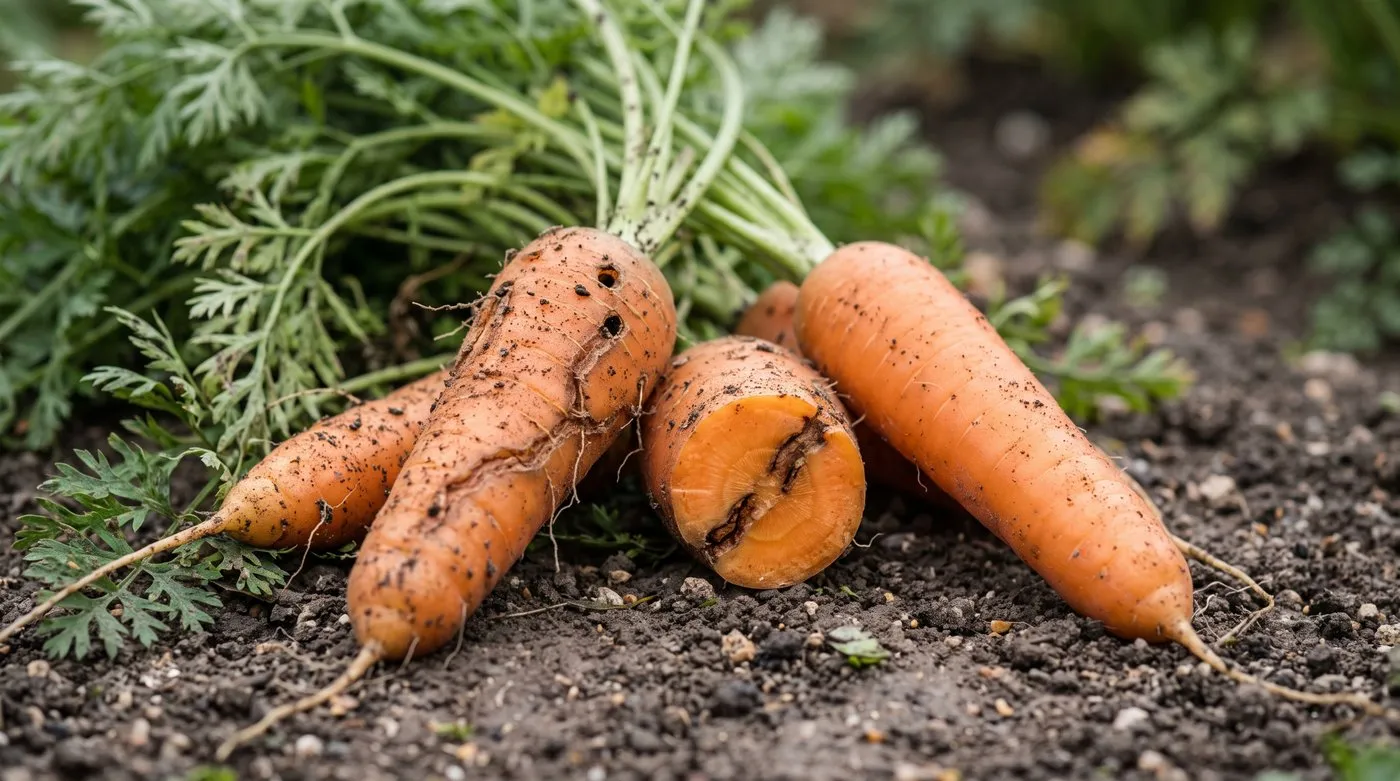
Rusty tunnels like these are the work of carrot fly maggots. By the time you see them, it’s too late, so get your barrier up early.
5. Flea beetle (Phyllotreta spp.)
Flea beetles love young cabbage family plants, rocket, radishes and turnips. They’re tiny, shiny beetles that jump when disturbed, and they pepper leaves with small round holes. Young seedlings can be killed, but bigger plants usually shrug it off.
They’re busiest in warm, dry, sunny weather in spring and again in late summer.
Fleece or fine mesh over seedlings until they have a few proper leaves gives great protection. Keeping the soil moist also helps put them off.
6. Onion fly (Delia antiqua)
Onion fly maggots feed inside onions, leeks and shallots. Plants go yellow, wilt and pull up easily, showing small white maggots at the base. Onions grown from sets are less at risk than those grown from seed, as they’re bigger and tougher when planted.
Fine mesh netting from planting to harvest keeps the flies off. Firm the soil around the plants. Pull up and bin any affected plants straight away.
7. Cutworms (Agrotis spp.)
Cutworms are moth caterpillars that live in the soil and chew through young stems at ground level overnight. They curl into a C-shape when you dig them up. Most damage happens in summer.
Turning the soil over in winter lets birds find them. A cardboard collar pushed into the soil around each young stem stops them cutting through. Nematodes watered in from late spring also help.
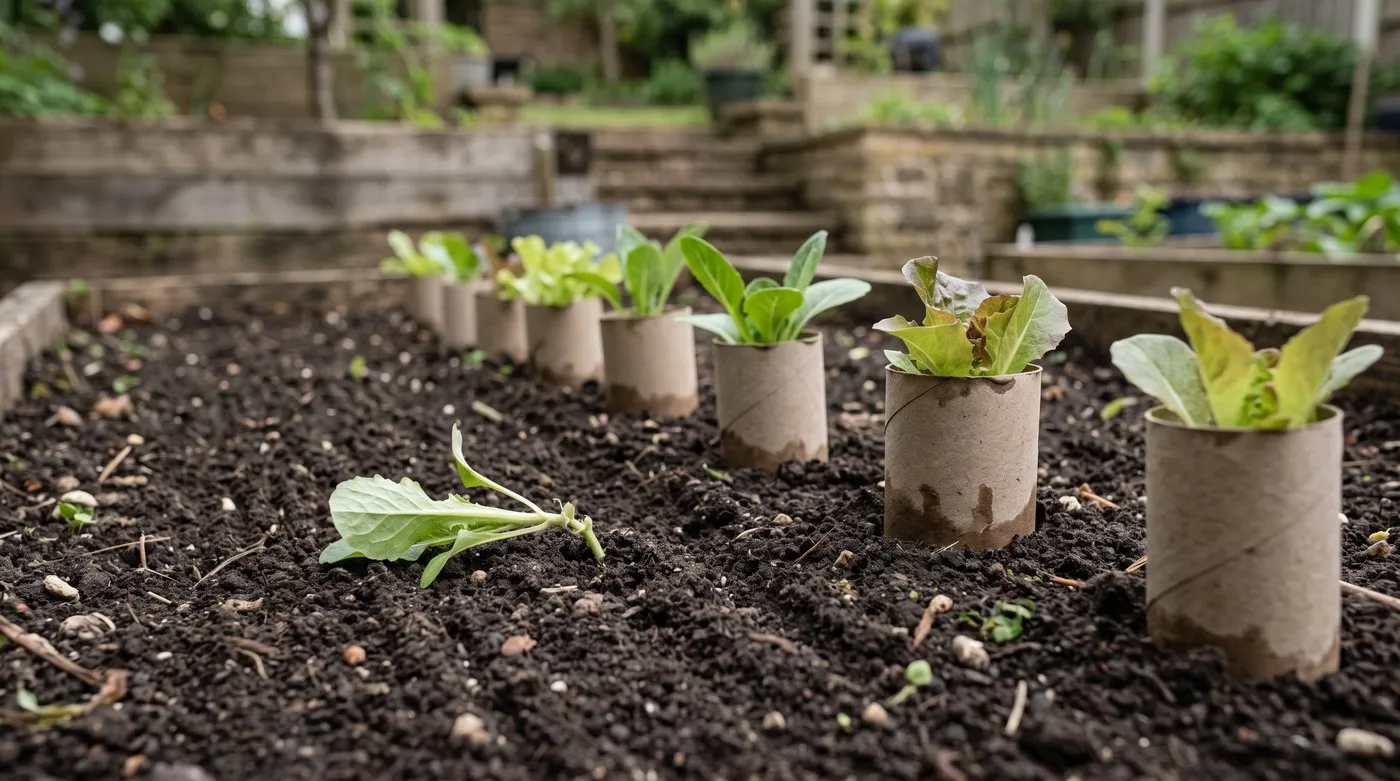
A simple cardboard collar round each young stem stops cutworms chewing through at ground level overnight.
8. Whitefly (Trialeurodes vaporariorum)
Glasshouse whitefly loves tomatoes, cucumbers and peppers under cover. The tiny white adults cluster under leaves and fly up in a cloud when you brush past. Lots of them weaken plants and leave sticky honeydew.
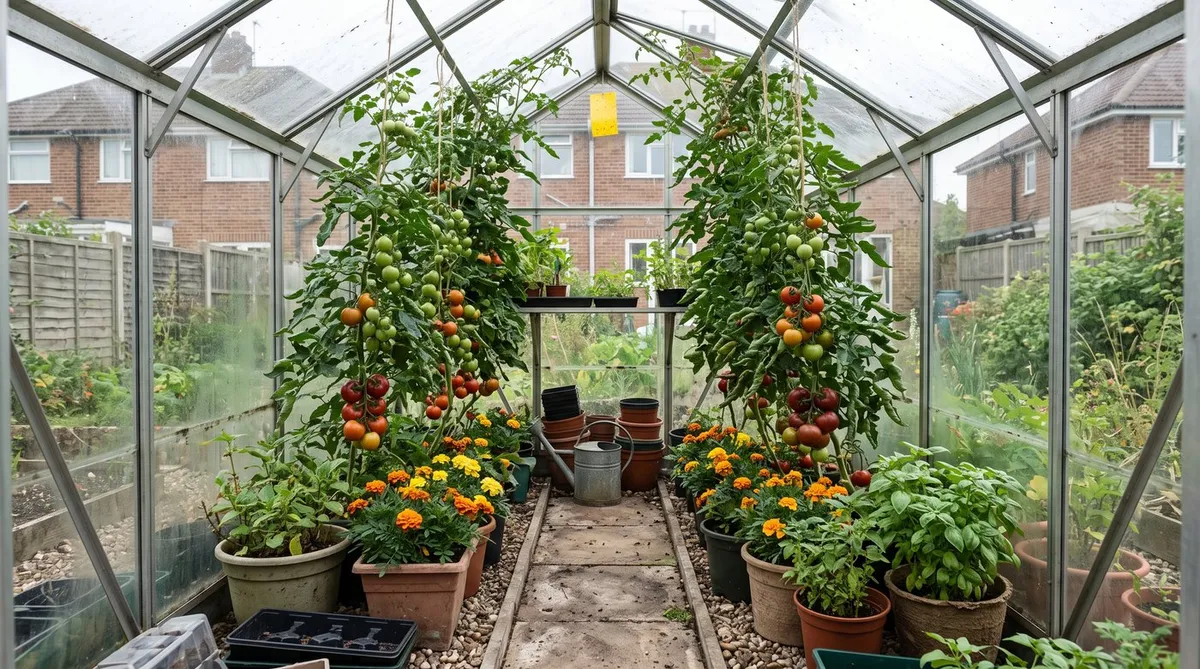
The tiny parasitic wasp Encarsia formosa is a great helper in a warm greenhouse. Introduce it in late spring, before numbers build up. Yellow sticky traps help you see how many you’ve got. French marigolds are a pretty companion that some gardeners find helpful too.
9. Red spider mite (Tetranychus urticae)
Red spider mite thrives in hot, dry greenhouses. The mites are tiny and spin fine webs under leaves. They cause pale speckling and bronzing, and badly hit leaves die.
They multiply fast in hot, dry air. Damping down the greenhouse floor and misting to raise humidity slows them. The predatory mite Phytoseiulus persimilis is a brilliant natural control. Introduce it at the first sign of trouble, before numbers explode.
10. Cabbage root fly (Delia radicum)
Cabbage root fly maggots feed on the roots of cabbage family plants. Young plants wilt even when the soil is moist. Pull one up and you’ll find small white maggots around the roots. The first wave arrives in spring, around the time cow parsley flowers.
Brassica collars (flat discs of felt, cardboard or carpet underlay) placed round the base of each young plant stop the fly laying eggs next to the stem. They really cut down cabbage root fly damage. Fine mesh netting tucked in well at ground level keeps them out altogether.
 Common pest damage on an allotment: slug trails on lettuce, blackfly on broad beans and cabbage white caterpillars on kale.
Pest treatment hierarchy table
Here’s a quick guide to the main ways to deal with vegetable pests, and how they fit together.
| What to use | What it helps with | How quickly it works | Good to know |
|---|---|---|---|
| Fine mesh netting | Carrot fly, cabbage whites, flea beetles, onion fly | Straight away | Your first line of defence |
| Hand-picking and egg checks | Caterpillars, cabbage white eggs | Straight away | Free, do it weekly |
| Wildlife-friendly slug pellets | Slugs and snails | A few days | Scatter thinly after rain |
| Nematodes | Cutworms, leatherjackets, vine weevil, slugs (slug type) | A week or two | Water in when the soil is mild |
| Predatory mites | Red spider mite | A few weeks | For greenhouses |
| Encarsia wasps | Whitefly | A few weeks | For greenhouses |
| Crop rotation | Soil pests and diseases | Over seasons | The foundation of it all |
| Companion planting | Aphids, carrot fly | Ongoing | A helpful extra |
The 8 most common vegetable diseases in UK gardens
1. Potato and tomato blight (Phytophthora infestans)
Blight is the most destructive disease in UK veg growing. Its spores blow in on the wind during warm, humid weather. Blight warnings are issued when the weather is right for it, so sign up for alerts.
It shows as dark brown, soggy-looking patches that spread fast, turning leaves and stems black. Spores washed into the soil can rot potato tubers. Outdoor tomatoes are at risk from early summer in the south and a little later further north.
Blight-resistant potatoes such as ‘Sarpo Mira’ and ‘Carolus’ cope much better than most. Remove infected leaves as soon as you spot them. If blight hits potatoes, cut the stems off at ground level and wait a few weeks before digging, so spores don’t reach the tubers. Copper fungicides such as Bordeaux mixture are no longer approved for home gardeners, so resistant varieties and quick action are your best defence. Our tomato blight guide has more on resistant varieties.
2. Clubroot (Plasmodiophora brassicae)
Clubroot is a soil disease that makes the roots of cabbage family plants swollen and knobbly. That includes cabbage, broccoli, cauliflower, kale, sprouts and turnips. Plants wilt on warm days even when the soil is moist. Pull one up and you’ll see the swollen “clubs”.
Clubroot can stay in the soil for many years. It loves acid, wet soil, and once you have it, you can’t get rid of it completely.
Adding garden lime in autumn to make the soil less acid really helps, so follow the rate on the pack. Raise brassicas in small pots of fresh compost and plant them out when the roots fill the pot, so they have a head start. Move brassicas to a new bed each year with our crop rotation planner. ‘Kilaton’ is a clubroot-resistant cabbage.
3. Powdery mildew (Erysiphales)
Powdery mildew looks like white powder dusted over the leaves. It hits courgettes, cucumbers, peas and squash hardest. It loves warm days, cool nights and dry roots, and doesn’t need wet leaves to spread.
It slows plants down but rarely kills them. Courgettes often get it from late summer, which cuts the last few weeks of picking.
Give plants room so air can flow. Water the roots well, as dry roots make mildew worse, and remove the worst leaves. Home-made sprays aren’t approved as fungicides in the UK. If you need a spray, use an approved product for home gardeners, such as a sulphur-based one, exactly as the label says.
4. Damping off (Pythium spp., Rhizoctonia solani)
Damping off makes seedlings keel over at soil level. The stem goes thin and brown, then the seedling collapses. It strikes in cold, wet, stuffy conditions, especially with early indoor sowings.
Use fresh compost every time you sow, and give trays and pots a good wash before reusing them. Sow thinly so air can move between seedlings. Water from below, and open propagator vents once seeds come up. A thin layer of perlite or vermiculite on top keeps the surface drier.
5. Rust (Puccinia spp.)
Rust shows as raised orange or brown spots, often under the leaves first. Leek rust is the one you’ll see most, on leeks, garlic and chives from summer into autumn. It rarely kills plants but can make them weaker and smaller.
Remove badly affected leaves and don’t compost them. Give plants space for air to move. Go easy on high-nitrogen feeds after midsummer, as soft growth is more easily infected. Clear up all old leek and onion leaves at the end of the season.
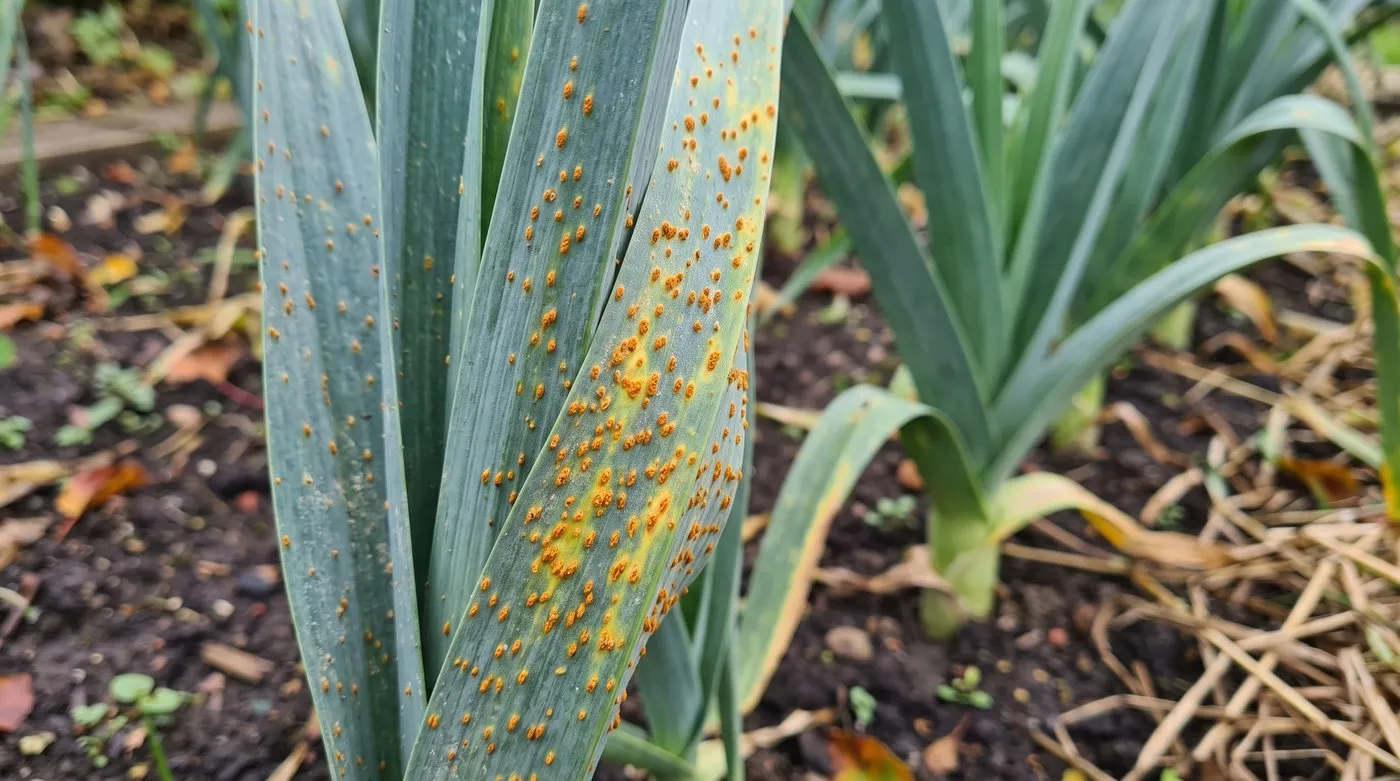
Leek rust looks alarming but rarely kills plants. Pull off the worst leaves, don’t compost them, and go easy on nitrogen after midsummer.
6. Grey mould (Botrytis cinerea)
Grey mould is a fuzzy grey mould that attacks damaged or dying bits of plants. It goes for strawberries, tomatoes, beans and lettuce, getting in through wounds, old flowers or frost damage. It’s about for most of the year.
Remove dead flowers and damaged fruit promptly. Keep greenhouses and polytunnels well ventilated, and water the soil rather than the leaves. Give strawberries room to breathe, and tuck straw under the fruit to keep it off damp soil.
7. White rot (Stromatinia cepivora)
White rot is a stubborn soil disease of onions, garlic, leeks and shallots. Leaves yellow from the tips down. Pull one up and you’ll find fluffy white mould and tiny black specks round the base.
Those black specks can survive in the soil for many years, and there’s no cure. Once you’ve confirmed white rot, don’t grow onion family crops in that soil. Raised beds with fresh soil give you a clean start.
8. Downy mildew (Peronospora spp.)
Downy mildew looks different from powdery mildew. You’ll see yellow patches on top of the leaf and grey-purple fuzz underneath. It’s common on onions and lettuce.
It loves cool, wet weather and still air, so it’s worst in spring and autumn. Water the soil, not the leaves, give plants space and remove infected leaves straight away. There are no copper sprays approved for home gardeners, so these simple steps are your main defence.
 Blight on potato leaves (left), clubroot on cabbage roots (centre) and powdery mildew on courgette leaves (right).
Disease severity and treatment table
| Disease | Crops | How serious | What helps | Stays in soil? |
|---|---|---|---|---|
| Potato and tomato blight | Potato, tomato | Very | Resistant varieties, remove infected leaves | No, blows in each year |
| Clubroot | Cabbage family | Very | Lime, plants raised in pots, rotation | Yes, for many years |
| White rot | Onion family | Very | Avoid infected ground, raised beds | Yes, for many years |
| Damping off | Seedlings | Fairly | Fresh compost, thin sowing, fresh air | No |
| Grey mould | Strawberry, tomato, bean | Medium | Remove dead bits, good airflow | It’s everywhere |
| Downy mildew | Onion, lettuce, cabbage family | Medium | Spacing, remove infected leaves | Survives on old leaves |
| Powdery mildew | Courgette, pea, cucumber | Mild | Spacing, water the roots | No |
| Rust | Leek, garlic, chive | Mild | Remove leaves, tidy up | Survives on old leaves |
Pest and disease lifecycle science
Why timing matters more than treatment choice
Every pest and disease runs to a timetable. Acting at the right moment matters far more than what you reach for. A simple mesh barrier put up before carrot fly arrives stops most of the damage. Once the maggots are inside the roots, there’s not much you can do.
Temperature thresholds for pest activity
| Pest | Wakes up | Busiest |
|---|---|---|
| Slugs | Mild spells | Mild, damp weather |
| Carrot fly | Late spring | Late spring and late summer |
| Cabbage white | Warm, sunny days | High summer |
| Aphids | Spring warmth | Warm weather |
| Flea beetle | Warm spring days | Hot, dry weather |
| Red spider mite | Warm greenhouse | Hot, dry air |
Month-by-month pest and disease calendar
Here’s what to watch for through the year. Northern gardens run a couple of weeks behind the south.
| Month | Pests about | Diseases about | Key job |
|---|---|---|---|
| January | Very few | Very few | Wash seed trays, order biological controls |
| February | Slugs in mild spells | Damping off on indoor sowings | Set slug traps, open propagator vents |
| March | Slugs, flea beetle stirring | Damping off | Put up carrot fly barriers, sow under mesh |
| April | Slugs, aphids, flea beetle, carrot fly | Damping off | Protect seedlings from slugs, fit brassica collars |
| May | Cabbage whites, carrot fly, onion fly, cutworms | Powdery mildew starts | Net brassicas, add Encarsia to the greenhouse |
| June | Most pests, aphids at their peak | Downy mildew, blight risk begins in the south | Check brassicas for eggs, pinch out broad bean tips |
| July | Cabbage whites, carrot fly, red spider mite | Blight, leek rust | Watch for blight warnings, remove blighted leaves |
| August | Flea beetle, whitefly, cabbage root fly | Powdery mildew, blight | Open greenhouse vents, remove mildewed leaves |
| September | Slugs on the rise, cabbage whites | Leek rust, grey mould on strawberries | Water in slug nematodes, clear old crops |
| October | Slugs, aphids dying down | Grey mould, downy mildew | Clear crop leftovers, compost healthy material only |
| November | Slugs in mild spells | Grey mould under cover | Clear old onion and leek leaves |
| December | Very few | Very few | Turn the soil so birds can find hidden pests |
Root cause analysis: why pest problems recur
Monoculture and missing rotation
Growing the same crop family in the same spot every year is the main reason problems get worse. Soil diseases like clubroot and white rot build up when their favourite plants are always there. Pests like carrot fly and cabbage root fly also gather where they did well the year before.
Crop rotation breaks the cycle. Split crops into groups such as peas and beans, cabbage family, onions and roots, and potatoes and tomatoes. Move each group to the next bed every year. The RHS rotation planning guide is a handy starting point.
Poor garden hygiene
Old crops left lying around over winter give pests and diseases a cosy place to hide. Slugs lay eggs under old cabbage stumps, and leek rust survives on dead leaves.
Clear crop leftovers by late autumn. Compost healthy material, and bin anything diseased. Never compost clubroot roots, onions with white rot or blighted potato tubers.
Soil health and biological activity
Healthy soil helps plants stay healthy. Spread a layer of well-rotted compost or manure every year to feed the soil and the life in it.
Squashed, waterlogged soil makes root diseases and clubroot worse. Keep off growing beds, use proper paths, and fork over heavy clay in autumn.
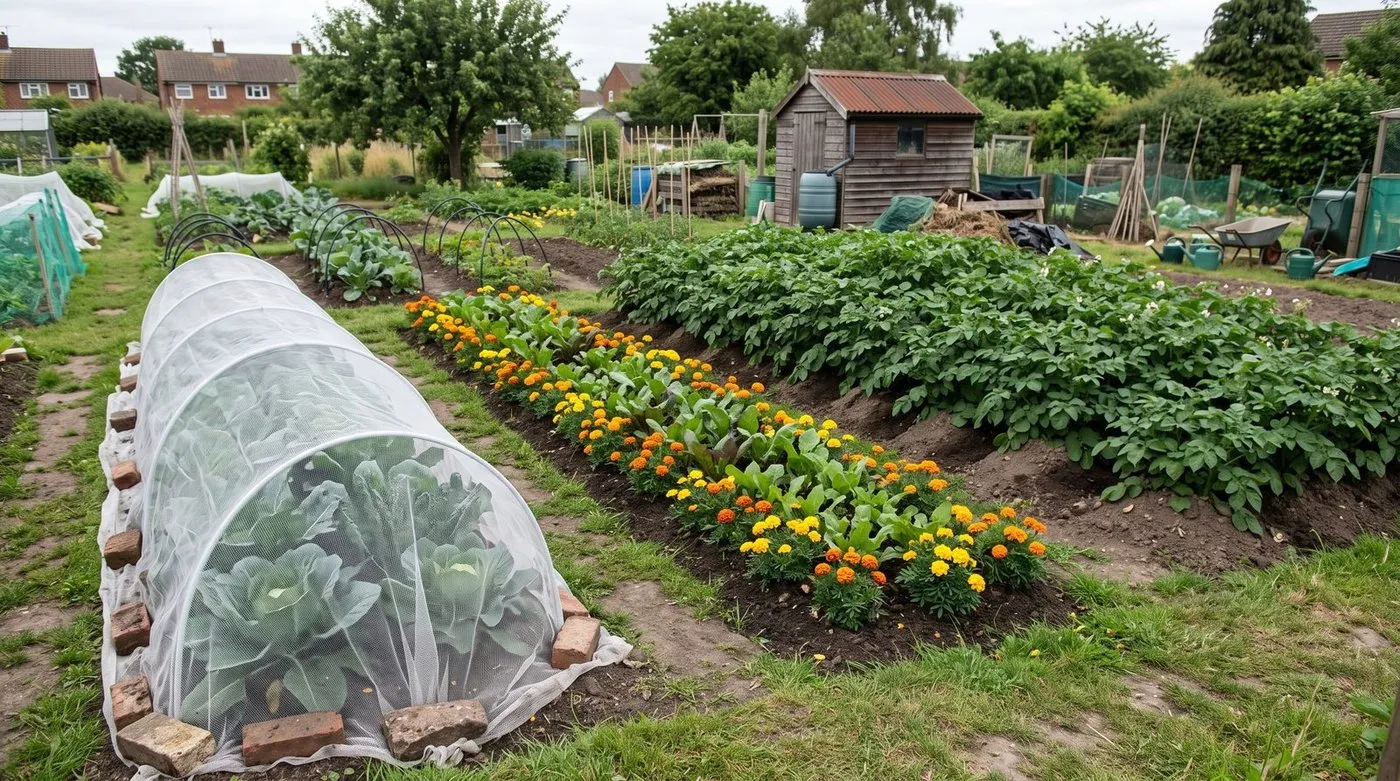 Keeping pests away on an allotment: mesh over the brassicas and French marigolds as companions.
Common mistakes when dealing with vegetable pests and diseases
1. Acting after the damage is done
By the time caterpillars have eaten half a cabbage, it’s too late to save it. By the time blight blackens potato leaves, the spores may already be heading for the tubers. Most success comes from prevention. Put barriers up when you sow or plant, and check plants often.
2. Ignoring soil pH
Clubroot loves acid soil. A cheap pH test kit tells you where you stand. If your brassicas keep getting clubroot, test the soil and add garden lime to make it less acid. It’s one of the best ways to keep clubroot in check.
3. Watering leaves in the evening
Wet leaves overnight are perfect for grey mould, downy mildew and blight. Water the base of plants in the morning so any splashes dry before evening. Soaker hoses keep water off the leaves altogether.
4. Removing all “weeds” and bare soil
Bare, tidy soil looks neat but gives no home to helpful insects. Ground beetles eat slug eggs. Hoverflies need flowers to feed on before they lay eggs near aphids. A strip of wildflowers or a flowering hedge near your veg beds gives these helpers a home.
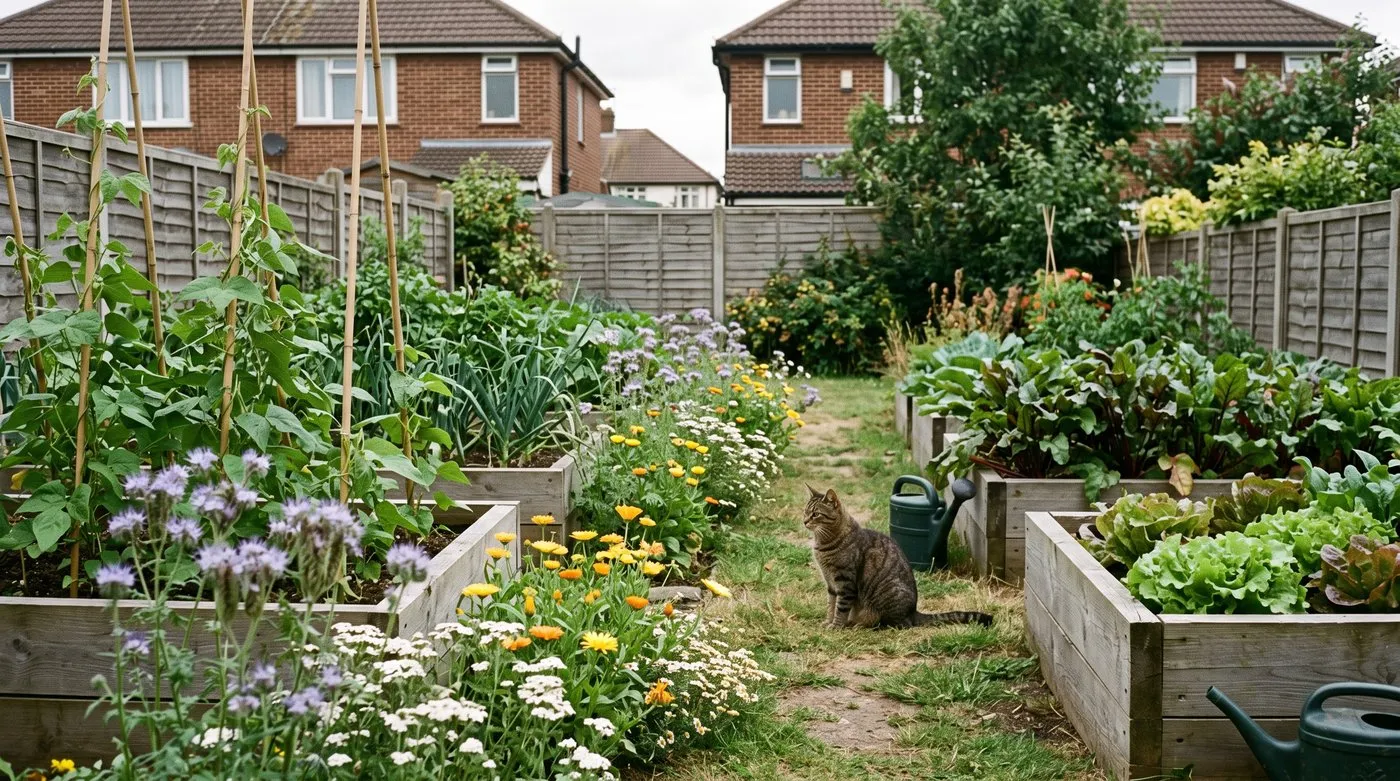
A strip of flowers beside the veg beds feeds hoverflies and gives ground beetles somewhere to live. They’ll help keep aphids and slugs down.
5. Stopping too early
Clearing caterpillars once doesn’t mean the job’s done. Eggs already laid will hatch in a week or two. Keep checking and keep the netting on right through the summer.
Integrated pest management strategy for UK vegetable gardens
The best approach mixes several methods, in this order. Our organic pest control guide goes into the natural methods in more detail.
1. Good habits (free): Rotation, healthy soil, resistant varieties, sensible spacing and tidying up. These stop lots of problems before they start.
2. Barriers (cheap and reusable): Fine mesh, brassica collars, carrot fly barriers and slug traps. These stop most of the rest.
3. Natural helpers (targeted): Nematodes for soil pests, Encarsia for whitefly and predatory mites for red spider mite. They go after specific pests and leave others alone.
4. Sprays and pellets (last resort): Wildlife-friendly slug pellets, and only products approved for home use. Always follow the label. Copper fungicides are no longer approved for home gardeners.
Handy tip: keep a simple garden diary. Note what you grew, where, and what went wrong each year. After a few seasons you’ll spot patterns, like blight turning up soon after the first warm, muggy spell of summer.
Now you know what to look for and when to act, have a look at our companion planting guide for plant partnerships that help keep your veg healthy.
Frequently asked questions
What is the most damaging vegetable pest in the UK?
Slugs do the most damage overall. They’ll have a go at almost any vegetable and can wipe out young plants in one wet night. Lettuce, cabbages, beans and seedlings are favourites. Wildlife-friendly slug pellets plus an evening hunt with a torch make a good team.
How do I tell the difference between pest damage and disease?
Pests usually leave holes, chewed edges or slimy trails. Diseases tend to cause spots, patches, yellowing, wilting or fuzzy mould. Pest damage often starts at the leaf edge, while disease shows up as patches on the leaf. Turn leaves over to look for pests hiding underneath.
Does crop rotation really prevent vegetable diseases?
It helps a lot, though it can’t work miracles. Moving crops each year stops soil diseases building up, because their favourite plants keep moving away. Clubroot and onion white rot can stay in soil for many years, so rotation won’t wipe them out. It does slow them down.
When should I start pest prevention for vegetables in the UK?
Start in March, as the weather warms up. That’s when slugs, flea beetles and carrot fly start to stir. Put netting and barriers in place when you sow or plant, before any damage appears. Keeping pests off is much easier than getting rid of them.
Are biological controls safe for vegetable gardens?
Yes, they’re a safe way to tackle pests on food crops. Biological controls are tiny living helpers such as nematodes, predatory mites and parasitic wasps. Each one targets particular pests and leaves bees and other wildlife alone. Many are suitable for organic growing.
Can I use netting to stop all vegetable pests?
No, but it stops a lot of them. Fine mesh keeps out carrot fly, cabbage white butterflies and flea beetles. Aphids can get through all but the very finest mesh. Netting won’t stop slugs, soil pests like cutworms, or diseases, so use it alongside other methods.
What causes blight on potatoes and tomatoes in the UK?
Blight is caused by a fungus-like organism called Phytophthora infestans. Its spores blow in on the wind during warm, humid weather. Blight warnings are issued when the weather is right for it to spread. Sign up for alerts so you know when to check your plants.
How do I prevent clubroot in brassicas?
Lime your soil and raise healthy young plants in pots first. Clubroot loves acid soil, so adding garden lime in autumn helps. Raise brassicas in small pots of fresh compost and plant them out when the roots fill the pot. Move brassicas to a new bed each year, and try resistant varieties like ‘Kilaton’.
Our team produces practical UK gardening guidance from source research, contributor records and established horticultural practice. Editorial standards are overseen by Matt W.