Key takeaways
- White fluffy mould at the base plus tiny black dots means white rot
- The black dots can sit in the soil for 20 years or more, so rotation won't clear it
- Every member of the onion family can catch it, including ornamental alliums
- There's no treatment for home gardeners, so prevention is everything
- Grow onions and garlic in raised beds or pots of fresh compost on infected ground
- It spreads on soil, so clean boots and tools and buy proper sets, not supermarket garlic
Allium white rot is the disease every onion and garlic grower dreads. Once it’s in your soil, it stays for 20 years or more. There’s no spray and no fully resistant variety. The good news is you can still grow a great crop by lifting it out of the problem soil.
Here’s how to spot it, how it spreads, and how to work around it.
What is allium white rot?
It’s a soil fungus that only attacks the onion family. That means onions, garlic, leeks, shallots, chives, spring onions and ornamental alliums. Nothing else in your garden is affected.
The fungus survives as tiny black balls about the size of a poppy seed. These are tough little things and can last in the soil for decades. They stay asleep until onion-family roots grow nearby, then wake up and attack.
It turns up all over the UK, most often on allotments where onions have been grown in the same beds for years. Our vegetable pests and diseases guide covers other soil problems in the veg patch.
How to identify allium white rot
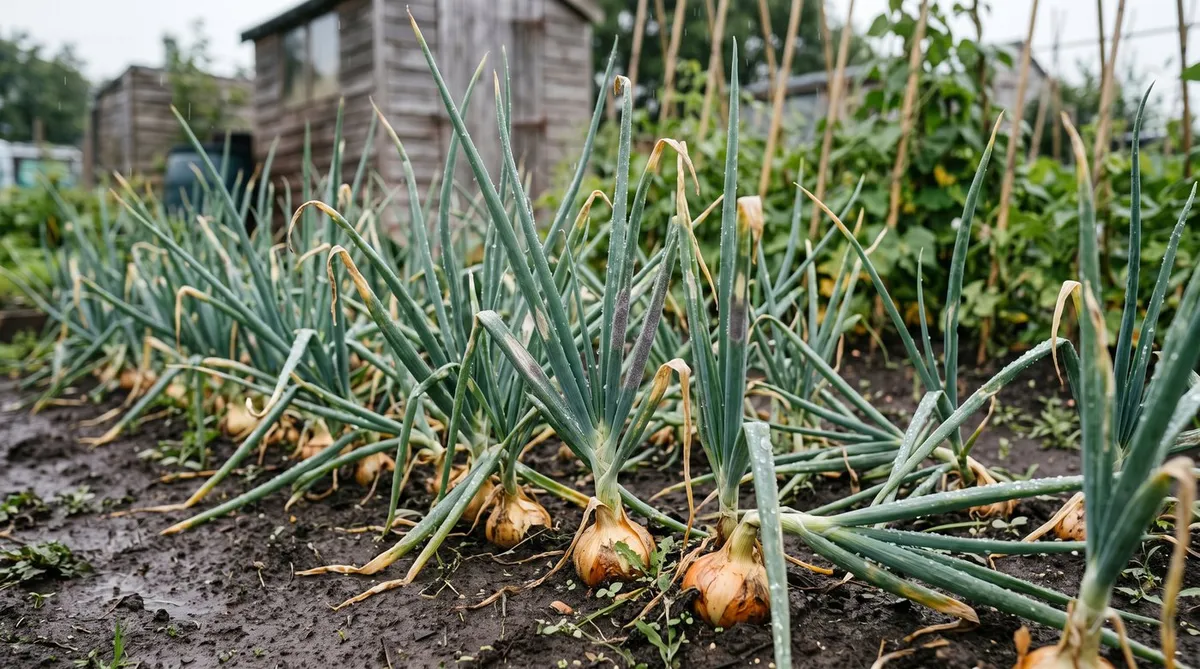
The first clue is leaves turning yellow and flopping early, even though the soil is damp. It starts with the outer leaves and works inwards. The plant looks thirsty and stops growing.
Pull up a plant and look at the base. Healthy roots are white and firm. With white rot, most of the roots have gone, and the base is wrapped in white fluffy mould like cotton wool.
Now look closely in that mould for the tiny black dots. White mould plus black dots tells you it’s white rot.
It’s most active in cool, damp soil, so spring and autumn are the worst times. Hot summers slow it down. Cold winters don’t kill it.
Other rots can look similar. Fusarium basal rot has pinkish mould but no black dots. Onion neck rot attacks the neck in store, not the base. White mould with black dots is white rot’s calling card.
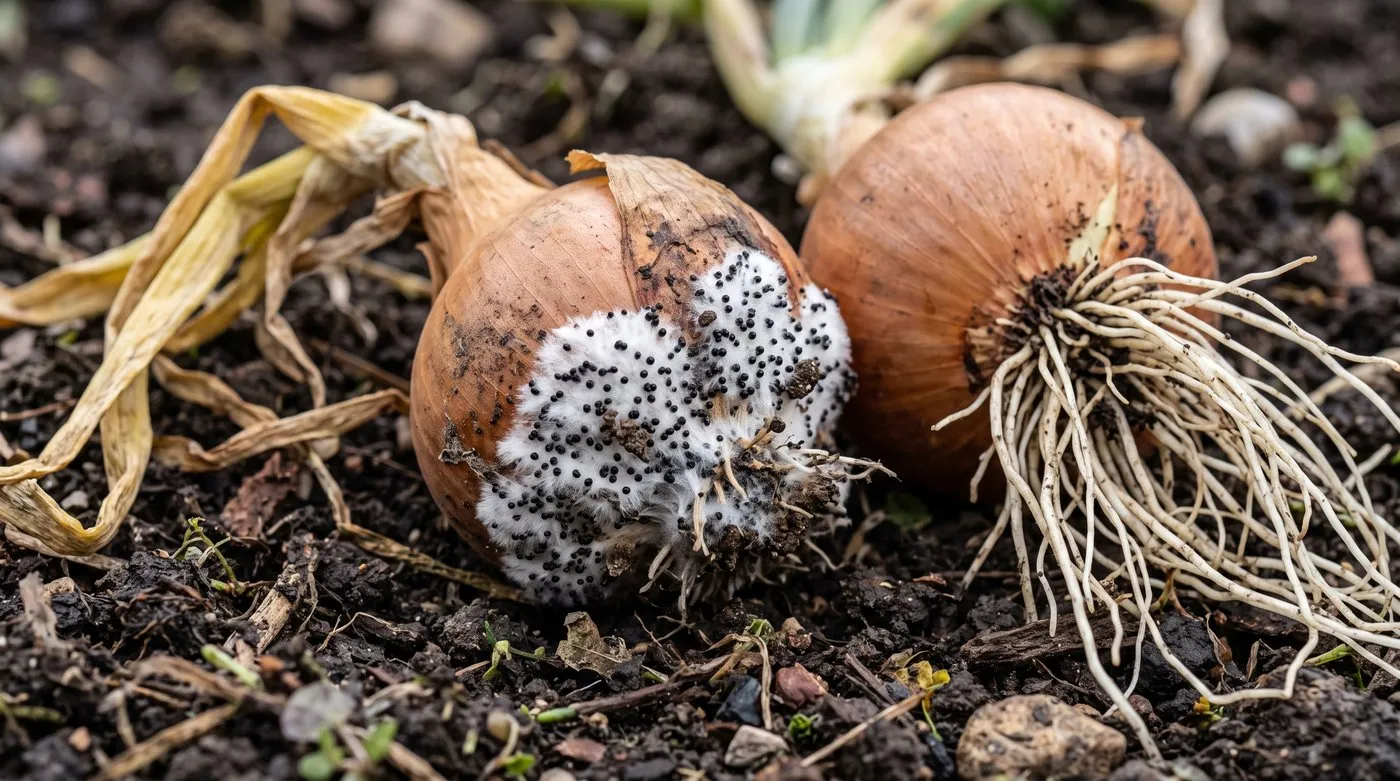
White fluffy mould with tiny black dots at the base is the giveaway. A healthy onion beside it still has firm white roots.
How allium white rot spreads
It only spreads when infected soil moves. It doesn’t blow about in the wind like many diseases. Every new outbreak starts with soil arriving from somewhere infected.
Boots and tools are the usual culprits on allotments. Muddy boots, spades, wheelbarrows and rotavators carry it from plot to plot.
Sets and young plants grown in infected soil can carry it on their roots. Buy onion sets and garlic from a garden centre or seed supplier. Don’t plant supermarket garlic, which may carry the disease.
Rain running downhill carries it on sloping sites. Plots at the bottom catch soil from above, and solid-sided raised beds help here.
Soil deliveries can bring it in. Ask where any topsoil comes from. Garden Organic’s disease prevention advice has more on keeping your growing space clean.
Why allium white rot is so hard to get rid of
It waits a very long time, and it only wakes for onion roots.
It lasts for decades. Most soil diseases die out in a few years. Normal crop rotation of three to five years doesn’t touch white rot.
It only wakes up for the onion family. With no onions about, the black dots just sit and wait, so they hardly die off on their own.
It builds up fast. Every rotten bulb leaves a lot of new black dots behind. Each year you grow onions in infected soil, the problem gets worse.
So the answer is to skip the infected soil altogether, or to trick the fungus into waking up with nothing to eat.
Can I still grow garlic and onions on infected land?
Yes, in raised beds or pots of fresh compost. Just keep the roots away from the infected soil below.
Make raised beds at least 20cm deep. Lay woven weed membrane across the bottom, then fill with fresh multipurpose or peat-free compost. Don’t mix in any soil from the plot. Stand beds on a hard surface or membrane if you can.
- The membrane keeps roots out of the soil below
- Make the bed deep enough that roots stay in clean compost
- Stop rain or watering splashing soil in from outside the bed
- Top up with fresh compost each year
- Clean your boots and tools before working in the beds
Pots and growbags work well for smaller amounts. A 30cm pot of fresh compost fits five or six onion sets. Troughs on legs are ideal because they sit right off the ground.
Filling big beds with compost isn’t cheap, but for home growers who love their own garlic it does the job year after year. Our raised bed guide shows how to build and fill them.
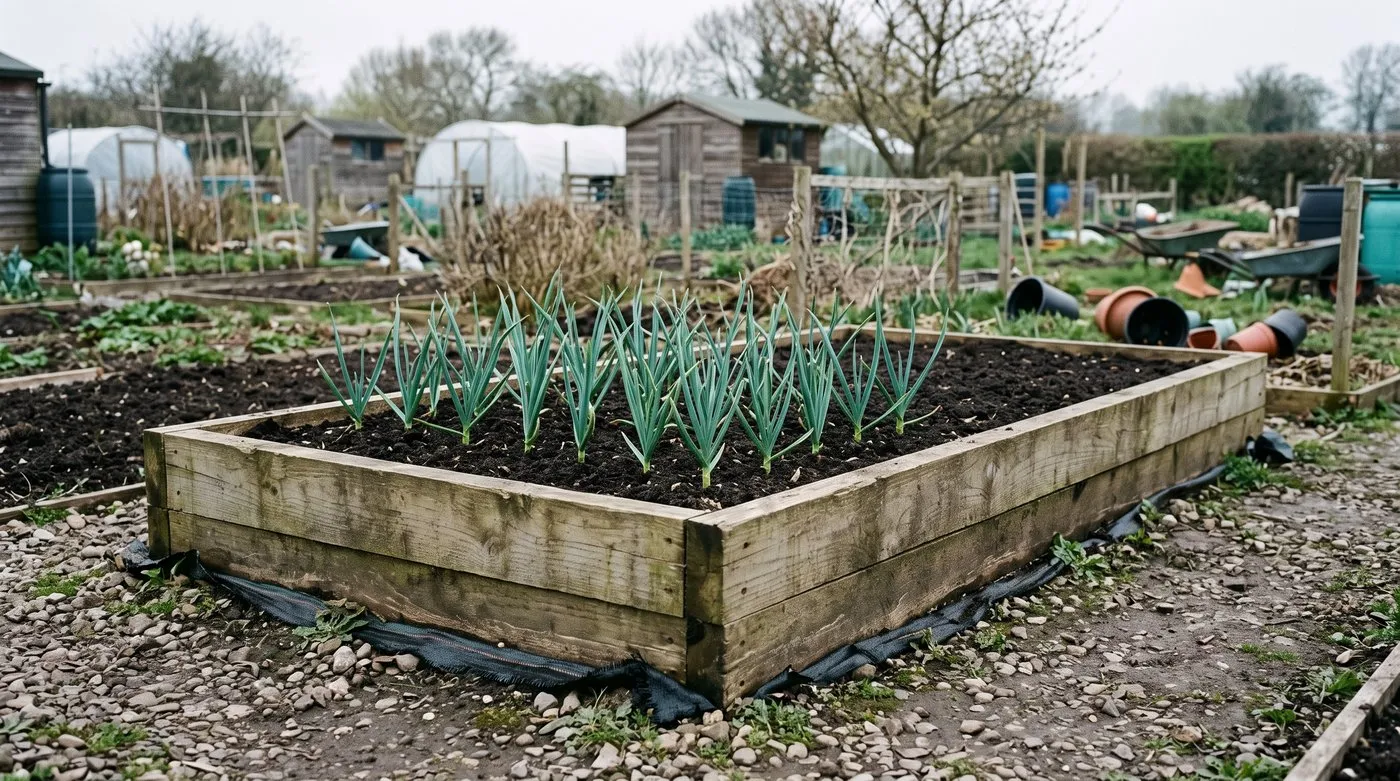
A deep bed of fresh compost on membrane keeps garlic roots well away from infected soil. Top it up with fresh compost each year.
The garlic decoy trick for white rot
The decoy method tricks the black dots into waking up when there’s nothing for them to attack. It’s still experimental, but it’s simple and cheap.
The fungus wakes when it smells onion-family roots. Garlic juice gives off that same smell. Water it onto bare soil, and some of the black dots wake up, find no roots and die.
How to try it:
- Pick a mild spell in autumn, when the soil is cool but not cold.
- Crush 4-6 garlic cloves per square metre into water.
- Strain it and top up to about 10 litres per square metre.
- Water it evenly over the infected bed.
- Don’t grow any onion-family crops in that bed that season.
- Repeat each year for 3-5 years.
It won’t clear the soil completely, and results vary. Use it alongside raised beds, not instead of them.
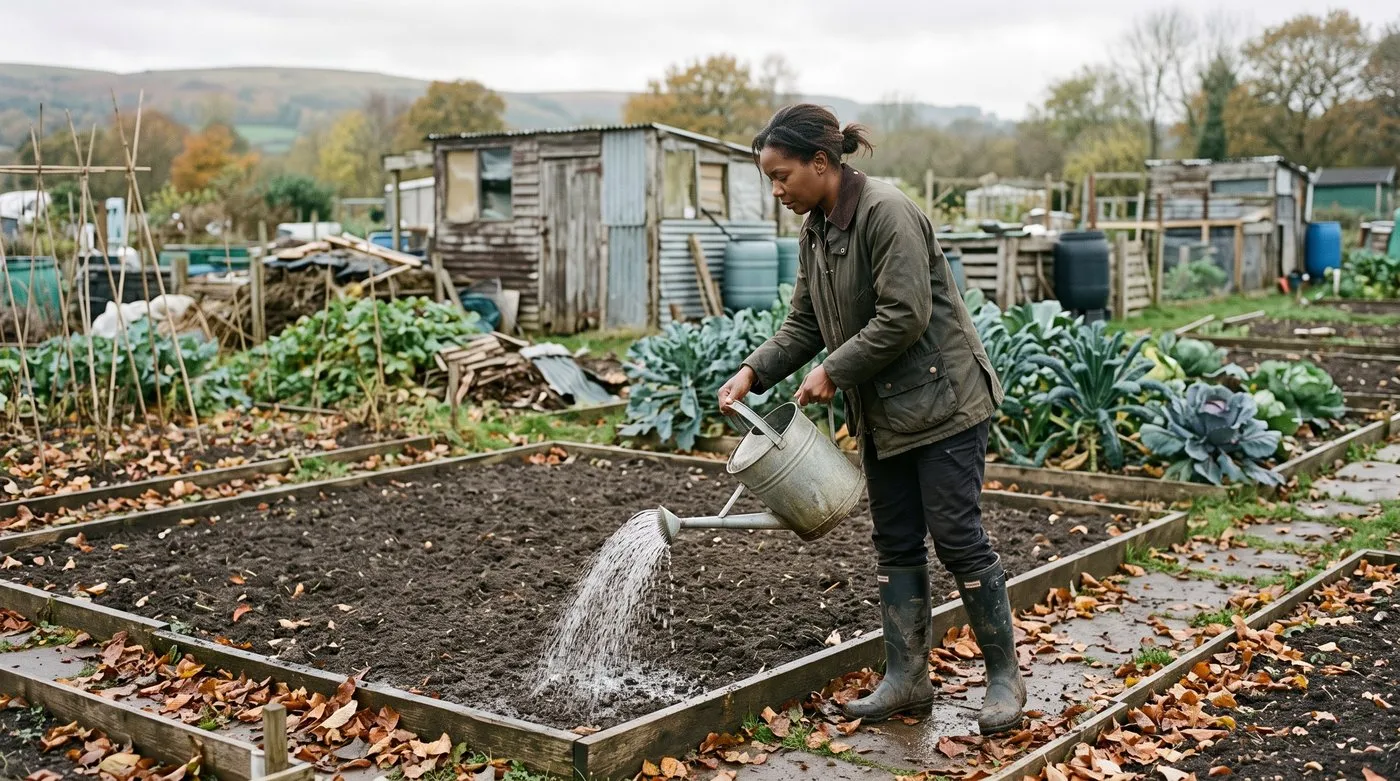
Water the garlic mix over bare soil on a mild autumn day. Keep the onion family out of that bed for the season.
Which allium crops suffer most?
Garlic and seed-sown onions suffer most. Every allium can catch it, but some are hit harder than others.
Garlic spends the longest time in the ground, from autumn to the next summer. That gives the fungus plenty of time to find it. Our garlic growing guide covers buying clean bulbs and planting.
Onions from sets are in the ground for a shorter time and get growing quickly, which gives them a better chance. See our onion growing guide for varieties and timing.
Leeks often show symptoms late. Because leeks are eaten fresh, you can usually peel off the bad outer layers and use the rest. Leeks also have to deal with leek moth, so see our leek moth guide too.
| Crop | Risk | Time in the ground | If it’s infected |
|---|---|---|---|
| Garlic | Very high | Autumn to summer | Often the whole crop is lost |
| Onion from sets | High | Spring to summer | Big losses in a bad year |
| Onion from seed | Very high | Most of the year | Seedlings may die young |
| Shallot | High | Spring to summer | Clumps rot from the base |
| Leek | Medium | Summer to winter | You can often save some |
| Chives | Low to medium | Year after year | Clumps weaken over time |
| Spring onion | Medium | A few weeks | Quick crops may escape |
How to keep white rot out of clean soil
Keeping it out is much easier than living with it. If your soil is clean, look after it.
Buy proper sets and bulbs. Get onion sets, garlic and shallots from a garden centre or seed supplier, not a supermarket or market stall.
Don’t move soil between plots. On an allotment, don’t borrow soil or share compost unless you know where it’s been. Say no to manure stored on onion-growing land.
Clean tools and boots. Give spades, forks and boots a good wash after working anywhere you’re not sure about.
Shake off soil from gift plants. If someone gives you leek or onion plants, shake all the soil off the roots first. Better still, raise your own from seed in fresh compost.
Keep an eye out. Check onion-family beds every week from April to July. If outer leaves yellow early in spring, pull one plant and look at the base. Catching it early means fewer black dots left behind. Our allium leaf miner guide covers the pest that can be mistaken for early disease.
New plot? Ask the allotment secretary or previous tenant whether white rot has been seen there before you plant onions.
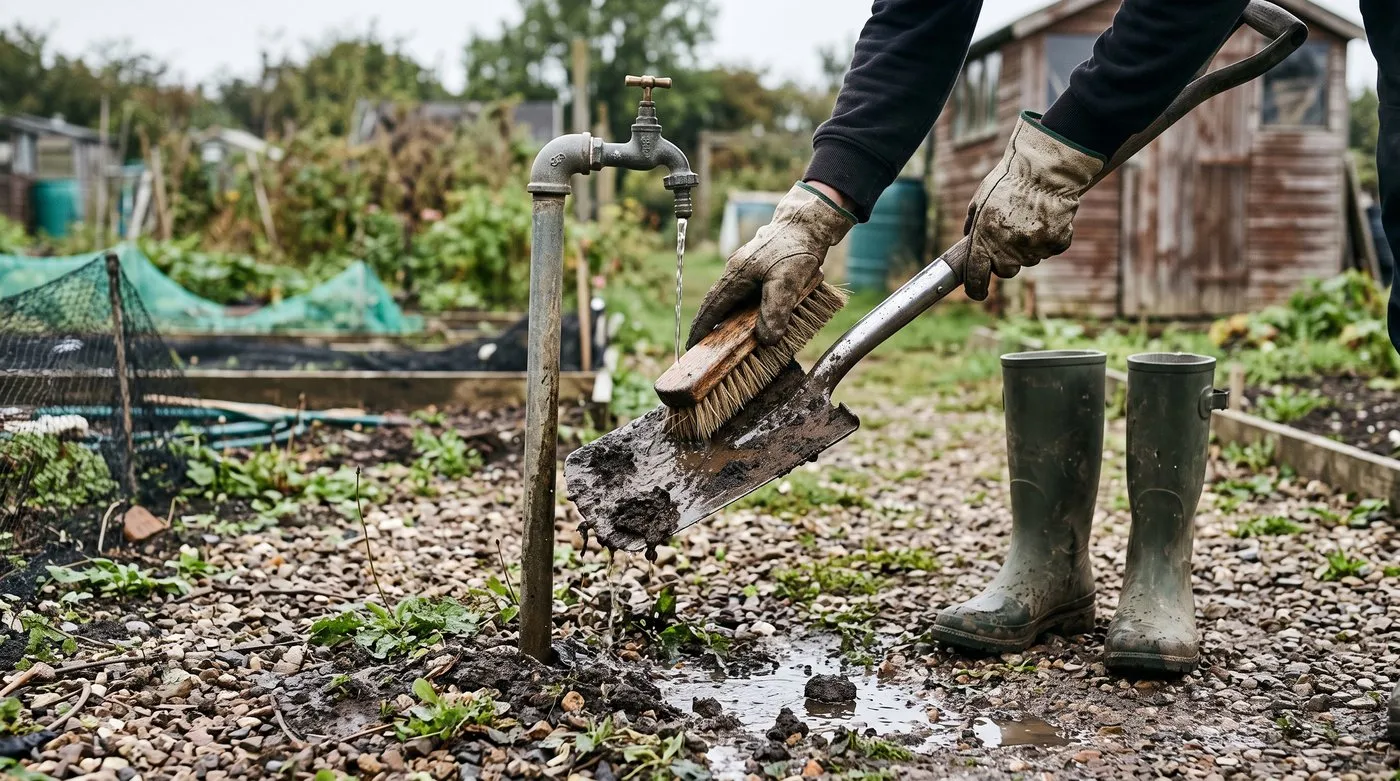
A quick scrub of boots and tools stops infected soil hitching a ride to clean beds. It’s worth doing every time you leave a plot.
Frequently asked questions
What does allium white rot look like?
Look for white fluffy mould at the base of the bulb. The leaves yellow and flop even when the soil is moist. Pull the plant up and the roots and base are wrapped in white mould like cotton wool. Tiny black dots, like poppy seeds, sit in the mould. The base feels soft and most of the roots have gone.
How long do white rot sclerotia survive in soil?
They can survive for 20 years or more. These tiny black resting bodies stay asleep until onion-family roots grow close by. Then they wake up and attack. That’s why the disease is so hard to get rid of.
Can I treat white rot with fungicide?
No, there’s no fungicide for home gardeners. Nothing you can spray or water on will clear it from the soil. Instead, buy clean stock, grow in fresh compost above the infected soil, and keep soil from spreading.
Does crop rotation control white rot?
No, because it can wait in the soil for decades. A gap of a few years between onion crops means nothing to it. Rotation is still good for other problems, so keep doing it. On infected ground, grow your onion family in raised beds or pots of fresh compost instead.
What is the garlic decoy method for white rot?
It tricks the fungus into waking up with nothing to attack. Garlic juice smells like onion-family roots to the fungus. Water crushed garlic onto bare soil in autumn, and some of the resting bodies wake up and die. It’s still experimental and won’t clear the soil, so treat it as a bonus alongside raised beds.
Can I grow alliums in containers to avoid white rot?
Yes, pots of fresh compost keep you clear of it. Use pots, troughs or raised beds filled with clean compost. Stand them on paving, gravel or membrane rather than bare infected soil. Use fresh compost each year for onions and garlic.
Does white rot affect ornamental alliums?
Yes, every allium can catch white rot. Ornamental ones like ‘Purple Sensation’ and the giant alliums can all be infected. They also keep the fungus going in the soil. So an ornamental allium bed on infected ground keeps the problem alive, even if you grow no onions.
Our team produces practical UK gardening guidance from source research, contributor records and established horticultural practice. Editorial standards are overseen by Matt W.