
Key takeaways
- Most garden diseases are caused by fungi and are worst from June to September
- Raking up fallen leaves in autumn is the easiest way to cut black spot, scab and rust next year
- Water at the base in the morning so leaves don't stay wet overnight
- Space plants so air can move between them
- Copper fungicides are no longer allowed for home gardeners in the UK
- Resistant varieties save a lot of bother
Spotty roses, white-dusted courgettes, tomatoes that collapse overnight. Most UK gardens meet a plant disease or two each year, usually between spring and late autumn.
This guide covers the 12 you’re most likely to see, what they look like and what to do. The short version? Keep things tidy, let air move between plants and water at the base. That stops most problems before they start.
How to identify common garden plant diseases
Getting the right name for the problem is the first step. Garden diseases come in three main types, and each looks a bit different.
Fungal diseases: the most common
Fungi cause most garden diseases. They spread by tiny spores on the wind, in rain splash and on tools. Most need wet leaves to get going, which is why wet summers are worse. Look for powdery or fuzzy coatings, neat spots and visible mould.
Bacterial diseases: wet and slimy
Bacteria get in through wounds, pruning cuts and leaf pores. They cause soft, wet, slimy patches that can smell. Bacterial canker on cherries and plums oozes amber gum. There are no sprays to cure them, so tidiness and resistant varieties are your best bet.
Viral diseases: distortion and mosaic
Viruses cause twisted growth, mottled leaves, stunting and streaky flowers. Cucumber mosaic virus attacks a huge range of plants. Viruses are spread mostly by sap-sucking insects like aphids, and by tools and seed. There’s no cure, so pull up and bin affected plants quickly.
The 12 most common UK garden diseases
These are the ones you’re most likely to meet, with what to look for and what to do.
1. Powdery mildew
Powdery mildew puts a white or grey dusty coating on leaves, stems and buds. Roses, courgettes, peas, apples and gooseberries get it most.
Unlike most diseases, it doesn’t need wet leaves. It loves warm days and plants that are dry at the roots. Crowded, stuffy spots are worst. Badly hit leaves yellow, curl and drop.
What to do: Cut off the worst shoots and keep plants watered at the base. If needed, use a fungicide approved for home use against powdery mildew and follow the label. Home-made milk or bicarbonate sprays aren’t allowed. Our powdery mildew treatment guide has more detail.
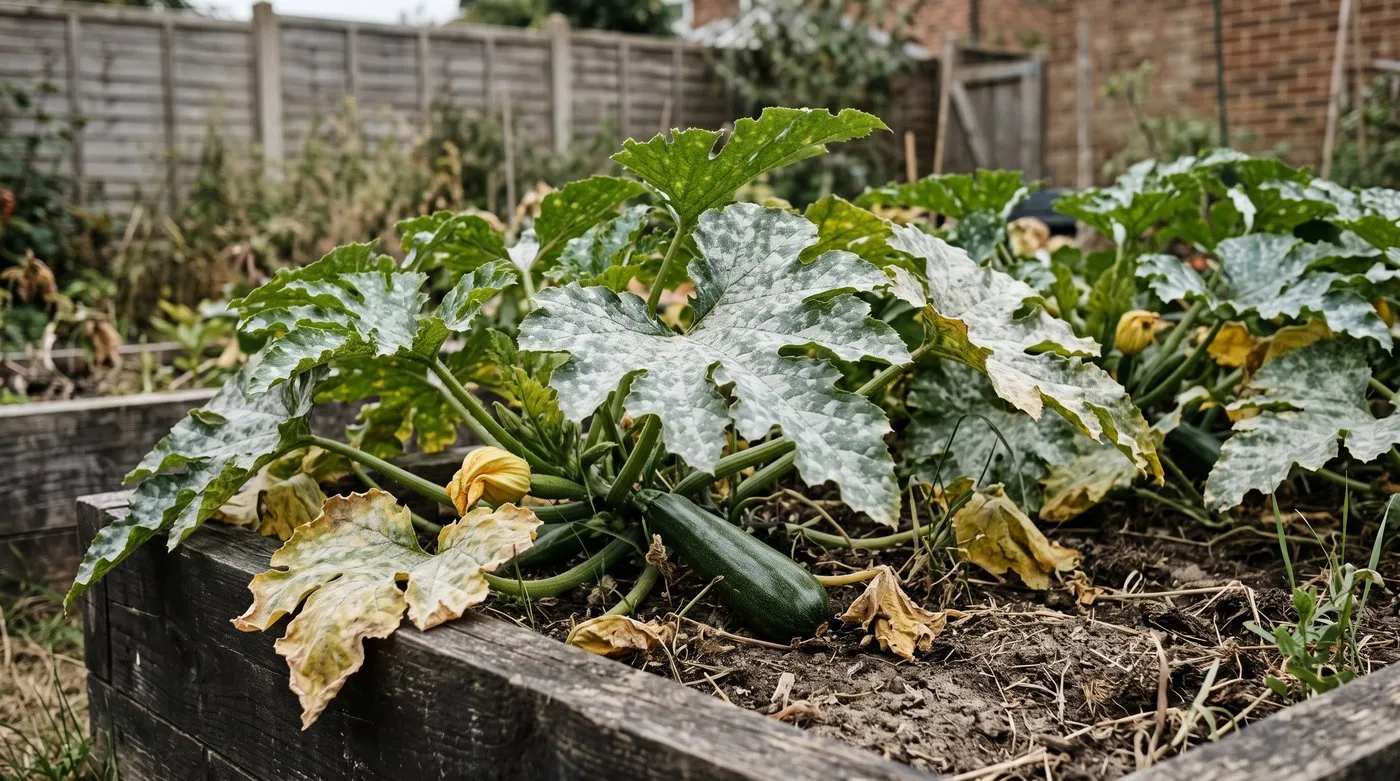
Powdery mildew loves plants that are dry at the roots. Steady watering at the base helps more than anything.
2. Black spot (roses)
Black spot is the most troublesome rose disease in the UK. Round black spots with feathery edges appear on leaves from May. Leaves yellow and drop, and a bad case can strip a bush by August.
Spores sit on fallen leaves and stems over winter, then rain splashes them onto new growth in spring.
What to do: Rake up and remove all fallen rose leaves in autumn. That one job makes a big difference. On roses that always get it, you can use an approved fungicide labelled for black spot. For new roses, look for ones sold as disease resistant.
3. Potato and tomato blight
Blight is the big one for potato and tomato growers. Brown patches appear on leaves, often at the tips and edges, with white fuzz underneath in damp weather. Stems get dark marks. Tomatoes rot brown, and potatoes get a reddish-brown rot under the skin. It can flatten plants in days.
It strikes in warm, wet, muggy spells, usually from June onwards.
What to do: Act fast, as there’s no copper spray for home gardeners. Remove and bin affected leaves straight away. On potatoes, cut the stems down to the ground and wait about three weeks before digging. Grow resistant varieties like ‘Sarpo Mira’ potato or ‘Crimson Crush’ tomato.
 Powdery mildew, black spot and blight each look quite different, which helps you tell them apart.
4. Rust
Rust gives orange, yellow or brown powdery spots under the leaves. In UK gardens it’s common on roses, hollyhocks, pelargoniums, leeks, garlic, plums and fuchsias.
It spreads on the wind and needs wet leaves. Bad attacks make leaves drop early and cut the crop on veg.
What to do: Pick off affected leaves early and space plants so air can move. On ornamentals, you can use an approved fungicide labelled for rust. There’s no spray for leek rust, so grow resistant varieties and space plants 15cm apart.
5. Grey mould (botrytis)
Grey mould is a fluffy grey-brown mould on flowers, fruit, leaves and stems. Strawberries, raspberries, tomatoes, lettuce and flowers get it most.
It loves cool, damp, still air and gets in through damaged or dying bits like old petals. Greenhouses are a classic trouble spot. Our greenhouse pest and disease guide has more on keeping it under control under glass.
What to do: Pick off dead flowers and damaged bits. Space plants well. Open greenhouse vents to let damp air out. Bin infected material. Only spray strawberries if there’s an approved product labelled for the crop.
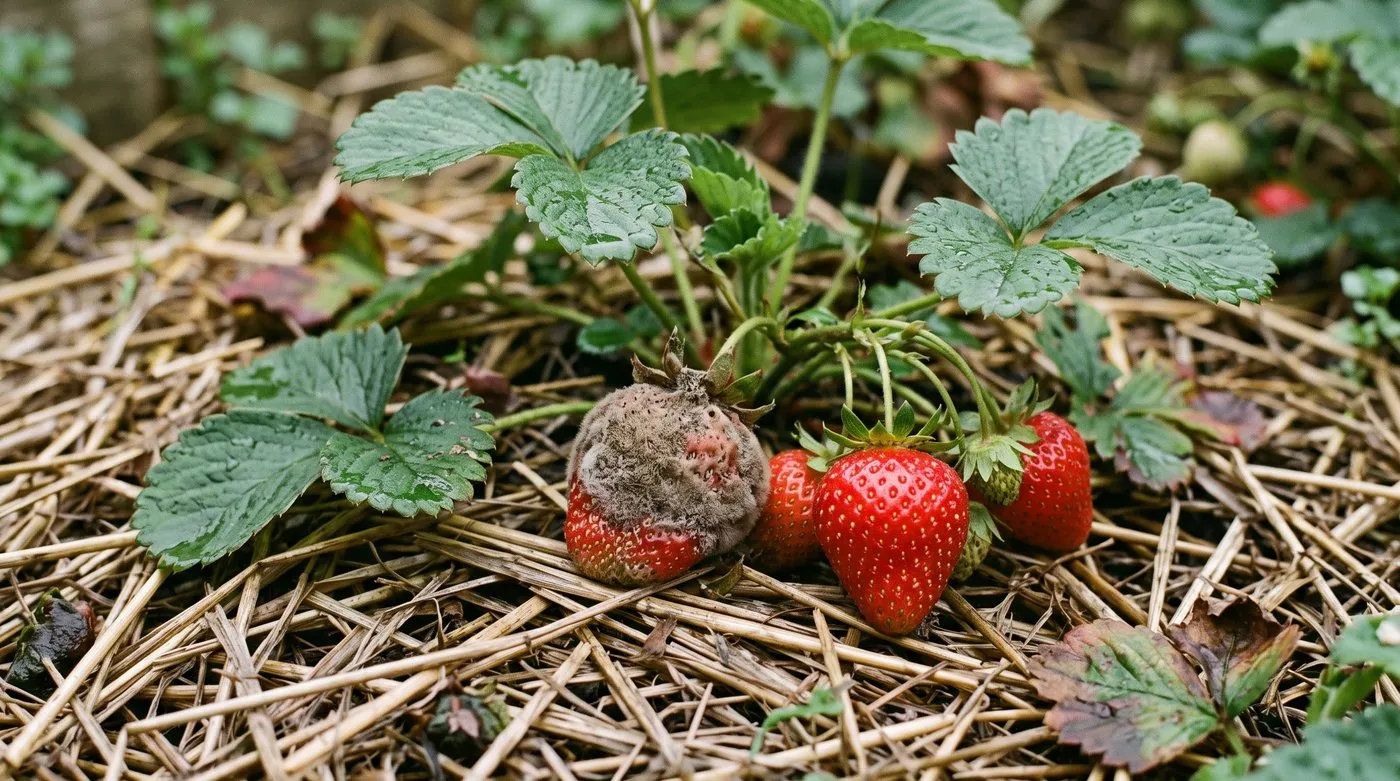
Grey mould gets in through damaged or dying bits. Pick off mouldy fruit and old petals promptly and bin them.
6. Honey fungus
Honey fungus kills more trees and shrubs in UK gardens than anything else. Clusters of honey-coloured toadstools appear at the base in autumn. Peel back the bark and you’ll see white fungal sheets. Black “bootlaces” spread through the soil to reach new plants.
Privet, birch, willow and ornamental cherries are very prone. Yew, holly, box and beech hold out better.
What to do: There’s no spray. Dig out dead and dying plants, stump and as much root as you can. To stop it spreading, bury a sheet of heavy-duty polythene or butyl rubber upright, 45cm deep, round the affected area. Replant with tougher types.
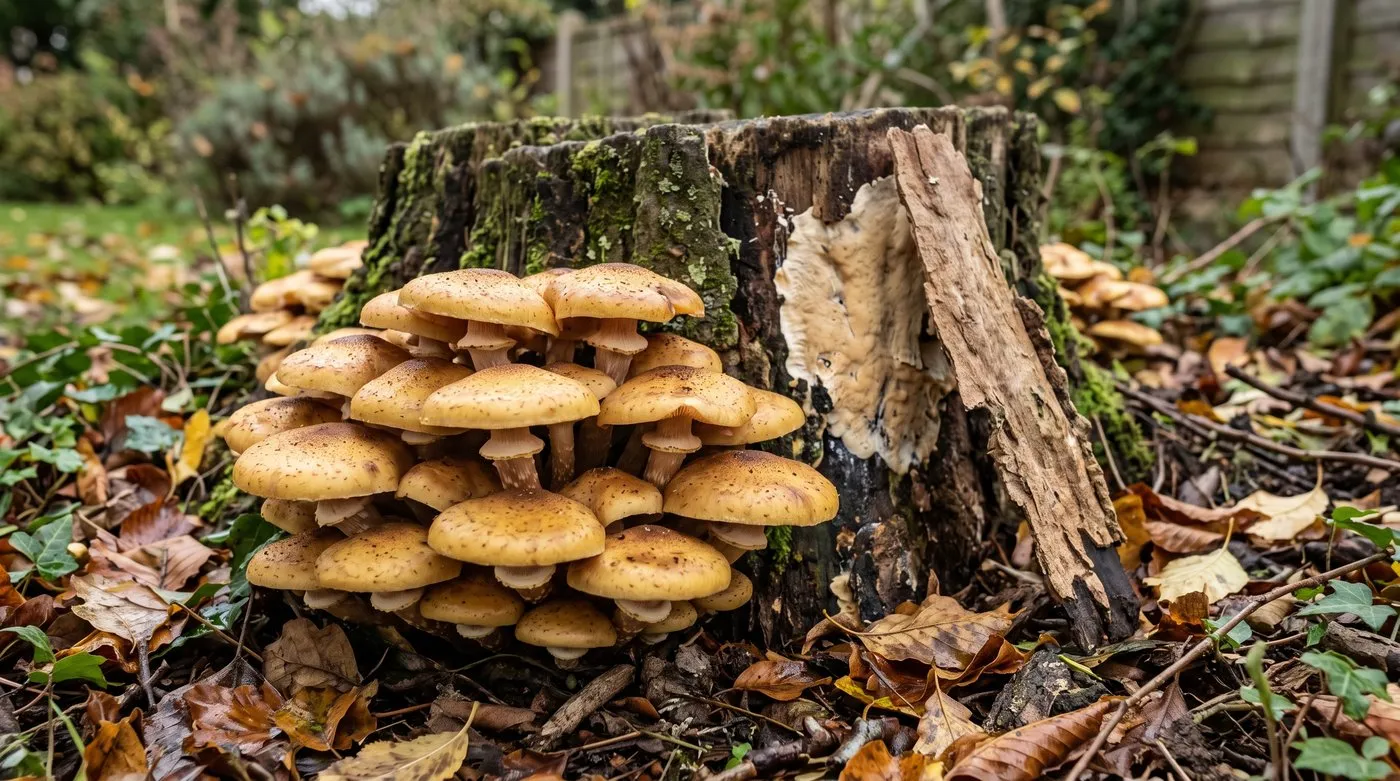
Toadstools at the base plus a white sheet under the bark points to honey fungus. Dig out the stump and as much root as you can.
7. Clubroot
Clubroot attacks cabbages, broccoli, cauliflower, sprouts, kale, swede and turnips. Roots swell into lumpy clubs. Plants wilt in warm weather even when the soil is damp, and they stall.
It stays in the soil for many years and loves acid, soggy ground. Once it’s in, you can’t really get rid of it.
What to do: Lime acid soil to bring it up to around pH 7 or a touch above, following the rate on the bag. Improve drainage. Raise brassicas in clean compost in modules and plant out once they have strong roots. Use a crop rotation with at least four years before brassicas go back in the same spot.
8. Apple and pear scab
Scab gives dark, scabby patches on fruit, leaves and twigs. Fruit gets rough, cracked skin that looks poor and doesn’t store well. Leaves get olive-green to black velvety spots.
It lives on fallen leaves and spreads in wet weather in spring, from bud burst to petal fall.
What to do: Rake up fallen leaves in autumn. Prune to open the tree up so it dries quickly. There’s no copper spray for home gardeners. Choose resistant varieties such as ‘Discovery’ or ‘Red Falstaff’.
9. Coral spot
Coral spot gives tiny pink to orange bumps on dead and dying wood. It gets in through pruning cuts, dead stubs and damaged bark. Magnolia, maple, elaeagnus and pyracantha are often hit. It can kill branches and sometimes whole shrubs.
What to do: Cut out affected wood well below the last pink bump, at least 15cm. Use sharp, clean tools. Clear away dead wood and prunings rather than leaving them in a pile.
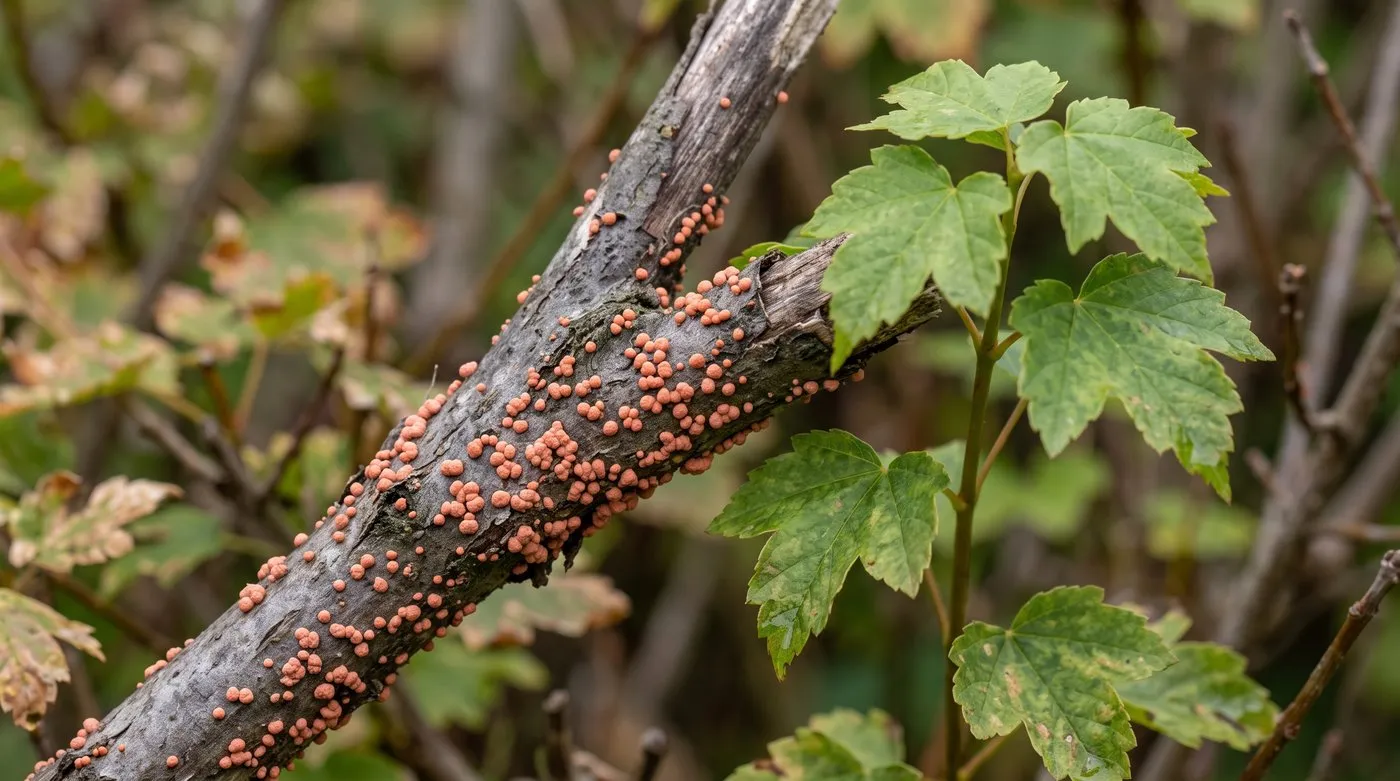
Coral spot starts on dead wood. Cut at least 15cm below the last pink bump and clear prunings away rather than piling them up.
10. Bacterial canker (stone fruit)
Bacterial canker attacks cherries, plums, damsons and their relatives. Sunken patches of bark ooze amber gum. Leaves get small brown spots that drop out, leaving “shot holes”. Branches die back in spring and summer.
It gets in through leaf scars in autumn and through pruning cuts. Never prune stone fruit in winter. Prune in summer, from June to August, instead.
What to do: Cut out cankered branches well below the damage, at least 30cm. There’s no copper spray for home gardeners, so clean tools and summer pruning matter most.
11. Downy mildew
Downy mildew is different from powdery mildew. It gives yellowish patches on top of leaves with grey-purple fuzz underneath. Lettuce, spinach, brassicas, onions, grapes and pansies get it most.
It loves cool, wet weather and is worst in spring and autumn. It can’t cope with dry conditions.
What to do: Thin plants so air moves. Water at the base, never over the top. Remove affected leaves. Grow resistant lettuce varieties.
12. Phytophthora root rot
Phytophthora root rot attacks roots in soggy ground. Rhododendrons, heathers, yew and many shrubs can get it. Plants wilt suddenly and may die within weeks. Roots turn brown-black and soft.
What to do: Improve drainage. Dig out affected plants along with the soil round the roots. Don’t replant the same kinds of plant there for at least five years.
Disease comparison table
| Disease | What you’ll see | Plants it hits most | Worst time | How it spreads |
|---|---|---|---|---|
| Powdery mildew | White dust on leaves | Roses, courgettes, peas, apples | Jun-Sep | Wind |
| Black spot | Black spots, yellowing leaves | Roses | May-Oct | Rain splash |
| Blight | Brown patches, white fuzz below | Potatoes, tomatoes | Jul-Sep | Wind and rain |
| Rust | Orange or brown spots underneath | Roses, hollyhocks, leeks | May-Oct | Wind |
| Grey mould | Fluffy grey-brown mould | Strawberries, tomatoes, lettuce | Apr-Oct | Air |
| Honey fungus | White sheets under bark | Trees and shrubs | All year | Through the soil |
| Clubroot | Swollen, twisted roots | All brassicas | Mar-Oct | In soil |
| Apple scab | Dark scabby patches on fruit | Apples, pears | Mar-Jun | Rain splash |
| Coral spot | Pink-orange bumps on dead wood | Magnolia, maple, pyracantha | All year | From dead wood |
| Bacterial canker | Oozing gum, shot holes | Cherries, plums, damsons | Gets in Oct-Feb | Rain splash, tools |
| Downy mildew | Yellow patches, grey fuzz below | Lettuce, onions, brassicas | Apr-Jun, Sep-Nov | Wind and water |
| Phytophthora root rot | Sudden wilt, brown roots | Rhododendrons, yew, heathers | All year | Soggy soil |
How plant diseases spread
You don’t need the science, just a few basics. They explain why the simple fixes work.
What spores need
Most fungal spores need moisture, the right warmth and a plant to land on. Many need leaves to stay wet for hours. That’s why watering over the top causes more disease than watering at the base.
The critical mistake: treating symptoms, not cycles
By the time you see spots, the disease has usually been at work for a week or two and spores are already spreading. So prevention works far better than waiting for symptoms. Tidy up, space plants out and water carefully before trouble starts.
Weather and disease
Very little happens in cold winter weather. Once things warm up in spring, rust, scab and downy mildew get going. Warm, muggy summer weather is peak time for most diseases, including blight, grey mould and powdery mildew.
Which treatments work best
Some fixes do far more than others. Here’s where to put your effort.
| What to do | When | Best for | How important |
|---|---|---|---|
| Rake up fallen leaves | Autumn | Black spot, scab, rust | Do this first |
| Grow resistant varieties | When buying | Most diseases | Saves bother for years |
| Approved fungicide | As the label says | Only what’s on its label | Occasional help |
| Remove sick leaves and plants | Straight away | All diseases | Stops it spreading |
Any fungicide you use must be approved for home garden use, applied as the label says. Neem oil and home-made mixes aren’t legal to use as pesticides in the UK, and copper fungicides, including Bordeaux mixture, are no longer allowed for home gardeners.
Why diseases keep coming back
If the same problem turns up every year, one of these is usually behind it.
Poor air circulation
Crowded plants trap damp air round their leaves, which is just what fungi want. A rose squeezed against a fence behind a hedge will get black spot year after year. Space roses 60-90cm apart and 45cm from walls. Thin out crowded growth in late winter to open up the middle.
Overhead watering
Watering with a hose or sprinkler from above wets the leaves for no reason. Water at the base instead. Do it in the morning so any splashes dry quickly. Avoid evening watering, as leaves then stay wet all night.
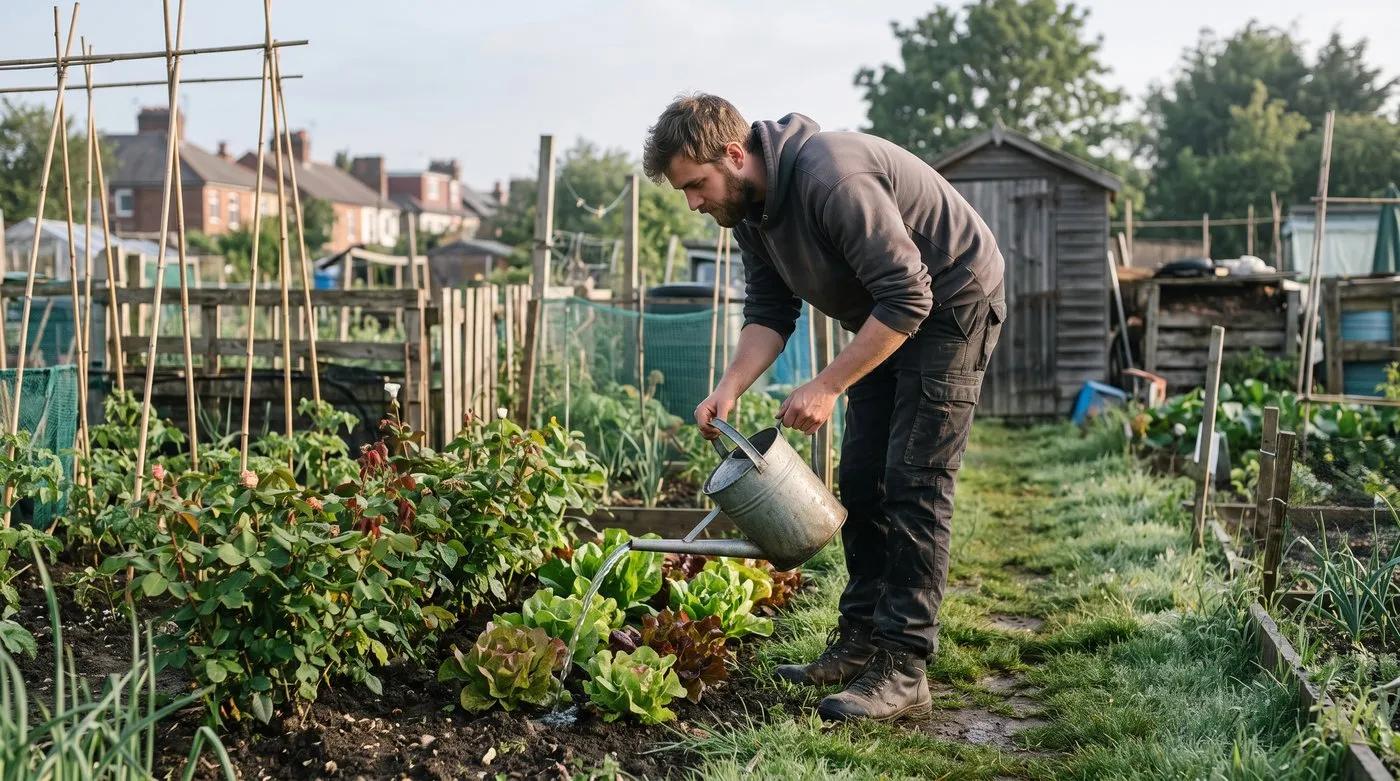
Water the soil, not the leaves, and do it in the morning. Any splashes dry off as the day warms up.
Neglected hygiene
Fallen leaves, dead stems and old prunings are where diseases hide over winter. Just a few infected rose leaves left on the soil can start black spot off again in spring. Dirty secateurs can carry canker from cut to cut.
Clean your tools between plants, especially when cutting out diseased wood. Clear away old crops at the end of the season. Home compost heaps often don’t get hot enough to kill disease, so put diseased material in your council green waste.
Soil conditions
Soggy soil invites root rot and clubroot. Heavy clay is most at risk. Dig in well-rotted manure or garden compost each year, and use raised beds on clay. Lime brassica beds if the soil is acid.
 Raking up leaves, cleaning tools and spacing plants well all help keep disease away.
Month-by-month disease calendar for UK gardens
Timings are for the Midlands. Northern gardens run a couple of weeks later, southern ones a week or two earlier.
| Month | Watch for | What to do |
|---|---|---|
| January | Very little | Order resistant varieties for spring |
| February | Bacterial canker | Check cherries and plums for oozing gum |
| March | Scab | Clear any fallen leaves left under fruit trees. Check for canker |
| April | Black spot, downy mildew | Keep an eye on roses and lettuce. Pick off spotty leaves early |
| May | Powdery mildew, rust | Check roses, peas and gooseberries weekly |
| June | Blight | Sign up for Blightwatch alerts. Remove any blighted leaves at once |
| July | Blight, grey mould on strawberries | Remove lower tomato leaves. Pick strawberries promptly. Open greenhouse vents |
| August | Most diseases at their peak | Remove badly hit plants. Water at the base only |
| September | Grey mould, leek rust | Thin autumn lettuce. Check leeks. Keep the greenhouse aired |
| October | Honey fungus toadstools | Note where they appear. Remove dead stumps |
| November | Fallen leaves | Rake up all fallen leaves under roses and fruit trees |
| December | Quiet time | Clean greenhouse glass, staging and tools |
Common mistakes when dealing with plant diseases
Spraying after symptoms appear and expecting a cure
Most garden fungicides prevent disease rather than cure it. Once you see spots, the disease is already inside the leaf. A spray then only protects new growth. Focus on prevention instead.
Putting diseased material on a cool compost heap
Many diseases survive in a cool heap, so you end up spreading them round the garden with your compost. Put diseased material in council green waste instead.
Watering in the evening
Evening watering leaves leaves wet all night, which is perfect for black spot and downy mildew. Water in the morning so splashes dry off as the day warms.
Ignoring resistant varieties
There are plenty of disease-resistant plants now. ‘Sarpo Mira’ potatoes shrug off blight, and ‘Discovery’ apples cope well with scab. Growing fussy varieties means more disease. The RHS Plant Finder is handy for checking resistance before you buy.
Failing to rotate crops
Growing brassicas in the same bed every year lets clubroot build up. Growing tomatoes in the same greenhouse border every year invites root diseases. Move veg families round on at least a four-year cycle. In the greenhouse, use fresh grow bags each year.
For crop-by-crop help, read our vegetable pests and diseases guide.
Frequently asked questions
What is the most common plant disease in UK gardens?
Powdery mildew is the most common. It shows up in almost every garden at some point as a white, dusty coating on leaves. It loves warm days and dry roots. Roses, courgettes, peas and apple trees get it most.
Can diseased plants infect other plants in the garden?
Yes, most diseases spread from plant to plant. Spores travel on the wind, in rain splash, and on tools and hands. Clean your secateurs between plants, especially when cutting out diseased wood.
Should I remove diseased leaves from plants?
Yes, take them off as soon as you see them. It slows the spread to healthy leaves. Cut back to clean growth, and put diseased bits in council green waste rather than a cool compost heap. Don’t leave them lying on the soil.
Are copper fungicides safe for organic gardening?
They’re no longer allowed for home gardeners in the UK. That includes Bordeaux mixture, so they’re not an option, organic or otherwise. Rely on tidiness, cutting out infection, resistant varieties and good airflow. If you use any fungicide, check it’s approved for home garden use.
Why do my tomatoes get blight every year?
Blight often comes from potatoes. Missed potatoes that sprout again can carry it to nearby tomatoes. Grow tomatoes in a greenhouse or polytunnel if you can, space them 60cm apart and remove the leaves below the first truss.
What causes white powder on plant leaves?
That’s powdery mildew. It likes warm days and plants that are dry at the roots. Improve the airflow, keep plants watered at the base and remove the worst leaves. If you need a spray, use one approved for home use against powdery mildew. Home-made milk or bicarbonate sprays aren’t allowed.
When should I spray fruit trees to prevent disease?
Usually you don’t need to. Copper sprays used to be standard, but they’re no longer allowed for home gardeners. Rake up fallen leaves, remove shrivelled old fruit, cut out cankers, open up the tree and grow resistant varieties. Check any fungicide is approved for home use on fruit trees.
Our team produces practical UK gardening guidance from source research, contributor records and established horticultural practice. Editorial standards are overseen by Matt W.


