
Key takeaways
- Damp, still air under plastic is behind most polytunnel tomato diseases
- Leaf mould shows as yellow blotches on top of the leaf and brown fuzz underneath
- Grey mould gets in through wounds and dead leaves after cool, damp nights
- Pale rings on green fruit are ghost spot, a warning that the air is too damp
- Open doors and vents daily, water the soil not the leaves, and strip the lower leaves
- Grow a leaf-mould-resistant variety such as 'Shirley' where you can
Most tomato diseases in polytunnels come down to one thing: damp, still air. Warm, moist air under plastic is perfect for fungal diseases. So the fix is mostly about opening up, watering carefully and keeping plants airy.
This guide helps you spot the diseases that thrive under cover, and shows the simple daily habits that keep them away. For outdoor tomato problems, see the common tomato diseases guide.
Why polytunnel tomatoes get diseases
A polytunnel traps warmth and moisture, which is why tomatoes crop so well in one. The catch is that fungal spores love the same damp air.
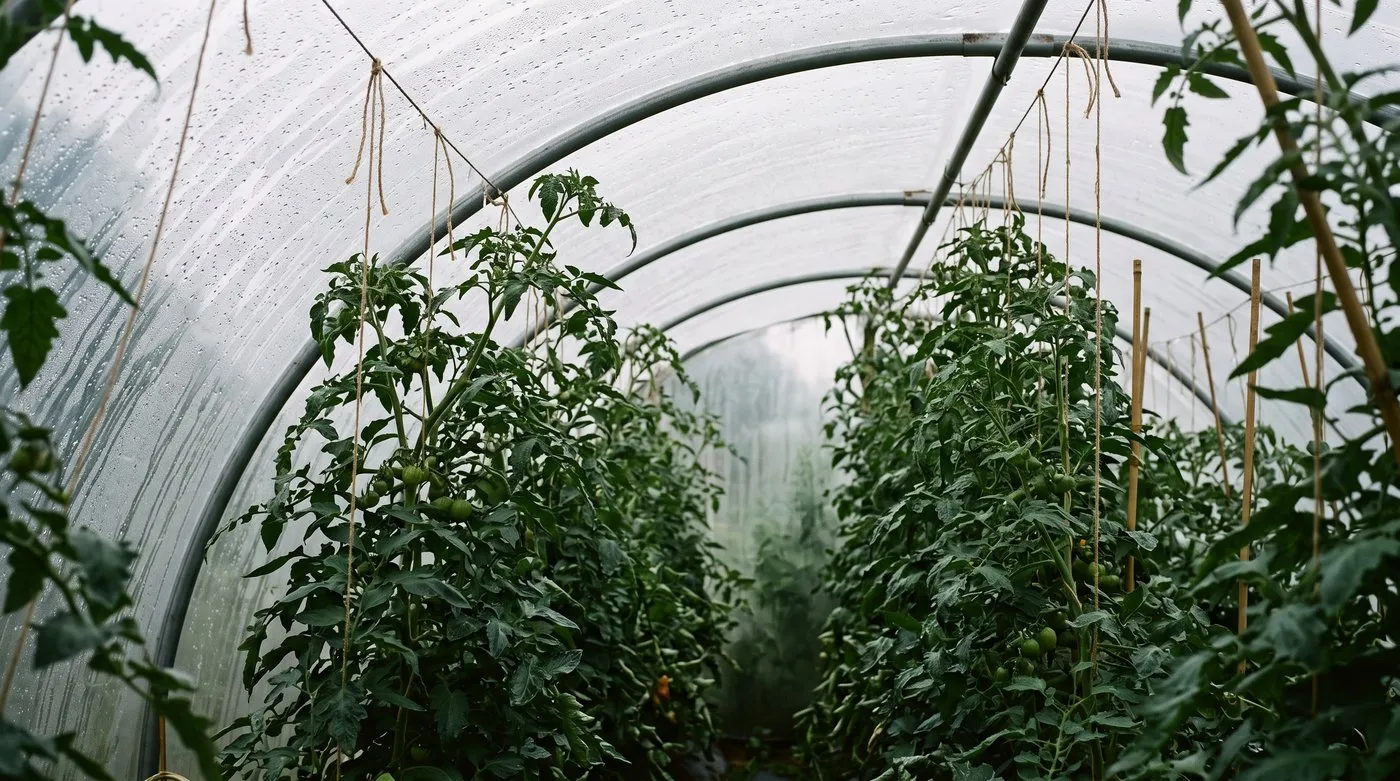
Overnight condensation drips onto the leaves and keeps them wet. Opening up first thing lets them dry.
On cool nights, moisture in the air settles on the cold plastic and drips onto the leaves. With no wind under cover, the leaves stay wet for hours, and that is when spores get going. Outdoors, wind dries the leaves and blows spores away.
So rather than fighting six separate diseases, you’re really managing one problem: damp, stagnant air. Lower the humidity and keep air moving, and most diseases never take hold. The greenhouse ventilation guide covers this in more detail, and the same rules apply to polytunnels.
How to identify polytunnel tomato diseases
Look at where the problem is and what it looks like up close. This table matches what you see to the likely cause.
| What you see | Likely cause | Where it starts |
|---|---|---|
| Yellow blotches on top, brown fuzz underneath | Leaf mould | Lowest leaves, June-July |
| Grey-brown fuzzy mould on stems, leaves or fruit | Grey mould (botrytis) | Wounds, dead leaves, old flowers |
| Pale rings on green fruit | Ghost spot | Green fruit skin |
| Dark, sunken, leathery patch on the fruit base | Blossom end rot | Bottom of the fruit |
| Brown patches spreading fast in wet weather | Blight | Leaves, then stems and fruit |
| White powdery coating on leaves | Powdery mildew | Upper leaf surface |
Tomato leaf mould: the classic polytunnel disease
Leaf mould is the disease you see under cover and rarely outdoors. It starts as pale yellow blotches on the top of the lowest, oldest leaves, usually in June or July. Turn the leaf over and you’ll find velvety olive-brown fuzz underneath each blotch.
In humid air it climbs the plant. Leaves yellow, curl and die, and a bad attack strips enough foliage to cut your crop. The spores spread on air, hands and clothes, and survive the winter on plant debris and the tunnel frame.
There is no fungicide for home gardeners to use against leaf mould, so prevention is everything:
- Pick off and bin affected lower leaves as soon as you see them. Don’t compost them.
- Keep doors and vents open to lower the humidity.
- Clear all plant debris in autumn and wash down the frame over winter.
- Grow a resistant variety. The RHS leaf mould advice has more detail.
The best greenhouse tomato varieties guide suggests tomatoes that suit growing under cover.

Turn the leaf over to be sure. Leaf mould leaves a velvety olive-brown fuzz under each yellow blotch.
Grey mould and ghost spot
Grey mould (botrytis) shows up after cool, humid nights. It grows as a dusty grey-brown fuzz on stems, dead leaves, old flowers and soft fruit. It loves a fresh wound, so the cut left when you remove a sideshoot or leaf is a common way in.
Ghost spot is the same fungus having a go at green fruit and failing. It leaves faint pale rings on the skin. The fruit is still fine to eat, but the rings are a warning that the air is damp enough for grey mould. Open up the tunnel more.

Pale rings like these are ghost spot. The fruit is fine to eat, but it’s a sign to ventilate more.
To deal with both:
- Cut out mouldy parts on a dry day and put them in the bin.
- Pinch out sideshoots and remove leaves on a dry morning, so the wounds dry before night. The pinching out sideshoots guide shows where to snap them.
- Clear dead leaves, old flowers and fallen fruit as you go.

Grey mould often starts at a leaf scar left on a damp day, then spreads into the stem.
Blossom end rot is a watering problem
Blossom end rot isn’t a disease, so there is nothing to catch or spray. The bottom of the fruit turns dark, sunken and leathery. It happens when uneven watering stops calcium reaching the growing fruit.
Polytunnels make it more likely, because compost and grow bags dry out fast in the heat. Water little and often so the compost stays evenly moist. The blossom end rot guide covers how to prevent it.

Blossom end rot is down to uneven watering. Steady watering stops it on fruit that forms later.
What about blight in a polytunnel?
Blight is less common under cover, because the leaves stay drier than outdoors. It can still blow in during warm, wet spells, especially if doors are open in wet weather. Brown patches that spread fast across leaves and stems, then brown, firm rot on the fruit, are the signs. Remove affected plants promptly. The tomato blight guide explains what to do and which varieties resist it.
Daily polytunnel habits that prevent disease
Simple daily habits prevent far more disease than any treatment can cure. Damp builds up overnight, so make these routine:
- Open up every day. Open doors and vents each morning. Leave them open on mild nights. An opening at each end pulls air right through.
- Water the soil, not the leaves. Water in the morning so any splashes dry by midday.
- Strip the lower leaves. Once plants are established and the first fruit is forming, remove leaves below the lowest truss. Keep taking off old lower leaves as the plant grows.
- Give them space. Plant 45-60cm apart so air can move between the stems.
- Keep it tidy. Clear dead leaves and fallen fruit, and remove all plant debris at the end of the season.
- Choose resistant varieties. A leaf-mould-resistant tomato removes the most likely problem.

Taking off the lower leaves lets air reach the base of the plant, where damp hangs around longest.
Common mistakes with polytunnel tomatoes
- Keeping the doors shut to keep it warm. In summer the damp does more harm than a little extra warmth does good.
- Watering the leaves in the evening. Wet leaves overnight are an open invitation to leaf mould and grey mould.
- Pinching out on a damp day. Fresh wounds that stay wet are an easy way in for grey mould.
- Planting too close. Crowded plants trap damp air between them.
- Leaving debris over winter. Spores survive on old leaves and the frame, ready for next year.
Polytunnel tomato disease calendar
| Month | What to do |
|---|---|
| March-April | Wash down the frame and plastic. Sow resistant varieties |
| May | Plant out 45-60cm apart. Start opening doors on warm days |
| June | Watch the lowest leaves for leaf mould. Strip leaves below the first truss |
| July | Doors and vents open daily, and on mild nights. Water in the morning |
| August | Keep removing old lower leaves. Watch for grey mould after cool nights |
| September | Clear fallen fruit and dead leaves. Watch for blight in wet spells |
| October | Remove and bin all plants and debris |
| November-February | Clean the frame and staging ready for spring |
Frequently asked questions
What is the most common tomato disease in a polytunnel?
Leaf mould is the most common one under cover. It loves humid, still air and is rarely seen outdoors. Look for pale yellow blotches on top of the lowest leaves and olive-brown fuzz underneath, usually from June or July.
How do I stop tomato diseases in my polytunnel?
Lower the humidity and keep the air moving. Open the doors and vents every day, water the soil in the morning, strip the lower leaves and space plants well. Resistant varieties help too.
Why do my polytunnel tomatoes have grey fuzzy mould?
That is grey mould, also called botrytis. It grows on damp, dying tissue and wounds after cool, humid nights. Cut out affected parts on a dry day, bin them and open up the tunnel more.
Is blossom end rot a disease?
No, it is a watering problem, not a disease. Uneven watering stops calcium reaching the fruit, so the base turns dark and leathery. Steady, regular watering is the fix, and no spray will help.
Which tomato varieties resist polytunnel diseases?
Look for leaf mould resistance on the seed packet, such as ‘Shirley’. For blight, ‘Crimson Crush’ and ‘Mountain Magic’ have good resistance. No variety replaces good ventilation, though.
Can I spray for tomato leaf mould?
There is no fungicide for home gardeners to use against leaf mould. Control it with ventilation, removing affected leaves, a good clean-up in autumn and resistant varieties.
For more tunnel jobs through the year, see the polytunnel calendar, or browse the problems hub for other plant troubles. If your plants are healthy but the leaves are rolling up, read our guide to tomato leaves curling next.
Our team produces practical UK gardening guidance from source research, contributor records and established horticultural practice. Editorial standards are overseen by Matt W.


