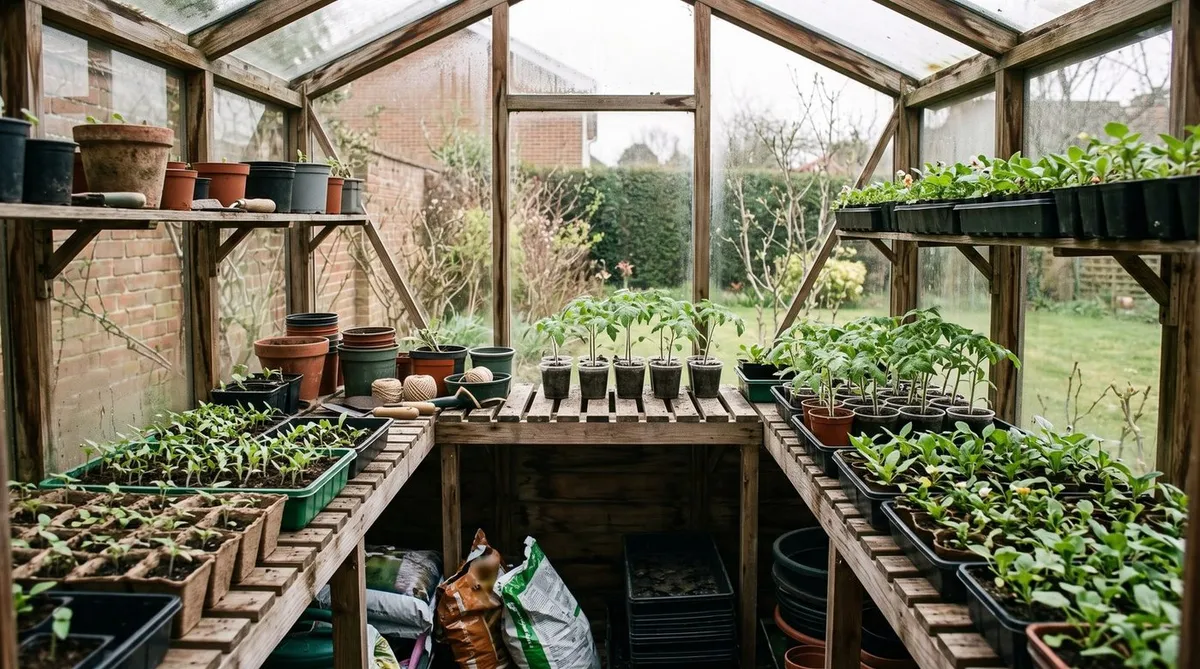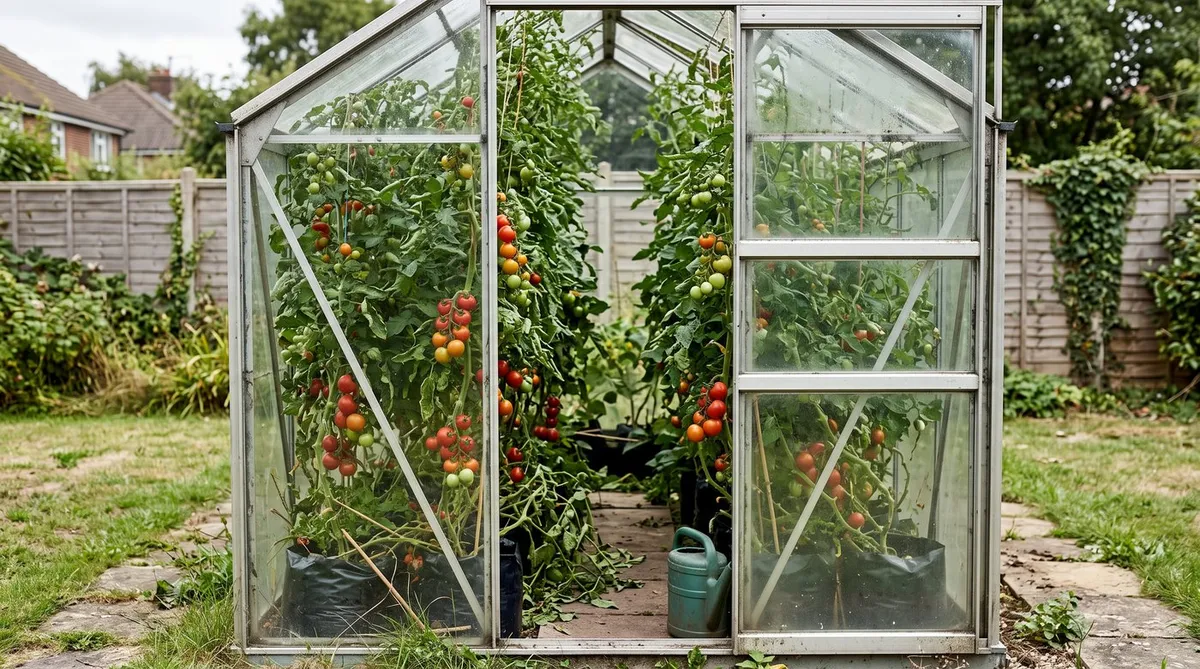
Key takeaways
- Sungold is the sweet orange cherry most growers rave about, and it thrives under glass
- Shirley is a reliable medium tomato for unheated greenhouses, with good disease resistance
- Grow cordon tomatoes, which climb a single stem and make the most of the space
- Beefsteaks such as Marmande need a long, warm season, so they ripen later
- Open vents on warm days, because heat above about 30°C stops fruit setting
- Feed weekly with a high-potash tomato feed once the first truss has set
The best greenhouse tomatoes for UK growers are Sungold and Gardener’s Delight for sweet cherries, Shirley for a reliable everyday crop, Rosada for little plum fruit, and Marmande for big slicing tomatoes. A greenhouse gives you a longer season and keeps the rain off, which helps fruit ripen and keeps blight at bay.
This guide helps you choose varieties for growing under glass, whether your greenhouse is heated or not. If you’re growing outside instead, see our guide to blight-resistant tomatoes for outdoor growing. New to tomatoes? Our beginner’s tomato guide covers sowing and care.
Cordon or bush: which suits a greenhouse?
Cordon tomatoes are the best choice under glass. They grow up a single stem, usually 1.5-2m tall, tied to a string or cane. You pinch out the side shoots as they appear, so each plant takes up little floor space.
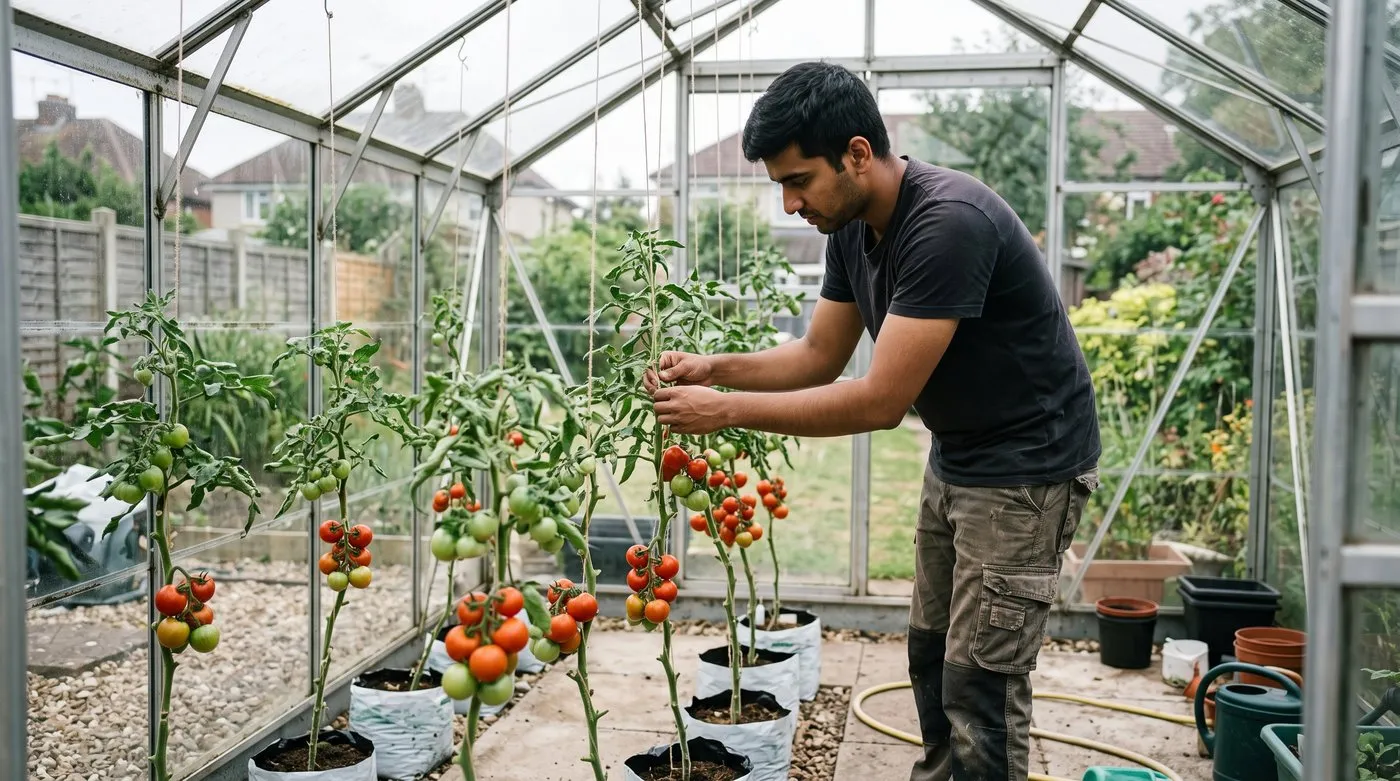
Cordons climb a single string or cane, so you can fit a neat row of plants along each side of a small greenhouse.
Bush tomatoes sprawl outwards. They’re better in pots, hanging baskets and outdoor beds. Every variety below is a cordon.
Cordons need a little more attention: tying in, side-shooting each week and stopping the top in late summer. Our guide to pinching out tomato side shoots shows how.
Choosing a greenhouse mainly for tomatoes? Tall eaves give cordons room to climb. The Access Double Tomato Greenhouse is a compact 4x4ft model built for them, and a Vitavia Venus 5000 8x6 holds 8-10 plants.
The best cherry tomatoes for a greenhouse
Sungold
Sungold is the sweet orange cherry that many growers think is the best-tasting tomato of all. It crops heavily from midsummer to autumn. It’s vigorous, so keep on top of side shoots. The fruit can split if watering is uneven, so water little and often.
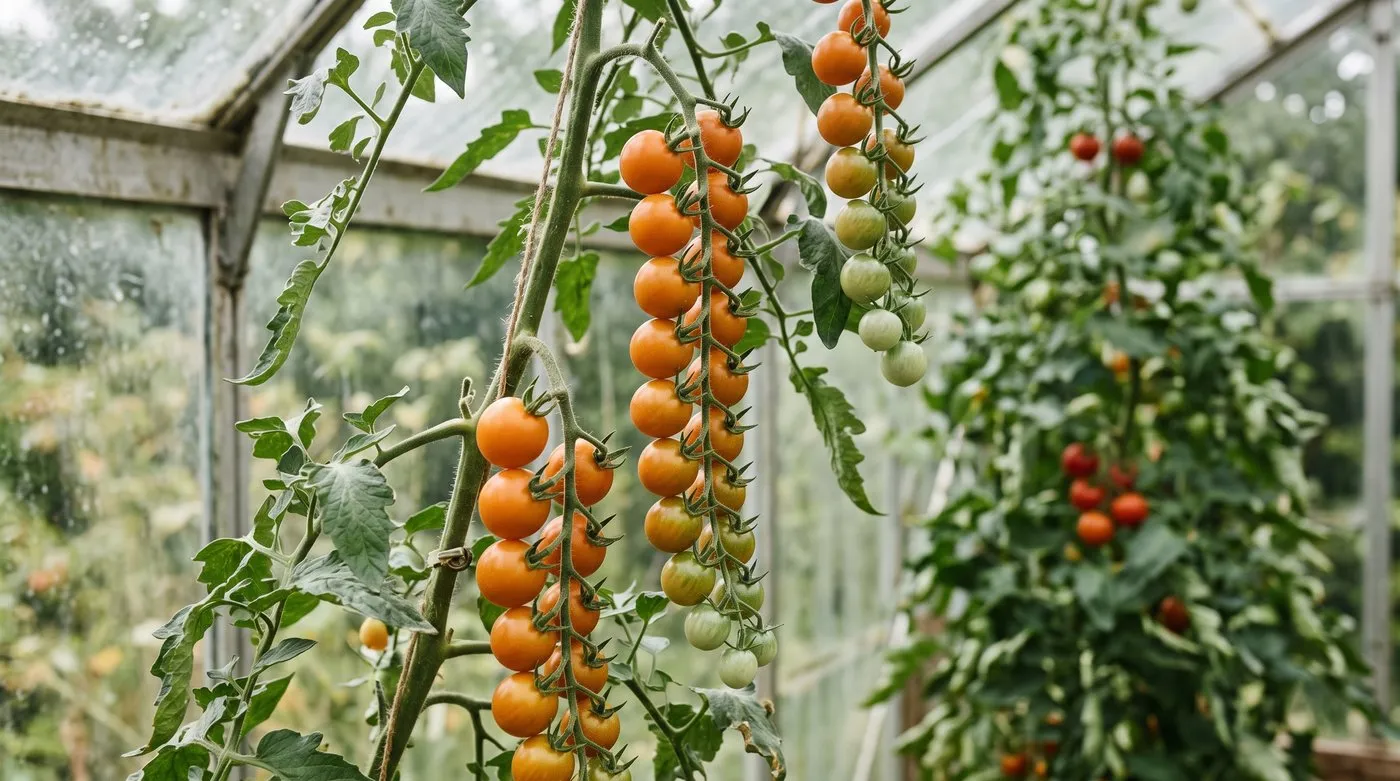
Sungold’s orange cherries are famously sweet. Pick them as soon as they turn deep orange, before they split.
Gardener’s Delight
Gardener’s Delight is a much-loved red cherry with a classic sweet and tangy flavour. It’s reliable, crops over a long season and copes well in an unheated greenhouse.
Rosada
Rosada gives small, plum-shaped red fruit with a sweet flavour and firm flesh. It’s lovely in salads and for roasting whole.
The best medium tomatoes for a greenhouse
Shirley
Shirley is the reliable choice for unheated greenhouses. It was bred for growing under glass and resists several common greenhouse diseases, including leaf mould. It gives medium-sized red fruit with a good, balanced flavour. If you only grow one variety, this is a safe bet.
Ailsa Craig
Ailsa Craig is an old Scottish variety named after the island off the Ayrshire coast. It gives medium, round red fruit with a proper old-fashioned flavour. It’s a little less disease-resistant than Shirley, so keep the greenhouse airy.
Moneymaker
Moneymaker is a dependable classic with neat trusses of medium red fruit. The flavour is mild rather than exciting, but it crops reliably and forgives the odd mistake. Grow it alongside a cherry such as Sungold for contrast.
The best beefsteak tomatoes for a greenhouse
Marmande
Marmande is a French beefsteak with large, ribbed, meaty fruit, ideal for slicing. Beefsteaks need a long, warm season, so they ripen later than smaller tomatoes. Give Marmande the sunniest, warmest spot in the greenhouse.
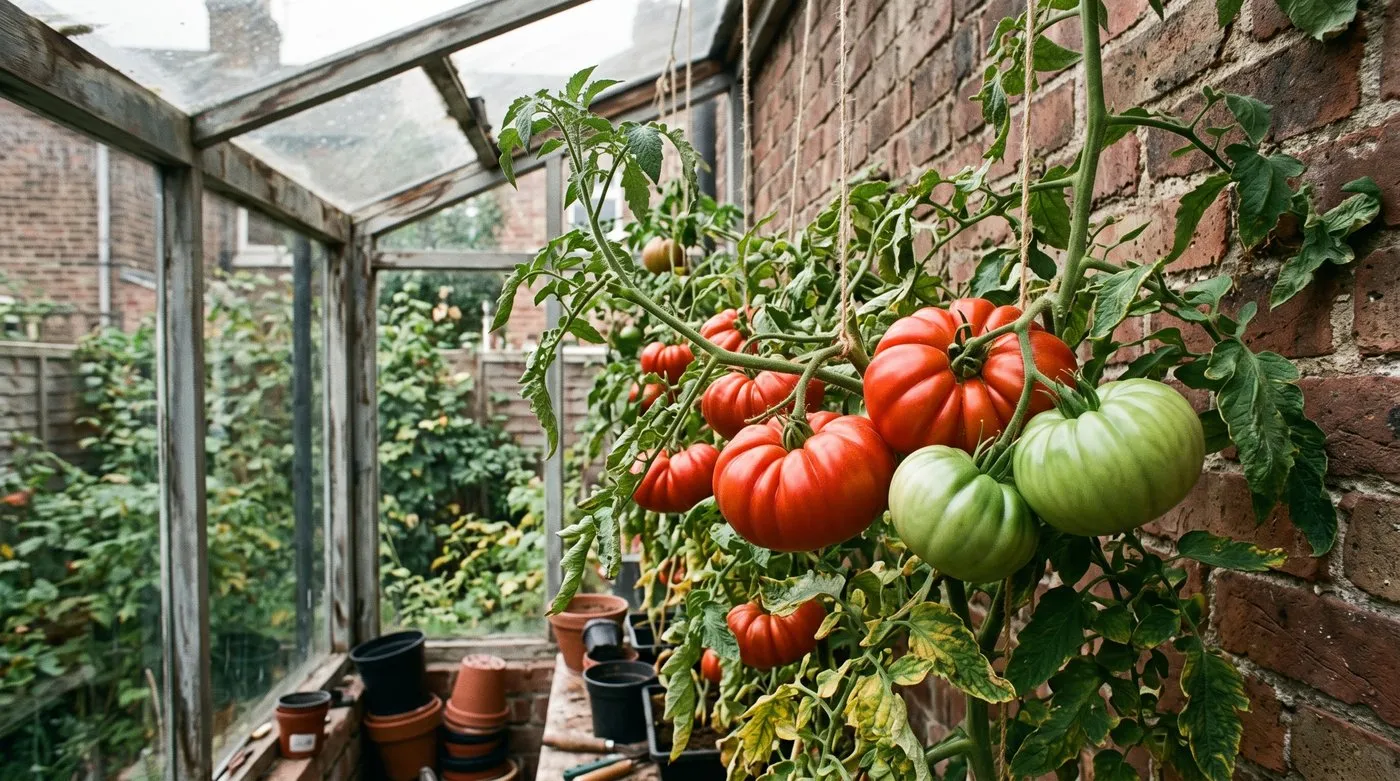
Beefsteaks need the warmest, sunniest spot. A lean-to against a house wall is ideal.
Costoluto Fiorentino
Costoluto Fiorentino is an Italian heritage beefsteak with big, deeply pleated fruit and a rich flavour that’s lovely in sauces. Like Marmande, it needs warmth and patience, and does best in a sunny greenhouse in a good summer.
Greenhouse tomato comparison table
| Variety | Type | Fruit | Good in an unheated greenhouse? | Best for |
|---|---|---|---|---|
| Sungold | Cherry | Orange, very sweet | Yes | Snacking |
| Gardener’s Delight | Cherry | Red, sweet and tangy | Yes | Reliable cherries |
| Rosada | Small plum | Red, sweet, firm | Yes | Salads, roasting |
| Shirley | Medium | Red, balanced | Yes, very reliable | Everyday crop |
| Ailsa Craig | Medium | Red, old-fashioned flavour | Yes | Flavour |
| Moneymaker | Medium | Red, mild | Yes | Beginners |
| Marmande | Beefsteak | Large, ribbed | Yes, but late | Slicing |
| Costoluto Fiorentino | Beefsteak | Large, pleated | Best in a warm year | Sauces |
Gardener’s tip: For an unheated greenhouse, grow Shirley for your main crop and Sungold for snacking. Add one beefsteak if you have a sunny spot. Three or four varieties is plenty for a small greenhouse.
Keeping the temperature right
Tomatoes like steady warmth. Above about 30°C, flowers fail to set and fruit can develop greenback, a hard green patch at the top. Cold nights slow everything down.
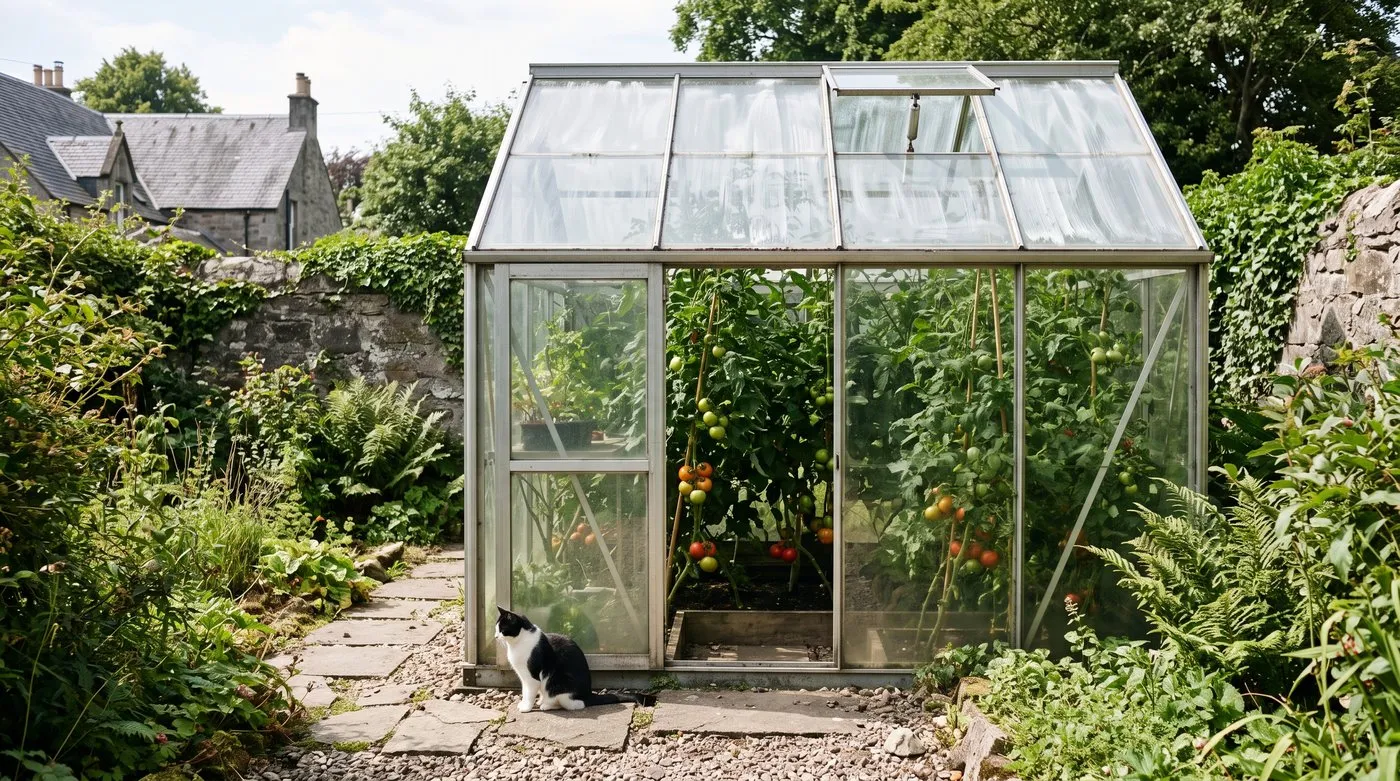
Open the vents and door on warm days. Heat above about 30°C stops tomato flowers setting fruit.
- Open vents and doors on warm days, and close them in the evening to hold some heat.
- Fit an automatic vent opener if you’re out during the day. A Palram automatic roof vent opener opens and closes on its own as the temperature changes.
- Shade the glass in a heatwave with shade paint or netting.
- Damp down the floor on hot days to cool the air.
Our guide to greenhouse ventilation and humidity covers vents and shading in more detail.
Feeding and watering under glass
Greenhouse tomatoes dry out fast, especially in grow bags and pots. Check them every day in summer, and twice a day in hot weather.
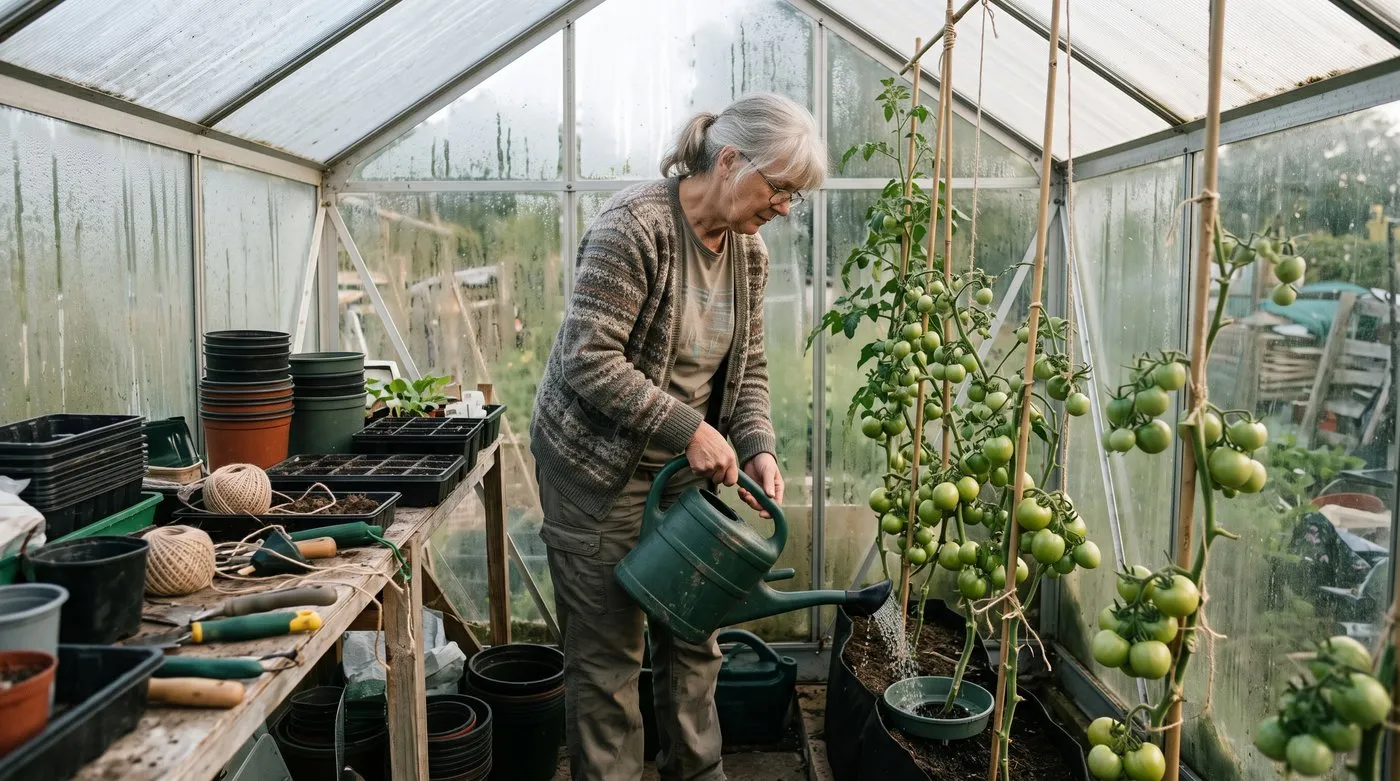
Water at the base, little and often. Steady watering stops split fruit and blossom end rot.
- Water at the base, ideally in the morning, so the leaves stay dry.
- Water steadily. Uneven watering causes split fruit and blossom end rot, the dark, sunken patches at the base of the fruit.
- Feed weekly with a high-potash tomato feed once the first truss has set, following the label. Don’t make it stronger, as that gives lots of leaf and fewer tomatoes.
Growing in grow bags? Our guide to growing in grow bags explains how to keep them evenly moist.
Common greenhouse tomato problems
Whitefly are tiny white insects that fly up when you brush the plants. Hang yellow sticky traps to spot them early. For a bigger problem, release a tiny parasitic wasp called Encarsia formosa, a biological control sold for greenhouses. Our greenhouse pest control guide covers whitefly, red spider mite and aphids.
Leaf mould shows as yellow patches on top of the leaves with a brown, furry coating underneath. It loves damp, still air. Ventilate well, space plants properly and remove affected leaves. Shirley has good resistance.
Greenback leaves a hard green or yellow ring around the stalk. It’s linked to too much heat and sun. Shade the glass and keep feeding with a high-potash feed.

A quick weekly check, with yellow sticky traps hung above the plants, helps you spot whitefly and leaf mould early.
Greenhouse tomato calendar
| Month | What to do |
|---|---|
| February to March | Sow seeds indoors in a propagator at about 18-21°C |
| March to April | Pot seedlings on into 9cm pots once they have true leaves |
| Mid-April | Plant into a heated greenhouse |
| Late April to May | Plant into an unheated greenhouse once nights stay above about 10°C |
| June to July | Tie in, side-shoot weekly, feed once the first truss sets |
| July to September | Pick ripe fruit regularly. Ventilate on hot days |
| Late August | Pinch out the tops so the plant ripens the fruit it has |
| September to October | Pick green fruit before it gets cold and ripen it indoors |
Common mistakes with greenhouse tomatoes
- Planting too early. Cold nights in an unheated house check growth. Wait until nights stay above about 10°C.
- Forgetting to ventilate. A shut greenhouse on a sunny day gets far too hot for fruit to set.
- Overcrowding. Plants packed together stay damp and get leaf mould. Give each 45-60cm.
- Uneven watering. It leads to split fruit and blossom end rot.
- Too many side shoots. Missed shoots turn a cordon into a jungle with smaller fruit.
For outdoor and greenhouse varieties side by side, read our guide to the best tomato varieties to grow in the UK, or explore more crops in the growing veg hub.
Frequently asked questions
What is the best tomato to grow in a UK greenhouse?
Shirley is a great all-rounder for UK greenhouses. It crops reliably in an unheated house and resists several common diseases. For flavour, add Sungold, a sweet orange cherry. Together they give you everyday tomatoes and snacking fruit.
Can I grow beefsteak tomatoes in an unheated greenhouse?
Yes, but they ripen late. Beefsteaks such as Marmande need a long, warm season. Sow early, plant in the warmest, sunniest spot and pick any green fruit before the first frosts to ripen indoors. In a cool summer, expect a smaller crop.
How many tomato plants fit in a 6x8 greenhouse?
Usually about 8-10 cordon plants. Space them 45-60cm apart along both sides, leaving a path down the middle. Crowding cuts airflow and invites disease. A standard grow bag is best with two plants.
Should I grow cordon or bush tomatoes in a greenhouse?
Cordon tomatoes are best. They grow up a single stem tied to a string or cane, so you fit more plants into the space. Bush types sprawl and suit pots, baskets and outdoor beds better.
When should I plant tomatoes in a greenhouse in the UK?
Plant into an unheated greenhouse in late April or May. Wait until nights inside stay above about 10°C. In a heated greenhouse you can plant from mid-April. Cold nights after planting check growth and delay the crop.
Why are my greenhouse tomatoes not turning red?
Usually because it’s too hot or too cool. Tomatoes ripen best in steady warmth, not scorching heat. Open vents and shade the glass in a heatwave. Late in the season, pick green fruit and ripen it indoors in a warm room.
Our team produces practical UK gardening guidance from source research, contributor records and established horticultural practice. Editorial standards are overseen by Matt W.