Key takeaways
- Blossom end rot is caused by uneven watering, not a lack of calcium in the soil
- Plants in pots and grow bags get it most, because they dry out fast
- Water pots and grow bags morning and evening in hot weather, and never skip a weekend
- Mulch plants in the ground to keep the soil evenly moist
- Cherry tomatoes rarely get it, while big plum and beefsteak types are most at risk
- Calcium sprays, lime and eggshells won't fix it
Blossom end rot is the dark, sunken patch that appears on the bottom of tomatoes, peppers and courgettes just as they start to swell. It’s really common in UK greenhouses, and the good news is it’s almost always preventable.
It isn’t a disease, so no spray will fix it. It’s caused by uneven watering, which stops calcium getting to the growing fruit. Get the watering steady and the problem usually disappears.
What causes blossom end rot in tomatoes?
The growing fruit needs calcium to build strong cells. When it doesn’t get enough, the bottom of the fruit (the end opposite the stalk) collapses and turns dark brown or black.
Here’s the key bit: it’s almost never because your soil lacks calcium. UK garden soils have plenty. The problem is getting that calcium into the fruit.
 A dark, sunken patch on the bottom of the fruit is the classic sign. Once you can see it, that fruit won’t recover.
Calcium travels up the plant in water, from the roots to the leaves. Leaves pull lots of water through, so they get most of the calcium. Fruits pull very little, so they lose out first.
When the compost dries out, the calcium supply to the fruit stops. The fast-growing cells at the bottom of the fruit go short and die. By the time you see the patch, the damage happened about a week earlier.
Why uneven watering is the main trigger
The risky time is when the first fruits are 2-3cm across and growing fast. Even one day of dry compost then can cause blossom end rot that shows up a week later.
Common watering slip-ups:
- Weekend gaps: watering every weekday, then missing Saturday and Sunday
- Feast and famine: letting compost dry out, then drowning it
- Morning only: one big drink at breakfast that’s gone by mid-afternoon in a hot greenhouse
- Trusting the rain: assuming outdoor plants get enough during a dry spell in June or July
Other things that make it worse
Watering is the main cause, but a few other things raise the risk:
| What | Why it matters |
|---|---|
| Too much nitrogen feed | Lots of leafy growth, and the leaves grab the calcium first |
| Damaged roots | The plant can’t take up as much water |
| Very acid soil | Calcium is harder for roots to take up |
| Feed building up in pots | Gets in the way of calcium uptake at the roots |
| Very hot weather | Leaves pull even more water and calcium away from the fruit |
| Fruit growing very fast | The fruit needs more calcium than it can get |
Which crops and varieties are most at risk?
Big, fast-growing fruit are hit hardest. Knowing which plants are most likely to suffer helps you focus your efforts.
Risk by crop
| Crop | Risk | Notes |
|---|---|---|
| Tomatoes (plum and beefsteak) | Very high | Big fruit, first trusses worst |
| Tomatoes (cherry) | Very low | Small fruit cope well |
| Peppers | High | Thick-walled types worst |
| Courgettes | Medium | Usually just the first few fruits |
| Aubergines | Medium | Mostly in pots |
| Squash and pumpkins | Low | Growing outside helps |
| Cucumbers | Rare | Hardly ever affected |
Tomatoes in pots and grow bags
 Calcium needs a steady flow of water from the roots to reach the fruit. Any dry spell cuts it off.
Plants in pots and grow bags get blossom end rot far more often than plants in the ground. There’s less compost, so it dries out quickly, and feed builds up too. If you grow in containers, your watering needs to be extra steady. Our container vegetable guide has more on keeping pots evenly moist.
How to prevent blossom end rot
Prevention is all about keeping the compost or soil evenly moist, not overdoing the nitrogen and choosing the right varieties.
Step 1: water on a steady routine
This one change stops most cases. Aim for compost that’s always moist, never soggy and never dry.
Greenhouse tomatoes in grow bags or pots:
- In summer, water morning and evening, about 1 litre per plant each time
- In a heatwave, add a small top-up at midday
- A drip watering kit with a timer makes this easy and covers you when you’re away
Tomatoes and courgettes in the ground:
- Water deeply every couple of days rather than a little every day
- Give each plant 2-3 litres each time
- Mulch with 5-8cm of garden compost to keep the soil evenly moist
- Never let the soil crack between waterings
Step 2: mulch to keep moisture steady
A 5-8cm layer of mulch round the base keeps the soil cooler and stops it drying out so fast. Garden compost, well-rotted manure or straw all work. Put it down in late May or early June, once the soil has warmed up. Leave a small gap around the stem.
Step 3: get the feeding right
Too much nitrogen gives lots of leaves, and the leaves grab the calcium. Once the first truss sets fruit, switch to a high-potash tomato feed and follow the label. Steady, regular feeding is better than big occasional doses.
Feeds high in ammonium can make things worse, while feeds containing calcium nitrate are a good choice for plants prone to the problem. Our guide to the best fertilisers for UK gardens explains the different types.
Step 4: choose the right varieties
If it keeps happening, try smaller tomatoes. Cherry types like ‘Sungold’, ‘Gardener’s Delight’ and ‘Sweet Million’ rarely get it. If you love big beefsteaks, grow them in a greenhouse border rather than a pot, where the extra soil keeps moisture steadier.
Variety choice matters as much as technique when growing tomatoes in the UK. The same goes for growing chilli peppers and growing aubergines, which both get blossom end rot in pots.
 A drip watering kit on a timer is the easiest way to keep compost evenly moist, even when you’re away.
What about calcium sprays and supplements?
You’ll see calcium leaf sprays sold for blossom end rot. Save your money: they don’t prevent or cure it.
Calcium sprayed onto leaves stays in the leaves. The fruit only gets calcium from the roots, carried up in water. So the fix is always steady watering.
What helps and what doesn’t:
| Treatment | Does it help? |
|---|---|
| Steady watering | Yes, this is the real fix |
| Mulching | Yes, it keeps moisture even |
| Calcium nitrate feed | Only on very acid, low-calcium soil |
| Calcium leaf sprays | No, it can’t reach the fruit |
| Eggshells in the planting hole | No, they take years to break down |
If you think your soil really is short of calcium, for example sandy, very acid soil, a simple soil test will tell you. In most UK gardens it shows plenty of calcium.
How to deal with blossom end rot on courgettes
Growing courgettes is usually easy, but the first few fruits of the season often get blossom end rot. Don’t panic, this is normal. The roots are still settling in. Later fruits are almost always fine once the roots spread.
The same rules apply: steady watering, a good mulch and no high-nitrogen feed once flowering starts. Courgettes in the ground rarely have ongoing trouble. Those in small pots are most at risk, so give them a big one.
Pick off affected fruits straight away. They won’t recover, and removing them lets the plant put its energy into healthy ones.
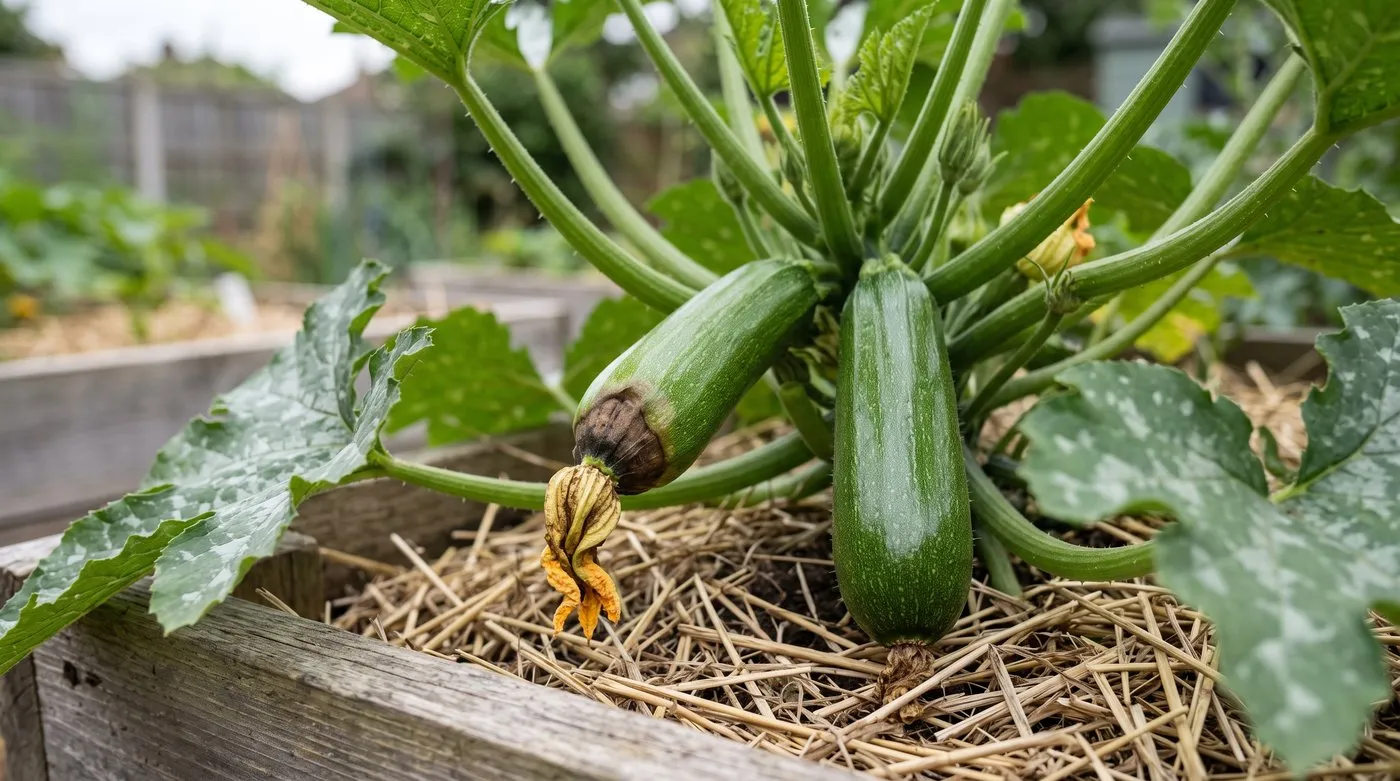
The first few courgettes often rot at the tip while the roots settle in. Pick them off and later fruits are usually fine.
Is blossom end rot different from tomato blight?
Yes, they’re completely different. Tomato blight is a disease that spreads fast and can finish off whole plants. Blossom end rot only affects individual fruits and doesn’t spread. Here’s how to tell them apart:
| Blossom end rot | Tomato blight | |
|---|---|---|
| Cause | Uneven watering | A disease |
| Where | Bottom of the fruit only | Leaves, stems and fruit |
| Looks like | Dark, dry, sunken patch on the bottom | Brown patches, white mould, plants collapsing |
| Spreads? | No | Yes, quickly between plants |
| Leaves affected? | No | Yes, they brown and collapse |
| What to do | Fix the watering | No cure, prevention only |
| Fruit edible? | Yes, cut away the patch | No, throw it away |
If the leaves and stems are browning and the plant is going downhill fast, think blight rather than blossom end rot. The RHS blossom end rot page has photos to help you check.
Prevention calendar for UK growers
| Month | What to do |
|---|---|
| March to April | Set up drip watering before planting. Test the soil if you had problems last year. |
| May | Plant out tomatoes, peppers and courgettes. Start regular watering straight away for plants in pots. |
| Late May | Mulch once the soil has warmed up. |
| June | Watch the first fruits as they reach 2-3cm. Keep watering steady. |
| June to July | Switch to tomato feed once the first fruits set. |
| July to August | Keep watering steady. Add a midday top-up in heatwaves. |
| September | Water less as cropping slows down. |
Frequently asked questions
Can you eat tomatoes with blossom end rot?
Yes, they’re safe to eat. Cut away the dark patch at the bottom and use the rest. It’s just dead tissue, not a disease, so there’s nothing harmful in it.
Does blossom end rot spread to other plants?
No, it doesn’t spread. It’s caused by how a plant is watered, not by a disease. Plants in the same bed often get it together, simply because they’ve all been watered the same way.
Will adding lime fix blossom end rot?
Rarely, because most UK soils already have plenty of calcium. The trouble is getting it into the fruit, and that’s down to watering. Lime only helps on very acid soil, which a simple soil test kit will show.
Why do my tomatoes get blossom end rot every year?
It almost always comes down to the watering pattern. The usual culprit is swinging between dry compost and a big soaking. Check whether you skip weekends or rely on rain. A drip watering kit on a timer is an easy fix.
Do cherry tomatoes get blossom end rot?
Hardly ever. Their small fruit cope much better with ups and downs in watering than big tomatoes do.
Can foliar calcium sprays prevent blossom end rot?
No, sprays on the leaves don’t help. Calcium sprayed onto leaves stays in the leaves and can’t move into the fruit. The fruit only gets calcium from the roots, carried up in water. Steady watering is what fixes it.
When does blossom end rot appear on tomatoes?
Usually when the first fruits are 2-3cm across. For greenhouse tomatoes that’s often late June or early July. It starts as a small, damp-looking spot on the bottom of the fruit and darkens and spreads within a week.
Our team produces practical UK gardening guidance from source research, contributor records and established horticultural practice. Editorial standards are overseen by Matt W.