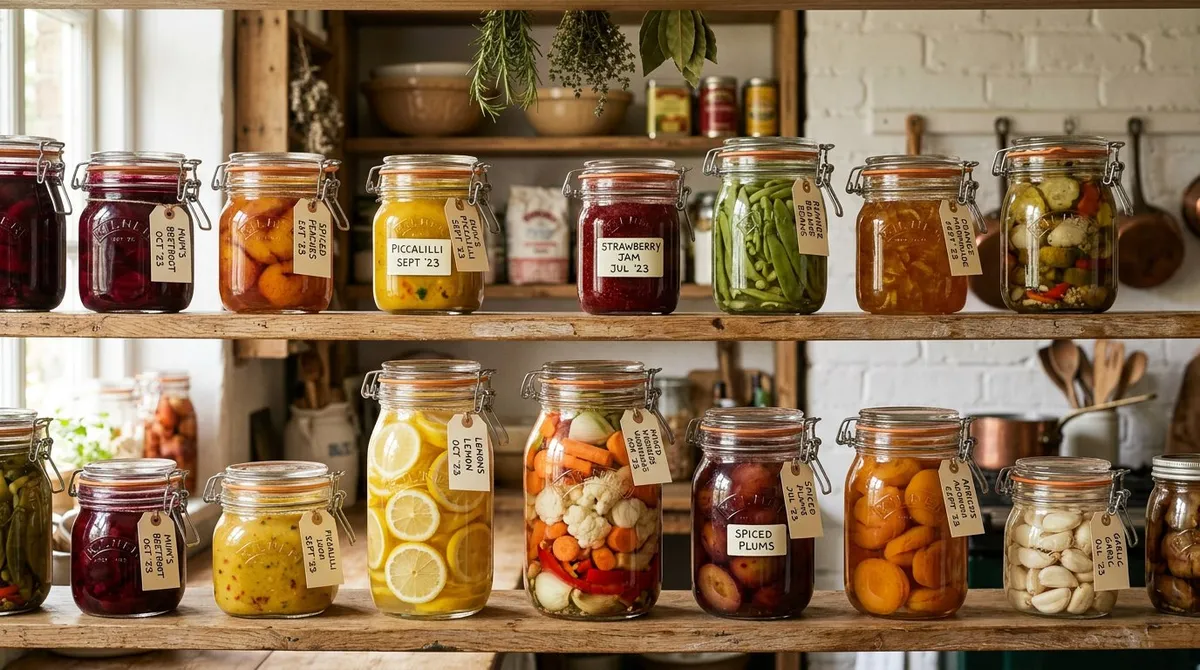
UK gardeners can preserve surplus fruit and vegetables using seven main methods: bottling in Kilner jars, dehydrating, making fruit leather, salting, oil preserving, sugar preserving, and vacuum packing. Water bath canning reaches 100C and suits high-acid foods like tomatoes, fruit, and pickles. Low-acid vegetables require pressure canning at 116C to prevent botulism. Properly bottled fruit lasts 12-18 months. Dehydrated produce stores for 6-12 months in airtight containers.
Key takeaways
- Water bath canning at 100C is safe for high-acid foods like fruit, tomatoes, and pickles
- Low-acid vegetables need pressure canning at 116C to destroy botulism spores
- Properly bottled fruit in Kilner jars lasts 12-18 months at room temperature
- Dehydrating at 55-60C removes 80-90% of moisture and stores produce for 6-12 months
- Fruit leather made from 500g of pureed fruit dries in 8-12 hours and keeps for 3 months
- Salt preserving uses 60-80g of salt per kilogram of vegetables and costs under ten pounds to start
preserving bottling dehydrating fruit leather food storage grow your own
Our team produces practical UK gardening guidance from source research, contributor records and established horticultural practice. Editorial standards are overseen by Matt W.