
Key takeaways
- Use 1kg fruit to 1kg granulated sugar for most jams
- Let the sugar dissolve fully before you turn up the heat
- Jam is ready at about 104.5C, or when it wrinkles on a cold saucer
- Blackcurrants and gooseberries set easily, strawberries need lemon juice
- Pour hot jam into hot, clean jars and use new lids
- If a jar goes mouldy, throw the whole jar away
Jam is one of the easiest ways to use up a glut. One afternoon turns a bowl of garden raspberries or blackcurrants into jars for the year. All you need is fruit, sugar, a big pan and a bit of patience.
Below you’ll find what to use, how to tell when it’s set, and simple recipes for six fruits. They work whether you have one strawberry patch or a whole fruit cage.
What you need to make jam
A big pan, some jars and a wooden spoon will get you going. A sugar thermometer is cheap and takes most of the guesswork out of knowing when it’s done.
Your kit list:
- A heavy-based preserving pan or big stainless steel pan (at least 6 litres)
- Sugar thermometer
- Long-handled wooden spoon
- Heatproof jug or ladle
- Jam jars with new lids (340g is the usual size)
- Jam funnel (handy but not essential)
- Three saucers in the freezer for the wrinkle test
Skip aluminium or unlined copper pans, as fruit acid reacts with them and spoils the taste. A wide pan beats a tall, narrow one. More surface means water boils off faster, so the jam sets sooner.
Reuse glass jars from shop-bought jam, but always buy new lids. Old lids rarely seal well.
Boiling jam is very hot and sticks to skin, so keep children and pets out of the kitchen and never leave the pan alone.
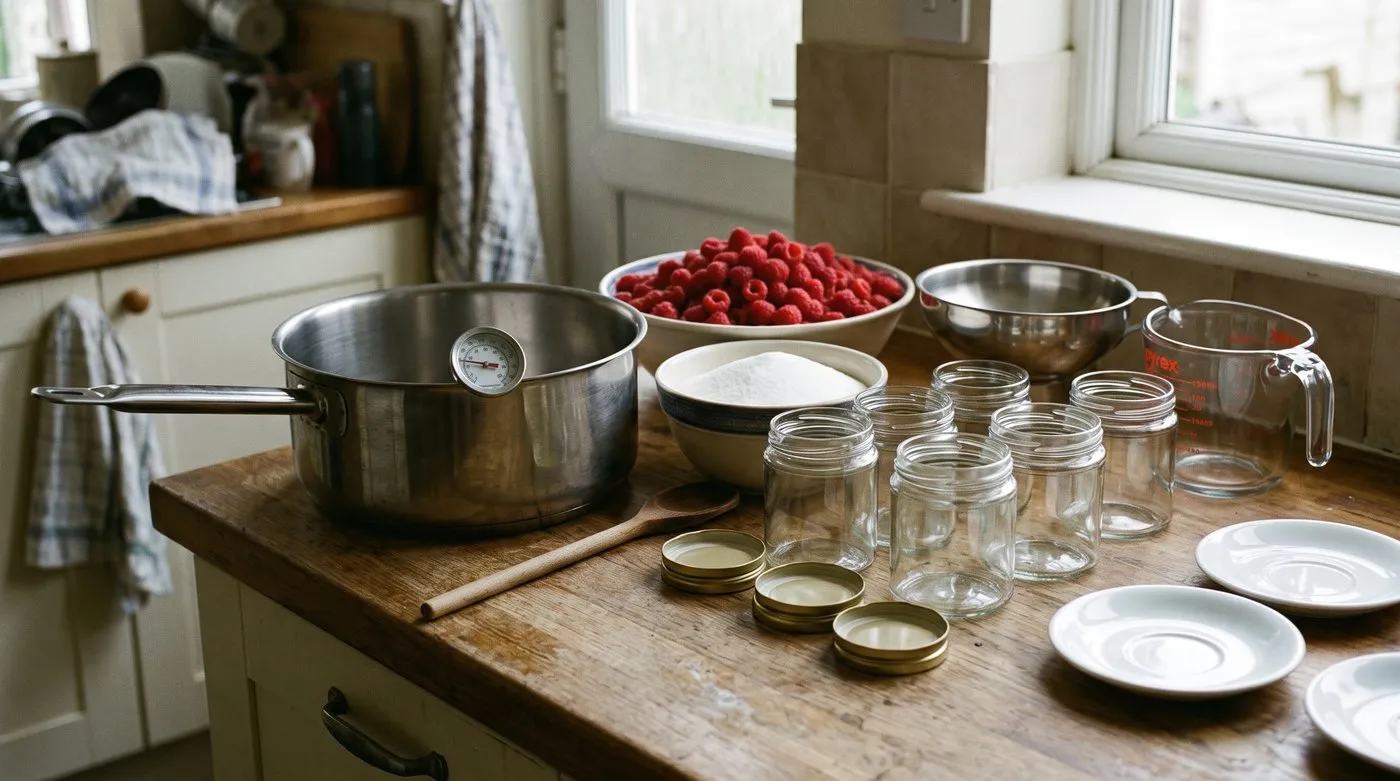
A wide pan is the key bit of kit. More surface means water boils off faster, so the jam sets sooner and keeps its colour.
Why some fruits set better than others
Jam sets thanks to pectin, a natural gel in fruit, helped along by the fruit’s acid. Some fruits have plenty of both. Others need a helping hand, which is why strawberry recipes always add lemon juice.
| Fruit | Sets on its own? | What to add |
|---|---|---|
| Blackcurrants | Easily | Nothing |
| Gooseberries | Easily | Nothing |
| Cooking apples | Easily | Nothing |
| Damsons | Easily | Nothing |
| Plums (Victoria) | Usually | Rarely anything |
| Raspberries | Usually | Juice of 1 lemon per kg |
| Blackberries | Needs help | 2 lemons per kg, or pectin powder |
| Strawberries | Needs help | 2 lemons per kg |
| Cherries | Needs help | 2 lemons per kg, or pectin powder |
| Rhubarb | Needs help | Mix with a fruit that sets easily |
Slightly under-ripe fruit sets better than very ripe fruit. Aim for about three-quarters ripe and a quarter just under. Save squishy, overripe fruit for sauces.
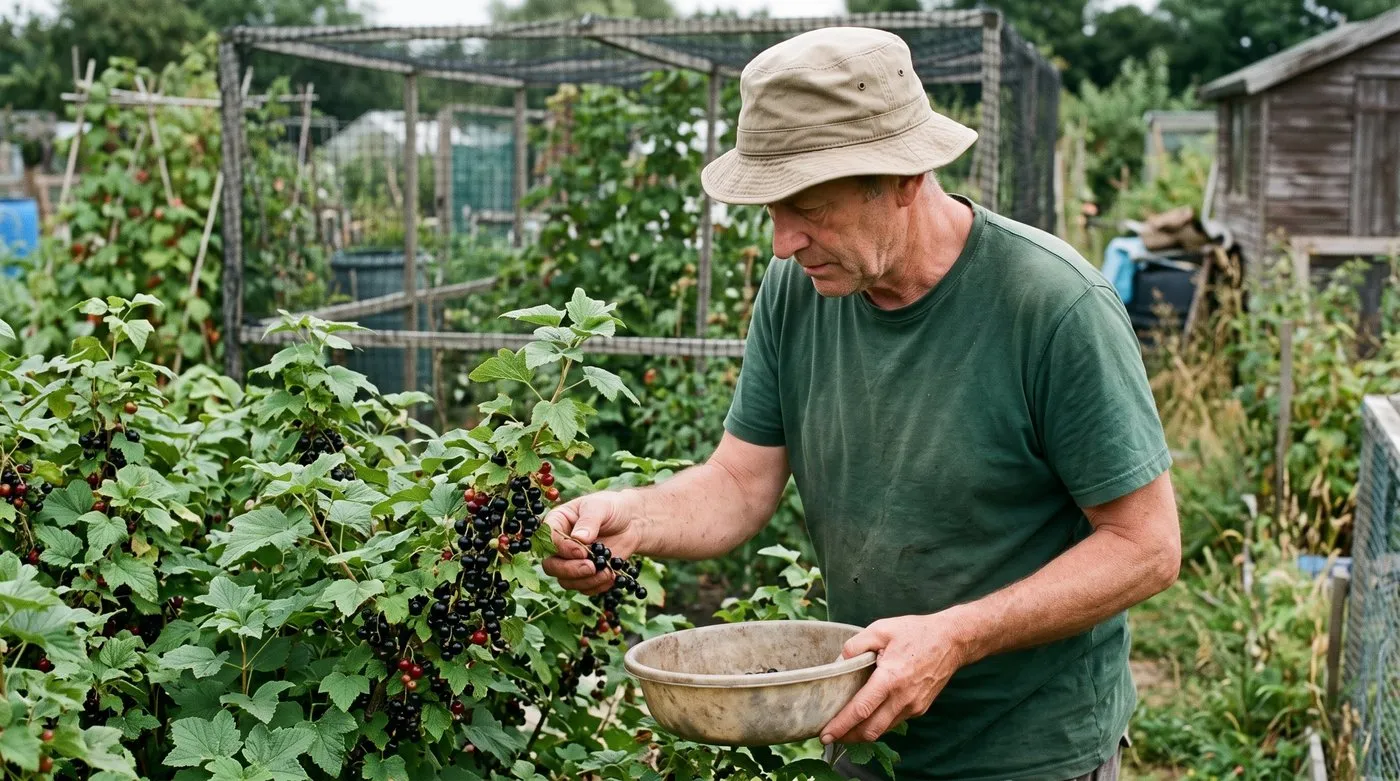
Blackcurrants are packed with pectin and set easily. Picking a few slightly under-ripe fruit with the ripe ones helps any jam set better.
How much sugar to use
Use 1kg of fruit to 1kg of granulated sugar. The sugar isn’t just there for sweetness. It helps the jam set and stops it spoiling in the cupboard.
Which sugar?
- Granulated sugar is cheap and works perfectly.
- Preserving sugar has bigger crystals, makes less scum and gives a slightly clearer jam. It costs more.
- Jam sugar has pectin added. Handy for strawberries if you’d rather skip the lemons.
Don’t just cut the sugar in a normal recipe. The 1:1 balance is what makes it set and keep.
Can you make jam with less sugar?
Yes, but it’s a different thing. Normal pectin won’t set it properly, so use a low-sugar pectin or a recipe written for less sugar. You’ll get a softer, fresher-tasting spread.
Low-sugar jam doesn’t keep like the real thing, so store it in the fridge or freezer. Make small batches and label them clearly.
A handy trick: warm the sugar first. Spread it on a baking tray in a 100C oven for 10 minutes. It dissolves faster and doesn’t cool the fruit down.
How to tell when jam is set
Jam is ready at about 104.5C. That’s when sugar, pectin and acid turn to a gel. There are two easy ways to check.
Using a sugar thermometer
Clip the thermometer to the side of the pan with the bulb in the jam, not touching the bottom. When it hits 104.5C, take the pan off the heat and double-check with a wrinkle test.
The wrinkle test (cold saucer method)
Pop three saucers in the freezer before you start. When you think the jam’s ready, take the pan off the heat. Drop a teaspoon of jam on a cold saucer and wait 30 seconds. Push the edge with your fingertip. If it wrinkles, it’s set. If it’s still runny, boil for another 2 minutes and test again.
Always take the pan off the heat while you test. Otherwise it keeps cooking and can turn tough and rubbery.
Handy tip: If your thermometer and the saucer disagree, test the thermometer in boiling water. It should read 100C. If it’s a degree or two out, adjust your target by the same amount.
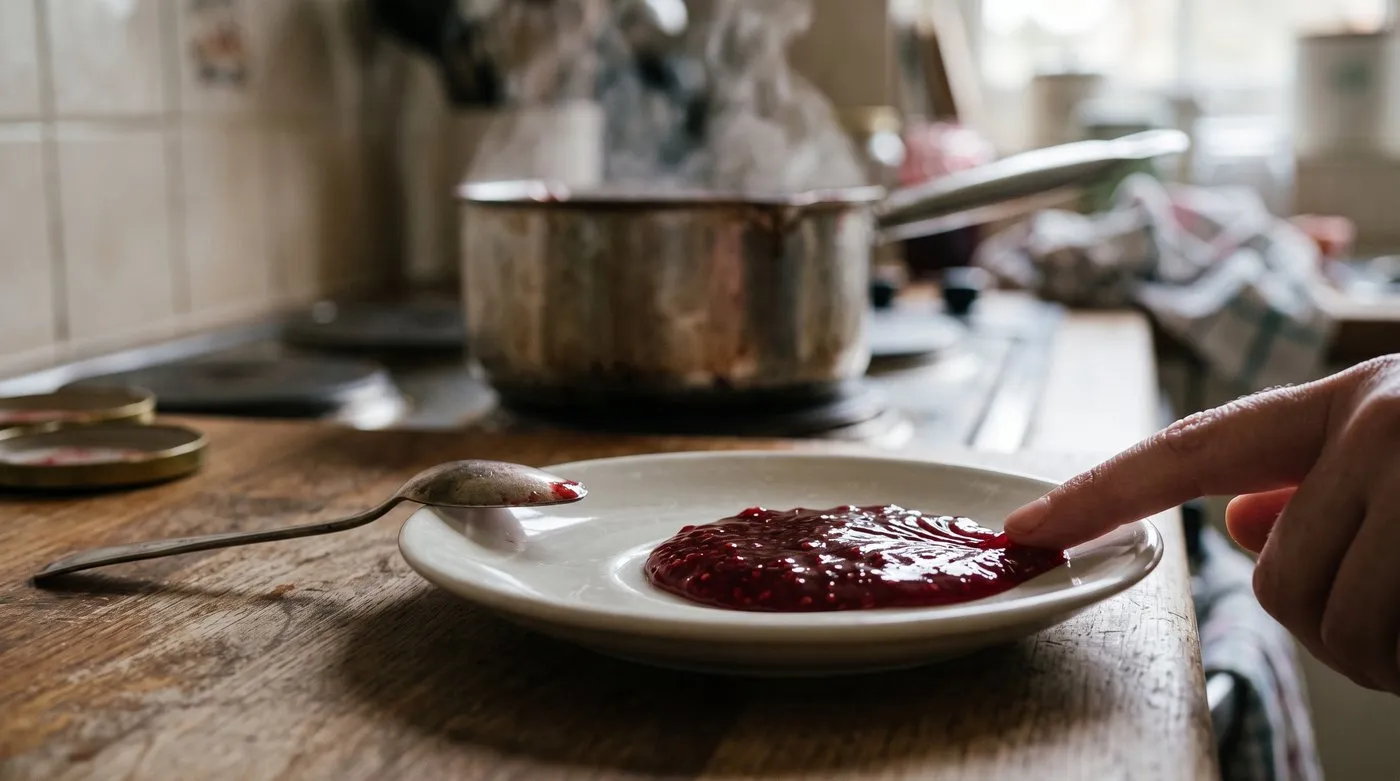
If the jam wrinkles when you push it, it’s set. Take the pan off the heat while you test so it doesn’t overcook.
How to get jars clean and ready
Wash the jars in hot soapy water, then heat them in a 140C oven for 15 minutes or boil them for 10 minutes. This kills the yeasts and moulds that make jam go off.
Oven method:
- Wash the jars in hot soapy water and rinse well.
- Stand them upside down on a clean baking tray.
- Heat the oven to 140C.
- Put the tray in for 15 minutes.
- Leave the jars in the warm oven until you’re ready to fill them.
- Boil the lids in a pan of water for 5 minutes.
Boiling method: Stand clean jars upright in a big pan, cover them with water and boil for 10 minutes. Leave them in the hot water until you fill them.
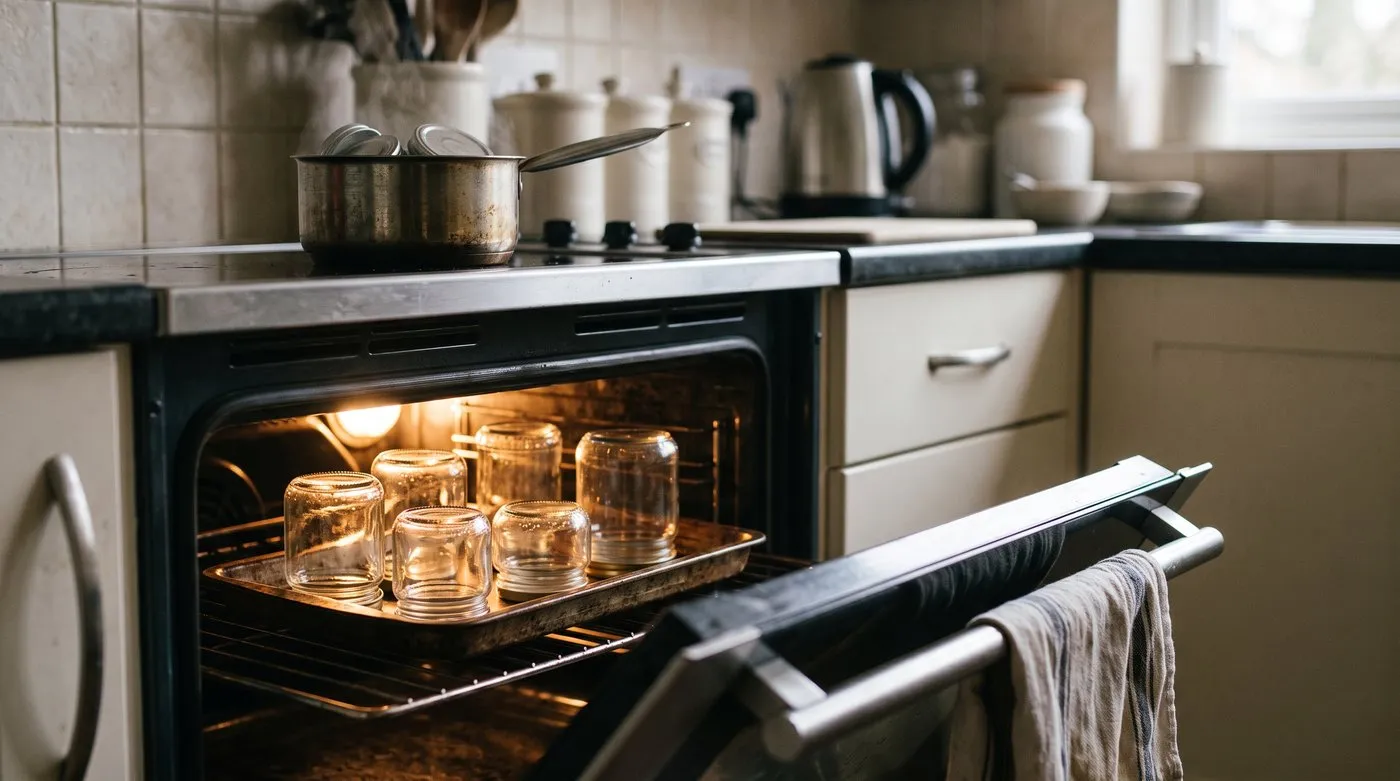
Heat clean jars in a 140C oven for 15 minutes and leave them in until you fill them. Warm jars won’t crack when hot jam goes in.
Can you sterilise jam jars in the dishwasher?
A dishwasher gets jars clean, but it isn’t enough on its own. After a hot cycle, finish them off in the oven or a pan of boiling water. Filling the jars:
Use a jug or jam funnel to pour hot jam into hot jars. Leave a 5mm gap at the top. Add a waxed disc, wax side down, if you’re using one. Screw on the hot lid straight away. As it cools, the lid pulls down to seal, often with a satisfying click.
Do you need waxed discs if you use screw-top lids?
No. With new screw-top lids, a waxed disc is optional extra protection. You do need one if you cover jars with cellophane and elastic bands, because cellophane doesn’t seal. Don’t seal jam with melted wax, as mould can grow underneath. Whatever you use, label each jar with the fruit and date.
There’s no need to turn jars upside down after filling. It doesn’t help the seal and can make them leak.
Easy jam recipes for six garden fruits
Each recipe uses about 1kg of fruit and fills four or five 340g jars. Got a big harvest? Make a few batches rather than one giant one. Huge batches take longer to set and lose colour and flavour.
Strawberry jam
Everyone’s favourite, but the trickiest to set. Strawberries need lemon juice to help them along.
You’ll need: 1kg hulled strawberries, 1kg granulated sugar, juice of 2 lemons.
Halve the strawberries and put them in the pan with the lemon juice. Warm gently for 5 minutes to get the juices going. No water needed. Add the sugar and stir over a low heat until it has all dissolved. Don’t let it boil before then, or the jam turns grainy.
Turn up to a full rolling boil and boil hard for 8-10 minutes, stirring now and then. Test for set. Skim off any scum. Leave it in the pan for 10 minutes before potting, so the fruit doesn’t all float to the top of the jar.
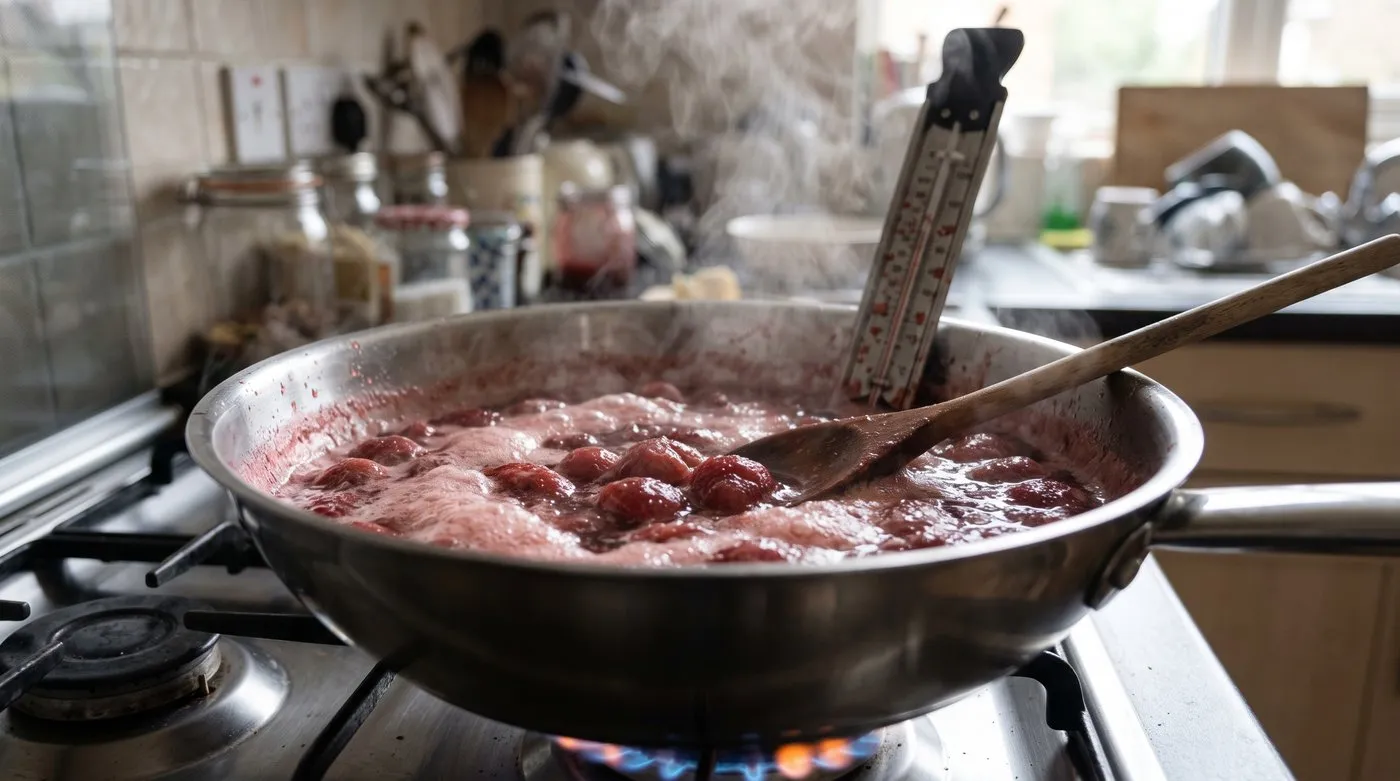
A full rolling boil keeps bubbling even while you stir. Skim off the scum and rest the jam for 10 minutes before potting.
Raspberry jam
The best one to start with. Raspberries set easily with very little fuss. The set is softer than plum or blackcurrant, which suits them.
You’ll need: 1kg raspberries, 1kg granulated sugar, juice of 1 lemon.
Warm the raspberries gently for 5 minutes until the juice runs. Add the sugar and lemon juice and stir over a low heat until dissolved. Boil hard for 5-8 minutes. Raspberry jam sets quickly, so test early. Pot straight away.
Autumn varieties like Autumn Bliss and Polka make lovely jam, and so do summer ones like Glen Ample and Tulameen. A mix of ripe and just-under-ripe berries sets best.
Blackberry jam
Hedgerow blackberries make wonderful jam, but they don’t always set well. Adding cooking apple sorts that out.
You’ll need: 750g blackberries, 250g peeled and chopped cooking apple, 1kg granulated sugar, juice of 1 lemon.
Simmer the apple in 100ml of water for 10 minutes until soft. Add the blackberries and lemon juice and warm gently for 5 minutes. Stir in the sugar until dissolved. Boil hard for 10-12 minutes, then test. Off picking wild ones? Our foraging guide has tips.
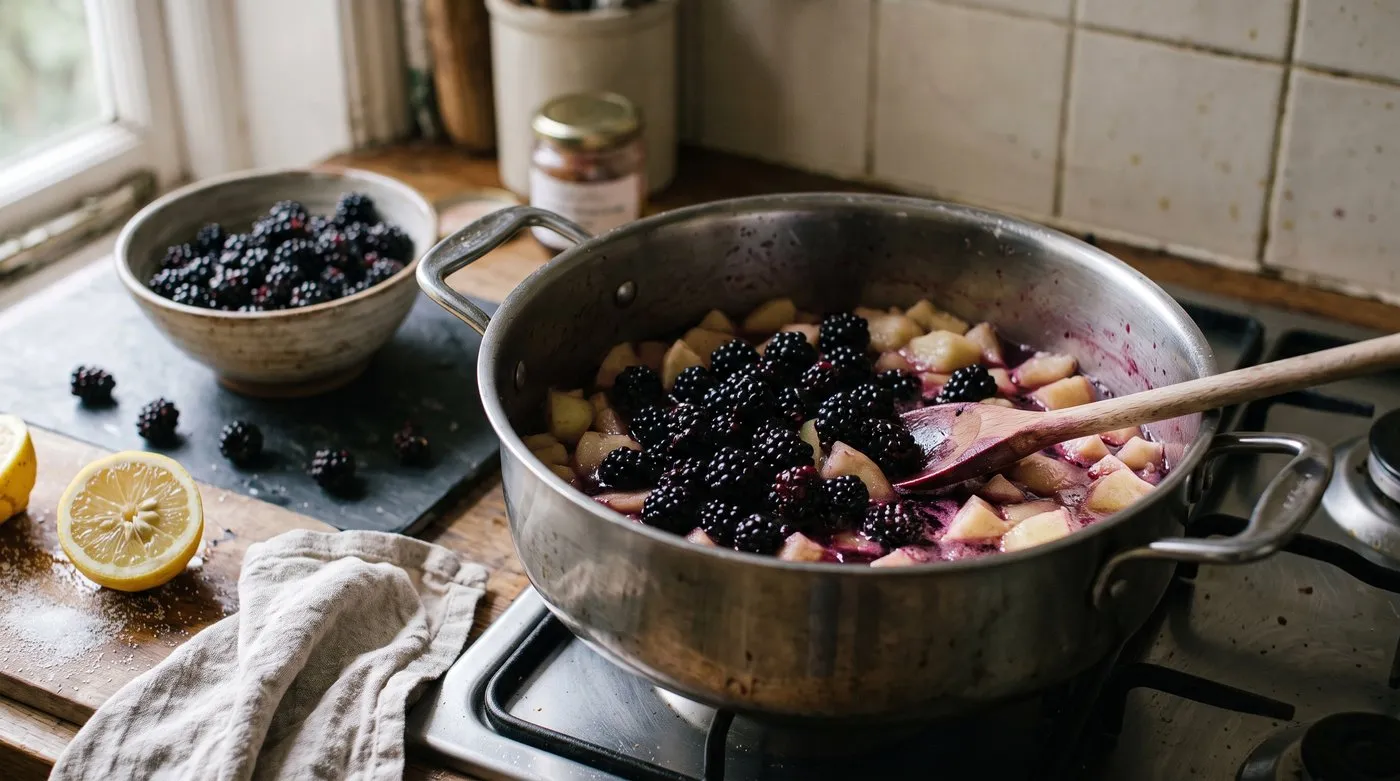
Cooking apple gives blackberries the pectin they lack. Soften the apple first, then add the berries.
Plum jam
Plums make a firm, full-flavoured jam. Victoria is the classic. Damsons give a richer, sharper jam and need a bit more sugar.
You’ll need: 1kg plums (halved and stoned), 1kg granulated sugar, 150ml water.
Simmer the plums in the water for 15 minutes until soft and broken down. Stir in the sugar until dissolved. Boil hard for 10-15 minutes, skimming off any froth. Test for set and pot into hot jars.
For damsons, use 1.2kg sugar per 1kg of fruit. Their stones are fiddly, so cook them whole and scoop the stones out as they float up.
Gooseberry jam
Gooseberries set so firmly that too much boiling makes the jam stiff and rubbery. Keep an eye on the clock.
You’ll need: 1kg gooseberries (topped and tailed), 1kg granulated sugar, 300ml water.
Simmer the gooseberries in the water for 15-20 minutes until really soft and mushy. Add the sugar and stir until dissolved. Boil hard for just 5-8 minutes, testing early. Pot straight away.
Green gooseberries make a pale amber jam. Red ones like Hinnonmaki Red give a gorgeous rosy pink.
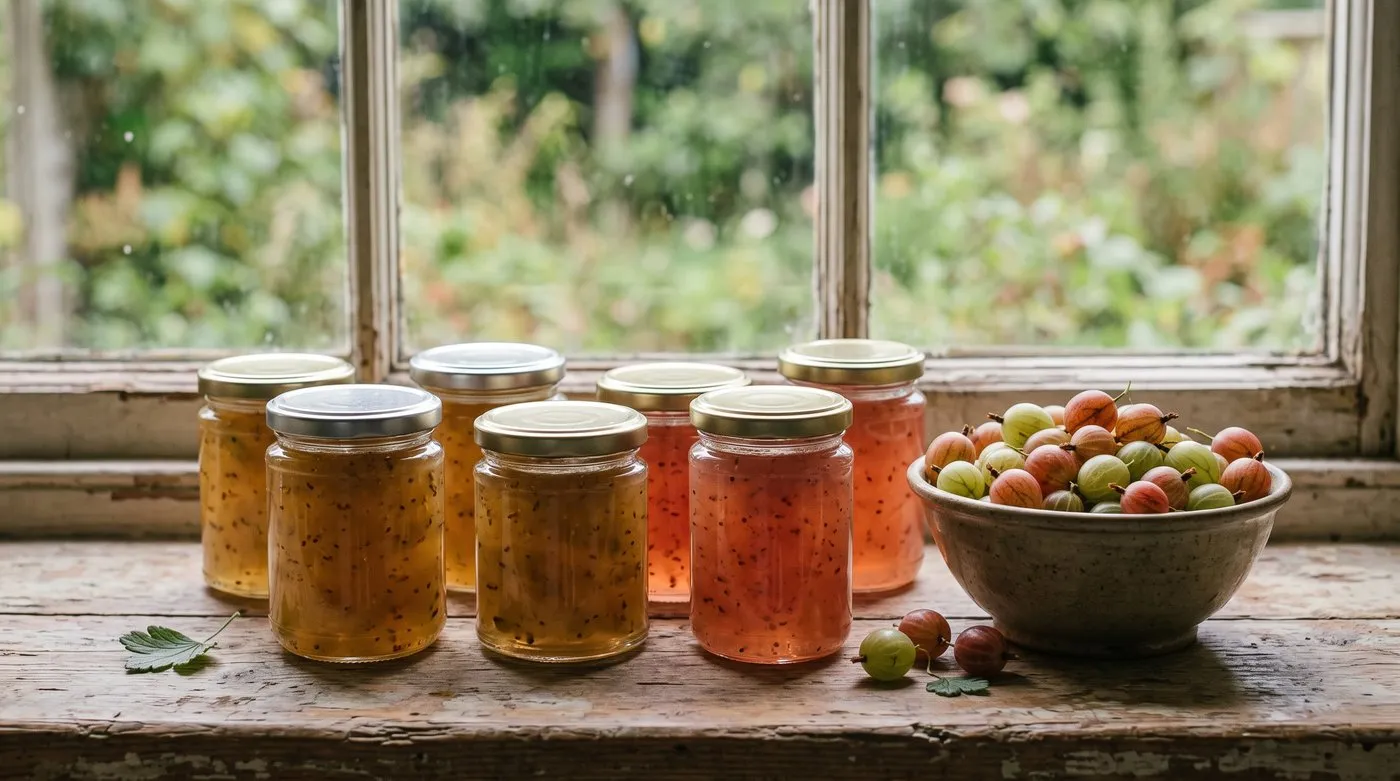
Green gooseberries make a pale amber jam and red ones a rosy pink. They set fast, so test early to keep it soft.
Blackcurrant jam
Blackcurrants make the richest, fruitiest jam of all, and it sets very reliably.
You’ll need: 1kg blackcurrants (stripped from the stalks), 1.2kg granulated sugar, 500ml water.
Don’t skimp on the water. The skins are tough and need a long simmer. Simmer the currants in the water for 30 minutes, stirring now and then, until soft and the liquid has dropped by about a third. Stir in the sugar until dissolved. Boil hard for 5-8 minutes, test, and pot into hot jars.
When to make jam from each fruit
Make jam when the fruit is just ripe, with a few slightly under-ripe ones mixed in. Too early and it lacks flavour. Too late and it won’t set as well.
| Fruit | Harvest | Best time for jam |
|---|---|---|
| Gooseberries | Late June to July | Late June, slightly under-ripe |
| Strawberries | June to July | June to July, just ripe |
| Raspberries (summer) | June to August | July, ripe and under-ripe mixed |
| Blackcurrants | July | Mid-July, fully ripe |
| Plums (Victoria) | August to September | Late August |
| Blackberries | August to September | Late August to early September (early pickings set better) |
| Damsons | September to October | September |
| Raspberries (autumn) | August to October | September |
Common jam making mistakes
Most jam that goes wrong comes down to one of these five.
Boiling before the sugar dissolves
This is the big one for grainy, crystallised jam. Stir over a low heat until every bit of sugar has gone. Check the back of the spoon. It takes 5-10 minutes, so don’t rush it.
Not reaching a full rolling boil
A gentle simmer won’t do it. You need a full rolling boil that keeps bubbling even while you stir. A hard boil for 8 minutes beats a gentle one for 20.
Over-boiling high-pectin fruits
Gooseberries and blackcurrants set fast. Five minutes of hard boiling is often enough. Too long and you get dark, rubbery jam. Test early and take the pan off the heat while you check.
Using old or damaged lids
Dented or reused lids rarely seal, and the jam can go mouldy within weeks. New lids cost pennies, so buy a stack.
Filling cold jars with hot jam
Hot jam can crack a cold jar, and the lid won’t seal properly. Keep your clean jars warm in the oven or hot water until you need them.
Fixing jam problems
Most problems come down to pectin, boiling time or clean jars. Some you can fix, some are lessons for next time.
| Problem | Why | What to do |
|---|---|---|
| Won’t set | Not enough pectin, or not boiled enough | Reboil with the juice of 2 lemons per kg and test again |
| Too thick or rubbery | Boiled too long | Can’t fix once potted. Test sooner next time |
| Gritty crystals | Sugar not dissolved before boiling | Can’t fix. Stir longer on a low heat next time |
| Mould on top | Jars not clean, or a poor lid | Throw the whole jar away. The NCHFP storage advice says don’t scrape it off |
| Fruit floating to the top | Potted too soon | Leave the jam 10-15 minutes in the pan, then stir gently before potting |
| Bubbles in the jar | Fermenting | Throw it away. Clean jars and lids more thoroughly next time |
| Dark colour | Boiled too long, or stored in the light | Keep jars in a dark cupboard and boil for less time |
How long homemade jam keeps
Well-made, well-sealed jam keeps for about a year. All that sugar does the preserving.
Unopened jars: Use within about a year. Keep them somewhere cool and dark, like a pantry or under-stairs cupboard. Sunlight and warmth fade the colour and flavour.
Opened jars: Keep in the fridge and eat within about a month. Always use a clean, dry spoon. If mould appears, throw the whole jar away. Don’t scrape it off.
Low-sugar jam: Keep it in the fridge or freezer, not the cupboard, and label it clearly.
Freezer jam: This is made with uncooked or lightly cooked fruit and frozen. It keeps for up to a year in the freezer and about 3 weeks in the fridge. Softer, with a lovely fresh taste.
Fancy trying more? There are chutneys, freezing produce and pickling, plus our easy vegetable recipes. Our guide to storing apples and pears covers keeping fruit without cooking it.
Want more fruit for next year’s jam? See how to grow blackcurrants and redcurrants.
Related reading: Rose hips are full of pectin too. Find out when to harvest rose hips and how to use them.
Frequently asked questions
What temperature does jam set at?
Jam sets at about 104.5C. A sugar thermometer clipped to the pan makes it easy. No thermometer? Drop a teaspoon of jam on a cold saucer, wait 30 seconds and push it with your finger. If the surface wrinkles, it’s ready.
Why won’t my homemade jam set properly?
Usually there isn’t enough pectin, or it wasn’t boiled hard enough. Strawberries and blackberries are low in pectin, so add the juice of 2 lemons per kg of fruit, or some pectin powder. Then make sure the jam is at a full, rolling boil.
How long does homemade jam last once opened?
Keep it in the fridge and eat it within about a month. Unopened jars stay at their best for about a year in a cool, dark cupboard. Always use a clean spoon. If mould appears, throw the whole jar away.
Which garden fruits are best for making jam?
Blackcurrants and gooseberries are the easiest to set. Plums and raspberries set well too. Strawberries and blackberries need a little help from lemon juice or pectin powder.
Do I need to add pectin to homemade jam?
Not always. Blackcurrants, gooseberries, damsons and cooking apples set on their own. Strawberries need the juice of 2 lemons per kg, or a spoonful of pectin powder. You can also mix them with a fruit that sets well, such as redcurrants.
How do I sterilise jars for jam making?
Wash them, then heat them in the oven at 140C for 15 minutes. Or boil them in a pan of water for 10 minutes. Boil the lids separately for 5 minutes. Fill the jars while they’re still hot.
Can I use frozen fruit to make jam?
Yes, frozen fruit makes good jam. Thaw it fully and use all the juice. The set can be a little softer, so add an extra tablespoon of lemon juice per kg. Frozen raspberries and blackcurrants are especially good.
How much jam does 1kg of fruit make?
About four or five standard 340g jars. That’s from 1kg of fruit and 1kg of sugar. Recipes with extra sugar, like blackcurrant or damson, make a little more.
Our team produces practical UK gardening guidance from source research, contributor records and established horticultural practice. Editorial standards are overseen by Matt W.


