
Key takeaways
- Late apples like Bramley and Winston keep for months, mid-season ones for a few weeks
- Store fruit somewhere cool, dark, airy and frost-free, ideally 4-7C
- Pick when the fruit comes away with a gentle lift and twist
- Lay fruit in single layers so nothing touches. Wrapping apples in paper is optional
- Keep pears hard in store, then bring them indoors for a few days to soften
- Check apples weekly and pears more often, and remove anything going bad
Store your apples and pears well and you can be eating fruit from your own garden well into spring. A Bramley’s Seedling picked in October can keep until March in a cool, frost-free garage. It all comes down to four things: picking at the right time, choosing varieties that keep, finding a cool, dark, airy spot, and checking for rot.
Most of us grow more fruit than we can eat at harvest time. Rather than leaving the extra to rot on the ground, storing it stretches the season by months. Here’s when to pick (see our harvest guide), which varieties keep, where to store them and how to check on them through winter. For anything that won’t keep, try making jam or freezing your produce.
How to pick apples and pears for storage
Pick fruit for storing when it comes away from the tree easily but is still firm. Fruit picked a touch under-ripe usually keeps best. Too early and apples shrivel and lack flavour. Too late and the flesh goes floury within weeks.
The lift-and-twist test
The easiest way to check is the lift-and-twist test. Cup the fruit gently in your palm and lift it with a quarter turn. A ripe apple comes away cleanly, with its stalk still attached. If you have to tug, it isn’t ready. Leave it another week and try again.
The same test works for pears, but pick pears for storing a little under-ripe. A pear left to ripen fully on the tree goes gritty and brown in the middle. Pick when the test works but the fruit still feels firm.
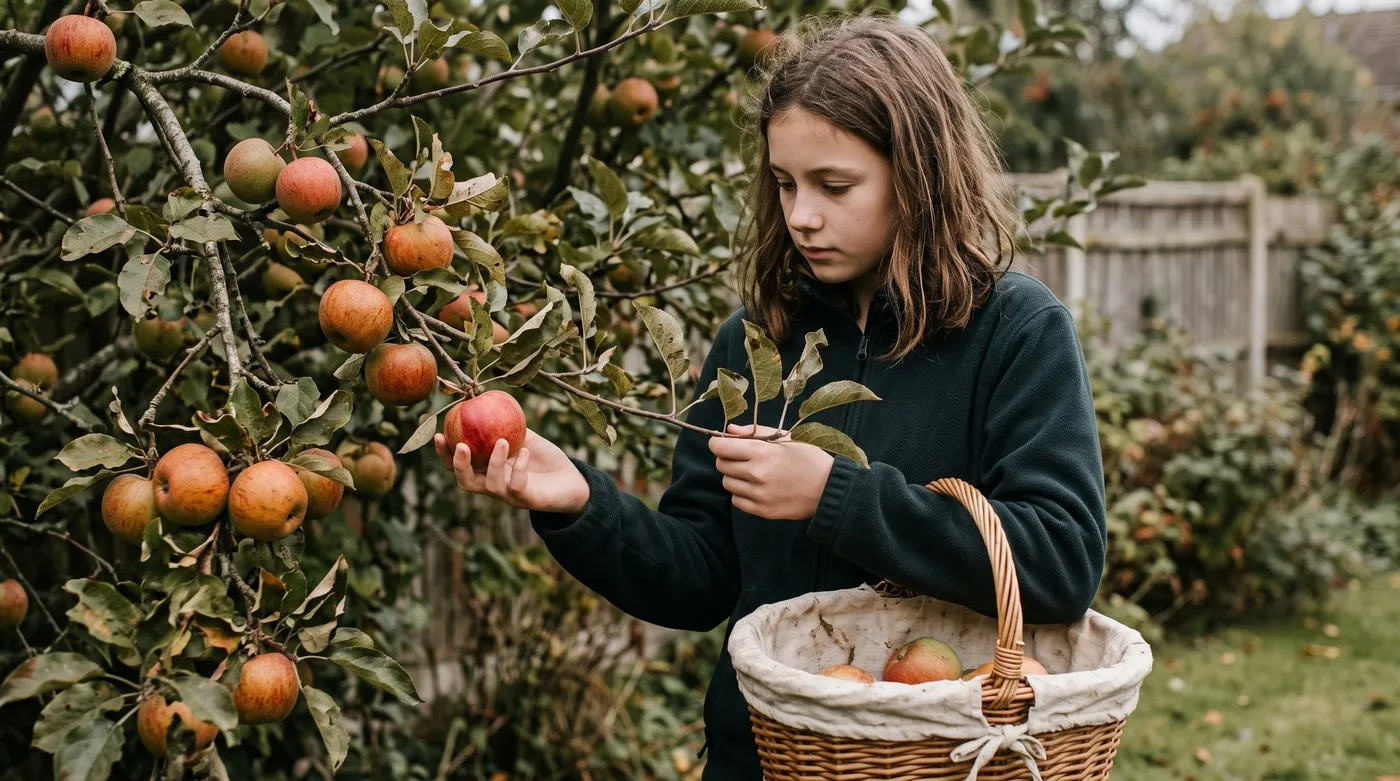
Cup the apple and lift it with a quarter turn. If it comes away cleanly with its stalk, it’s ready. If you have to tug, wait a week.
Other signs it’s ready
- Pips: Cut an apple open. White pips mean it’s not ready. Brown pips mean it’s ripe.
- Skin: The background colour shifts from green to yellowish-green as it ripens. Ignore the red blush, which comes from sunshine, not ripeness.
- Windfalls: When the first healthy fruit drops, the rest are nearly ready. Don’t store windfalls, as bruised fruit rots quickly.
- Taste: Try one. Ripe apples taste sweet and fragrant. Unripe ones taste starchy and sharp.
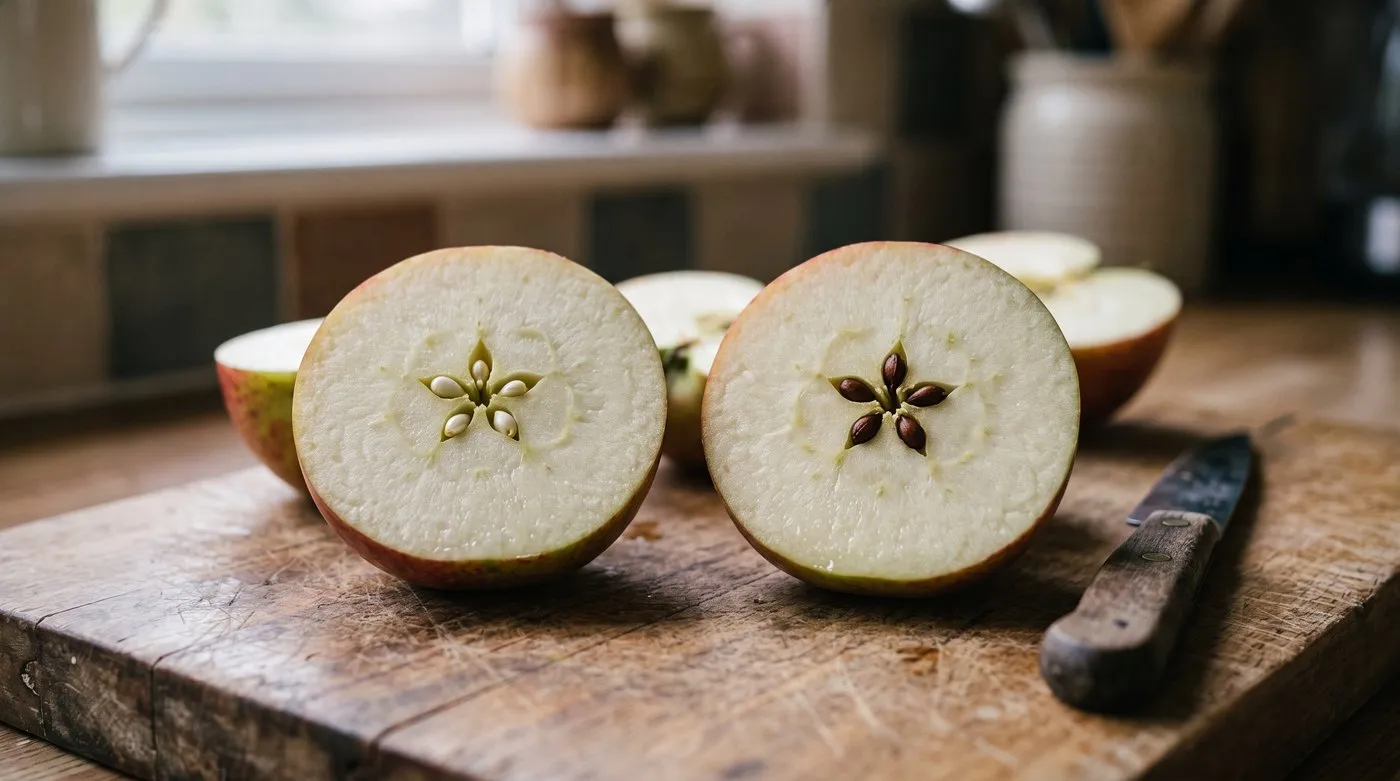
Cut one open before you pick. White pips mean it needs longer, brown pips mean it’s ripe.
Picking fruit for storing
Handle every apple and pear like an egg. Even a small bruise lets rot in. Use a picking bag or a basket lined with something soft, and never drop fruit into a bucket. Pick on a dry day, as wet fruit is more likely to go mouldy. Split or cracked fruit won’t keep, so eat it fresh.
Tip: Pick in the morning once the dew has dried, before the afternoon sun warms the fruit. Cool, dry fruit keeps better.
Which apple varieties store well?
The later an apple ripens, the longer it keeps. Early apples like Discovery, Beauty of Bath and Worcester Pearmain are for eating straight off the tree. They go soft within a week or two however you store them. Late apples picked in October and November keep for months.
The RHS guide to storing fruit names Winston, Jonagold, Bramley’s Seedling and Lane’s Prince Albert as good keepers. The times below are typical in a cool, airy store, and vary from year to year.
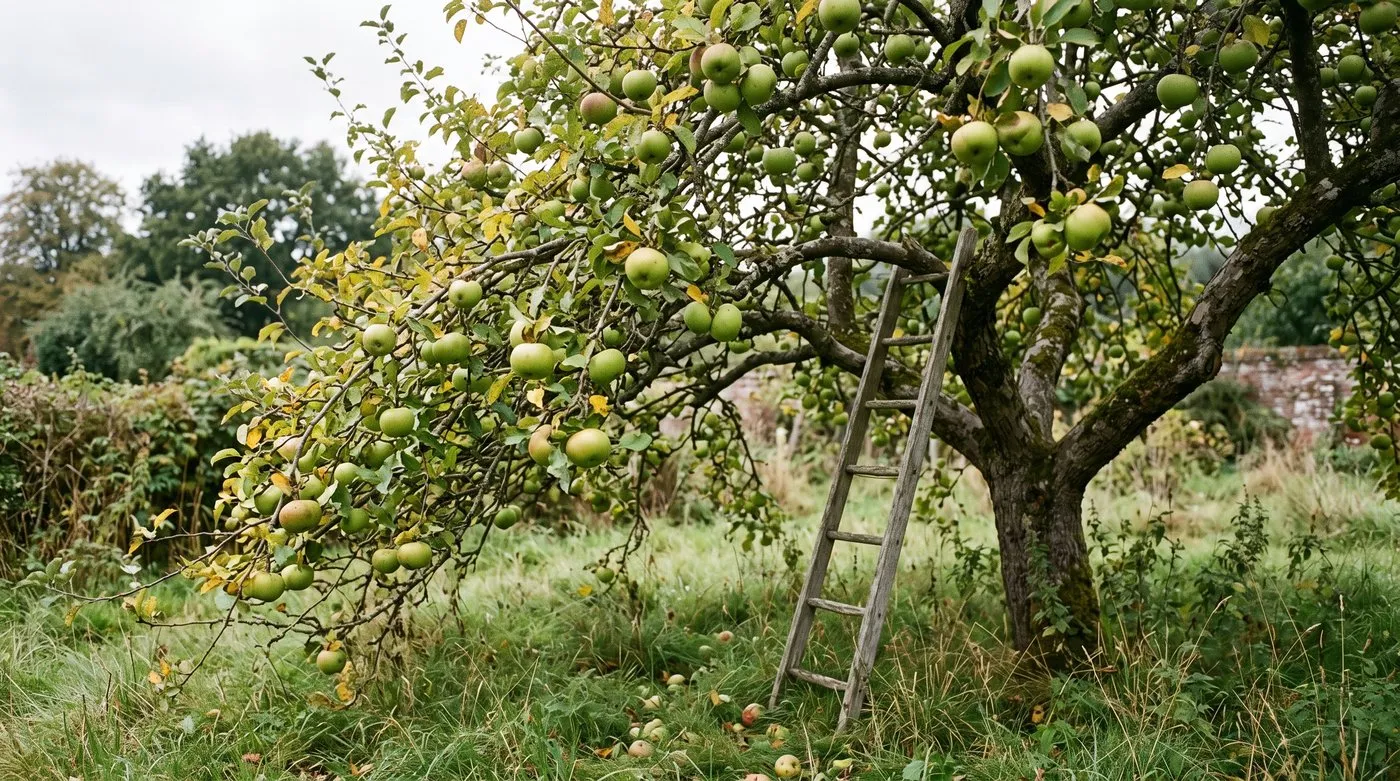
Late apples like Bramley keep far longer than early ones. Picked in mid-October and kept cool, they can last until February or March.
How long apple varieties keep
| Variety | Type | Pick | Keeps for | Flavour |
|---|---|---|---|---|
| Bramley’s Seedling | Cooker | October | 4-5 months | Sharp and tangy, the classic cooker |
| Cox’s Orange Pippin | Eater | October | 2-3 months | Rich and fragrant |
| Egremont Russet | Eater | Late September to October | 2-3 months | Nutty, a good keeper |
| Ashmead’s Kernel | Eater | October | 4-5 months | Sweet-sharp, gets better in store |
| Blenheim Orange | Both | October | 3-4 months | Nutty and honeyed |
| Winston | Eater | November | 5-6 months | Crisp, one of the longest keepers |
| Howgate Wonder | Cooker | October | 4-5 months | Huge fruit, cooks to a smooth purée |
| Discovery | Eater | August | 1-2 weeks | Sweet, eat fresh |
| Worcester Pearmain | Eater | September | 2-3 weeks | Strawberry notes, eat fresh |
| James Grieve | Both | September | 3-4 weeks | Sharp turning sweet, short keeper |
Bramley’s Seedling is the best-known keeper in UK gardens. Picked in mid-October and kept cool, it lasts until February or March. Bramley trees crop heavily, so good storage really pays off.
Ashmead’s Kernel is the unsung hero. Freshly picked it tastes sharp, but by midwinter it’s a lovely eating apple.
Tip: Grow at least one great keeper like Winston or Ashmead’s Kernel alongside your Bramley. Eating apples from your own store in January is a real treat.
Which pear varieties store well?
Conference, Comice and the cooking pear Catillac keep best. Pears are trickier than apples because they ripen from the inside out. One can look perfect but be brown and mushy in the middle. The trick is to store them hard and ripen them at room temperature before eating.
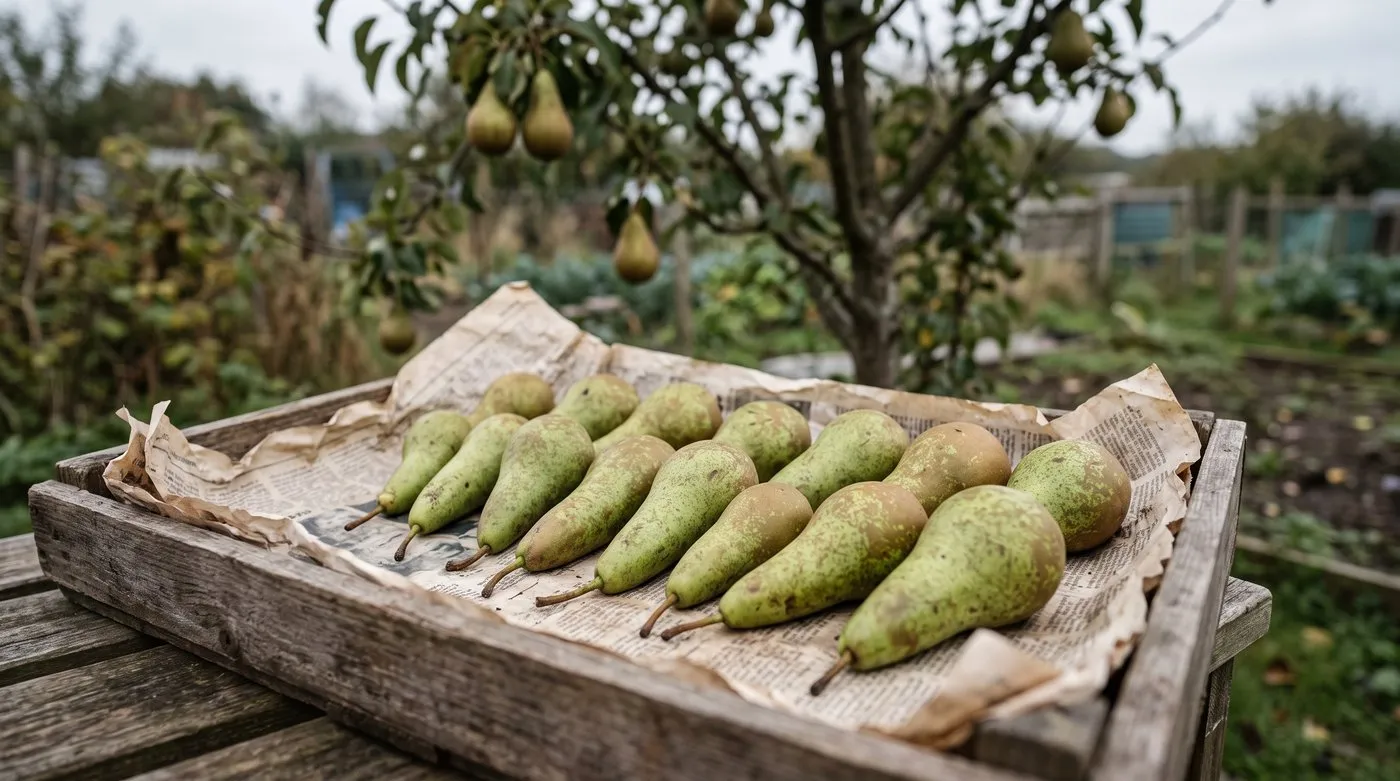
Pick pears for storing while they’re still firm. They ripen from the inside out, so store them hard and soften them indoors later.
How long pear varieties keep
| Variety | Pick | Keeps for (cool) | Ripening indoors | Flavour |
|---|---|---|---|---|
| Conference | Late September to October | Up to 3 months | A few days | Sweet, juicy, reliable |
| Concorde | October | 2-3 months | A few days | Sweet and buttery |
| Doyenne du Comice | October | 1-2 months | A few days | Rich and melting |
| Beth | September | 1-2 weeks | 1-2 days | Sweet, short keeper |
| Williams Bon Chretien | Late August to September | 1-2 weeks | 1-2 days | Classic pear flavour, short keeper |
| Catillac | November | 4-6 months | Not needed (cooking pear) | Hard, for cooking only |
Conference is the most reliable keeper. It lasts up to about three months in the cool and ripens predictably indoors, turning greenish-yellow when ready. Pears cope with colder storage than apples, down to 0C.
Catillac is the long-distance champion. It’s a cooking pear that keeps well into spring. The flesh stays rock-hard, so poach or bake it. Cooked slowly, it turns a lovely pink.
What are the ideal storage conditions for apples and pears?
The perfect store is cool (4-7C), slightly damp, dark and airy, and mouse-proof. Get all of these right and late apples keep for months.
Cool and frost-free
Temperature matters most. Aim for a steady 4-7C. Cool fruit stays firm for longer. Unheated garages, sheds and cellars can work, but some swing about a lot, so keep an eye on yours.
Warmer stores make fruit ripen faster. Apples are damaged below about 2.8C, while pears cope down to 0C. Frozen fruit turns brown and mushy when it thaws, so the store must stay frost-free. A cheap max-min thermometer helps you keep track.
A little moisture in the air
Fruit slowly loses water through its skin. Dry air makes it shrivel, while stale, damp air brings mould. A stone or earth floor naturally holds a bit of moisture. In a dry garage, damp the floor now and then.
Dark and airy
Light speeds up ripening, so keep fruit in the dark. If your garage has windows, cover the racks with breathable fabric rather than plastic.
Fruit also needs gentle air movement. A shed with small gaps under the eaves is ideal. A tightly shut cupboard isn’t.
Good to know: Don’t keep fruit near paint, fuel or chemicals. Apples soak up smells and can end up tasting of them.
Can you store apples and pears in the fridge?
Yes, the fridge is fine for small amounts if you don’t have a cool shed or garage. The RHS suggests putting 2-3kg of apples in a polythene bag, piercing a few holes and folding the top over loosely.
Check bagged apples often, as fruit kept in plastic can get core flush, a pink or brown patch round the core. Pears can go loose in the salad drawer, which slows their ripening. Fridges run a little colder than ideal, so apples may not keep as long as in a good shed. Keep them away from smelly foods like onions.
How to prepare and wrap apples for storage
Sort out anything damaged, then lay the rest in single layers. This step decides whether your fruit lasts all winter or rots within weeks.
Sort your harvest
After picking, leave the fruit on trays somewhere cool for a day or two. Any damage will show by then. Bruises darken, insect holes appear and broken skin starts to weep.
Sort it into three piles:
- Perfect fruit for long storage: no bruises, cuts or holes, and the stalk still on.
- Slightly damaged fruit to use within a few weeks, or for making chutney and preserving.
- Badly damaged fruit and windfalls to cook straight away, juice or put on the compost heap.
Only perfect fruit goes into long storage. One rotten apple in a box soon spoils the ones around it.
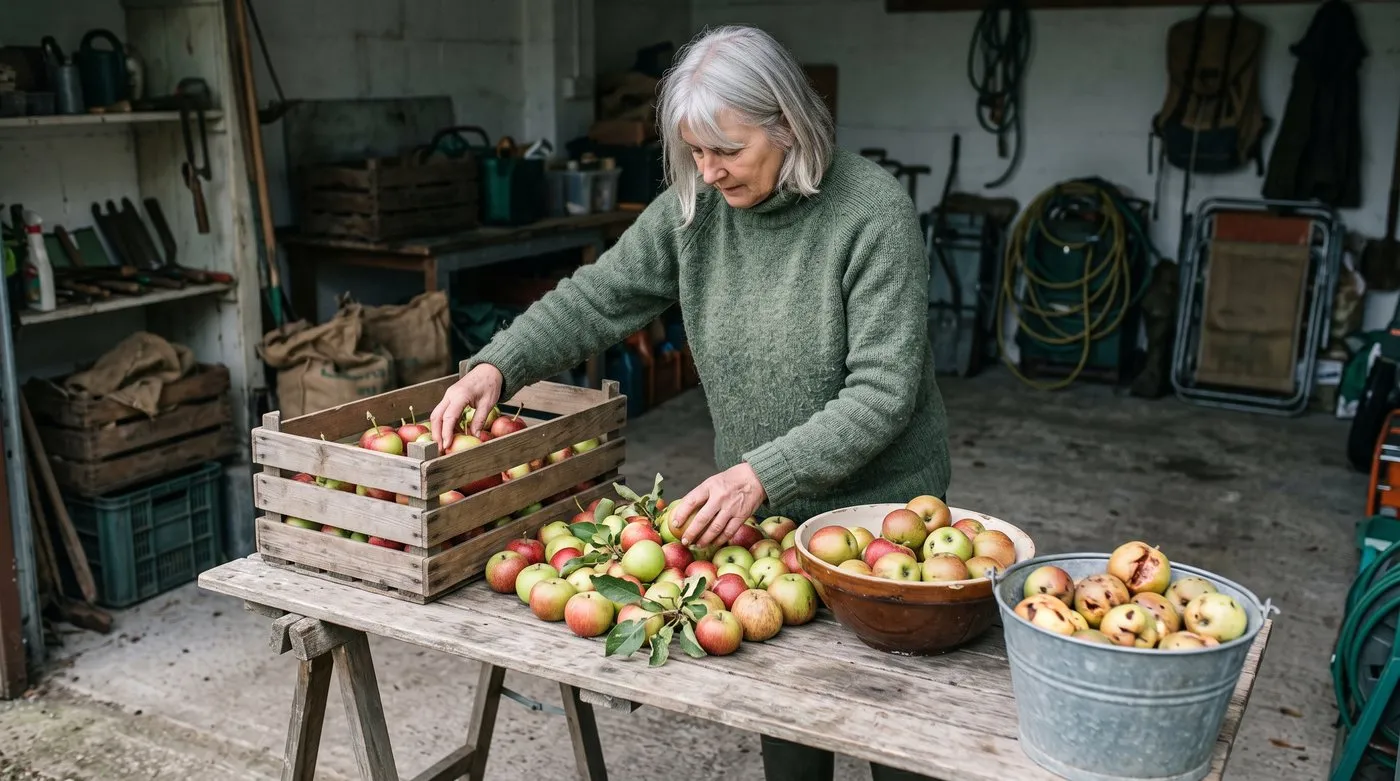
Only perfect fruit with the stalk on goes into long storage. Bruised apples and windfalls are for cooking or eating now.
Should you wash apples before storing them?
No, don’t wash them. Water left on the skin encourages rot, and rubbing removes the natural waxy bloom that stops them drying out.
If fruit is muddy, wipe it gently with a dry cloth or put it in the use-first pile. Wash fruit just before you eat or cook it. Pick on a dry day, and let any damp fruit dry in a single layer before storing. Keep the stalks on, as a pulled-out stalk leaves a wound where rot can get in.
Wrapping
If you want to wrap, use a sheet of newspaper or tissue for each apple. It helps stop rot spreading, but makes checking slower. Lay each apple stalk-up on a slatted rack.
Pears don’t need wrapping. Lay them on trays in a single layer, as you’ll be checking them more often.
Racks and boxes
A traditional apple rack is a stack of shallow wooden trays with slatted bottoms and gaps between them, so air reaches every fruit. Stackable wooden crates lined with newspaper work well too.
Avoid sealed plastic bags, deep boxes where fruit piles on fruit, and closed cardboard boxes without air holes.
Tip: No apple racks? Use clean wooden seed trays lined with newspaper. Space the fruit so nothing touches, and stand the trays on bricks so air can get underneath.
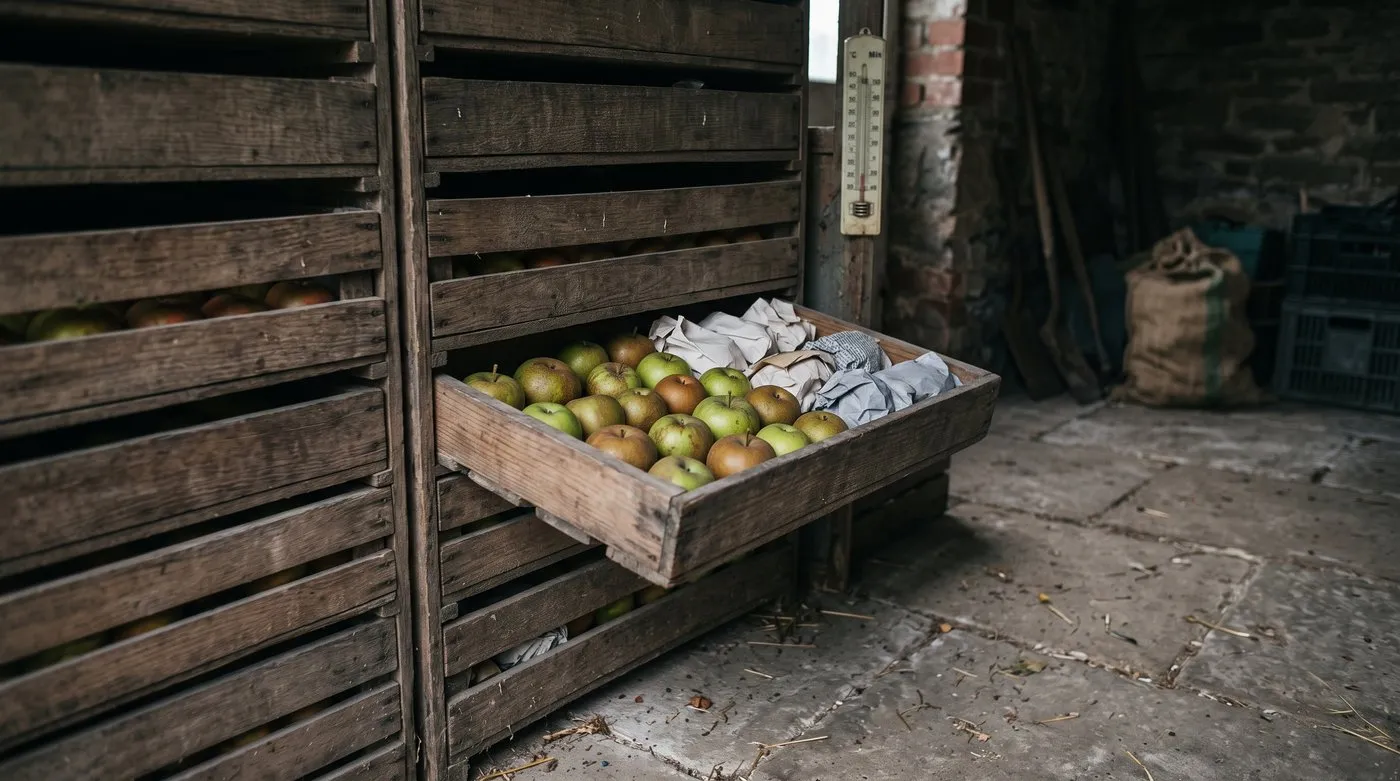
Slatted trays let air reach every fruit. Space them so nothing touches, and keep apples and pears on separate racks.
Month-by-month storage calendar
Here’s the storage season from the September harvest through to March. In colder northern gardens, everything happens a little later.
| Month | Apples | Pears |
|---|---|---|
| September | Pick early apples like Discovery and Worcester Pearmain and eat fresh. Start on Cox and Egremont Russet at the end of the month. | Pick Beth and Williams. Eat fresh or keep for a few weeks. Pick Conference late in the month. |
| October | Main picking month: Bramley, Cox, Egremont Russet, Blenheim Orange, Ashmead’s Kernel. Sort, rest for a day or two, then rack. | Pick Conference, Concorde and Comice. Store hard in the cool. |
| November | Pick Winston. Get everything stored by mid-month. Check October fruit weekly. | Pick Catillac. Check pears every day or two. |
| December | Check weekly and remove anything going bad. Keep the store frost-free. | Bring out Conference as you need it. Give it a few days indoors to ripen. |
| January | Egremont Russet may soften, so use it first. Bramley and Ashmead’s Kernel are at their best. | Keep bringing pears out in small batches. Concorde may soften by late January. |
| February | Use up Cox this month. Bramley still good. Ashmead’s Kernel tastes its best. | Conference coming to an end. Catillac still fine for cooking. |
| March | Last of the store. Bramley lasts to mid-month, Winston into April. Clean the racks for next year. | Catillac still usable. Clean the store for next autumn. |
How to ripen pears after cold storage
Pears must be ripened at room temperature before you eat them. A Conference pear straight from the store is hard and tasteless. Watch for a slight change of colour, then bring pears indoors to soften for a day or two, or a few days if they’re very firm. Medlars need softening after picking too, as our medlar growing guide explains.
How to do it
- Bring out a few at a time, three to five pears, so you have a steady supply rather than a glut.
- Put them in a fruit bowl at room temperature, not in a sealed bag.
- Check every day. Press gently near the stalk. When the flesh gives a little, it’s ripe.
- Eat them quickly. A ripe pear is at its best for only a day or two before it goes grainy.
Signs each variety is ready
- Conference: turns from green to greenish-yellow.
- Concorde: goes buttery. There’s a very short window between ripe and overripe.
- Doyenne du Comice: melting and full of flavour when perfect.
- Williams Bon Chretien: turns golden with a strong, lovely smell.
Tip: In a hurry? Pop pears in a paper bag with a ripe banana. The banana gives off ethylene, which speeds up ripening. Check them every day.
Common storage problems and how to prevent them
Brown rot, bitter pit, scald and grey mould are the main ones to watch for. Spotting them early stops one bad apple ruining a whole rack.
Brown rot
Brown rot is the most common. It shows as spreading brown patches, often with rings of whitish mould. It gets in through wounds, insect damage and bird pecks. Only store undamaged fruit, keep fruit apart, and remove any affected fruit straight away.
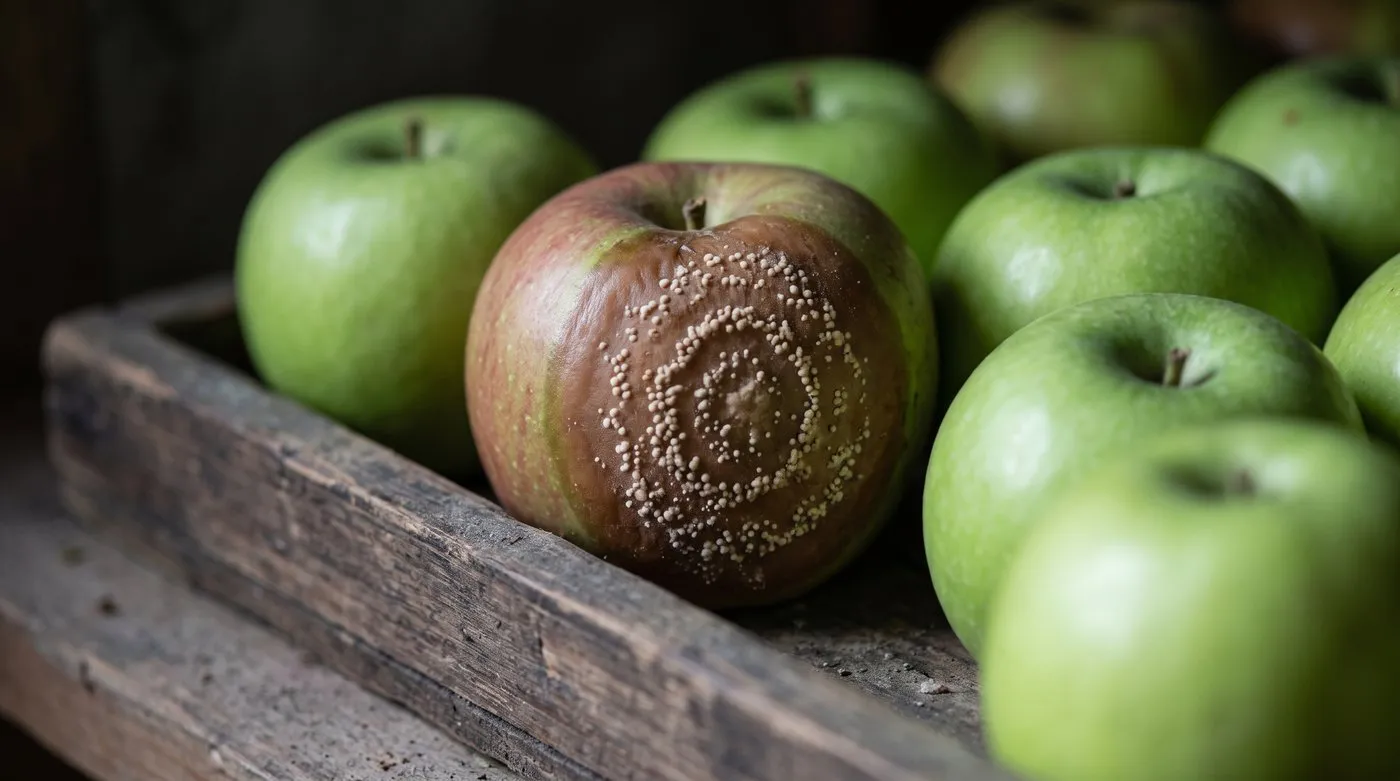
Brown rot gets in through bruises, holes and bird pecks. Remove any affected fruit straight away before it spreads to its neighbours.
Bitter pit
Bitter pit shows as small, dark, sunken spots on the skin, with brown corky patches in the flesh. It’s caused by a shortage of calcium in the fruit, not a disease. Water apple trees well in dry spells, mulch round the roots and go easy on nitrogen feed. Bramley and Cox often get it.
Storage scald
Storage scald shows as patchy brown or grey marks on the skin. It isn’t a disease, and fruit picked too early is more prone to it. Let fruit ripen properly before picking and keep the store airy.
Grey mould
Grey mould is a fuzzy grey-brown mould, more common on pears than apples. It loves cool, damp, still air and gets in through wounds. Keep the store airy, don’t store damaged fruit, and remove affected pears straight away.
Five common storage mistakes
1. Storing early varieties
Discovery, Worcester Pearmain, Beauty of Bath and Beth are for eating fresh. No amount of wrapping will make them keep. Eat them straight away or turn them into jam, juice or chutney.
2. Storing bruised fruit
A bruised apple soon starts to rot, and the rot spreads to its neighbours. Sort ruthlessly. If in doubt, eat it or cook it now.
3. Storing apples and pears together
Ripening fruit gives off ethylene gas, which makes nearby fruit ripen faster. Keep apples and pears, and early and late varieties, on separate racks or in separate rooms.
4. Forgetting to check
One rotting apple left alone can spoil the ones around it. Check apples at least weekly and pears every day or two. Lift each one, sniff for a boozy smell and feel for soft spots.
5. Sealed plastic
Sealed plastic traps damp, and that brings mould. The only exception is a pierced polythene bag in the fridge for small amounts.
What to do with fruit that won’t store
Cook it, freeze it, preserve it or juice it. Windfalls, bruised fruit and early varieties all need using up quickly.
- Cook it. Bramleys that didn’t make the cut are perfect for pies, crumbles and sauce.
- Freeze it. Peel, core and slice apples, blanch for a minute, freeze flat on trays, then bag them up.
- Make jam or chutney. Windfalls make lovely apple jelly, and apple and pear chutneys get better with age.
- Juice it. A home fruit press gets through a garden’s worth of apples in an afternoon, and the juice freezes well.
- Bin the diseased ones. Put badly diseased fruit in the council green waste bin, as a home compost heap rarely gets hot enough to kill disease.
Soft fruit grows happily alongside apples and pears. Our guides to blueberries and raspberries cover summer fruit to enjoy before the apple harvest. And for choosing varieties and rootstocks, see our guide on growing apple trees in the UK.
Frequently asked questions
How long can you store apples at home?
From a couple of weeks to several months, depending on the variety. Late apples like Bramley’s Seedling and Winston keep for months in good conditions. The RHS gives about 4-8 weeks for mid-season apples. Early ones like Discovery and Worcester Pearmain don’t keep, so eat them within a couple of weeks.
What temperature should you store apples at?
Somewhere cool and steady, ideally 4-7C. Apples are damaged below about 2.8C, while pears cope down to 0C. A garage, shed or cellar can work if it stays frost-free. Warmer than that and fruit ripens faster and won’t last as long.
Can you store apples and pears together?
It’s better to keep them apart. Ripening fruit gives off a gas called ethylene, which makes anything nearby ripen faster. The same goes for different varieties. Use separate racks or rooms, and use up any tray that’s fully ripe.
How do you know when apples are ready to pick?
Try the lift-and-twist test. Cup the apple and lift it gently with a quarter turn. A ripe one comes away easily. Other clues are pips turning from white to brown and the first healthy windfalls dropping under the tree.
Why do my stored apples go brown inside?
Brown, corky spots under the skin are usually bitter pit. It’s linked to a shortage of calcium in the fruit and is worse after dry summers. Bramley and Cox often get it. Browning round the core can be core flush, which is common in fruit kept too cold or in plastic bags. Water trees well in dry spells and go easy on nitrogen feed.
How do you ripen pears after storage?
Bring them indoors to room temperature for a few days. Put them in a fruit bowl, not a sealed bag. Press gently near the stalk each day, and when the flesh gives a little, they’re ready. Conference pears turn greenish-yellow, and Williams go golden and smell wonderful.
Do you need to wrap apples for storage?
No, it’s up to you. Wrapping apples in newspaper or tissue helps them last a bit longer and stops them shrivelling, but makes checking slower. Unwrapped apples keep well on slatted racks as long as they don’t touch.
Related guides
To turn the extra into dried rings and crisps, see drying apples and pears, which covers air-drying, the oven and a dehydrator. Our guide to storing garden produce covers every crop from the kitchen garden.
Our team produces practical UK gardening guidance from source research, contributor records and established horticultural practice. Editorial standards are overseen by Matt W.


