Key takeaways
- Start with a plump, firm ginger root with visible buds, ideally organic
- Plant in March or April, 2-5cm deep, in a wide, shallow pot of free-draining compost
- Keep it warm, ideally above 20C, and bright but out of harsh midday sun
- Water sparingly until shoots appear, as cold, wet compost rots the root
- Harvest in autumn when the leaves yellow, or dig young ginger from late summer
- Save a few plump pieces to replant next spring
Yes, you can grow your own ginger in the UK, and it starts with a root from the supermarket. Plant it in spring, keep it warm and bright, and by autumn you’ll have fresh ginger to dig up. The plant looks good too, with tall, leafy stems that bring a tropical touch to a windowsill or conservatory.
This guide covers edible ginger, Zingiber officinale, the one you cook with. Ginger needs warmth for most of the year, so it’s grown indoors or under glass here. If you’ve grown turmeric from a supermarket rhizome, the method is almost the same.
How to choose and prepare a ginger root
Pick the freshest, plumpest ginger you can find. Supermarkets and Asian grocers both sell good pieces. Organic ginger is a safer bet, as some ginger is treated to stop it sprouting in the shop.
Look for:
- Plump, firm roots with smooth skin, not wrinkled or dried out
- Visible buds, small pale or greenish bumps, often at the tips of each “finger”
- No mould or soft spots when you squeeze gently
Then prepare it:
- Soak the root in warm water overnight to rehydrate it.
- Cut it into pieces 3-5cm long, each with at least one bud.
- Leave the cut ends to dry for a day or two so they seal over and are less likely to rot.
- If a piece already has green shoots, you can plant it straight away.

Those little green tips are the buds waking up. Each piece you plant needs at least one.
When and how to plant ginger
Plant ginger indoors in March or April. It needs a long, warm season, so starting later means a smaller harvest.
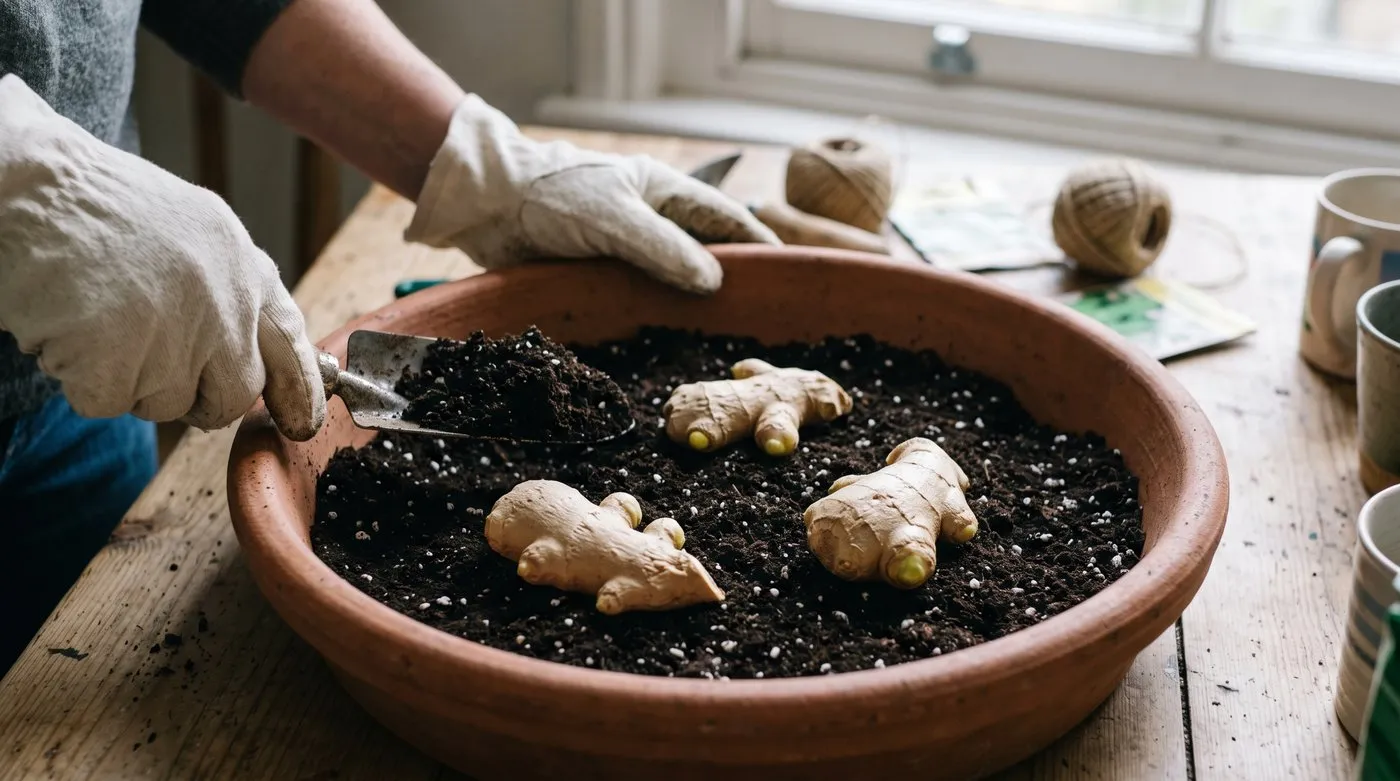
Lay the pieces flat with the buds pointing up, then cover with a few centimetres of compost. A wide, shallow pot suits ginger’s spreading roots.
Ginger roots spread sideways rather than down, so choose a wide, shallow pot, at least 30cm across. Use peat-free multipurpose compost with a few handfuls of perlite or grit mixed in for drainage.
- Fill the pot to a few centimetres below the rim and water it lightly.
- Lay the pieces flat on the surface with the buds pointing up.
- Cover with 2-5cm of compost.
- Put the pot somewhere warm, ideally above 20C. A heated propagator or heat mat is a big help.
- Keep the compost just moist until shoots appear, which usually takes a few weeks.
Use warm compost. If your compost lives in a cold shed, bring it indoors for a couple of days before planting. Cold, wet compost is the main reason ginger rots before it sprouts.
Where to grow ginger in the UK
Ginger likes warmth, humidity and bright light without harsh midday sun. A warm, bright windowsill works, as does a conservatory or greenhouse. Strong summer sun through glass can scorch the leaves, so give it a little shade at midday.
| Spot | Good points | Watch out for |
|---|---|---|
| Greenhouse | Warm and humid in summer | Needs heat or bringing in from autumn |
| Conservatory | Bright and warm | Scorching sun at midday, dry air |
| Sunny windowsill | Easy to keep an eye on | Dry air from radiators |
| Warm kitchen | Some humidity from cooking | Can be too dark |
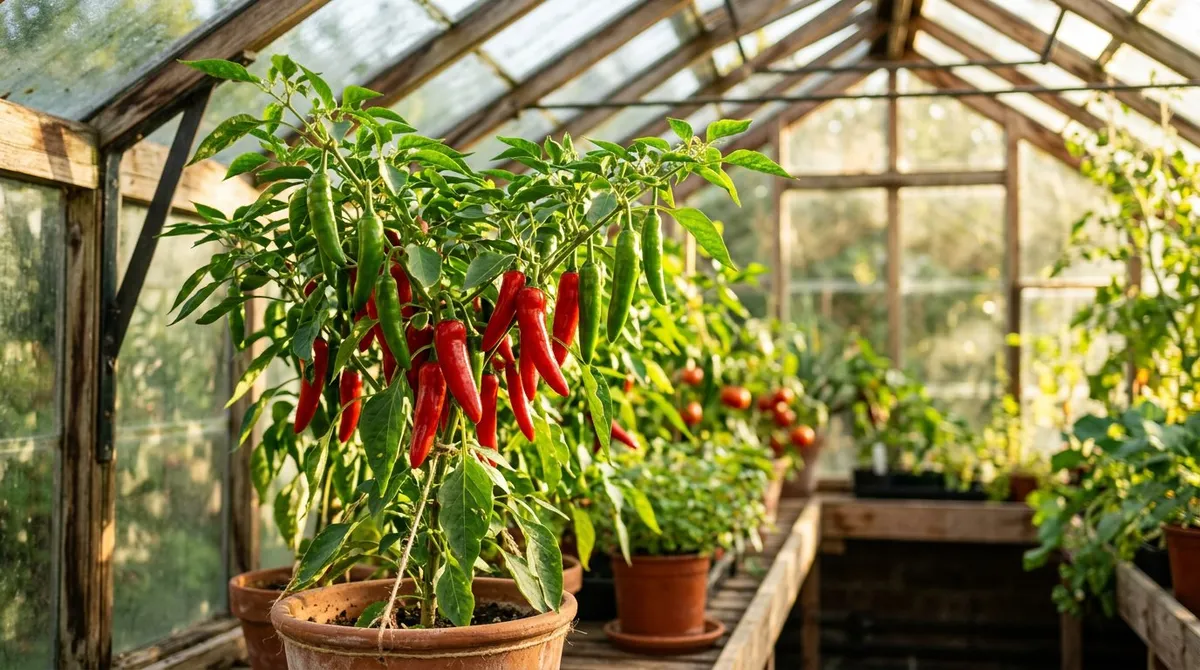
In a greenhouse, ginger sits happily alongside other heat-lovers like chilli peppers. Bring it inside if your greenhouse gets cold in autumn. Our greenhouse heating guide explains ways to keep a greenhouse warm.
Indoors, dry air is the main problem. Stand the pot on a tray of wet pebbles, group it with other plants, and keep it away from radiators.

A warm conservatory suits ginger well. Grouping it with other plants keeps the air around the leaves more humid.
How to care for ginger through the summer
Once growing, ginger is thirsty and hungry. From late spring to early autumn it needs regular attention.
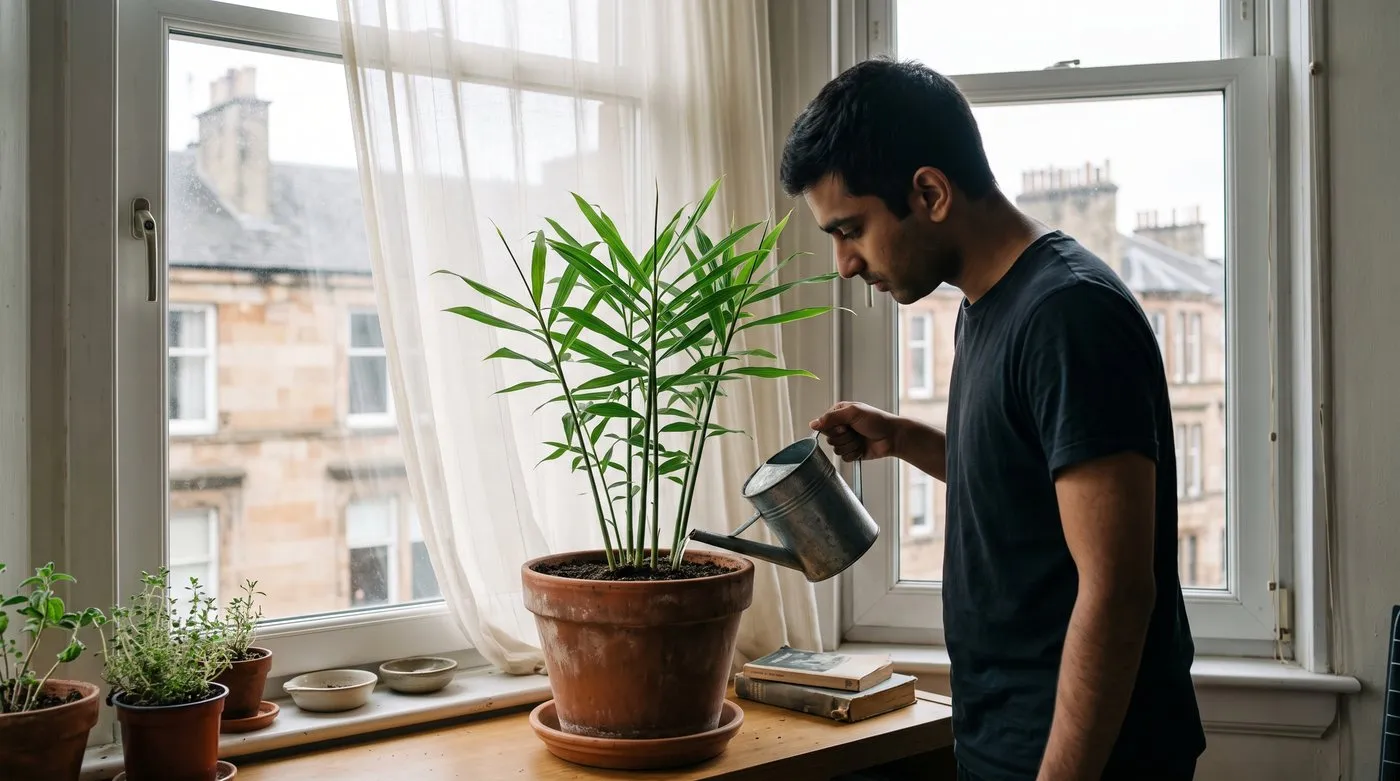
In summer ginger is thirsty. Water at the base with room-temperature water and keep the compost moist but never soggy.
Watering: keep the compost moist but not soggy. In summer that may mean watering every few days, and more often in a hot greenhouse. Use water at room temperature rather than straight from a cold tap.
Feeding: once the shoots are growing well, give a balanced liquid feed every two weeks. From late summer, switch to a high-potash feed such as tomato food to help the roots swell.
Light: if growth is pale, thin and stretched, the plant needs more light. Move it somewhere brighter.
From October, as the leaves start to yellow, water less and stop feeding.
Month-by-month ginger calendar
| Month | What to do |
|---|---|
| March to April | Soak and plant pieces in a warm spot. Keep compost just moist |
| May to June | Shoots grow. Start feeding every two weeks. Move to a conservatory or greenhouse |
| July to August | Water often. Shade from midday sun. Dig young ginger if you like |
| September | Switch to tomato feed. Bring in from cold greenhouses |
| October to November | Leaves yellow. Water less, then harvest |
| December to February | Keep saved roots somewhere frost-free and dry, ready for spring |
Common ginger problems and how to fix them
Most problems come from cold and too much water before shoots appear. Once growing well, ginger is fairly trouble-free.
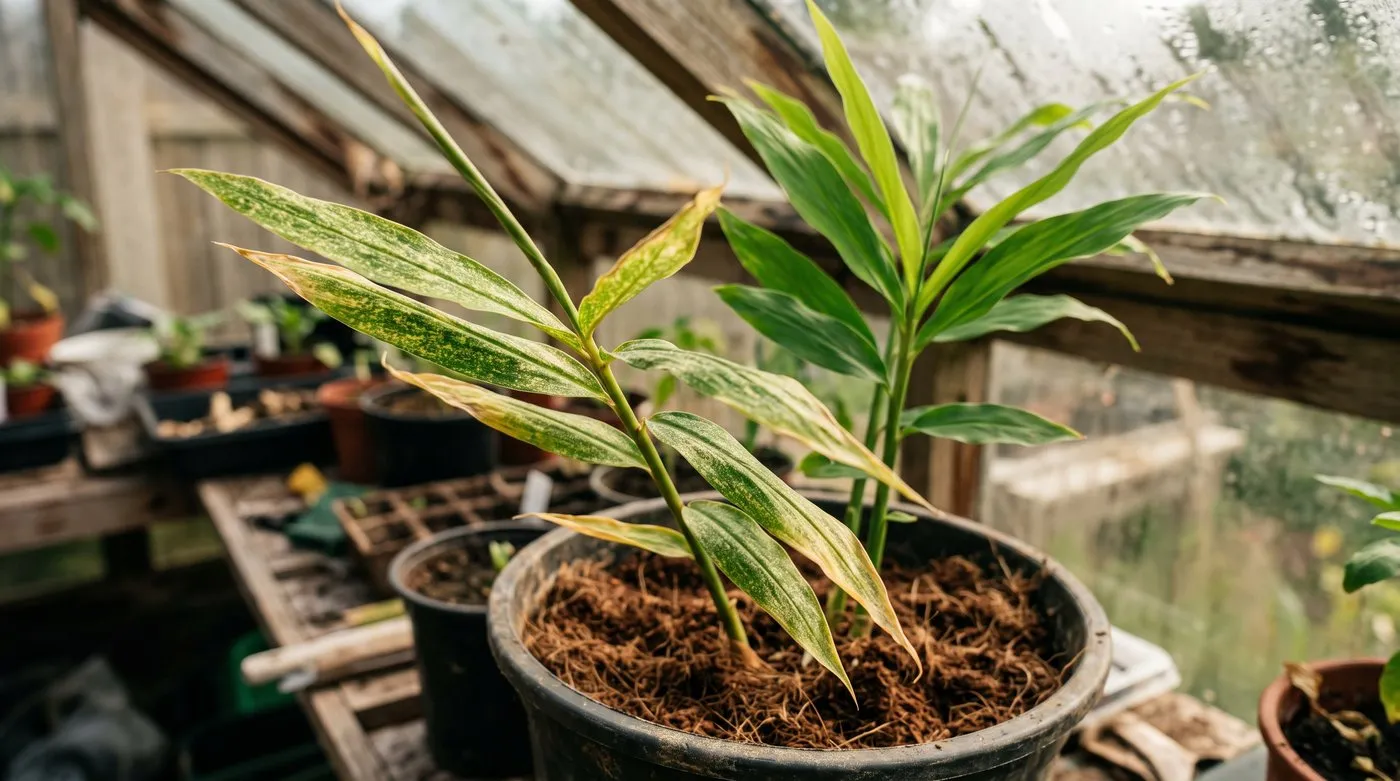
Yellowing in midsummer is a warning sign. Check for soggy compost, cold draughts and the fine speckling of red spider mite.
Root rots before sprouting. Cold, wet compost is to blame. Use free-draining compost, water lightly until shoots appear and keep it warm. If the root goes soft and brown, start again with a fresh piece.
Yellow leaves in summer. If this happens in the growing season rather than autumn, check for soggy compost, a cold draught or a lack of feed. Look under the leaves for fine webbing, a sign of red spider mite, which loves warm, dry air. Our guide to spider mite control explains what to do.
Nothing has come up after five or six weeks. The root may have been treated, planted too deep or kept too cold. Gently dig it up. If it’s firm with green buds, replant it shallower somewhere warmer.
How to harvest and store ginger
Harvest ginger in autumn, when the leaves turn yellow and start to die back. That’s usually eight to ten months after planting.
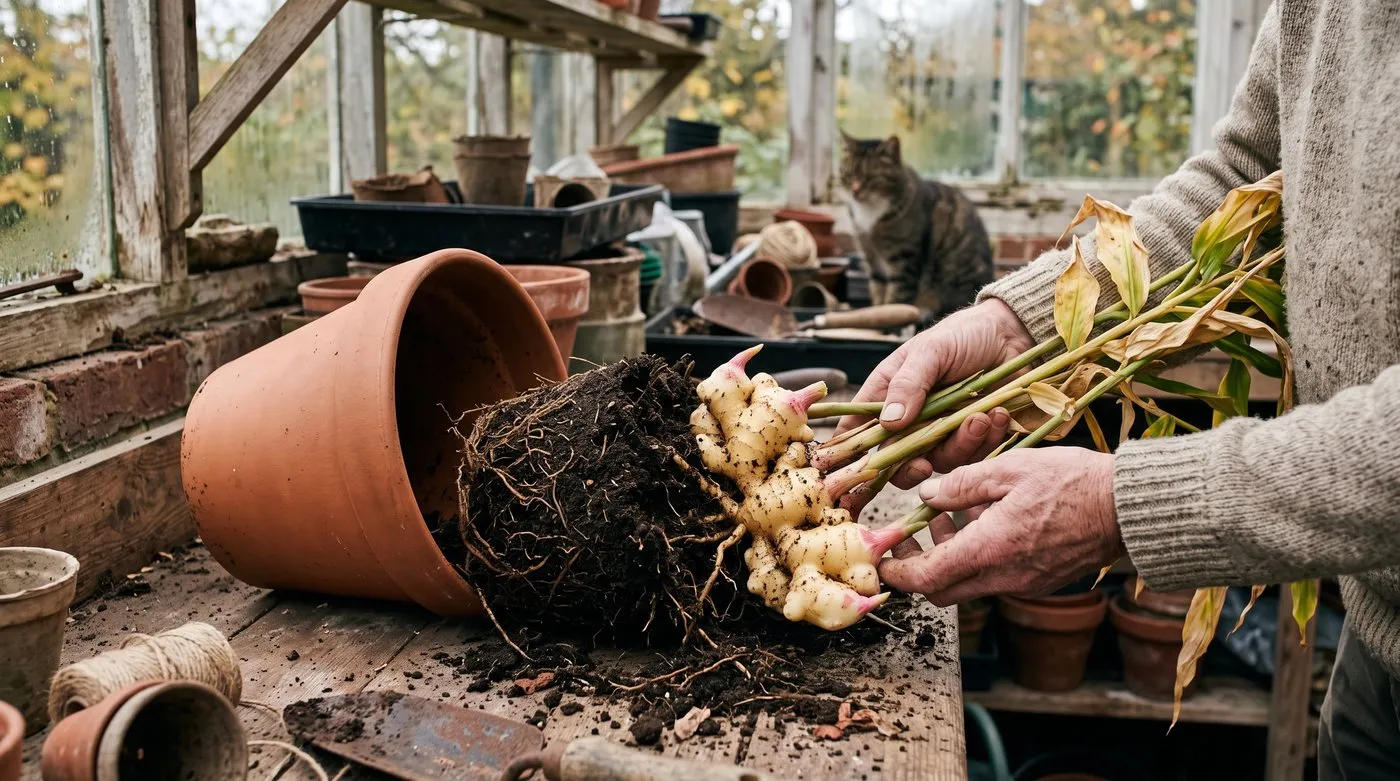
When the leaves yellow in autumn, tip out the pot and see what you’ve grown. Keep a few plump pieces to plant next spring.
- Stop watering a week or so before you harvest.
- Tip the pot on its side and slide the rootball out.
- Gently break away the compost to find the new roots spreading from the original piece.
- Snap off what you want to use.
- Keep a few plump pieces with good buds to replant in spring.
Young ginger can be dug from late summer. It has thin, pinkish skin that doesn’t need peeling and a milder, juicier flavour. You’ll get less, but it’s lovely sliced fresh. It’s also good for pickling and fermenting.
Storing: wrap fresh ginger in kitchen paper and keep it in a bag in the fridge for a few weeks. For longer, freeze it whole. It grates easily straight from the freezer.
Edible ginger vs ornamental ginger
Only Zingiber officinale gives you the ginger you cook with. Several relatives are grown for their looks and are tougher in UK gardens.
Hedychium, the ginger lily, has showy, often scented flowers and can grow outdoors in sheltered, milder gardens. Our guide to growing hedychium covers it in detail. Its roots aren’t the ginger you buy in shops.
If you like growing your own spices, our guide to Indian and Eastern spices you can grow in the UK has more ideas. You’ll find plenty more edible crops on our growing hub.
Growing ginger again from your own harvest
Once you’ve grown ginger, you don’t need to buy a starter root again. Save two or three of the fattest pieces with plenty of buds. Keep them somewhere dry and frost-free over winter, then plant them in fresh compost in March.
Now you know how to grow ginger, read our guide to regrowing veg from kitchen scraps for more free plants from your shopping.
Frequently asked questions
Can I grow ginger from a shop-bought rhizome?
Yes, a fresh supermarket ginger root will often sprout. Pick a plump, firm piece with small buds at the tips. Organic ginger is less likely to have been treated to stop sprouting. Soaking it in warm water overnight before planting helps it wake up.
What temperature does ginger need to grow in the UK?
Ginger grows best above 20C, and slows right down below about 15C. That’s why it suits a warm windowsill, conservatory or greenhouse in the UK. A heated propagator or heat mat helps the root sprout in spring.
How long does ginger take to grow in the UK?
About eight to ten months from planting to a full harvest. Plant in March or April and dig it up in autumn when the leaves turn yellow. You can take young, mild ginger earlier, from late summer, but you’ll get less.
Can I grow ginger outdoors in the UK?
Not reliably, as edible ginger needs more warmth than our summers give. Nights cool down too much from late summer. A pot can go outside in a warm, sheltered spot in a hot spell, but bring it back in before nights turn cool.
What is the difference between edible and ornamental ginger?
Edible ginger, Zingiber officinale, is the one you cook with. Ornamental gingers such as Hedychium, the ginger lily, are grown for showy flowers and can live outdoors in milder UK gardens. Their roots aren’t the ginger you buy in shops.
How do I store harvested ginger?
Keep fresh ginger in the fridge for a few weeks, or freeze it. Wrap it in kitchen paper inside a bag in the fridge. Frozen ginger keeps for months and grates easily straight from the freezer.
Why is my ginger plant not growing?
Cold compost is the most common cause. Ginger needs warmth to sprout, and cold, wet compost can rot it. Check the root. If it’s firm with green buds, move it somewhere warmer. If it’s soft and brown, it has rotted, so start again.
Our team produces practical UK gardening guidance from source research, contributor records and established horticultural practice. Editorial standards are overseen by Matt W.