Key takeaways
- Sow indoors from late February to mid-March, ideally on a heated propagator
- A greenhouse or polytunnel gives far more coloured peppers than growing outside
- Every pepper starts green and needs a few extra warm weeks to change colour
- Feed with a high-potash tomato feed twice a week once the first flowers open
- Water evenly to avoid blossom end rot
- Gypsy F1 and Mohawk F1 are easy, early varieties for UK gardens
Sweet peppers are a lovely greenhouse crop, and there’s nothing like picking your own glossy red and yellow fruit. Sow them in late winter, keep them warm and well fed, and give them time to colour up.
Can you grow sweet peppers in the UK?
Yes, but they need warmth, so a greenhouse helps a lot. Sweet peppers come from hot parts of the Americas. They like warm days and nights that don’t drop too low, and a British summer can’t promise that.
In the south, a sheltered patio by a sunny wall can give a fair crop in a warm summer. Outdoor plants usually set fewer peppers, though, and many stay green before the cold arrives in autumn.
A greenhouse, polytunnel or conservatory makes all the difference. If you already grow tomatoes or chilli peppers, you’ve got the right set-up. Sweet peppers like the same conditions and grow happily alongside them.
How warm do they need it?
Here’s a rough guide to keep in mind.
| Stage | What they like |
|---|---|
| Sowing | Warm, about 21-25°C |
| Young plants | Keep above 16°C |
| Flowering | Warm days, nights above about 12°C |
| Hot summer days | Below 30°C, so open the vents |
When it gets cold, growth stops. When it’s too hot, flowers drop off without making peppers. Greenhouses can get very hot in summer, so good ventilation matters from June.
Which sweet pepper varieties grow best in the UK?
Pick a variety that ripens early. Modern F1 varieties cope with cooler weather and colour up faster than old Mediterranean types.
Easy, early varieties
- Gypsy F1: a UK favourite. Long, pointed fruits that ripen early and crop well in an unheated greenhouse.
- Bell Boy F1: a classic chunky bell pepper with thick walls, green turning red. Crops well in a warm greenhouse.
- Mohawk F1: a small, bushy plant about 40-50cm tall, perfect for pots and windowsills. Orange fruit that ripens early.
Fun and colourful varieties
- California Wonder: the classic big bell pepper, green turning deep red. It needs a warm greenhouse and a longer season. Not F1, so you can save the seed.
- Sweet Banana: long, tapering yellow fruits that turn red if left. Thin skinned, sweet and generous.
- Lunchbox Mini: snack-sized peppers in red, orange and yellow. Very sweet and lots of them. Children love picking these.
The RHS pepper growing guide has more ideas for British gardens.
 Pepper seedlings on a warm windowsill, ready to pot on once roots fill the modules.
Sweet pepper variety comparison table
| Variety | Fruit | Ripens | Best for |
|---|---|---|---|
| Gypsy F1 | Long, pointed, red | Early | Unheated greenhouse, beginners |
| Bell Boy F1 | Chunky bell, red | Mid | Warm greenhouse |
| Mohawk F1 | Small, orange | Early | Pots, windowsills |
| California Wonder | Big bell, red | Late | Warm greenhouse, seed saving |
| Sweet Banana | Long, yellow to red | Mid | Salads, stir-fries |
| Lunchbox Mini | Small, mixed colours | Mid | Snacking, children |
Short on space? Mohawk F1 and Lunchbox Mini do well in 5-litre pots on a sunny patio or greenhouse shelf. The peppers are smaller, but you get plenty.
How to sow sweet pepper seeds
Sow indoors from late February to mid-March. Sow earlier without grow lights and the seedlings get leggy. Sow after April and there isn’t time for them to colour. Growing chilli peppers too? Sow them at the same time, the same way.
What you’ll need
- Small 7cm pots or module trays
- A heated propagator or heat mat set to about 21-25°C
- Seed compost
- A clear lid or cling film
- Labels and a pen
Step by step
- Fill pots with seed compost, firm gently and water.
- Sow 2 seeds per pot, 6mm deep, and cover lightly with vermiculite or compost.
- Put them on a heat mat or in a propagator at 21-25°C, with a lid to keep them humid.
- Keep the compost just moist. A spray bottle is gentler than a watering can.
- Seedlings usually appear in about 10-21 days.
- Once they have their first true leaves, snip out the weaker one in each pot.
- Move them to a bright windowsill or under grow lights. Keep them above 16°C.
Why warmth matters so much
Bottom heat makes a big difference. In a cool room, pepper seeds come up slowly and patchily, if at all. A heat mat is a handy buy for all tender crops.
Watch for cold windowsills. In February a windowsill can get very chilly at night. Move trays away from the glass after dark, or use a heat mat that keeps going overnight.
Potting on and growing strong plants
Move seedlings into bigger pots when roots fill the old ones. You’ll see roots poking out of the bottom. This usually happens twice before their final home.
First potting on (March to April)
Move them into 9cm pots of peat-free multipurpose compost. Hold them by a leaf, never the stem. Water well and keep them warm and bright, above 16°C.
Don’t pinch out the tip. Peppers branch on their own.
Second potting on (April to May)
Move them into their final pot: 7-10 litres for standard varieties, 5 litres for small ones like Mohawk F1. Use peat-free multipurpose compost with some perlite mixed in.
Planting in a greenhouse border? Space them 45-50cm apart in soil improved with well-rotted compost. Border plants have more root room and need watering less often than pots.
Growing sweet peppers in a greenhouse
This is where sweet peppers do best in the UK. They get the warmth, shelter and long season they need. Our guide on greenhouse ventilation and humidity control helps you keep things comfortable.
 Pepper plants tied to bamboo canes and fed with tomato feed in an unheated greenhouse.
Keeping the temperature right
- Daytime: around 20-25°C is ideal. Open vents and doors when it gets above about 28°C.
- Night-time: above about 12°C helps flowers turn into peppers.
- Hot spells: very hot weather makes flowers drop and can scorch the fruit.
- Damping down: wet the greenhouse floor at midday on hot days to cool the air and add humidity.
Staking and training
Plants grow 60-90cm tall and get top-heavy with fruit. Push a bamboo cane in beside each one and tie the stem loosely with soft twine as it grows. Without one, branches can snap under the weight.
Pick off the very first flower (the “crown flower”) that forms where the main stem splits. It gives the plant time to build more branches before it starts fruiting.
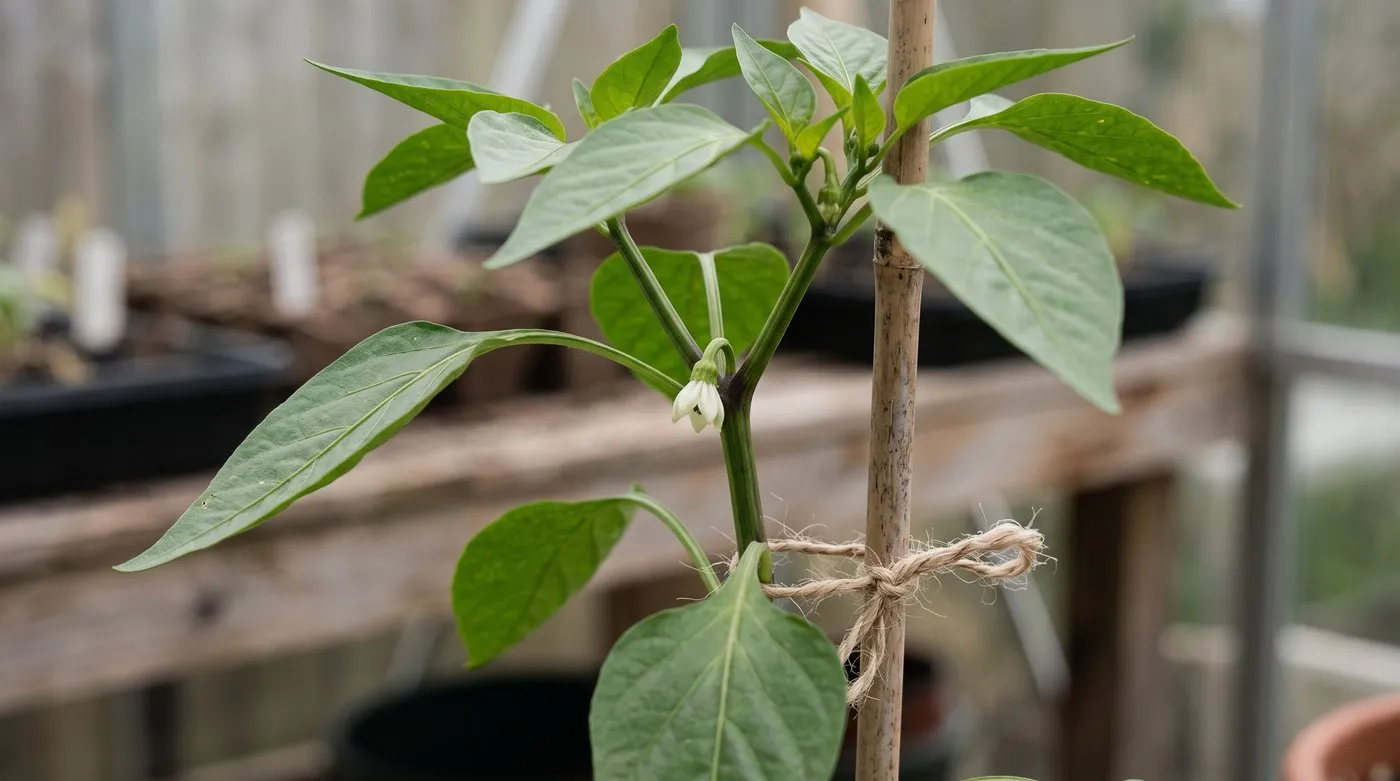
The crown flower sits right where the stem forks. Pick it off and the plant builds more branches before it starts fruiting.
Pollination
Sweet peppers pollinate themselves. In a greenhouse, give the flowering stems a gentle tap or shake now and then. Open doors and vents so bees and hoverflies can drop in.
If the peppers are small or oddly shaped, get more air moving or dab inside each flower with a soft paintbrush.
Growing sweet peppers outdoors
It’s possible, but a bit of a gamble. Pick a warm, sheltered, south-facing spot, ideally in the south. A cool, wet summer can spoil the crop, so in the north stick to a greenhouse.
Hardening off
Get greenhouse-raised plants used to outdoor life over 10-14 days. Start with a few hours outside in a sheltered spot and build up until they’re out day and night. Only plant out after the last frost, usually late May in the south and early June further north.
Best outdoor spots
- A south-facing wall: the wall soaks up heat in the day and gives it back at night. The best outdoor spot.
- Raised beds: they warm up faster and drain well.
- Pots on a sunny patio: dark pots warm the roots, and you can move them under cover in long spells of rain. Growing in containers gives you that flexibility.
Greenhouse or outdoors?
| Greenhouse | Outdoors (south) | Outdoors (north) | |
|---|---|---|---|
| How many peppers | Lots | Fewer | Very few |
| First coloured peppers | Late July onwards | Mid-August onwards | Unlikely |
| Chance of colouring up | Good | Patchy | Poor |
| Growing season | April to October | June to September | June to August |
Growing outside? Stick with early varieties like Gypsy F1 and Mohawk F1. Big types like California Wonder rarely colour up outdoors in the UK.
Feeding sweet peppers
Peppers are hungry once they start flowering. Feed them just like tomatoes.
Before flowering
Give a balanced liquid feed every fortnight. Don’t overdo high-nitrogen feeds, or you’ll get big leafy plants with few peppers.
Once the flowers open
Switch to a high-potash tomato feed and give it twice a week, at the strength on the bottle. Potash helps flowers, fruit and ripening.
Reading the leaves
| What you see | Likely cause | What to do |
|---|---|---|
| Yellow lower leaves | Hungry plant | Give a balanced feed at half strength |
| Purple-tinged leaves | Too cold, or hungry | Keep warmer and give a balanced feed |
| Few peppers setting | Not enough potash | Switch to tomato feed |
| Brown, crispy leaf tips | Too much feed | Water with plain water, feed less |
| Brown, leathery fruit bottoms | Uneven watering | Water regularly, never let pots dry out |
Watering
Water little and often, and evenly. Uneven watering causes blossom end rot, where the bottom of the pepper goes brown and leathery. In hot weather, pots in a greenhouse may need water once or twice a day. Push a finger in; if the top 2cm is dry, water until it runs out the bottom. A mulch of straw or bark helps keep moisture in.
How to ripen sweet peppers from green to colour
Every sweet pepper starts green. Leave it and it turns red, yellow, orange or even chocolate, depending on the variety. Green peppers are fine to eat but taste a bit grassy. Coloured ones are sweeter.
Changing colour takes a few more weeks of warm weather once the pepper is full size. This is the tricky bit in the UK, as cooler September weather slows things right down.
Helping them colour up
- Don’t keep too many. Thin to about 6-8 per standard plant and 4-6 per small one while they’re marble-sized.
- Pick off new flowers from mid-August. They won’t have time to make peppers, and the plant can focus on the ones it has.
- Move pots to your sunniest spot in September, ideally by a south-facing wall.
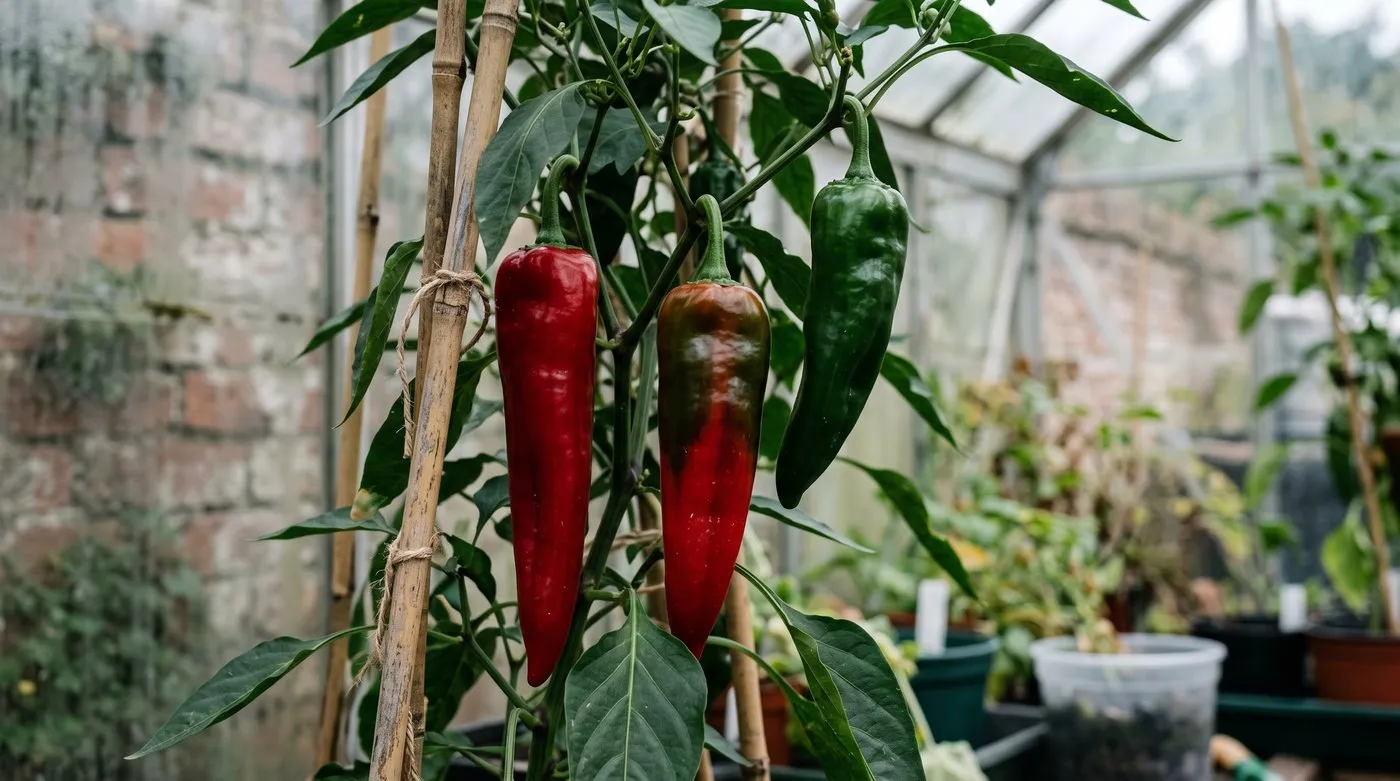
Colour starts at the bottom and works its way up. Pinching off new flowers from mid-August helps the plant ripen the peppers it already has.
Ripening picked peppers indoors
If frost is on the way, pick everything. Full-size green peppers may pick up some colour on a sunny windowsill over a week or two. Tiny ones won’t ripen, so compost them.
Sweet pepper growing calendar month by month
For everything else to sow under glass, see our greenhouse growing calendar.
| Month | What to do |
|---|---|
| February | Sow indoors from late February in a heated propagator or on a heat mat |
| March | Keep sowing until mid-March. Pot on earlier seedlings into 9cm pots |
| April | Pot into final containers. Keep above 16°C. Pick off the crown flower |
| May | Move into the greenhouse. Start hardening off any plants going outside |
| June | Water regularly. Start tomato feed when flowers open. Stake the stems |
| July | First green peppers ready. Feed twice a week. Check shoot tips for aphids |
| August | Main harvest of green peppers. Early ones start colouring. Pick off new flowers from mid-August |
| September | Pick coloured peppers as they ripen. Bring outdoor pots under cover |
| October | Pick everything before the first frost and compost the old plants |
Common mistakes when growing sweet peppers
Dodge these and you’ll get far more peppers.
1. Starting too late
Peppers need a long season. Sow in April or May and you’ll get green peppers at best, or none before the frost.
2. Not enough warmth
Peppers want more steady heat than tomatoes. Cold, draughty spots give stunted plants that flower late and rarely colour up. An unheated greenhouse is the minimum for a reliable crop.
3. Overwatering seedlings
Young plants hate cold, soggy compost. Water sparingly until they’re growing well with a few true leaves, and let the surface dry a little between waterings.
4. Skipping the stakes
A plant loaded with peppers gets heavy. Without a cane, branches snap where they join the main stem. Stake every plant when it goes into its final pot.
5. Keeping every pepper
It’s tempting to keep every one. But too many gives lots of small, green, thin peppers. Thin to 6-8 per standard plant for bigger, sweeter ones.
Pests and diseases affecting sweet peppers
Peppers have fewer problems than many greenhouse crops. Here’s what to look out for.
Aphids
Greenfly and blackfly gather on shoot tips and under young leaves from May. Check plants every week and squash small groups with your fingers. For bigger problems, try ladybird larvae or the tiny parasitic wasp Aphidius colemani, which you can buy as a biological control. Our guide to growing aubergines covers the same pests.
Red spider mite
A pest of hot, dry greenhouses in summer. Leaves get fine yellow speckles, then turn bronze and drop. You may see fine webbing. Damp down and mist to keep the air moist, which they hate. At the first sign, you can buy the predatory mite Phytoseiulus persimilis to eat them.
Blossom end rot
Not a disease, but a watering problem. The bottom of the pepper turns brown, sunken and leathery. The fix is steady, regular watering, never letting the compost dry out. Pick off affected peppers, as they won’t recover.
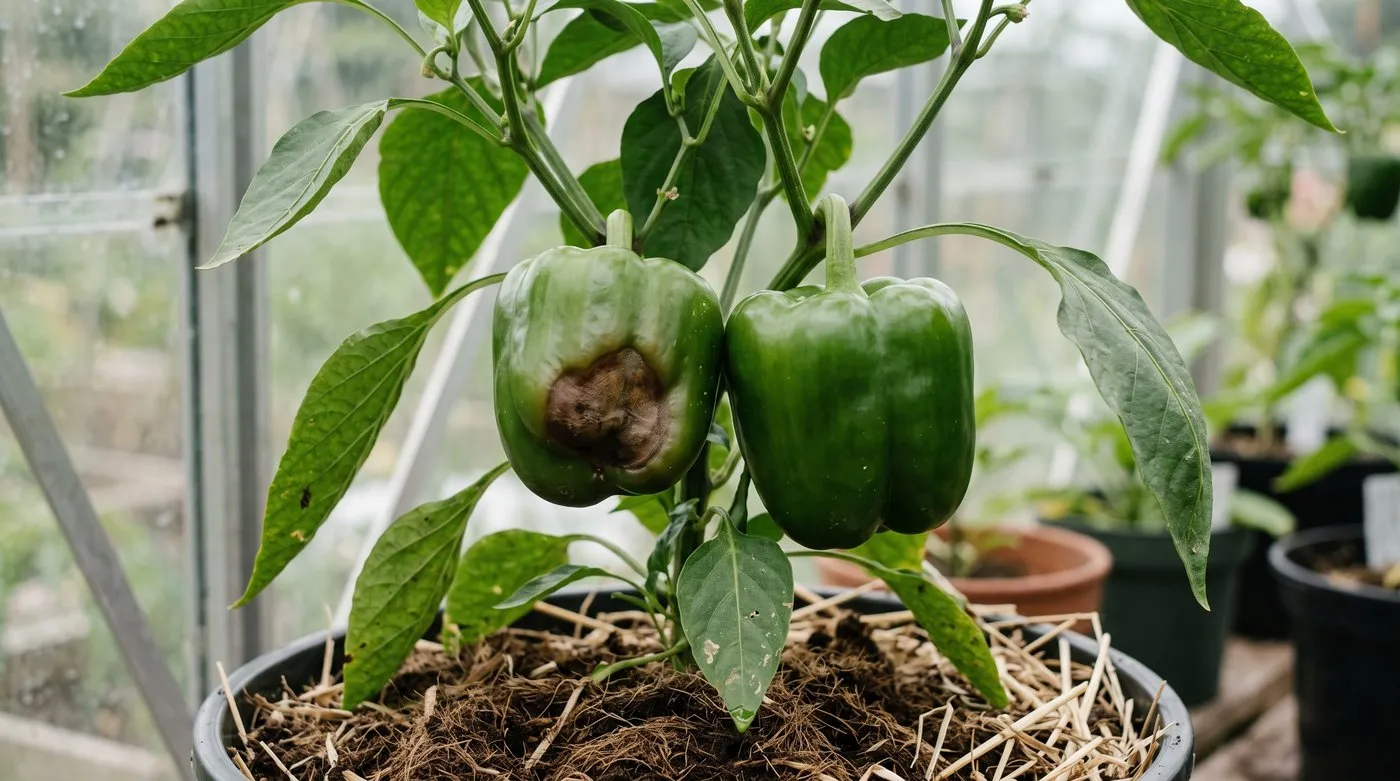
A brown, leathery patch on the base is blossom end rot. Pick that pepper off and keep the watering steady so new fruit stays healthy.
Grey mould
Fuzzy grey-brown mould on fruit, stems or dead flowers. It loves still, damp, cool air. Pick off dead flowers and leaves, give plants space, ventilate even on cool days and water the compost, not the leaves.
 A colourful harvest of red, yellow, orange and green peppers from one greenhouse season.
Harvesting and storing sweet peppers
Cut peppers off with secateurs or a sharp knife, leaving 2-3cm of stalk. Don’t pull them, or you may snap branches or even pull a potted plant out.
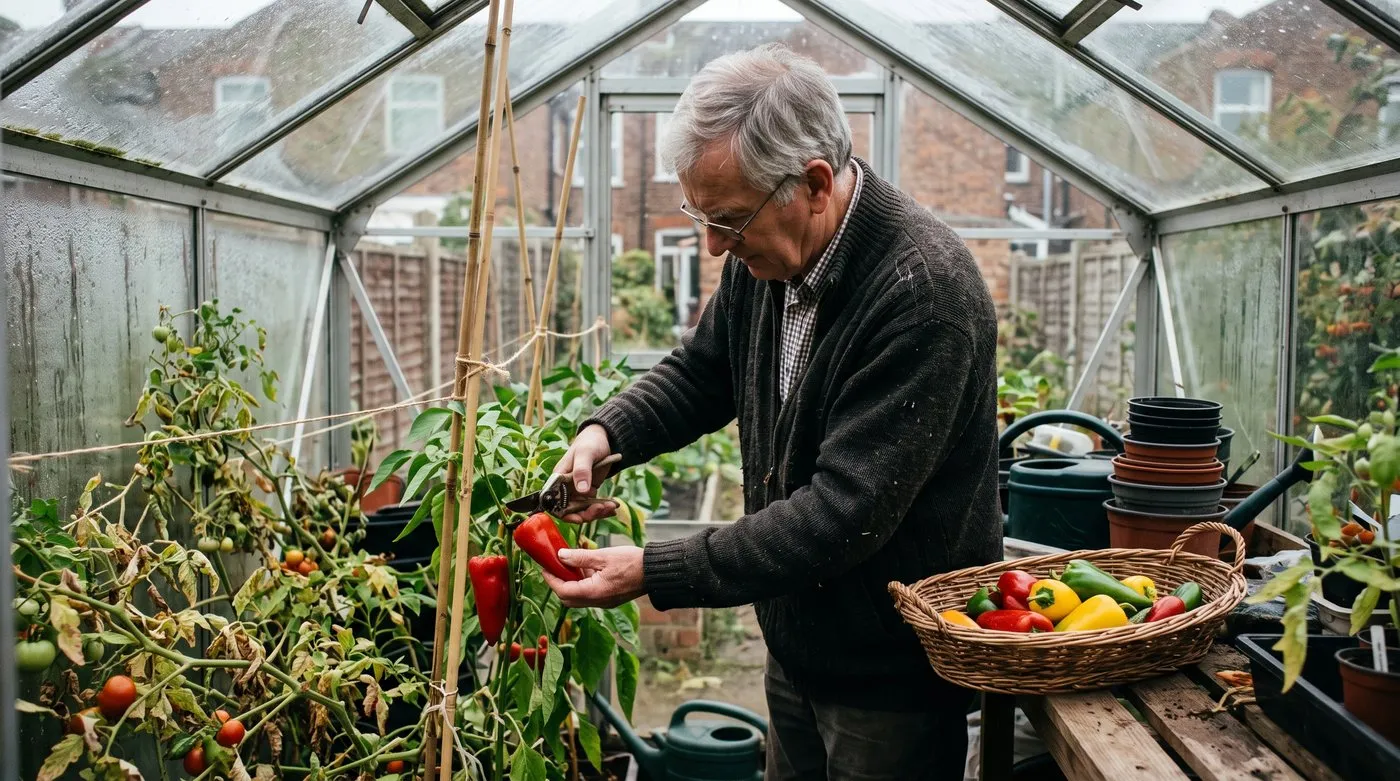
Cut, don’t pull. Leaving a short stalk on each pepper saves snapped branches and keeps the plant cropping.
When to pick
- Green peppers: pick when full size, firm and shiny, usually from July or August.
- Coloured peppers: wait a few more weeks. The colour starts at the bottom and spreads up. Pick when fully coloured for the sweetest taste.
- Keep picking. Regular picking keeps the plant cropping.
Storing
- Fresh: keep them unwashed in the fridge salad drawer for 1-2 weeks.
- Frozen: slice, remove the seeds and freeze on a tray, then bag them up. They’re best in cooked dishes, as they go soft.
- Roasted: roast, peel and deseed, then freeze in portions.
- Dried: slice thinly and dry in a food dehydrator. Store in airtight jars out of the light.
Now you know how to grow sweet peppers from seed to harvest, read our guide on growing aubergines in the UK for another tasty greenhouse crop that likes the same conditions.
Frequently asked questions
When should I sow sweet pepper seeds in the UK?
Sow indoors from late February to mid-March. Peppers need a long season to grow and colour up. Sowing earlier without grow lights gives leggy seedlings, and sowing after April leaves too little time. A heated propagator at 21-25°C gets them going fastest.
Can I grow sweet peppers outdoors in the UK?
Only in a very warm, sheltered spot, mostly in the south. A sunny patio against a south-facing wall can work in a good summer. For a reliable crop, a greenhouse, polytunnel or conservatory is much better.
Why are my sweet peppers not turning red?
They need more warmth and more time. All peppers start green and take a few more warm weeks to colour, and cool nights slow them right down. Pick off new flowers from mid-August and move pots to your sunniest spot.
How many sweet peppers will one plant produce?
Aim to keep about 6-8 peppers on a standard plant. If you leave every fruit, you’ll get lots of small, thin peppers that struggle to colour. Thin some out while they’re marble-sized for fewer, bigger, sweeter ones.
What is the best sweet pepper variety for UK beginners?
Gypsy F1 is a great choice for beginners. It ripens early and crops well in an unheated greenhouse. Mohawk F1 is a good pick for pots and small spaces.
Do sweet peppers need a greenhouse in the UK?
A greenhouse gives the best results anywhere in the UK. Peppers love steady warmth, and a greenhouse gives them a longer season and shelter from wind and rain. A polytunnel or sunny conservatory works too.
What feed should I use for sweet peppers?
Use a high-potash tomato feed once flowering starts. Give it twice a week at the strength on the bottle. Before flowering, a balanced liquid feed every fortnight is plenty.
Our team produces practical UK gardening guidance from source research, contributor records and established horticultural practice. Editorial standards are overseen by Matt W.