
Key takeaways
- Apply to your council or a local allotment association, and ask about half plots
- Read your tenancy agreement before building anything or lighting a bonfire
- Clear and plant one section at a time, and cover the rest to keep weeds down
- A spade, fork, hoe, rake, trowel and watering can are enough to begin
- Potatoes, broad beans, courgettes, beans and salad make a good first-year mix
- Short, regular visits keep a plot under control far better than the odd long day
Starting an allotment is one of the best things a keen gardener can do. You get space to grow far more than a back garden allows, plus friendly neighbours with plenty of advice. The secret to a good first year is simple: take it one section at a time.
This guide walks you through the first steps, from getting a plot to picking your first potatoes. If you’ve already got your keys and want more on crops and rotation, the allotment for beginners guide picks up where this one leaves off.
How do you get an allotment?
Most plots are run by local councils. Search your council’s website for “allotments” or contact its parks department. Some sites are run by parish councils or independent allotment associations, so ask locally as well.
To improve your chances:
- Apply to every site within easy reach, not just the nearest.
- Ask whether half plots or starter plots are available, as these often come up sooner.
- Ask how long each waiting list is, so you know what to expect.
The guide on how to get an allotment covers applying and waiting lists in more detail.
What size allotment should you take?
A full plot is traditionally 10 poles, about 250 square metres. A half plot, about 125 square metres, is the best start for most people. It grows a lot of food without taking over your life.
If you’re offered a full plot, ask whether you can share it or work half while you settle in. The guide to half plots and plot-sharing explains how that usually works.
What to do when you get the keys
Don’t start digging straight away. Spend your first visit getting to know the plot.
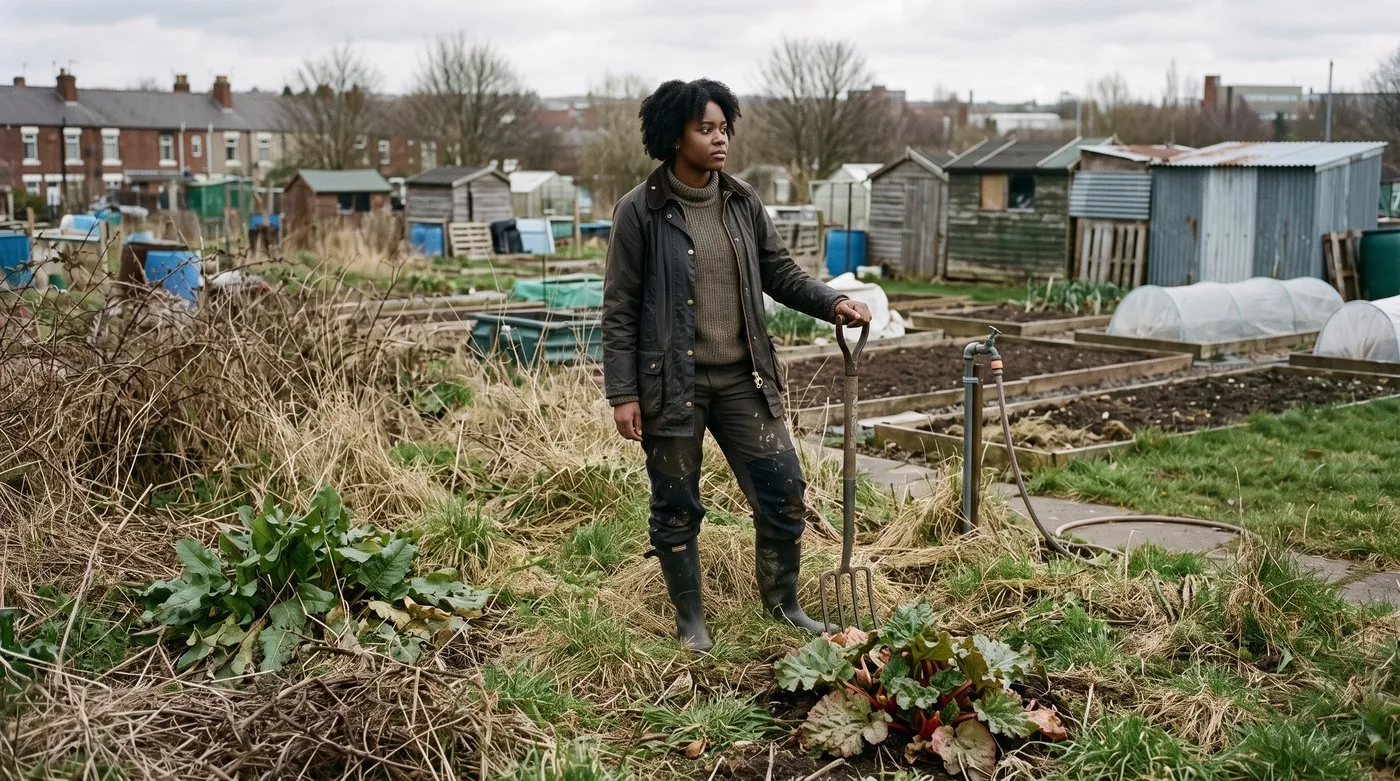
Take a slow walk round on your first visit. Find the tap, the sunny spots and any fruit worth keeping.
- Sun: which parts get the most light? Most veg wants full sun.
- Water: where’s the nearest tap or trough? Carrying cans a long way gets tiring fast.
- Hidden treasure: look for rhubarb, fruit bushes or herbs left by the last tenant.
- Soil: push a fork in. Is it heavy clay, light and sandy, or somewhere in between?
- Weeds: spot perennial weeds such as couch grass, bindweed, docks and brambles.
- Boundaries: check where your plot ends and your neighbour’s begins.
Then read your tenancy agreement properly. It sets out what you can build, whether bonfires are allowed and how much of the plot must be cultivated. The guide to allotment rules covers the common ones.
Gardener’s tip: Introduce yourself to your plot neighbours early. They’ll know which crops do well on the site and where to get manure.
How to clear an overgrown plot
Most new plots are overgrown. Don’t panic: weeds show the soil can grow things.
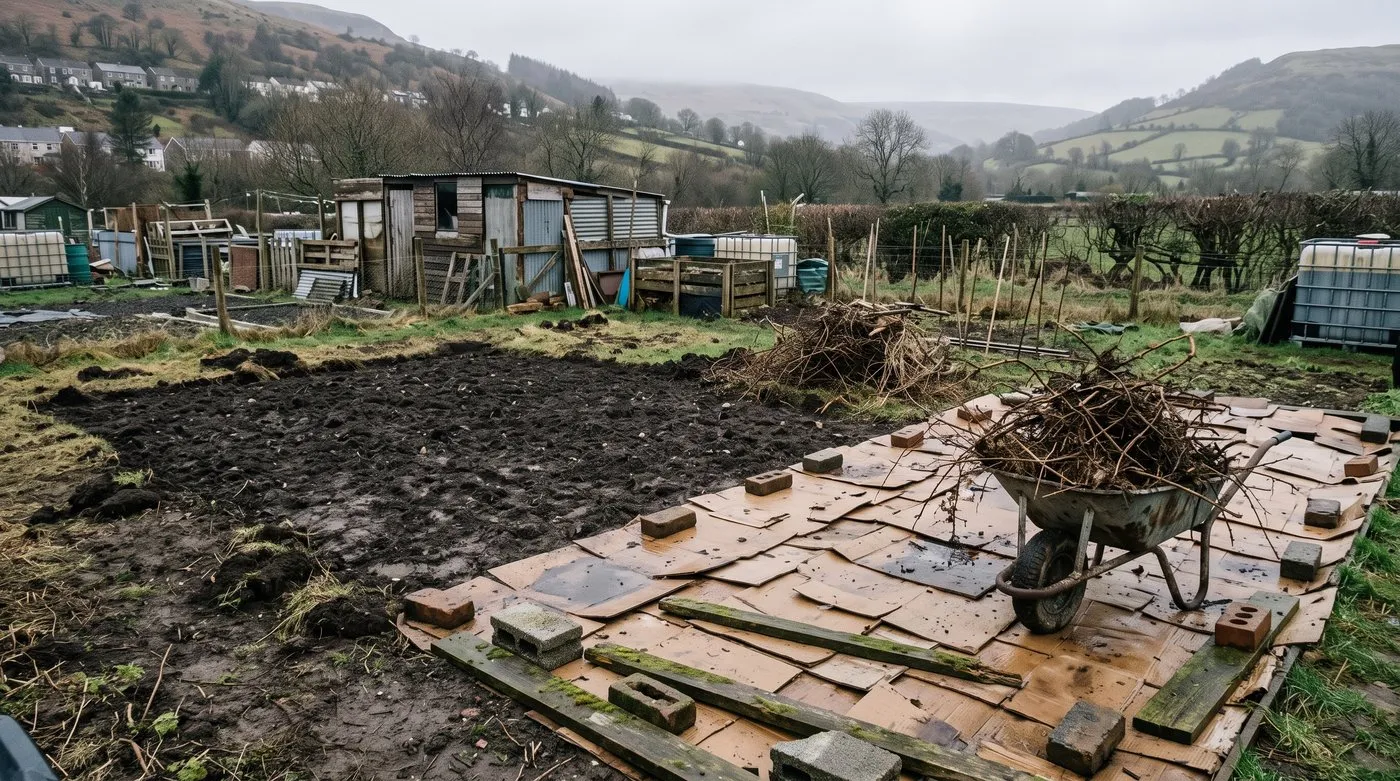
Clear one bed at a time and cover the rest. The cardboard does the weeding while you get started.
- Cut everything down to near ground level.
- Pick out rubbish, glass, old wire and stones.
- Dig out brambles and the roots of docks and other perennial weeds in the first section you want to use.
- Cover the rest with thick cardboard or a light-excluding membrane, weighed down well.
- Plant your cleared section, then move on to the next one.
Covering ground for a season weakens many weeds and saves a lot of digging. The guide to clearing an overgrown allotment has a full step-by-step plan.
Warning: Check your site’s rules before lighting a bonfire, and look underneath piles first. Hedgehogs and other wildlife often shelter in brash heaps.
Planning your allotment layout
A simple layout saves hours later. Divide the plot into beds and paths, plus a few permanent spots.
- Beds about 1.2m wide, so you can reach the middle from either side without treading on the soil.
- Paths between beds, and one main path wide enough for a wheelbarrow.
- Compost bins in a corner. Two or three bays let one fill while another rots down.
- Shed or store on the north side, so it doesn’t shade your crops.
- Fruit along one edge, out of the way of yearly crop rotation.
- Water butts collecting rain from the shed roof.
Many growers split the beds into four groups and move each group of crops along one bed every year. The guide to allotment layout ideas has ready-made plans.

Narrow beds, clear paths and compost in a corner make a plot much easier to look after.
What tools do you need for an allotment?
You need fewer tools than you think. Start with sturdy basics and add more as you go.
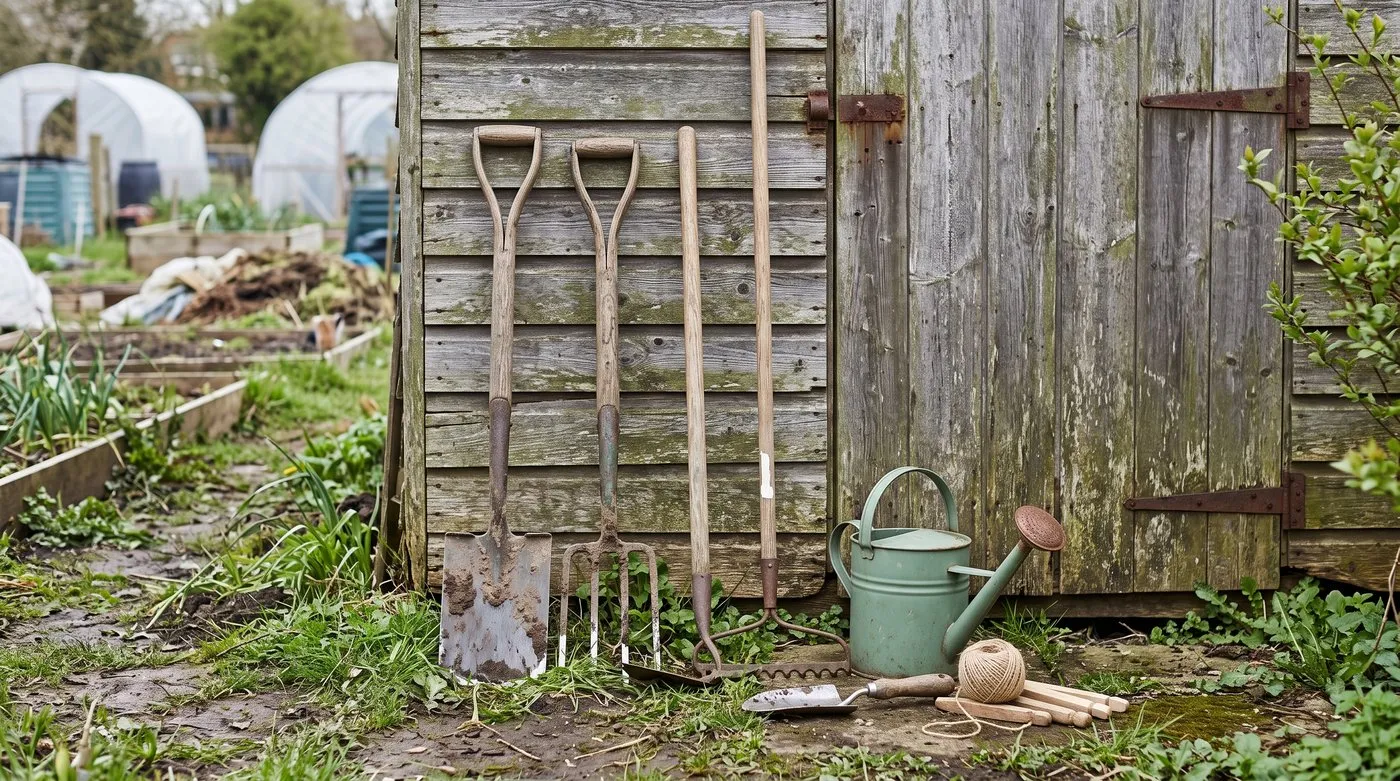
These few basics cover almost every job in your first year.
| Tool | What it’s for |
|---|---|
| Spade | Digging beds, moving compost |
| Fork | Loosening soil, lifting potatoes and weeds |
| Hoe | Slicing off weed seedlings between rows |
| Rake | Levelling soil and making seedbeds |
| Hand trowel | Planting and close weeding |
| Watering can | Watering seedlings and transplants |
| String line and pegs | Marking straight rows |
| Wheelbarrow | Moving compost, manure and weeds |
Some sites have shared wheelbarrows or tool stores, so ask before you buy. Later on you might add netting, fleece, cloches or a cold frame.
What to grow in your first year
Your first year is about learning your plot, so choose forgiving crops that give a good return.
- Potatoes are a classic first crop. Digging them up loosens the soil and leaves a cleared bed. The guide to growing potatoes covers chitting, planting and lifting.
- Broad beans can be sown outdoors in early spring and cope with cold.
- Courgettes are very productive. Two or three plants are plenty.
- Runner and French beans grow fast and crop heavily if you keep picking.
- Salad leaves and radishes are ready within weeks. Sow short rows every few weeks.
- Onion sets and garlic need little care and store well.
Leave fussy crops such as cauliflower, celery and asparagus until year two or three. Brassicas also need netting against pigeons and caterpillars, so add them once you’re settled.

Potatoes are a great first crop. Lifting them in summer leaves you a bed of nicely worked soil.
First-year allotment calendar
| Month | What to do |
|---|---|
| January | Read the tenancy agreement. Order seed potatoes and seeds. Sketch a layout |
| February | Start clearing and covering. Chit seed potatoes on a windowsill |
| March | Plant onion sets. Sow broad beans and early peas. Plant first early potatoes late in the month in mild areas |
| April | Plant more potatoes. Sow beetroot, carrots, radish and salad. Earth up potato shoots |
| May | Sow runner and French beans. Plant out courgettes after the last frost. Hoe weekly |
| June | Lift first early potatoes. Pick broad beans. Water in dry spells |
| July | Pick beans every few days. Harvest courgettes and onions. Sow more salad |
| August | Keep picking. Lift and dry onions. Sow green manure on empty beds |
| September | Lift maincrop potatoes. Clear spent crops. Note what worked |
| October | Plant garlic. Spread compost or manure on empty beds. Plant fruit bushes |
| November | Mulch beds. Mend paths, bins and the shed |
| December | Rest, plan next year and order seed catalogues |
Common mistakes new allotment holders make
- Taking on too much. A neglected full plot is worse than a tidy half plot. Start small.
- Clearing everything at once. You’ll burn out. Clear, plant and cover in sections.
- Leaving ground bare. Bare soil fills with weeds. Cover it or sow a green manure.
- Ignoring the soil. Add compost or well-rotted manure every year.
- Sowing everything in one go. You’ll get a glut, then nothing. Sow little and often.
- Visiting too rarely. Weeds and pests move fast in summer. Pop in two or three times a week.
Getting involved with your allotment site
An allotment is a community as well as a plot. Neighbours swap advice, seedlings and surplus courgettes. Many sites hold working days to look after shared paths and hedges, and these are a great way to meet people.
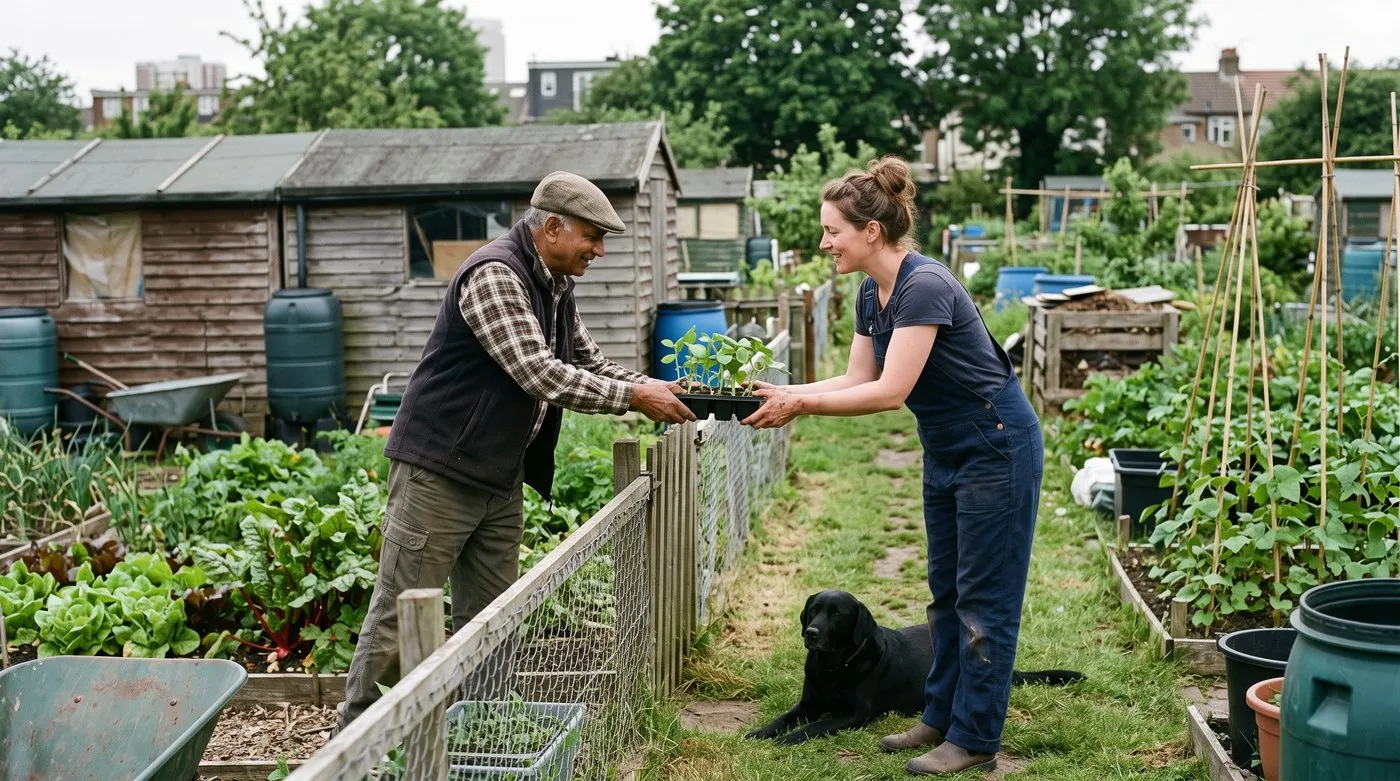
Allotment neighbours are generous with seedlings and advice. Say hello early on.
Neighbours often water for each other during holidays, so offer to return the favour. If your site has a committee or newsletter, it’s the best place to hear about deliveries of manure or woodchip.
Frequently asked questions
How do I apply for an allotment in the UK?
Contact your local council or a nearby allotment association. Most councils have an online form or a parks department to contact. Some sites are run by parish councils or private associations, so ask locally too. Applying for more than one site can shorten your wait.
How long is the wait for an allotment?
It varies hugely from site to site. Busy towns and cities can have waits of several years, while some rural sites have plots free straight away. Ask each site how long its list is. Asking for a half plot often gets you in sooner.
How much does an allotment cost?
Rent is set by your council or association and varies a lot. It is usually a modest yearly fee, often with concessions for pensioners and people on certain benefits. Ask whether water is included. Your first year costs more because of tools and supplies.
What size is a standard allotment plot?
A full plot is traditionally 10 poles, about 250 square metres. Half plots of about 125 square metres are common and suit most beginners. Some sites also offer smaller starter plots or raised-bed plots.
What should I grow on a new allotment?
Potatoes, broad beans, courgettes, runner or French beans and salad leaves. They are forgiving and give good harvests. Onion sets and garlic are easy too. Leave fussier crops, like cauliflower and asparagus, until your soil and confidence have built up.
How much time does an allotment need?
A few hours a week, more from late spring to late summer. Two or three short visits a week work better than one long session. Winter needs much less time, mostly tidying, planning and ordering seeds.
Can I put a shed on my allotment?
Often yes, but check your tenancy agreement first. Most sites limit the size and position of sheds, greenhouses and polytunnels, and some need permission before you build. Some sites have shared tool stores instead.
Got your plot cleared and planted? The four-year crop rotation plan shows how to move your crops round the beds from year two. Find more grow-your-own ideas on the growing hub.
Our team produces practical UK gardening guidance from source research, contributor records and established horticultural practice. Editorial standards are overseen by Matt W.


