
Key takeaways
- The hungry gap runs from late March to mid-May, a little later in the north
- Purple sprouting broccoli is the star crop, picked from late winter into spring
- Overwintered leeks stand in the ground until you need them
- Winter salads under a cloche give fresh leaves all winter and spring
- Forced rhubarb is the first "fruit" of the year
- Most hungry gap crops are sown the summer or autumn before
The hungry gap is the trickiest bit of the growing year. From late March to mid-May, the stored potatoes are sprouting, the last carrots have gone soft, and this year’s sowings are still tiny seedlings. The good news? A handful of hardy crops will keep you in fresh veg right through it. The catch is that you have to sow them the summer or autumn before.
What is the hungry gap and when does it happen?
It’s the gap between the last of the winter harvest and the first spring crops. In southern England it usually runs from late March to early May. Further north it stretches into mid-May, and in Scotland it can last into early June.
Long ago this was a real time of shortage. By March the winter stores were nearly empty and fresh greens were still weeks away.
Most of us see a smaller version today. The frozen beans are nearly gone, the squash has gone soft, and the new peas are only a few centimetres tall. For six weeks or so, the plot can look pretty bare.
The fix is the same as it ever was. Grow crops that are ready in this window, and sow them the year before.
Which crops bridge the hungry gap in the UK?
Lots of veg survive winter, but they don’t all crop in spring. These are the ones that actually give you something to pick during the gap.
 Purple sprouting broccoli keeps sending up fresh spears for weeks from late winter.
How do I grow purple sprouting broccoli for the hungry gap?
Purple sprouting broccoli is the hero of the hungry gap. It takes up space for most of a year, but nothing else gives you so much fresh green food in March and April.
Sow in April or May the year before. Use modules on a windowsill or in a cold frame. Plant out in June or July, 60cm apart, in firm soil with plenty of manure dug in. The plants grow tall, so stake them in windy spots.
It needs a proper spell of cold weather to start flowering, so a very mild winter can mean fewer spears. Early varieties such as ‘Rudolph’ and ‘Red Arrow’ can crop from late January in a good year. ‘Late Purple Sprouting’ carries on into May.
Pick the spears when they’re tight and about 10-15cm long. Take the middle one first. Side shoots keep coming for weeks, and the more you pick, the more you get. Stop once the buds start opening into yellow flowers.
Pigeons love it, so net the plants from October. Cabbage white caterpillars are the late-summer menace, so check leaves weekly in August and September. Whitefly may gather under the leaves but rarely do much harm.
What winter salads grow through the hungry gap?
With a little cover, you can pick fresh salad all winter and spring. Sow in September under a cloche, cold frame or low tunnel and you’ll be picking from November through to April.
Lamb’s lettuce (corn salad) is the toughest salad leaf of all. Its small, round leaves have a mild, nutty taste. Sow in September in rows 15cm apart. It’s slow to start but crops steadily from November. Under cover the leaves stay clean and tender. Uncovered, they survive but get muddy.
Winter purslane (Claytonia) is nearly as hardy. Its juicy, heart-shaped leaves have a mild, fresh flavour. Sow in September and thin to 10cm apart. It self-seeds happily, so once you have it, it tends to come back every year. It copes with shade and poor soil too.
Wild rocket regrows after cutting and gets through winter well. Pick it over salad rocket, which bolts fast and dies in hard frost. Wild rocket romps back into growth in March, and the cold makes it even more peppery.
A fleece tunnel over wire hoops is cheap and gives salads useful frost protection. Our guide to cloches and low tunnels shows you how to make one.
 Lamb’s lettuce, rocket and winter purslane keep growing through winter in a cold frame.
Can I grow spring cabbage and kale through the gap?
Yes. Along with purple sprouting broccoli, these are the backbone of the hungry gap. All are sown the summer before and stand up to hard frost.
Spring cabbage sown in July or August gives you fresh pointed heads or loose spring greens by April.
Kale is one of the hardiest veg you can grow. ‘Cavolo Nero’ and ‘Dwarf Green Curled’ both laugh at frost, and the leaves taste sweeter after a cold snap. Pick a few outer leaves each week and never strip a plant bare. Six plants sown in May will keep you going from October to April. Our kale growing guide has more on varieties and sowing.
Perpetual spinach isn’t true spinach. It’s a leaf beet, related to chard, and it’s a hungry gap star that hardly anyone talks about. Sow in August, thin to 20cm apart and pick outer leaves from October. It regrows after every cut. While this spring’s spinach is still a seedling, last August’s perpetual spinach is giving you full-sized leaves.
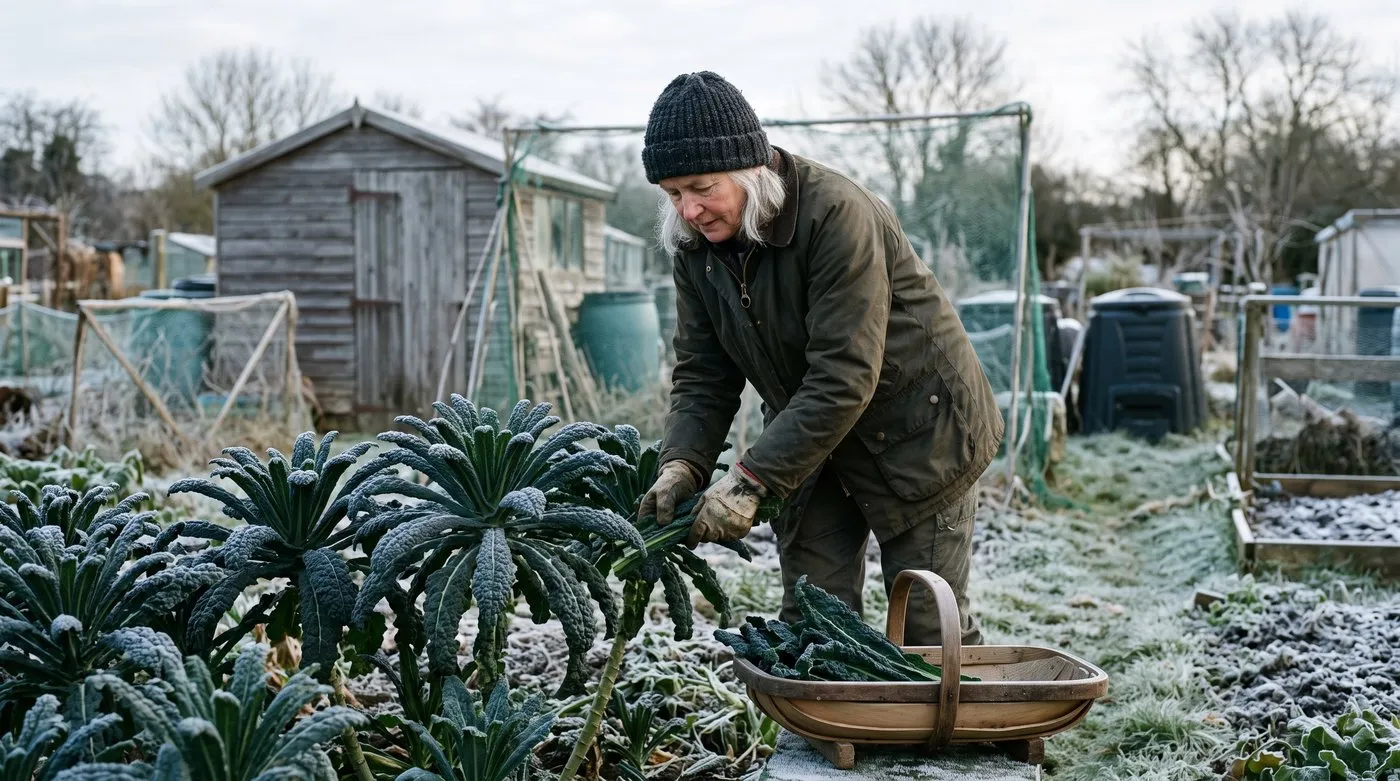
Pick a few outer leaves from each kale plant every week and never strip it bare. A cold snap makes the leaves taste sweeter.
How do overwintered leeks and onions fill the gap?
Leeks are the easiest crop on this list. They sit in the ground until you want them, through frost, snow and soggy soil. A row of winter leeks is the best insurance against an empty spring kitchen.
Sow leeks in March or April in a seedbed or modules. In June, make 15cm-deep holes with a dibber, 15cm apart in rows 30cm apart. Drop a seedling into each hole and fill it with water, not soil. The holes slowly fill on their own, giving you long white stems.
Choose late, winter-hardy varieties. ‘Musselburgh’ is the classic allotment leek and stands from November to May. ‘Bandit’ and ‘Apollo’ are good too. Avoid early varieties like ‘King Richard’, which are meant for autumn and bolt as spring warms up. Our leek growing guide has the full how-to.
Overwintering onion sets are a handy extra. Plant sets of ‘Radar’, ‘Senshyu Yellow’ or ‘Electric Red’ in October, 10cm apart in rows 25cm apart. They root before winter and give you bulbs weeks ahead of spring-planted sets. A few may bolt after a hard winter. Pull those straight away and use them fresh. Our onion growing guide covers autumn and spring planting.
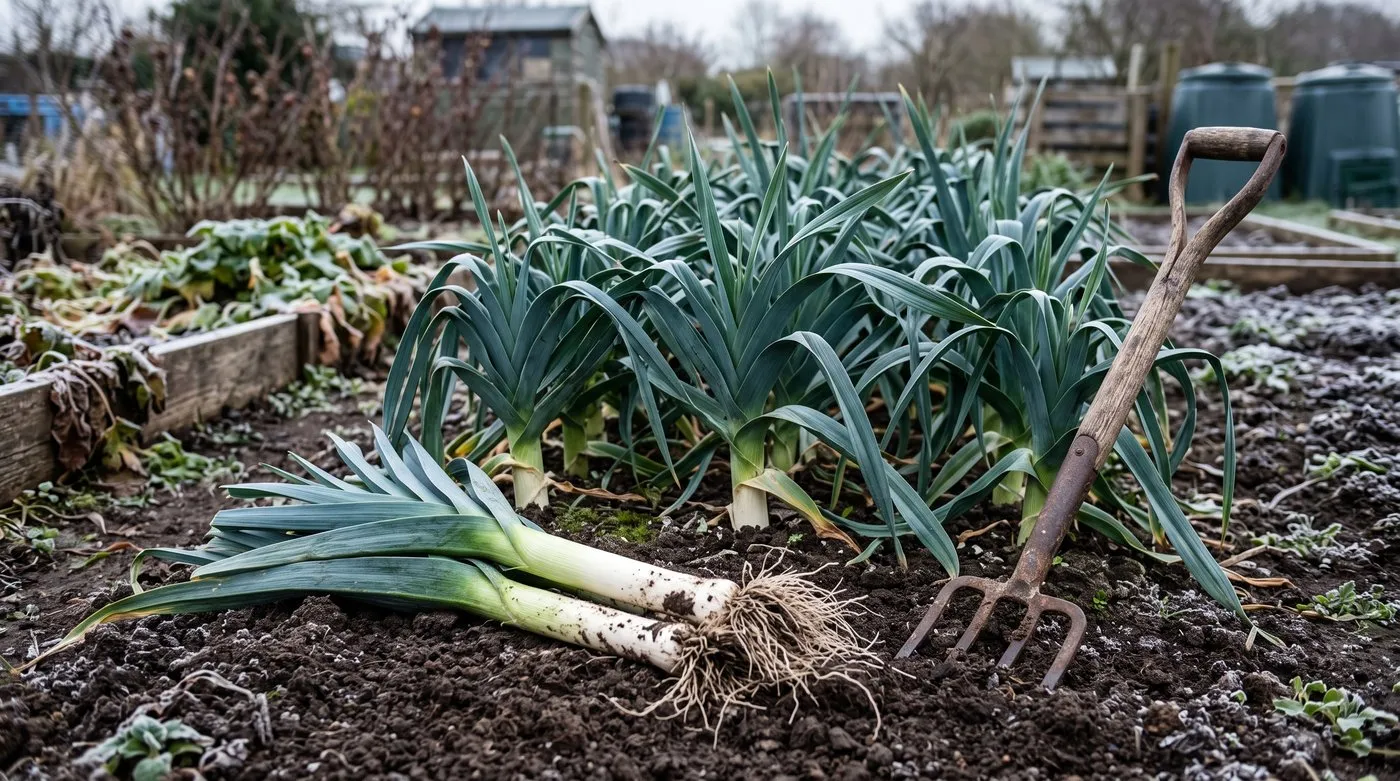
Hardy winter leeks sit happily in the ground until you need them, through frost and snow, right into May.
How do I force rhubarb for the earliest spring harvest?
Forced rhubarb is the first “fruit” of the year, and it’s very easy. Keep a dormant crown in the dark and it sends up pale, tender stems.
Put a forcing pot or upturned bin over a dormant crown in late January. It must block out all the light. A traditional terracotta forcing pot looks lovely, but an old dustbin weighed down with a brick does the job just as well.
About 4-6 weeks later you’ll have long, bright pink stems. They’re more tender and delicate than outdoor rhubarb, and look wonderful in a crumble.
 Bright pink forced rhubarb, ready about 4-6 weeks after covering.
Forcing tires the plant out, so only force crowns at least 3 years old, and no more than every other year. After picking, take the pot off, mulch with well-rotted manure and leave the crown to recover all year. Our rhubarb growing guide has more.
What perennial crops produce during the hungry gap?
Two perennial vegetables give you spring food every year with no sowing at all. Once settled, they need almost no work.
Sorrel has sharp, lemony leaves and is very hardy. French sorrel is milder than common sorrel. It pops up in March and keeps going until the hard frosts. Young leaves are great in salads, and older ones make a lovely soup with a potato, stock and a knob of butter. Divide clumps every 3-4 years to keep them lively.
Good King Henry is an old British kitchen-garden plant, grown long before spinach was common. Young shoots appear in March and can be cooked like asparagus. The leaves are eaten like spinach through spring. It copes with clay, part shade and poor soil, and once settled it comes back for years.
Both pair nicely with fruit bushes, as our companion planting guide explains.
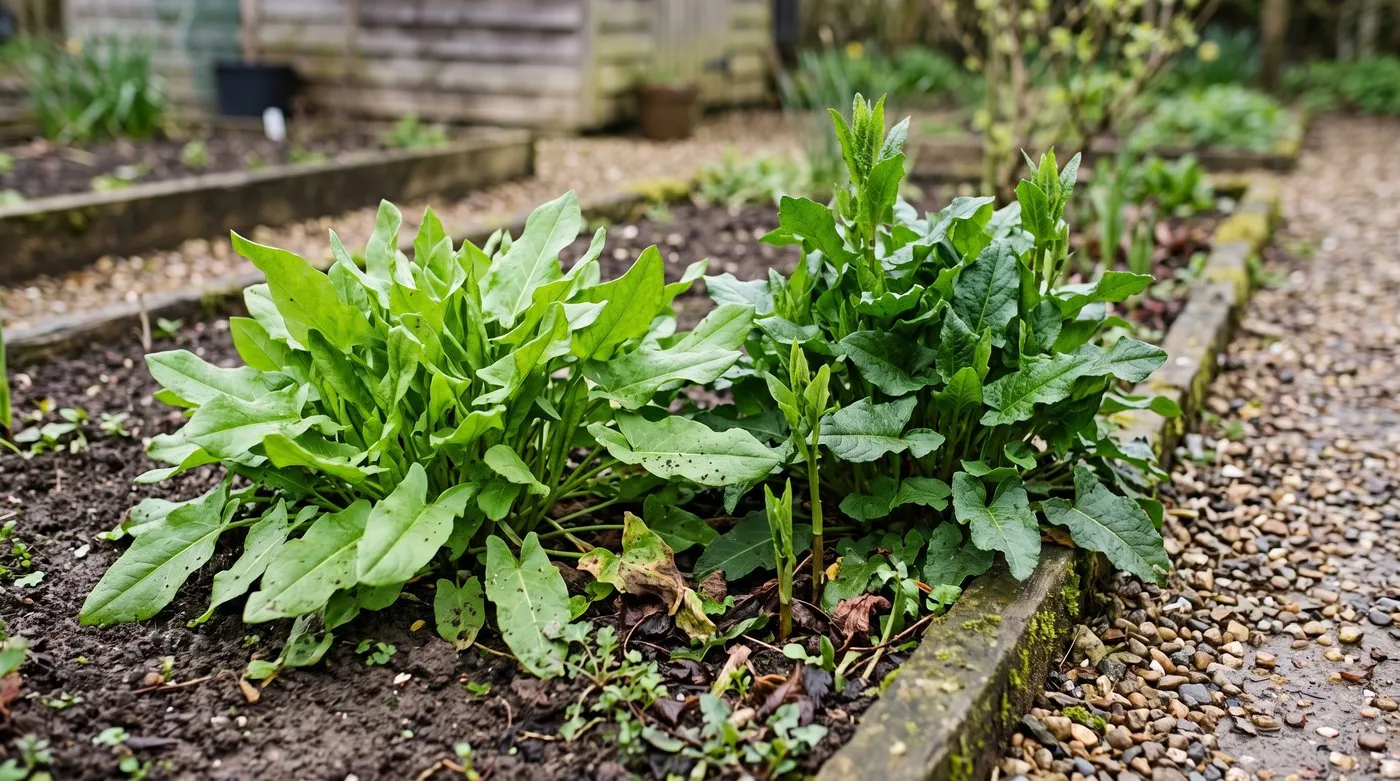
Sorrel and Good King Henry come back every spring with no sowing at all. Pick young sorrel leaves for salads and cook the shoots of Good King Henry.
What can I still sow now to fill the hungry gap?
Missed the autumn sowings? Don’t worry. A few quick crops sown under cover in March or April are ready in a matter of weeks. They won’t replace the main crops, but they help with the worst of it.
Radishes are the speediest of all. ‘French Breakfast’ and ‘Cherry Belle’ sown under cloches in March are ready in about a month. Sow them where they’re to grow in rows 15cm apart and thin to 5cm. No feeding needed.
Lettuce sown under glass in March gives loose leaves in about 6 weeks. Choose varieties that like the cool, such as ‘Winter Density’, ‘All the Year Round’ and ‘Lollo Rossa’. Sow in modules and plant out when they have 4 proper leaves. A cold frame or unheated greenhouse is fine. Sow a little every 2-3 weeks for a steady supply, as our succession planting guide explains.
Spring onions sown in March under cloches are ready in 8-10 weeks. ‘White Lisbon’ is the classic. Our spring onion growing guide covers sowing through the season.
Spinach (true spinach) sown in March under a low tunnel gives baby leaves in 5-6 weeks. Pick a bolt-resistant variety for spring sowing.
These quick crops buy you time, but the real answer is planning ahead. Pop next year’s hungry gap sowings into the seed sowing calendar now.
Stored crops and preserves that stretch through spring
Stored food is your back-up plan. A cool, dark shed and a few simple tricks can make autumn crops last into April.
Potatoes keep well in hessian or paper sacks somewhere cool, dark and frost-free. Maincrop varieties such as ‘Sarpo Mira’ and ‘Cara’ store far better than earlies. Check them monthly and remove any that are rotting or green. The potato growing guide covers storage too.
Parsnips can stay in the ground under a thick straw mulch until March. Frost makes them taste sweeter, so January and February parsnips are the best. Or lift them in November and store them in boxes of slightly damp sand.
Winter squash such as ‘Crown Prince’ keeps for months if you cure it first. Leave it in the sun for about 10 days after picking to harden the skin, then store it on a shelf indoors somewhere cool but not cold.
Preserves fill the last gaps. Dried beans for stews, sauerkraut, chutney, pickled beetroot and frozen tomato sauce from the September glut all help stock the hungry gap cupboard.
Planning your hungry gap: month-by-month calendar
Work backwards from what you want to eat in March to May. Pin this to the shed wall.
| Month | What to do |
|---|---|
| March-April | Sow leeks |
| April-May | Sow purple sprouting broccoli and kale |
| June-July | Plant out leeks and purple sprouting broccoli |
| July-August | Sow spring cabbage, perpetual spinach and chard |
| September | Sow winter salads under cloches. Put up low tunnels |
| October | Plant overwintering onion sets. Mulch parsnips to leave in the ground |
| November-January | Pick kale, leeks, chard and spinach. Force rhubarb from late January |
| March-May | Enjoy the hungry gap crops: purple sprouting broccoli, spring cabbage, leeks, salads, sorrel and forced rhubarb |
The biggest mistake is leaving it until March, when it’s too late. Pop the sowing dates in your allotment planner and treat them as appointments.
For more variety ideas, Garden Organic’s hungry gap guide is well worth a read. The RHS vegetable growing pages are handy for sowing dates.
Frequently asked questions
What is the hungry gap in UK gardening?
It’s the lean spell from late March to mid-May. Winter veg has finished, and spring sowings are still too small to pick. The name goes back centuries in British farming. In northern England and Scotland it can run into early June, as spring arrives later.
What are the best crops to grow for the hungry gap?
Purple sprouting broccoli, leeks, spring cabbage and perpetual spinach. All four shrug off frost and grow happily outdoors. Purple sprouting broccoli keeps giving spears for weeks, leeks wait in the ground until you need them, and perpetual spinach regrows after every picking.
When should I sow hungry gap crops?
Between April and October the year before. Sow purple sprouting broccoli in April or May, spring cabbage in July or August, and winter salads in September. Plant overwintering onion sets in October. Miss a sowing window and you’ll usually have to wait a year.
Can I still grow food if I missed the sowing window?
Yes, a little. Perennials like sorrel, Good King Henry and rhubarb come back every spring with no sowing. You can also sow quick crops under cloches in March. Radishes, baby salad leaves and spring onions are ready in a few weeks and help fill the gap while you plan for next year.
Do hungry gap crops need a greenhouse?
No, most grow outdoors without any cover. Purple sprouting broccoli, leeks, kale, spring cabbage, chard and perpetual spinach all cope with UK winters in open ground. A cold frame, cloche or fleece tunnel lets you add winter salads. A greenhouse is handy but not essential.
How do I force rhubarb for an early spring harvest?
Cover a dormant crown with a light-proof pot in late January. A forcing pot, upturned bin or bucket all work, as long as no light gets in. Pale pink stems are ready about 4-6 weeks later. Only force crowns at least 3 years old, and give each one a full year off afterwards.
How much food can I grow during the hungry gap?
With a bit of planning, something fresh every week. Purple sprouting broccoli, leeks, kale, spring cabbage and winter salads keep coming through spring. Add stored roots, forced rhubarb and perennial greens, and the hungry gap feels more like a gentle trickle than bare beds.
Our team produces practical UK gardening guidance from source research, contributor records and established horticultural practice. Editorial standards are overseen by Matt W.


