
Key takeaways
- Plant one-year crowns in late March or April, 45cm apart in a trench 20cm deep
- Leave every spear to grow for the first two years so the roots can build up
- Cut spears from mid-April to mid-June, then stop and let the ferns grow
- All-male varieties like Gijnlim and Millennium give more spears and don't self-seed
- Mulch with compost every autumn and weed by hand, never with a hoe
Asparagus rewards patience like no other vegetable. Plant a bed this spring, leave it alone for two years, then cut tender spears every April to June for the next twenty years or more. That’s a lot of return from one afternoon’s digging.
The two-year wait puts many people off, but those years pass anyway. Plant in spring 2027 and you’ll have your first light harvest in spring 2029. If you’re planning a new growing area, our guide to starting a vegetable garden covers choosing a site and preparing the soil.

Asparagus spears pushing through the soil in April, the first sign of a lovely spring treat.
Which asparagus varieties grow best in the UK?
All-male varieties such as Gijnlim, Backlim and Millennium are the best choice for most UK gardens. All-male plants put their energy into spears rather than berries and seeds, so you get more to cut. Female plants make red berries, and the seedlings that follow pop up like weeds in the bed.
Best varieties for UK gardens
Gijnlim is a reliable all-rounder from the Netherlands. It’s all-male, with thick, straight, green spears, and it starts cropping early in the season.
Connover’s Colossal is an old variety that has been grown in Britain since Victorian times. It gives thick spears with good flavour. It isn’t all-male, so expect some berries and self-sown seedlings.
Pacific Purple has lovely purple spears with a sweet, nutty taste. The colour fades to green when cooked, so try them raw in salads. It’s a little less vigorous than Gijnlim.
Millennium is an all-male variety known for heavy crops of medium-thick spears with tight tips. A good pick if you want plenty from a small space.
Backlim is another all-male Dutch variety with fat spears. It’s a good choice alongside or instead of Gijnlim.
Variety comparison table
| Variety | All-male? | Spear colour | Best for |
|---|---|---|---|
| Gijnlim | Yes | Green | Reliable all-rounder, early spears |
| Connover’s Colossal | No | Green | Traditional, heritage choice |
| Pacific Purple | No | Purple | Salads and sweet flavour |
| Millennium | Yes | Green | Heavy crops from a small bed |
| Backlim | Yes | Green | Fat spears |
Gardener’s tip: Plant an all-male variety like Gijnlim or Millennium for your main crop, then add a short row of Pacific Purple for salads. The purple spears are lovely raw, straight from the garden.
How to plant asparagus crowns
Plant one-year crowns in late March or April, spreading their roots over a ridge of compost in a trench 20cm deep. Most people grow asparagus from crowns rather than seed. Crowns look a bit like pale spiders or starfish, with a central bud and long fleshy roots. Suppliers send them out dormant in early spring.

Planting crowns in a trench, with the spidery roots spread over a ridge of soil.
Choosing and buying crowns
Buy one-year crowns rather than older ones. They settle in better because their roots are less damaged when they’re lifted and moved.
Crowns should arrive firm, plump and slightly damp. Plant them as soon as you can. If you have to wait a day or two, wrap them in damp newspaper and keep them somewhere cool. Never let the roots dry out.
Preparing the trench
Asparagus needs well-drained, fertile soil in full sun. Wet ground is its biggest enemy. If your soil is heavy clay, think about raised beds, which drain much better.
- Dig a trench 30cm wide and 20cm deep along the bed
- Fork over the bottom to loosen it
- Spread a ridge of garden compost about 5cm high along the middle of the trench
- Shape it into a low mound running the length of the trench
For more than one row, leave 90-100cm between trenches. That gives the ferns room and you space to walk.
Planting method
- Sit each crown on top of the ridge, bud pointing up
- Spread the roots down the sides of the ridge, like a spider on a mound
- Space crowns 45cm apart
- Cover with 5-8cm of soil, leaving the trench partly open
- As the shoots grow through the first summer, gradually fill the trench back to ground level
- Water well and keep the soil moist through the first summer
Filling the trench bit by bit helps the crowns get going. Burying them deep straight away slows them down.
The two-year waiting period
This is the hard part. For the first two years after planting, don’t cut any spears at all. Every spear needs to grow into tall, feathery fern. The fern feeds the roots, and the roots feed your future harvests.
What to expect in year one
Thin shoots appear from mid-April. They look nothing like the fat spears to come, so just let them grow. By midsummer each crown has a few fern stems, often head height or close to it. The fern is pretty in its own right.
Weed by hand. Don’t hoe near the crowns, because the roots sit close to the surface. A mulch of 5-8cm of garden compost in late autumn keeps weeds down and feeds the crowns at the same time.
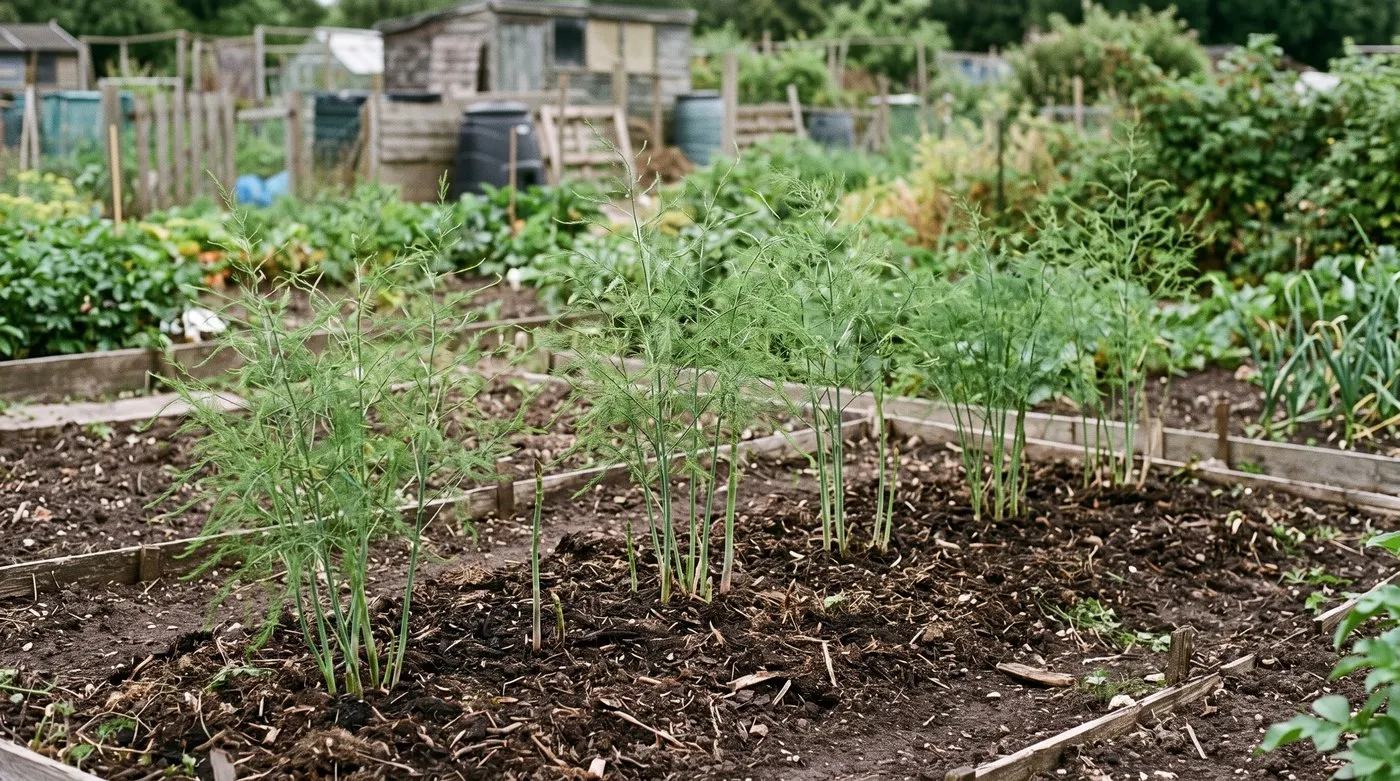
In year one, let every shoot grow into fern. It looks lovely and it’s busy feeding the crowns for years of spears to come.
What to expect in year two
Growth is stronger in the second year, with more and thicker shoots. You’ll be tempted to cut a few. Don’t! The roots are still building up. Let every spear turn into fern, keep weeding by hand, and mulch again in autumn.
Year three: the first harvest
In the third spring, cut lightly for about four weeks, from mid-April to mid-May. Take only the thickest spears and leave anything thinner than a pencil to grow on.
From year four onwards, harvest for the full season, from mid-April to mid-June.
When and how to harvest asparagus
The season is short: mid-April to mid-June, then you stop. That’s what makes home-grown asparagus such a treat.

A freshly cut bundle of spears. Asparagus is at its sweetest eaten soon after cutting.
Cutting technique
Cut spears when they’re 15-20cm tall and the tip is still tight. Use a sharp knife and slice just below the soil surface. A special asparagus knife is nice to have, but any sharp knife does the job.
Check the bed every day or two at the peak of the season. Spears shoot up fast in warm weather. If you leave them too long, the tips open into ferny fronds and the stems turn tough.
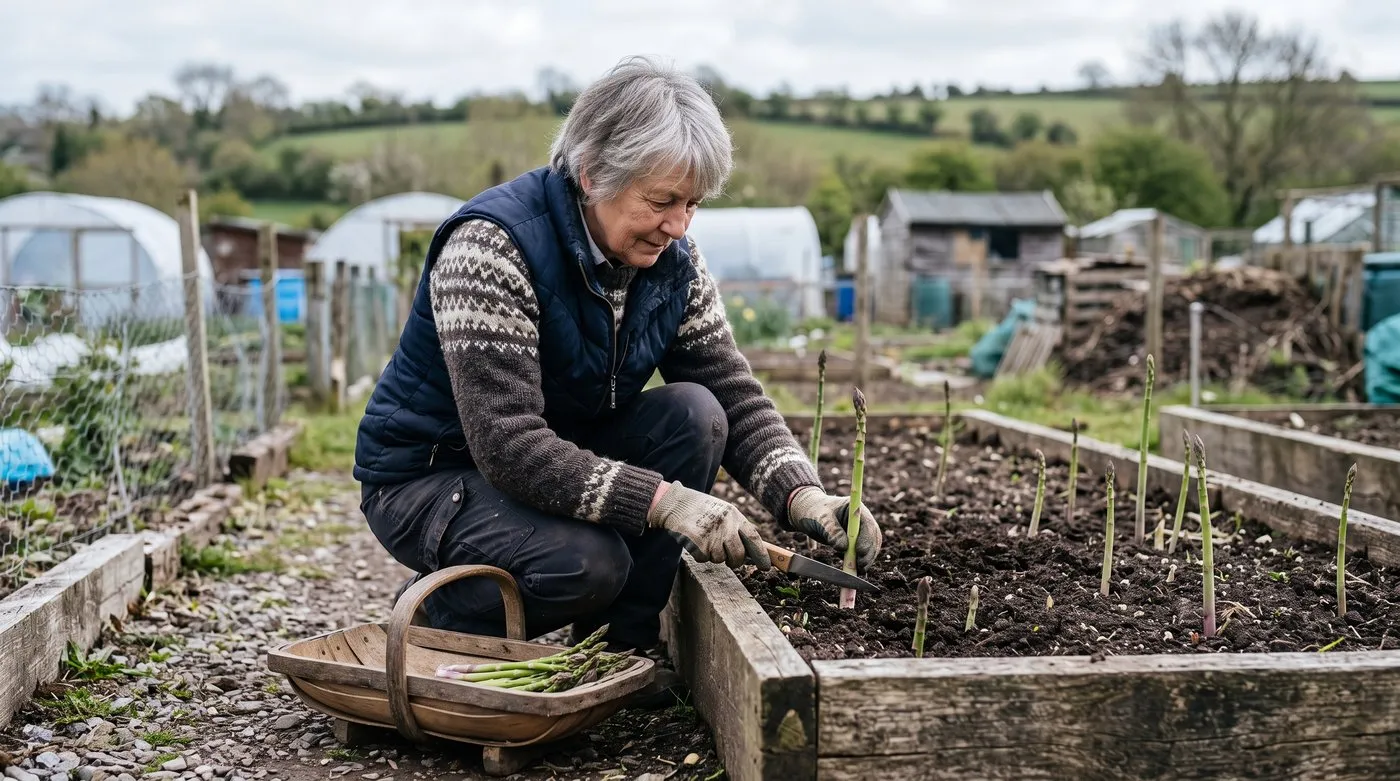
Cut spears when they’re 15 to 20cm tall with the tip still tight. In warm weather check every day or two, as they shoot up fast.
When to stop harvesting
Stop cutting in mid-June. Many gardeners use 21 June, the longest day, as their last day. After that, leave every spear to grow into fern. The fern spends summer and autumn building up energy for next spring’s crop.
Cutting later into summer robs the plant of that growing time, and next year’s spears will be fewer and thinner.
What to do with the fern
Leave the fern standing through summer and autumn. It turns yellow, then brown, as the weather cools. Cut it down to about 5cm in late October or November, once it has died back completely. Cutting it while still green wastes the energy going back down to the roots.
Clear the cut fern off the bed. This leaves fewer hiding places for asparagus beetles over winter.
Asparagus month-by-month calendar
Here’s the year for an established bed (year three onwards). Our UK vegetable planting calendar shows how asparagus fits in with your other crops.
| Month | What to do |
|---|---|
| January | Plan new beds and order crowns. |
| February | Prepare planting trenches on dry days and add compost. |
| March | Plant one-year crowns from late March when the soil is workable. |
| April | Start cutting established beds when spears reach 15-20cm. |
| May | Keep cutting. Hand-weed carefully between crowns. |
| June | Stop cutting by mid-June. Let all new spears grow into fern. |
| July | Water in long dry spells. Support tall fern on windy sites. |
| August | Look for asparagus beetle and pick them off. |
| September | Fern starts to yellow. Leave it standing. |
| October | Cut brown fern down to 5cm. Mulch with compost. |
| November | Finish mulching and tidy away any debris. |
| December | The bed is resting. Nothing to do. |
How to care for an asparagus bed
Asparagus is easy-going once it’s settled. A few jobs each year keep it cropping well.
Mulching
An autumn mulch is the most important job. Spread 5-8cm of garden compost or well-rotted manure over the bed in October or November, after cutting down the fern. It feeds the crowns, improves the soil and keeps weeds down.
The RHS asparagus guide has more detail if you’d like it. Without a yearly mulch, spears tend to get thinner over time.
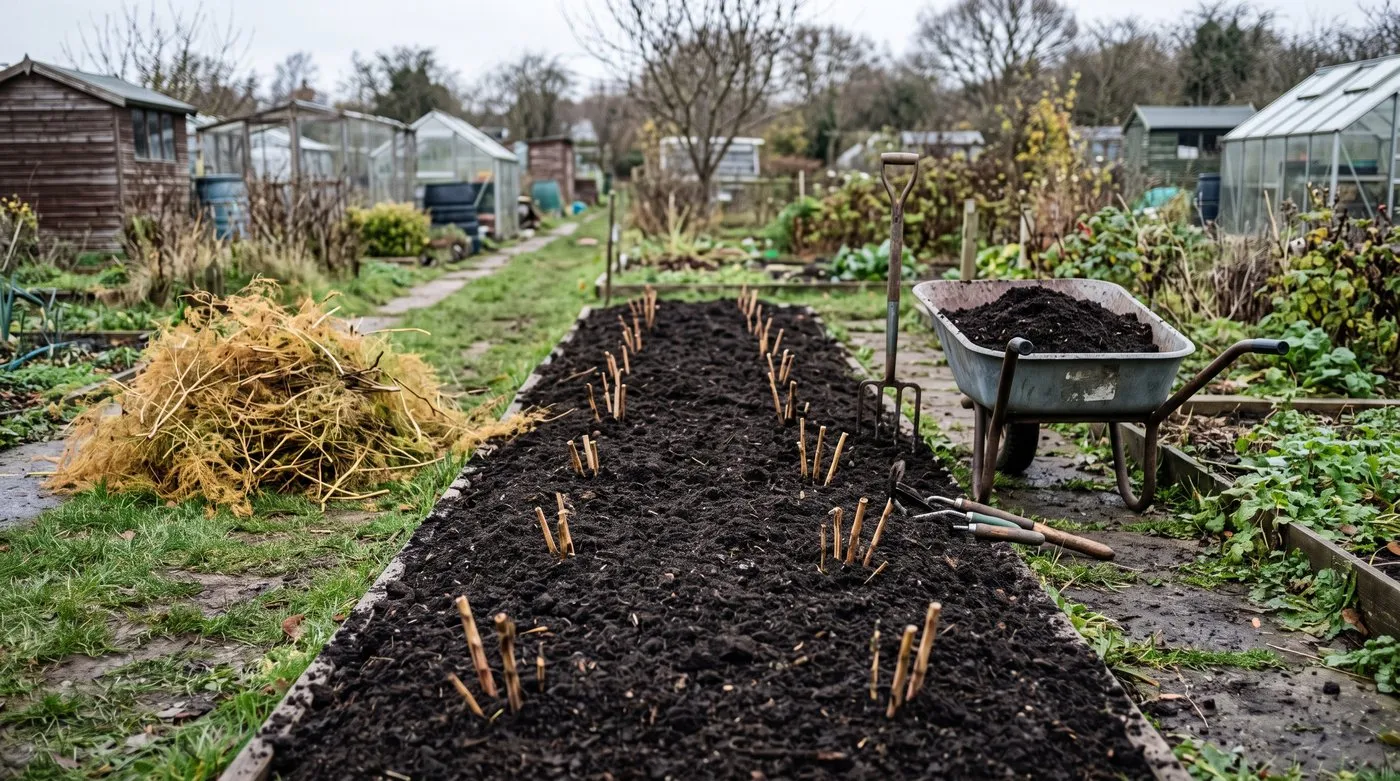
Once the fern has died back, cut it to 5cm and mulch thickly. That one autumn job feeds the crowns and keeps spears fat next spring.
Weeding
Weed by hand, not with a hoe. The roots spread just under the surface and a hoe can cut through them. Pull weeds while they’re small. The autumn mulch stops most annual weeds, but dig out couch grass and bindweed by hand before they take hold.
Don’t use weedkiller on or near the bed, as it can harm the crowns.
Watering
Water new crowns regularly in their first summer. Established beds only need water in long dry spells, as the roots go deep. When you do water, give a good soak once a week rather than a little often.
Feeding
The autumn mulch gives most of what asparagus needs. If growth seems weak after a few years, scatter a general fertiliser such as blood, fish and bone in early spring at the rate on the pack. Skip high-nitrogen feeds, which give thin, soft spears.
Why are my asparagus spears thin?
Thin spears usually mean the crowns are short of stored energy. The usual reasons are cutting too early in the bed’s life or cutting too late into June.
Asparagus beetle stripping the fern the summer before has the same effect. Wet soil, crowded seedlings from female plants and very young or very old beds can also give thin spears.
To fix it, stop cutting earlier for a season or two, leave pencil-thin spears to grow, and mulch well in autumn. Keep beetles in check and pull up seedlings. Things usually improve the next spring.
Can late frost damage asparagus spears?
Yes, a late frost can turn spear tips soft, brown or limp. It doesn’t hurt the crown, but the spears won’t be nice to eat.
Cut frosted spears off at soil level and throw them away. New ones soon follow in mild weather. If frost is forecast in April or May, cover the bed overnight with fleece or straw. Beds at the bottom of a slope, where cold air settles, are most at risk.
Can you replant asparagus in the same spot?
No, it’s best to start a new bed somewhere else. Old asparagus ground can carry root problems that attack young crowns.
When an old bed starts to fade, plant a new one in a fresh, sunny, well-drained spot two or three years before you dig up the old one. That way you keep cutting without a gap. The old site can go back into your normal veg rotation.
Male vs female asparagus plants
Male plants give more spears and don’t self-seed, which is why most modern varieties are all-male.
Male plants make spears and fern, and nothing else. All their energy goes into roots and spears.
Female plants make small red berries on the fern in late summer. The seeds drop and sprout all over the bed. These seedlings compete with your main crowns, so they’re really just weeds.
All-male varieties like Gijnlim, Millennium and Backlim avoid all this. No berries, no seedlings, more spears.
If you grow a mixed variety like Connover’s Colossal or Pacific Purple, you can spot the females by their berries. Either dig them out and replace them, or snip the berries off before they ripen.
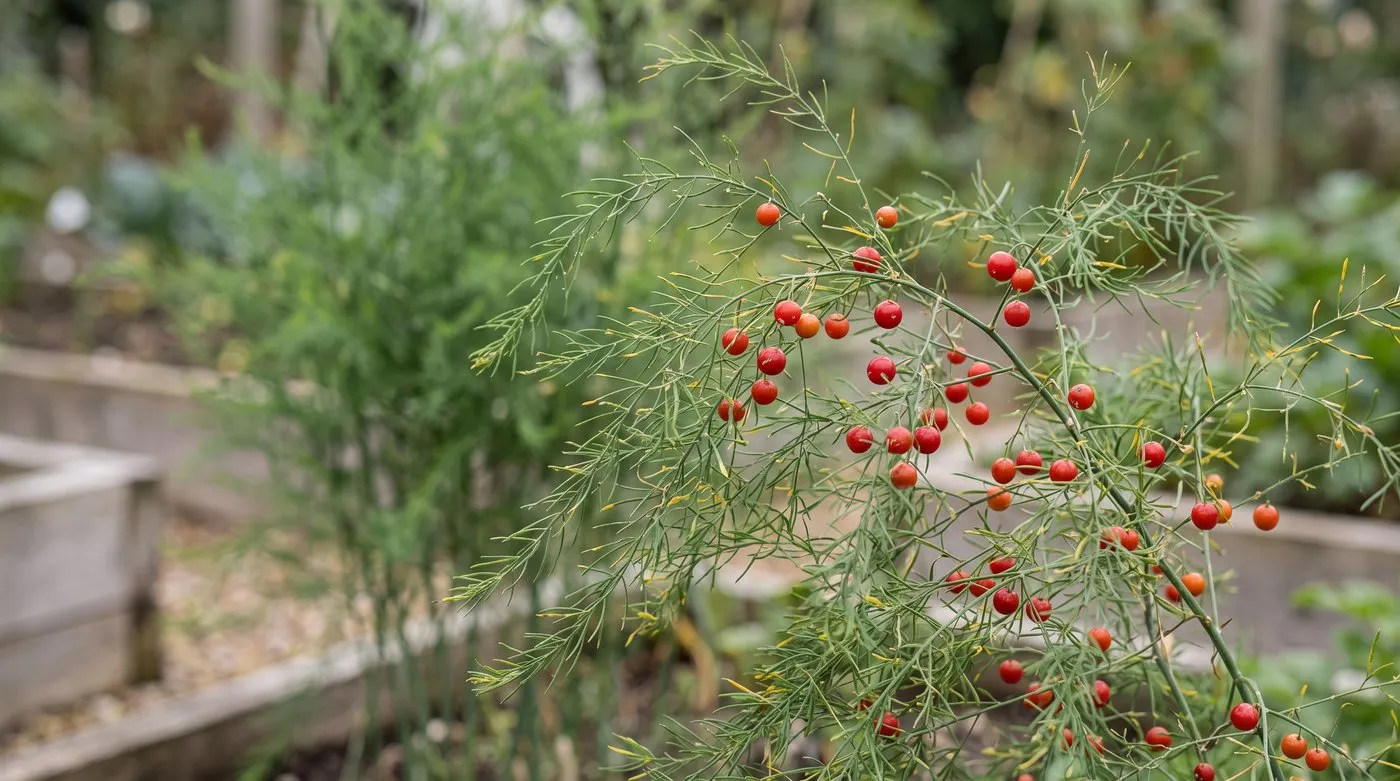
Red berries mean a female plant. Snip them off before they ripen, or the seedlings will crowd your bed.
Asparagus beetle: the main pest to watch for
Asparagus beetle is the main pest to look out for, and picking them off by hand from late April keeps it under control.
How to spot asparagus beetle
The adults are small beetles, under 1cm long, with black and creamy yellow markings. They turn up in late April, just as cutting starts. The grubs are plump and grey-green, feeding on the fern from May. Look for rows of tiny dark eggs on spears and stems.
What damage it does
Adults and grubs strip the fern. Less fern means less energy for the crown, so next year’s spears are thinner. Bad attacks year after year can weaken a bed badly.
How to control it
- Pick them off by hand. Check plants every few days and squash adults and grubs
- Clear away dead fern in autumn. Beetles spend the winter in debris at the base of the plants
- Welcome natural predators like ground beetles by avoiding insecticides
- Rinse cut spears. Eggs and young grubs on spears wash off easily
Regular hand picking from late April through summer is all most garden beds need. The RHS asparagus beetle page has photos to help you spot them.
Five common mistakes when growing asparagus
Most asparagus beds that fail do so because of early cutting, wet soil or cutting too late into summer.
1. Cutting too soon
Cutting spears in the first or second year is the biggest mistake. The crown hasn’t built up enough strength yet. Leave it alone for two full years, and keep the third-year harvest short.
2. Planting in soggy soil
Crowns rot in waterlogged ground. Heavy clay that stays wet all winter is a common cause of failure. If your soil is heavy, plant in raised beds filled with a free-draining mix. Good drainage matters more than rich soil.
3. Cutting past mid-June
Carrying on into July feels like a bonus, but it takes away the fern’s growing time. Next year’s crop will suffer, and doing it year after year weakens the bed.
4. Hoeing between crowns
The roots run just under the surface and a hoe slices through them. Always weed by hand, and let a thick autumn mulch stop weeds getting going.
5. Leaving female plants to seed
Berries from female plants scatter seed through the bed. The seedlings crowd it out and crops drop. Grow all-male varieties, remove female plants, or snip off berries and pull up seedlings every year.
Growing asparagus in raised beds and containers
Raised beds are a great option, especially on heavy or badly drained soil. Make them at least 30cm deep and 120cm wide for two rows. Fill with half topsoil and half garden compost. They drain well and warm up sooner in spring.
Plant two rows 45cm apart, with crowns 45cm apart along each row. A raised bed about 240cm long holds around 10 crowns.
Pots are possible but tricky. Each crown needs a container at least 45cm deep and 40cm wide, filled with loam-based compost like John Innes No. 3, which doesn’t dry out as fast as multipurpose. Spears from pots are thinner, so treat it as a fun experiment rather than a steady supply.
What to grow alongside asparagus
Asparagus stays put for years, so it sits outside your normal crop rotation. Give it a bed of its own.
In the first two years, while the crowns are settling in, you can grow quick crops like lettuce, radish or spinach between the rows. Stop once you start cutting in year three, as daily picking and footsteps get in the way. Flowers like marigolds around the edges bring in helpful insects.
Is growing asparagus worth the wait?
Yes, if you have a sunny spare bed you can give over to it for years. A modest bed of crowns costs a bit up front, then crops every spring for two decades or more.
The flavour is the real reward. Asparagus loses its sweetness soon after cutting, and shop spears have often travelled a long way. Home-cut spears, cooked the same day, have a sweetness and snap you just don’t get from the supermarket.
If you’ve got the space and a bit of patience, give it a go. Plant a row of Gijnlim this spring, and in three years you’ll see what all the fuss is about.
Now you’ve got asparagus sorted, read our guide on raised bed gardening for beginners to see how a raised bed helps with drainage and earlier crops.
Frequently asked questions
When should I plant asparagus crowns in the UK?
Plant one-year crowns from late March to mid-April. Wait until the soil is workable rather than cold and sodden, as crowns can rot in wet ground. Plant them soon after they arrive so the roots don’t dry out.
Why can I not harvest asparagus in the first year?
The young plant needs its ferns to build up strong roots. Cutting spears in the first two years takes away the leaves that feed the crown. In the third year, cut lightly for about four weeks. From the fourth year, harvest for the full season.
How long does an asparagus bed last?
A well-kept bed crops for 20 years or more. Mulch every autumn and keep on top of the weeds. When it starts to tire, plant a new bed in a fresh spot a couple of years before you dig up the old one.
What is the best asparagus variety for UK gardens?
Gijnlim is a great all-rounder for UK gardens. It’s an all-male variety with thick, straight spears and an early start. Millennium gives heavy crops, Pacific Purple adds colour and a sweet flavour, and Connover’s Colossal is a long-grown British favourite.
How do I control asparagus beetle?
Pick off the adults and grubs by hand as soon as you see them. The adults are small black and cream beetles that turn up from late April. Check the ferns regularly through summer, and clear away the dead ferns in autumn so fewer beetles spend the winter in the bed.
Should I grow asparagus from seed or crowns?
Crowns are quicker and easier for most gardeners. Seed adds an extra year before your first harvest and gives a mix of male and female plants. Buy crowns of an all-male variety for more spears and no self-sown seedlings to weed out.
Can I grow asparagus in raised beds?
Yes, raised beds suit asparagus really well. The better drainage stops crowns rotting, which is a common problem on heavy clay. Build the bed at least 30cm deep and 120cm wide for two rows, and fill it with topsoil and garden compost.
Our team produces practical UK gardening guidance from source research, contributor records and established horticultural practice. Editorial standards are overseen by Matt W.


