
Key takeaways
- Mow from March to October, starting high at 4cm and going a little lower in summer
- Feed in spring, early summer and autumn, with a special autumn feed from September
- September is the best month to scarify, aerate and overseed
- Never mow frozen or waterlogged grass, and don't feed between November and February
- Northern gardens run two to three weeks behind the south in spring
Every UK lawn follows the same yearly rhythm. It wakes up slowly in spring, grows fastest in summer and slows down again in autumn. Work with that rhythm and you’ll get thick, tough grass. Fight it and you’ll be patching thin, weedy bits forever.
This calendar walks you through each month, from the first mow in March to the last feed in October. For more detail on any job, follow the links to our step-by-step guides.
January
In January, stay off the grass and give the mower some love. The lawn is asleep and the soil is cold.
Mowing: None. Never mow frozen or waterlogged grass. The wheels squash soft soil and the blades tear the grass instead of cutting it.
Feeding: None. Feed put down now just washes away. Keep it somewhere dry for spring.
Key tasks: Service the mower. Sharpen or replace the blade, change the oil, clean the air filter and check the spark plug. A sharp blade cuts cleanly and the grass heals fast. A blunt one rips the tips, which go brown. It’s also a good month to plan what you’ll need this year.
Stay off the lawn when it’s frosty. Frozen grass snaps underfoot and you’ll get brown footprints that take weeks to grow out.
February
February is for planning and shopping, as the lawn is still resting in most of the UK. Mild southern and coastal gardens may see the first growth late in the month. Moles get busy now too, so see how to get rid of moles if hills pop up.
Mowing: Not in most areas. If grass is growing in a mild spot, one pass on the highest setting (4cm) tidies it up without stressing it.
Feeding: None yet. The soil is too cold for the roots to use it.
Key tasks: Buy your spring feed, grass seed and any moss killer. Check your spreader works. Test the soil with a cheap pH kit from the garden centre. Lawns are happy in slightly acid to neutral soil, so only think about lime if the test shows very acid soil. Too much lime brings more worm casts and weeds. Brush off any leaves, twigs and dry worm casts.
March
March is when lawn care really starts, with the first mow and, later in the month, the first feed. The soil is warming and the grass is waking up. Southern England usually gets going in early March. Northern gardens follow two to three weeks later.
Mowing: Do the first mow of the year in early to mid-March, with the blades at 4cm. Never take off more than a third of the grass height in one go. Mow every fortnight until growth picks up in April.
Feeding: Put down a spring lawn feed from late March once the grass is growing well. A spring feed is high in nitrogen, which greens up and thickens the grass before weeds get going.
Key tasks: If you have moss, treat it with a ferrous sulphate (iron) moss killer. March is one of the best months for moss treatment, because the grass bounces back quickly. Once the moss turns black, rake it out, as the RHS guidance on lawn moss suggests. Follow the label and measure carefully, because fixing too much iron sulphate on a lawn can cost you weeks. Rake up any old leaves and make a note of bare patches to sow next month. Lots of other spring gardening jobs land now too, so make the most of dry weekends.

Feeding in spring with a spreader. Even coverage stops stripes and scorched patches.
What temperature does grass start growing?
Grass starts to grow once the soil stays above about 5-6C for a few days. It’s slow at first and only really gets going at around 8-10C. That’s why spring feed waits until the soil is about 8C, as the roots can’t use much before then.
In southern England that’s usually March. In the north and Scotland it’s often April. A cheap soil thermometer pushed 10cm into the lawn tells you more than the calendar. Check it in the morning, when the soil is coolest.
In late October and November the soil cools again and growth slows. That’s your sign for the last mow.
April
April is when most lawns get growing properly, so mowing goes weekly and weed control can start.
Mowing: Mow weekly and drop the height to 3-3.5cm. Stick to the one-third rule. Rake up clippings if they clump, or leave short ones on the lawn to feed it.
Feeding: If you missed the spring feed in March, do it now. Mid-April suits Scotland and northern England best. Feed-and-weed products work well this month, as the grass and weeds are both growing.
Key tasks: Sow seed on thin or bare patches now, at 25-35g per square metre, and keep them damp. From mid-April, treat established weeds with a lawn weedkiller while they’re growing strongly. Spot-treat where you can rather than spraying everything. Our lawn weed identification guide helps you pick the right treatment.

April is the time to sow seed on thin or bare patches. Rake the soil first and keep the seed damp until it comes up.
May
May is all about weekly mowing, and it’s the last good month for a whole-lawn weed treatment. Grass grows fastest now and into June.
Mowing: Mow weekly at 2.5-3cm for a family lawn. Fine ornamental lawns can go a bit lower, but check how low you should mow a lawn first, as scalping lets in moss and weeds. After a lot of rain, a quick mid-week cut keeps things tidy. Trim edges with a half-moon edger or long-handled shears. Our lawn edging guide covers permanent edging if you’d rather skip that job.
Feeding: None needed. The spring feed is still working, and feeding again now gives soft growth that struggles in summer heat.
Key tasks: Finish weed control before summer heat makes it risky. Dig out dandelions, taking the whole root. If daisies are spoiling the look, see how to get rid of daisies while they’re growing strongly. For tricky areas, think about wildflower lawn alternatives or ground cover options instead. New grass sown in April should be up by now. Let it reach 7-8cm before the first cut at 5cm.

A smart striped lawn in late May, thanks to weekly mowing and a spring feed.
June
June is for the summer feed and, on many lawns, mowing twice a week when it’s growing hard.
Mowing: Up to twice a week in good growing weather, at 2.5-3cm. Leaving fine clippings on the lawn feeds it a little. Change direction each time so the grass doesn’t start to lean.
Feeding: Give a summer feed in early to mid-June. Choose a balanced summer feed rather than a high-nitrogen spring one, so you get steady growth rather than a lawn that needs mowing every three days. Liquid feeds are good in warm weather, as they’re less likely to scorch.
Key tasks: Watch for signs of thirst. If the lawn looks blue-grey and your footprints stay put, it needs water. In dry spells, give about 20-25mm a week in one good soak, early in the morning or in the evening. June is part of the busy summer gardening jobs season, so fit lawn watering in with the rest of the June garden jobs.
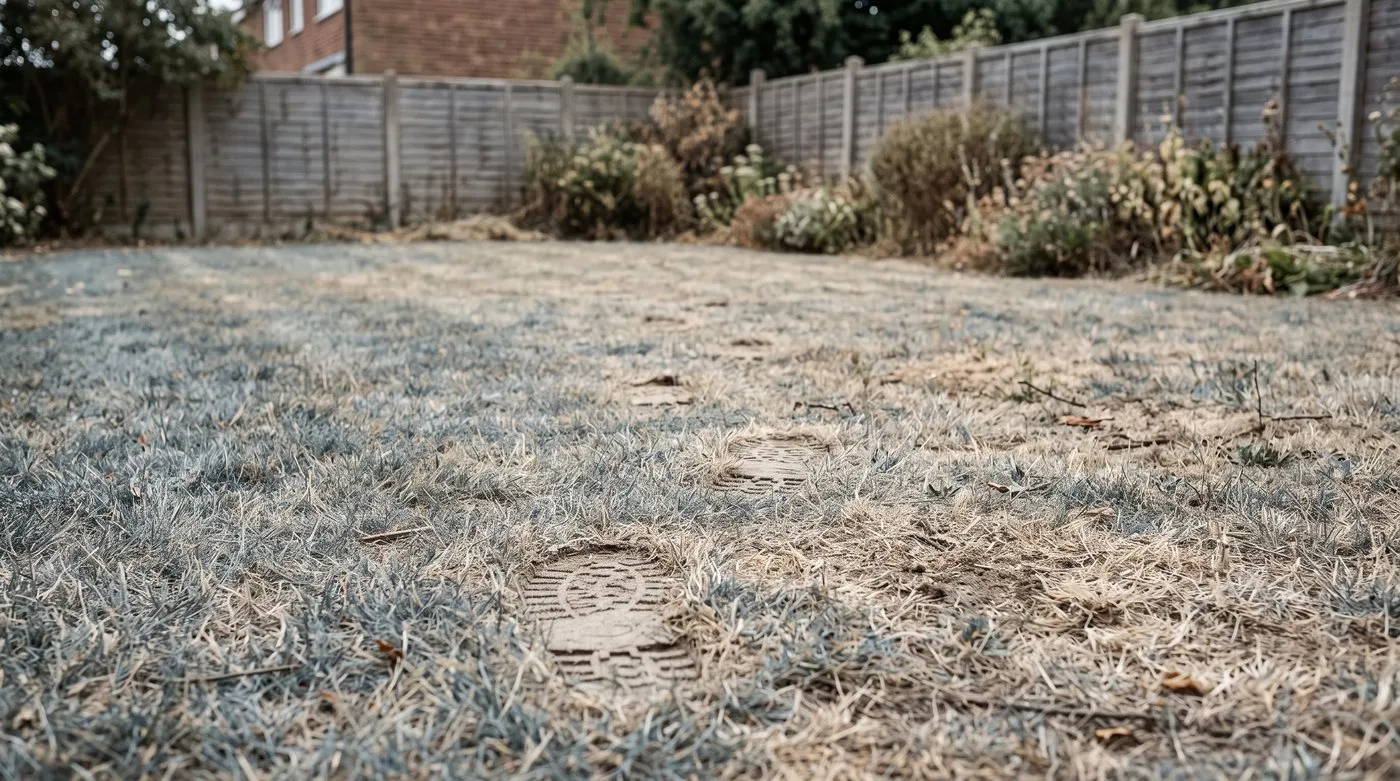
If the lawn looks blue-grey and your footprints stay put, it’s thirsty. One deep weekly soak beats a daily sprinkle.
July
In July, raise the mower and help the lawn through the heat. This is its toughest month.
Mowing: Keep to 2.5-3cm in normal weather. In hot, dry spells, raise the blades to 4cm and mow every 7-10 days. Longer grass shades its roots and stays green longer. If the lawn goes brown in a heatwave, stop mowing. It’s resting, and it’ll come back when the rain does.
Feeding: Skip it, unless you’re on sandy soil that drains fast. Feed can’t dissolve on a dry lawn and granules can scorch the grass.
Key tasks: If you started watering in June, keep it steady. One deep weekly soak beats a daily sprinkle, which keeps roots near the surface. Patch worn spots with a little seed, though it’s slower to come up in the heat. A bucket of seed mixed with compost is handy for quick repairs.
Can you water your lawn during a hosepipe ban?
No, not with a hose or sprinkler. A hosepipe ban (officially a temporary use ban) stops you watering the garden with a hose, and that includes lawns. The Environment Agency explains that only water companies can bring in these bans, and they have to give notice first.
Watering cans are allowed, but doing a whole lawn by can isn’t realistic. Save that water for newly sown or turfed areas. Rainwater from a water butt is best.
A brown lawn in a drought is resting, not dead. Stop mowing, keep off it where you can, and it should green up within a few weeks of steady rain. Check your water company’s notice for exact dates and any exceptions.
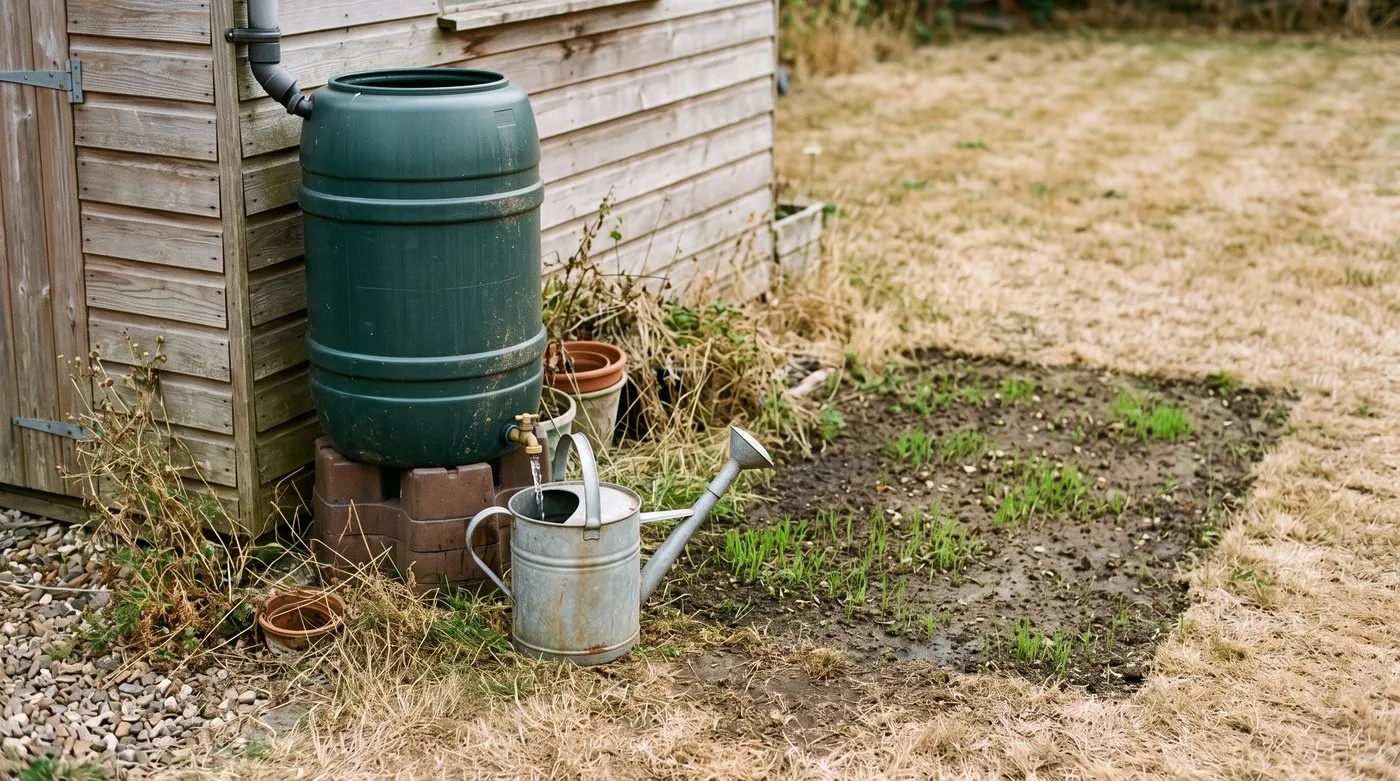
During a hosepipe ban, save watering cans for newly sown patches. An established brown lawn is resting and will green up after rain.
August
August is for light upkeep and getting ready for autumn. Our checklist of autumn gardening jobs covers the bigger picture. Growth starts to slow.
Mowing: Go back to weekly mowing at 2.5-3cm. If you raised the blades for a dry July, lower them gradually over two or three cuts. Dropping it all at once shocks the grass.
Feeding: An optional second summer feed in early August helps lawns that get heavy use or sit on poor soil. Skip it if the grass looks green and healthy.
Key tasks: Plan your autumn makeover. Order grass seed, top dressing and autumn feed, and moss killer if moss was a problem last year. Book a scarifier if you need to hire one. Look out for chafer grub and leatherjacket damage. If turf lifts like a loose carpet, nematode treatments in August or September, while the soil is warm, can help. If you see scrapes and burrows instead, learn how to protect turf from rabbit damage before it spreads.
September
September is the most important month of the lawn year. It’s the best time to scarify, aerate and overseed. The soil is warm, the rain is back and the grass has weeks of growing left before winter.
Mowing: Keep mowing weekly at about 3cm. Growth is slowing but steady.
Feeding: Use an autumn lawn feed, which is higher in potassium. It toughens the grass and roots for winter. Don’t use a spring or summer feed now, as the extra nitrogen pushes soft growth that frost will damage.
Key tasks: This is the month for the big three: scarify, aerate and overseed. Scarify first to rake out thatch (the layer of dead grass) and moss. Then aerate with a hollow-tine aerator to loosen packed soil. Finally, sow seed at 25-35g per square metre and top-dress with a loam, sand and compost mix. Doing all three together works best. The lawn will look rough for a few weeks, then come back thicker by spring.
A September makeover is the best thing you can do for a UK lawn. One weekend of scarifying, aerating and overseeding turns tired, thin grass into a lush lawn by next April.

Scarifying in September. All that thatch and moss shows the lawn really needed it.
October
October is for clearing leaves, raising the mower and finishing off any autumn work.
Mowing: Drop to every fortnight and raise the blades to 3.5-4cm. The grass needs a bit more leaf to make the most of the weaker light. In the north, mowing often stops by mid to late October.
Feeding: If you missed the autumn feed in September, do it in early October. Don’t feed after mid-October.
Key tasks: Clear fallen leaves every week. A soggy layer blocks light and can lead to disease. Use a rake, a leaf blower or the mower on a high setting. If you have heavy clay soil that gets waterlogged, push a garden fork into the lawn every so often to help it drain over winter. Keep watering newly sown areas if it turns dry.
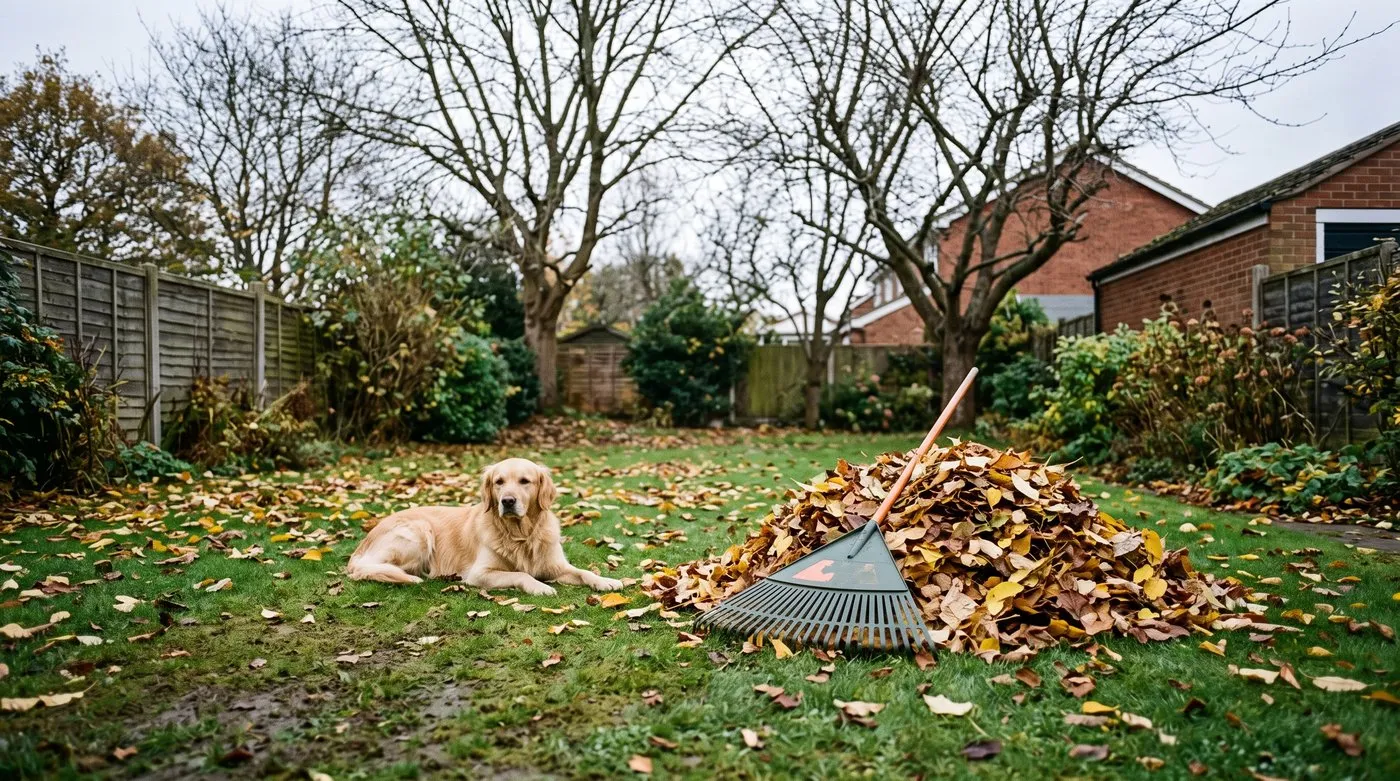
Clear fallen leaves every week in autumn. A soggy layer blocks light from the grass and can lead to disease.
Can you mow wet grass?
Try not to, but a light trim on damp grass is fine if the ground is firm. Wet grass tears rather than cuts, clippings clog the mower and soft ground gets rutted.
Dry days are rare in autumn, so wait until the dew has gone, usually late morning. Set the blades high, go slowly and clear the deck often. Collect the clippings rather than leaving wet clumps. A rotary mower copes with damp grass better than a cylinder mower.
Never use a mains electric mower on wet grass. Water and mains cables don’t mix, even with an RCD.
November
November is for one last mow if needed, and keeping the leaves off as the lawn settles down for winter.
Mowing: Do the final mow on a dry day with the blades at 4cm. Don’t mow if the ground is wet or soft. Northern lawns often have their last cut in late October. Afterwards, clean the mower and put it away ready for spring.
Feeding: None. The soil is too cold and feed would just wash away.
Key tasks: Keep clearing leaves. Brush off worm casts when they’re dry. Stay off the lawn when it’s waterlogged or frosty. If you limed this autumn, test the pH again in February.
December
December needs hardly any lawn work. Just keep it clear and stay off it in frost.
Mowing: None.
Feeding: None. Keep leftover feed in a cool, dry shed.
Key tasks: Stay off the lawn in frost and heavy rain. Pick up branches after storms. If water sits on the lawn for more than a couple of days after rain, note where. Those spots need aerating or better drainage in spring. Then put your feet up and plan next year.
Annual lawn care task calendar
Here’s the whole year at a glance. Use it alongside the monthly notes above.
| Task | Jan | Feb | Mar | Apr | May | Jun | Jul | Aug | Sep | Oct | Nov | Dec |
|---|---|---|---|---|---|---|---|---|---|---|---|---|
| Mowing | - | - | Start (4cm) | Weekly (3cm) | Weekly (2.5-3cm) | Up to 2x weekly | Weekly or pause | Weekly | Weekly (3cm) | Fortnightly (4cm) | Final cut (4cm) | - |
| Feeding | - | - | Spring feed | Spring feed | - | Summer feed | - | Optional feed | Autumn feed | Autumn feed | - | - |
| Scarifying | - | - | - | Light only | - | - | - | - | Full scarify | - | - | - |
| Aerating | - | - | - | Light spike | - | - | - | - | Hollow-tine | - | - | - |
| Overseeding | - | - | - | Patch repair | Patch repair | - | - | - | Full overseed | - | - | - |
| Weed control | - | - | - | Start treating | Treat weeds | Spot treat | - | - | - | - | - | - |
| Moss treatment | - | - | Treat moss | Treat moss | - | - | - | - | Treat if needed | - | - | - |
| Watering | - | - | - | New seed only | New seed only | Dry spells | Dry spells | Dry spells | New seed only | New seed only | - | - |
Regional adjustments for UK gardens
This calendar is based on central and southern England. In the north and on higher ground, run two to three weeks behind.
Southern England and the coast often see growth start in late February, so you may be able to mow and feed a little earlier. Autumn jobs can run into late October. If dogs use your lawn a lot, you’ll need tougher seed and more repairs. Our guide to dog-proofing your lawn covers seed choices and wee patches.
Northern England, Scotland and high gardens should hold spring jobs back by two to three weeks. The first mow is more likely mid-March to early April. Start autumn work in early September, as winter arrives sooner.
Exposed, windy gardens dry out faster in summer and get more late frosts. Wait until frosts have passed before mowing lower than 3.5cm.
Your own lawn is the best guide. When it’s growing, start. When it stops, stop.
Essential equipment checklist
These basics cover every job in the calendar.
- Lawnmower with adjustable height (rotary for most gardens, cylinder for fine lawns)
- Spreader for even feed and seed
- Spring-tine rake for moss, thatch and leaves
- Garden fork or hollow-tine aerator for packed soil
- Half-moon edger for crisp edges
- Watering can or sprinkler for dry spells and new seed
- Soil pH test kit for a yearly check
- Grass seed (hard-wearing ryegrass mix for most lawns, fine fescue for shade)
- Seasonal lawn feed (spring, summer and autumn types)
Ready for the big autumn job? Our guide on how to scarify and aerate your lawn takes you through it step by step.
Frequently asked questions
When should I start mowing my lawn in the UK?
Usually in early to mid-March. Wait until the grass is clearly growing and the ground is firm enough to walk on without leaving footprints. Set the blades to 4cm for the first cut. In northern England and Scotland, the first mow is often two to three weeks later.
What month should I scarify my lawn?
September is the best month. The soil is still warm, the autumn rain is back and the grass has weeks of growing time to recover before winter. You can do a light rake in April, but save the heavy scarifying for autumn.
How often should I feed my lawn?
Three or four times a year works well. Use a spring feed in late March or April, a summer feed in June, an optional extra summer feed in August, and an autumn feed in September or October.
When is the best time to overseed a lawn in the UK?
September is the best month. Warm soil and autumn rain help seed come up fast. April to May is the next best time, but spring seed needs more watering and has more weeds to fight.
Should I aerate my lawn every year?
Only the busy areas need it every year. The rest of the lawn is fine every two or three years. Hollow-tine aerating in September works best, as it pulls out plugs of packed soil and lets air, water and roots back in.
Can I mow my lawn in winter?
Mostly no, from November to February. The grass barely grows and the ground is often soggy or frozen, and walking on frosty grass damages it. If a mild spell gets it growing, one high cut at 4cm in late November is fine.
What is the best lawn care schedule for beginners?
Start with three simple jobs. Mow weekly in the growing season, feed in spring and autumn, and overseed bare patches in September. These make the biggest difference. Add scarifying and aerating once you’re comfortable. Most lawns look much better after one season of steady care.
Our team produces practical UK gardening guidance from source research, contributor records and established horticultural practice. Editorial standards are overseen by Matt W.


