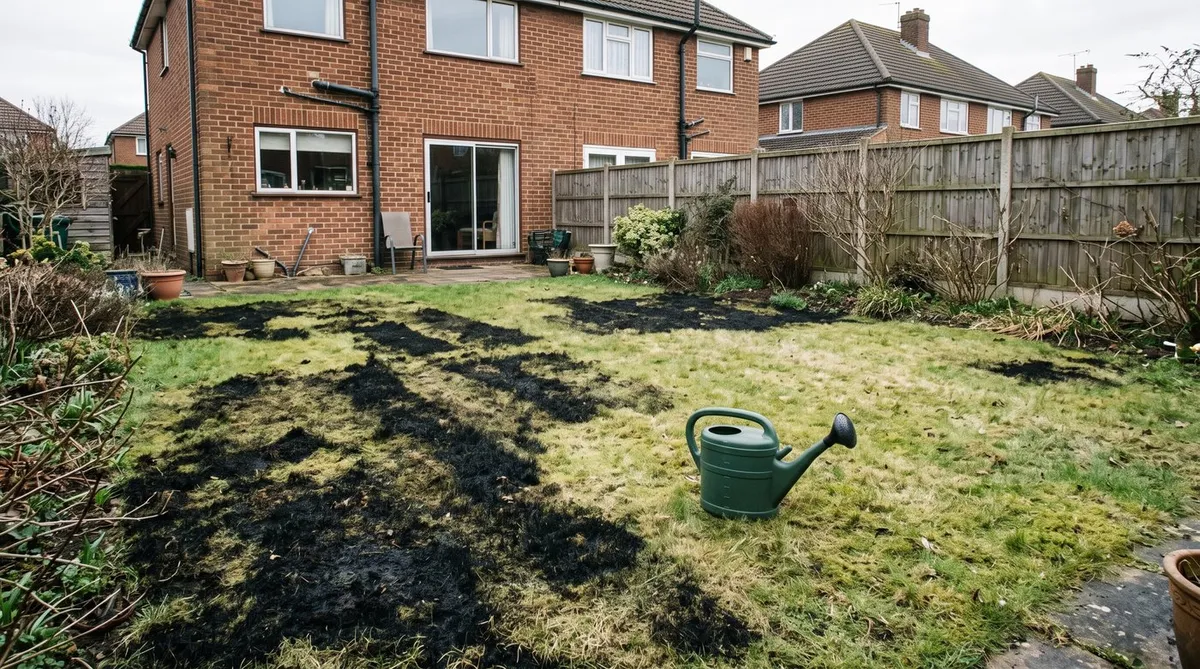
Key takeaways
- Black grass after iron sulphate is usually scorched, not dead, and regrows in two to four weeks
- Do the tug test - grass that holds firm will recover, grass that lifts out cleanly needs reseeding
- Water the area well over a few days and don't add more feed or moss killer
- Rake out dead moss after two to three weeks, then overseed bare patches in spring or early autumn
- Rinse spills off paving straight away, as dried iron leaves rust-brown stains
- Next time, weigh the dose to the label and apply it on a cool, dull day to dry grass
Black grass after a moss treatment looks awful, but it is usually only skin deep. Too much iron sulphate scorches the blades and leaves the crowns underneath alive. Water it, wait two to four weeks and most lawns green up again. This guide shows you how to tell scorched grass from dead, nurse the lawn back, clean up any rust stains and get the dose right next time.
Why has iron sulphate turned my lawn black?
The dose was too strong for the grass. Iron sulphate (also sold as sulphate of iron or ferrous sulphate) kills moss by drying it out and turning it black. Grass is tougher, so at the right rate it just browns a little at the tips. Overdo it and the grass blackens along with the moss.
A few things make scorch worse, even at a sensible rate:
- Wet grass, which holds the granules against the blades for longer
- Hot, sunny or dry weather, when stressed grass burns more easily
- No watering in, which leaves a strong dose sitting on the leaves
- Overlapping passes, which give strips a double dose
Iron also stains. Granules or splashes oxidise into rust on concrete, stone, clothes and mower decks.

See how the black stops partway down each blade? Green at the base means the plant is still alive and will regrow.
Is my grass scorched or dead?
Most of it will just be scorched. Iron burns the blades but rarely reaches the crown, the growing point at soil level. Grass regrows from the crown, so new green shoots usually appear within two to four weeks.
Two quick checks tell you for sure:
- The tug test. Pinch a blackened tuft and pull gently. Scorched grass holds firm. Dead grass lifts out with no resistance.
- Look at the crown. Part the grass at soil level. A green or pale cream base is alive. A brown, mushy base is dead.
| Sign | Scorched (will recover) | Dead (needs reseeding) |
|---|---|---|
| Tug test | Holds firm | Lifts out easily |
| Crown | Green or pale cream | Brown and mushy |
| Blades | Black tips, green base | Black or grey all the way down |
| After three to four weeks | New green shoots | Still bare |
How to fix a lawn after too much iron sulphate
Be patient. The lawn needs water and time, not more products.
- Don’t add anything else. No extra feed and no more moss killer for now.
- Water the area well. Give it a good soak every day or two for about a week, unless it rains. This dilutes the iron and washes it down past the grass.
- Mow high once it regrows. After two to three weeks, set the mower high and just take off the dead tips. Cutting low now stresses the recovering crowns.
- Rake out the dead moss. Iron kills moss but doesn’t remove it. Use a spring-tine rake or scarify the lawn to lift the black mat, so light and seed reach the soil.
- Overseed bare patches. Sow only the areas that stay bare, ideally in April, May or September. The guide to fixing a patchy lawn covers seed choice and aftercare.
- Feed later. Once new grass is growing well, give a normal seasonal feed. Hold off on any more iron until then.

Raking out the dead black moss lets air, light and new seed reach the surviving grass.
When can I reseed after iron sulphate scorch?
Wait two to three weeks. Leftover iron on the surface can hold seed back, and you’ll waste it. By then you’ll also know which patches are truly dead.
Rake the bare soil to a fine crumb, sow, rake lightly and keep it moist until the seedlings are up. Spring and early autumn give the best results, when the soil is warm and moist. The step-by-step guide to sowing grass seed has the details.

Give it a few weeks and a scorched lawn usually looks like this again, as long as the crowns survived.
Removing iron stains from paving and clothes
Act fast. Fresh iron rinses off. Dried iron turns to rust and sticks.
- Fresh spills: hose them off straight away and scrub textured slabs with a stiff brush.
- Dried stains: use a rust or iron stain remover sold for patios, following the label. Many contain oxalic acid, which is harmful, so wear gloves and eye protection and rinse well.
- Clothes: rinse fresh marks in cold water and use a rust-stain laundry treatment. Hot water and tumble drying can set the stain.
Warning: Test any remover on a hidden corner first. Acids can mark limestone and some coloured slabs. Never wire-brush smooth or coloured paving.
For general slab cleaning afterwards, the guide to cleaning a patio has gentler methods.

Granules walked off the lawn leave marks like this. Rinse them while they’re fresh and you may avoid the stain altogether.
How to apply iron sulphate without scorching
Get the dose and the weather right and scorch is rare.
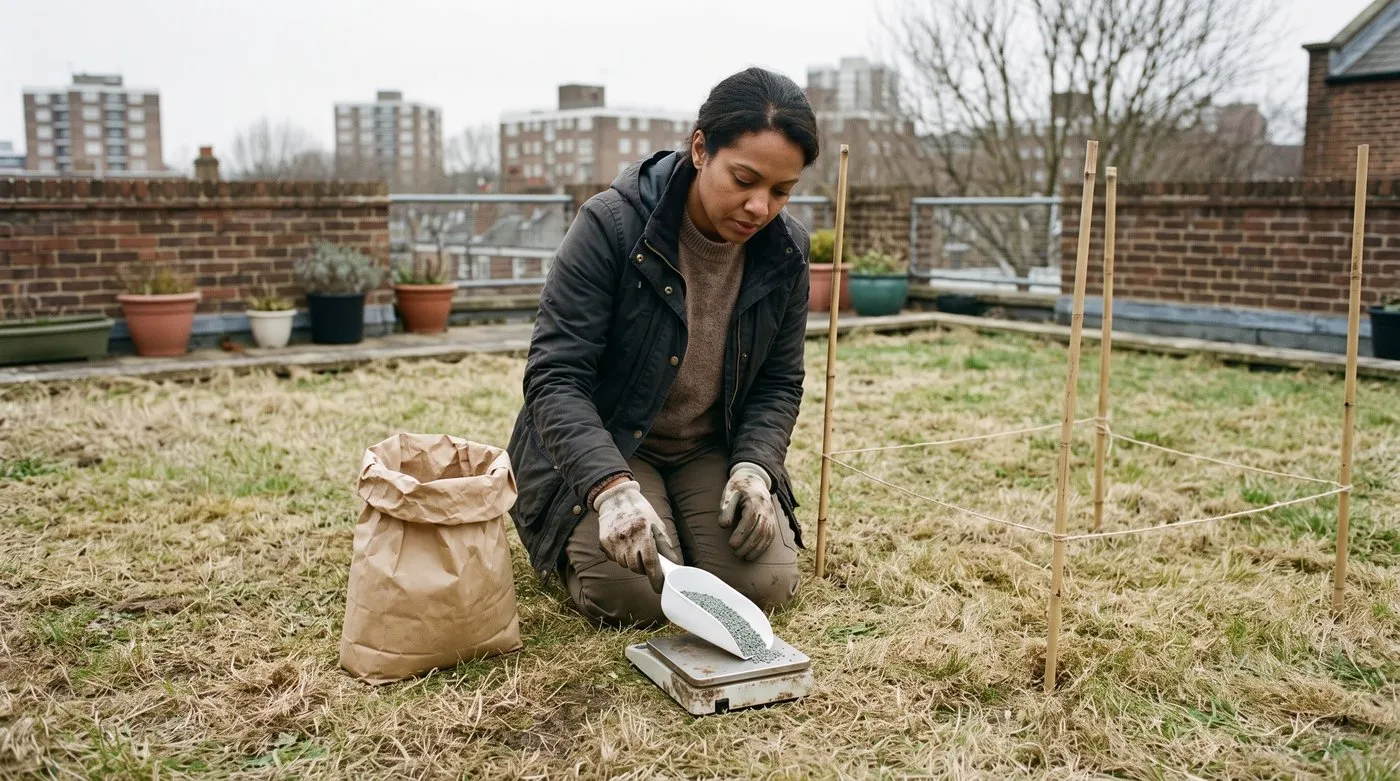
Weighing each dose and marking out a square metre takes minutes and saves weeks of recovery.
- Follow the label. Pure sulphate of iron, lawn sand and spring lawn feeds all have very different strengths. Never use one product’s rate for another.
- Weigh it. Use kitchen scales and mark out a square metre with canes. A handful thrown by feel is often far too much.
- Pick the right day. Apply to dry grass on a cool, dull day. Avoid heatwaves, drought and frost.
- Water it in if no rain arrives within a couple of days, or as the pack says.
- Keep it off paving. Sweep stray granules back onto the grass before they get walked about.
Early spring and autumn are the usual times to treat moss. If moss keeps coming back, the real cause is usually shade, compaction or poor drainage. In shady spots, see which grasses cope with shade.
Common mistakes after an iron sulphate overdose
Adding a feed to “fix” it. More product on scorched grass only makes things worse. Water and wait.
Reseeding the whole lawn. Most black grass regrows. Only sow the patches that fail the tug test.
Mowing short to cut out the black. Low mowing stresses the crowns. Keep the blades high until new growth is strong.
Leaving the dead moss in place. The black mat smothers the grass beneath. Rake it out after two to three weeks.
Scrubbing stains with a wire brush. It scratches the slab and often looks worse than the stain.
For the rest of the lawn year, the lawn care calendar and the lawn care hub cover what to do and when.
Frequently asked questions
Will my lawn recover after too much iron sulphate?
Yes, most lawns green up again within two to four weeks. Iron sulphate burns the blades but rarely kills the crowns and roots below. Water the area, wait, then mow high. Only patches where the grass lifts out cleanly need reseeding.
How long does iron sulphate take to blacken grass?
Usually within a day or two. It happens fastest in warm, sunny weather and on wet grass. At the right dose the moss goes black while the grass just browns a little at the tips.
How do I get iron sulphate stains off my patio?
Rinse fresh spills off with water straight away. Dried rust-brown marks need a rust or iron stain remover made for paving, used as the label says. Test it on a hidden corner first, and don’t wire-brush smooth or coloured slabs.
What is the right amount of iron sulphate for a lawn?
Use exactly the rate on your product’s label. Strengths vary a lot between pure sulphate of iron, lawn sand and lawn feeds, so a dose that suits one can scorch with another. Weigh it rather than guessing.
Why has iron sulphate left black stripes on my lawn?
The stripes are where your passes overlapped. Those strips got a double dose and scorched, while the gaps stayed green. They recover just like general scorch. Next time, mark out the lawn and use a spreader or a measured grid.
Can I reseed straight after iron sulphate scorch?
No, wait two to three weeks first. Leftover iron on the surface can hold seed back. Water the area, rake out the dead material, then sow only the patches that stay bare.
Once the grass is back, stop the moss returning: read the guide to getting rid of moss in your lawn for good to fix the shade, compaction and drainage behind it.
Our team produces practical UK gardening guidance from source research, contributor records and established horticultural practice. Editorial standards are overseen by Matt W.


