Key takeaways
- Use an authorised lawn mosskiller at the label rate, as plain iron sulphate isn't authorised for moss
- Rake or scarify out the blackened moss a week or two after treating
- Spring and autumn are best, while the grass can grow back into the gaps
- Compaction, shade, soggy ground, hunger and short mowing are the main causes
- Overseed bare patches straight after scarifying so moss can't move back in
Moss is one of the most common lawn problems in UK gardens. Soft, spongy green patches spread through the damp autumn and winter, and by spring some lawns are more moss than grass.
Getting rid of it is simple if you do things in the right order. Kill it, rake it out, fix the cause and sow fresh grass in the gaps. Skip a step and it’ll be back. For the best months to do each job, see our lawn care calendar.

Moss creeping in where the grass is thin.
Why moss grows in your lawn
Moss moves in where grass is too thin or weak to fight back. The usual causes are hard ground, wet soil, shade, a hungry lawn or mowing too short. The RHS guide to moss in lawns adds acid soil, as many mosses like it. Fixing the cause matters more than the treatment.
Compacted soil
Compacted soil is one of the commonest causes. Feet, play and even mowing squash the soil, so roots can’t grow and water sits on top. That suits moss perfectly.
To check, push a garden fork into moist lawn. If it struggles to go in more than a few centimetres, the soil is compacted.
Poor drainage
Heavy clay, a high water table or a lawn at the bottom of a slope all mean soggy ground. Grass roots need air, so they weaken and moss fills the gaps. If your lawn squelches in winter, drainage is part of the problem. Our guide on how to improve clay soil can help.
Shade
Most lawn grasses need plenty of sun. Deep shade from trees, buildings, fences and hedges thins the grass, and moss is happy with much less light.
Trees are a double whammy. They block light, their roots take water and food, and overhanging branches stop the dew drying off.
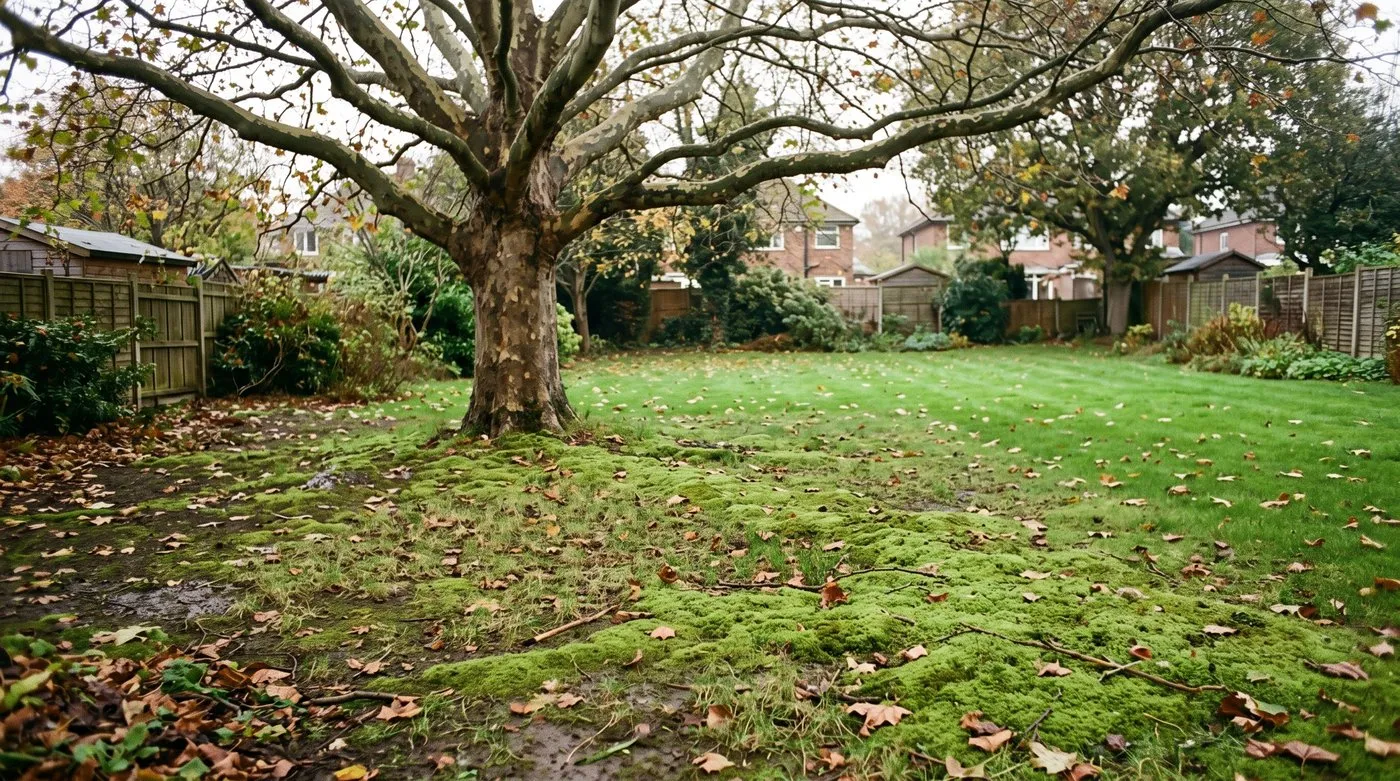
See how the moss stops where the sun starts. In shade, raising the lowest branches or sowing a fescue shade mix helps the grass fight back.
A hungry lawn
Grass is hungry. An unfed lawn grows thin and pale and can’t compete with moss. Feeding in spring and autumn makes a real difference.
Mowing too short
Cutting too short weakens grass and leaves soil showing. Scalped patches recover slowly, so moss gets in first.
How to kill lawn moss with iron sulphate
Most lawn mosskillers in the UK use iron sulphate (also called ferrous sulphate). It turns moss black within a week or two and gives the grass a quick green-up too. Only use it in a product sold as a lawn mosskiller.
Can you use plain iron sulphate as a moss killer?
No. The RHS advises against using iron sulphate on lawn moss unless it’s in an approved lawn mosskiller. Bags sold as fertiliser or for making soil more acid aren’t authorised for killing moss, and using them that way breaks the rules.
Authorised products have a MAPP number on the label. They include liquid mosskillers, lawn sand and feed, weed and moss products. The label tells you the rate, the right weather and how long to keep children and pets off. Following it also stops you scorching the lawn.
How to apply it
- Measure your lawn and work out how much you need from the label.
- Apply with a watering can and fine rose, a sprayer or a spreader, as the label says.
- Walk steadily in overlapping strips so you don’t miss bits.
- Pick the weather the label asks for, usually a calm day when the grass is growing.
- Follow the label on when to mow before and after.
- Keep off the lawn for as long as the label says.
Iron sulphate leaves rusty orange stains on paths, clothes and skin that are hard to shift. Wear old clothes and gloves, and keep it off paving and decking. Stick to the label rate, as too much iron sulphate scorches the grass black. If you do stain the paving, our guide on how to clean a patio can help.
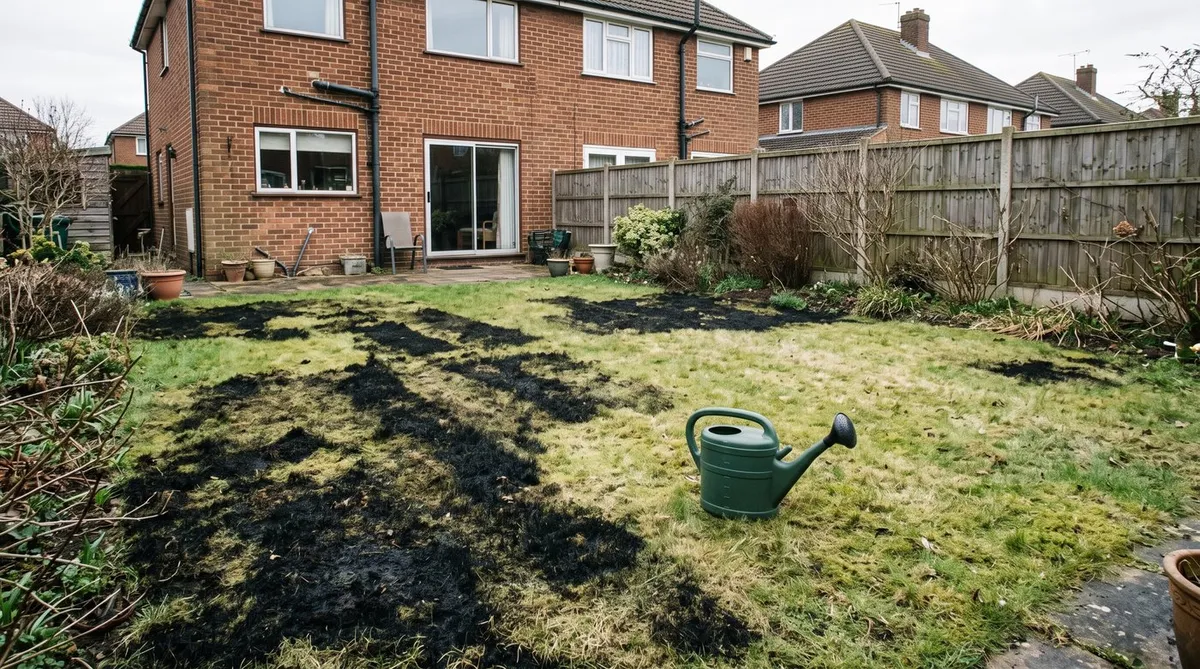
Once the moss has gone black like this, it’s dead and ready to rake out. Leave it in place and it forms a soggy mat that smothers the grass.
Types of lawn mosskiller
| Type | What’s in it | Best for |
|---|---|---|
| Liquid mosskiller | Iron sulphate | Moss only, no feeding |
| Lawn sand | Iron sulphate, a nitrogen feed and sand | Spring moss control with a feed |
| Feed, weed and moss | Iron sulphate, feed and a lawn weedkiller | Moss, weeds and feeding in one go |
When to apply
Treat moss in spring (March to April) or autumn (September to October), when the grass is growing. It then bounces back quickly after scarifying. Avoid hot, dry summers, when stressed grass scorches easily, and winter, when it can’t fill the gaps.
Scarifying: raking out the dead moss

An electric scarifier pulling dead moss out of the lawn.
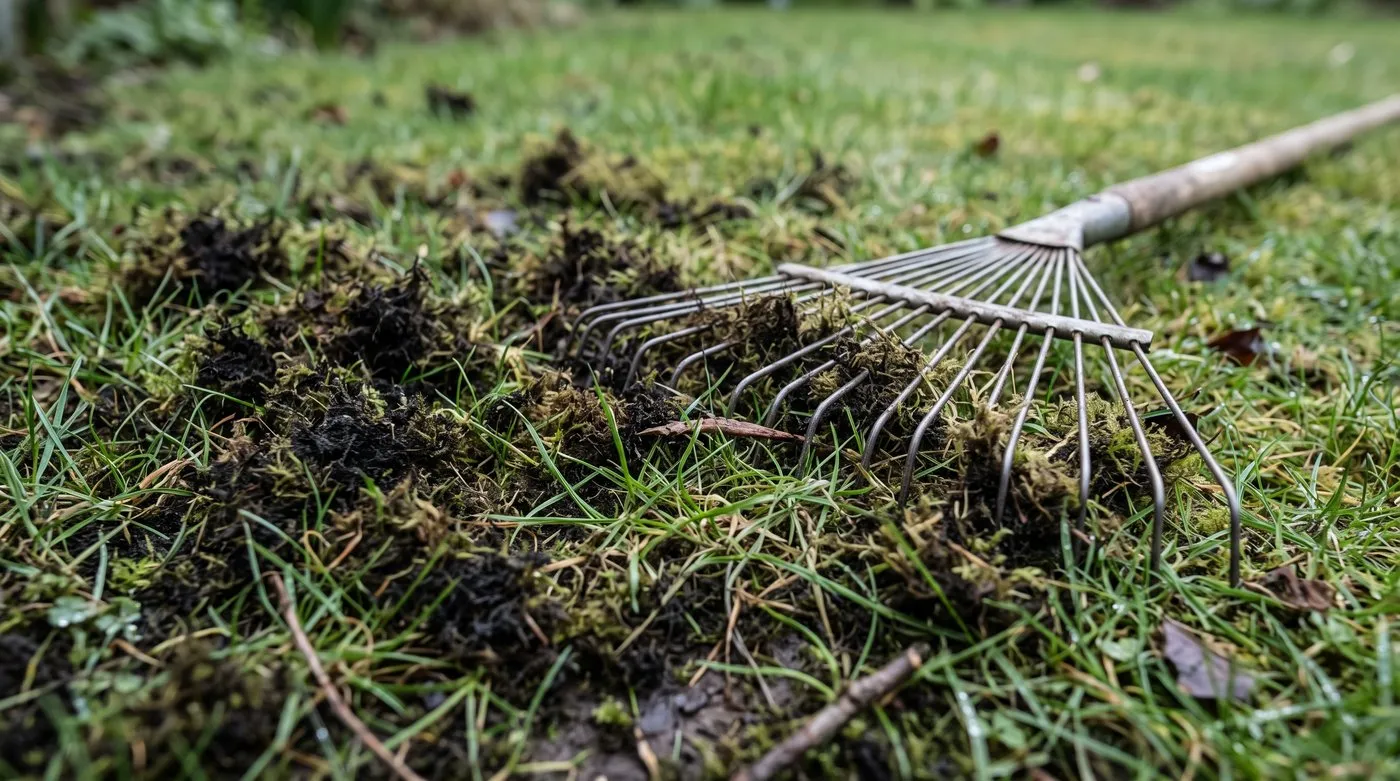
Once the moss has turned black, usually a week or two after treating, rake or scarify it out. Lots of people skip this. Dead moss left behind forms a soggy mat that smothers the grass.
How to scarify
On a small lawn, a spring-tine rake does the job. It’s hard work but it works. Rake firmly one way, then again across it.
For bigger lawns, hire an electric or petrol scarifier. Its spinning blades drag the dead moss to the surface. Start on a shallow setting and go a little deeper on a second pass if the moss is thick.
Don’t panic: your lawn will look awful afterwards, with bare soil and thin patches. That’s normal and it doesn’t last. Spiking and overseeding fill the gaps over the next few weeks.
What to do with the dead moss
Moss rots down slowly but is fine on the compost heap in thin layers mixed with grass clippings or other green waste. Don’t compost moss from a lawn treated with feed, weed and moss, as the weedkiller can linger. Check the label for what to do with it.
Aerating the lawn
Aerating, or spiking, eases compaction, one of the biggest causes of moss. It lets air, water and food reach the roots. Do it after scarifying.
Hollow-tine aerating
A hollow-tine aerator pulls out little plugs of soil, and it’s the best way to ease compaction. Work evenly across the hard areas.
Use a hollow-tine fork for small lawns, or hire a powered aerator for big ones. Leave the plugs to break down on the surface, or sweep them up for the compost heap.
Spiking with a fork
Pushing a garden fork in every 10-15cm helps a little on mildly compacted lawns. Solid tines just push soil sideways, though, so for really hard ground, hollow tines are better.
Top dressing after aerating
Brush a top dressing into the holes, such as sharp sand mixed with some sieved compost. It keeps the holes open and helps drainage. Use a stiff broom or the back of a rake, and don’t bury the grass.
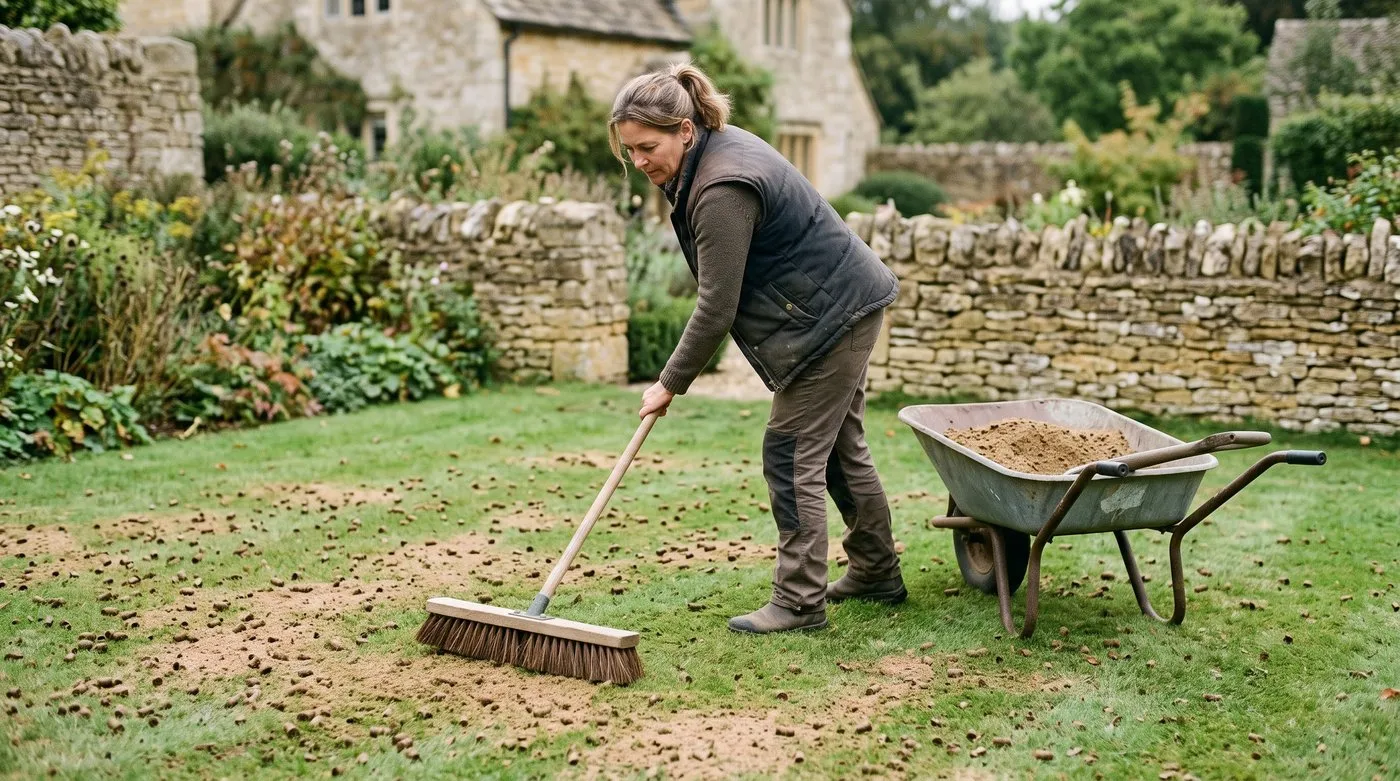
Brushing sandy top dressing into the holes keeps them open, so water drains away and moss finds it harder to settle. Don’t bury the grass.
Overseeding the bare patches
Sow grass seed straight after scarifying and aerating, so grass fills the gaps before moss and weeds do. The scratched-up surface gives the seed good contact with the soil.
Choosing grass seed
Pick a seed mix that suits your lawn. For shady lawns, choose a mix with creeping red fescue and Chewings fescue, which cope with less light than ryegrass. For busy lawns, a hard-wearing ryegrass mix recovers faster.
Sow at the rate on the box.
How to overseed
- Lightly rake the scarified surface.
- Scatter the seed evenly by hand or with a spreader.
- Lightly rake again to work it in.
- Sprinkle a thin layer of sieved compost or top dressing over the top.
- Water gently and keep it moist until the grass comes up.
It usually comes up in one to three weeks. Keep off it until it’s settled in.
Improving lawn drainage
If soggy ground is the cause, moss will keep coming back until you sort the drainage.
Levelling dips
Small puddly dips can be raised with top dressing so water runs away. Build them up gradually, no more than 1cm at a time, or you’ll smother the grass.
French drains
For a really waterlogged lawn, a French drain carries the water away. It’s a trench lined with landscape fabric, filled with gravel, with a perforated pipe at the bottom. It runs to a soakaway, ditch or lower part of the garden. It’s a big job, so you may want help.
Slitting
In autumn, cut narrow slits across the lawn with a slitting tool or a spade, and fill them with sharp sand. It helps surface water drain away and is less work than hollow-tine aerating.
Chemical-free ways to tackle moss
You can cut down moss without mosskillers by fixing the conditions and raking it out. It’s slower, but it works.
Fix the growing conditions
The best organic approach is to fix what’s causing the moss. Cut back overhanging branches to let in light. Spike compacted soil. Feed the lawn twice a year. Never mow shorter than 3cm. Over a few seasons, this alone makes a big difference.
Our guide to spring gardening jobs in the UK includes a handy spring lawn checklist.
Rake and scarify
Regular scarifying pulls moss out before it takes over. The RHS suggests October or early November, while the grass is still growing well. Overseed afterwards.
Can you get rid of moss without raking?
Partly. Bacteria-based moss removers break down the moss so you don’t have to rake it out. The RHS says they don’t get rid of it all, but usually make a noticeable difference.
They work more slowly than iron sulphate, and you use them in spring or autumn when the lawn is moist. Many include a feed too. Pair them with better mowing, feeding and drainage, or the moss will be back.
Avoid home-made mixes like baking soda or washing-up liquid. They aren’t authorised for moss, and the RHS warns that household products can kill grass and harm wildlife.
Give up on the shadiest spots
In deep shade, a mulch around the base of trees can be easier than battling for grass. Some spots just aren’t lawn spots. Bark, ground cover plants or a gravel path are all good answers.
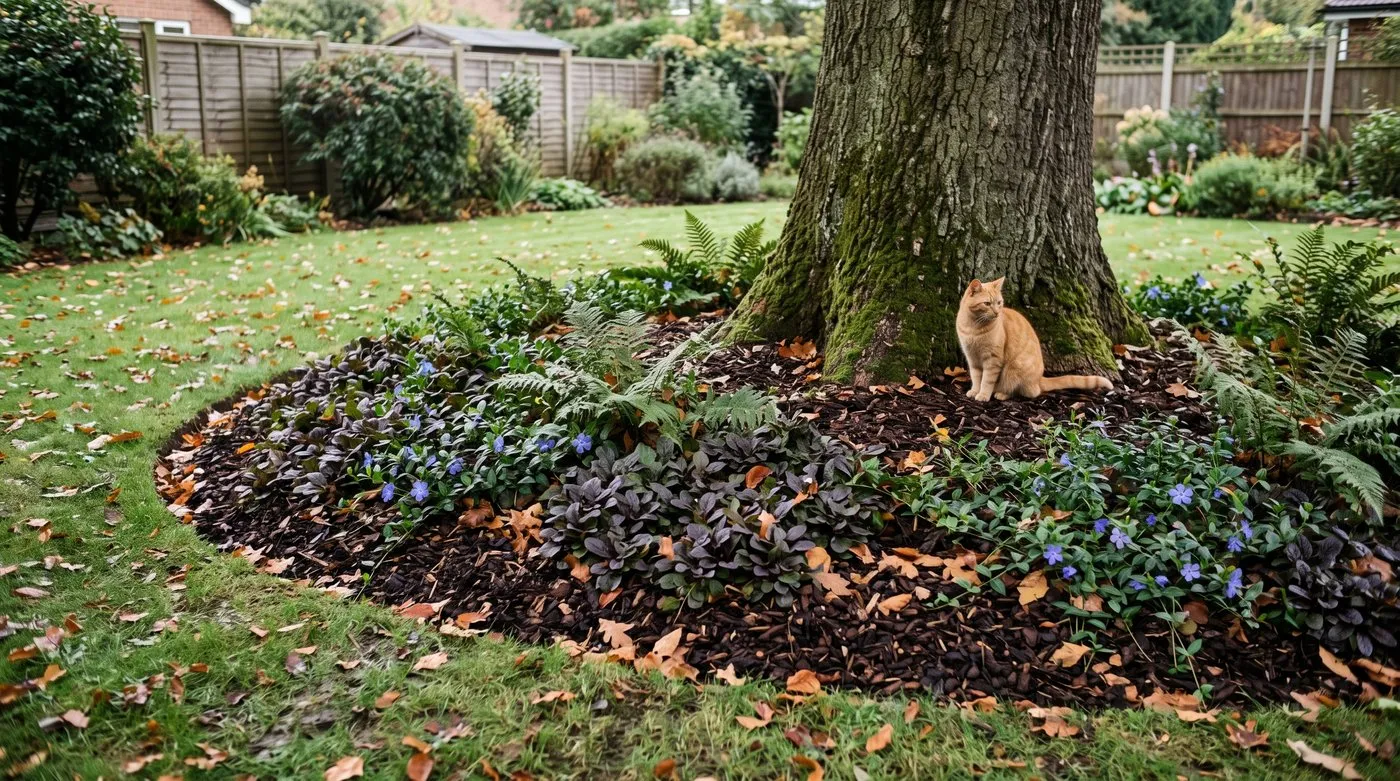
Some spots just aren’t lawn spots. A bark bed with shade-loving ground cover looks smart and takes far less effort than fighting moss every year.
Month-by-month moss calendar
| Month | What to do |
|---|---|
| January | Keep off frozen or soggy grass. |
| February | Buy an authorised mosskiller, grass seed and top dressing. |
| March | Treat moss once the grass is growing. |
| April | Rake out the black moss and overseed. |
| May | Spring feed to thicken the grass. |
| June | Raise the mower to about 4cm in dry weather. |
| July | Water in drought if you can, as stressed grass thins. |
| August | Cut back overhanging branches before autumn. |
| September | Hollow-tine aerate before the autumn rain. |
| October | Autumn feed to toughen roots for winter. |
| November | Rake up fallen leaves, which smother grass. |
| December | Keep off the lawn when it’s wet. |
Common mistakes with lawn moss
1. Leaving the dead moss on the lawn
This is the big one. After treatment the moss goes black but stays put. It won’t vanish on its own. Dead moss forms a thick mat that blocks light and air. Rake it out.
2. Not fixing the cause
Killing moss feels great, and the lawn soon looks greener. But if the shade, compaction, soggy soil or hunger is still there, the moss will be back. Treating without fixing the cause is a never-ending yearly job.
3. Mowing too soon after treating
Mowing too soon after a mosskiller can make it work less well, so follow the label. After scarifying and overseeding, wait until the new grass has settled before mowing, and set the blades high.
4. Scarifying at the wrong time
Scarify in late autumn or winter and the grass can’t grow back, so moss and weeds take the gaps. Scarify in early autumn or spring.
5. Scalping the lawn
Mowing too short weakens grass and leaves soil exposed. Keep the mower at 3-4cm for a normal family lawn.
The full treatment in order

A hollow-tine aerator pulls out plugs of soil to help drainage.
Do these steps in spring or early autumn.
- Test your soil. If it’s very acid, add garden lime at the pack rate a few weeks before.
- Apply an authorised mosskiller at the label rate. Wait until the moss turns black.
- Scarify to pull out all the dead moss. Rake in two directions and compost the debris.
- Hollow-tine aerate compacted areas.
- Top dress with a sand and compost mix, brushed into the holes.
- Overseed bare patches at the rate on the box, then cover lightly with sieved compost.
- Water gently and keep it moist until the grass comes up.
- Feed the lawn about a month after overseeding.
Expect the lawn to look rough for a few weeks before the new grass thickens up.
Keeping moss away for good
Keeping moss away means fixing the conditions that let it in.
Feed twice a year
Give a spring feed in April and an autumn feed in September or October. Well-fed grass grows thick and leaves moss no room. Stick to the pack rates, as too much feed makes soft, sickly growth.
Mow at the right height
Never cut below 3cm. In shade, raise it to 4cm, and higher still in dry summers. Taller grass grows deeper roots and shades the soil.
Let in more light
Cut back overhanging branches, thin dense hedges and remove the lowest branches of trees. Where shade is permanent, swap grass for shade-loving ground cover plants such as bugle, ivy or periwinkle.
Keep it draining well
Keep drains and ditches clear. Top dress with sharp sand each autumn. Spike busy areas every year, and avoid always walking the same route across the grass.
Overseed thin areas every year
Scatter seed over thin patches each spring. Thick grass is your best defence against moss, and it helps against the weeds in our lawn weeds guide too.
Do you have to get rid of moss in your lawn?
No. Moss does no harm on its own, and the RHS suggests embracing it where it grows well. It’s soft, green, low and fine to walk on, and it gives small creatures a home.
Clearing moss makes most sense if you want a hard-wearing lawn for play, or if it’s spreading into thin grass. In deep shade or on always-damp ground, it’s often easier to enjoy a mossy lawn than to fight it every year. Mowing still keeps it neat, and you save on mosskiller, scarifying and seed.
When to call a professional
Most moss problems are fine to tackle yourself. Call in help if you need proper land drains or the ground is too hard for a hand aerator. Lawn care companies can do powered aerating, scarifying and drainage work.
For the next step towards a thick, healthy lawn, see our guide to lawn weeds: identification and control.
Frequently asked questions
When is the best time to treat lawn moss in the UK?
Spring (March to April) or autumn (September to October). The grass is growing then and can fill the gaps. The RHS favours early autumn for scarifying. Avoid hot, dry summer weather and winter.
How long does ferrous sulphate take to kill moss?
Usually a week or two. The moss turns black when it’s dead. Use an authorised lawn mosskiller and follow its rate and weather advice. Then rake or scarify out the dead moss.
Can I scarify without treating the moss first?
Yes, but live bits of moss can root where they land. Killing it first with a mosskiller, then scarifying once it’s black, avoids that. If you’d rather not use chemicals, scarify in early autumn and collect every scrap.
Does lime get rid of lawn moss?
No, lime doesn’t kill moss. Many mosses like acid soil, so lime can help grass compete on very acid ground. Test your soil first, as liming a lawn that isn’t acid does little. Fixing shade, compaction and drainage usually helps more.
Will moss come back after treatment?
Yes, if you don’t fix the cause. Mosskiller kills the moss you have, but not shade, compaction, soggy soil or a hungry lawn. Spike, feed and overseed too, and thick grass will keep moss out.
Is lawn moss harmful to grass?
Not directly, as it just fills gaps. Moss moves in where grass is already thin or weak. A thick layer does block light and keep the surface wet, though, so over time it can push the grass out.
What is the best grass seed for shady lawns prone to moss?
A shade mix with fine fescues. Look for creeping red fescue and Chewings fescue, which cope with less light than ryegrass. Sow at the rate on the box, which is lower for overseeding than for bare soil.
Our team produces practical UK gardening guidance from source research, contributor records and established horticultural practice. Editorial standards are overseen by Matt W.