Key takeaways
- Catch rain from every roof on your plot and store it in linked water butts
- Two linked 200-litre butts are a good start for a half plot
- A soaker or drip hose from a raised butt waters the roots with little effort
- A hosepipe ban covers mains standpipes, but not rainwater you've stored yourself
- A thick mulch of compost or manure means you'll water far less often
- Water in the morning and aim at the base of the plant, not the leaves
Good allotment watering makes all the difference in a dry British summer. A plot drinks a lot over the season, and lugging cans from a shared standpipe is hard work.
The good news is that a few water butts, a simple hose system and a thick mulch take most of the strain. Here’s how to set it all up.
What are the best allotment water supply options?
Most allotments rely on a shared standpipe, rainwater in water butts, or both. The best-watered plots use more than one. Relying on the standpipe alone leaves you stuck in a dry spell or a hosepipe ban.
| Water source | Effort to set up | How much water | Pressure | Best for |
|---|---|---|---|---|
| Shared standpipe | None, it’s in your rent | Plenty, but shared | Mains | Filling cans and topping up butts |
| One 200-litre water butt | Easy | Small | Gravity only | Small plots and backup |
| Two or three linked butts | Easy | Medium | Gravity, if raised | Half and full plots |
| 1,000-litre IBC tank | Medium | Large | Gravity, if raised | Full plots and keen growers |
| Your own plot tap | Needs site approval | Plenty | Mains | Big plots and polytunnels |
How to size water butts for your allotment
 A water butt on breeze blocks, fed from the shed roof. Raising it gives enough pressure for a soaker hose.
Every 1mm of rain on 1 square metre of roof gives you about 1 litre of water. So a 10 square metre shed roof collects about 250 litres from a 25mm downpour. That’s enough to fill a 200-litre butt with some to spare.
Butts fill and empty many times over a season, so you don’t need to store everything at once. As a rough guide:
| Roof | Good starting storage |
|---|---|
| Small shed | One or two 200-litre butts |
| Standard shed | Two or three linked 200-litre butts |
| Shed in a wet area like the North West | Three linked butts or an IBC tank |
| Shed plus greenhouse | An IBC tank or several linked butts |
Many allotment associations offer bulk-buy deals on butts and diverter kits, so ask your committee.
What you need for a water butt
- A water butt: 200-210 litres is a handy size. Slim ones fit snugly against a shed wall.
- A downpipe diverter kit: fits a standard round downpipe and takes a few minutes with a hacksaw.
- A stand or breeze blocks: lifting the butt 30-45cm gives enough flow to fill a can and run a soaker hose.
- A linking kit: a short pipe between the bottoms of two butts, so one fills the next.
- A lid that locks: important if children visit the site.
How to set up drip irrigation on an allotment
 Drippers water right at the roots of each plant, fed by gravity from a water butt.
Drip irrigation runs water straight to the roots through little drippers along a pipe. Very little is lost to the air, and the leaves stay dry, which helps keep blight and mildew away.
A simple gravity-fed drip system
Most plots can’t plumb into the mains, so let gravity do it:
- Raise your water butt 60-100cm above the beds on blocks, a pallet or a stand
- Fit a connector to the butt’s tap
- Add a small filter to stop bits clogging the drippers
- Run main tubing along the path between beds
- Branch thin tubing into each bed, with a dripper by each plant
- Fit a battery tap timer if you’d like it to run on its own
Choose drippers made for low pressure. In summer, start with a session every other day and adjust to your soil. For raised beds, keep them no wider than 1.2 metres so one line of drippers reaches every plant.
What a basic drip kit includes
| Part | What it does |
|---|---|
| Drip line with drippers | Waters each plant in a row |
| Main tubing | Carries water from the butt to the beds |
| Thin branch tubing | Takes water into each bed |
| Inline filter | Stops drippers clogging |
| Battery tap timer | Turns the water on and off for you |
| Connectors and end caps | Joins it all together |
Hosepipe ban rules for allotments
A hosepipe ban stops you using a hose on mains water, and that includes allotment standpipes. Breaking a ban can mean a fine.
What you can and can’t do
| Fine during a ban | Not allowed during a ban |
|---|---|
| Watering cans filled at the standpipe | A hose on the standpipe |
| Drip hoses fed from rainwater butts | Sprinklers on mains water |
| Soaker hoses fed from rainwater | Automatic watering from the mains |
| Watering from your own stored rain | Filling ponds from the mains |
What matters is where the water comes from. Rainwater in your own butts isn’t mains water, so you can keep using hoses fed from it. That’s one of the best reasons to store rain.
For dry summers, our drought-tolerant plants guide has plants that manage on very little water.
Catching rainwater on your allotment
 Water butts and an IBC tank linked together, fed from the shed and greenhouse gutters.
Catch rain from every roof on your plot and store it for dry spells. A shed roof is the obvious one, and a greenhouse roof roughly doubles your catch. The RHS water management advice explains why rainwater is so good for gardens.
Every roof counts
- The shed is your biggest roof
- A small greenhouse adds a useful extra supply
- Cold frames and lean-tos add a bit more
Fit gutters to each one and run the downpipes into your butts. Our rainwater harvesting guide covers bigger storage options too.
Linking butts together
- Stand all the butts at the same height on a level base
- Fit linking kits between the bottoms of the butts
- Run the downpipe diverter into the first butt
- Each butt fills the next as it overflows
- Fit your tap or hose outlet on the last butt in the line
Three linked 200-litre butts hold 600 litres. Keen growers sometimes use a second-hand food-grade IBC tank, which holds 1,000 litres. Check your allotment rules first, as some sites don’t allow them.
Which allotment crops need the most water?
Give your water to the thirsty crops at the times they need it most. It makes your supply go much further in a dry spell.
| Crop | How thirsty | When it matters most |
|---|---|---|
| Runner beans | Very | From flowering to pods forming |
| Courgettes | Very | While the fruits swell |
| Tomatoes | Quite | While the fruits develop |
| Sweetcorn | Quite | When the tassels and cobs form |
| Potatoes | Medium | When the tubers form, June to July |
| Lettuce and salads | Medium | All the time, or they bolt |
| Beetroot | Not very | While the roots swell |
| Onions and garlic | Not very | While the bulbs swell |
| Broad beans | Not very | At flowering |
| Rosemary and thyme | Hardly at all | Only while settling in |
Our guides to growing runner beans and growing tomatoes have more on watering each crop. The allotment planner shows what needs water when through the year.
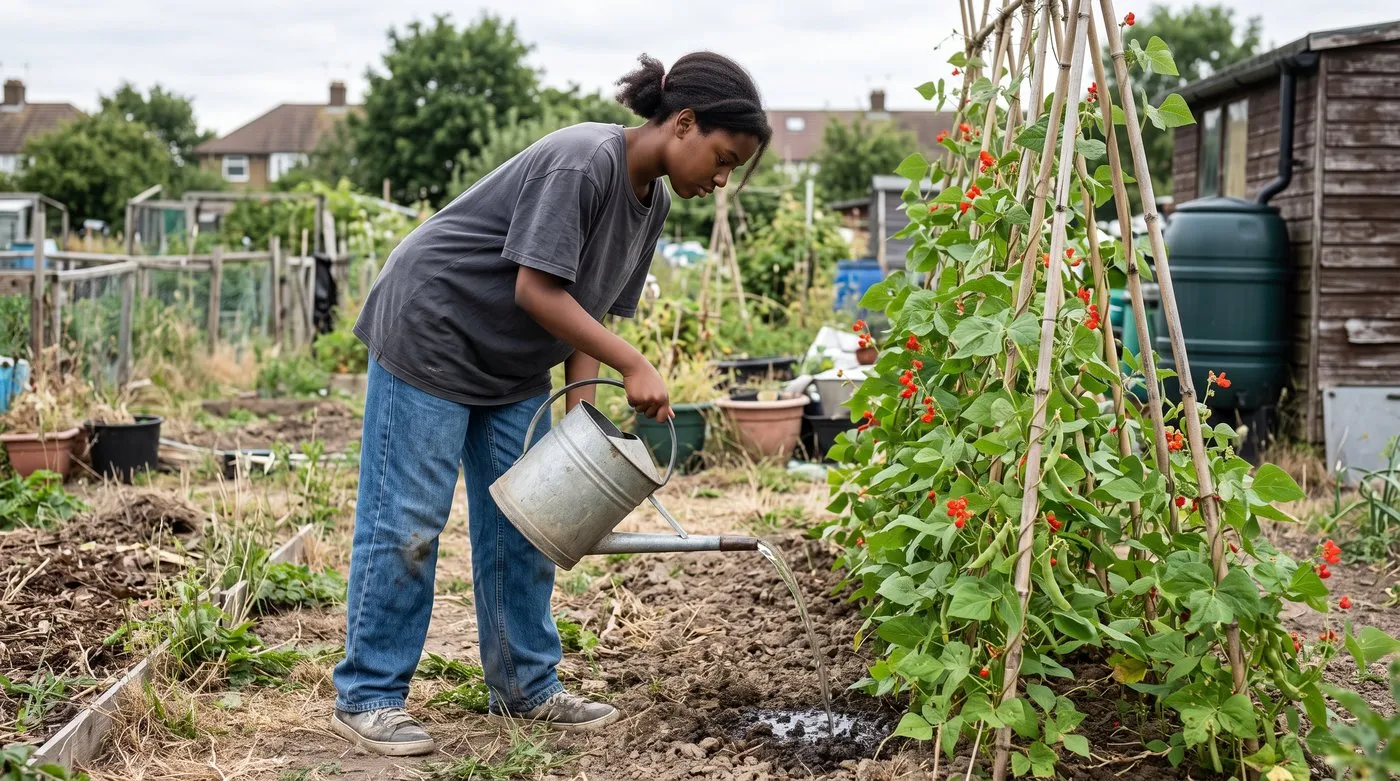
Runner beans are thirstiest from flowering to pod set, so save your water for them then. Pour it at the base, not over the leaves.
How mulching cuts your watering
A 5-8cm layer of mulch on your beds means you’ll water much less often. It stops the soil drying out, keeps roots cool and smothers thirsty weeds.
Good mulches for allotments
| Mulch | Cost | Holds moisture | Feeds the soil | Lasts |
|---|---|---|---|---|
| Well-rotted manure | Often free from stables | Very well | Yes | Up to a year |
| Garden compost | Free if homemade | Very well | Yes | Up to a year |
| Straw | Cheap | Well | A little | A few months |
| Wood chip | Often free from tree surgeons | Well | A little (best on paths) | One to two years |
| Grass clippings | Free | OK | A little | A few weeks |
| Cardboard | Free | Well | No | A few months |
Spread mulch in spring, once the soil is warm and damp. Keep it a few centimetres back from stems so they don’t rot. Our guide on how to make compost helps you make plenty.
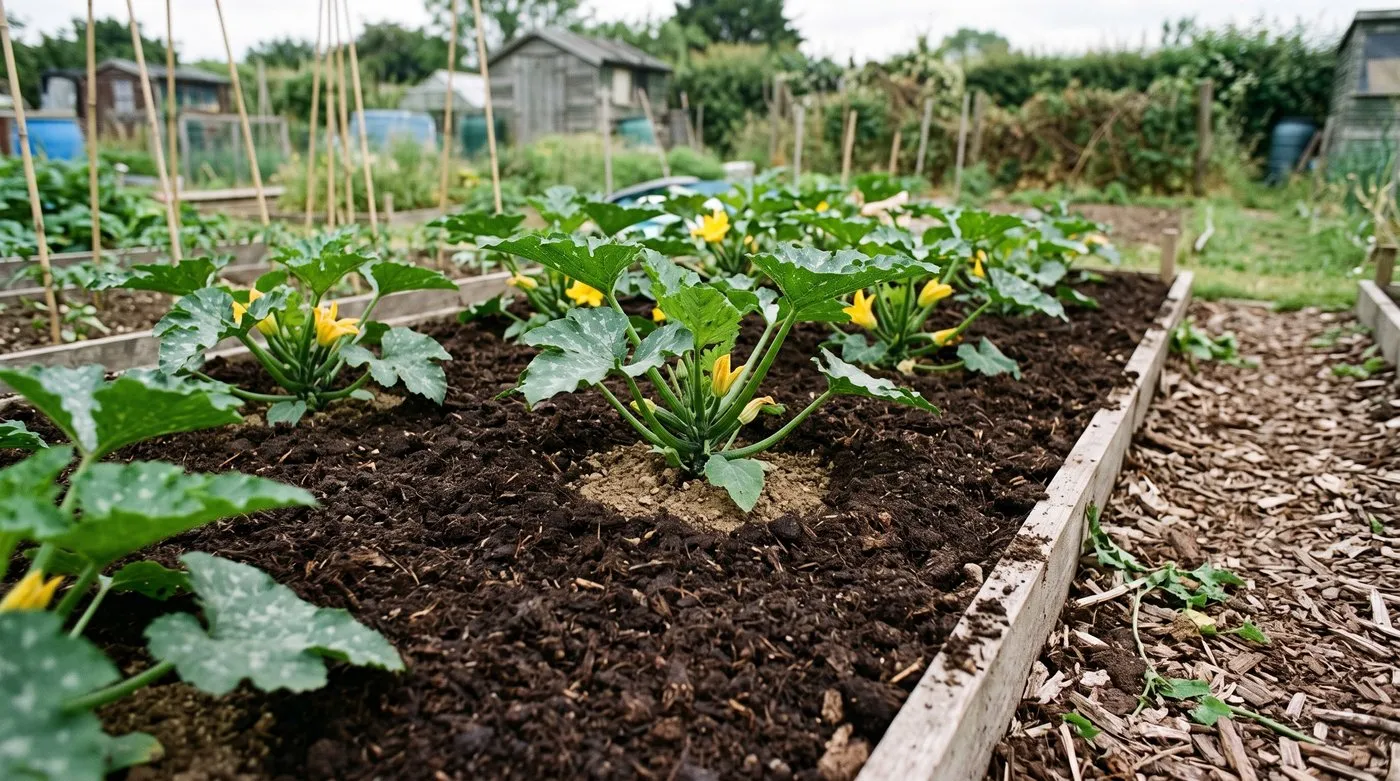
A thick mulch keeps the soil damp for far longer. Leave a small gap around each stem so it doesn’t rot.
Three allotment watering set-ups
You can start simple and add to it over time.
Simple set-up (half plot)
- One 200-litre water butt on a stand
- A downpipe diverter kit
- A soaker hose
- A good watering can
Connect the soaker hose to the butt and move it between beds. Top the butt up from the standpipe in dry spells.
Middle set-up (half plot)
- Two linked 200-litre butts on stands
- Diverter kits for the shed and greenhouse
- A linking kit
- A longer soaker hose
- A battery tap timer
- A small inline filter
This stores 400 litres and the timer runs the hose for you.
Full set-up (full plot)
- A 1,000-litre IBC tank on a raised platform
- Gutters on the shed and greenhouse
- A drip irrigation kit
- A battery tap timer with a rain sensor
- Main tubing, fittings, a filter and a pressure regulator
- A few watering cans
The tank collects from several roofs and feeds the drippers by gravity. The rain sensor skips watering after a shower.
Easy ways to save water on your allotment
A few simple habits mean your plot needs less water to begin with.
-
Water early in the morning. Less is lost to the sun, and leaves dry off during the day. Evening watering leaves leaves wet overnight, which blight loves.
-
Water the base, not the leaves. Take the rose off your can and pour around the stem.
-
Add organic matter. Digging in or mulching with compost every year helps the soil hold water. Our soil drainage guide covers clay and sandy soils.
-
Pick tougher varieties. Some seed packets say “drought tolerant”. Climbing French beans need less water than runner beans.
-
Block the wind. Wind dries soil fast. A row of Jerusalem artichokes or sweetcorn on the windy side makes a handy windbreak on an exposed site.
-
Catch rain from every roof. Every butt you fill is one less trip to the standpipe.
Going away? Our holiday watering guide covers ways to keep crops going while you’re off the plot.
Frequently asked questions
How much water does an allotment need per week in summer?
A half plot can need several hundred litres a week in summer. It depends on the weather, how windy your site is and what you grow. Raised beds dry out faster and may need daily watering in a heatwave. Mulching bare soil helps a lot. Water deeply and less often, rather than a little every day.
What size water butt do I need for an allotment?
Two linked 200-litre butts are a good start for a half plot. A full plot is better with more, ideally several linked together. Your shed roof decides how fast they refill. Every 1mm of rain on a square metre of roof gives about a litre. So a 10 square metre roof collects around 250 litres from 25mm of rain.
Can you use a hosepipe on your allotment during a ban?
Not from the mains, no. Hosepipe bans cover allotment taps as well as home gardens. Many sites ban hoses on shared standpipes all the time anyway. Watering from your own rainwater butts is fine, because it isn’t mains water. Watering cans filled at the tap are fine too.
How do I set up drip irrigation from a water butt?
Raise the butt on a sturdy stand so gravity pushes the water along. Fit a connector and a small filter to the tap. Run main tubing to your beds, then branch thinner tubing off to drippers by each plant. Choose drippers made for low pressure. A battery tap timer can do the rest. Rinse the filter now and then to stop blockages.
Is rainwater better than tap water for allotment plants?
For a few plants, yes, but most veg are happy with tap water. Rain is free of limescale, so it’s best for acid-lovers like blueberries. It also stops limescale clogging drippers. And it’s free once your butts are in. If your stored rainwater is dirty, use tap water for seedlings.
How do I stop water butts going green with algae?
Keep the light out, as algae need sunlight to grow. Keep the lid on tight and put butts in the shade if you can. Dark butts stay clearer than pale or see-through ones. Give them a clean once a year in early spring. A mesh filter on the downpipe keeps leaves out.
Can I connect multiple water butts together on an allotment?
Yes, and it’s an easy way to store more water. Fit a linking kit near the bottom of each butt. When the first fills up, water flows into the next one by itself. Stand them all at the same height on a level, sturdy base. Three linked 200-litre butts hold 600 litres from one downpipe.
Our team produces practical UK gardening guidance from source research, contributor records and established horticultural practice. Editorial standards are overseen by Matt W.