Key takeaways
- Pots, baskets and greenhouse plants dry out first, so focus on them
- Bottle drippers and water spikes cover a short break of a few days
- A drip system on a timer is the best bet for a week or more
- Group pots together in the shade and mulch bare soil before you go
- Test any watering system for several days before you leave
Summer holidays are when most potted plants get lost. A week away in hot weather can finish off pots, baskets and greenhouse crops. The good news is there’s a fix for every budget, from free bottle tricks to a drip system that looks after things for a fortnight.
How quickly do plants die without water in the UK?
It depends on where the plant is growing and how hot it gets. Pots on a sunny patio dry out fastest, because the sun heats the pot and the compost dries from every side. Terracotta dries quicker than plastic. Hanging baskets are just as quick to dry out.
Greenhouse plants have it hardest. A shut greenhouse gets extremely hot on a sunny day, and tomatoes and cucumbers drink a lot.
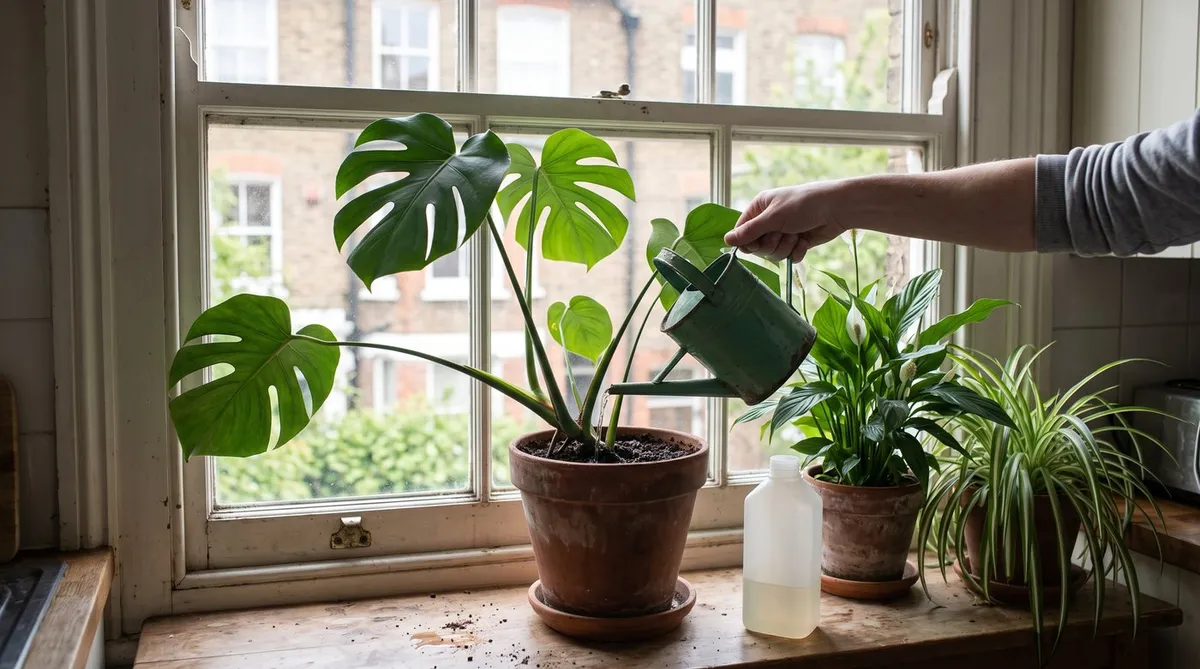
Houseplants last longer, because rooms are cooler and water evaporates more slowly. Most indoor plants cope with a week or so. Succulents and cacti manage a few weeks.
Plants in the ground do best of all, especially established shrubs with deep roots. Mulched borders on clay hold water better than sandy ones.
| Where the plant is | Risk in a summer week away |
|---|---|
| Greenhouse tomatoes and cucumbers | Very high |
| Terracotta pots in full sun | Very high |
| Hanging baskets | Very high |
| Plastic pots on the patio | High |
| Houseplants | Medium |
| Mulched borders on sandy soil | Medium |
| Mulched borders on clay | Low |
| Succulents and cacti | Low |
What are the best holiday watering methods?
Some methods cover a weekend, others a fortnight. Match the method to how long you’re away.
| Method | How long it covers | Cost | Best for |
|---|---|---|---|
| Gravity drip system | Up to a couple of weeks | Medium | Greenhouse, patio pots |
| Mains drip with timer | As long as you like | Medium | Bigger gardens, long trips |
| Capillary matting | About a week | Low | Small houseplants, herbs |
| Self-watering pots | A week or more | Medium | Single favourite plants |
| Water spikes or globes | A few days | Low | Weekends, top-ups |
| DIY bottle dripper | A few days | Free | Single pots in a pinch |
| Neighbour or friend | As long as you like | A favour owed | Greenhouses, busy gardens |
 Capillary matting keeps small pots moist by soaking up water from a tray at one end of the bench.
How to set up drip irrigation for holidays
Drip irrigation is the most reliable way to water while you’re away. A gravity-fed version needs no electricity or mains water.
Gravity-fed barrel systems
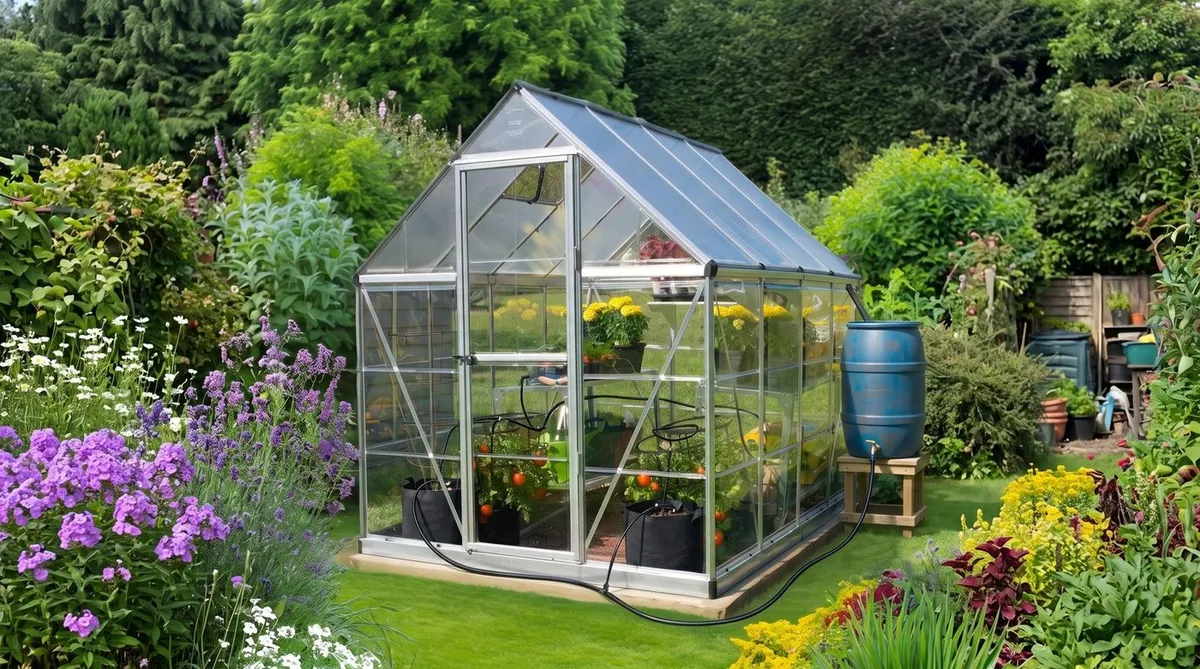
Raise a water butt or barrel at least 1 metre above your pots on a sturdy stand. Run a main pipe from the tap, then thin tubes to each pot with an adjustable dripper on the end. A battery tap timer opens the tap once or twice a day for a set time, so each pot gets a steady drink. For a longer trip, link two barrels together.
What goes in a basic drip kit
| Part | What it does |
|---|---|
| Battery tap timer | Turns the water on and off for you |
| Main tubing | Carries water along the row |
| Thin tubing | Takes water to each pot |
| Adjustable drippers | Set how much each pot gets |
| Water barrel on a stand | Holds the supply if you’re not on mains |
Testing before you travel
Run the system for several days before you go. Check every dripper each day. Look for blocked drippers (limescale is a common culprit in hard water areas), leaky joints, and pots that are too wet or too dry. Adjust each dripper until every pot gets the right amount. A big tomato pot needs far more than a small herb pot.
How does capillary matting work for houseplants?
Capillary matting is a felt-like mat that soaks up water from a bowl and passes it to pots standing on it. The compost drinks through the drainage holes. It’s the simplest, cheapest option for houseplants and small herb pots.
Setting up a capillary mat station
- Lay the mat on a flat, waterproof surface, such as a draining board or a table covered in plastic
- Drape one end into a bowl of water, such as a washing-up bowl
- Make sure the mat always touches the water
- Stand pots straight on the mat, without saucers
- Use pots with good drainage holes so the compost touches the mat
It works best with small pots. Big pots drink more than the mat can supply.
Limitations of capillary matting
Matting struggles with pots bigger than about 15cm across, because the water can’t wick up through that much compost. Pots need drainage holes, so glazed pots without holes won’t work. Make sure pets and children can’t knock the bowl over.
 A drip system on a tap timer waters patio pots while you’re away.
How to prepare plants before going on holiday
A bit of preparation in the week before you go makes a big difference, whatever watering method you use.
The pre-holiday preparation checklist
A week before: Give borders a long, deep soak. Spread compost or bark chips 5-7cm deep over bare soil to hold the moisture in.
5 days before: Set up and test any watering system. Run a full cycle and check every dripper. Set up capillary matting and check the pots are soaking up water. Move container vegetables into some shade.
3 days before: Deadhead flowers and pick anything that’s ripe. Flowers and fruit take a lot of water, so this takes the pressure off.
The day before: Give everything a final good soak, until water runs out of the bottom of each pot. Fill all barrels, bowls and trays to the top.
The morning you leave: Have one last look. Check timers are on, mats are wet and barrel taps are open.
Grouping plants to reduce water loss
Bunching plants together is one of the best free tricks. Grouped plants keep the air around each other moister, so each one loses less water.
Move outdoor pots to the shadiest part of the garden, such as by a north-facing wall or under a tree. Stand them on a tray of wet gravel if you can. Gather houseplants onto one table in a north or east-facing room, away from radiators and direct sun.
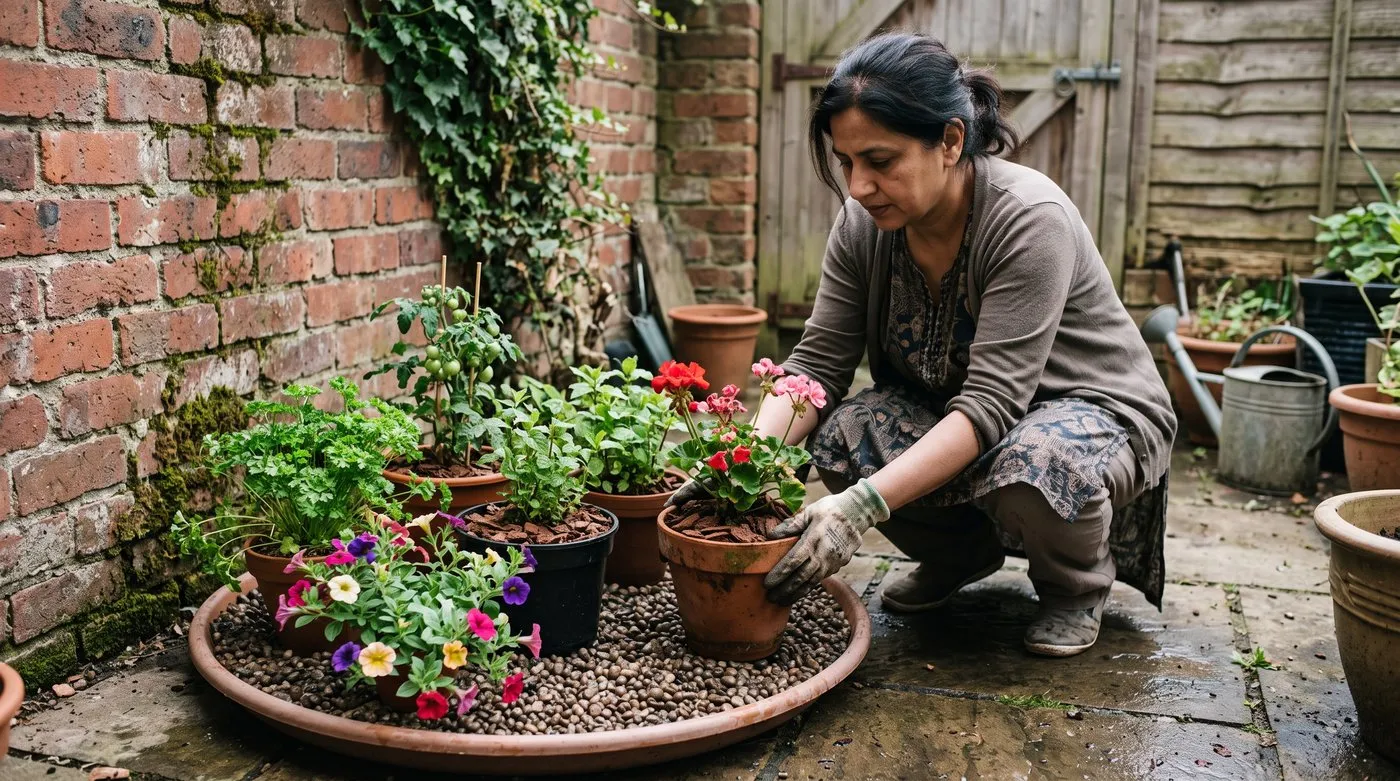
Huddling pots together in the shade is free and really works. Standing them on wet gravel keeps the air around them that bit moister.
How to keep greenhouse plants alive during holidays
A greenhouse is the hardest thing to leave. It gets very hot on sunny days, and potted plants can’t reach any water in the ground. Our guide to greenhouse auto-watering systems goes into more detail.
Keeping it cool is as important as water
Even moist plants suffer if a greenhouse overheats for hours. Automatic roof vents open by themselves when it warms up and close as it cools. Brush shade paint onto the south and west-facing glass, or hang shade netting. Wedge the door slightly open if it’s safe to do so.
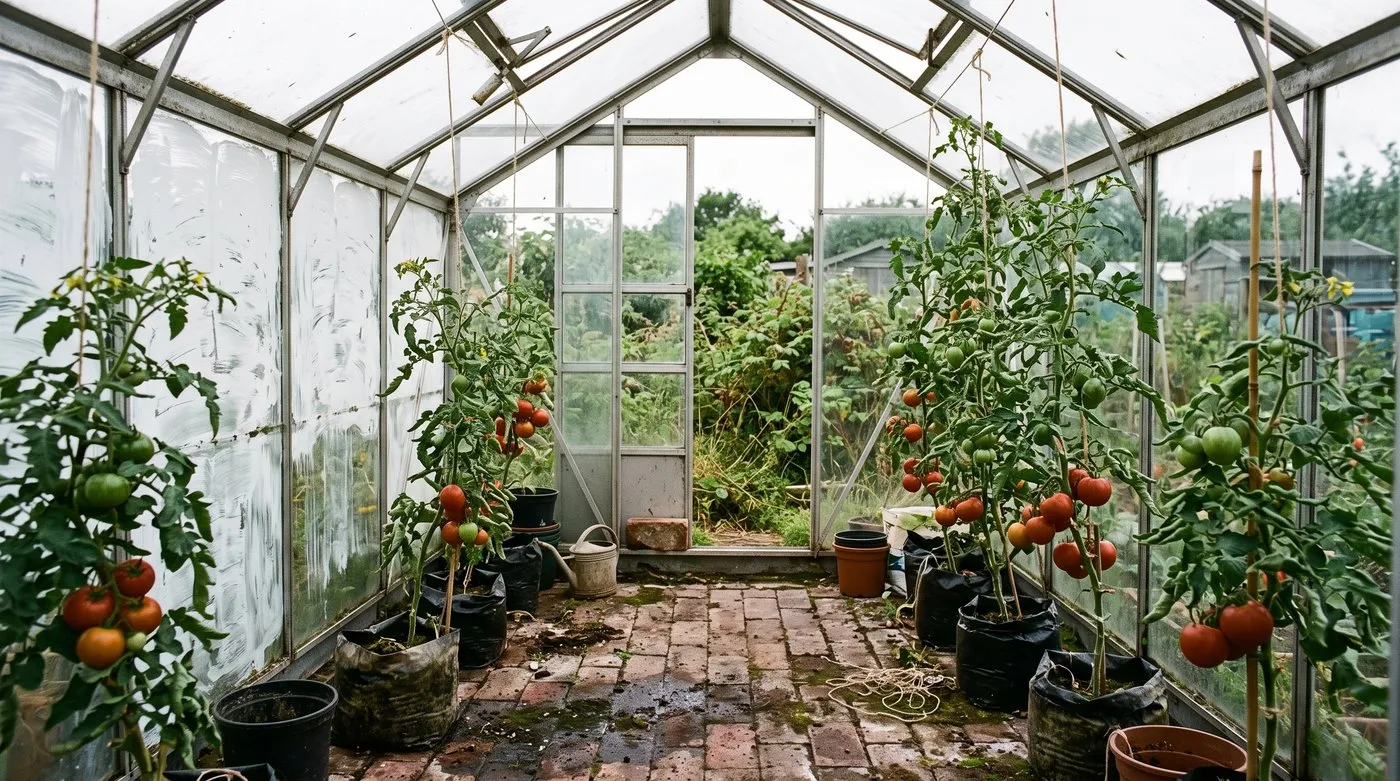
Shade paint and an automatic vent stop the greenhouse turning into an oven while you’re away. Damping down the floor helps keep the air moist too.
The greenhouse holiday setup
| Job | What to do | Why |
|---|---|---|
| Watering | Gravity drip system from a big barrel | Waters while you’re away |
| Air | Automatic roof vents | Lets hot air out |
| Shade | Shade paint or netting on sunny glass | Keeps it cooler inside |
| Damping down | Wet the floor before you leave | Keeps the air moist |
| Feeding | Feed a few days before you go | Not the morning you leave |
DIY and budget holiday watering methods
Not every trip needs a drip system. For a weekend or short break, cheaper tricks work well.
Bottle drippers
Fill a 1 or 2-litre plastic bottle with water. Make a tiny hole in the cap with a heated needle, then push the bottle upside down into the compost. Water slowly trickles out as the soil dries. It’s good for a few days, but runs out faster in hot weather.
Water spikes and globes
Water spikes screw onto an ordinary bottle and let water seep out through a porous tip. They give a slightly steadier flow than a hole in the cap. Glass watering globes look pretty but hold very little, so they only last a day or two. Neither is reliable for more than a few days.
The bath or sink method for houseplants
Lay a folded towel in the bath and run a couple of centimetres of water over it. Stand pots on the towel without their saucers. The towel feeds water up into the pots. It costs nothing and keeps houseplants going for about a week. Check the plug seals well, and leave the bathroom door open a little for air.
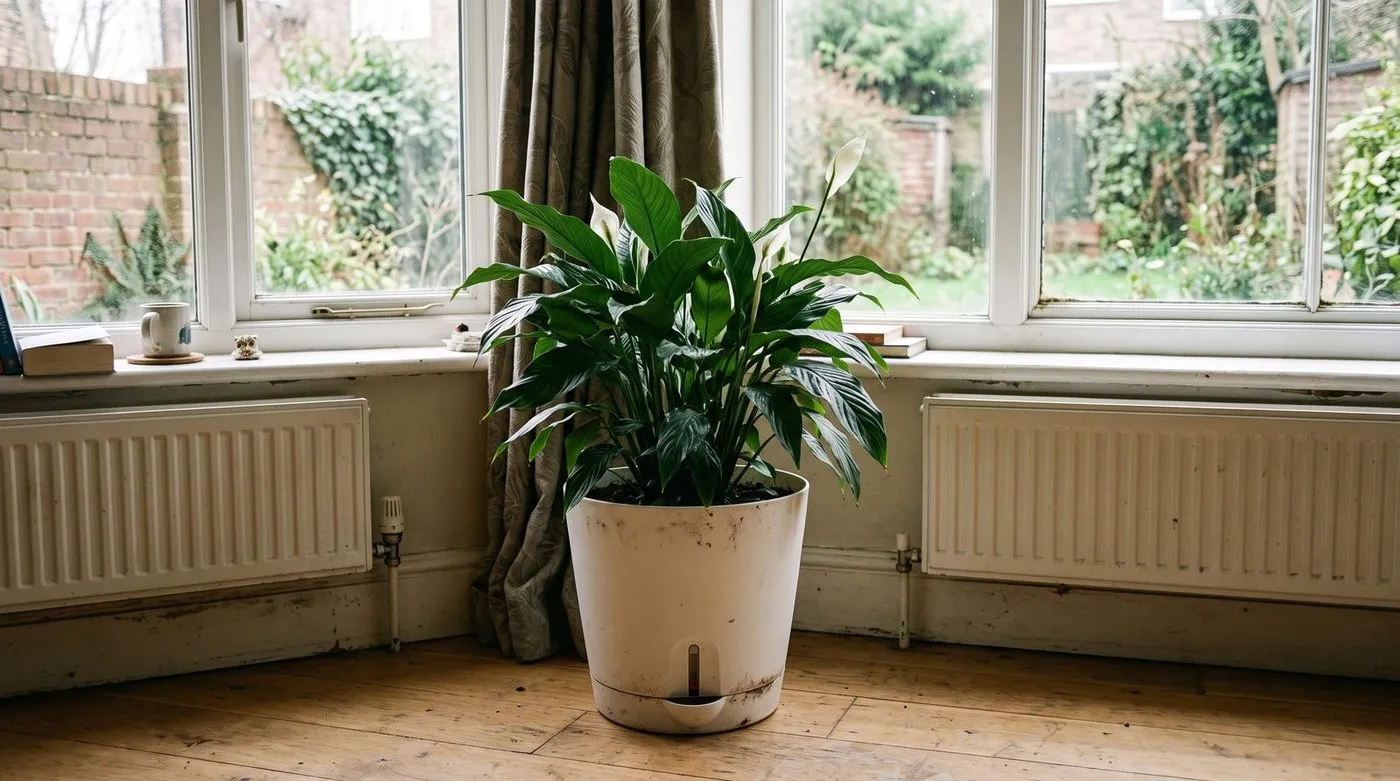 A self-watering pot has a water tank in the base that keeps a houseplant going while you’re away.
Common holiday watering mistakes to avoid
Drowning plants before you go. Water deeply, but stop once water runs from the bottom. Don’t leave pots sitting in saucers of water.
Not testing the system. A drip kit fitted the morning you leave may have blocked drippers or loose joints you won’t spot. Always test it for a few days first.
Using one method for everything. Bottle drippers are fine for a weekend, not a fortnight. Match the method to the trip.
Forgetting about heat. Greenhouse plants can cook even in moist compost. Sort out vents and shading as well as water.
Feeding the morning you leave. Feed a few days before you go instead, while the compost is still moist.
Holiday watering for different plant types
Most gardens need a mix of methods.
Outdoor containers
Group pots in the shade and top each one with a layer of bark or gravel. For trips of more than a few days, use a drip system on a timer. For a short break, water deeply the day before and add bottle drippers. Make sure every pot drains freely, with no saucers of standing water.
Houseplants
Move houseplants to a north or east-facing room and group them on a tray of wet gravel. Use capillary matting for small pots, and water spikes or self-watering inserts for bigger ones. Draw the curtains halfway to slow them down a little, but don’t leave them in the dark.
Greenhouse plants
Set up a gravity drip system with a barrel big enough for the whole trip. Fit automatic vents, paint on shading and damp down the floor before you leave. Watering well through the season also helps, because plants grow deeper roots that cope better with a dry spell.
Open-ground borders
Established, mulched borders need the least help. Give them a long, deep soak a week before you go and mulch any bare soil. Shrubs and trees planted this year need more care, so set a leaky hose on a timer or ask a neighbour to soak them once or twice while you’re away.
Month-by-month holiday watering risk
| Month | Risk | Main worry |
|---|---|---|
| January to March | Very low | Frost, not drought |
| April | Low | Young seedlings only |
| May | Medium | Greenhouse crops getting going |
| June | High | Fast growth, holidays starting |
| July | Very high | Hottest month, main holiday season |
| August | Very high | Long hot spells, dry soil |
| September | Medium | Cooler nights, shorter days |
| October to December | Low | Too wet more likely than too dry |
June to August is the danger zone. If you go away in winter, the worry is waterlogging rather than drought. Move tender potted plants under cover and check drainage holes are clear.
Frequently asked questions
Now your holiday watering is sorted, read our guide on water-efficient gardening for year-round ways to make your garden less thirsty.
How long can plants survive without water in summer?
Plants in the ground usually cope for a week or so. Pots are much more at risk and can wilt within a day or two in hot weather. Greenhouse tomatoes and cucumbers are especially thirsty. Succulents and cacti manage for weeks. Houseplants depend on pot size and how warm the room is.
What is the best way to water plants while on holiday?
A drip watering system is the most reliable choice. A gravity-fed or timer-run system drips water into each pot without you being there. For houseplants, capillary matting fed from a bowl of water keeps small pots moist. Test any system for a few days before you leave.
Do self-watering pots actually work?
Yes, they work well for small and medium plants. A water tank in the base feeds water up into the compost through a wick. That can keep a plant moist for a week or more, depending on its size and the weather. Big, thirsty plants such as tomatoes can drain the tank fast in hot weather.
Can I use a bath towel as capillary matting?
Yes, an old cotton towel works for a short break. Lay it on the draining board with one end in a sink or bowl of water. Stand the pots on the wet part so they soak up moisture. Towels don’t wick as evenly as proper matting and can get smelly, so buy matting if you go away often.
Should I move houseplants before going on holiday?
Yes, a quick shuffle helps them cope. Move them away from hot, sunny windows. Group them together on trays of damp gravel in a bright room out of direct sun, which keeps the air around them moister. Don’t leave them in the dark, as they still need light.
How do I prepare my garden before a two-week holiday?
Start a few days before you go. Water borders deeply, then mulch bare soil. Move pots into shade and group them together. Set up and test any watering system. Deadhead flowers and pick ripe crops, mow the lawn a little higher than usual, and ask a neighbour to water pots halfway through.
Are water spikes worth buying?
Yes, for short breaks of a few days. They’re cheap and fit on ordinary plastic drinks bottles. The bottle then lets water seep slowly into the compost. How fast it flows depends on the soil and weather, so they’re less reliable for trips of more than a week.
Our team produces practical UK gardening guidance from source research, contributor records and established horticultural practice. Editorial standards are overseen by Matt W.