Key takeaways
- Water in the early morning, aimed at the roots, not the leaves
- Give a good soak less often rather than a little every day
- New trees and shrubs need regular water through their first summer
- Established trees and shrubs rarely need watering in a normal UK summer
- Clay soil needs watering less often than sandy soil
- Mulch and water butts are the easiest ways to save water
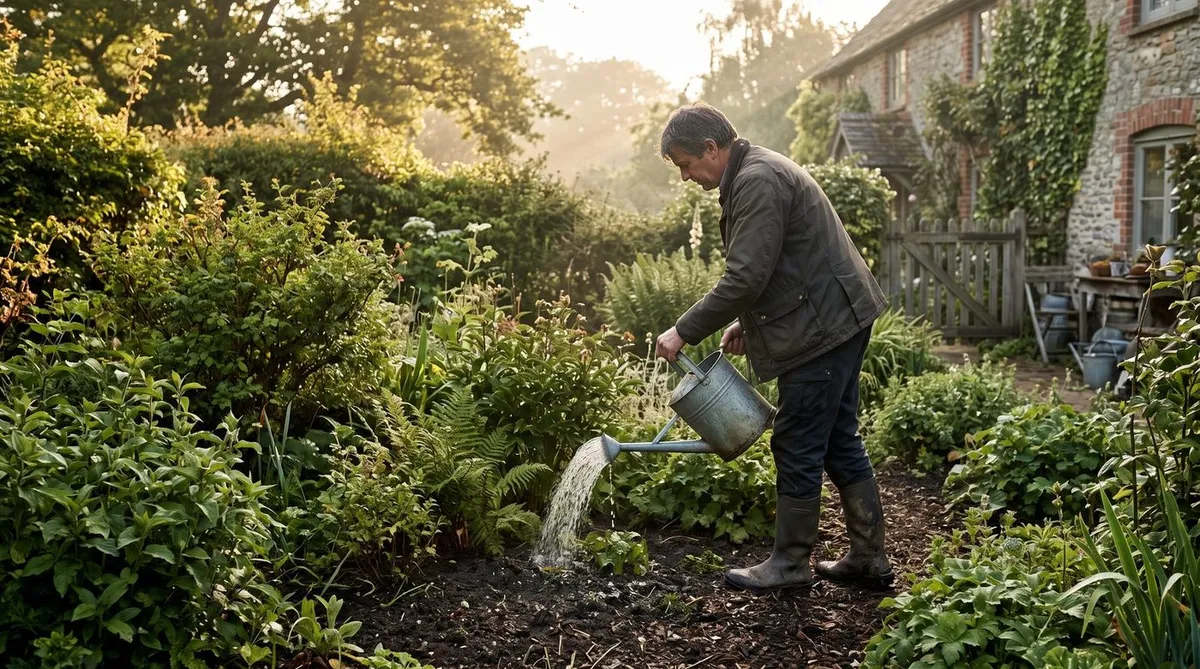
Watering sounds simple, but it’s easy to get wrong. The secret is to water less often but more deeply, in the morning, and right at the roots. Get that right and your garden will cope with a dry summer far better, with less effort and less water.
Why plants die from incorrect watering
Most watering problems start at the roots.
Roots need both water and air. If the soil stays soggy, the air gets pushed out and the roots start to rot. A plant with rotting roots can’t take up water, so it wilts just like a thirsty one. That’s why a wilting plant in wet soil usually has a root problem, not a thirst problem.
Too little water is easier to spot. Growth slows, leaves droop, and in the end the leaf edges turn brown and crispy.
What you’re after is soil that’s damp but not waterlogged, like a wrung-out sponge.
Root cause analysis: why common watering habits fail
| Habit | What happens | The result |
|---|---|---|
| A light sprinkle every day | Only the top few centimetres get wet | Shallow roots that can’t cope with dry spells |
| Watering over the leaves in the evening | Leaves stay wet all night | Mildew, grey mould and leaf spots |
| Watering on a schedule, whatever the weather | Too much water in cool or wet spells | Root rot, especially on clay |
| Watering the whole border, not the plants | Lots of water dries off bare soil | Wasted water, thirsty plants |
| Treating seedlings and big trees the same | One gets too little, one too much | Patchy results |
So aim the water at the roots, go deep rather than often, and let the soil tell you when to water.
The science behind soil moisture and water movement
Here’s the simple version. Water soaks straight down through the soil, then slowly spreads sideways. That’s why a slow, steady trickle at the roots works so well. It gives the water time to soak in instead of running off.
Very dry clay is a bit stubborn. Water tends to run across the surface before it soaks in, so water slowly or in a couple of goes.
In a dry, sunny summer, plants and soil lose water faster than the rain puts it back. A layer of mulch over the soil slows that down a lot.
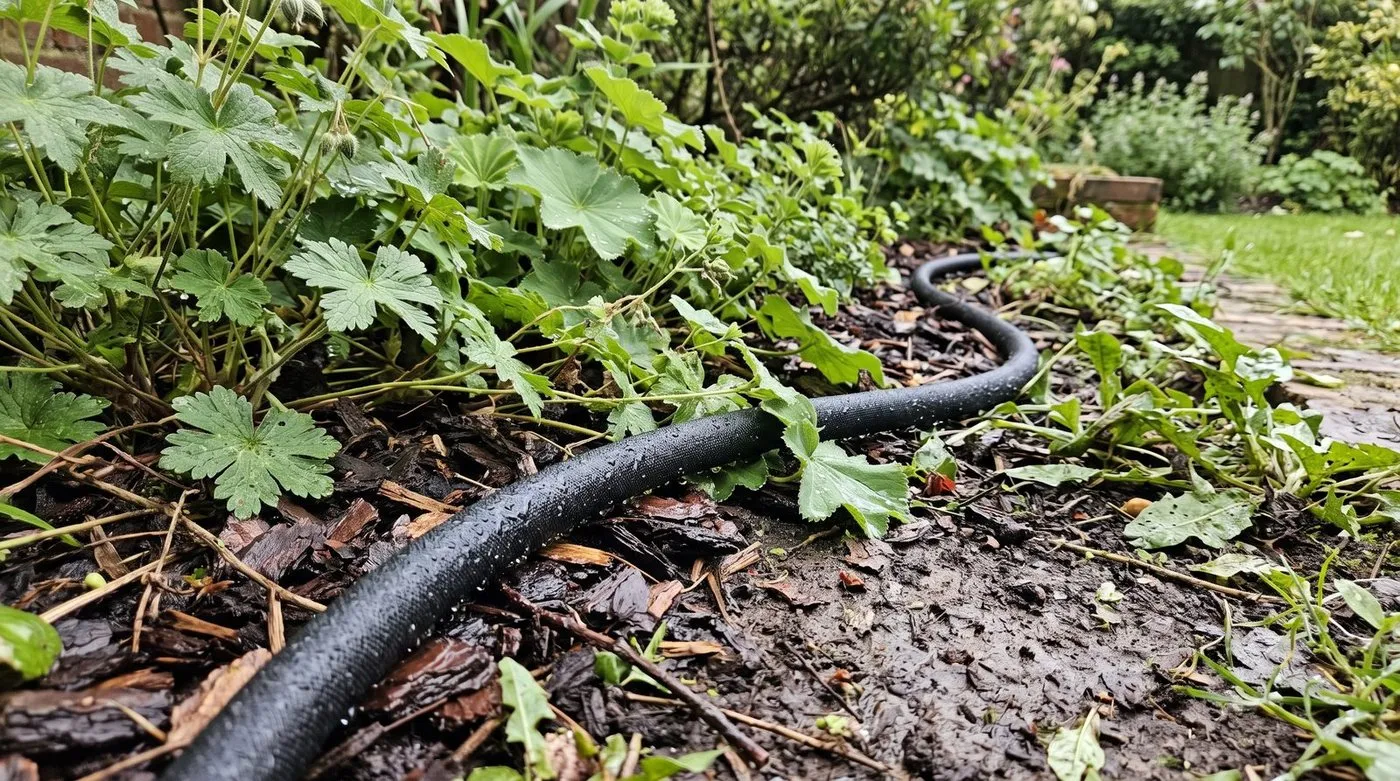 A soaker hose under bark mulch puts water right at the roots and stops it drying off the surface.
Watering methods ranked by efficiency
Here’s how the common methods compare, from least wasteful to most.
| Method | Water saving | Best for | Watch out for |
|---|---|---|---|
| Drip irrigation | Excellent | Veg beds, fruit cages, greenhouses | Needs a bit of planning to set up |
| Soaker / leaky hose | Excellent | Borders, hedges, rows of shrubs | Awkward around scattered plants |
| Watering can at the roots | Very good | Pots, seedlings, single plants | Slow for big areas |
| Hosepipe at the base of plants | Good | Borders, new plants | Depends on taking your time |
| Seep hose (porous rubber) | Good | Borders, fruit trees | Can clog in hard-water areas |
| Micro-sprinkler | Fair | Mixed borders, greenhouses | Needs decent water pressure |
| Rotating sprinkler | Poor | Lawns, big areas | Lots lost to the air, wets leaves |
| Oscillating sprinkler | Poor | Lawns, veg beds | Lots lost to the air, uneven |
Drip irrigation is the most efficient choice for home gardens. A simple kit for a veg bed plugs into an outside tap, and you can add a timer so it waters while you sleep.
Water requirements by plant type
Different plants need very different amounts. These are rough guides for a dry UK summer.
| Plant type | How much | How often | Tips |
|---|---|---|---|
| Lawns | Usually none once established | Only new lawns need regular water | See how often to water a lawn. Brown grass usually recovers after rain |
| Leafy veg | 10-15 litres per sq m | Every 2-3 days in heat | Lettuce, spinach and chard bolt if dry |
| Fruiting veg | 10-15 litres per sq m | Every 2-3 days, steadily | Tomatoes, courgettes, cucumbers like even moisture |
| Soft fruit | A good soak | Every 3-5 days while fruiting | Strawberries and raspberries |
| Established roses | 10-15 litres per plant | Every 7-10 days in dry spells | A deep soak, not a splash |
| Perennial borders | 15-20 litres per sq m | Every 7-14 days, depending on soil | Mulch cuts this down a lot |
| Newly planted trees | 10-15 litres per tree | 2-3 times a week in dry spells | The first summer matters most |
| Established trees | Usually none | Only in a real drought | Water if the ground is cracked and dry |
| Patio pots | Check daily in summer | Daily in heat, every 2-3 days otherwise | Terracotta dries faster than plastic |
| Greenhouse tomatoes | Little and often | Daily, steadily | Uneven watering causes blossom end rot |
Pots need the most attention, because the roots can’t go looking for water. A terracotta pot on a sunny patio can dry out in a day. Clay pots dry faster than plastic or glazed ones, as water escapes through the sides.
For container vegetable gardening, check every day from June to August. Push a finger 2cm into the compost. If it’s dry, water.
How soil type changes watering needs
Clay and sandy soils need quite different treatment.
Clay soil watering
Clay holds on to water for a long time. The tricky bit is getting the water in, as dry clay can shed water rather than soak it up. Water slowly, in a couple of passes, so each lot can sink in.
On clay:
- Water deeply every 10-14 days in a normal summer, every 7-10 days in a heatwave
- Give 15-20 litres per square metre each time, not little bits often
- Check the soil with your finger before watering
- Mulch borders well to keep the moisture in
- For improving clay soil, add organic matter every year and it gets easier each season
Sandy soil watering
Sandy soil drains fast, sometimes too fast. Water can run past the roots before plants get a drink.
On sandy soil:
- Water every 3-5 days in summer, every 2-3 days in a heatwave
- Give around 10 litres per square metre, more often
- Dig in or spread plenty of compost each year to help it hold water
- Mulch is even more important than on clay
- Soaker hoses are brilliant here, as they let the water soak in slowly
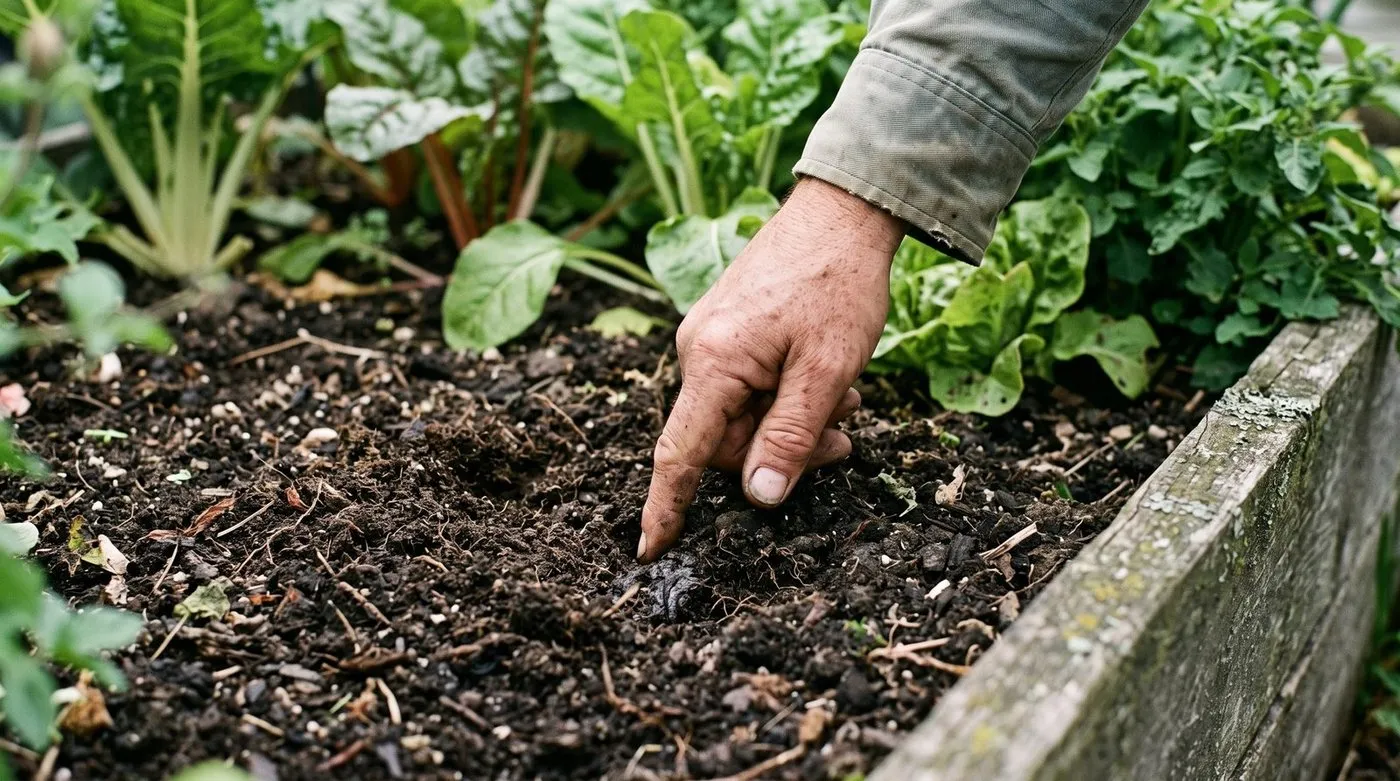 The finger test: if the soil feels damp 5cm down, your plants don’t need water yet.
When to water: morning vs evening, the science
Early morning, roughly 6am to 9am, is the best time. Here’s why:
- It’s cool, so the water soaks in before the sun dries it off
- Leaves dry quickly as the day warms up, which helps keep mildew and grey mould away
- Plants have water ready for the warm part of the day, when they need it most
- Don’t worry about droplets scorching leaves. That’s mostly a myth
If mornings don’t work, the late afternoon (about 4pm to 6pm) is next best. The heat has passed, and leaves still have time to dry before dark.
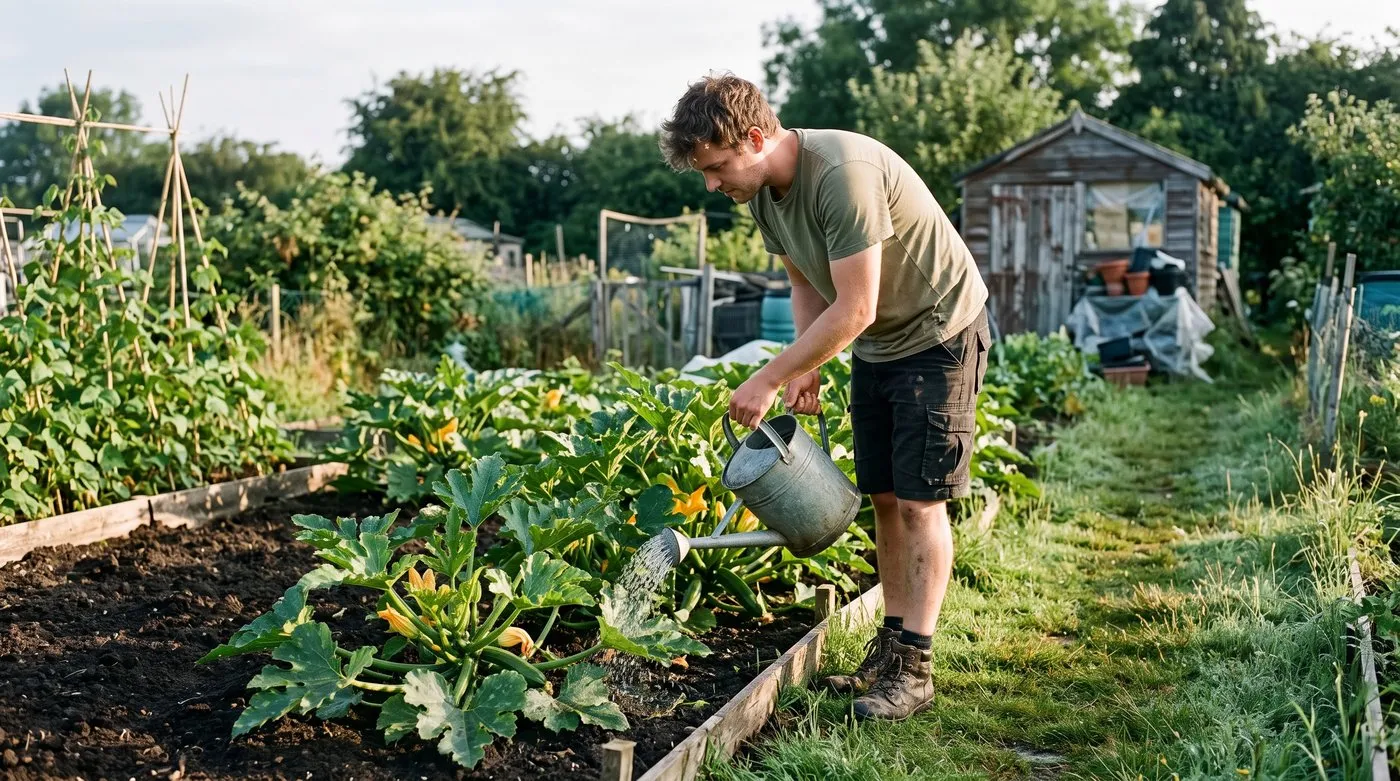
Early morning is the best time to water. It soaks in before the sun gets up, and leaves dry quickly, which keeps mildew away.
Month-by-month watering calendar
| Month | How much | Main jobs | Tips |
|---|---|---|---|
| January | None | Check pots drain freely | Frozen, soggy compost can harm roots |
| February | None | Start watering in the greenhouse | Go easy, cold roots stay wet |
| March | Occasional | New plants only | Spring rain usually does the job |
| April | Low | New plants and seedlings | Watch for dry spells, especially in the south-east |
| May | Medium | New plants and pots | Start checking pots every day |
| June | High | Full watering routine begins | June is often dry |
| July | High | Veg every few days, deep soaks for borders | Watch for heatwaves |
| August | High | Keep up the July routine | Often the driest month in the south-east |
| September | Medium | Water new autumn plantings | Cut back as it cools |
| October | Low | Autumn plantings only | Rain usually returns |
| November | None | Make sure pots drain | Protect pots from freezing |
| December | None | Greenhouse checks only | Overwintering plants need very little |
June to August is when most gardens need help. The east and south-east are the driest parts of the UK and most likely to see hosepipe bans. In the wetter north and west, you’ll rarely need to water outside a proper dry spell.
Rainwater harvesting for UK gardens
One water butt is plenty for a few pots. A busy veg patch needs more.
A house roof sheds a surprising amount of rain, so even one downpipe can fill a butt quickly.
Your options:
- Standard water butt (100-200 litres): great for pots and raised beds. Fit it to a downpipe with a diverter kit.
- Large butt or tank (500-1,000 litres): suits a small veg garden.
- Underground tank: buried and fed by several downpipes. For big productive gardens.
- Linked butts: join two or more with an overflow pipe to double your storage cheaply.
Stand your butt on a base so it’s easy to fill a watering can, and gravity can even feed a simple drip system. For more ideas, see our guide to water-efficient gardening.
Hosepipe ban rules: what you can and cannot do
Water companies can bring in hosepipe bans during a drought, and you can be fined for ignoring one.
Usually banned:
- Watering the garden with a hosepipe
- Filling ponds with a hosepipe
- Washing the car with a hosepipe
- Filling paddling pools, swimming pools or hot tubs
Usually still fine:
- Watering cans
- Collected rainwater
- Grey water from baths and washing-up
Exemptions vary, for example for some drip systems or for people with a disability, so check your own water company’s rules. During a ban, water butts, grey water for ornamentals and a watering can will keep a veg patch going.
New plantings vs established plants: different watering needs
A plant’s first summer is the one that counts. An established shrub has deep roots and can manage a couple of weeks without rain. A new one only has the roots in its original pot, and can struggle within days in dry weather.
Newly planted trees and shrubs
Water straight after planting with 10-15 litres to settle the soil. Through the first summer, water two or three times a week in dry spells, and more in a heatwave. Keep going until you see strong new growth, which tells you the roots have spread out.
A tree watering bag zipped round the trunk lets water trickle out slowly. It’s handy for trees that are hard to reach with a hose.
After the first year, most hardy trees and shrubs can look after themselves except in a real drought.
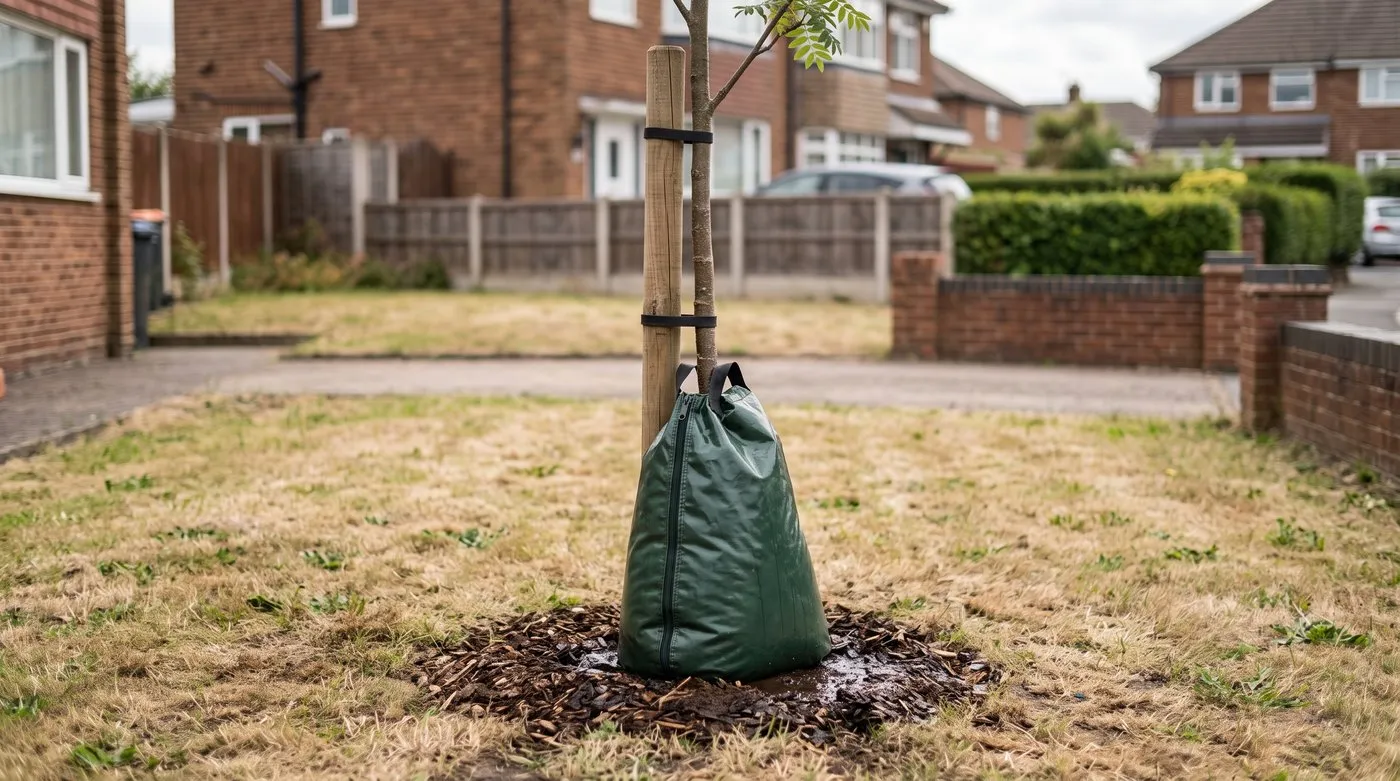
A tree’s first summer is the one that counts. A watering bag lets water trickle out slowly, so it all soaks down to the roots.
Newly sown lawns and seedlings
A newly sown lawn needs its top couple of centimetres kept damp until the grass comes up. That can mean a light watering twice a day in warm, dry weather. Use a fine spray so you don’t wash the seed into puddles. Once the grass is about 5cm tall, water less often but more deeply.
Water seed trays from below. Stand the tray in a shallow dish of water for 10 minutes, let it drain, and don’t water again until the surface is just dry. Watering small seedlings from above can flatten them and lead to damping off.
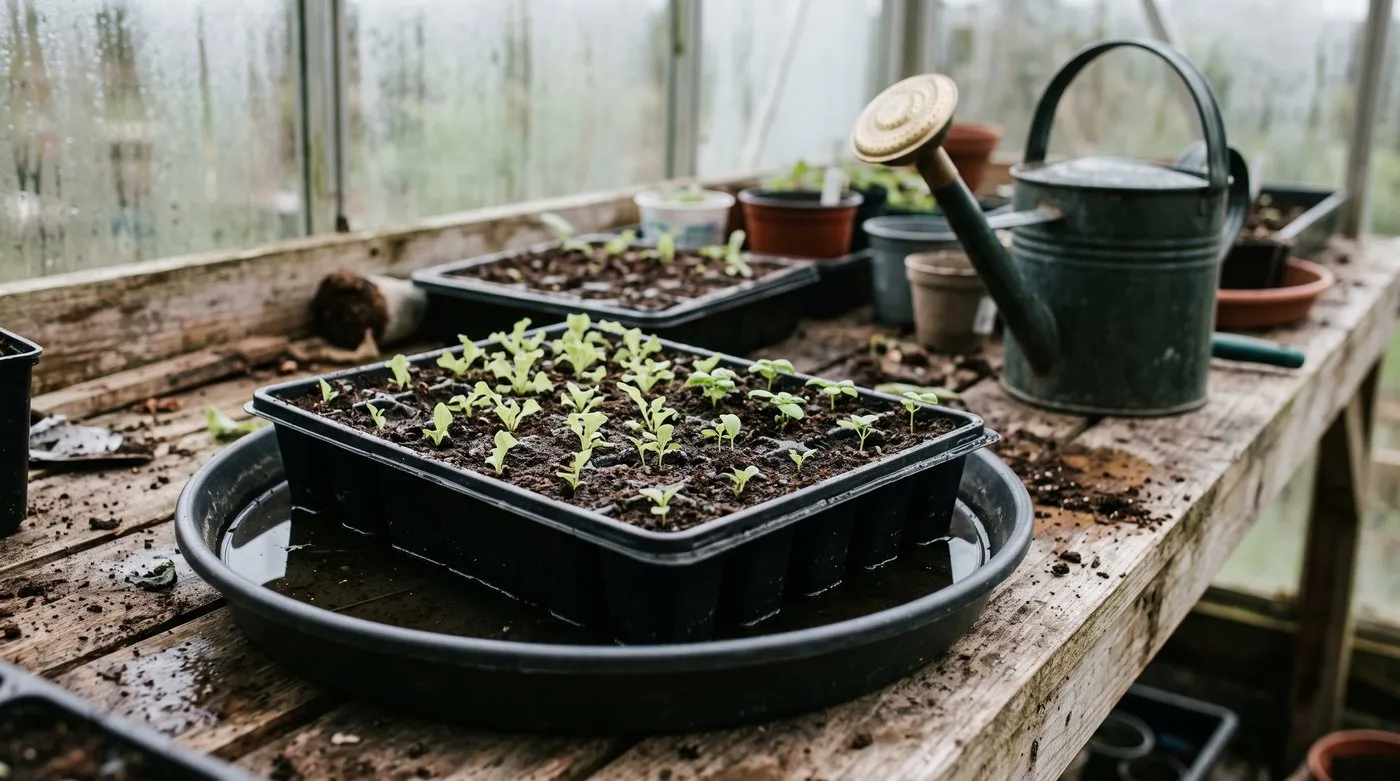
Watering from below won’t flatten tiny seedlings. Stand the tray in water for 10 minutes, then let it drain.
Greenhouse and container watering
A greenhouse gets no rain and warms up fast, so plants in there rely on you. Our greenhouse auto-watering systems guide covers ways to make it easier.
Greenhouse watering rules
- Water in the morning. Damp leaves overnight in a humid greenhouse invite grey mould
- Keep tomatoes, cucumbers and peppers evenly moist. Uneven watering causes blossom end rot on tomatoes and bitter cucumbers
- In summer, plants may need watering twice a day. In winter, every week or two is often enough
- Lift pots to check them. A dry pot feels much lighter than a wet one
Nutrient interaction with watering
Plants take up food dissolved in water, so dry soil means hungry plants even if you’ve fed them. Steady watering makes feeding of garden plants work much better. Water tomatoes and other hungry plants before giving liquid feed, never onto bone-dry compost.
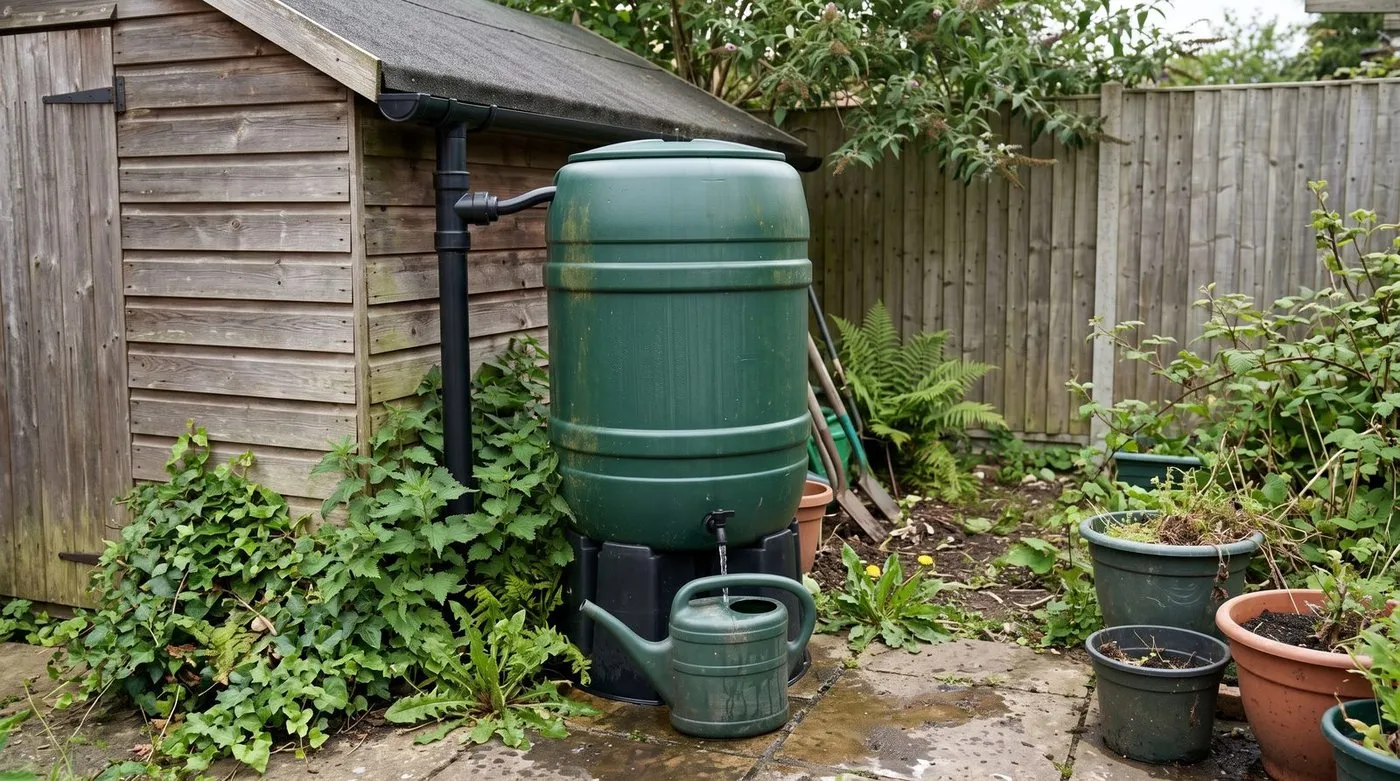 A water butt on a shed downpipe gives you free rainwater. Link a second one with an overflow pipe for even more.
Drought-tolerant garden design: reducing watering needs
The easiest way to water less is to plan a garden that needs less water in the first place.
Soil improvement as water management
Organic matter helps every soil. It helps clay drain and helps sandy soil hold water. A 7-10cm mulch of bark or compost stops the soil drying out, keeps weeds down and feeds the soil. Our guide on how to make compost tea has more on putting your compost to work.
Mulch in spring once the soil has warmed up, before dry weather sets in, and again in early autumn. Always mulch onto damp soil. For the full how-to, see what is mulch and how to use it.
Choosing drought-tolerant plants
Mediterranean plants love hot, dry summers. Lavender, rosemary, thyme, sage, salvias, achilleas, Verbena bonariensis, sedums and ornamental grasses all need very little water once settled in.
The RHS drought-tolerant plants guide has plenty more ideas. Group these plants together in a dry, sunny spot and you’ll only need to water them in their first year.
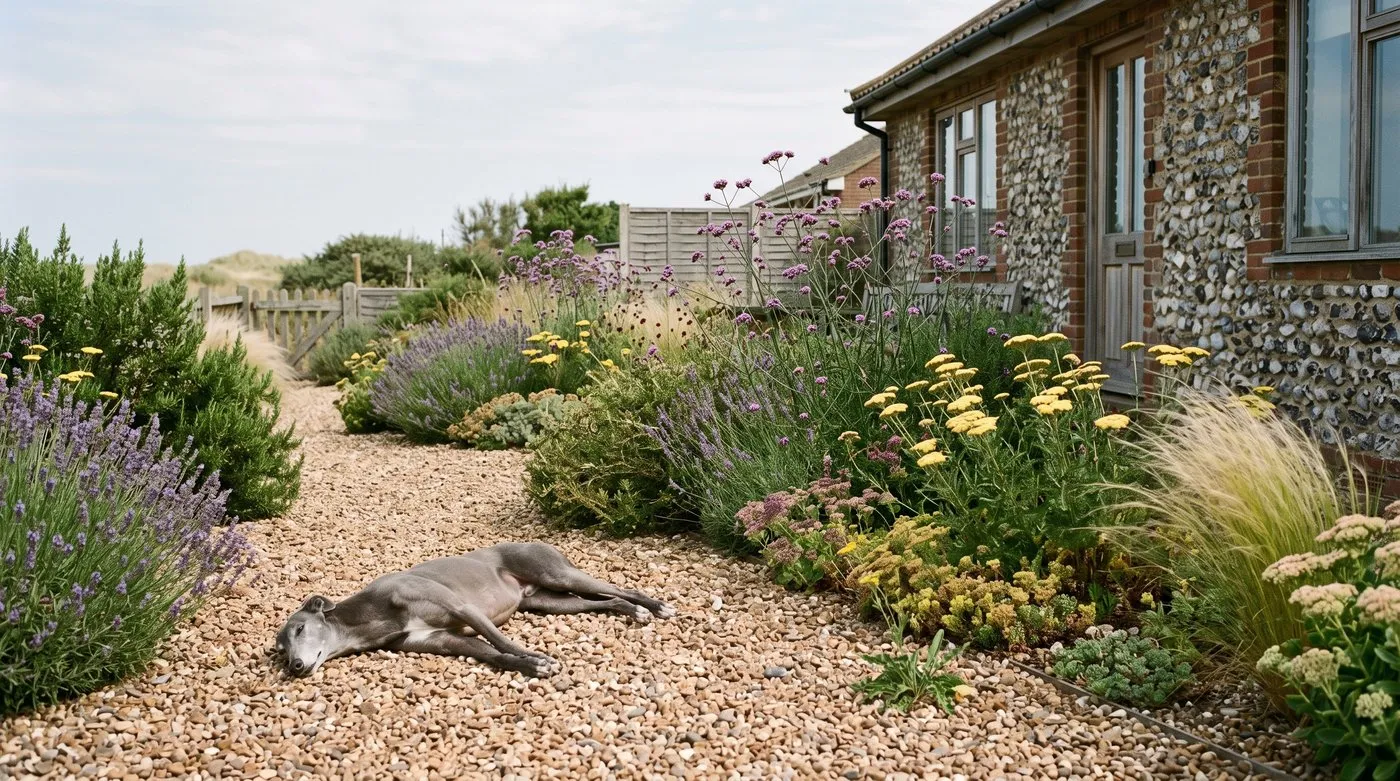
Group drought-tolerant plants together in a sunny spot. Once settled in, they’ll rarely need watering after their first year.
Common watering mistakes
1. Watering on a fixed schedule regardless of rainfall
Let the soil decide, not the calendar. If rain has kept the border damp, hold off. Too much water in cool, wet weather is a common way to lose roses, lavender and other Mediterranean plants on heavy soil.
2. Splashing water onto foliage repeatedly
Wet leaves invite powdery mildew, rust, grey mould and black spot. Aim at the roots, especially for roses, phlox, monarda and anything prone to mildew.
3. Watering little and often
Roots follow the water. If it’s always near the surface, so are the roots. One deep soak a week grows tougher plants than a daily sprinkle.
4. Forgetting to adjust for container materials
Terracotta dries out faster than plastic or glazed pots. Check clay pots daily in hot weather, or line the inside with plastic (leaving the drainage holes clear) to slow them down.
5. Watering trees and established shrubs as if they were annuals
Established trees and shrubs have roots that reach deep down. They rarely need watering in a normal UK summer, and frequent watering just keeps their roots near the surface. Save it for a real drought.
Further reading
- How to feed garden plants in the UK - feeding and watering go hand in hand
- What is mulch and how to use it - the best way to save water
- Container vegetable gardening in the UK - keeping pots watered
- How to improve clay soil - helping water soak in
- Water-efficient gardening UK - more water-saving ideas
For more detail on particular plants, the RHS watering advice is a good next stop.
Frequently asked questions
When is the best time to water your garden in the UK?
Early morning, between about 6am and 9am. The soil is cool, so less water is lost to the sun, and the leaves dry off quickly, which helps keep mildew and grey mould away. If mornings don’t work, water in the late afternoon once the heat has passed, and keep water off the leaves.
How much water does a garden need in summer?
Borders in a dry spell need a good soak about once a week. Aim for roughly 20-30 litres per square metre. Vegetables need 10-15 litres per square metre about twice a week. New trees and shrubs need 10-15 litres each, two or three times a week in dry weather during their first summer.
Should I water every day or less often but more deeply?
Less often and more deeply is better. A daily sprinkle only wets the top few centimetres, so roots stay shallow and suffer the moment you miss a day. A deep soak sends roots down to where the soil stays damp. Water well, then wait until the top 5cm of soil feels dry before watering again.
Can I use grey water on my garden?
Yes, used sensibly on ornamental plants. Bath, shower and washing-up water is fine for most flowers and shrubs. Keep it off edible crops, seedlings and acid-loving plants. Use it straight away rather than storing it. Don’t use water containing bleach, disinfectant, dishwasher detergent or fabric conditioner.
What are hosepipe ban rules in the UK?
Water companies can ban hosepipes during a drought. A ban usually stops you using a hosepipe to water the garden, wash the car or fill a pool. Watering cans and collected rainwater are still fine. Rules and exemptions vary, so check your own water company’s website.
How do I know if my plant is overwatered or underwatered?
Push a finger into the soil, as both can make a plant droop. Overwatered plants have yellowing lower leaves, soft stems at soil level and soggy soil. Underwatered plants have crisp brown leaf edges, wilt that doesn’t recover overnight and dry soil 10cm down. Check the soil before you water, not the calendar.
Does rainwater make a difference compared to tap water?
Yes, for acid-loving plants in pots. Tap water in much of the UK is hard and limy. Watered with it for long, potted blueberries, camellias, azaleas and rhododendrons can get yellow leaves. Use rainwater for them. For the rest of the garden, tap water is fine.
How can I reduce water use in my garden?
Mulch is the easiest way to save water. Spread 7-10cm of bark, compost or straw over damp soil to stop it drying out. Use soaker hoses or drip lines instead of sprinklers. Collect rain in water butts, and choose drought-tolerant plants for hot, dry spots. Adding organic matter helps all soils hold water better.
Our team produces practical UK gardening guidance from source research, contributor records and established horticultural practice. Editorial standards are overseen by Matt W.


