Key takeaways
- Drip watering is the most reliable way to water a greenhouse while you're away
- Run your setup for 48 hours before you go to see how much water it really uses
- Capillary matting suits small plastic pots with drainage holes
- Bottle drippers are a handy backup, but test them first
- Automatic roof vents and shading matter as much as water
- Ask a neighbour to pop in every few days, just in case
A drip watering kit that you’ve tested before you leave is the safest way to keep greenhouse plants happy while you’re away. How big your water barrel needs to be depends on how much your drippers really use. Don’t forget vents and shading too, because wet compost won’t save plants from cooking.
This guide compares drip watering, capillary matting and bottle drippers, shows you how to work out how long your water will last, and ends with a handy checklist. The RHS holiday watering advice also suggests timed drip watering and checking for local hosepipe bans. If you grow in pots outside too, our guide to container vegetable gardening covers self-watering pots.
Why greenhouse watering is different from garden watering
Greenhouse plants have it tougher than those outside. The heat makes them drink more, pots and grow bags hold far less water than the ground, and there’s no rain to help out. How much water your plants use depends on their size, the pots, the compost, the airflow and the weather. So don’t rely on a general “litres per plant” figure. Measure your own.
Here’s the simple sum. Add up what all your drippers use in a day. Then divide the water in your barrel by that number. For example, if your plants use 20 litres a day, 100 litres lasts five days. Always leave some spare rather than planning to use the last drop.
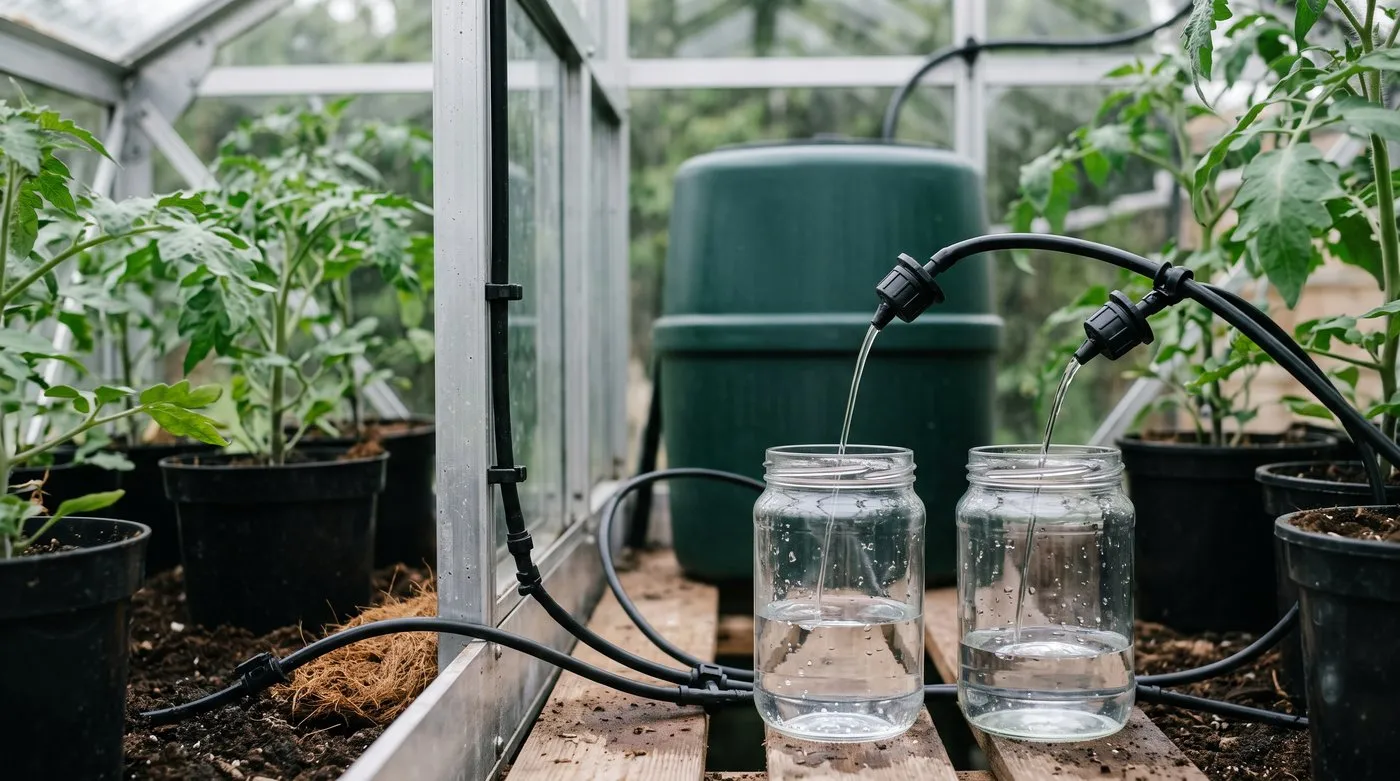 Catch what each dripper gives out over the same run to see how much water you need.
Run a 48-hour capacity test
Set the system up exactly as it will be while you’re away: same barrel height, same tubing, same timer settings.
- Put each dripper in its own jar for one full timed run.
- Compare the jars and adjust any dripper that gives much more or less than the rest.
- Put the drippers back in their pots and run everything for 48 hours.
- Mark the water level in the barrel before and after to see how much was used.
- Feel the driest and wettest pots and adjust their drippers.
Test again after any change. Moving the barrel, adding a branch or cleaning a dripper can change the flow. Keep a note of the daily total with your holiday instructions.
Then do the sum: water in the barrel divided by daily use. Knock a bit off to allow for hotter weather or a small leak. It’s still worth asking a neighbour to look in, because no sum can spot a hose that’s popped off.
Our tips on water-efficient gardening can help plants use less. Grouping pots away from the hottest glass and mulching the compost slows drying. Just test the whole setup before you go.
Drip irrigation: the most reliable option
Drip watering sends a steady trickle to each pot through thin tubes and adjustable drippers. It’s the most reliable choice for holidays of a week or more.
Gravity-fed systems
A raised water barrel can feed drip tubing with no electricity or mains tap. Follow the kit’s guidance on how high the barrel needs to be and how long the pipes can run, as both affect the flow.
Work out how much water you can really use from the barrel, as some sits below the outlet. Then use your 48-hour test to see how long it lasts. Linking barrels gives you more water, but check every joint for leaks.
Timer-controlled mains systems
If your greenhouse has a tap, a battery tap timer can do the watering for you. Set it using what your drippers really give out, not a guess. Put in fresh batteries before you go if needed. The big plus is endless water. The risk is a leak or a pipe coming loose and flooding the floor. Give it a proper trial run before you travel.
What each drip component does
| Part | What it does | Check before you go |
|---|---|---|
| Battery tap timer | Turns the mains water on and off | Batteries, seal and settings |
| Drip tubing | Carries water to each pot | Kinks, loose joints, blocked ends |
| Adjustable drippers | Control the flow to each plant | What they gave in your 48-hour test |
| Water barrel | Holds water with no mains | How much it holds, sturdy stand, outlet height |
| Filter | Catches bits before they block drippers | Clean and fitted firmly |
Gardener’s tip: Lay drip lines on top of the compost rather than poking them in. The water spreads more evenly and they’re easier to check and adjust.
Capillary matting: simple and effective for small pots
Capillary matting is a thick, felt-like mat that soaks up water from a tray and passes it to the pots sitting on it. It suits small plastic pots whose drainage holes sit right on the wet mat.
How to set it up
Lay the mat flat on the greenhouse bench. Tuck one end into a tray or tank of water below the bench. The mat soaks up the water and stays damp, and the pots on top drink through their drainage holes. Use pots with good drainage holes and stand them straight on the mat, without saucers. The compost needs to touch the mat. Pots with no holes won’t work.
Limitations
It works best with small, shallow pots. Deep pots and thirsty crops need more. For tomatoes, cucumbers and grow bags, use drip watering.
The tray still needs enough water to last the whole trip. Run the setup until the tray gets low, note how long it took, and check every pot stays evenly damp.
 Capillary matting keeps small pots evenly damp by drawing water up from a tray.
DIY bottle drippers: free and quick
The cheapest holiday watering trick costs nothing. Fill a plastic bottle, make a small hole in the cap, and push it upside down into the compost. The water trickles out slowly.
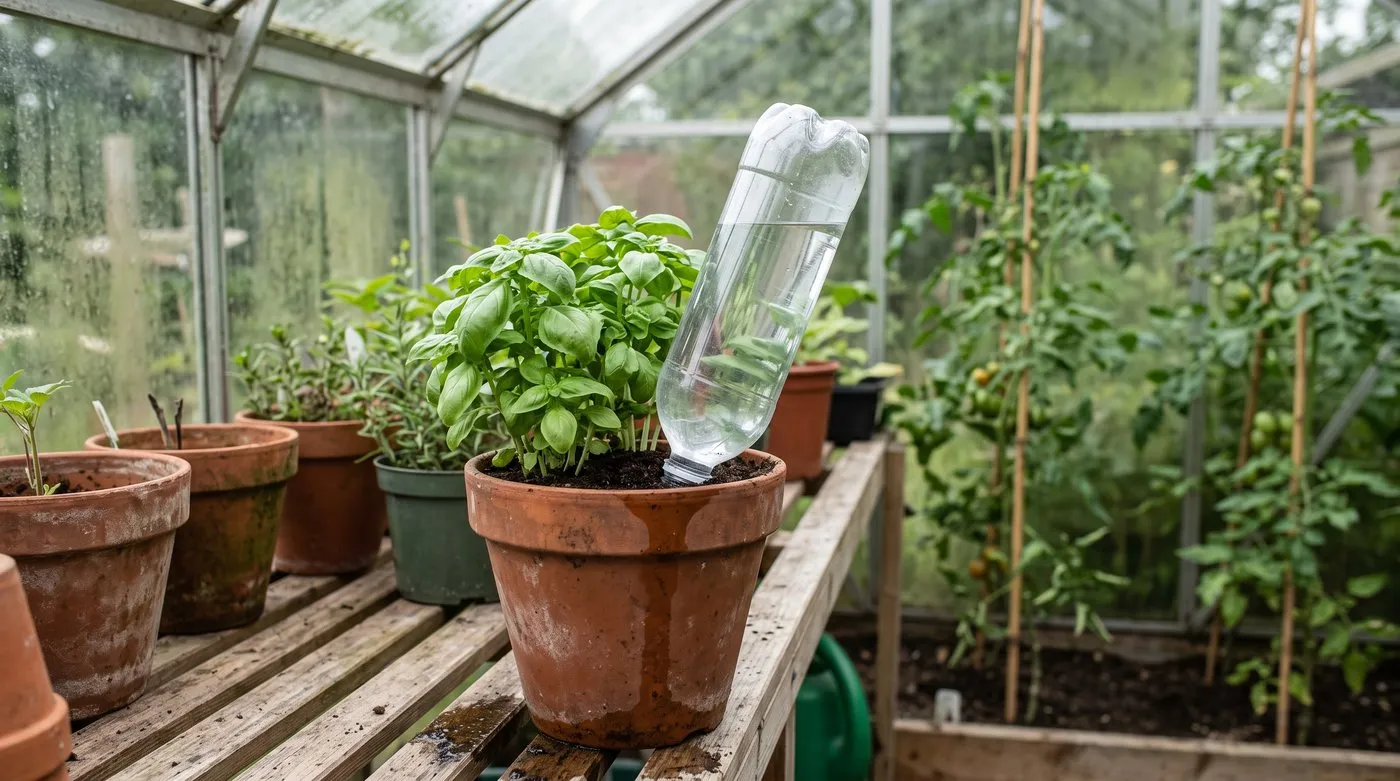
Bottle drippers are a free backup for herbs and single pots. Each one drips differently, so time how long yours takes to empty before you rely on it.
How to make one
- Rinse out a 1-litre or 2-litre plastic bottle
- Make one small hole (1-2mm) in the cap with a heated pin
- Fill the bottle with water and screw the cap back on
- Push the bottle neck-first into the compost at a slight angle
- Check the drip after 30 minutes and adjust the hole if needed Every bottle drips differently, so test each one in its own pot and time how long it takes to empty. They’re a good backup for herbs, but don’t rely on them alone for tomatoes or chilli peppers.
Tip: Test bottle drippers for at least 24 hours before you go. Some empty in a rush and leave the pot dry by the next day. Others barely drip at all.
Comparing the three main methods
| Method | Best for | Watch out for | Check before you go |
|---|---|---|---|
| Drip watering, from a barrel | Pots and grow bags with no tap nearby | Running out of water | How much it uses a day |
| Drip watering, tap timer | Bigger greenhouse collections | Leaks, timer settings, hosepipe bans | A full trial run |
| Capillary matting | Small plastic pots | Pots not touching the mat, tray too small | Every pot still damp |
| Bottle drippers | Backup for single pots | Drip speed varies a lot | How long each takes to empty |
| Self-watering pots | Single pot plants | Small built-in tank | How often it needs topping up |
Whatever you choose, the only way to know how long it’ll last is to test it in your own greenhouse.
Ventilation: as important as watering
A well-watered greenhouse can still overheat. The RHS ventilation and shading guide says plants can be damaged above 27C and suggests using enough shade to stay around 25-27C.
Automatic roof vents
Automatic roof vent openers use a wax-filled cylinder that swells in the heat and pushes the vent open. They need no electricity. Our guide to greenhouse ventilation and humidity control explains how roof vents, side vents and the door work together.
Check the opener fits your vent and follow the maker’s instructions. The Palram automatic roof vent opener is one example, but not every opener fits every greenhouse.
Shading
Paint on greenhouse shading or fit shade netting. Check the label, as some shading paints aren’t suitable for plastic glazing. Hang a max-min thermometer inside so you can see how hot it got.
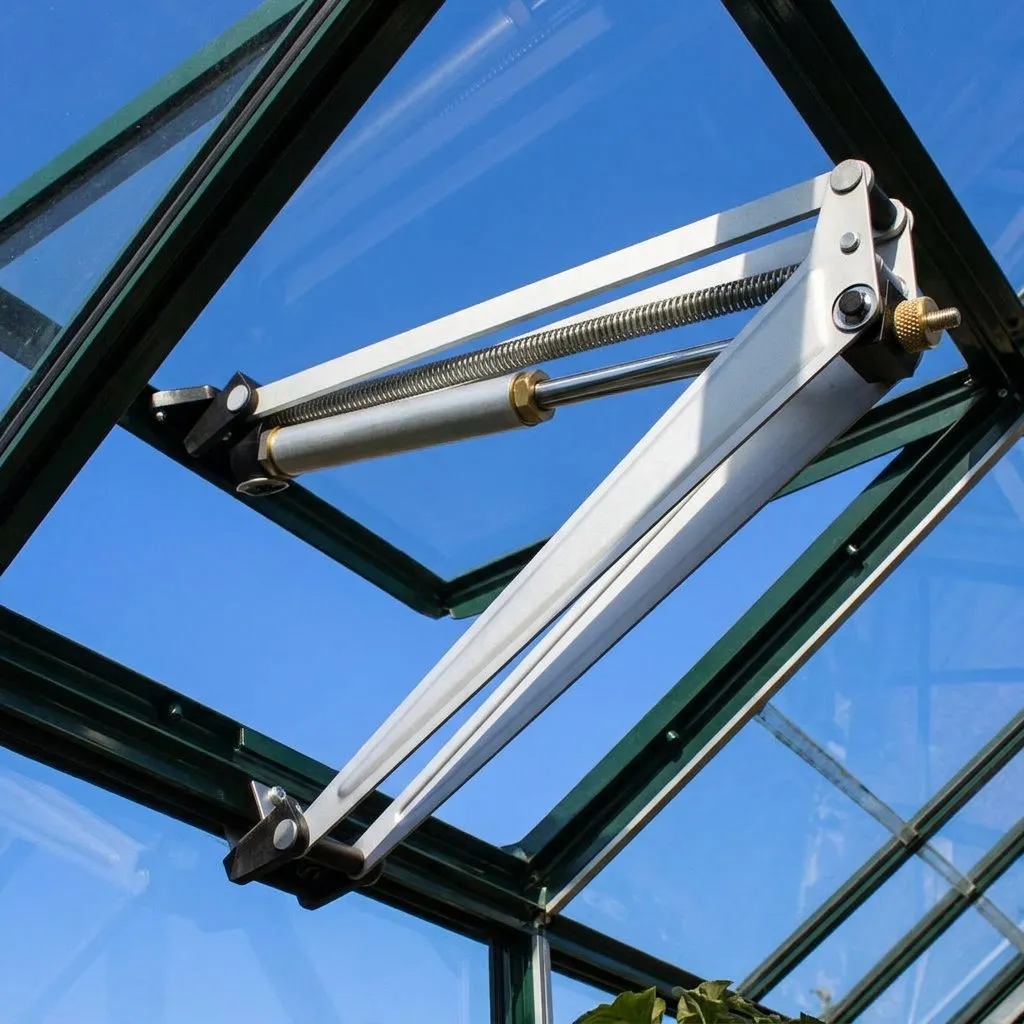 An automatic roof vent and shade netting keep things cool while you’re away.
Pre-holiday checklist
Work through this two or three days before you leave, so there’s time to test and tweak.
Watering
- Set up and test your watering system for at least 48 hours
- Fill all barrels, tanks and water butts to the top
- Mulch the top of each pot with 2-3cm of gravel or bark
- Move pots away from the sunniest glass
- Group pots together so they shade each other
Ventilation and temperature
- Fit and test automatic roof vent openers
- Add shading paint or netting
- Leave the door on a secure latch if you can
- Remove any black covers on the staging that soak up heat
Feeding and plant care
- Give a liquid feed two or three days before you go
- Pick ripe and nearly ripe fruit so it doesn’t rot
- Pinch out side shoots on cordon tomatoes
- Check for pests and deal with any before you leave
- Harvest any vegetables that will be ready while you’re away
Backup
- Ask a neighbour to check the greenhouse every three or four days
- Leave clear notes next to the watering system
- Hang a max-min thermometer inside to check when you’re back
Common mistakes to avoid
Relying on one method. Use drip watering as the main system and capillary matting or bottle drippers as backup. If one fails, the other buys your plants time.
Not testing first. Give every system a 48-hour trial. Drip lines block, bottles empty too fast and mats dry out unevenly. Better to find out while you can still fix it.
Forgetting the vents. Water won’t stop heat damage. Use roof vents, the door and shading.
Drowning plants before you go. A huge soaking just before you leave can rot the roots and doesn’t store up water. Water as normal and let the system take over.
Forgetting the grow bags. Grow bags are shallow and dry out fast. Give each grow bag its own drippers. For the rest of the year’s jobs, see our greenhouse growing calendar.
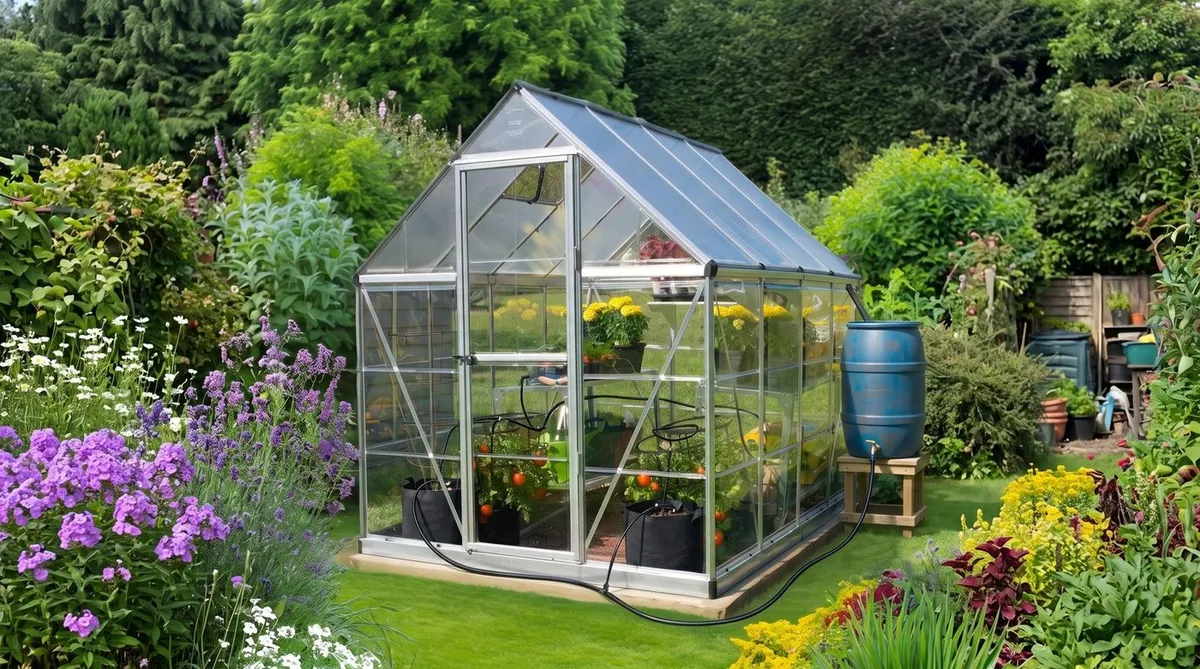
 A Vitavia Venus 5000 greenhouse ready for the holidays, with grouped pots, bark mulch and drip watering from a barrel.
If you’re thinking of a new greenhouse, you can shop the Vitavia Venus 5000 at Greenhouse Stores.
Before you go, read our guide to greenhouse ventilation and humidity control for more on keeping air moving.
Browse the how-to guides or carry on with greenhouse ventilation and humidity control.
Frequently asked questions
How long can greenhouse plants survive without watering?
It depends on the plants, the pots and the weather. Big tomatoes in a hot spell may need water every day, while small pots in cool weather last longer. Test your setup before you go and leave plenty of spare water.
What is the best automatic watering system for a greenhouse?
Drip watering is the most reliable choice. A kit fed from a raised water barrel needs no mains tap. A tap timer gives you endless water but needs checking for leaks, timer settings and any hosepipe ban.
Do capillary mats really work?
Yes, for small plastic pots with drainage holes. The holes need to sit right on the wet mat. Check every pot, as some composts and pot shapes soak up water better than others.
Can I use a bottle dripper for tomatoes?
Only as a backup, and test it first. How fast a bottle drips depends on the hole, the compost and how it sits in the pot. Give tomatoes a drip system as their main supply.
How do I stop my greenhouse overheating while on holiday?
Fit automatic roof vents that open in the heat. Add shading to the glass and leave the door safely latched open if you can. Aim to keep the greenhouse below about 25-27C.
Our team produces practical UK gardening guidance from source research, contributor records and established horticultural practice. Editorial standards are overseen by Matt W.