
Key takeaways
- Grow mint in a pot, as its roots spread fast through open ground
- Spearmint and peppermint are fully hardy and easy anywhere in the UK
- Cuttings root in a glass of water, usually within a couple of weeks
- Cut whole stems down to about 5cm to keep plants bushy
- It dies back in winter and pops up again each spring
- Cut the whole plant back after flowering for a fresh crop of leaves
Mint is one of the easiest herbs you can grow. It copes with some shade, laughs off frost and gives you fresh leaves from May right through to October. One good pot is usually plenty for a household.
There’s just one golden rule: don’t plant it straight into the ground. Mint spreads through underground runners and can take over a border within a couple of seasons. Once it’s in, it’s very hard to get out.
Why must I grow mint in containers?
A pot stops mint’s runners taking over your garden. Left loose, they creep under lawns, through borders and up between paving slabs. Miss one bit of root when you dig it out and it’s back in weeks.
A pot at least 30cm wide gives mint all the room it needs. Stand it on a patio, path or gravel so roots can’t sneak out of the drainage holes into the soil below.
Want mint in a border? Sink the whole pot into the ground, with the rim a few centimetres above the soil. Check every month or so through the growing season for runners creeping over the top, and snip them off. It’s not completely foolproof, but it helps a lot.
The RHS mint growing guide also suggests growing mint in a container, or in a sunken pot if you want it in a bed.
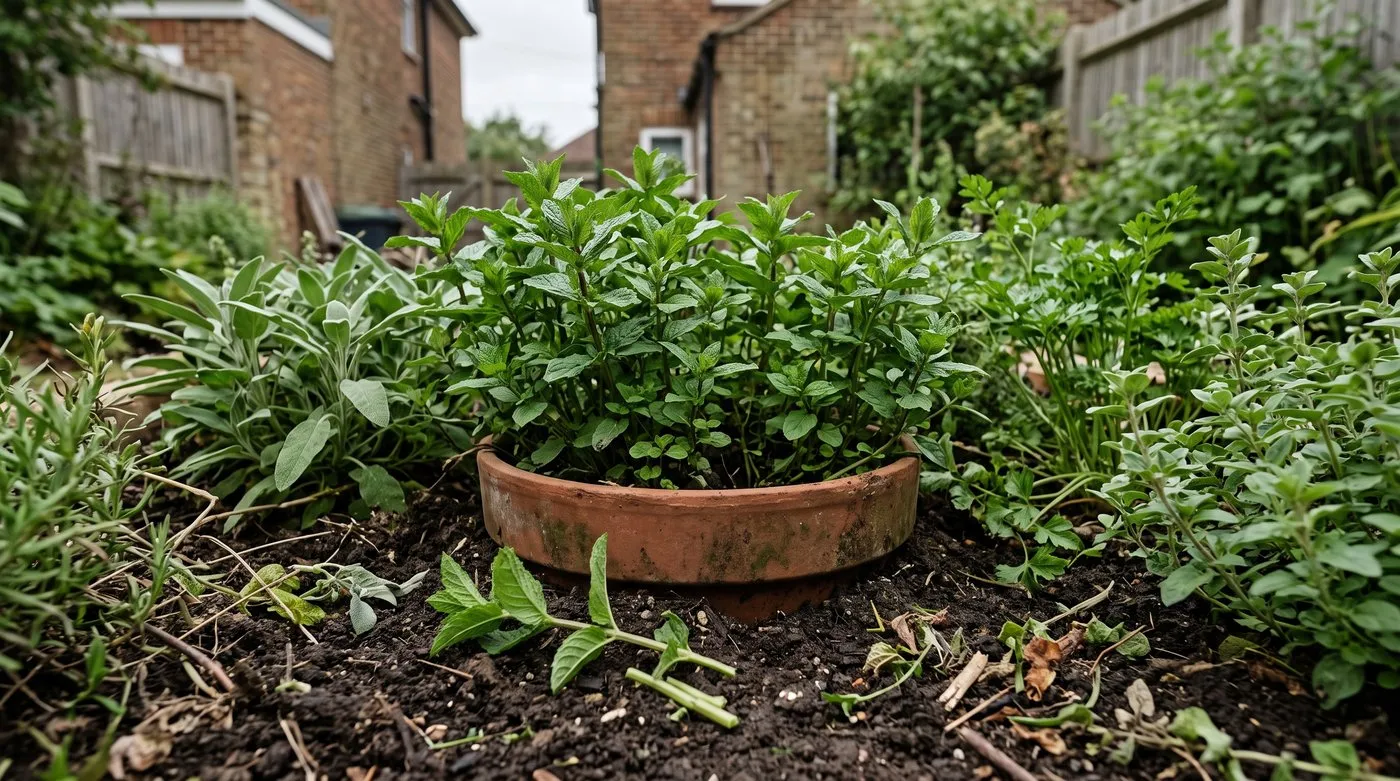
Sink the pot with the rim above the soil and check every month for runners creeping over the top. Snip off any you find.
What are the best mint varieties for UK gardens?
Spearmint is the best all-rounder for UK kitchens. Peppermint, apple mint and Moroccan mint are the other handy ones. Pick by how you’ll use it.
| Variety | Flavour | Best use |
|---|---|---|
| Spearmint (Mentha spicata) | Mild, sweet | Cooking, drinks, salads |
| Peppermint | Strong, cool | Tea, puddings, chocolate |
| Apple mint | Fruity, gentle | Jellies, fruit salads |
| Chocolate mint | Hint of cocoa | Puddings, hot drinks |
| Moroccan mint | Strong, sweet | Mint tea, tabbouleh |
| Eau de cologne mint | Citrusy, floral | Potpourri, garnish |
Spearmint is where to start. It’s the classic mint for lamb, new potatoes, peas and mojitos. Peppermint has a stronger, cooler kick, lovely in tea and after-dinner treats. Both are tough and reliable anywhere in the UK.
Apple mint has soft, fuzzy leaves and a gentle fruity taste that suits apple jelly and fruit salads. For something fun, try chocolate mint. It has dark stems and a hint of cocoa, great in ice cream, brownies and hot chocolate.
Moroccan mint makes the best traditional mint tea, brewed with green tea.
Can you grow different mints in the same pot?
Best not to. The strongest one soon takes over. Spearmint or apple mint will usually swamp a gentler type like Moroccan or chocolate mint within a season or two.
Give each variety its own pot. For a mixed display, group single pots together, or use a big trough split with solid dividers that go right to the bottom. Label them, as lots of mints look alike once cut back.
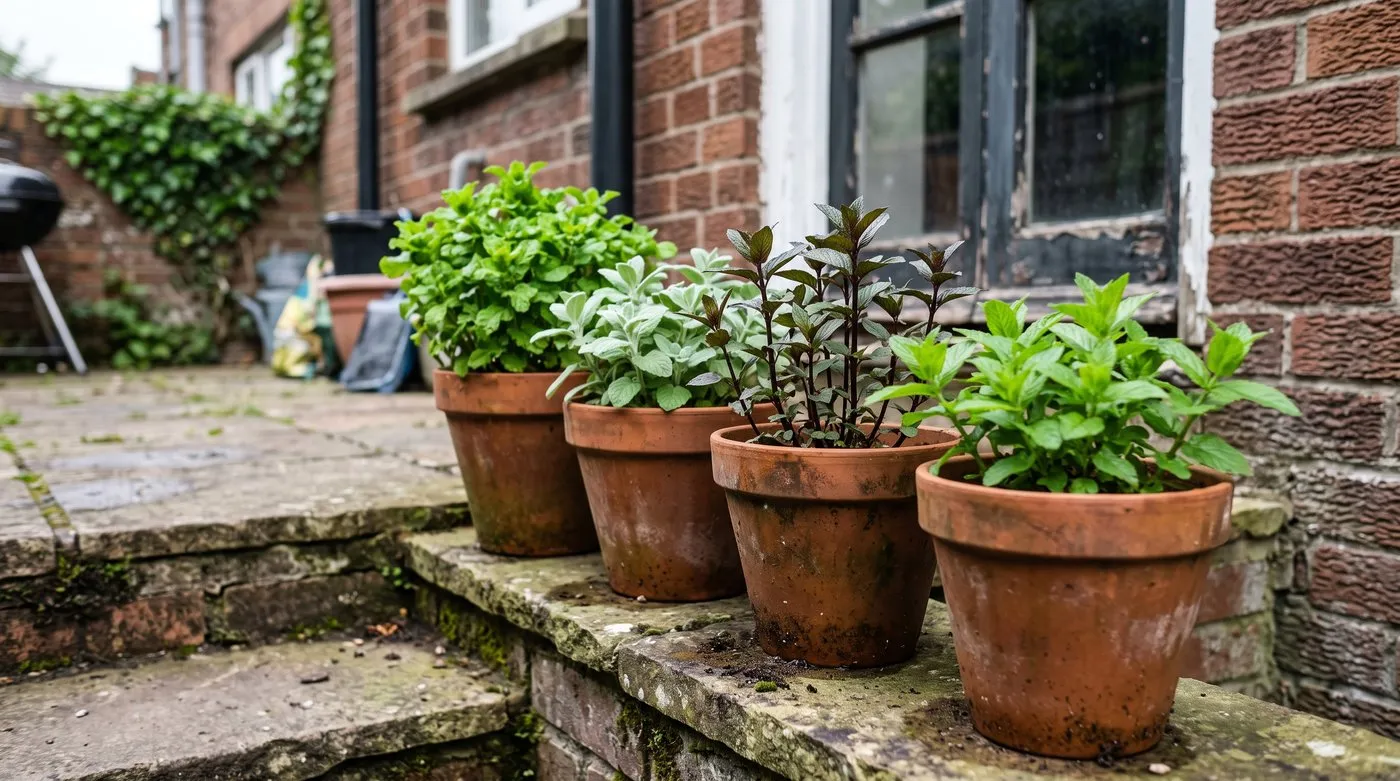
Give each mint its own pot, or the strongest soon swamps the rest. Grouping the pots gives you the mixed look without the takeover.
How do I grow mint from cuttings?
Cuttings are the quickest and easiest way to get more mint. They give you exact copies of the plant and usually root within a couple of weeks. Seed is slow, and the flavour can vary.
Taking stem cuttings step by step
Cut a healthy stem 10-15cm long, just below a leaf joint. Pull off the lower leaves, leaving two or three pairs at the top. Stand it in a glass of water on a bright windowsill and change the water every few days.
White roots usually appear within one to two weeks. When they’re a few centimetres long, pot the cutting into multipurpose compost. Water well and keep it out of strong sun for a week before moving it somewhere sunnier.
April to August is the best time, when the plant is growing strongly. You can also root cuttings straight into damp compost. Pop a clear plastic bag over the pot and take it off once new leaves appear.
Splitting a plant works too. In spring, tip an established plant out of its pot and pull the rootball into three or four pieces, each with some stems and roots. Pot them up in fresh compost. This also perks up tired, woody plants.
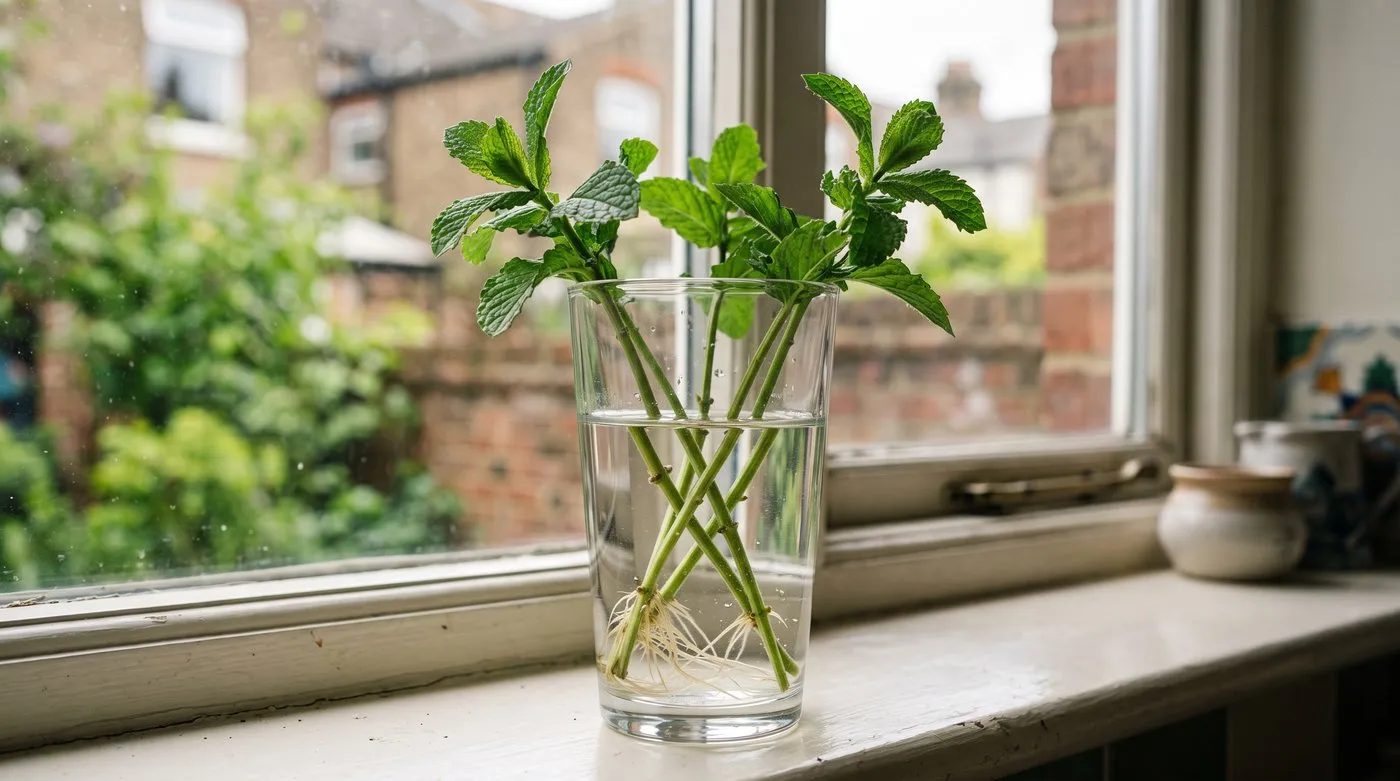
White roots usually show within one to two weeks. Pot them up once the roots are a few centimetres long.
Can you grow supermarket mint?
Yes, and it’s a cheap way to start. A supermarket pot of mint is usually lots of seedlings squashed together. Tip it out and split it into three or four clumps. Pot each into its own container, water well and keep on a bright windowsill. Harden them off for a week before moving them outside after the last frost.
Cut bunches of fresh mint can root too. Pick the firmest stems, strip the lower leaves and stand them in water. Not every stem will root, as some shop bunches are a few days old.
For more on starting plants indoors, see our guide to sowing seeds indoors.
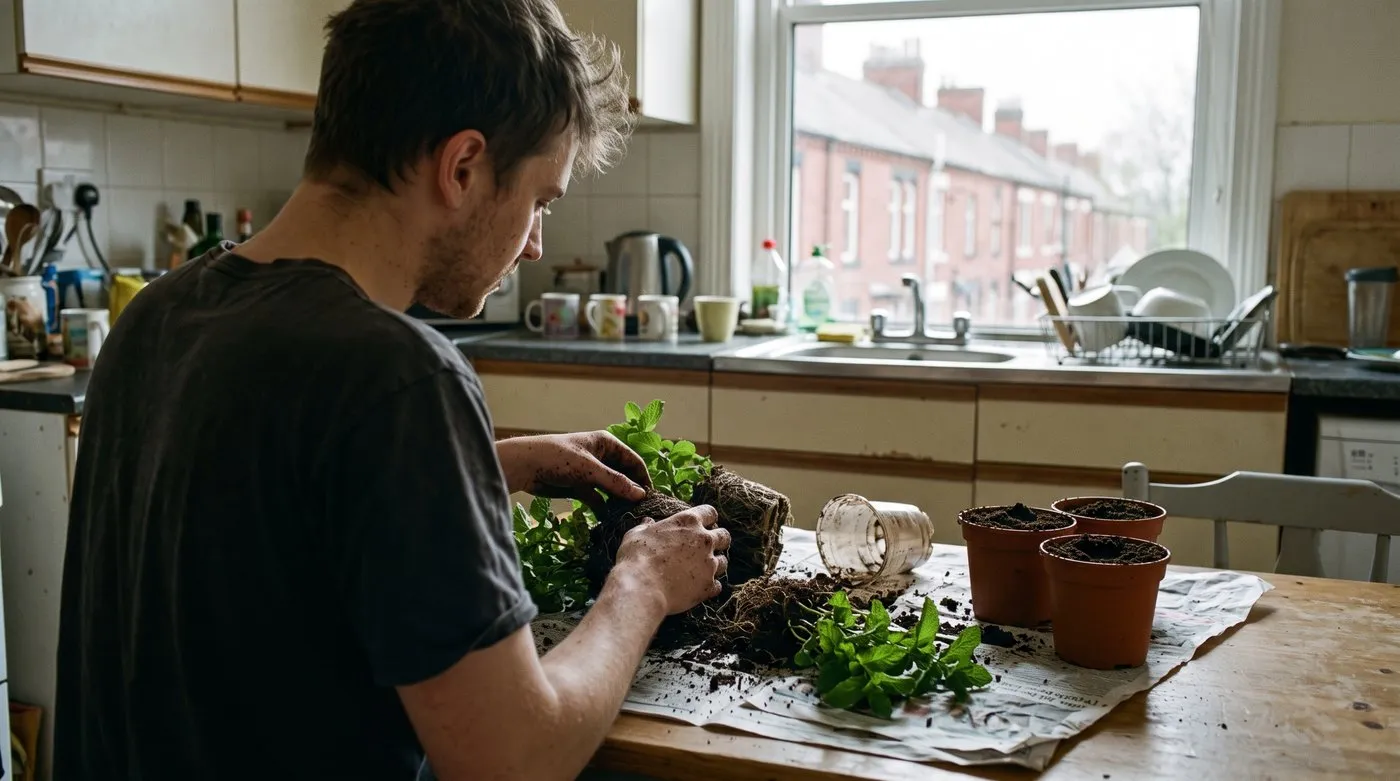
A shop pot is lots of seedlings squashed together. Split it into three or four clumps and each one will grow into a strong plant.
What growing conditions does mint need?
Mint wants a wide pot, moist but well-drained compost, and sun or part shade.
Pot size: at least 30cm across. Mint roots spread sideways, so wide is better than deep. Half-barrels, old sinks and big tubs all work.
Compost: peat-free multipurpose compost with a few handfuls of perlite mixed in for drainage. Some homemade garden compost adds goodness too.
Position: sun or part shade. Mint copes with less sun than most herbs. Apple mint and eau de cologne mint are happy in dappled shade. A baking hot spot in midsummer can scorch the leaves.
Watering: keep the compost moist. That’s every day or two in summer and less in cooler months. Pots dry out faster than the ground, especially terracotta.
Feeding: a balanced liquid feed every few weeks from May to September is plenty. Seaweed feed works well. Too much feed gives you lots of soft leaves with less flavour.
Mint is a great fit in a container herb and vegetable garden. Group a few pots on the patio for a little kitchen garden by the back door.
How do I harvest mint for the best flavour?
Cut whole stems often, ideally in the morning. Regular cutting keeps mint bushy. Left alone, it gets leggy and woody.
Pick from May to October. Cut whole stems down to about 5cm above the compost rather than plucking single leaves, as this makes the plant send up fresh shoots. Take up to a third of the plant at a time, and it’ll soon bounce back for the next cut.
Preserving surplus mint
Mint freezes well. Chop the leaves, pack them into an ice cube tray, top up with water and freeze. Each cube is a handy portion for cooking.
To dry mint, hang bunches upside down somewhere warm and airy for about a week. Strip off the leaves once they’re crisp and keep them in a jar out of the light. Dried mint is good in marinades, rubs and tea.
Mint is the perfect partner for fresh garden peas and crisp lettuce leaves straight from the garden. New potatoes with butter and chopped mint is one of the great simple pleasures of a British summer.
When should you cut back mint?
Cut mint back hard twice: after it flowers in summer, and again over winter. After flowering, cut the whole plant to about 5cm. It quickly sends up a fresh crop of tender leaves for late summer.
Mint flowers from midsummer into early autumn. The little purple, pink or white flowers are edible and loved by bees and hoverflies, so let one pot bloom if you can. On pots kept for the kitchen, pinch out the flower buds to keep the leaves coming.
In winter the top dies back. Cut the old stems down to the compost any time from late autumn until just before new shoots appear. Clearing them away also removes places where rust and mint beetles can hide over winter.
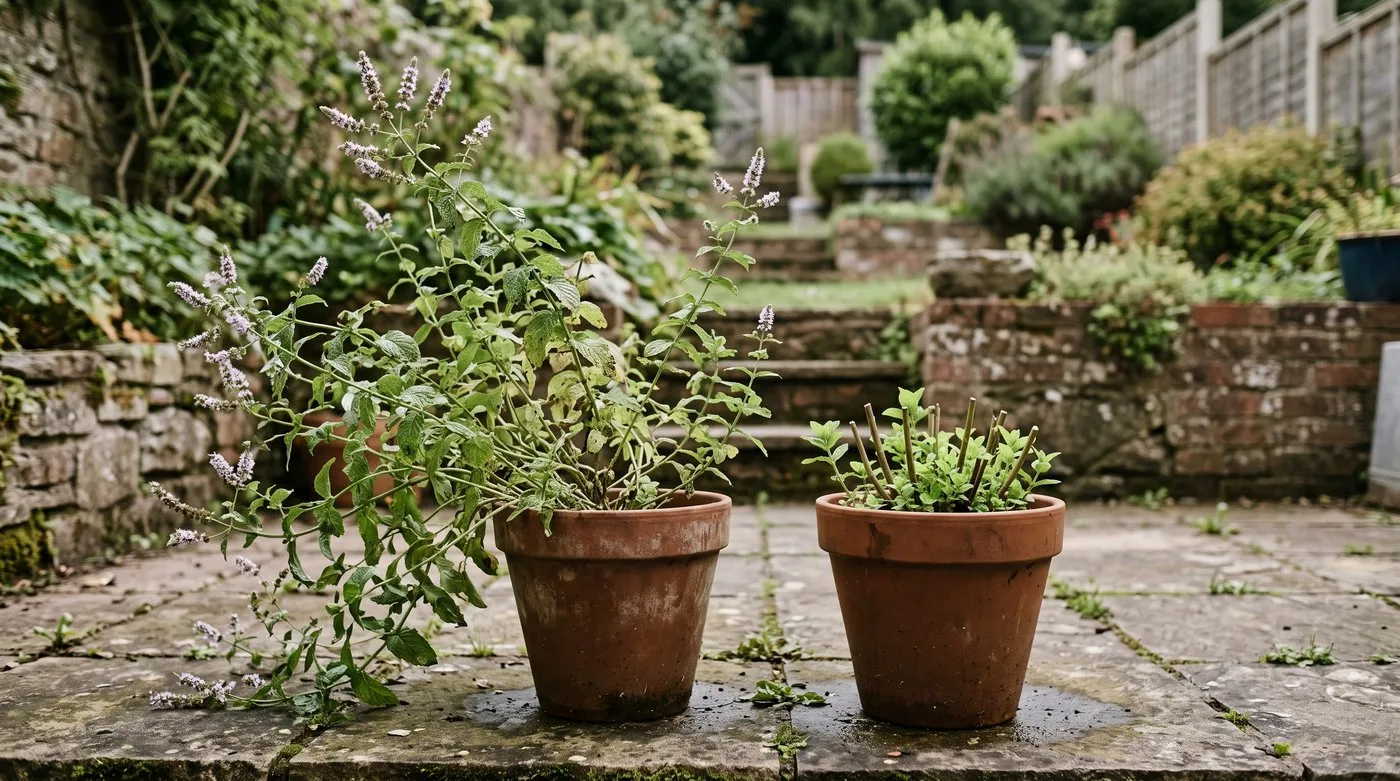
Cut the whole plant to about 5cm after flowering. A fresh crop of tender leaves follows within a few weeks.
What are the common mint problems in the UK?
The usual ones are mint rust, mint beetles, powdery mildew and leggy growth.
Mint rust
Orange-brown spots under the leaves mean mint rust, a fungus that loves warm, humid weather. Cut off affected stems and put them in the bin, not the compost. Thin out crowded growth so air can move. If it’s bad, cut the whole plant down and let it regrow. If rust comes back every year, start again with a healthy plant in fresh compost. The RHS rust disease guide has more help.
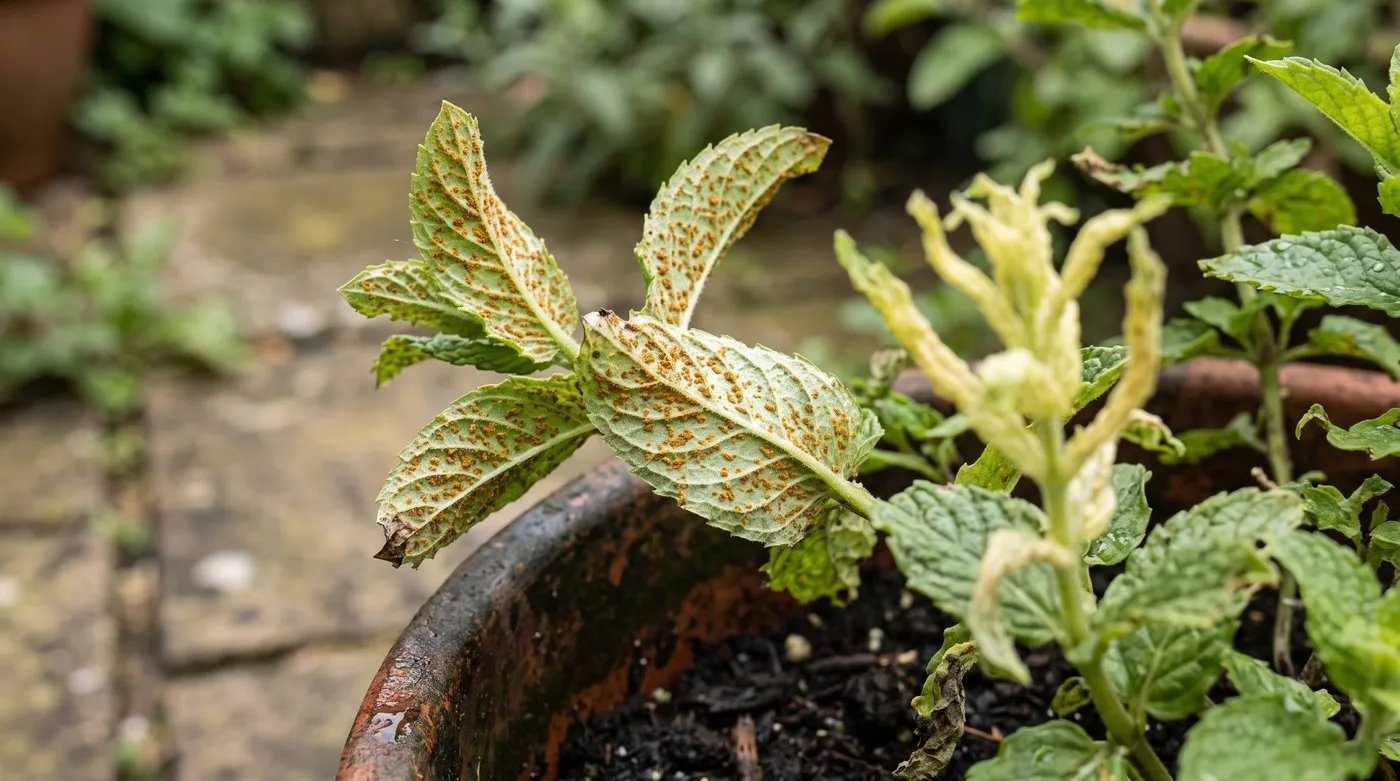
Cut off rusty stems and put them in the bin, not the compost. If it keeps coming back, start again with a healthy plant in fresh compost.
Mint beetle
Mint beetles are small, shiny green beetles that chew holes in the leaves in summer. Pick them off by hand. Birds and ground beetles help too. If they’re everywhere, cut the plant back hard and clear up around the pot. The blue mint beetle, a newer arrival in parts of England, is dealt with in the same way.
Powdery mildew
A white, dusty coating on the leaves, usually in dry weather with still air. Water the compost, not the leaves, and space pots out so air can flow. Remove affected leaves.
Leggy, weak growth
Tall, thin stems with small, pale leaves mean too little light or not enough cutting. Move the pot somewhere brighter and cut all the stems back to about 5cm. It’ll grow back bushier in a few weeks.
How do I use fresh mint in cooking?
Mint loves lamb, new potatoes, peas, yoghurt and drinks. Home-grown sprigs stay fresh far longer than shop bunches.
Classic pairings: New potatoes with butter and chopped spearmint. Lamb with fresh mint sauce. Peas with mint and a squeeze of lemon. Cucumber raita with yoghurt and finely chopped mint. Tabbouleh with parsley and lots of mint.
Drinks: A proper mojito needs fresh spearmint, muddled with lime and sugar. For fresh mint tea, steep a handful of leaves in boiling water for a few minutes. Moroccan mint tea uses green tea and a big bunch of Moroccan mint.
Preserves: Mint sauce is finely chopped spearmint with white wine vinegar and a pinch of sugar. Mint jelly is made with apple juice, spearmint and pectin.
Grow a few more kitchen herbs alongside your mint for a full set of flavours by the back door. Basil, parsley, chives and coriander all grow well in pots. Our companion planting guide has ideas for good neighbours.
Month-by-month mint care calendar
Plant and take cuttings in spring, pick all summer, and cut back in autumn and winter.
| Month | What to do |
|---|---|
| January | Mint is resting. Move pots somewhere sheltered in very cold spells. |
| February | Buy plants or get fresh pots ready. Sow indoors in warmth if growing from seed. |
| March | Plant new mint in pots. Water as fresh shoots appear. |
| April | Take cuttings. Start feeding every few weeks. Look for greenfly on new shoots. |
| May | Start picking. Cut stems often to keep it bushy. Water every day or two. |
| June | Peak season. Pick lots. Pinch out flower buds on kitchen pots. |
| July | Keep picking. Take more cuttings. Check watering daily. |
| August | Last good month for cuttings. Freeze spare leaves in ice cube trays. |
| September | Growth slows. Stop feeding. Last pickings. Pot up rooted cuttings. |
| October | Tops start to die back. Clear dead stems. Move pots to a sheltered spot. |
| November | Mint goes dormant. Water only now and then. No feeding. |
| December | Keep the compost barely moist. The roots are fine through winter. |
In the north or up in the hills, do spring jobs a couple of weeks later. Our seed sowing calendar has timings for herbs and veg.
Frequently asked questions
Does mint come back every year in the UK?
Yes, mint comes back every spring. The leafy top dies back after the first hard frost, but the roots sit safely underground through winter. New shoots appear from around March without you doing a thing. Potted mint likes being split and given fresh compost every few years.
Why should I not plant mint in the garden soil?
Because it spreads fast through underground runners. One plant can take over a bed within a couple of seasons. Getting rid of it is really hard, as even tiny bits of root left behind grow into new plants.
Can I grow mint indoors on a windowsill?
Yes, mint grows happily on a bright windowsill. Use a pot at least 15cm wide with drainage holes, and turn it every week so it grows evenly. Water when the top of the compost feels dry. Indoor mint has smaller leaves but keeps cropping.
What is the best mint variety for cooking?
Spearmint is the best all-rounder for cooking. Its mild, sweet taste suits drinks, salads, sauces and lamb. Peppermint is stronger and great for tea and puddings. Moroccan mint makes a lovely traditional mint tea, and apple mint adds a gentle fruity note to jellies and fruit salads.
How do I stop mint from spreading?
Keep it in a pot on a hard surface. Use a pot at least 30cm wide, stood on paving or gravel. If you want it in a border, sink the whole pot into the ground with the rim a few centimetres above the soil. Check for runners creeping over the rim and snip them off.
How do I treat mint rust?
Cut off affected stems and put them in the bin. Don’t compost them, as the rust can survive. If the plant is badly hit, cut it right down and let it regrow. Thin out crowded growth so air can move. If rust comes back every year, start again with a healthy new plant in fresh compost.
How often should I water mint in pots?
Every day or two in summer, less in cooler months. Mint likes moist compost but not a waterlogged pot. Push a finger into the compost, and if it feels dry, water until it runs out of the bottom. A layer of gravel on top helps keep moisture in.
Our team produces practical UK gardening guidance from source research, contributor records and established horticultural practice. Editorial standards are overseen by Matt W.


