Key takeaways
- Lemon grass can't take frost, so grow it in a pot of at least 30cm that you can move
- Put it outside in early June, once nights stay above about 10C, and harden it off first
- A sunny spot against a south-facing wall gives the warmth it loves
- Bring it back indoors by mid-September, before cold nights damage the leaves
- Cut outer stalks at the base once they're about 1.5cm thick
- Freeze spare stalks whole or sliced, as frozen lemon grass keeps its flavour better than dried
Yes, you can grow lemon grass in the UK, and a pot on a sunny patio is the perfect summer home for it. It’s a tropical grass that can’t take frost, so it lives outside from early June to mid-September and spends winter indoors. In return you get fresh, fragrant stalks for curries, soups and tea.
This guide is all about the outdoor season: getting your plant outside, keeping it happy on the patio, harvesting and storing the stalks. For starting a plant from a supermarket stalk, overwintering and dividing, see our guide to growing lemongrass in pots as a conservatory crop.
Getting a lemon grass plant to start with
The easiest start is a supermarket stalk with its base still on. Stand it in a glass of shallow water on a warm, sunny windowsill in spring. Change the water every couple of days. Roots usually appear within two or three weeks, and you can pot it up once they’re a few centimetres long.
Choose plump, fresh stalks with a firm base and little bumps where roots will grow. Avoid stalks that are dry, split or trimmed flat across the bottom. You can also buy young plants from herb nurseries in spring, which gets you to harvest sooner.
The stalks sold in shops are West Indian lemon grass (Cymbopogon citratus), the one with fat stalks for cooking.

Roots sprout from the base of a supermarket stalk in a jar of water. Pot it up once they’re a few centimetres long.
What pot and compost does lemon grass need?
Use a pot at least 30cm across with drainage holes. Lemon grass grows a big, thirsty root system and gets pot-bound fast in anything smaller. A light plastic pot is easier to carry in and out than a heavy terracotta one.
Fill it with peat-free multipurpose compost mixed with a few handfuls of perlite or grit. It likes rich compost that holds moisture but drains well. Don’t use garden soil, which stays too wet and heavy in a pot.
When to put lemon grass outside
Move it out once nights stay above about 10C. That’s usually early June in most of the UK, late May in the far south and mid-June in northern England and Scotland. Cold nights turn the leaves yellow and stop growth.
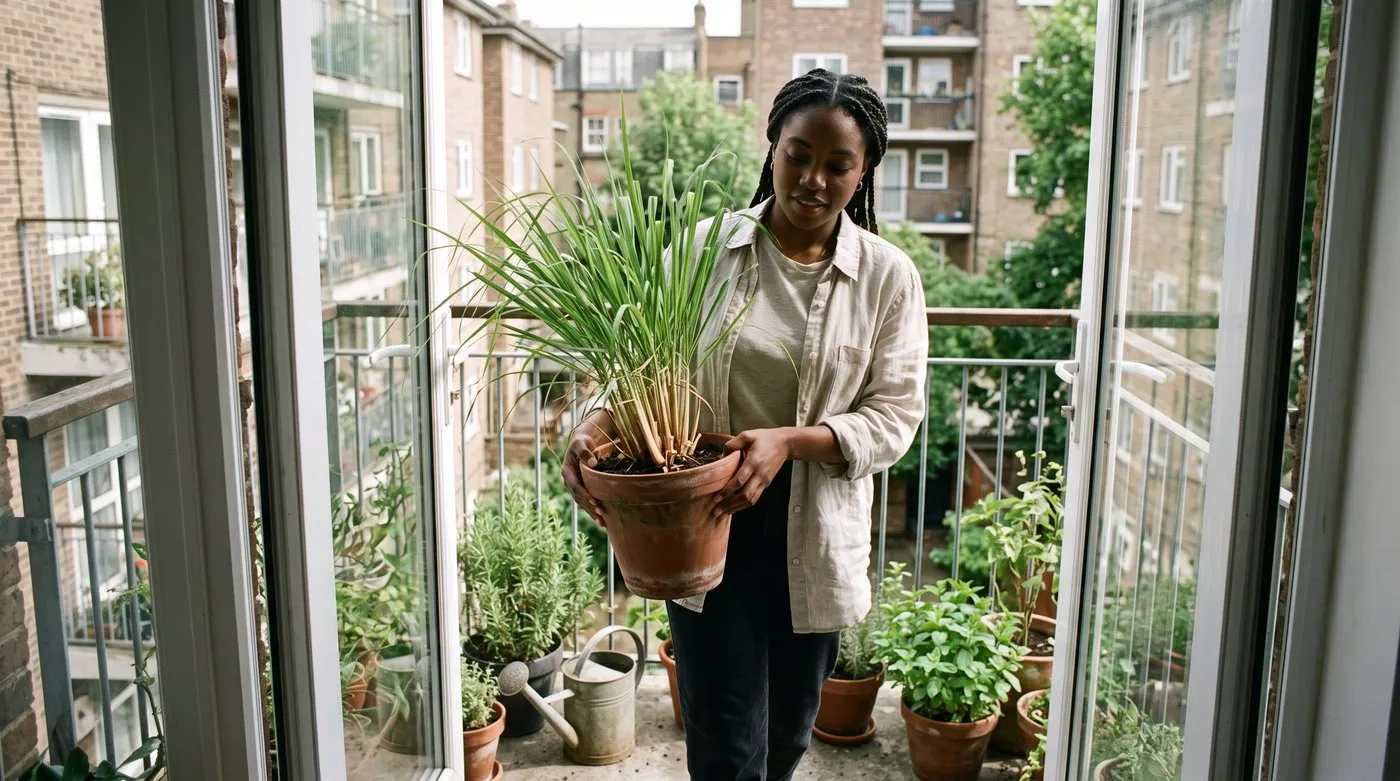
Put it out by day and bring it in at night for a week or so before it stays out for summer.
Harden it off over a week or so first. Put the pot outside in a sheltered spot by day and bring it in at night. After a week, leave it out overnight if the forecast is mild. Our guide to hardening off tender plants explains the steps.
Where to put lemon grass on the patio
Give it the sunniest, most sheltered spot you have. A south-facing wall or fence is ideal, as it soaks up heat and gives shelter from wind. Lemon grass loves the same conditions as basil and chilli peppers, so they make good patio neighbours.
A balcony works well too, as long as it gets sun for most of the day and isn’t too windy. Shade and cold wind mean slow growth and thin stalks.

A sunny, sheltered patio is lemon grass’s summer holiday. A warm wall behind the pot helps even more.
Watering and feeding through summer
Keep the compost moist but never soggy. In hot weather, a pot of lemon grass may need water every day. Check by pushing a finger into the compost, and water if the top couple of centimetres feel dry.
Feed every two weeks from June to August with a balanced liquid feed. Lemon grass is hungrier than most herbs, and regular feeding gives thicker stalks. Stop feeding in September as it slows down.
Outdoors it’s rarely bothered by pests. Indoors, warm dry air can bring red spider mite and mealybugs. See our guide to mealybugs if you spot white fluffy patches at the leaf bases.
How to harvest lemon grass
Cut the outer stalks once they’re about 1.5cm thick at the base. Thin stalks are fibrous and have little flavour. A plant started in spring usually has stalks ready by late summer.
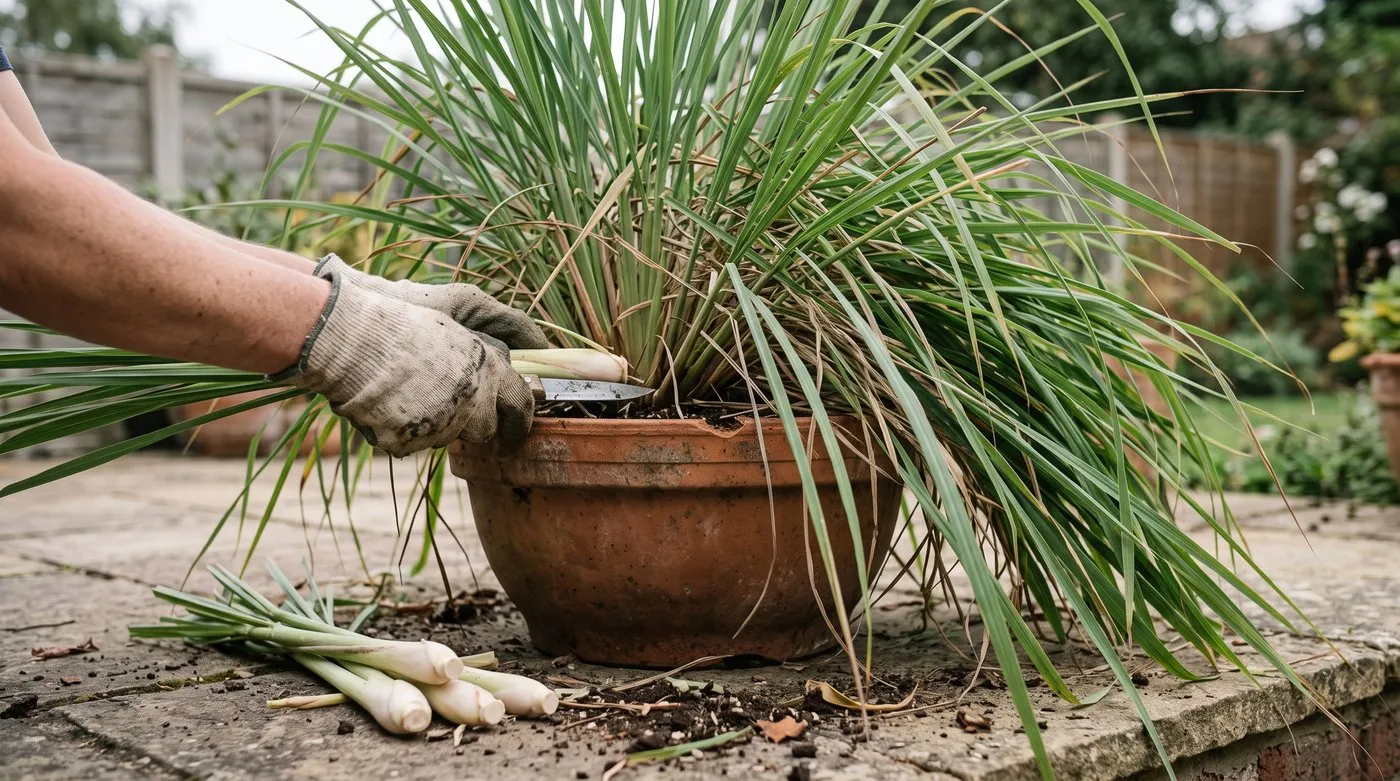
Take thick stalks from the outside of the clump so fresh ones keep coming from the middle.
- Pick a thick stalk from the outside of the clump.
- Twist and pull it away, or cut it at soil level with a sharp knife.
- Peel off the tough outer two or three layers.
- Use the pale, tender bottom 10-15cm for cooking.
- Save the green leaves for tea, as they’re too tough to eat.
Take from the outside so new stalks keep coming from the centre. Leave plenty standing so the plant keeps growing. The leaves have sharp edges, so gloves help. The green tops make a lovely brew, and our guide to making herbal teas from the garden has more ideas.
How to store lemon grass
Freezing is the best way to keep lemon grass for cooking. It holds its flavour far better than drying.
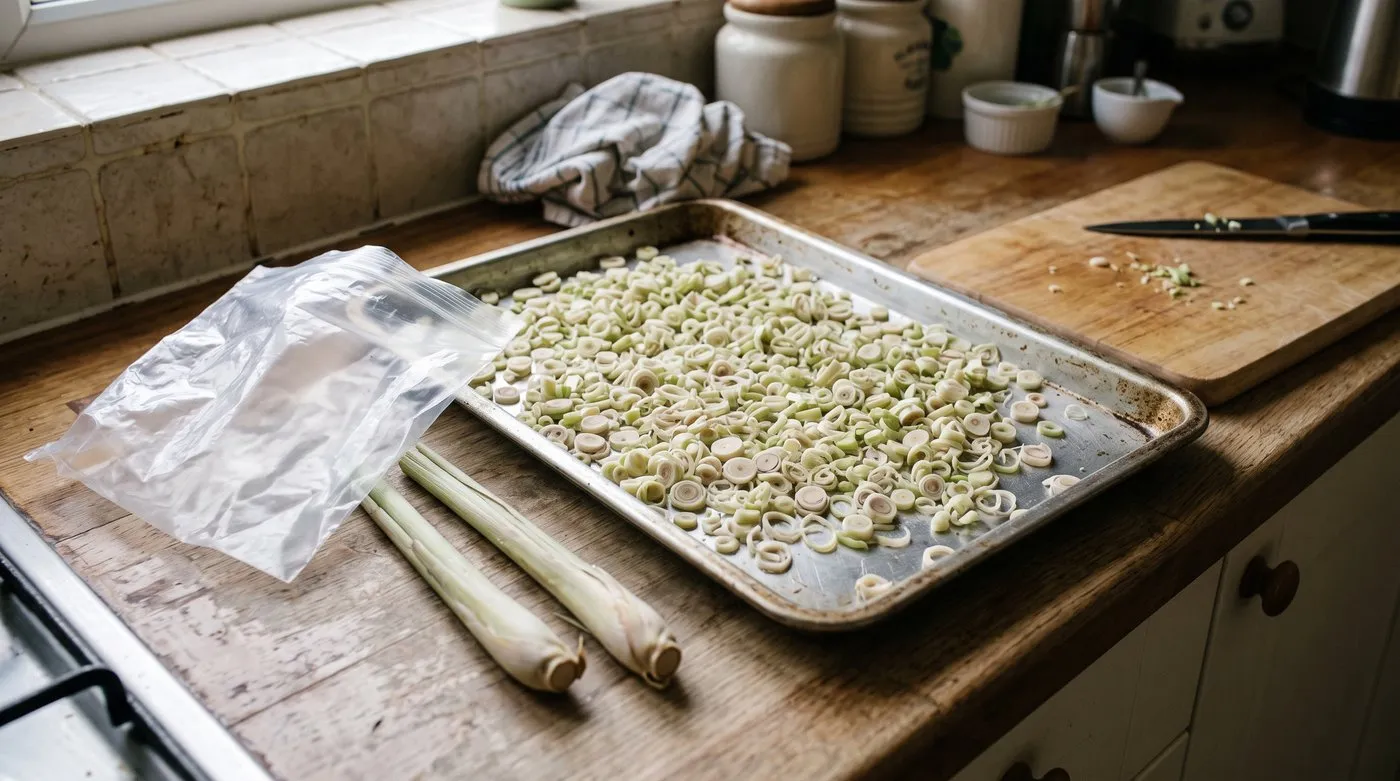
Freeze slices on a tray first so they don’t clump, then tip them into a bag.
| Method | How long | How to do it |
|---|---|---|
| Fridge | A couple of weeks | Wrap in damp kitchen paper in a bag |
| Freezer, whole | Several months | Wrap stalks and use straight from frozen |
| Freezer, sliced | Several months | Freeze slices on a tray, then bag them |
| Freezer, paste | Several months | Blend with ginger and garlic, freeze in portions |
| Dried | Several months | Dry the leaves for tea, store in a jar |
Frozen stalks slice easily without thawing. Dried lemon grass is best kept for tea. Our guide to freezing fresh herbs covers handy tricks like ice-cube trays.
Bringing lemon grass back indoors in autumn
Bring the pot in by mid-September, or early September in the north. Don’t wait for the first frost. Cold nights damage the leaves well before then.
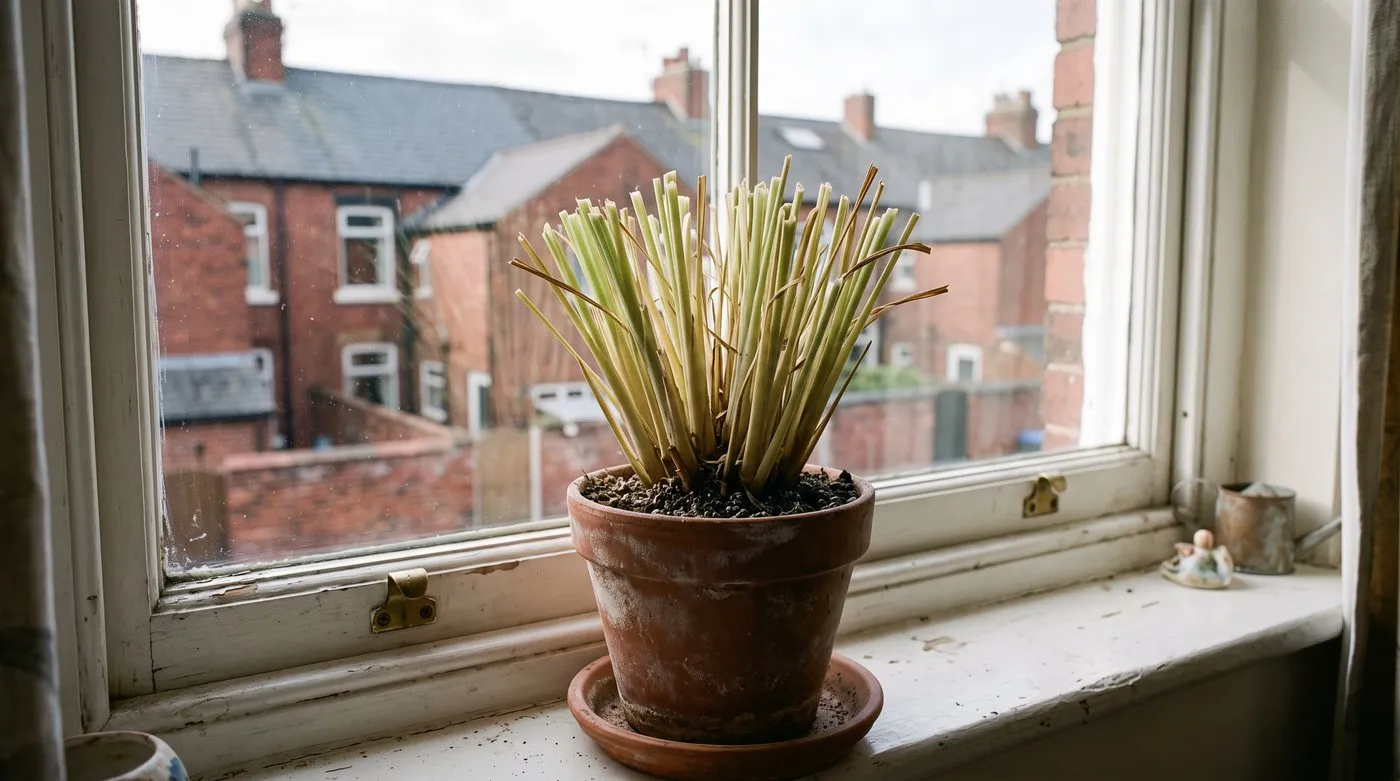
Cut it back and give it your brightest windowsill. A few brown tips over winter are normal.
Cut the leaves back to about 15-20cm so it’s easier to fit indoors. Stand it in the brightest spot you have, such as a sunny windowsill, conservatory or heated greenhouse, kept above about 10C. Water much less from October to March, letting the top of the compost dry between drinks. Cold, soggy compost kills more lemon grass than cold air does. Pets that chew grass should be kept away, as lemon grass can upset cats and dogs.
Lemon grass growing calendar
| Month | What to do |
|---|---|
| March to April | Root supermarket stalks in water on a warm sill. Cut back overwintered plants |
| May | Pot up into a 30cm pot. Start hardening off in the far south |
| June | Move outside once nights stay above about 10C. Start fortnightly feeding |
| July | Water often in hot spells. Keep feeding |
| August | Harvest thick outer stalks. Freeze spares |
| September | Last big harvest. Bring indoors by mid-month. Cut leaves back |
| October to February | Bright spot above about 10C. Water sparingly. No feeding |
Common mistakes with patio lemon grass
Putting it out too early. A few cold nights in May can set it back for weeks. Wait for nights above about 10C.
Using too small a pot. In a small pot it dries out fast and the stalks stay thin. Go for 30cm or more.
Letting it dry out in summer. Lemon grass likes plenty of water when it’s warm. Check pots daily in hot weather.
Harvesting thin stalks. Wait until they’re about 1.5cm thick at the base for real flavour.
Leaving it out in September. Cold nights yellow the leaves before any frost. Bring it in by mid-month.
Frequently asked questions
Can you grow lemon grass outside in the UK?
Yes, but only in summer, in a pot. Put it on a sunny, sheltered patio from early June, once nights stay above about 10C. Bring it back indoors by mid-September. It can’t survive a UK winter outdoors.
When should I put lemon grass outside?
Once nights stay above about 10C, usually early June. That can be late May in the far south and mid-June in the north. Harden it off over a week or so first, putting it out by day and bringing it in at night.
How do you harvest lemon grass?
Cut outer stalks at the base once they’re about 1.5cm thick. Twist and pull firmly, or cut at soil level with a sharp knife. Peel off the tough outer layers. The tender, white bottom 10-15cm is the part to cook with.
What is the best way to store lemon grass?
Freeze it, whole or sliced, for the best flavour. Fresh stalks keep for a couple of weeks in the fridge wrapped in damp kitchen paper. Dried lemon grass is fine for tea but loses much of its zing in cooking.
How often should I water lemon grass in a pot?
Keep the compost moist all summer, never soggy. In hot weather that can mean watering daily. Feed every two weeks with a balanced liquid feed from June to August. Water far less once it comes indoors for winter.
Is lemon grass safe for cats and dogs?
No, it can upset pets that chew it. The ASPCA lists lemon grass as toxic to cats and dogs, usually causing stomach upset. Keep pots out of reach of pets that like to nibble grass.
Now your lemon grass is thriving, browse more ideas in our growing hub, or read our guide to growing lemon verbena for another citrus-scented herb that loves a sunny patio.
Our team produces practical UK gardening guidance from source research, contributor records and established horticultural practice. Editorial standards are overseen by Matt W.