Key takeaways
- Allow 10-14 days to harden off tender bedding, pelargoniums and dahlias
- Keep half-hardies under cover on nights below about 5°C, and busy lizzies and coleus above 10°C
- Wind does as much damage as cold in May, so start in a sheltered spot
- Hardy bedding like pansies and wallflowers needs only about a week
- Give mail-order perennials a day or two in the shade to recover before you start
- Plant out after the last frost and keep fleece handy into early June
Bedding plants, half-hardy annuals and tender perennials need a longer, gentler hardening off than most veg seedlings. Plants like pelargoniums, dahlias and cosmos are often grown warm and soft under glass to be in flower by May. Put them straight out and wind, sun and cold nights can scorch or stall them.
This guide covers the flowering plants: bedding, half-hardies, dahlias and mail-order perennials. For veg seedlings and the basics of hardening off, see our guide on how to harden off seedlings.
Why do bedding plants need longer to harden off?
Bedding plants are usually bigger and softer than seedlings. Many have spent months under glass, growing fast in warmth and still air. Their leaves and stems have never felt a breeze or full sun.
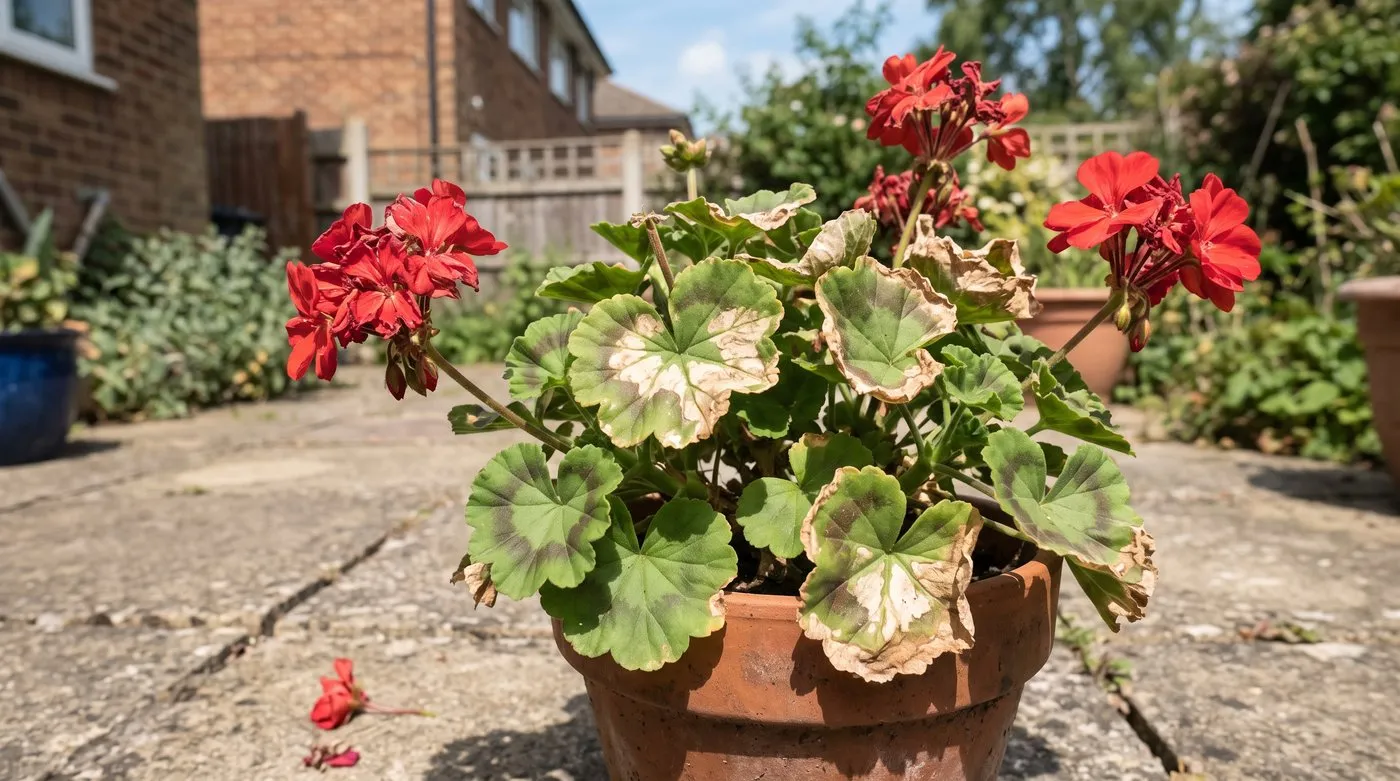
Pale, papery patches like these are sun and wind scorch on a plant that went out without hardening off.
So they need 10-14 days of gradual exposure, not a quick week. Rush it and you’ll see scorched or curled leaves, dropped flower buds and plants that sit and sulk for weeks after planting.
Which bedding plants are tender?
Sort your plants into three groups. Each needs a slightly different approach.
| Group | Examples | Hardening off | Plant out |
|---|---|---|---|
| Hardy bedding | Pansies, violas, primulas, wallflowers, forget-me-nots | About a week | From early spring |
| Half-hardy annuals | Cosmos, French marigolds, lobelia, nicotiana, zinnias, nemesia | About 10 days | After the last frost |
| Tender perennials | Pelargoniums, fuchsias, tender salvias, osteospermums, dahlias, begonias | 10-14 days | After the last frost, once nights are mild |
| Very tender | Busy lizzies (impatiens), coleus | 10-14 days | Once nights stay above 10°C |
Hardy bedding copes with frost once it’s used to outdoor life. Half-hardy annuals and tender perennials are killed or badly damaged by frost, however well they’re hardened off. A few, like busy lizzies, coleus and celosia, sulk after any chill, so hold them under cover until nights are reliably mild. Our guide to the best half-hardy annuals has more on this group.
A 14-day plan for tender perennials
Use this for pelargoniums, fuchsias, tender salvias and similar plants. Start once nights in your area are mild, usually late April or early May.
| Days | Where | Time outside | At night |
|---|---|---|---|
| 1-3 | Sheltered spot, light shade | 2 hours, building to 6 | Back under cover |
| 4-6 | Sheltered spot, some sun | Most of the day | Cold frame, lid closed or just open |
| 7-10 | More open spot, more sun | All day | Cold frame, lid open wider each night |
| 11-12 | Planting position, in pots | All day | Cold frame, lid fully open |
| 13-14 | Planting position, in pots | Day and night | Outside, fleece on cold nights |
Then plant out. Moving from the cold frame to staying out overnight is the riskiest step. Check the forecast for mild nights and no strong wind first. If it looks cold, hold them in the frame for a few more days.

A cold frame makes the job easy. Prop the lid a little wider each day, and close it on cold nights.
A 10-day plan for half-hardy annuals
Cosmos, marigolds, nicotiana, lobelia and other half-hardy annuals are smaller and toughen up faster.
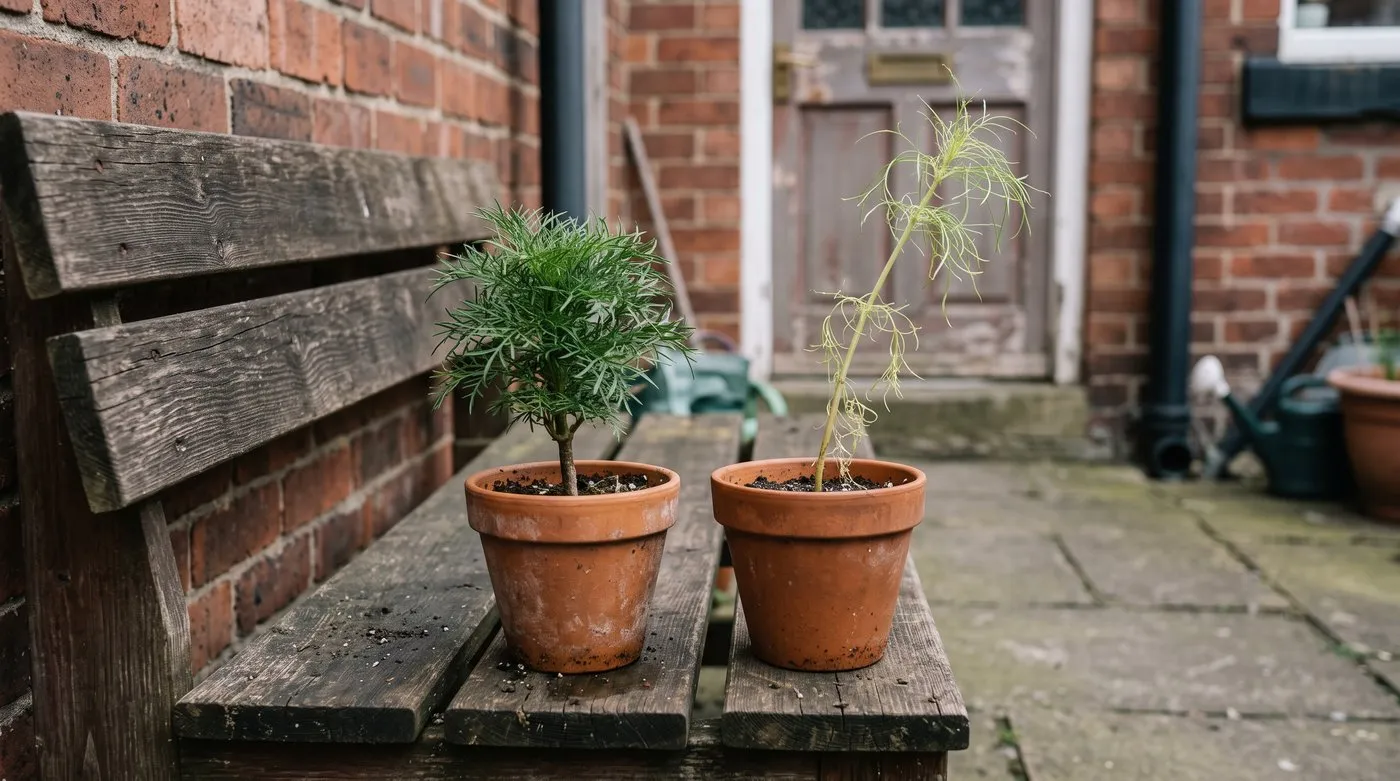
The stocky cosmos on the left is ready to go out. The pale, leggy one needs more time and a cane when planted.
| Days | Where | Time outside | At night |
|---|---|---|---|
| 1-2 | Sheltered spot, light shade | About 4 hours | Back under cover |
| 3-4 | Sheltered spot, some sun | 6-8 hours | Cold frame, lid mostly closed |
| 5-8 | Open spot | All day | Cold frame, lid open wider each night |
| 9-10 | Planting position | Day and night | Outside, fleece handy |
Plant out on day 11 if the weather is settled. A well-hardened plant is short and sturdy with dark green leaves. A pale, leggy plant needs more time, and staking.
How to harden off dahlias
Dahlias started from tubers in a warm greenhouse grow soft, sappy shoots. Harden them off like other tender perennials.
- Days 1-3: Put them in a sheltered cold frame or spot in the day. Bring them in at night.
- Days 4-7: Leave them in the cold frame day and night, with the lid open a little on mild nights.
- Days 8-10: Stand the pots where they’ll be planted, out day and night. Fleece them on cold nights.
- Days 11-14: Plant out once the frosts are over. Put stakes in at planting time for taller varieties.
Dormant tubers planted straight into the ground outside don’t need hardening off, as the shoots grow up outdoors. Cover any early shoots with fleece if a late frost is forecast. Our guide on when to plant dahlias explains the timing.

Standing potted dahlias by a sheltered wall lets them toughen up out of the wind before they go in the ground.
Hardening off mail-order perennials
Perennials and plug plants that arrive by post have often been grown under cover, then spent a day or more in a dark box. They’re soft and need a little recovery time before you start.
- Unpack them straight away. Water if dry and stand them in a sheltered, shady spot for a day or two.
- Days 3-7: Move them into light shade outside, adding a few hours each day.
- Days 8-14: Move them into more sun, then leave them out at night once nights are mild. Plant out when they cope happily with a full day and night outside.
Hardy perennials ordered in spring may only need a week. Tender ones need the full two. Our guide to plug plants covers potting tiny plugs on before they go out.

Fleece on hoops gives newly planted perennials extra shelter on cold nights. Take it off in the day.
How to protect bedding from wind
Wind catches out a lot of gardeners in May. A breezy day can scorch soft leaves and snap stems, even when it isn’t cold.
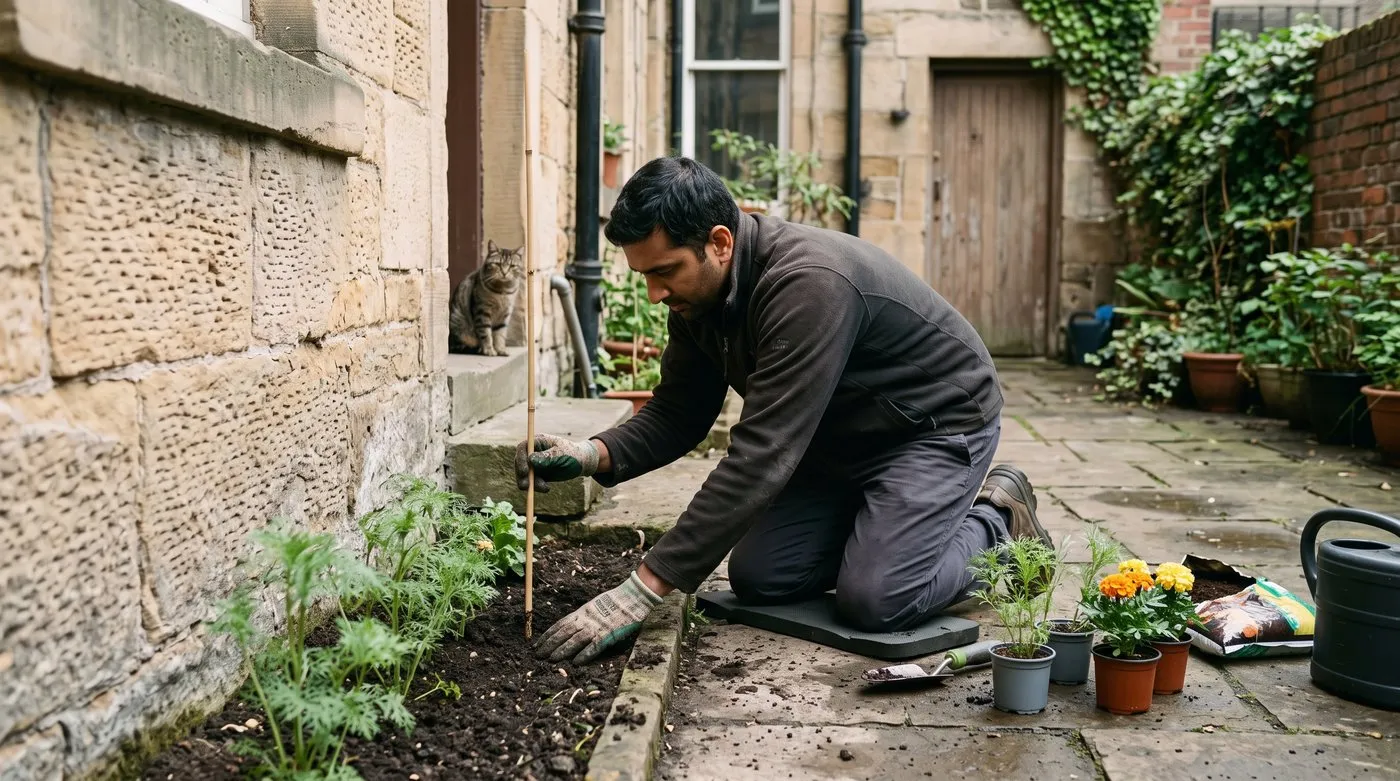
Plant on a calm evening, in the shelter of a wall if you can, and put the cane in at the same time.
- Start somewhere sheltered, out of the wind, for the first few days of hardening off.
- Plant on a calm day, ideally in the evening or on a cloudy day.
- Plant tall annuals such as cosmos and nicotiana in the shelter of a wall, hedge or shrubs if you can.
- Stake tall plants at planting time rather than waiting for them to flop.
- Keep fleece handy to throw over plants on a cold or very windy night. Our garden fleece guide explains which grade to buy.
When to plant out bedding in the UK
Plant out half-hardy bedding after the last frost. Roughly:
- South-west and coastal areas: often early to mid-May.
- Southern England and the Midlands: mid to late May.
- Northern England, Wales uplands and Scotland: late May to early June.
These are only guides. Frosts can come later in some years, and cold hollows and high gardens are later still. Always check the forecast for the week ahead before planting, and keep fleece handy until early June.
Common hardening off mistakes with bedding
- Using a veg seedling schedule. A week is too short for big, soft bedding plants. Give tender perennials the full two weeks.
- Planting on a windy day. The first day out is when plants are most fragile. Choose a calm day.
- Going straight from frame to border. Leave plants out overnight for a couple of nights before you plant them.
- Trusting the calendar. Mid-May is an average, not a promise. Check the forecast.
- Ignoring garden centre plants. If they came from a heated area, they still need hardening off.
Frequently asked questions
How long does it take to harden off bedding plants?
About 10-14 days for most bedding plants. Start with a couple of hours outdoors somewhere sheltered and add more time each day. Leave them out overnight once nights are mild. Bring them in if frost or cold winds are forecast.
When can I plant out half-hardy bedding plants in the UK?
Once the risk of frost has passed. In southern England that’s usually mid to late May. In northern England and Scotland it can be late May or early June. Check the forecast for the week ahead, and if in doubt, wait.
Can I harden off bedding plants in a greenhouse?
An unheated greenhouse is a good first step, but not the whole job. Move plants there from a heated greenhouse or windowsill for a few days. Then move them to a cold frame or a sheltered spot outside, and finally to their planting position.
How do I know if a plant has been hardened off properly?
It looks sturdier and darker than a plant grown indoors. Look for thicker stems, firmer, darker leaves and compact growth. It should cope with a full day and night outside without wilting or scorching.
Do I need to harden off plants bought from a garden centre?
It depends where they were displayed. Plants sold on outdoor benches are usually hardened off already. Plants from indoor or heated areas need about a week of gradual exposure first. Ask staff if you’re not sure.
What temperature is too cold for hardening off?
Nights below about 5°C are too cold for most half-hardies. Hardy bedding such as pansies and primulas copes with colder nights. Busy lizzies and coleus prefer nights above 10°C. A max-min thermometer in the cold frame shows you the overnight low.
Can hardened off plants survive a late frost?
Usually not, if they’re half-hardy. Hardening off toughens plants against wind and sun, not frost. If frost is forecast after planting out, cover them with fleece overnight and take it off in the morning.
Should I harden off perennials shipped in the post?
Yes, especially early in the season. Many are grown under cover and are soft after a few days in a dark box. Unpack them straight away, water if dry and stand them in a sheltered, shady spot for a day or two. Then harden them off over a week or two.
Short of space for all those trays? Our cold frame gardening guide shows how to get the most from one, and you’ll find more seasonal jobs in our how-to guides.
Our team produces practical UK gardening guidance from source research, contributor records and established horticultural practice. Editorial standards are overseen by Matt W.