Key takeaways
- October to mid-March is the moving window; autumn soil at 8-12C lets roots regrow before winter
- Root ball rule: at least a third of the branch spread, and 25-30cm deep
- Shrubs over 5 years old need a root-pruning circle cut a full year before the move
- Water 10 litres a week from April to September in the first year after moving
- Magnolia, daphne, broom and tap-rooted perennials rarely survive a move
- 15 of 16 plants survived two seasons of moves in a Stafford trial garden
When is the best time to move perennials and shrubs?
Evergreens are the exception. They lose water through their leaves all winter, so a December move leaves them drinking through a damaged root system in drying winds. Move them in early October or wait until April. Ornamental grasses are fussier still and want spring only; autumn-moved grasses often rot at the crown. Check the Met Office frost outlook before a late-winter move, because lifting a root ball from frozen ground tears it apart.
| Plant group | Best months | Second choice | Avoid |
|---|---|---|---|
| Deciduous shrubs | November-February | March | May-September |
| Evergreen shrubs | Early October | April | December-February |
| Herbaceous perennials | October | March-April | June-August |
| Ornamental grasses | April-May | None | September-March |
| Roses | November-February | None | April-September |
| Bamboo | April-May | None | Autumn and winter |
Many border perennials are better split than shifted whole. If the clump has a dead centre, division gives you three or four young plants instead of one tired one; our guide to perennials to divide in May covers the late-spring candidates such as hostas and hardy geraniums.
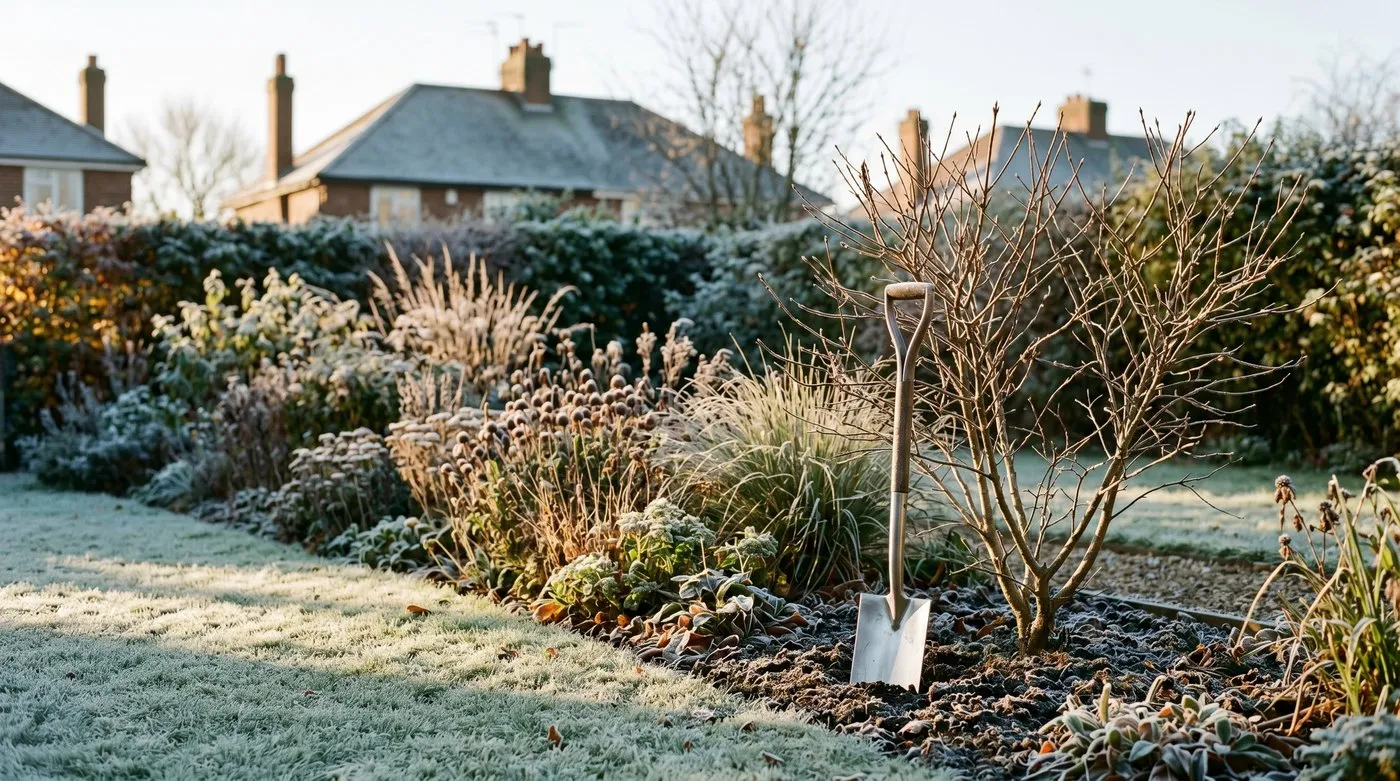 The ideal moment: late October, leaves dropping, and soil still holding 10C of summer warmth for new root growth.
How big should the root ball be?
Age changes the maths because roots thicken and anchor with time:
Herbaceous perennials are simpler. Lift the whole crown with a fork, and most clumps come up with a 25-30cm ball of their own accord. Asters, daylilies and geraniums tolerate losing half their roots and barely sulk. Depth matters more than width for these: get the fork 25cm down so the crown lifts intact rather than shearing off.
Root pruning: the year-ahead trick for older shrubs
Root pruning means slicing a circle around the shrub a full 12 months before you move it. Push a sharp spade in to its full blade depth, about 28cm, in a continuous ring the same diameter as your planned root ball. Do it in October. The severed roots respond by producing a dense mat of fibrous feeding roots inside the circle, exactly where your root ball will be cut the following autumn.
If 12 months feels too long, even 8 weeks of notice helps. Slice the circle in August for an October move and you get a partial root response. It is roughly half the benefit, but half is better than none.
How do you lift a shrub without killing it?
- Water the day before. 15 litres over the root zone. Moist soil holds the ball together; dry soil falls off the roots like crumble topping.
- Prepare the destination. Twice the ball’s width, exactly its depth. Fork the base and sides so new roots can push out.
- Tie in the branches. A loop of soft twine pulls the framework upright and saves your face during the dig.
- Trench around your marked circle. Dig a 20cm-wide trench just outside the root-ball line, down to 30cm.
- Undercut at 45 degrees. Work the spade beneath the ball from all sides until the plant rocks freely.
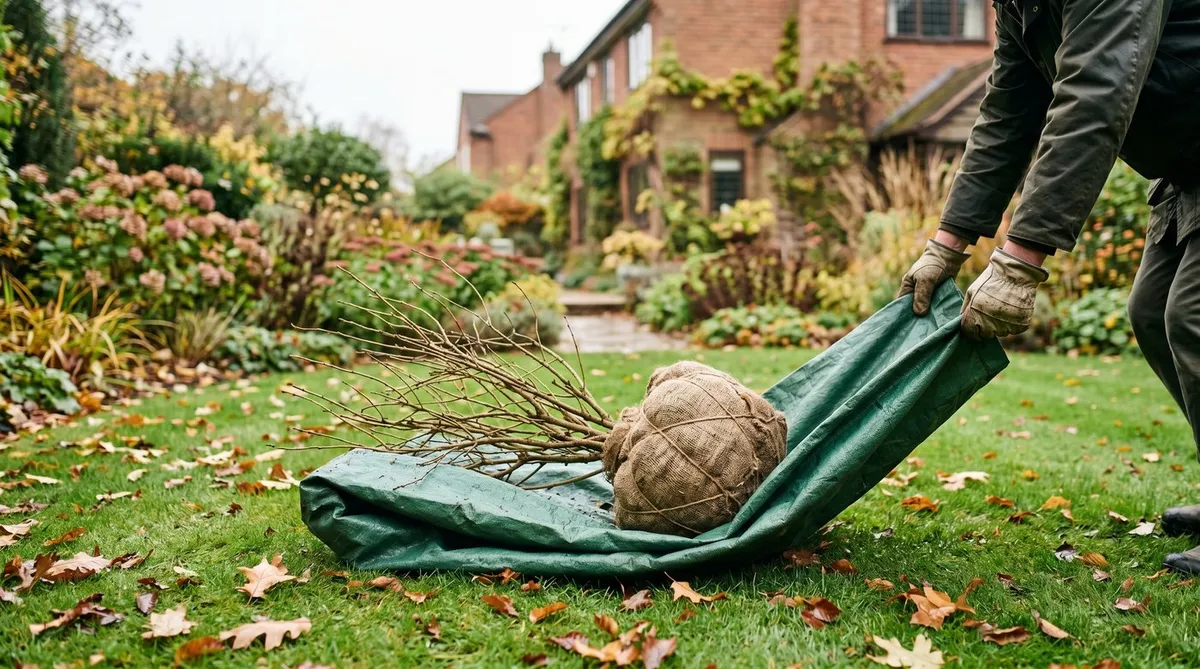
- Tip and slide. Rock the ball onto a folded tarpaulin or hessian sheet, then drag it to the new hole. Never lift by the stems; carry the ball, not the plant.
Replant at exactly the same depth as before. The old soil mark on the stem is your guide, and burying it even 5cm deeper can rot the bark of most shrubs. If you are rescuing a single established plant rather than reorganising a border, our step-by-step guide to moving a shrub safely walks through one move in finer detail.
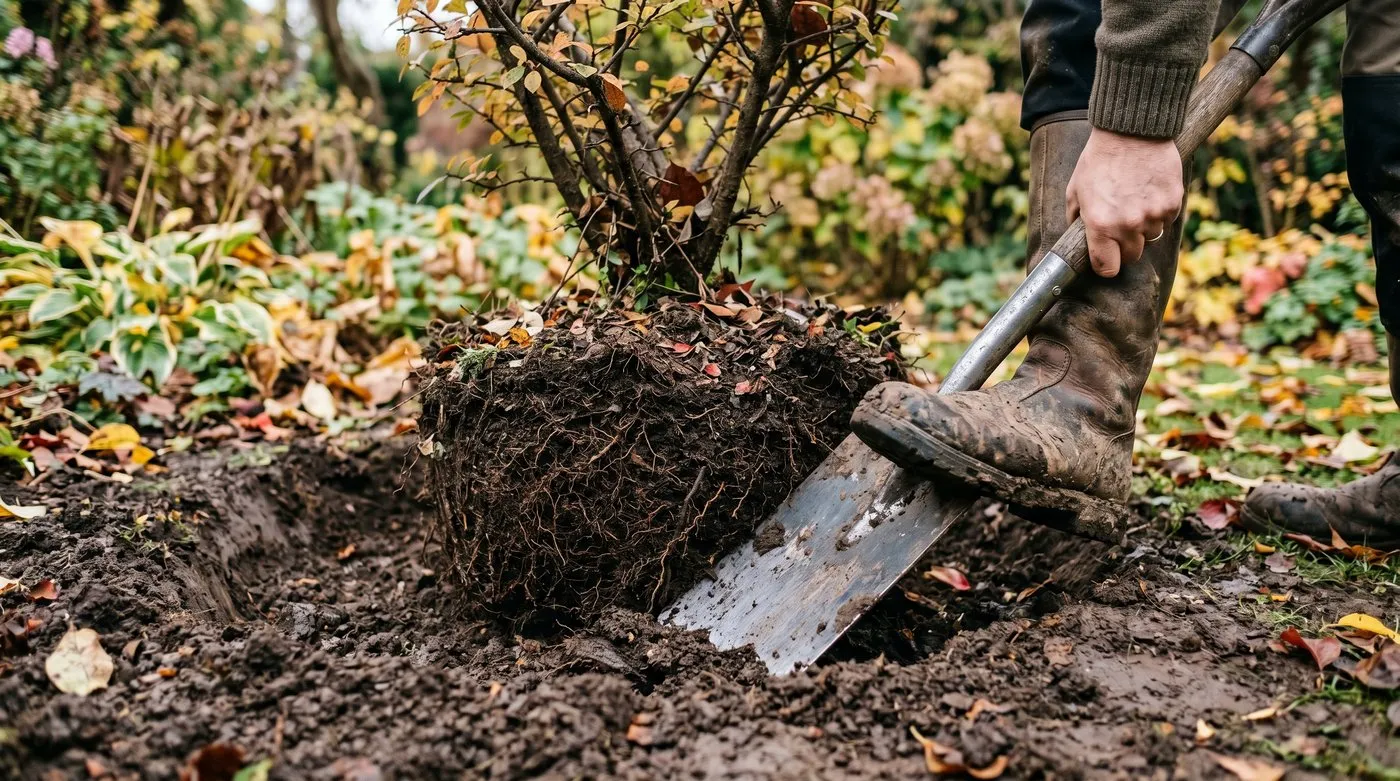 The undercut: work the spade beneath the ball from all sides until the plant rocks free, then slide it onto a tarpaulin.
Replanting and the first year of aftercare
Water a moved shrub with 10 litres a week from April to September, doubling that in any dry spell over a fortnight. This single habit decides more outcomes than the dig itself. A moved plant has lost up to two-thirds of its root system; what remains cannot reach far for moisture, so the hose has to bridge the gap for one growing season.
Backfill with the soil you dug out, not bagged compost. A pocket of rich compost in clay acts like a sump, and roots circle inside it rather than venturing into the native soil. Firm the soil in layers with your boot heel, then build an 8cm-high ring of soil at the root ball’s edge to form a watering basin. Each 10-litre can then soaks down rather than running off. The same depth-and-firming rules apply when you plant a bare-root tree, and getting them wrong causes the same slow decline.
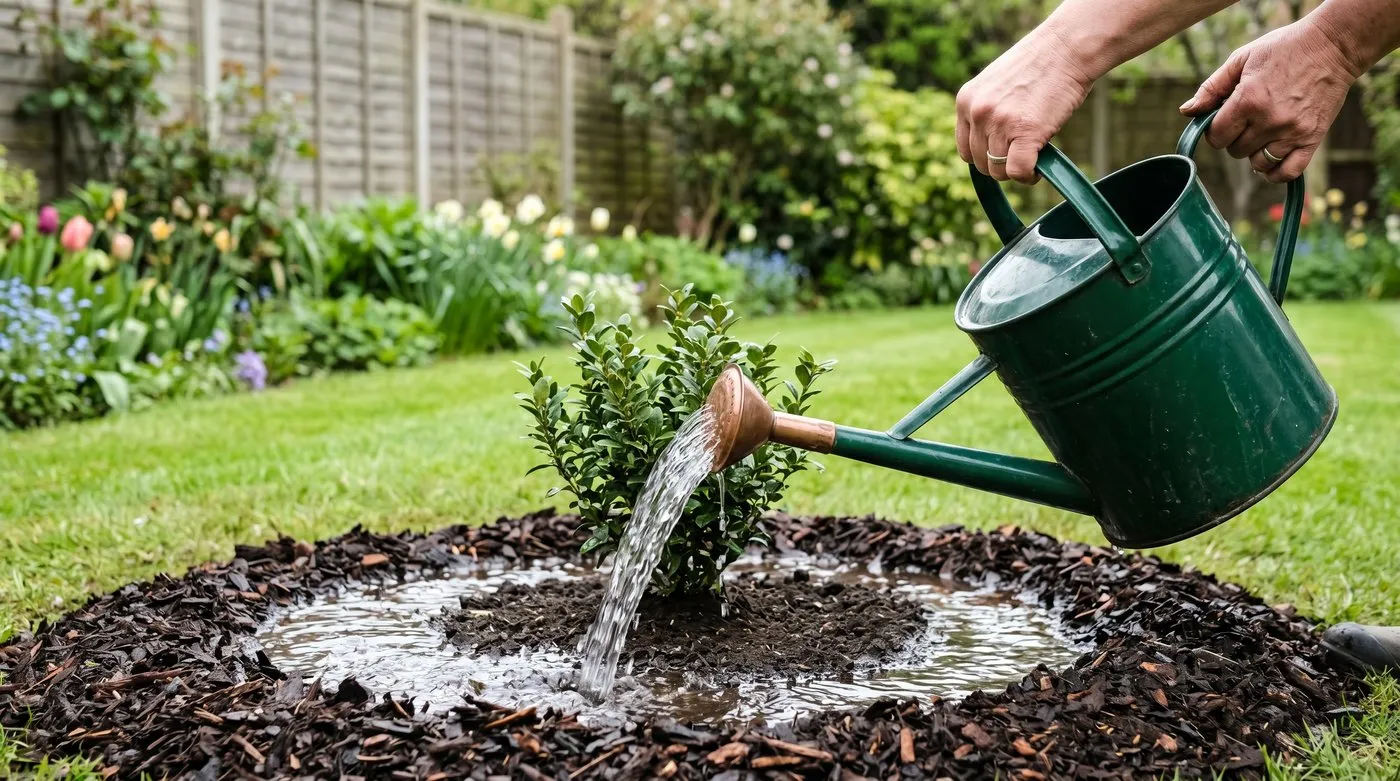 The watering basin at work: an 8cm soil ring holds each 10-litre can over the root ball instead of letting it run off.
Which plants survive moving and which hate it?
Fibrous-rooted plants move well; tap-rooted species and a short list of resenters usually die. The pattern is all in the root architecture. A hosta or hydrangea carries a dense mat of shallow, branching roots that regenerate quickly. An oriental poppy runs one thick tap root 40cm down, and when the spade snaps it, the plant has no plan B.
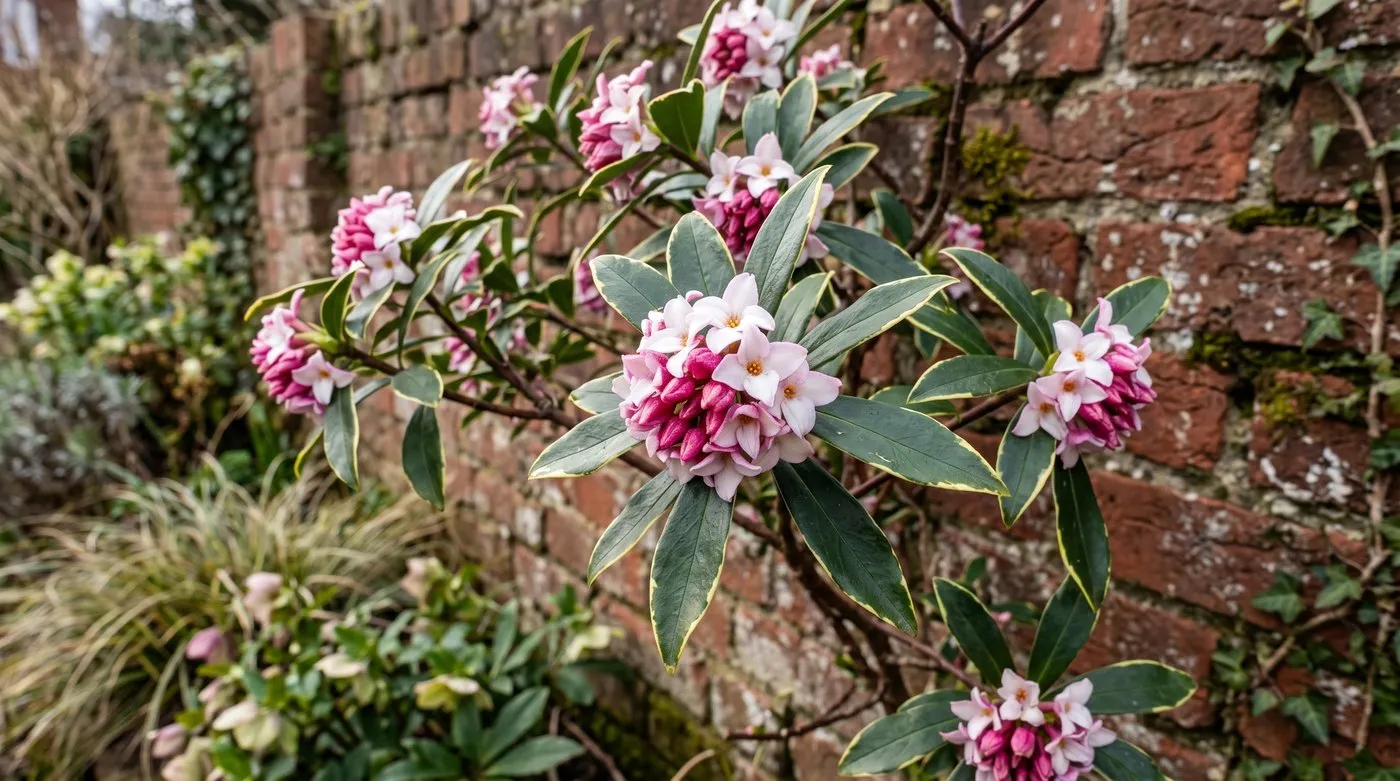 Leave it alone: daphne resents root disturbance so strongly that moved plants usually die within months.
Common mistakes when moving plants
Frequently asked questions
When is the best time to move shrubs in the UK?
October to mid-March, while plants are dormant, suits most shrubs. Autumn beats late winter because soil at 8-12C lets new roots grow before leaves return. Evergreens prefer early October or April, when wind is gentler. Never move anything in full leaf between June and August unless the plant is doomed where it is.
How big should the root ball be when moving a shrub?
At least a third of the branch spread, and 25-30cm deep. A shrub with a 1.2m spread needs a 40cm root ball, which weighs 30-40kg in wet soil. Older shrubs need more: aim for 60cm across on anything past eight years old.
Can I move a shrub in summer?
Yes, but expect setbacks: summer moves lose roughly half their foliage. Only move in June to August if building work or a house sale forces it. Take the biggest root ball you can lift, cut the top growth back by a third, and water 10 litres every two days for eight weeks.
Which plants should never be moved?
Magnolia, daphne, broom and tap-rooted perennials usually die after moving. Tap roots snap when lifted, and these species cannot regrow them. Oriental poppies, lupins and sea holly are the common tap-rooted casualties. Take root cuttings or buy a replacement instead.
Do peonies really die if you move them?
No, herbaceous peonies move well if replanted at the same depth. The myth comes from planting too deep afterwards. Set the buds 2.5cm below the surface and a moved peony flowers again within two years. Bury them deeper than 5cm and the plant sulks indefinitely.
How long does a moved shrub take to recover?
Most shrubs re-establish fully within 12-18 months of an autumn move. Expect reduced flowering and some midday wilting in the first summer. Growth usually returns to normal in the second season. Anything still wilting after two summers took too small a root ball.
Our team produces practical UK gardening guidance from source research, contributor records and established horticultural practice. Editorial standards are overseen by Matt W.