
Key takeaways
- Prune philadelphus, deutzia and weigela straight after flowering, usually June to July
- Take out a few of the oldest stems at the base each year to keep them flowering
- Cut wisteria's long green summer shoots back to five or six leaves in July or August
- Trim lavender after flowering, keeping to the leafy growth and away from bare wood
- Check for nesting birds before you cut any shrub in summer
Five popular shrubs are best pruned in summer: lavender, wisteria, philadelphus, deutzia and weigela. Philadelphus, deutzia and weigela flower on stems that grew the year before, so you prune them straight after flowering. Wisteria and lavender get a summer trim for tidiness and better flowers.
This guide is a quick summer checklist for these five. For the bigger picture across the year, see the year-round pruning calendar.
Before you start: Many garden birds nest in shrubs and climbers until August. Look carefully before you cut. If there’s an active nest, leave that plant until the young have flown. Damaging an active nest is an offence.
Why these shrubs need a summer prune
Philadelphus, deutzia and weigela flower in late spring or early summer on last year’s stems. If you prune them in winter, you cut off the buds that would have flowered. Pruning straight after flowering gives new shoots the rest of the summer to grow and ripen ready for next year.
Wisteria is different. Its summer prune cuts back the mass of long green shoots so the plant puts energy into flower buds, not leaves.
Lavender gets a trim after flowering to keep it compact. Left unpruned, it goes leggy and woody.
| Shrub | Flowers | When to prune | The cut |
|---|---|---|---|
| Deutzia | Late spring to early summer | Straight after flowering, June to July | Flowered stems back to strong young shoots |
| Weigela | Late spring to early summer | Straight after flowering, June to July | Flowered stems back, remove some old stems |
| Philadelphus | Early summer | Straight after flowering, June to July | Flowered stems back, remove some old stems |
| Wisteria | Late spring to early summer | July or August | Long green shoots to five or six leaves |
| English lavender | Midsummer | After flowering, late July to early September | Flower stalks and a little leafy growth |
How to prune lavender in summer
Trim English lavender straight after flowering. In most gardens that’s from late July to early September.
Cut off the old flower stalks and about 2-3cm of this year’s leafy growth. Shape the plant into a neat, rounded mound. Always leave some green, leafy shoots on every stem.
Don’t cut into bare, brown wood. Lavender rarely regrows from old wood, so a hard cut can leave bald patches that never fill in. If a plant is already very woody and leggy, it’s usually best to replace it.
French lavender flowers earlier and can be trimmed after its first flush in summer. The guide to pruning lavender covers every type in detail.

See the woody base under the leaves? Keep your cuts in the green growth above it.
How to summer prune wisteria
Prune wisteria in July or August, after flowering. By then it has thrown out lots of long, whippy green shoots.
- Find the main framework of thick, woody branches. Leave these alone.
- Cut each long green shoot from this year back to five or six leaves from where it starts.
- Tie in any shoots you need to extend the framework instead of cutting them.
In winter, around January or February, cut the same shoots back again to two or three buds. This two-step routine is what makes wisteria flower well. The guide to pruning wisteria covers both prunes step by step.

Shorten the long, whippy green shoots to five or six leaves. The thick framework stays as it is.
How to prune philadelphus (mock orange)
Prune philadelphus straight after flowering, usually in June or July. Do it in one go.
- Cut back flowered stems. Follow each stem that flowered down to a strong young shoot, and cut just above it.
- Remove some old stems. Take out a few of the oldest, thickest stems at the base, roughly one in four or five. Loppers make this easier.
This keeps fresh young stems coming, so the shrub flowers well all over, not just at the top. The guide to growing philadelphus has more on choosing and planting.

Spot the oldest, greyest stems while the shrub is in flower, then cut them out at the base as soon as the flowers fade.
How to prune deutzia
Prune deutzia straight after flowering, usually in June or early July.
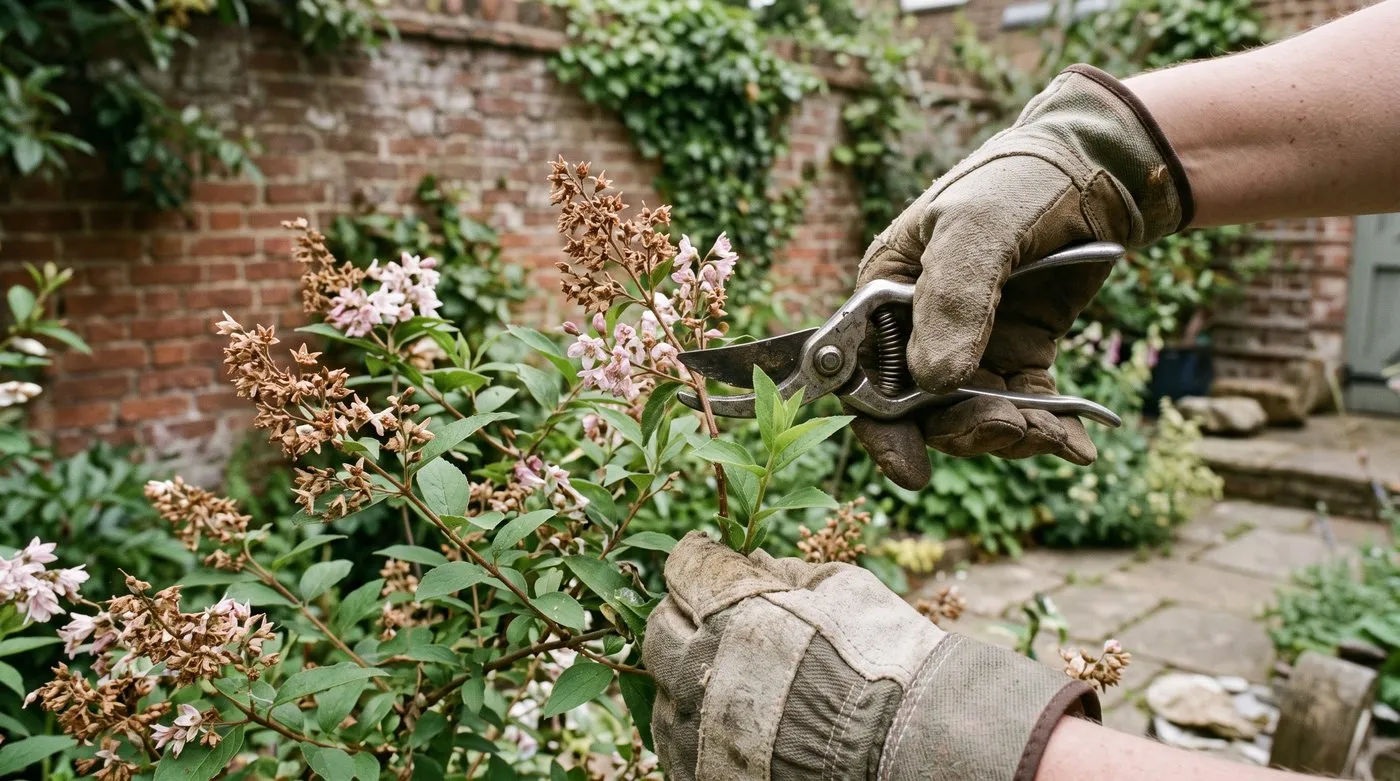
Cut just above a strong young shoot like this one. It carries next year’s flowers.
Cut each stem that has flowered back to a strong young shoot lower down. That young shoot will flower next year. Then take out a few of the oldest stems at ground level to let in light and make room for new growth.
Don’t prune deutzia in winter. You’ll cut off next year’s flowers and end up with a leafy shrub and nothing else. For varieties and planting tips, see the guide to growing deutzia.
How to prune weigela
Prune weigela straight after flowering, usually in June or July. The method is the same as philadelphus.
- Remove some old stems. Cut a few of the thickest, oldest stems at the base.
- Cut back flowered stems. Shorten each one to a strong, outward-facing young shoot.
Weigela often flowers again lightly later in summer on the new shoots. Variegated types are pruned exactly the same way.

Enjoy the show first. Once the last flowers drop, cut the flowered stems back to strong young shoots.
Summer pruning calendar
| Month | What to prune |
|---|---|
| June | Deutzia, weigela and philadelphus as their flowers finish |
| July | Late-flowering philadelphus. Start the wisteria summer prune |
| August | Wisteria summer prune. English lavender as flowers fade |
| Early September | Finish trimming later lavenders |
| January to February | Wisteria winter prune, back to two or three buds |
Tools for summer pruning
You need three tools for summer pruning.
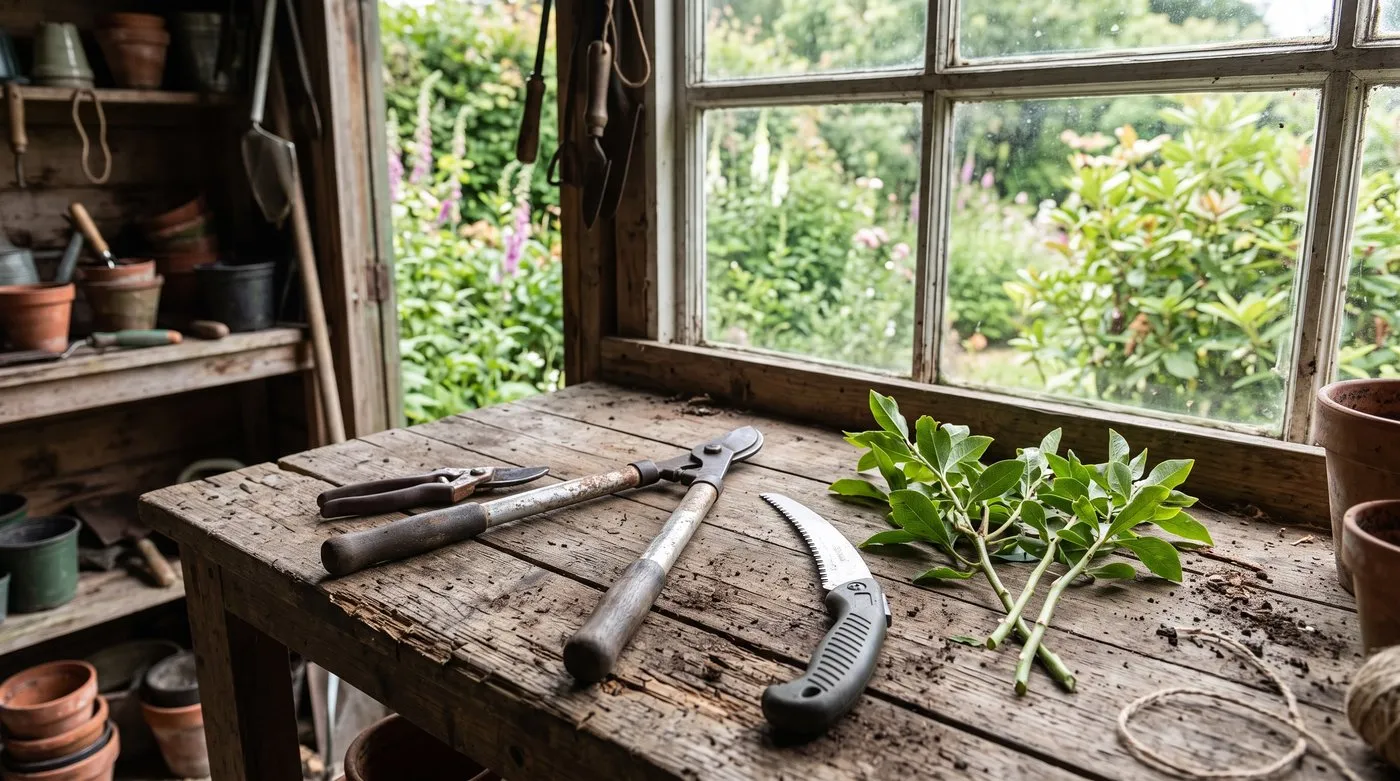
Secateurs, loppers and a small saw cover every cut in this guide. Keep the blades sharp.
- Bypass secateurs for stems up to about pencil thickness.
- Loppers for thicker stems, such as the old stems on philadelphus and weigela.
- A pruning saw for anything thicker still.
Keep blades sharp and clean. A clean cut heals faster than a crushed one. If you’re choosing a new pair, the guide to the best secateurs compares the main types.
Common summer pruning mistakes
- Pruning in winter. Philadelphus, deutzia and weigela lose next year’s flowers if cut in winter.
- Leaving it too late. Prune soon after flowering, so new shoots have time to ripen.
- Cutting lavender into bare wood. It rarely regrows. Stay in the leafy growth.
- Cutting wisteria’s framework. Only shorten this year’s long green shoots in summer.
- Only trimming the tips. Without removing some old stems, these shrubs flower only at the top.
- Not checking for nests. Look before you cut, and wait if birds are nesting.
How to rescue an overgrown shrub
Philadelphus, deutzia and weigela can be cut back hard if they’ve become a tangle. Do it in late winter, cutting all stems to about 30cm from the ground. You’ll lose a year or two of flowers, but the shrub regrows with young, free-flowering stems.
A gentler option is to remove a third of the old stems each winter over three years. The shrub keeps flowering while you renew it.
Overgrown wisteria is best brought back over a few winters, removing some of the oldest branches each time. Lavender is the exception: very woody plants rarely recover, so replace them.
For more seasonal jobs, browse the how-to guides. Ready for the rest of the garden? Read the guide on how to prune shrubs for the method that suits every shrub you grow.
Frequently asked questions
Why prune some shrubs in summer rather than winter?
Because they flower on stems that grew the year before. Prune them in winter and you cut off next year’s flowers. Pruning straight after flowering gives new shoots the rest of summer to grow and ripen.
When should I prune lavender in the UK?
Straight after flowering, usually from late July to early September. Cut off the old flower stalks and a little of this year’s leafy growth to make a neat mound. Don’t cut into bare, woody stems.
How do I summer prune wisteria?
Cut the long green shoots back to five or six leaves in July or August. Leave the main branches alone. In winter, shorten the same shoots again to two or three buds.
When do I prune philadelphus (mock orange)?
Straight after flowering, usually in June or July. Cut flowered stems back to strong young shoots lower down. Then remove a few of the oldest stems at the base to make room for new ones.
What is the biggest summer pruning mistake?
Pruning at the wrong time. Leave it too late and the new shoots may not ripen before winter. Prune these shrubs in winter and you lose next year’s flowers.
Can I prune shrubs when birds are nesting?
Check carefully first, and wait if you find an active nest. It’s an offence to damage or destroy an active nest. Many birds nest in shrubs and hedges from March to August.
Our team produces practical UK gardening guidance from source research, contributor records and established horticultural practice. Editorial standards are overseen by Matt W.


