
Key takeaways
- Prune apples and pears from November to February while they're dormant
- Only prune plums and cherries from June to August, to avoid silver leaf disease
- Prune roses from late February to mid-March in the south, a few weeks later up north
- Shrubs that flower before midsummer get pruned straight after flowering, not in winter
- Trim lavender after flowering, but never cut into the bare wood
Pruning feels scary, but it’s mostly about timing. Every type of plant has its moment. Prune then and you get more flowers, better fruit and healthier plants. Get it wrong and you might lose a year’s flowers or let disease in.
A few examples show why it matters. Prune a plum tree in December and you risk silver leaf, a serious disease. Prune a forsythia in February and you cut off all its flower buds. Prune roses too early and a late frost can scorch the new shoots. This calendar takes the guesswork out.

Winter pruning in January. With the leaves gone, it’s easy to see the shape of the branches.
Why pruning timing matters
Three simple things decide whether a cut helps or harms. Once you know them, the whole calendar makes sense.
Healing. Plants seal cuts fastest when they’re growing strongly in spring and summer. In winter, healing is slow. That’s fine for apples and pears, as disease is quiet then too. For plums and cherries, it’s risky, because silver leaf spores are about in autumn and winter.
Bleeding. Birch, maple and grape vines ooze sap if you cut them as spring approaches. Prune them in midwinter, when sap is lowest, or in full leaf in summer.
Flower buds. This is the big one. Spring-flowering shrubs like forsythia, mock orange, deutzia and weigela flower on stems that grew last year. Prune them in winter and you cut off the flowers. Summer-flowering shrubs like buddleia, hardy fuchsia, caryopteris and perovskia flower on this year’s new stems. A hard prune in early spring gives you lots of fresh, flowering growth.
“Old wood or new wood?” is the single most useful question in pruning.
Month-by-month pruning calendar
Here’s what to prune each month. Regional tweaks follow below.
| Month | What to prune | How | Why now |
|---|---|---|---|
| January | Apples, pears, wisteria (second prune), grape vines, gooseberries, redcurrants | Remove crossing branches. Shorten side shoots to 2-3 buds | Fully dormant. Easy to see the shape |
| February | Roses (south), buddleia, hardy fuchsia, lavatera, caryopteris, perovskia, clematis group 3, dogwood, willow | Cut summer-flowering shrubs hard, to 30-45cm | Kick-starts strong new growth for summer flowers |
| March | Roses (north), penstemons, mophead hydrangeas, light trim of evergreen hedges | Cut old hydrangea heads back to the first strong pair of buds | Frosts easing, new growth about to start |
| April | Evergreen shrubs like laurel and privet, rosemary, frost-damaged tender plants | Shape evergreens once the worst frosts are over | Growing again, so cuts heal quickly |
| May | Spring-flowering shrubs after flowering: forsythia, deutzia, kerria | Cut flowered stems back to strong new side shoots | New stems have time to grow and flower next year |
| June | Plums, cherries, damsons, early clematis (group 1), mock orange, weigela | Light thinning on stone fruit. Remove dead and crossing wood | Silver leaf risk is low. Cuts heal fast |
| July | Wisteria (first prune), early lavenders, summer raspberries after picking | Cut wisteria shoots back to five or six leaves | Steers energy into flower buds |
| August | Rambling roses after flowering, lavender, hedges, yew | Thin out ramblers. Trim lavender, keeping some green | Keeps next year’s flowering stems |
| September | Very little. Deadheading and tidying | Remove faded flowers on repeat-flowering roses | Plants winding down for winter |
| October | Very little. Shorten tall rose stems by a third | Reduce height only, against wind rock | Stops winter gales rocking the roots |
| November | Apples and pears (start), blackcurrants, final tidy of deciduous hedges | Begin winter pruning of apples and pears | Leaves have fallen, so you can see the shape |
| December | Apples and pears, grape vines, neglected deciduous trees | Spread big renovations over 3 years, taking no more than a third a year | Deep dormancy. Sap at its lowest |
Adjusting for where you live
Spring arrives weeks later in the north and on high ground than in the south-west. Adjust like this:
- Southern England and mild coasts: use the earliest dates. Roses from late February.
- Midlands and northern England: add a couple of weeks. Roses from early to mid-March.
- Scotland, high ground and frost pockets: add a few weeks more for spring jobs. Roses from late March.
- Town and city gardens: cities stay a bit warmer, so you can often use slightly earlier timings.
Pruning roses: late February to March
Prune hybrid tea and floribunda roses between late February and mid-March in most of England. A handy sign is when the forsythia flowers near you. For step-by-step help, see our guide on how to prune roses in the UK.
Cut hybrid teas back to about 15-20cm from the base. Cut just above an outward-facing bud, with a slight slope. Floribundas need a lighter cut, to about 25-30cm. Remove dead, diseased and crossing stems first.
Climbing roses are pruned from late autumn into winter. Tie the main stems in as close to horizontal as you can, and shorten side shoots to 2-3 buds. Keep the main framework.
Rambling roses flower on last year’s stems, so prune them straight after flowering in late summer. Take out a few of the oldest stems at the base and tie in strong new ones to replace them. This is the opposite of most rose pruning and catches lots of people out.

The basic rose cut: just above an outward-facing bud, with a slight slope so rain runs off.
Pruning shrubs: the old wood and new wood rule
This is the group people get wrong most often. The timing split really matters.
Spring-flowering shrubs (prune after flowering)
These flower on last year’s stems. Prune in winter and you lose the flowers. Instead, prune within a few weeks of the flowers fading.
- Forsythia: right after flowering, cut a third of the oldest stems down to the ground. Fresh new stems will replace them.
- Mock orange (Philadelphus): after flowering in early summer, cut flowered stems back to strong new side shoots. Take out a few of the oldest stems at the base. Our guide on how to prune shrubs has the full method.
- Weigela: prune after flowering in June. Shorten flowered shoots to a strong pair of buds.
- Deutzia: same timing as weigela. Remove a third of the oldest stems at the base each year.
- Kerria: cut flowered stems to the ground in late spring. New shoots from the base carry next year’s flowers.
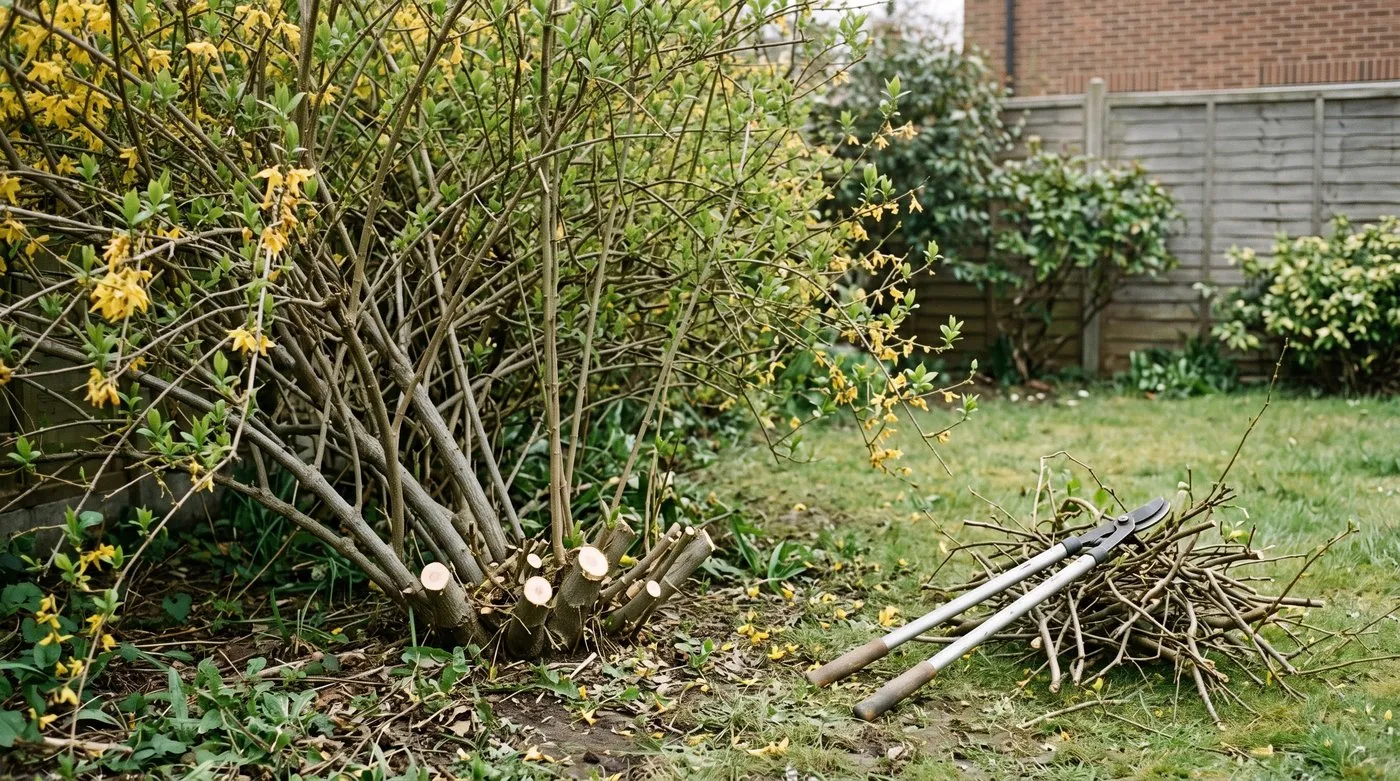
Prune forsythia right after it flowers by cutting a third of the oldest stems to the ground. Do it in winter and you cut off next spring’s flowers.
Summer-flowering shrubs (prune in late winter)
These flower on this year’s growth. A hard prune in February or March gives you strong new shoots that flower from midsummer.
- Buddleia: cut all stems back to 30-45cm in early March. Left alone, it gets very tall with flowers only at the top.
- Hardy fuchsia: cut back low in spring once new shoots appear at the base. In colder areas, the tops die back over winter anyway.
- Lavatera: prune hard in March to about 30cm. Unpruned plants get leggy and can split.
- Caryopteris and perovskia: cut back to the lowest pair of strong buds in March.
For a list of great flowering shrubs, each with pruning notes, see our guide to flowering shrubs.
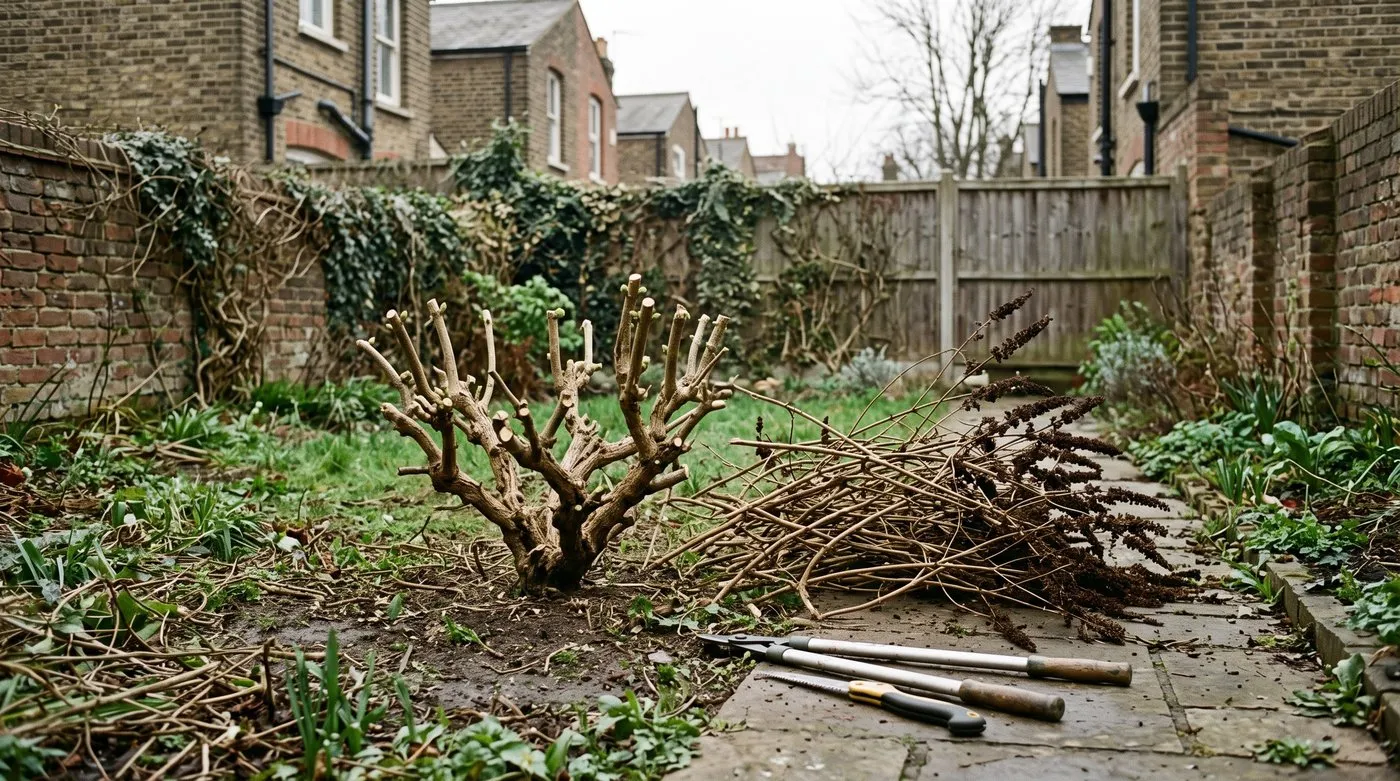
Buddleia flowers on this year’s stems, so cut it back hard to 30 to 45cm in early March. Left alone, it gets tall with flowers only at the top.
Pruning fruit trees: winter or summer
Fruit tree timing is strict. Get it wrong and you could lose a crop, or worse.
Apples and pears are pruned from November to February. See our guide on how to prune fruit trees. Most varieties, like Cox, Bramley and Gala, fruit on short spurs, so shorten their side shoots to 2-3 buds. Tip-bearers like Worcester Pearmain fruit at the shoot tips, so thin out older wood instead of shortening everything.
Plums, cherries and damsons must only be pruned from June to August. Silver leaf disease spreads through fresh cuts, mainly from autumn to spring. There’s no cure once it takes hold. This is the most important timing rule in the whole calendar. The RHS silver leaf guide explains what to look for.
| Fruit | When to prune | Risk if you get it wrong |
|---|---|---|
| Apple | November to February | Canker (small risk) |
| Pear | November to February | Canker (small risk) |
| Plum | June to August only | Silver leaf (serious) |
| Cherry | June to August only | Silver leaf and bacterial canker (serious) |
| Fig | Spring | Frost damage to new shoots |
| Gooseberry | January to February | Mildew in a crowded bush |
For young apple and pear trees, aim for an open, goblet shape in the first few years. Pick 3-5 well-spaced main branches and remove the rest. The open middle lets in air and light, which helps keep diseases away.
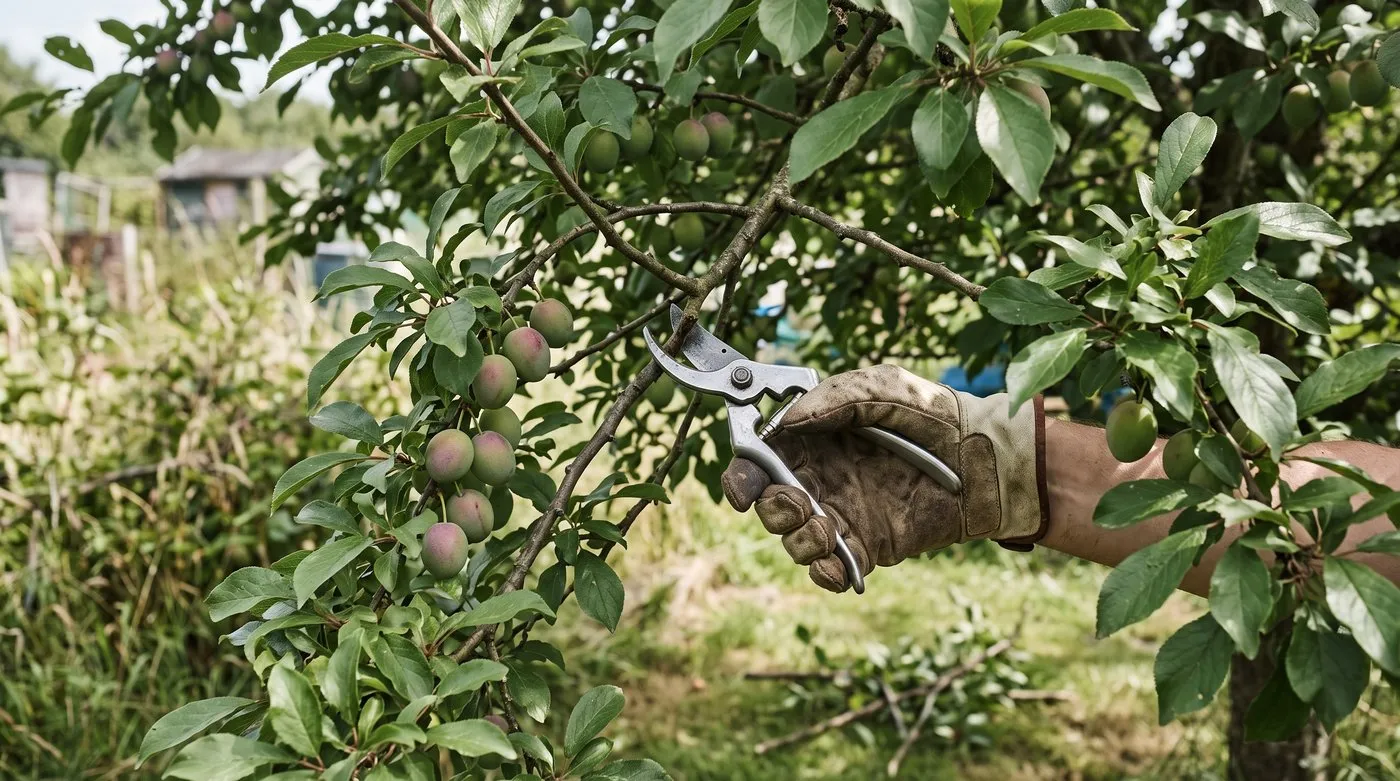
Only prune plums, cherries and damsons between June and August. Summer cuts heal fast, before silver leaf spores get a chance to move in.
Pruning wisteria, clematis and other climbers
Wisteria needs two prunes a year for lots of flowers. In July or August, cut the long whippy shoots back to five or six leaves. In January or February, shorten those same shoots to 2-3 buds. Our guide on how to prune wisteria walks you through it.
Clematis depends on its group:
- Group 1 (montana, armandii, alpina): light trim after flowering in late spring. These flower on old stems.
- Group 2 (big-flowered hybrids like ‘Nelly Moser’ and ‘The President’): light prune in February, removing dead stems and cutting back to the first strong pair of buds.
- Group 3 (viticella and late big-flowered types): cut hard to 15-30cm in February or March. They flower on new growth.
Climbing hydrangea needs very little pruning. Remove old flower heads in spring and trim shoots that stick out from the wall.

Summer wisteria pruning, the first of its two cuts a year.
Pruning lavender and herbs
Trim lavender every year, or it goes leggy and woody. The golden rule: never cut into the bare wood below the lowest green leaves. Lavender rarely regrows from old, bare stems.
Prune after flowering in late summer. Take off the flower stalks plus a little of the leafy growth, always leaving some green on every stem. This keeps a neat, bushy dome. English lavender is hardier and more forgiving than French or Spanish types.
For more, see our guide on how to prune lavender.
Rosemary: trim lightly after flowering in spring. Like lavender, don’t cut into bare wood.
Sage: trim lightly in spring to keep it bushy, staying above the old wood. Replace tired, woody plants every few years.
Thyme: give it a light trim after flowering in summer, taking off the old flower stems.
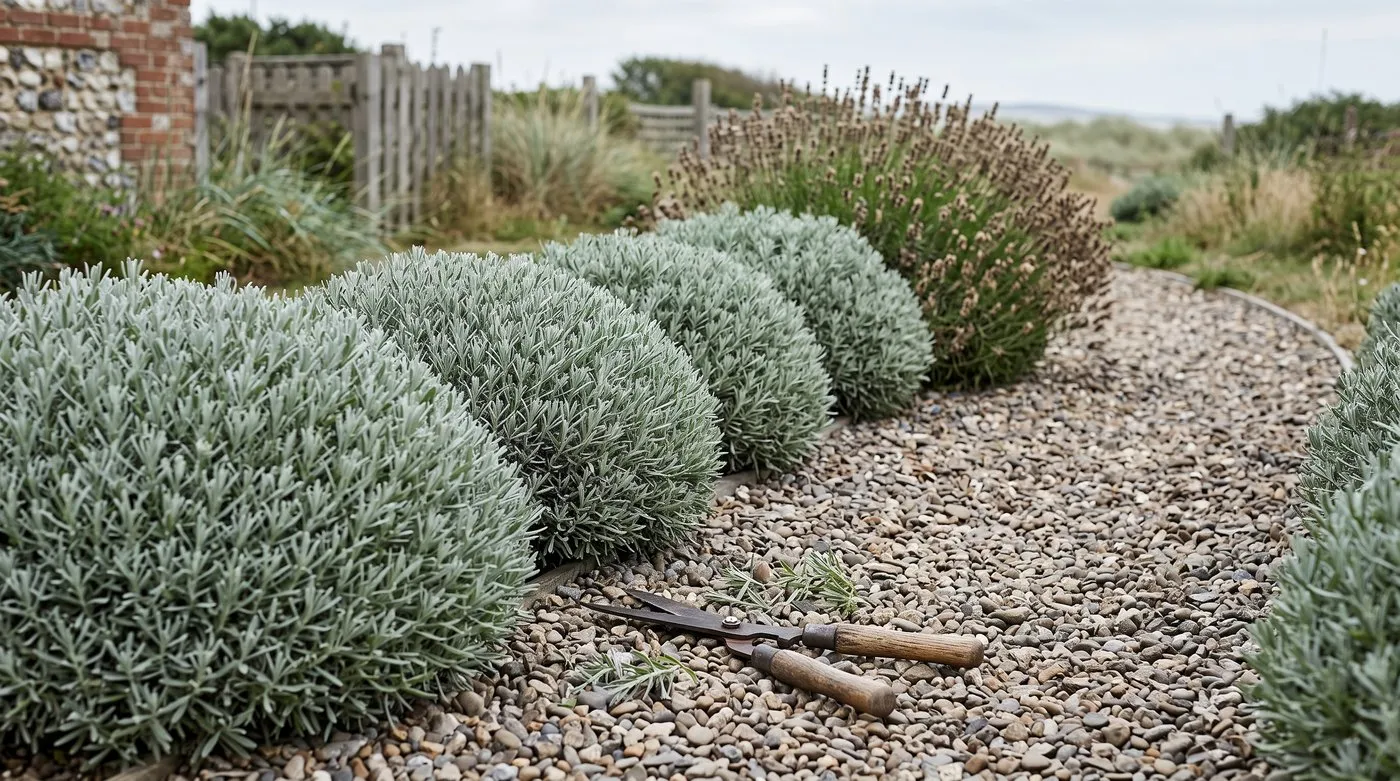
Trim lavender after flowering into a neat dome, always leaving some green on every stem. It rarely regrows from bare wood.
Cutting hedges: timing and nesting birds
Before you trim any hedge, check for nesting birds. It’s against the law to damage or destroy an active nest, and the main nesting season runs from March to August. Look carefully, and if you find a nest in use, leave that part until the chicks have gone.
A simple two-cut routine:
- Early summer: a first trim once you’ve checked carefully for nests.
- Late summer: a second trim to tidy up summer growth, so it looks neat all winter.
Yew hedges only need one trim a year, in late summer. Yew regrows well from old wood, so even a badly overgrown yew hedge can be cut back hard.
Box hedges are clipped in early summer and again in late summer. Box blight is common in the UK. Avoid clipping in wet weather, as the disease spreads in damp conditions, and clean your shears between sections.
Privet and leylandii grow fast and may need three trims a year. Leylandii won’t regrow from brown wood, so never cut back beyond the green growth.
Common pruning mistakes
Mistake 1: pruning spring-flowering shrubs in winter
The most common slip. People prune forsythia or mock orange in February because “it’s pruning season”. But that’s only true for summer-flowering shrubs and dormant trees. The result is no flowers next spring.
How to avoid it: does your shrub flower before midsummer? Then it flowers on old wood, so prune it after flowering.
Mistake 2: pruning plums and cherries in winter
The riskiest timing mistake. A single winter cut can let silver leaf in, causing dieback that spreads through the tree.
How to avoid it: tie a bit of bright tape on your plum and cherry trees as a reminder. Only prune them between June and August.
Mistake 3: cutting lavender into old wood
Lavender rarely regrows from bare, woody stems. Cut too low and those stems stay bare for good, leaving a woody, gappy plant.
How to avoid it: always leave some green, leafy growth on each stem. If a plant is already woody and bare in the middle, it’s usually best to replace it.
Mistake 4: using blunt or dirty tools
Blunt secateurs crush stems instead of cutting cleanly, and crushed cuts heal slowly. Dirty blades can carry diseases from plant to plant.
Mistake 5: cutting too much off a neglected plant at once
Taking off more than a third of a tree in one go stresses it. It then throws up lots of thin, upright shoots that crowd the tree and rarely fruit.
How to avoid it: spread the work over three years. Year one: take out dead, diseased and crossing wood. Year two: thin what’s left by a third. Year three: fine-tune the shape. If you need to remove a big limb, our guide on how to remove large tree branches explains the three-cut method that stops the bark tearing.
Pruning tools and how to look after them
Keep every tool sharp and clean. A clean cut heals quickly. A torn one heals slowly and invites disease.
| Tool | Good for | Care |
|---|---|---|
| Bypass secateurs | Stems up to about 15mm, roses, herbs | Sharpen regularly in the growing season |
| Loppers | Stems about 15-40mm, shrub branches | Sharpen and oil the pivot now and then |
| Pruning saw | Branches thicker than about 40mm | Replace the blade when it gets blunt |
| Hedge shears | Hedges, lavender | Keep sharp and clean |
| Topiary shears | Box and small-leaved hedging | Keep sharp for neat detail |
Clean your blades between plants, especially diseased ones. Wipe them with a garden disinfectant or methylated spirit, then dry them.
Why pruning goes wrong, and the easy fix
Most pruning problems come from one habit: treating every plant the same. A single “pruning day” in February where everything gets a chop is how forsythia loses its flowers and plum trees pick up silver leaf.
The fix is to sort your plants into groups:
- Winter pruners (apple, pear, gooseberry, grape vine): November to February
- Summer pruners (plum, cherry, damson, wisteria’s summer prune): June to August
- After-flowering pruners (forsythia, mock orange, rambling roses, early clematis): as soon as flowers fade
- Early spring pruners (buddleia, hardy fuchsia, caryopteris, group 3 clematis): February to March
- After-flowering trimmers (lavender, rosemary, thyme): after flowering
Once you know each plant’s group, the calendar is easy. Some gardeners even use coloured plant labels, one colour per group.
Now you have the year mapped out, grab your secateurs and start with whatever’s due this month. For more on individual plants, read our guide on how to prune hydrangeas, or try fruit tree grafting to grow your orchard skills.
Related reading: Flowering currant gets a trim once its April flowers fade, so see our guide to flowering currant care.
Frequently asked questions
What month do you prune roses in the UK?
Prune most roses from late February to mid-March. In southern England, start when the forsythia flowers. In the Midlands, early March is safer. In Scotland and northern England, wait until mid to late March. Rambling roses are different: prune them after flowering in late summer.
Can I prune shrubs in winter?
Yes, but only summer-flowering ones. Buddleia, hardy fuchsia, lavatera and caryopteris flower on new growth and love a hard cut in February or March. Spring-flowering shrubs like forsythia, mock orange and weigela flower on last year’s stems, so prune them straight after flowering.
Why should I never prune plum trees in winter?
Winter cuts can let in silver leaf disease. The fungus spreads mostly from autumn to spring, and fresh cuts give it a way in. There’s no cure once it takes hold. Stick to pruning plums, cherries and damsons from June to August.
When should I cut my hedge?
Most hedges need two trims a year. Do the first in early summer and the second in late summer. Always check for nesting birds first, as damaging an active nest is against the law. The main nesting season runs from March to August.
How do I know if I am pruning at the wrong time?
The plant usually tells you the following season. A spring shrub with no flowers was probably pruned in winter. Lots of sap oozing from spring cuts on birch or vines means you cut too late. A silvery sheen on plum or cherry leaves can mean silver leaf. If you’ve missed a window, wait for the next right time.
Should I prune wisteria once or twice a year?
Twice a year gives the best flowers. In July or August, cut long whippy shoots back to five or six leaves. In January or February, shorten those same shoots to 2-3 buds. This helps the plant make flower buds instead of more leafy growth.
Is it too late to prune in April?
Too late for apples, pears and southern roses, but fine for some plants. Apples and pears are already growing by then. April is a good time, though, for shaping evergreen shrubs, tidying frost-damaged tender plants and cutting back penstemons. Check each plant against the calendar.
Our team produces practical UK gardening guidance from source research, contributor records and established horticultural practice. Editorial standards are overseen by Matt W.


