
Key takeaways
- Prune apples and pears in winter, from November to February
- Prune plums, cherries and damsons only from June to August
- Cut out dead, diseased and damaged wood whenever you spot it
- Shape young trees into an open goblet over their first three years
- Bring an old tree back over three years, removing no more than a third a year
- Clean your secateurs between cuts on diseased branches
Pruning is the most useful skill a fruit grower can learn. A well-pruned tree gives bigger fruit, gets fewer diseases and crops reliably. A neglected one turns into a tangle of crossing branches, dark in the middle and prone to disease.
Timing is everything. Apples and pears are pruned in winter. Plums, cherries and damsons are pruned in summer. Figs wait for spring. Here’s how to prune each one, and the mistakes to steer clear of.
With the leaves gone, you can see every branch of a dormant apple tree clearly.
When to prune apple and pear trees
Prune apples and pears from November to February while they’re dormant. With no leaves in the way you can see the whole shape, and the tree is resting.
Try to finish before the buds burst in spring.
For apple trees, the winter prune is the main job of the year. Most apples, like Cox, Bramley, Gala and Egremont Russet, fruit on short, knobbly spurs. Shorten their side shoots to two or three buds and you’ll build up fruiting spurs over the years. A few, like Worcester Pearmain, Blenheim Orange and Irish Peach, fruit at the tips of last year’s shoots. Leave those tips alone and use renewal pruning instead: take out some of the older branches that have fruited each winter so fresh ones replace them.
Pear trees are pruned the same way and at the same time. Conference, Concorde and Doyenne du Comice all fruit on spurs.
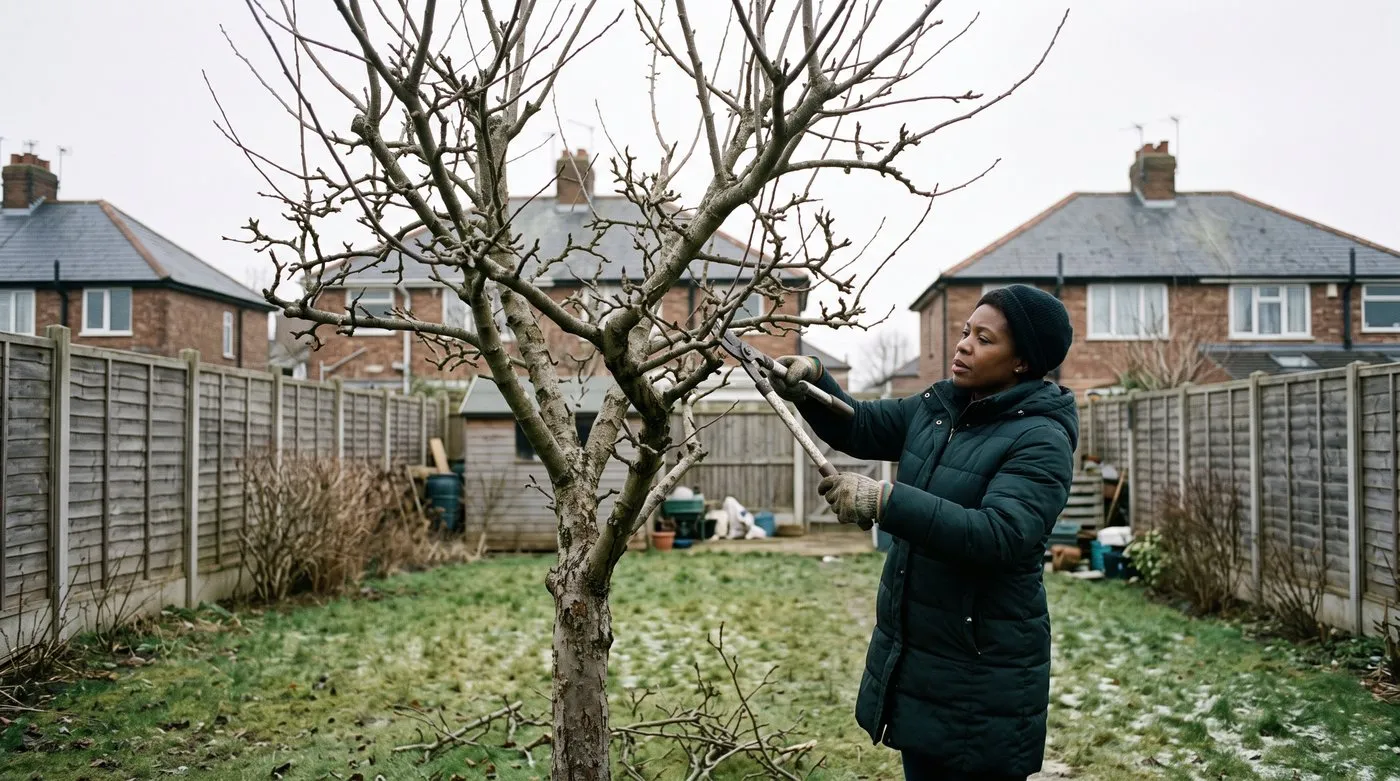
With the leaves gone you can see the whole shape of an apple tree. Aim to finish the winter prune before the buds burst.
How to prune plum, cherry, and damson trees
Only prune these between June and August. Silver leaf disease spreads through fresh cuts, mostly from autumn to spring. It kills branches bit by bit and can finish off a whole tree, and there’s no cure. Summer pruning keeps the risk low.
Plum trees only need a light prune in midsummer. Take out dead wood, crossing branches and anything growing into the middle. Victoria plums are especially prone to silver leaf. The RHS silver leaf guide shows what to look for.
Cherry trees follow the same summer rule. Sweet cherries on Gisela 5 rootstock can be kept to 3-4m with a summer prune each year. Sour cherries like Morello fruit on last year’s stems, so after picking, cut fruited branches back to a younger shoot.
Treat damsons and gages like plums. Just removing dead and crossing wood is often enough.
Summer pruning a cherry tree in July. Plums and cherries should never be pruned in winter.
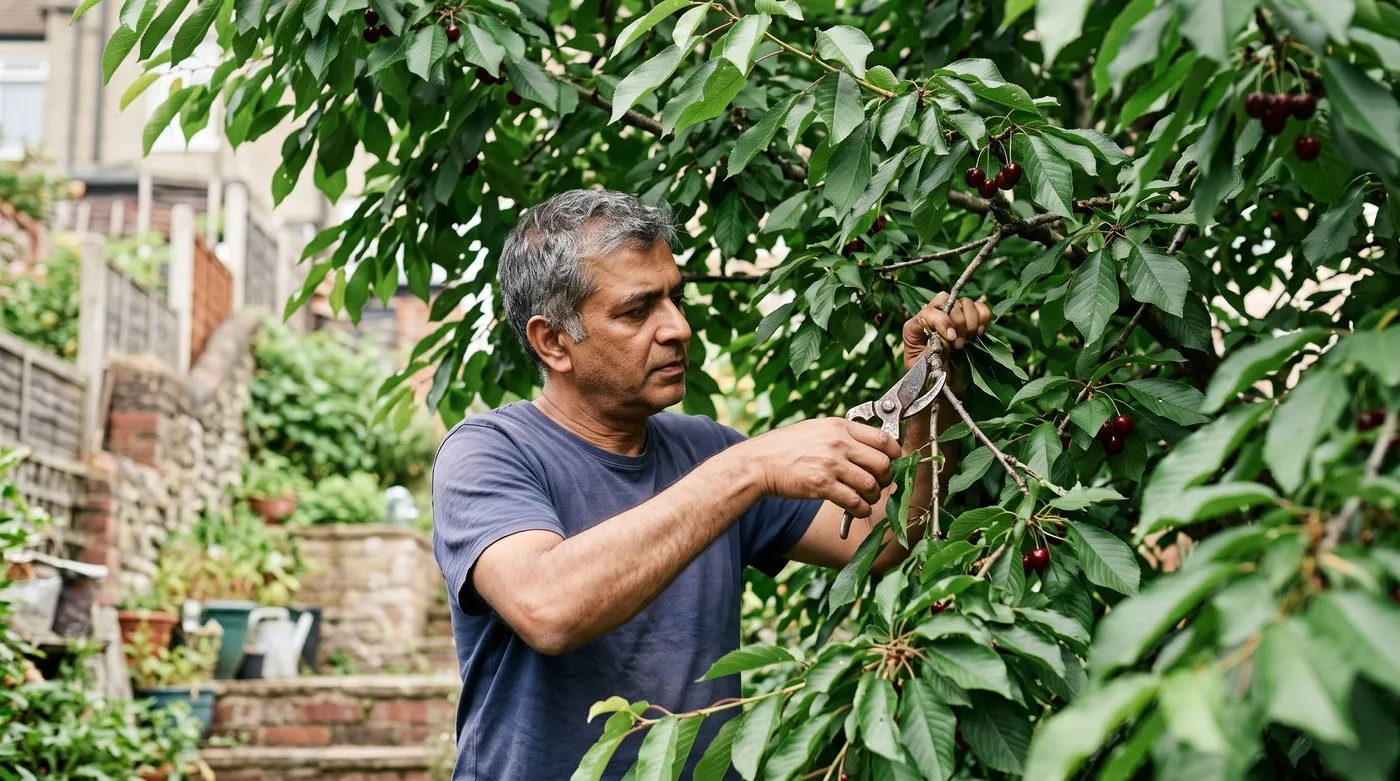
Plums, cherries and damsons are only pruned from June to August. Summer cuts keep the risk of silver leaf disease low.
When to prune fig trees
Prune figs in spring, once the last hard frost is over. That’s usually late April to early May. Figs aren’t fully hardy, and early pruning leaves fresh cuts and buds open to a late cold snap.
Remove frost-damaged tips, crossing branches and anything growing into the middle. Figs fruit on last year’s growth, so keep young shoots and take out older, unproductive wood. The tiny pea-sized figs at the shoot tips in autumn are next summer’s crop, so leave those. Pick off any bigger figs that didn’t ripen, as they won’t ripen now.
A fig fan-trained on a south-facing wall is the most reliable in the UK. Prune it in spring to keep the fan shape, tie in new shoots to fill gaps, and remove branches growing straight out from the wall.
Formative pruning for young trees
A tree’s first three years set its shape for decades. Aim for an open goblet shape, which lets light and air into the middle. That means less disease, better coloured fruit and easier picking.
Year one. After planting a maiden whip (a single stem with no branches), cut the stem to about 75cm above the ground in winter. This makes three to five strong side branches grow just below the cut.
Year two. Pick three or four well-spaced branches to keep, spread evenly round the trunk and not directly above each other. Remove the other side branches. Shorten the ones you keep by a third, cutting to an outward-facing bud.
Year three. The framework is in place. Let side branches grow from the main arms. Remove anything growing into the middle or crossing. From now on, prune in the right season for its fruit type.
Espaliers and cordons are shaped differently. Espalier arms are trained flat along wires, with a new tier added each winter until it’s tall enough.
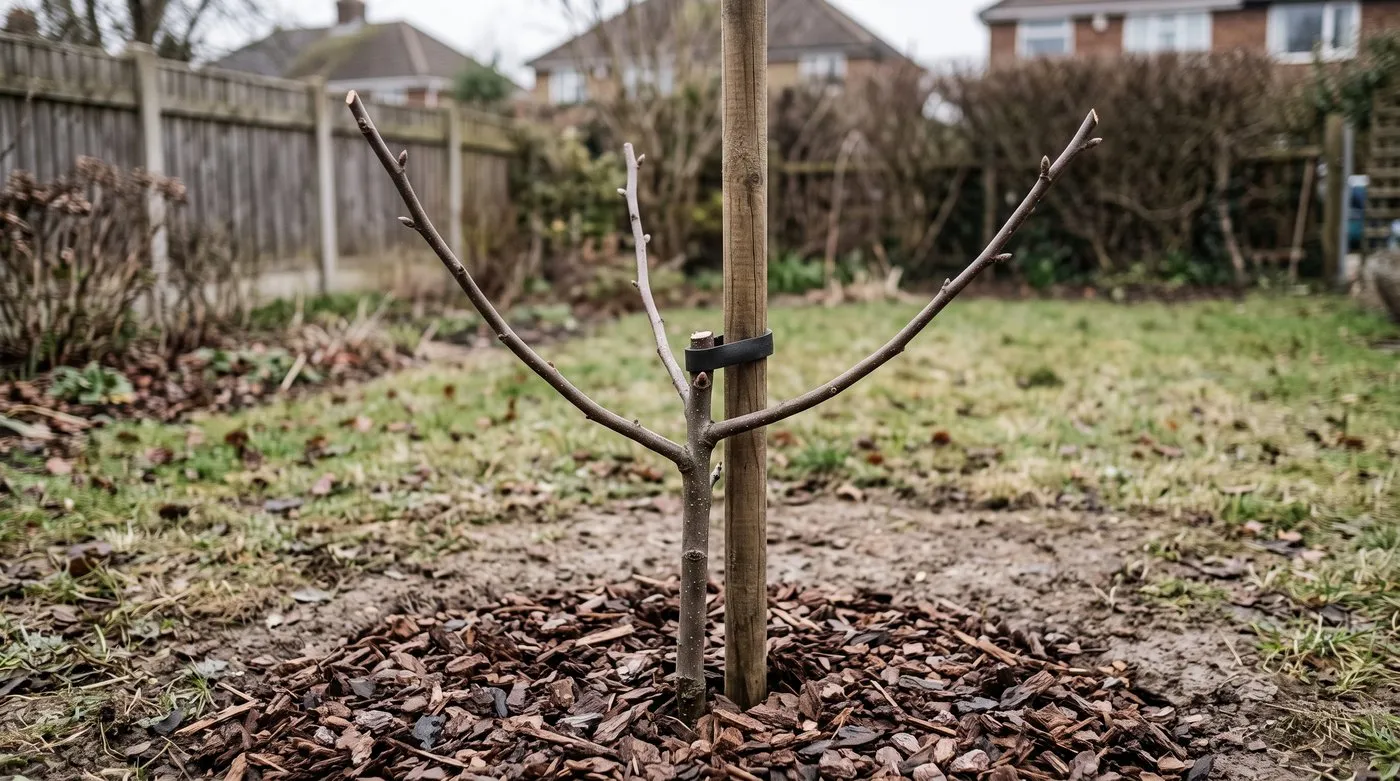
Pick three or four branches spread evenly round the trunk. Shortening them by a third to an outward bud sets up an open goblet shape.
Renovation pruning for neglected trees
Old, neglected fruit trees are well worth saving. Bring them back over three years. Doing it all at once causes a forest of weak, upright shoots and can kill an old tree.
Year one. Cut out all dead, diseased and badly damaged wood. Then remove up to a third of what’s left, picking branches that cross, rub, shoot straight up through the middle or droop to the ground. Cut back to a side branch or the trunk, never leaving stubs.
Year two. Take out another third, opening up crowded areas and the middle. Some upright shoots will have appeared after last year’s cuts. Remove the weakest, but keep any that fill a gap.
Year three. Tidy the shape. The tree should now be open with light reaching every part. Start normal pruning. In late winter, sprinkle sulphate of potash round the roots at about 35g per square metre to encourage fruit rather than leaves.
For more on feeding fruit trees while they recover, potash and a mulch of well-rotted manure work well together.
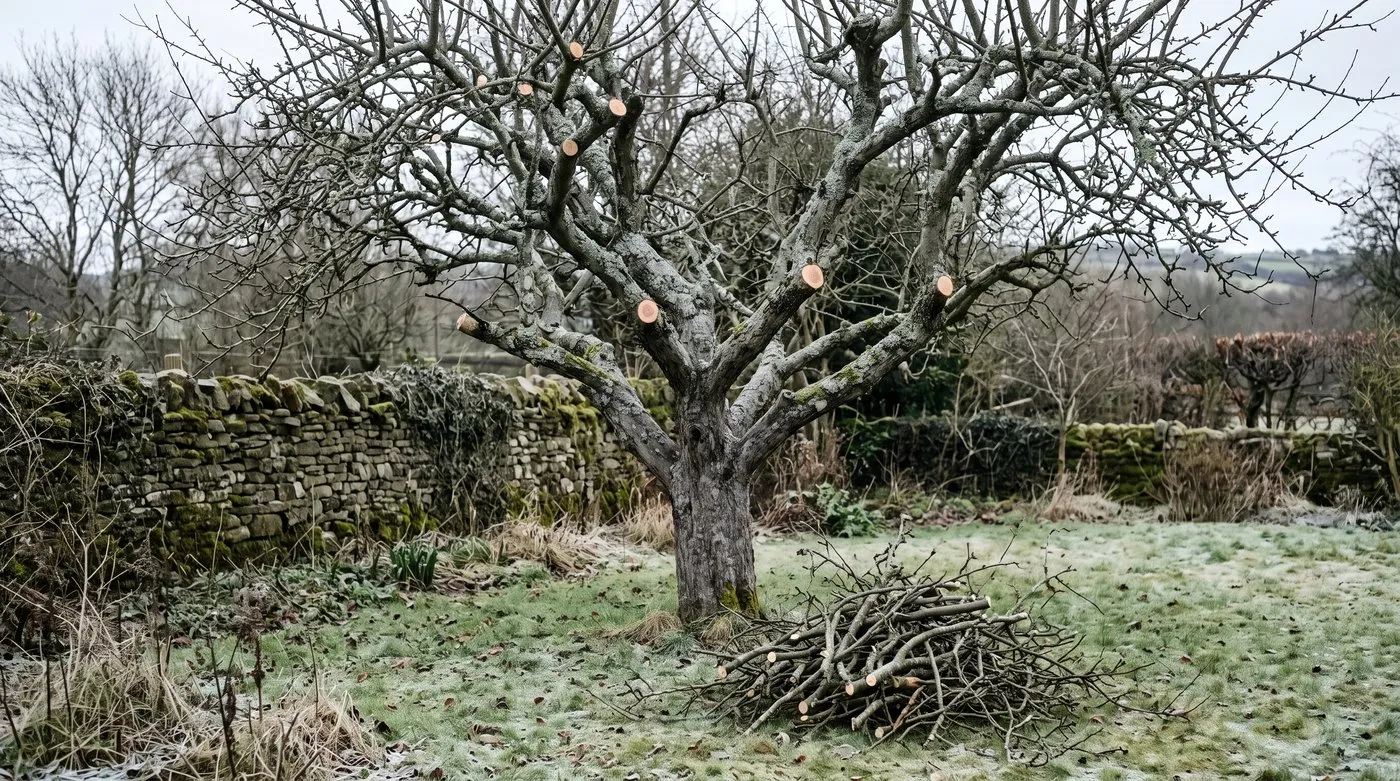
Bring a neglected tree back over three winters. Taking more than a third at once just sparks a forest of weak upright shoots.
Espalier and cordon pruning
Trained fruit trees get two prunes a year. The summer prune in late July or August matters most. It keeps them neat and builds fruiting spurs close to the framework.
Summer prune (late July to August). Shorten new side shoots from the arms or trunk to three leaves above the little cluster of leaves at their base. Leave the main tip alone until the tree reaches the height you want.
Winter prune (December to February). Cut any shoots that have grown from the summer-pruned stubs back to one bud. This builds the short, stubby spurs that carry the fruit. Take out any shoots growing forwards or backwards out of the flat shape.
Cordons are single-stemmed trees planted at a 45-degree angle. They take up very little room and can be planted 75cm apart, so you can fit several varieties along a short fence.
An espalier apple on horizontal wires. Summer pruning builds fruiting spurs close to the arms.
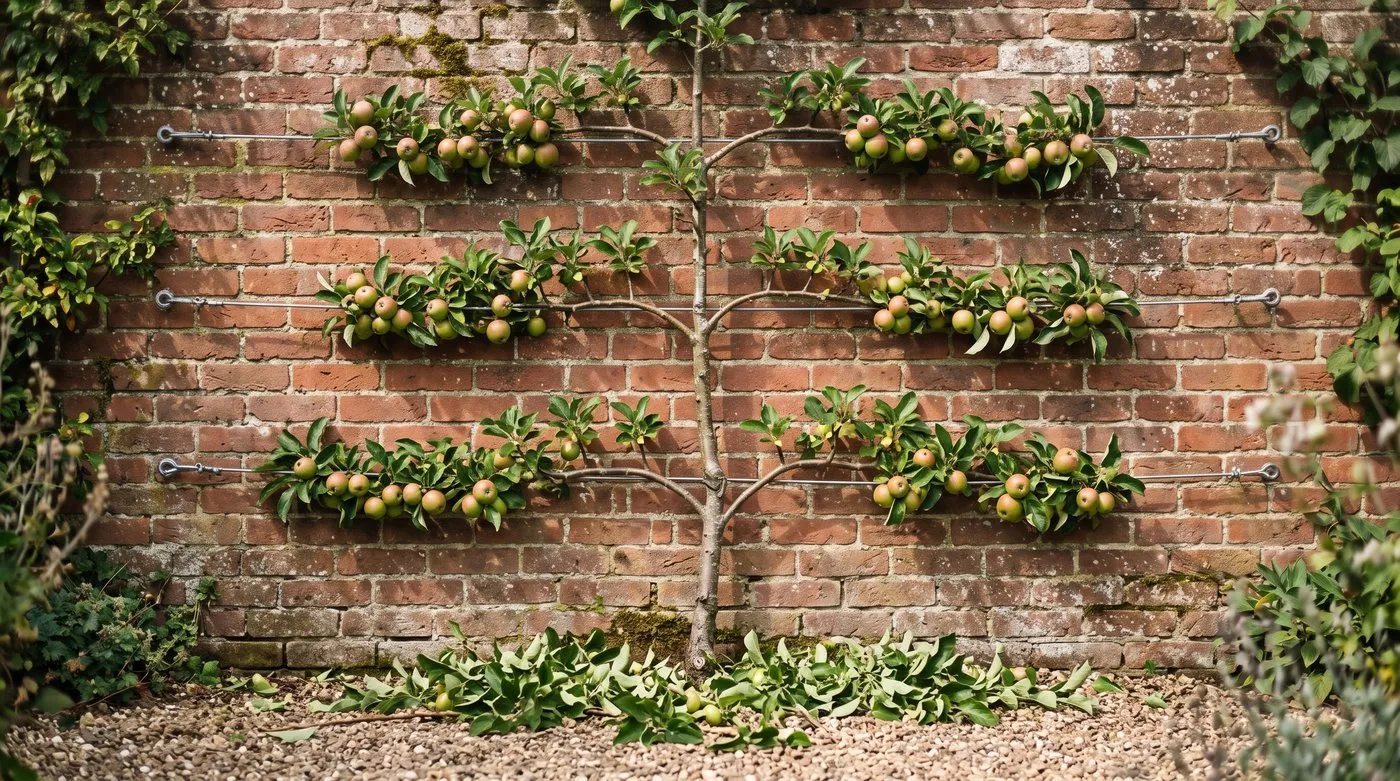
The summer prune in late July or August matters most for trained trees. It keeps them neat and builds fruiting spurs close to the arms.
Fruit tree pruning comparison table
| Fruit | When to prune | How | Watch out for | Examples |
|---|---|---|---|---|
| Apple (spur) | November to February | Shorten side shoots to 2-3 buds | Canker, scab | Cox, Bramley, Gala |
| Apple (tip) | November to February | Remove some older fruited wood | Canker, scab | Worcester Pearmain, Blenheim Orange |
| Pear | November to February | As spur apples | Canker, fireblight | Conference, Concorde, Comice |
| Plum | June to August only | Light thin, remove dead and diseased | Silver leaf | Victoria, Marjorie’s Seedling |
| Cherry (sweet) | June to August only | Thin crowded branches | Silver leaf, bacterial canker | Stella, Sunburst |
| Cherry (sour) | After picking (August) | Cut fruited stems to young shoots | Silver leaf, bacterial canker | Morello |
| Damson and gage | June to August only | Just dead, diseased and crossing wood | Silver leaf | Merryweather, Cambridge Gage |
| Fig | Late April to May | Remove frost damage, thin | Coral spot | Fan-trained on a sunny wall |
| Espalier or cordon | Summer and winter | Summer: 3 leaves. Winter: 1 bud | Canker, scab | Both prunes needed |
Month-by-month pruning calendar
January. Main pruning time for apples and pears. If the ground is frozen or soft, wait for a better day before putting up a ladder.
February. Carry on pruning apples and pears. Cut out any branches with canker and don’t compost them.
March. Finish off apples and pears before the buds burst. Check for any crossing branches you missed.
April. Prune figs once hard frosts are over.
May. Leave fruit trees alone while the blossom sets fruit.
June. Start pruning plums, cherries and damsons. Remove dead, diseased and damaged wood and crossing branches. Keep it light.
July. Carry on with plums and cherries. Start summer pruning espaliers and cordons in the last week of the month.
August. Finish all summer pruning. Prune sour cherries after picking.
September. No pruning. Leave plums and cherries alone until next June, and wait for apples and pears to drop their leaves.
October. Rake up fallen leaves to help stop scab and canker. Mark branches you want to remove this winter with chalk or ribbon.
November. Apple and pear pruning starts again. The RHS pruning guide has advice for particular varieties.
December. Keep pruning apples and pears. A good time to start bringing back a neglected tree.
Tools you need for pruning fruit trees
Sharp tools make clean cuts that heal fast. Blunt ones crush and tear. Three tools cover nearly every job.
Bypass secateurs cut branches up to about 15mm thick. A pair with a replaceable blade is a good buy. See our best secateurs guide for help choosing.
Loppers cut branches from about 15mm to 40mm. Bypass loppers give cleaner cuts than anvil ones. Geared models make thick wood easier, and long handles help you reach into the tree.
A pruning saw handles anything thicker. A curved saw that cuts on the pull stroke makes overhead cuts easier. Take heavy branches off in three cuts (see below).
The 3 Ds: dead, diseased, and damaged wood
You can cut out the 3 Ds at any time of year, on any fruit tree. Dead and diseased wood can spread trouble to healthy branches.
Dead wood has no buds, loose or missing bark, and snaps rather than bends. Cut back to living wood, where you can see green under the bark.
Diseased wood includes canker (sunken, cracked bark in rings), coral spot (little pink or orange pimples) and silver leaf (silvery leaves and a brown stain in the cut wood). Cut at least 15cm below any sign of disease, into clean, pale wood. Don’t compost diseased prunings.
Damaged wood means storm-snapped branches, branches that rub together, and any split by a heavy crop. Tidy ragged breaks with a sharp saw, cutting back to a side branch or the collar where it joins the trunk.
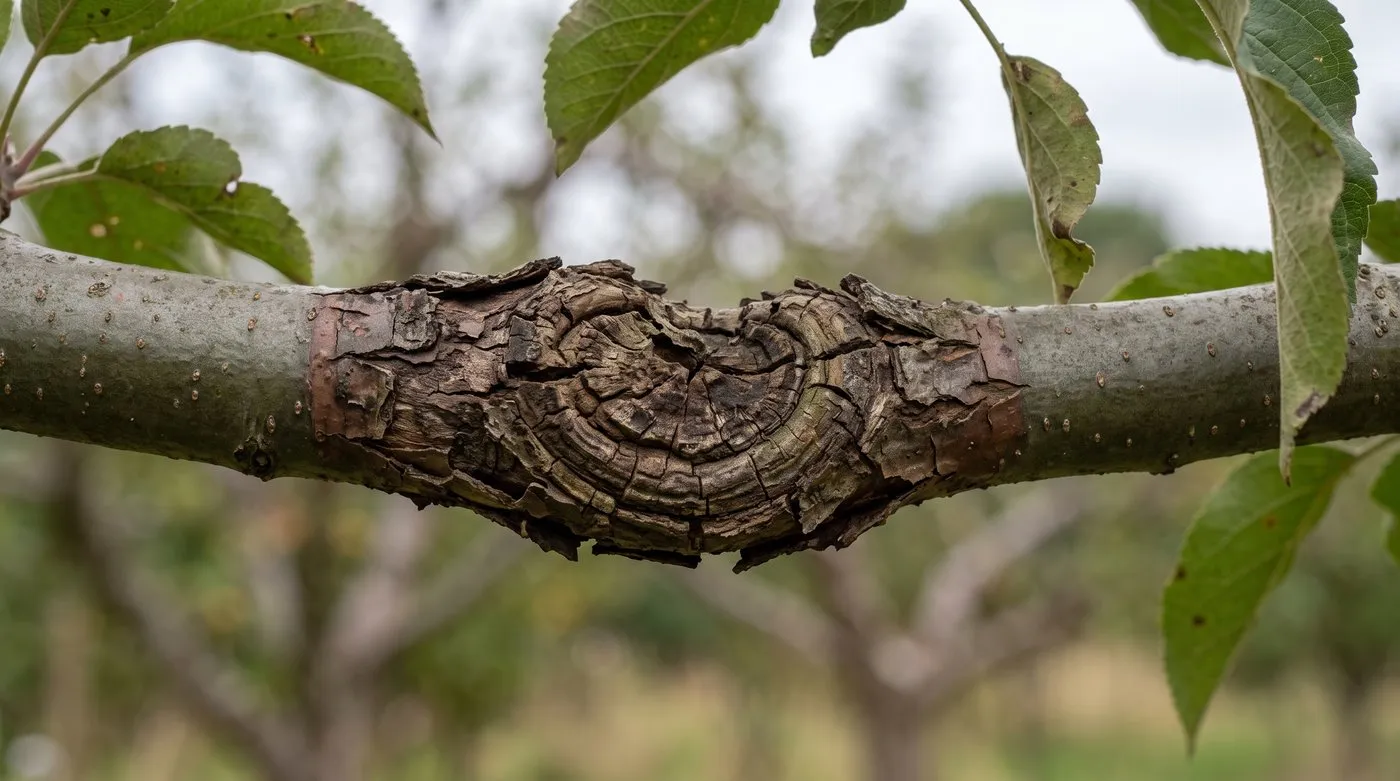
Canker shows as sunken, cracked bark in rings. Cut at least 15cm below it into clean, pale wood, and keep the prunings out of the compost.
Common pruning mistakes to avoid
Lopping the top off. Chopping the top off to make a tree shorter just makes a thicket of upright shoots where you cut. In a couple of years it’s taller and denser than before. Instead, bring the height down gradually by cutting tall branches back to a side branch.
Cutting flush to the trunk. The slight swelling at the base of a branch, called the collar, is what helps the wound heal. Cut it off and the wound stays open for years. Always cut just outside the collar.
Pruning plums and cherries in winter. This is the most damaging mistake of all. It’s easy to prune everything at once in winter, but a winter cut can let silver leaf in. Only prune them from June to August.
Taking too much at once. Never remove more than a third of a tree in one year. Over-pruning brings masses of weak upright shoots, fewer fruit for a few years and more disease.
Ignoring water shoots. Thin, upright shoots often pop up after hard pruning. Left alone, they become a tangle. Remove most of them in summer, but keep any that fill a real gap and tie them outwards.
Cut just above an outward-facing bud, sloping away from it, so new growth heads outwards.
Spur pruning vs renewal pruning explained
Knowing whether your tree fruits on spurs or tips tells you how to prune it. Get it wrong and you cut off next year’s fruit.
Spur-bearing trees fruit on short, knobbly spurs on older wood. Most apples and pears are like this, including Cox, Gala, Egremont Russet, Conference and Concorde. Shorten side shoots to two or three buds each winter to build up clusters of fruit buds. Thin crowded spurs when they get congested.
Tip-bearing trees fruit at the ends of last year’s shoots. Worcester Pearmain, Blenheim Orange, Irish Peach and Cornish Gilliflower are examples. Spur-prune these and you cut off the fruit buds. Instead, each winter take out some of the oldest shoots that have fruited, back to a younger one, and leave the new shoot tips alone.
Some varieties, like Discovery and Bramley, fruit on both spurs and tips. Prune them as spur-bearers but leave some young shoot tips uncut.
The variety on top decides how a tree fruits, not the rootstock. Our guide to grafting explains how the two fit together.
How to make the correct pruning cut
Every cut should be clean, in the right place, and sloped so rain runs off. Three kinds of cut cover everything.
Cutting to a bud. For shortening a branch. Cut about 5mm above an outward-facing bud, sloping away from it. Too close damages the bud. Too far leaves a stub that dies back.
Cutting to a branch. For removing a whole branch where it meets another. Cut just outside the ridge of bark in the fork and the collar at the base, so the tree can heal over.
Three cuts for heavy branches. Stops the bark tearing. First, saw a third of the way up through the underside, about 30cm from the trunk. Second, saw down from the top a few centimetres further out until the branch drops. Third, cut the stub off just outside the collar. For the biggest limbs, our guide on how to remove large tree branches safely covers ropes and ladders.
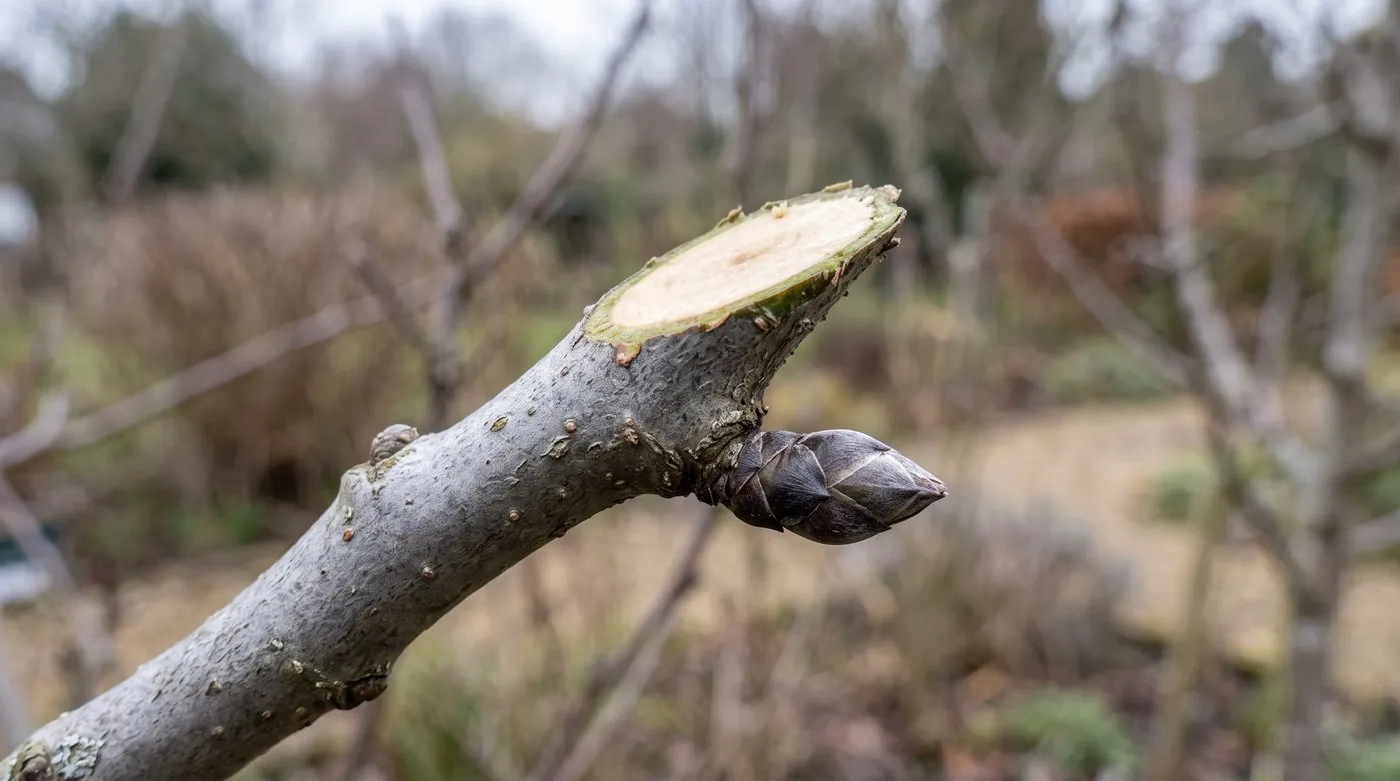
Cut about 5mm above an outward-facing bud, sloping away from it. Too close damages the bud, too far leaves a stub that dies back.
Pruning fruit trees in small gardens
Small gardens need small trees, and small trees need pruning every year to keep cropping. Dwarf fruit trees on dwarfing rootstocks (M27 and M9 for apples, Quince C for pears, Pixy for plums, Gisela 5 for cherries) give full-size fruit on small trees.
Cordon apples and pears planted 75cm apart along a fence pack lots of fruit into a small space. Summer prune them in August, shortening side shoots to three leaves, and cut regrowth back to one bud in winter. A 3m fence fits four cordons, so you can grow four varieties that pollinate each other.
Fan-trained plums, cherries and figs love a south or west-facing wall, which gives shelter, warmth and something to tie them to. In summer, pinch out unwanted shoots and tie in the ones you need. For choosing varieties and spacing in a small space, see our guide to growing fruit trees.
Frequently asked questions
When should I prune apple trees in the UK?
Between November and February, while the tree is dormant. With no leaves, you can see every branch clearly. Try to finish before the buds burst in spring. Trained apples like cordons and espaliers also get a summer prune in late July or August.
Why should I never prune plum trees in winter?
Winter cuts let in silver leaf disease. The fungus gets in through fresh wounds, mostly between autumn and spring. Infected branches get silvery leaves and die back. Prune plums only from June to August, when the risk is lowest and cuts heal quickly.
How do I prune a neglected fruit tree?
Take it slowly, over three years. In year one, cut out dead, diseased and crossing branches, up to a third of the tree. In year two, thin another third where it’s crowded. In year three, tidy the shape. Taking too much at once brings a mass of weak shoots and can kill an old tree.
What is the difference between spur pruning and renewal pruning?
Spur pruning shortens side shoots to two or three buds. It suits most apples, like Cox, Bramley and Gala. Renewal pruning takes out some older branches that have fruited, so fresh young ones replace them. Tip-bearing apples like Worcester Pearmain need renewal pruning, as they fruit at the shoot tips.
Should I seal pruning cuts on fruit trees?
No, wound sealants aren’t needed. They can trap damp under the seal and encourage rot. A clean cut in the right place heals on its own. Just keep your tools sharp and clean.
How do I prune an espalier apple tree?
Espaliers need two prunes a year. In late July or August, shorten new side shoots from the arms to three leaves above the cluster at their base. In winter, cut any regrowth from those stubs back to one bud. Remove shoots growing forwards or backwards out of the flat shape.
What tools do I need for pruning fruit trees?
Three tools cover most jobs. Bypass secateurs for branches up to about 15mm thick, loppers for 15-40mm, and a pruning saw for anything thicker. Keep blades sharp and wipe them with methylated spirit between diseased trees. Use a sturdy step or tripod ladder for big trees.
Our team produces practical UK gardening guidance from source research, contributor records and established horticultural practice. Editorial standards are overseen by Matt W.


